Custom non-woven promotional bags can look similar in a quotation but perform differently in use. I understand why buyers worry about choosing a bag that cannot carry their event materials reliably. I start with the carrying task, then compare materials, construction, and finished samples rather than relying on a process label.
I recommend choosing sewn or ultrasonic construction according to the intended contents, reuse expectations, handle design, and approved sample performance. Neither joining method alone establishes finished-bag suitability. For custom non-woven promotional bags, I ask buyers to define the job and validate the proposed construction before approving bulk production.
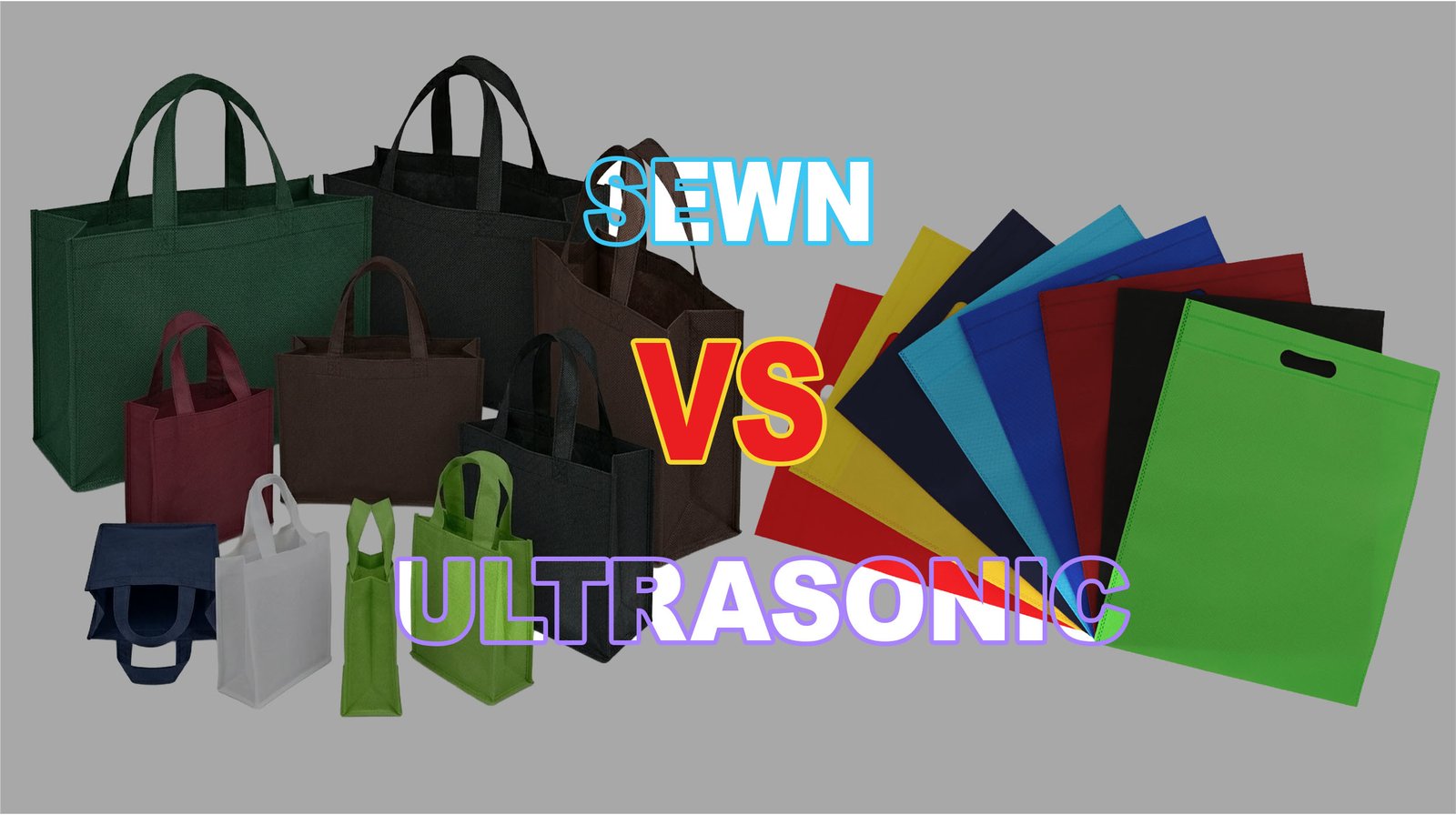
In my inquiry work at CoraggioBag, I encounter the assumption that sewn bags must be stronger. I do not replace that assumption with a claim that welded bags perform equally. Instead, I turn the discussion toward specific requirements that a supplier can document and a buyer can check.
When Is Ultrasonic Welding Suitable for a Non-Woven Bag?
I cannot assess a proposed welded bag from its appearance alone. A neat bonded edge does not show whether the material, handle arrangement, and bag dimensions suit the carrying task. I first ask what the buyer needs the bag to do.
I consider ultrasonic welding a candidate when the proposed material is compatible with the process and the finished construction can meet the agreed use requirements. I ask the supplier to confirm material compatibility, explain the proposed joints, and provide representative samples. Suitability remains subject to approval, not assumption.
I begin with the carrying brief
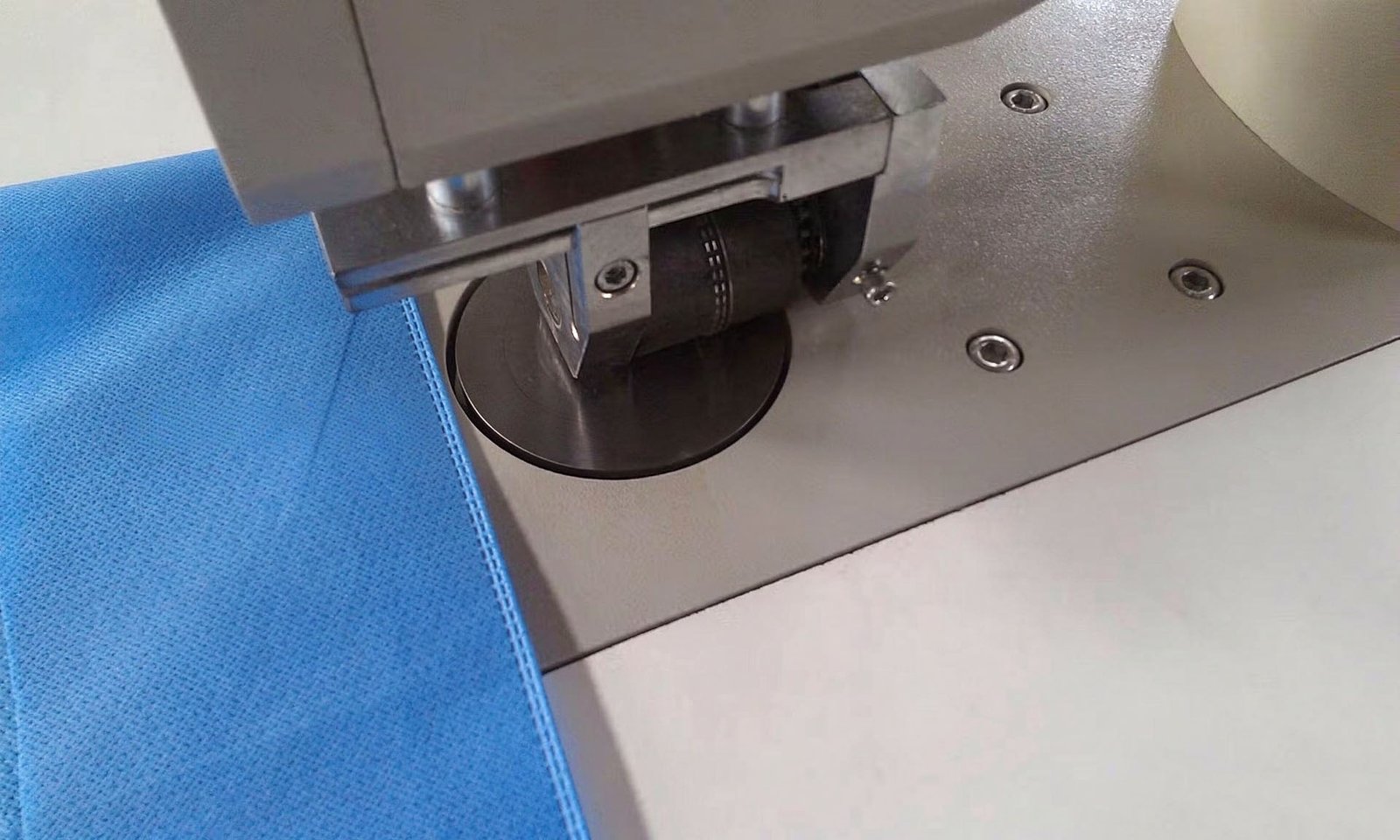
Ultrasonic joining uses localized energy to create a bond in compatible materials.1 However, that basic description does not tell me whether a particular promotional bag is appropriate.
For custom non-woven promotional bags, I begin with five questions:
- What will the bag contain? I ask for a contents list, including dimensions and total weight.
- How will people carry it? I distinguish between a short hand-carry journey and repeated carrying during an event.
- How often should it be reused? I ask buyers to define their expectation rather than simply request a “reusable” bag.
- What handle structure is proposed? I review separate handles, cut-out handles, and any reinforcement.
- What conditions matter? I ask whether moisture, bulky contents, or concentrated edges are relevant.
A bag carrying lightweight clothing has a different evaluation brief from a bag holding books, boxed gifts, or products with rigid corners. I would not approve either solely from a fabric-weight specification.
I ask for a construction-specific proposal
I ask suppliers to identify the actual non-woven material rather than describe it only as “eco fabric” or “standard non-woven.” Material composition, weight, finish, and any lamination should be recorded.
I also ask whether the proposed equipment and joining pattern are suitable for that material and design.2 If a supplier recommends ultrasonic construction, I want that recommendation tied to a sample and the stated application.
For application-specific performance questions, I recommend review by a qualified testing provider or relevant technical professional. My role is to help clarify the buying decision, not to assign an unsupported load rating.
My approval question is simple: does this proposed finished bag meet the documented carrying task?
Custom Non-Woven Promotional Bags: How Do Stitched and Welded Seams Change Bag Construction?
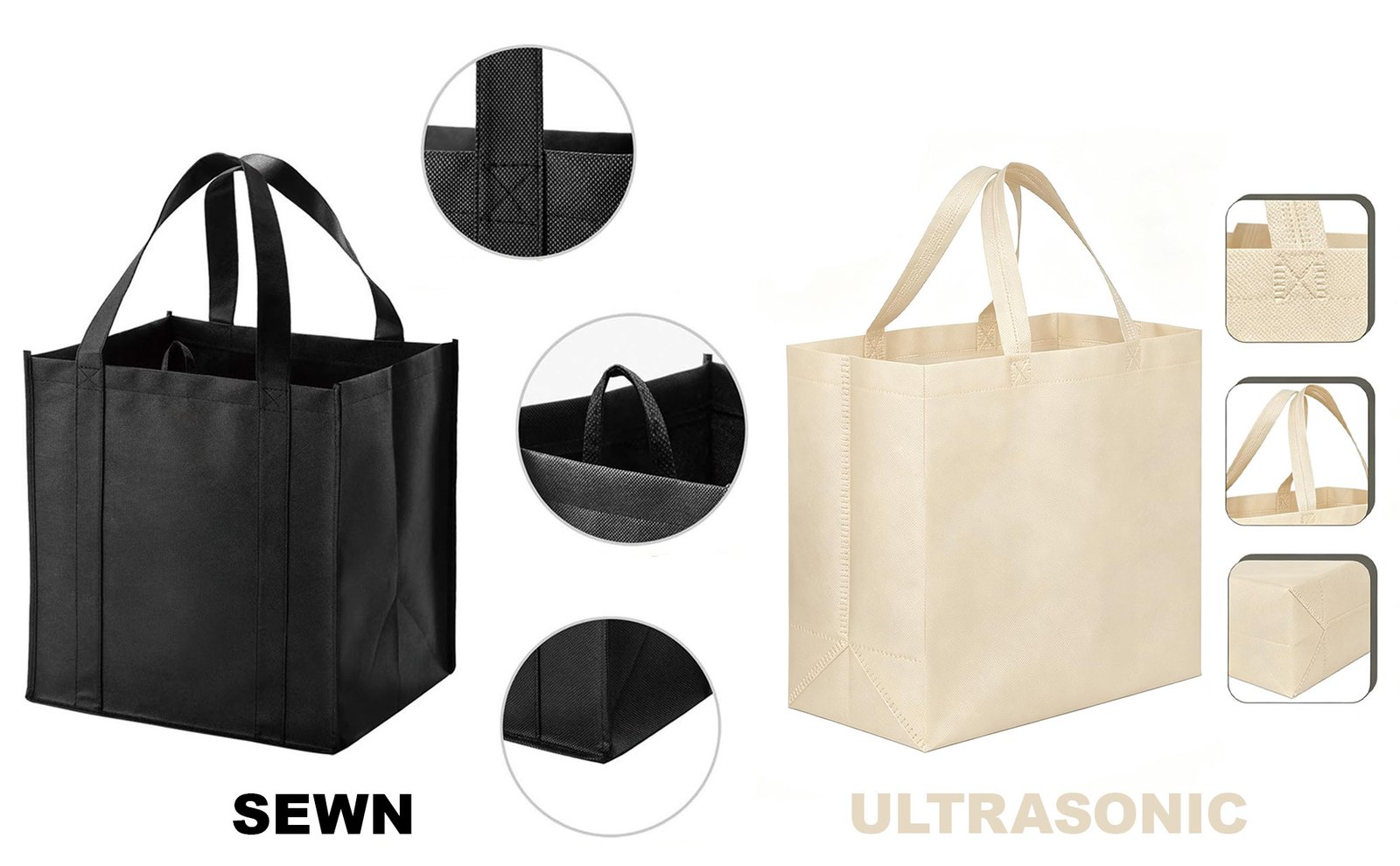
I find that buyers sometimes compare two samples as if the joining method were their only difference. That can hide changes in handle attachment, seam allowance, reinforcement, or material. I ask for a construction breakdown before drawing conclusions from either sample.
Stitched seams join components with thread, while ultrasonic seams bond compatible materials at defined joining areas.3 I treat these as different construction systems, not automatic performance rankings. I compare the complete bag, including material, joint layout, handle connections, reinforcement, and dimensions, before deciding what needs validation.
I separate process differences from design differences
A sewn sample and a welded sample may differ in several ways at once. If I overlook those differences, I could mistakenly attribute the entire result to stitching or welding.
I use a comparison table to keep the discussion specific:
| Construction feature | What I record for a sewn proposal | What I record for an ultrasonic proposal |
|---|---|---|
| Body joints | Seam position, allowance, thread, and stitch specification | Bond position, width, and joining pattern |
| Handle attachment | Attachment area, stitching layout, and reinforcement | Attachment area, bonded layout, and reinforcement |
| Bottom construction | Separate panel, folded base, or gusset arrangement | Separate panel, folded base, or gusset arrangement |
| Edge finishing | Hem, binding, fold, or other treatment | Bonded edge, fold, or other treatment |
| Additional components | Inserts, labels, trims, and supporting layers | Inserts, labels, trims, and supporting layers |
This table is not a ranking. I use it to establish what the supplier is actually offering.
I consider how the construction affects the whole bag
A change in joining method may require a different panel layout or handle design. It can also change the usable internal dimensions, appearance, or placement options for decoration.
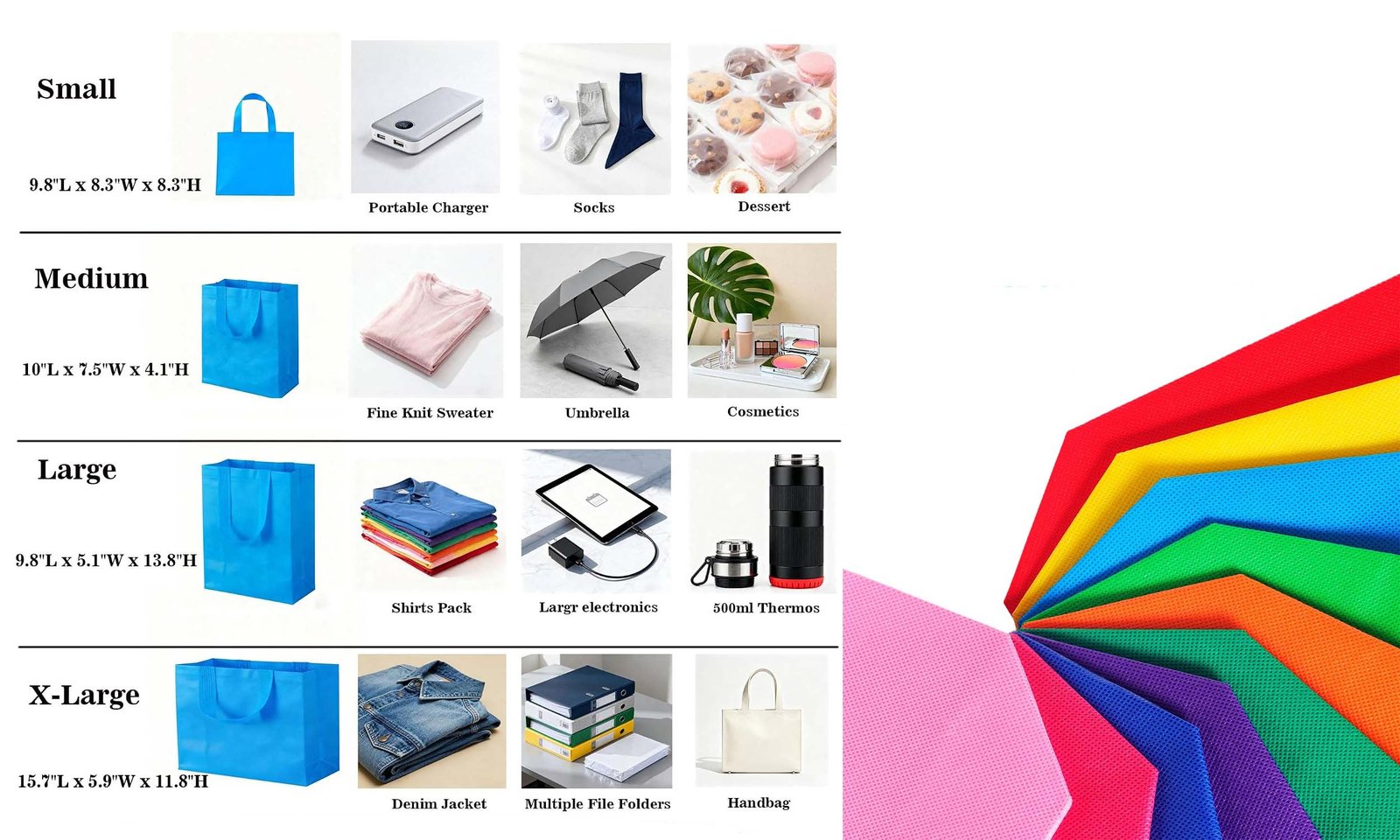
For custom non-woven promotional bags, I therefore request both external dimensions and usable capacity. A nominal size alone may not explain whether the intended box or brochure pack fits comfortably.
I also review the bag after printing or other decoration. I do not assume an undecorated development sample represents the complete production specification.
At CoraggioBag, I use these discussions to clarify what the buyer values: carrying function, presentation, branding space, packing efficiency, or a combination of these. I then ask for a proposal that addresses those priorities without claiming that one process is inherently more premium.
Custom Non-Woven Promotional Bags: Which Handle and Bottom-Seam Checks Should Buyers Request?
I pay close attention to handles because buyers naturally focus on the visible bag body and printed logo. A body-material description leaves important questions unanswered. I bring the handle connections and bottom construction into the approval discussion before the order reaches production.
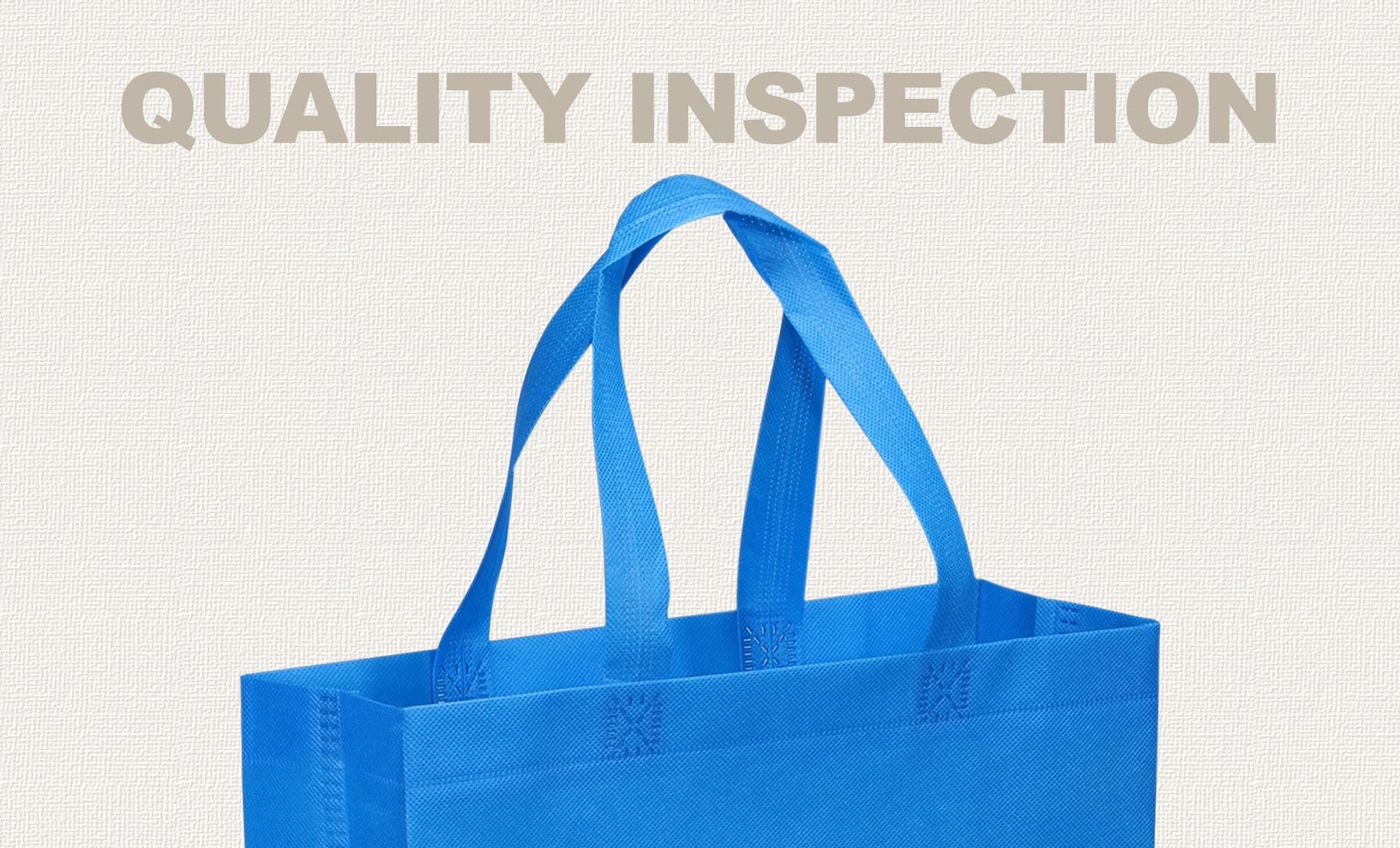
I ask buyers to review handle dimensions, attachment areas, reinforcement, bottom joints, and gusset intersections on finished samples. I then recommend checks using the intended contents and agreed carrying actions. These areas deserve inspection, but I do not present them as documented failure points without supporting evidence.
I document the handle arrangement
“Long handles” or “strong handles” does not give me enough information for a purchase specification. I prefer measurable details and an approved reference sample.
My handle review includes:
- Handle width and length: I record how the supplier measures both.
- Handle position: I check spacing and alignment against the approved drawing.
- Attachment layout: I identify the dimensions and location of the stitched or bonded connection.
- Reinforcement: I record any extra layer, patch, fold, or supporting component.
- Finishing: I inspect for loose threads, sharp edges, incomplete bonds, or other visible workmanship issues.
For cut-out handles, I review the opening shape, position, surrounding material, and any reinforcement. I do not treat that design as directly interchangeable with a separate loop handle.
I review the base with the actual contents
The bottom of a bag must be evaluated as part of its overall structure. I inspect the bottom joint, gusset folds, and intersections where several layers meet.
I ask whether the intended contents sit flat, push against corners, or distort the base. A rigid box and a group of soft garments can interact differently with the same bag.4
For custom non-woven promotional bags, I also clarify whether a bottom insert is included. If the approved sample has an insert, I record its material, dimensions, and placement so it does not become an undocumented difference later.
I ask suppliers to provide close-up photographs for remote review, but I do not treat photographs as a substitute for handling representative samples.
My aim is to make every important connection inspectable and every required component traceable to the approved specification.
Custom Non-Woven Promotional Bags: How Should Buyers Compare Samples at the Same Intended Load?
I find that “both bags carried the same weight” is only the start of a useful comparison. Different contents, carrying actions, or sample dimensions can change what that observation means. I ask buyers to agree on a repeatable scenario before comparing samples.
I recommend comparing finished samples with the same intended contents, packing arrangement, carrying actions, and inspection criteria. I record material and structural differences alongside the observations. A comparison can support an application decision, but it does not isolate the joining method unless other relevant variables are controlled.5
I write the comparison brief before checking samples
I do not invent a load target when the buyer has not defined the application. Instead, I ask for the real contents or a clearly documented equivalent.
My comparison brief covers:
| Item | What I specify |
|---|---|
| Contents | Product list, total weight, dimensions, and relevant edges |
| Packing | Placement, orientation, and any internal packaging |
| Handling | Lifting method, carrying route or duration, and set-down actions |
| Repetition | Agreed number of handling cycles or use sequences |
| Conditions | Relevant storage or environmental conditions |
| Inspection | Agreed observations and acceptance criteria |
Any numerical test conditions should come from an agreed protocol, not an arbitrary claim in marketing copy. Where the risk or contractual requirement warrants it, I recommend qualified testing support.
I distinguish observations from conclusions
During sample evaluation, I record what actually happened. Relevant observations might include visible joint opening, handle distortion, material tearing, or no visible change under the defined conditions.
I avoid converting a limited check into a broad statement such as “this bag is guaranteed to carry that weight in all situations.”6
For custom non-woven promotional bags, I also record whether the samples have the same:
- Material composition, weight, and finish.
- Dimensions and gusset depth.
- Handle design and attachment area.
- Reinforcement and inserts.
- Printing, lamination, and other relevant treatments.
If these features differ, I can still compare the proposed finished products. However, I cannot fairly claim that the joining method alone explains the result.
I also ask for an agreed number of samples rather than relying on one attractive prototype. The appropriate sample quantity depends on the evaluation objective and should be settled with the supplier or testing professional.7
Custom Non-Woven Promotional Bags: What Production and Testing Details Belong in the RFQ?
I see uncertainty increase when an RFQ asks only for size, fabric weight, logo, and quantity. Suppliers may quote different constructions under similar descriptions. I use the RFQ to expose those differences early, before price comparisons create a misleading sense of equivalence.
I include the intended use, material specification, dimensions, handle design, joining details, decoration, inspection requirements, sample-approval conditions, and delivery scope in the RFQ. I also request disclosure of proposed alternatives. For custom non-woven promotional bags, a comparable quotation needs a comparable specification, not just a matching product name.8

I make the supplier’s assumptions visible
My RFQ separates required features from areas where I welcome recommendations. If I am open to both sewn and ultrasonic proposals, I request clearly identified alternatives.
I use the following checklist:
| RFQ category | Details I request |
|---|---|
| Intended use | Contents, carrying expectations, reuse expectations, and destination market |
| Material | Composition, weight, finish, lamination, and color reference |
| Dimensions | Width, height, gusset, tolerances, and measurement method |
| Handles | Material, dimensions, position, attachment, and reinforcement |
| Construction | Joining method, joint layout, bottom design, and edge finishing |
| Branding | Artwork, print dimensions, placement, colors, and approval method |
| Evaluation | Sample quantity, use scenario, acceptance criteria, and reporting |
| Production control | Approved reference sample, inspection stages, and change approval |
| Commercial scope | Quantity, packaging, delivery terms, quotation validity, and exclusions |
I ask suppliers to confirm price, MOQ, sampling time, and production lead time for the specific proposal. I do not assume either joining method will always be cheaper or faster.
I connect sample approval to production control
An approved sample needs a written specification behind it. I ask the supplier to identify the sample version and record any deviations before approval.
I also request written approval before changes to materials, handle construction, reinforcement, or joining details.9 Otherwise, a quotation may remain unchanged while the product itself changes.
According to CoraggioBag’s business information, the company provides OEM/ODM bag development and bulk manufacturing, with some products available from a 100-piece MOQ depending on material, structure, and customization. I would confirm those conditions for the actual design rather than treat them as universal terms.
Where compliance documentation matters, I ask buyers to verify its scope, validity, and relevance. A factory audit, material certificate, or chemical test report answers a particular question; none automatically establishes finished-bag carrying performance.10 I recommend qualified compliance advice for destination-specific obligations.
Frequently Asked Questions
Are sewn non-woven bags always stronger than ultrasonic bags?
I do not use that rule. Finished-bag suitability depends on the material, dimensions, joints, handles, reinforcement, and intended use. I ask for representative samples and an agreed evaluation. Without comparable specifications and supporting results, I cannot establish a universal strength ranking.
Does a higher fabric weight guarantee a more durable promotional bag?
I treat fabric weight as one specification, not a durability guarantee.11 Material quality, construction, handle connections, and the way contents load the bag also matter. I record fabric weight alongside those details and evaluate the complete finished bag against the intended carrying task.
Can I approve a bag from photographs alone?
I use photographs to review appearance, dimensions, and visible construction details, but I do not recommend relying on them for carrying suitability. I ask buyers to inspect physical samples with the intended contents. For higher-risk applications, I recommend an agreed professional evaluation.
Should I request a maximum load rating?
I ask what evidence supports any proposed rating, including the tested construction, procedure, sample quantity, and acceptance criteria.12 A number without those details offers limited guidance. I prefer a documented evaluation tied to the intended use rather than an unsupported maximum-load statement.
Can CoraggioBag quote both sewn and ultrasonic options?
I welcome inquiries that ask us to review both construction routes. I first need the intended contents, dimensions, handle preferences, artwork, quantity, and delivery requirements. I can then discuss feasible proposals, with pricing, availability, and sample requirements confirmed for the specific project.
Conclusion
I choose custom non-woven promotional bags by defining the carrying task, documenting the proposed construction, and reviewing representative finished samples. I do not treat stitching, ultrasonic welding, or fabric weight as a standalone guarantee. Handles, bottom joints, material, and production consistency belong in the same decision. For your next B2B order, I invite you to send CoraggioBag your contents list, bag dimensions, artwork, quantity, and intended use. I can help turn that brief into a clearer construction proposal and sample-approval plan.
"Mechanisms of ultrasonic joining of textile materials", https://ptacts.uspto.gov/ptacts/public-informations/petitions/1556778/download-documents?artifactId=DfHRmjzS3NaOaK-frISO_9FQov-wG3RqWY5WgJLKShlCEpjreZeghfI. Research on ultrasonic welding describes the conversion of mechanical vibration into localized heat at joining interfaces in suitable thermoplastics; this mechanism does not establish the carrying performance of a finished bag. Evidence role: mechanism; source type: paper. Supports: Ultrasonic vibrations generate localized heating and bonding in suitable thermoplastic materials.. Scope note: Process-level evidence does not demonstrate the suitability of a particular material formulation or finished construction. ↩
"Mechanisms of ultrasonic joining of textile materials", https://ptacts.uspto.gov/ptacts/public-informations/petitions/1556778/download-documents?artifactId=DfHRmjzS3NaOaK-frISO_9FQov-wG3RqWY5WgJLKShlCEpjreZeghfI. Experimental studies of ultrasonic textile joining evaluate material properties, welding settings, and bond geometry as contributors to joint performance; results remain specific to the materials and parameter ranges tested. Evidence role: mechanism; source type: paper. Supports: Ultrasonic joint properties vary with material characteristics, process settings, and bonding geometry.. Scope note: Laboratory joint tests do not directly validate a supplier's equipment settings or complete bag design. ↩
"Mechanisms of ultrasonic joining of textile materials", https://ptacts.uspto.gov/ptacts/public-informations/petitions/1556778/download-documents?artifactId=DfHRmjzS3NaOaK-frISO_9FQov-wG3RqWY5WgJLKShlCEpjreZeghfI. Textile joining literature distinguishes thread-based sewn seams from ultrasonic bonds formed at selected joining regions; the distinction describes construction rather than a universal strength ranking. Evidence role: definition; source type: paper. Supports: Sewn seams connect components with stitches, whereas ultrasonic seams join suitable materials through localized bonding.. Scope note: Definitions of the joining methods do not establish comparative finished-bag performance. ↩
"Modeling Compressive Stress Distributions at the Interface ...", https://www.unitload.vt.edu/content/dam/unitload_vt_edu/graduate-research-and-subpages-pictures-and-docs/thesis-and-dissertations-/Yoo%20-%20ETD%20-%20Modeling%20Compressive%20Stress%20Distributions%20at%20the%20Interface%20Between%20a%20Pallet%20Deck%20and%20Distribution%20Packaging.pdf. Contact-mechanics research explains how object geometry and stiffness affect force distribution and localized stress in flexible structures; its application here is contextual rather than a direct comparison of boxes and garments in promotional bags. Evidence role: mechanism; source type: research. Supports: Contact geometry and contents stiffness influence how forces are distributed through flexible containers.. Scope note: General mechanics does not quantify the performance difference for the bag and contents described. ↩
"5.7. A Glossary of DOE Terminology", https://www.itl.nist.gov/div898/handbook/pri/section7/pri7.htm. Experimental-design guidance distinguishes comparisons of complete systems from tests that isolate an individual factor, because uncontrolled differences can confound causal attribution. Evidence role: general_support; source type: government. Supports: Uncontrolled differences can confound attribution of observed outcomes to a single factor.. ↩
"Metrological Traceability: Frequently Asked Questions and ...", https://www.nist.gov/metrology/metrological-traceability. Testing guidance ties reported conclusions to the items examined and the specified procedures and conditions; a limited carrying check therefore does not establish performance across untested situations. Evidence role: general_support; source type: institution. Supports: Test conclusions are bounded by the specimens, procedures, conditions, and decision criteria used.. Scope note: This principle defines the scope of test conclusions but supplies no carrying-capacity value for the bags. ↩
"NIST/SEMATECH e-Handbook of Statistical Methods", https://www.itl.nist.gov/div898/handbook/. Statistical guidance relates sample-size selection to the evaluation objective, expected variability, and required precision or decision risk, rather than prescribing one sample count for every assessment. Evidence role: general_support; source type: government. Supports: Sample-size selection depends on statistical objectives, variability, and acceptable uncertainty or decision risk.. ↩
"Procurement Regulations for IPF Borrowers - Public Documents", https://thedocs.worldbank.org/en/doc/178331533065871195-0290022020/original/ProcurementRegulations.pdf. Public procurement guidance uses defined technical requirements and evaluation criteria to establish a common basis for comparing offers; the principle is applicable to bag procurement but is not a bag-specific performance standard. Evidence role: general_support; source type: institution. Supports: Clear specifications and defined evaluation requirements provide a common basis for comparing supplier offers.. Scope note: Institutional procurement guidance supports the comparison method, not the adequacy of this article's particular RFQ checklist. ↩
"6.5 Configuration Management", https://www.nasa.gov/reference/6-5-configuration-management/. Quality and configuration-management guidance treats review, authorization, and documentation of changes as controls for maintaining conformity with an approved baseline. Evidence role: general_support; source type: institution. Supports: Controlled changes to approved specifications require review, authorization, and traceable documentation.. Scope note: General change-control guidance does not show that any particular supplier follows these practices. ↩
"ISO - International Organization for Standardization", https://www.iso.org/home.html. Conformity-assessment guidance distinguishes management-system assessment from product testing and limits test conclusions to the characteristics evaluated; chemical compliance or factory-audit documentation alone does not demonstrate carrying strength. Evidence role: general_support; source type: institution. Supports: Certification, audits, and test reports address defined systems or characteristics rather than every aspect of product performance.. Scope note: An individual document may include relevant mechanical testing, so its actual scope must be examined. ↩
"Assessment of Physical and Mechanical Parameters of Spun ...", https://pmc.ncbi.nlm.nih.gov/articles/PMC11510925/. Studies of nonwoven mechanics examine fiber properties, orientation, and bonding structure alongside basis weight, supporting the distinction between fabric weight and mechanical performance; fabric-level findings do not establish finished-bag durability. Evidence role: general_support; source type: paper. Supports: Nonwoven mechanical performance depends on structural and material variables beyond mass per unit area.. Scope note: Finished-product durability additionally depends on joints, handles, loading, and use conditions. ↩
"[Archives] Single-Use Carryout Bag Ban (SB 270) - CalRecycle", https://calrecycle.ca.gov/plastics/carryoutbags/. Standardized carrier-bag test methods provide a procedural basis for assessing carrying capacity; a reported result applies to the tested construction under the specified method rather than establishing an unrestricted safe load. Evidence role: general_support; source type: institution. Supports: Carrier-bag capacity assessments use defined procedures and identify the construction and conditions to which results apply.. Scope note: The selected standard's scope and applicability to the particular nonwoven bag must be established, and no rating is verified here. ↩