Food delivery complaints often start with cold food or broken bags. You lose money when gear fails. How do you find delivery bags that actually last?
To choose durable OEM insulated delivery bags, prioritize materials like 1680D Oxford cloth1 and high-density foam. Ensure the factory uses reinforced stitching and heavy-duty zippers. Customizing the size to fit your specific food containers prevents spills and improves heat retention during transit.
I have seen many buyers struggle with cheap bags that tear in a week. Let me show you exactly what to look for to save your budget.
What Is the Best Material for Insulated Delivery Bags?
Cheap fabric tears easily and ruins your brand image quickly. You need materials that withstand rain, sun, and heavy loads every single day.
The best material for the outer layer is 1680D Oxford cloth1 because it is water-resistant and tear-proof. For the interior, thick aluminum foil2 combined with high-density EPE foam3 provides the best thermal insulation to keep food at the right temperature.
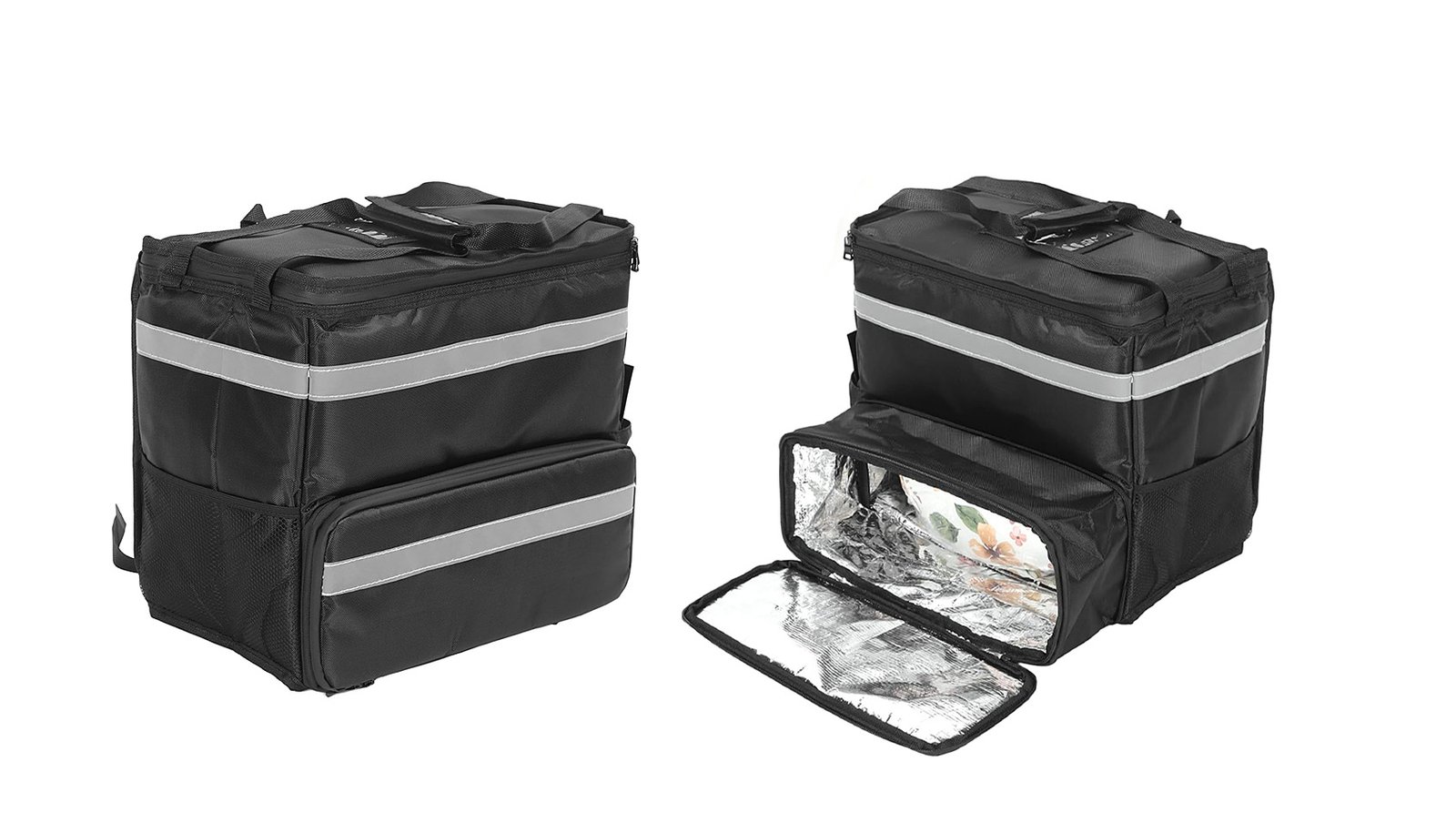
The material is the most critical part of a delivery bag. I have worked in the bag industry for 15 years. I see many factories use cheap 420D or 600D polyester to lower costs. These fabrics look okay when they are new. But after two weeks of use, they crack and tear. For professional use, you need 1680D Oxford cloth1 or 500D PVC tarpaulin4. These materials are heavy and strong. They do not rip when a driver drags the bag on the ground. They are also waterproof. This protects the food when it rains.
The inside material matters just as much. You should look for three layers. The outer layer is the shell. The middle layer is the insulation. The inner layer is the lining. For the middle layer, EPE foam is the standard. But the density changes everything. Low-density foam is soft and does not hold heat well. High-density insulation cotton or foam stays firm and traps heat better. For the lining, aluminum foil is good because it reflects heat. It is also easy to wipe clean if soup spills.
Here is a simple comparison of materials I recommend:
| Layer | Good Material | Bad Material | Why it matters |
|---|---|---|---|
| Outer | 1680D Oxford / 500D PVC | 420D / 600D Polyester | Durability and Water Resistance |
| Middle | High-Density EPE Foam | Low-Density Sponge | Heat Retention and Structure |
| Inner | Food Grade Aluminum Foil5 | Thin Plastic Sheet | Hygiene and Heat Reflection |
When you buy from China, ask the supplier for material swatches6 first. Feel the thickness. If it feels like paper, do not buy it.
How Long Do Insulated Delivery Bags Keep Food Hot?
Customers hate cold pizza and lukewarm soup more than anything. If your bags lose heat, you lose repeat business immediately.
High-quality insulated delivery bags should keep food hot for at least 45 to 60 minutes. The temperature drop should be less than 10°C per hour7 if the bag uses high-density foam insulation and has a proper velcro or zipper seal.
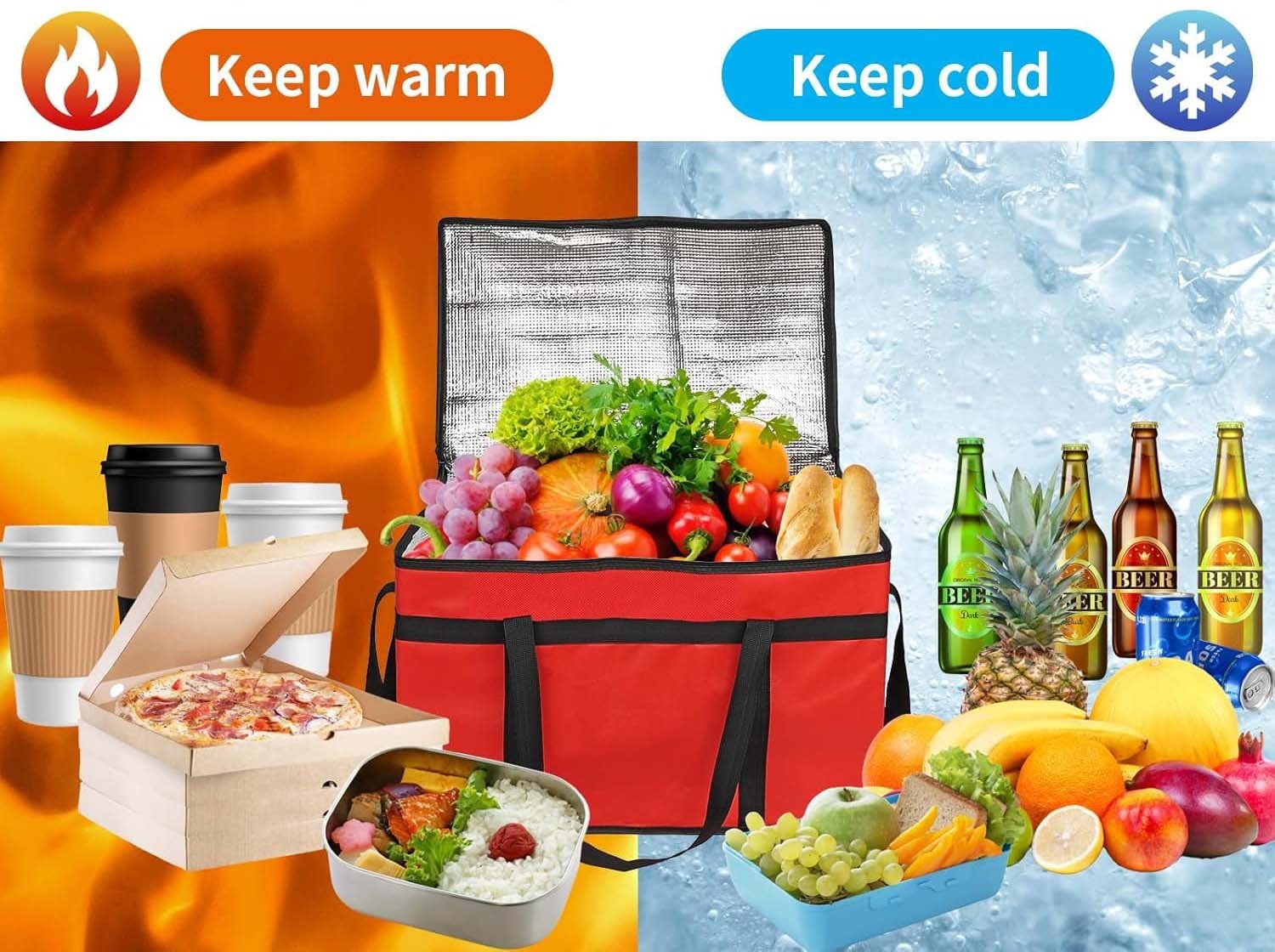
Time is the enemy of food delivery. I often tell my clients that a bag is a tool to buy time. A standard trip takes 20 to 30 minutes. But sometimes drivers have multiple stops. So the bag must work for at least one hour. The insulation thickness decides the performance. I recommend at least 8mm to 10mm of foam thickness8. Some cheap bags only use 3mm foam. That is not enough for winter in Canada or Northern Europe.
The closing mechanism is also key. Heat rises. If the top flap does not seal tight, heat escapes. Velcro is fast for drivers to open. But zippers seal better. A combination of a zipper and a flap9 is usually best. The volume of the bag also affects heat. If you put a small burger in a giant bag, it gets cold fast. There is too much empty air. The air cools the food. This is why I suggest using dividers. Dividers create smaller compartments inside the bag. This keeps the hot food isolated. It also separates cold drinks from hot food.
We test our bags at Coraggio. We put hot water bottles inside and measure the temp every 10 minutes. A good bag keeps the heat curve flat for a long time. If you source bags, ask the factory for their test data. Do not just trust the photo. Ask them how many degrees are lost in 30 minutes. This is a technical question that shows you know your business.
What Size Insulated Delivery Bag Do Restaurants Need?
Buying the wrong size leads to spilled drinks and crushed food. Your drivers need bags that fit specific orders perfectly without wasted space.
Restaurants need sizes based on their menu items, such as 16-inch bags for pizza or tall bags for stacked containers. A standard versatile size is often 40x40x40cm, but customizing dimensions to fit your specific take-out boxes prevents shifting and spills.
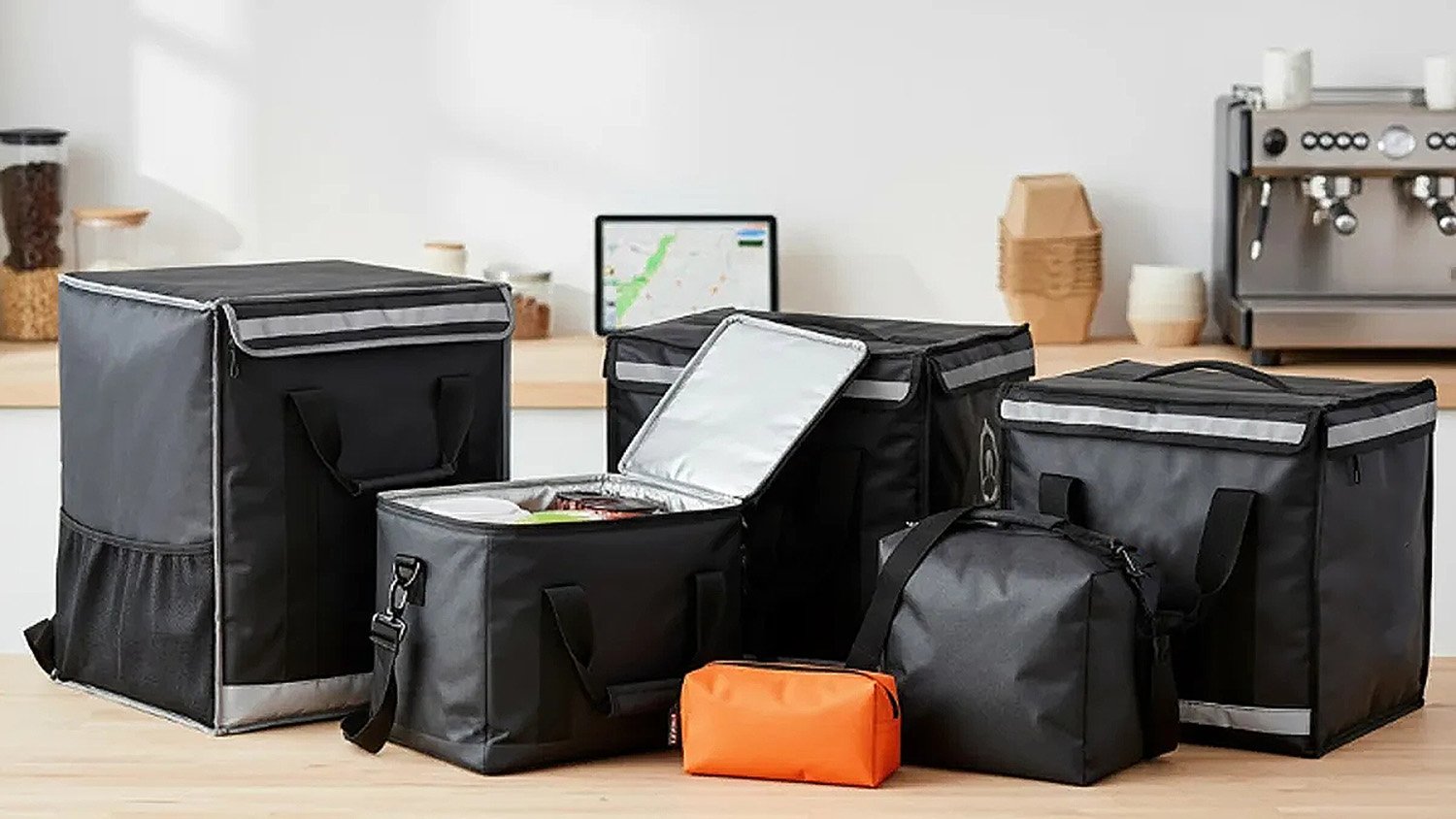
Size is not just about big or small. It is about fit. I have seen pizza places buy square bags that are too narrow. The drivers have to tilt the pizza box to get it in. The cheese slides off. The customer gets a mess. This is a disaster for the restaurant. You must measure the food packaging first.
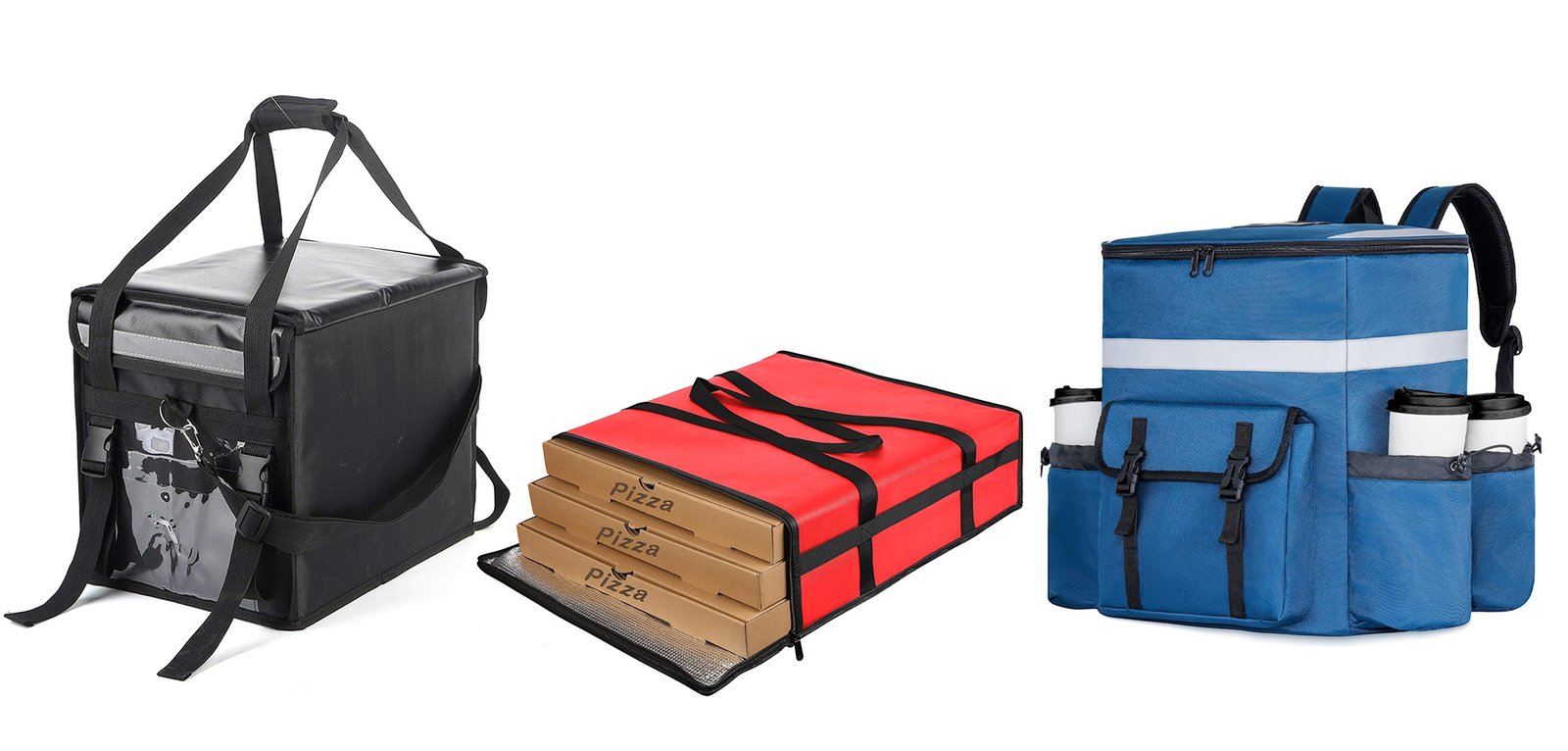
For pizza, the standard box is 14 to 18 inches. So the bag must be at least 19 inches wide. For Asian food or Indian food, containers are usually stacked. You need a bag that opens from the top (top-loading). This makes it easy to drop stacks of boxes in. For catering, the bags need to be very large. They might need to hold full-size steam table pans (Gastronorm pans)10.
Here is a breakdown of common sizes I produce:
| Delivery Type | Common Dimensions | Key Feature |
|---|---|---|
| Pizza Delivery | 18" x 18" x 5" | Wide and flat, front opening |
| UberEats / General | 40cm x 40cm x 40cm11 | Cube shape, backpack straps |
| Catering / Large Orders | 60cm x 40cm x 40cm | Extra large, side handles |
| Beverage / Coffee | Custom with cup holder | Tall, rigid structure |
The "Cube" shape is very popular now. It is versatile. It fits on the back of a scooter or bike. It can hold pizza and boxes. But be careful with weight. If a bag is too big, a driver might overfill it. It becomes too heavy to carry safely. At Coraggio, we help clients calculate the volume. We ensure the bag fits the local transport method. In Vietnam, motorbikes are common. In Canada, cars are common. The bag size must match the vehicle.
Are OEM Insulated Delivery Bags Better for Food Delivery Businesses?
Generic bags from online marketplaces often lack quality control and branding. You cannot build a strong company identity with unbranded, flimsy gear.
Yes, OEM insulated bags are better because they allow you to control quality, materials, and branding. You can reinforce weak points, add your logo, and get a lower unit price for bulk orders compared to buying generic retail bags.
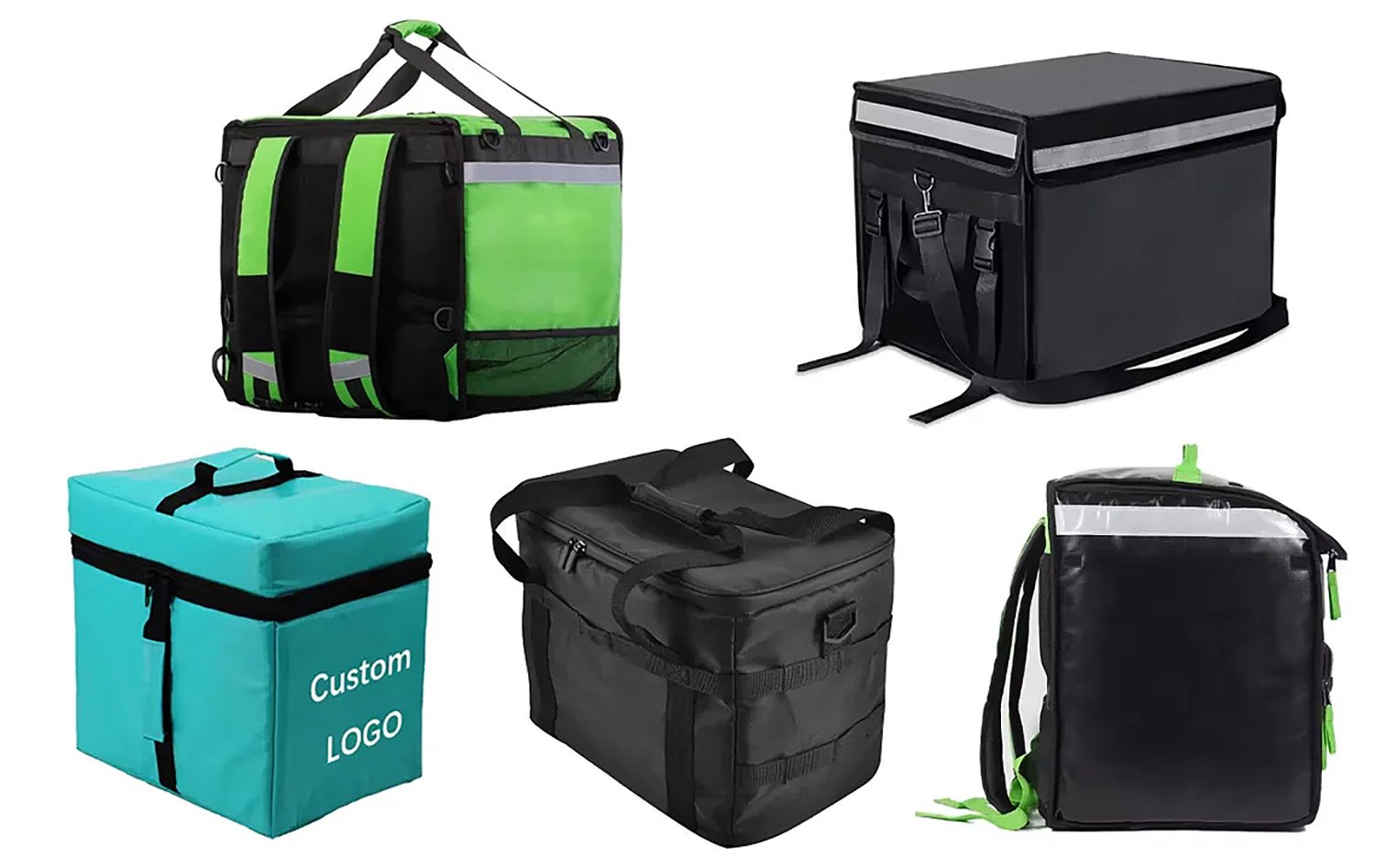
Buying generic bags is easy. But it is not a strategy for growth. When you buy stock bags, you take what you get. You cannot change the foam density. You cannot fix a zipper that breaks often. With OEM (Original Equipment Manufacturer), you are the boss. You tell the factory exactly what you want.
First, think about branding. Your delivery bag is a moving billboard12. It travels through the city all day. People see it. With OEM, you print your logo big and clear. You choose your brand colors. This builds trust. When a customer sees a professional bag, they trust the food is safe.
Second, think about cost. Generic bags have a retail markup. When you buy OEM directly from a factory like ours, you pay the factory price. You cut out the middleman. Yes, there is a Minimum Order Quantity (MOQ)13. But for a serious distributor or large chain, 500 or 1000 bags is normal. The unit price drops significantly.
Third, think about consistency. If you buy from a random seller online, the quality changes. One batch is good, the next is bad. With an experienced OEM factory, we follow a strict spec sheet. We check the quality before shipping. We ensure every bag is the same. This reduces your risk. You do not want to handle returns and complaints. You want a product that works. I help my clients design bags that solve their specific problems. Maybe they need an extra pocket for a card reader. Maybe they need a specific buckle. OEM makes this possible.
What Features Should Buyers Look for in Insulated Delivery Bags?
Bags often break at the handles or zippers first. Ignoring small hardware details causes frequent replacements and higher long-term operational costs.
Buyers should look for reinforced stitching at stress points, heavy-duty #10 zippers14, and hard plastic bottom boards15. Reflective strips for driver safety and clear windows for order tickets are also essential features for professional delivery operations.
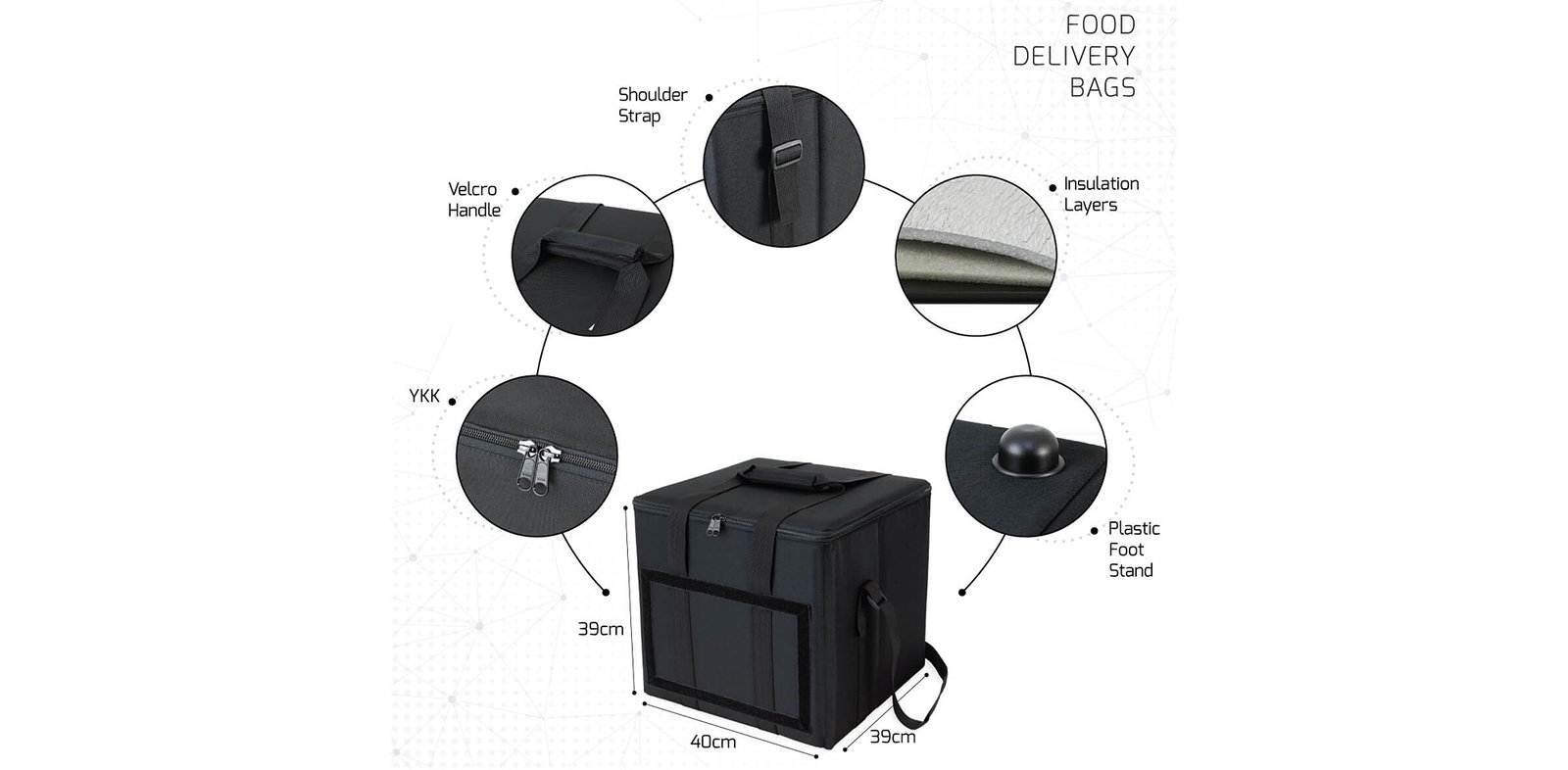
The difference between a good bag and a bad bag is in the details. I always check the stitching first. Look at the point where the handle meets the bag. This is the stress point. It carries all the weight. It needs "Bartack" stitching or "Cross" stitching. This is a zig-zag stitch that is very strong. If it is just a single straight line, it will rip.
Next, check the zipper. The zipper is the most used part. Drivers open and close it 50 times a day. I recommend #10 size zippers. They have large teeth. They do not get stuck easily. Small, hidden zippers look nice but they are weak. Double zippers are also good. They allow the driver to lock the bag if needed.
The bottom of the bag is also important. The bag sits on the ground, on asphalt, on wet floors. It needs feet or a rubber pad. Inside, it needs a hard plastic board. This keeps the bag flat. If the bottom sags, the food tips over. Soup spills. Customers get angry.
Safety features are also a must. Delivery often happens at night. Reflective strips on the outside save lives. They make the driver visible to cars. Finally, think about usability. A clear PVC window16 on the top or side is very helpful. The driver can put the receipt or order ticket there. They do not have to open the bag to check the address. This keeps the heat inside.
Here is a checklist for your inspection:
- Stitching: Is it reinforced at handles?
- Zipper: Is it #10 size and smooth?
- Bottom: Is there a hard board?
- Feet: Are there rubber feet on the bottom?
- Safety: Are there reflective strips?
- Window: Is there a pocket for the bill?
If a bag has all these features, it is a professional tool. It shows you care about quality.
Conclusion
To choose the best insulated delivery bags, focus on 1680D material, high-density foam, and reinforced structures. Partnering with an OEM factory ensures you get durable, branded gear that protects food quality and saves money long-term.
Learn how 1680D Oxford cloth resists tearing, rain, and daily abuse so your bags last longer and protect every order you deliver. ↩
See why thicker foil is crucial for hygiene and heat reflection, and how it helps keep messy spills easy to clean between deliveries. ↩
Understand how foam density affects heat retention and structure so you avoid bags that go flat, leak heat, and waste your investment. ↩
Compare 500D PVC tarpaulin with fabrics used in pro-grade bags to choose the right outer shell for heavy-duty operations. ↩
Confirm what makes foil “food grade” and how it impacts safety, cleanliness, and compliance for your restaurant brand. ↩
Learn a simple hands-on checklist to judge fabric quality before committing to bulk orders that might fail in weeks. ↩
Benchmark your current bags against industry standards so you can tell if they’re costing you repeat business. ↩
See lab and field data on insulation thickness so you don’t get tricked by bags using thin, ineffective foam. ↩
Discover closing systems that balance speed and heat retention, reducing complaints about cold food at the door. ↩
Identify catering-grade bags sized for GN pans so large orders arrive intact and at safe serving temperatures. ↩
Check if this popular “cube” format fits your menu, local transport type, and average order volume before you standardize. ↩
See real-world branding examples showing how logo bags generate free city-wide advertising and customer trust. ↩
Plan your budget and storage by knowing realistic MOQs before you start discussions with factories. ↩
Understand zipper sizing and durability so you avoid failures in the part drivers use and stress the most. ↩
See how rigid bases stop sagging, tipping, and soup spills so food arrives looking exactly like it left the kitchen. ↩
Discover how ticket windows cut driver errors, speed up deliveries, and keep heat inside by reducing bag openings. ↩