1. The Three Fabrics at a Glance
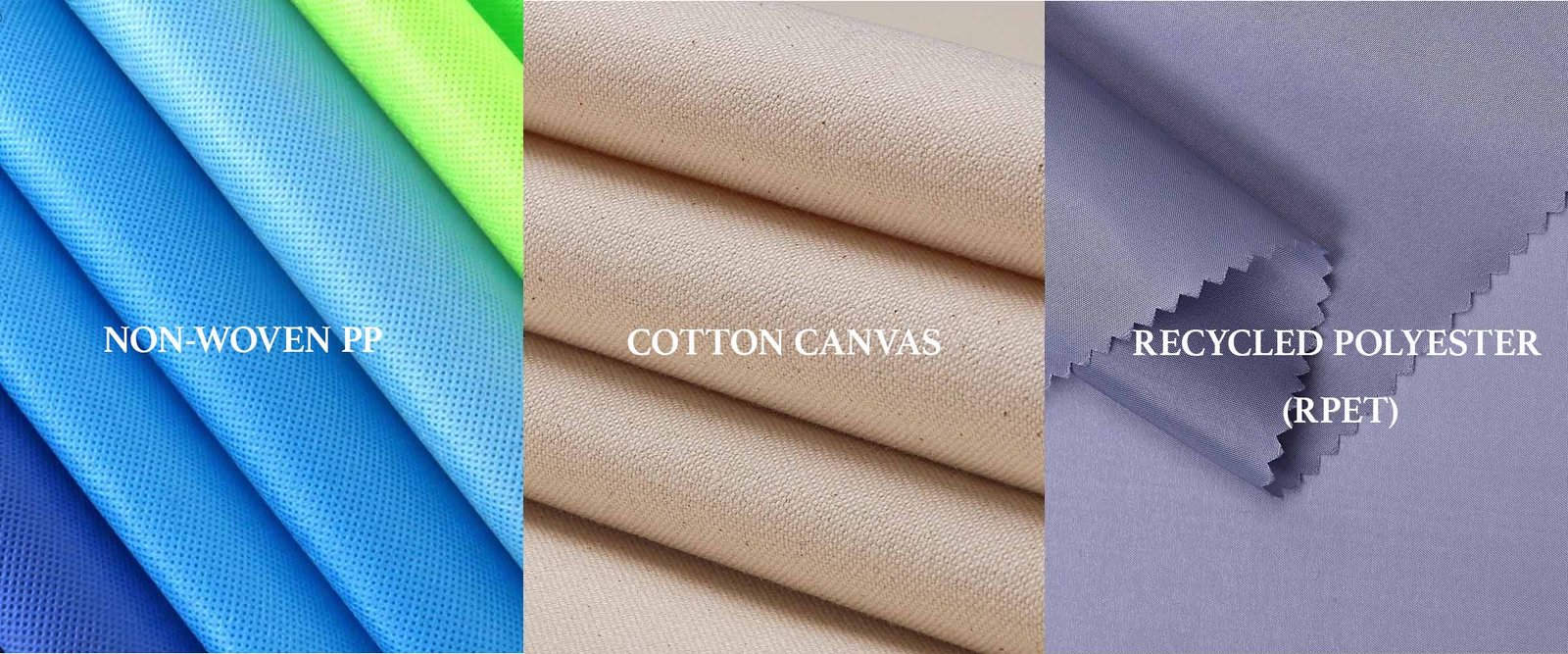
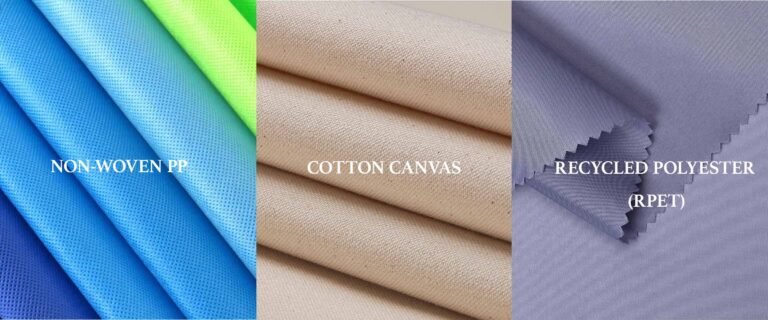
| Non-woven PP | Cotton Canvas | Recycled Polyester (rPET) | |
|---|---|---|---|
| Typical weight | 80–120 GSM | 8–14 oz canvas (approx. 270–475 GSM) | 600D / 900D oxford |
| Feel & look | Light, slightly papery | Soft, natural, premium | Crisp, technical, structured |
| Durability | Low–medium | High | High |
| Water resistance | Low | Low | High (PU-coated options) |
| Best printing methods | Screen, flexo | Screen, embroidery | Sublimation, heat transfer, embroidery |
| Eco profile | PP is a plastic; recyclable but rarely re-reused | Natural, biodegradable, but water-intensive to grow | Made from recycled bottles; GRS-certifiable |
| Typical unit cost (approx.) | $0.15–$0.40 | $0.60–$1.50 | $0.50–$1.20 |
| Best for | Trade shows, mass giveaways | Retail bags, corporate gifts | Fashion totes, backpacks, premium promos |
Costs are typical ranges for mid-volume orders; the final price varies with size, printing, quantity, and market conditions.
2. Non-Woven Polypropylene (PP) Bags — The Volume Option
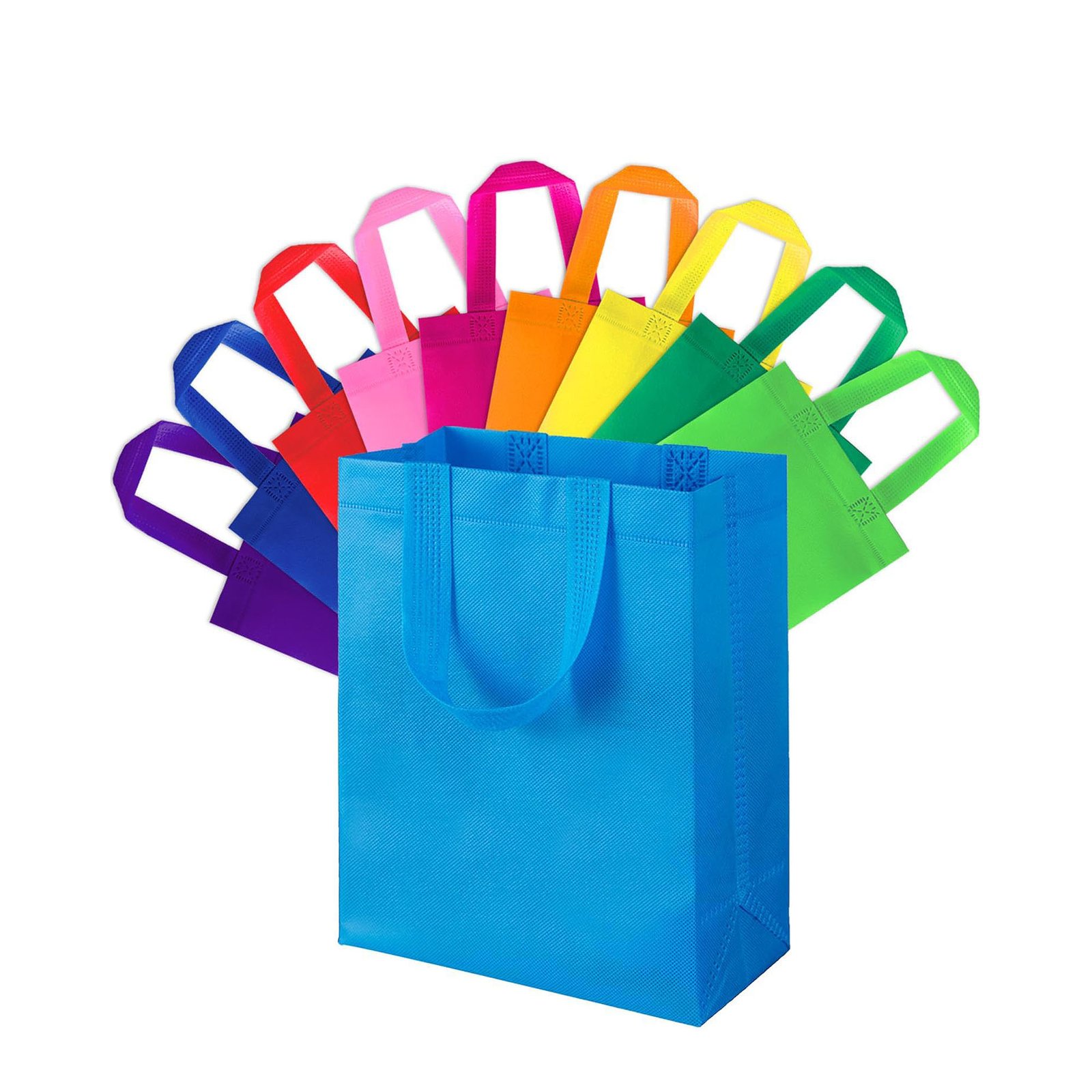
Non-woven PP bags are made from spun-bonded polypropylene fibers. They are the most common promotional bag in the world, and for good reason: they are cheap, lightweight, and fast to produce.
Strengths
- Lowest cost — ideal for events where you need thousands of bags on a tight budget.
- Lightweight — saves on freight, especially for large quantities.
- Large print area — easy to cover the bag with bold, colorful graphics.
- Water-resistant — a light rain shower won’t soak the contents.
Weaknesses
- Lower durability — the fabric can tear under heavy loads; it is not a bag most people will use for years.
- Perceived as low-value — for premium brands, a non-woven bag can cheapen the impression.
- Limited decoration — embroidery and high-end finishes don’t work well on non-woven fabric.
- Plastic-based — although recyclable, it is still a petroleum-derived plastic.
Common weights: 80 GSM (light giveaway), 100 GSM (standard), 120–140 GSM (stronger, more reusable).
Typical uses: trade show totes, conference giveaways, supermarket and pharmacy bags, event swag.
Printing: screen printing and flexo printing are standard; heat transfer works too.
3. Cotton Canvas Bags — The Classic Premium Choice
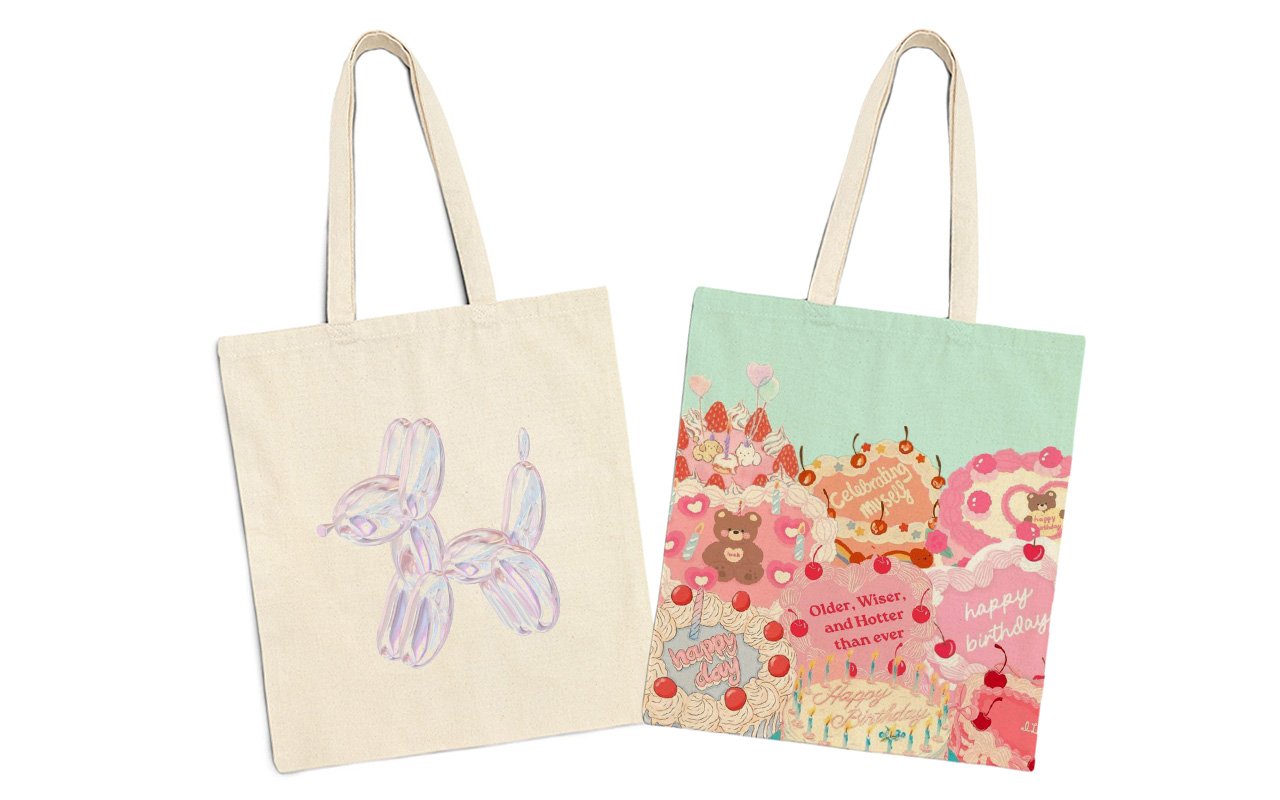
Cotton canvas is the bag fabric most consumers recognize and trust. It feels natural, ages well, and carries a brand message that says “quality.” Canvas is measured in ounces per square yard — the higher the number, the heavier and sturdier the fabric.
Strengths
- Premium feel — the go-to fabric for retail brands and corporate gifts.
- Strong and long-lasting — a 10 oz or 12 oz canvas bag survives years of daily use, which also makes it more eco-friendly in practice.
- Excellent print surface — holds screen printing, embroidery, and heat transfer with crisp detail.
- Natural and biodegradable — cotton decomposes naturally (finishes and dyes affect this, so choose water-based inks and natural dyes for the strongest claim).
Weaknesses
- Higher cost — cotton is typically more expensive than non-woven per unit.
- Heavier — higher freight cost, especially at scale.
- Shrinkage and color variation — requires pre-shrunk fabric and careful dye-lot control; natural fibers vary slightly between batches.
- Not water-resistant — contents can get wet in heavy rain.
Common weights: 8 oz (approx. 270 GSM, light retail), 10 oz (approx. 340 GSM, everyday standard), 12 oz (approx. 405 GSM, heavy-duty), 14 oz and up (very heavy).
Typical uses: retail shopping bags, grocery totes, corporate gift bags, fashion and lifestyle brands.
Printing: screen printing, embroidery, and heat transfer all work beautifully. Note that sublimation only works on fabrics with high polyester content, so it is not suitable for pure cotton.
4. Recycled Polyester (rPET) Bags — The Sustainable Workhorse
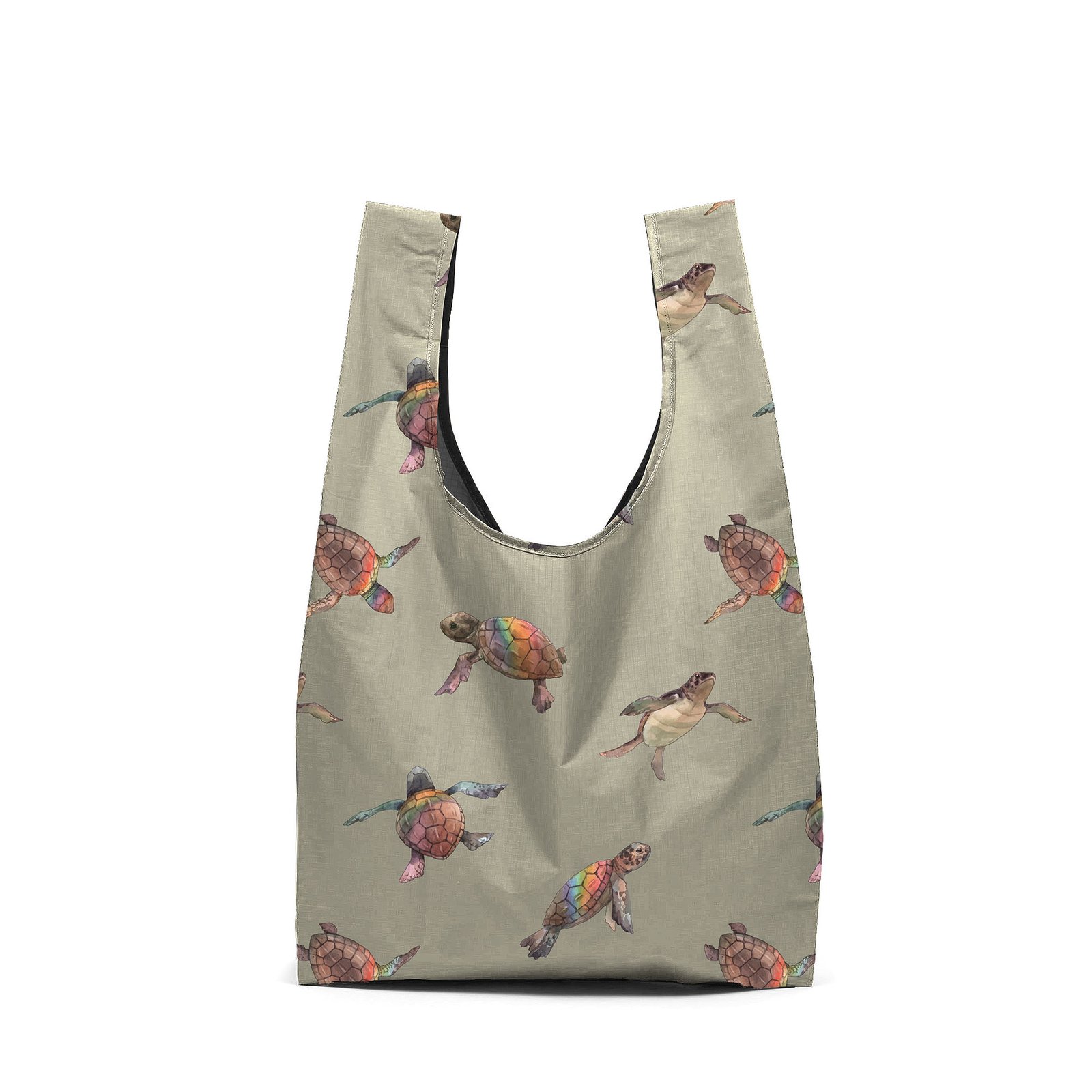
Recycled polyester bags are made from PET — typically recovered plastic bottles — spun into yarn and woven into fabric, most commonly 600D or 900D oxford. The result is a tough, structured bag with a modern technical look and one of the strongest sustainability stories in the industry.
Strengths
- High durability — 600D/900D fabric handles heavy daily use without tearing.
- Water-resistant — many options include a PU or PVC coating for extra protection.
- Strong eco narrative — each bag can be made from several recycled bottles; GRS (Global Recycled Standard) certification makes the claim verifiable.
- Crisp colors and finishes — sublimation printing produces vivid, fade-resistant graphics, and embroidery adds a premium touch.
Weaknesses
- Still a plastic — rPET is not biodegradable; buyers should understand the difference between recycled and compostable.
- Higher cost than non-woven — generally comparable to or slightly above cotton.
- Printing constraints — pure sublimation needs light-colored fabric; dark bags need heat transfer or screen options.
Common weights: 600D (everyday tote, backpacks), 900D (heavy-duty, travel and work bags).
Typical uses: fashion totes, laptop and backpack lines, premium corporate gifts, retail branding that wants an eco story with a technical look.
Printing: sublimation, heat transfer, screen printing, and embroidery are all viable.
5. How to Choose: A Decision Guide
By use case:
- Mass giveaways (thousands of units, tight budget) → non-woven PP, 100 GSM.
- Retail shopping bags or grocery totes → cotton canvas 8–10 oz, or 600D rPET if you want water resistance.
- Corporate gifts and premium branding → cotton canvas 10–12 oz, or 900D rPET with embroidery.
- Backpacks, cooler bags, and outdoor use → 600D/900D rPET with coating.
- Eco-first brand campaigns → rPET with GRS certification, or organic cotton with GOTS certification.
GSM cheat sheet:
- 80–100 GSM non-woven → light, disposable-feel giveaways.
- 120–140 GSM non-woven → stronger, more reusable promotional bags.
- 8–10 oz cotton (~270–340 GSM) → everyday retail and shopping bags.
- 12 oz+ cotton (~405 GSM+) → heavy-duty premium bags.
- 600D / 900D polyester → structured, durable bags of any weight class.
Print compatibility at a glance:
| Printing method | Non-woven PP | Cotton canvas | rPET |
|---|---|---|---|
| Screen printing | ✔ | ✔ | ✔ |
| Heat transfer | ✔ | ✔ | ✔ |
| Embroidery | ✖ (poor) | ✔ | ✔ |
| Sublimation | ✖ | ✖ (pure cotton) | ✔ (light colors) |
6. How Fabric Affects Your Price
Fabric is the single biggest cost driver in a custom bag. Three rules of thumb:
- Higher GSM / heavier fabric = higher price. A 12 oz canvas bag will cost noticeably more than an 8 oz one.
- Natural fibers cost more than synthetic ones. Cotton sits above non-woven PP in most markets; organic cotton sits higher still.
- Recycled content can carry a small premium — but it also justifies a higher retail price for your customers.
Beyond the fabric itself, your unit price is driven by print area, print method, handles, size, and quantity. If you are comparing quotes from different suppliers, always compare the same fabric weight and print specification — otherwise you are comparing apples to oranges.
7. Eco & Compliance Considerations
Developed-market buyers increasingly ask for verified sustainability claims. Keep these points accurate in your own marketing:
- Recycled content — look for GRS, RCS, or OCS certification to back up “made from recycled bottles” claims.
- Organic cotton — GOTS certification covers organic fiber, social criteria, and chemical limits.
- Biodegradable vs compostable — these are different claims with different standards (e.g., ASTM D6400 for compostability). PP and rPET are recyclable, not biodegradable; pure cotton is biodegradable, but coatings and synthetic threads can change that.
- Chemical compliance — for the EU and US markets, check REACH, California Proposition 65, and CPSIA (for products intended for children). A compliant factory will provide test reports on request.
8. Frequently Asked Questions
Q: Which fabric is best for promotional bags?
A: For high-volume giveaways, non-woven PP is the most cost-effective. For campaigns where perceived quality matters, cotton canvas or rPET builds more brand value.
Q: Is cotton more eco-friendly than non-woven?
A: It depends on how you measure it. Cotton is natural and biodegradable, but growing it is water-intensive. PP is a plastic, though it is recyclable. The most important factor is reuse: a bag used 100 times is greener than ten single-use bags, whichever fabric it is made from.
Q: What GSM should I choose?
A: Match the weight to the use: 80–100 GSM non-woven for light giveaways, 120–140 GSM for stronger promos, 8–10 oz cotton for retail, 12 oz+ for heavy-duty, and 600D/900D rPET for structured daily-use bags.
Q: Can I print my logo on all three fabrics?
A: Yes. Screen printing and heat transfer work on all three; embroidery works on cotton and rPET; sublimation works on polyester-rich fabrics (rPET), not on pure cotton.
Q: Do you provide eco certifications?
A: Yes — GRS for recycled polyester, GOTS for organic cotton, and REACH / Prop 65 test reports are available on request, along with BSCI and ISO factory audits.
9. Next Steps
Choosing the right fabric is the first decision in a successful custom bag project. Send us your design, target quantity, and budget, and we will recommend the best fabric, weight, and printing method — with samples before you commit to mass production.
Request a free quote or fabric swatch kit: contact our team with your product idea, and we will reply within one business day.