You order 50,000 drawstring bags for a client. The shipment arrives, but the bags are too tight for the intended shoe box. You now face a huge loss and an angry customer because of a simple size error.
To avoid sizing disasters, you must look beyond simple width and height measurements. You need to understand how material thickness1, bottom gusset%%%FOOTNOTE_REF2%%%ts](https://www.ekapackaging.com/blogs/news/a-comprehensive-guide-about-gusset-bag?srsltid=AfmBOoorZ4p2uwgSIJYQ7l1MvEzKVoxOpvmncFy4gXN10nKpRowFIRE)3, and seam allowances4 reduce the actual usable space inside the bag. A standard 14x18 inch bag5 is the safest starting point for general use, but custom projects require specific calculations based on the item you want to pack.
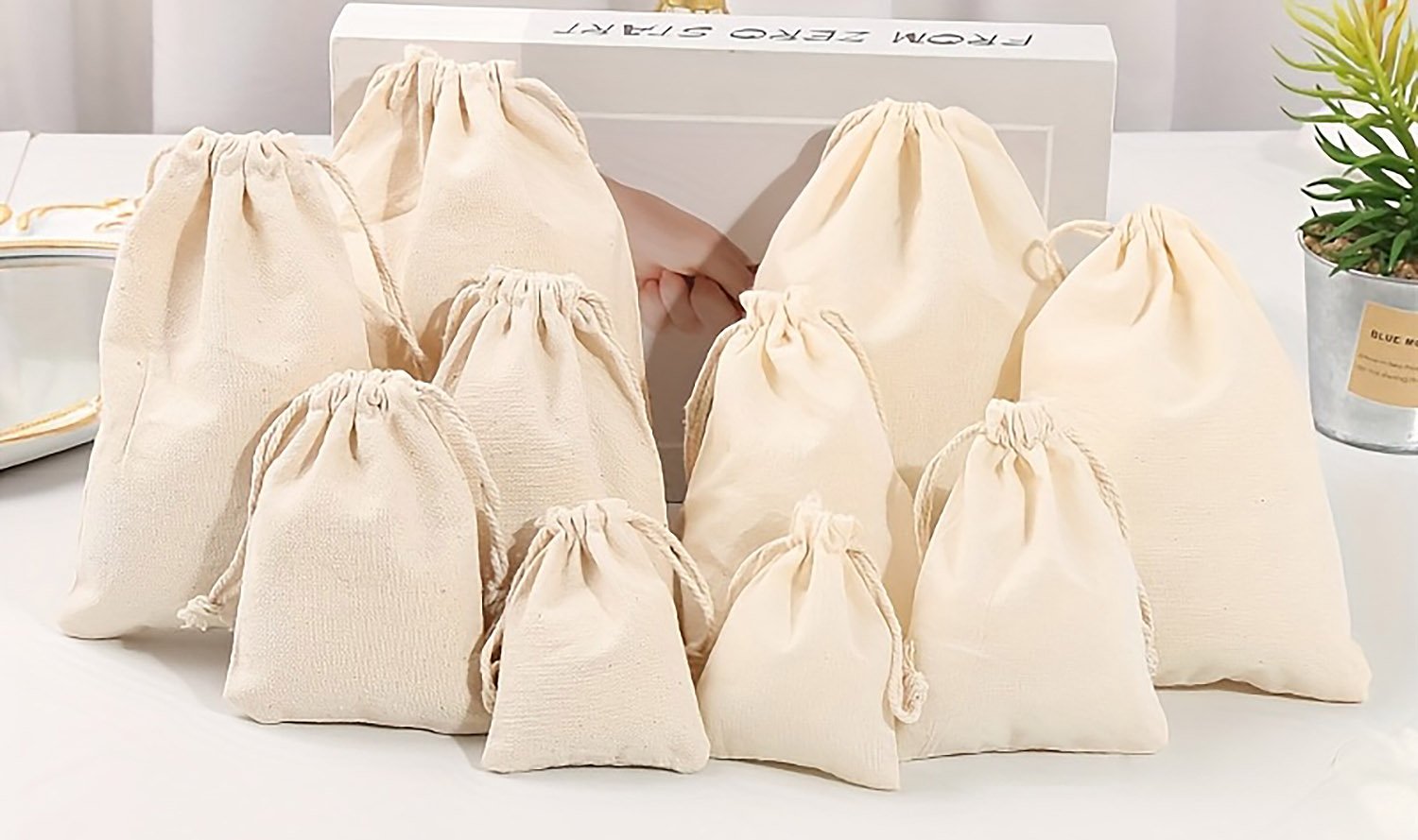
Choosing the right size is not just about numbers on a page. It is about understanding the final product in the hands of the user.
What Are the Standard Drawstring Bag Sizes for Bulk Orders?
You see dozens of size options on a price list and feel overwhelmed. If you pick a size that is non-standard, your costs go up and production takes longer.
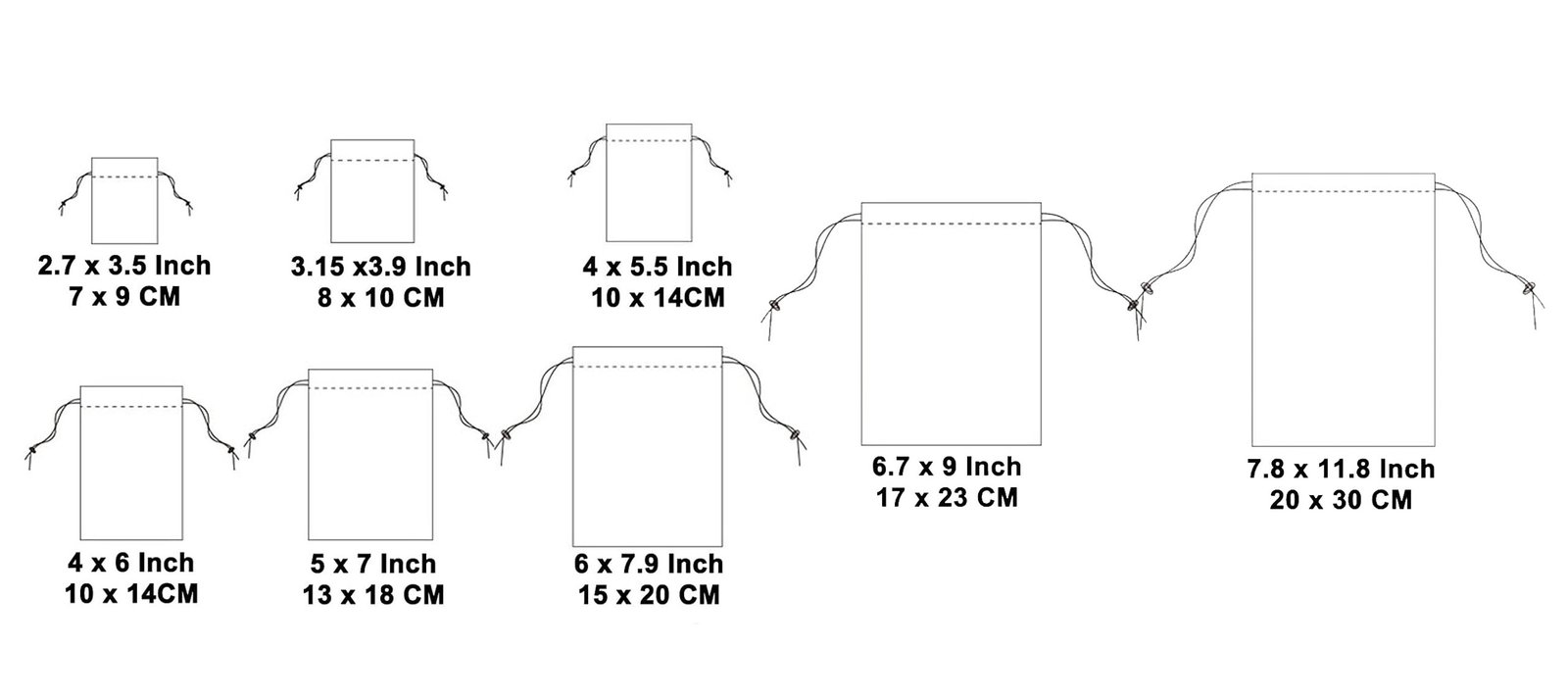
Standard drawstring bag sizes generally fall into three categories: Small (5x7 inches) for jewelry or small gifts, Medium (14x18 inches) for gym kits or shoes, and Large (17x20 inches) for laundry or heavy equipment. Sticking to these industry standards helps you keep material waste low and prices competitive.
In my 15 years running a factory in China, I see many buyers get confused by "standard" sizes. "Standard" can mean different things in different countries. However, in the manufacturing world, we try to cut fabric to minimize waste. This creates the most common sizes you will see in the market.
Here is a breakdown of the most common sizes we produce at Coraggio:
| Size Category | Inches (Approx) | Centimeters (Approx) | Common Use |
|---|---|---|---|
| Mini / Small | 4" x 6" to 8" x 10" | 10x15cm to 20x25cm | Jewelry, electronics accessories, soap |
| Standard / Medium | 13" x 16" to 14" x 18" | 34x40cm to 35x45cm | Gym clothes, shoes, promotional kits |
| Large / Oversize | 17" x 20" to 20" x 24" | 43x50cm to 50x60cm | Laundry bags, winter coats, equipment |
You must remember that these are "flat" measurements. This means we measure the bag when it is lying flat on the table. When you put things inside, the bag bulges out. This pulls the sides in. So, a 14-inch wide bag will not look 14 inches wide when it is full.
Also, factories often have existing cutting molds for these sizes. If you ask for a bag that is 14.5 inches instead of 14 inches, we have to cut it differently. This might increase fabric waste. That waste cost goes to you. If you are flexible, always ask your supplier: "What size creates the least waste6?" This is a simple trick to lower your unit price without lowering quality.
How Do You Choose Drawstring Bag Dimensions by Use Case (Gym, Promo, Retail)?
You buy a bag that looks good on paper, but it fails in the real world. A gym bag that cannot fit sneakers and a towel is useless to the end customer.
You must match the bag dimensions to the specific scenario where the customer will use it. For gym use, you need at least 14x18 inches to fit shoes and clothes; for retail packaging, the bag only needs to be 1 inch larger than the product box on all sides.
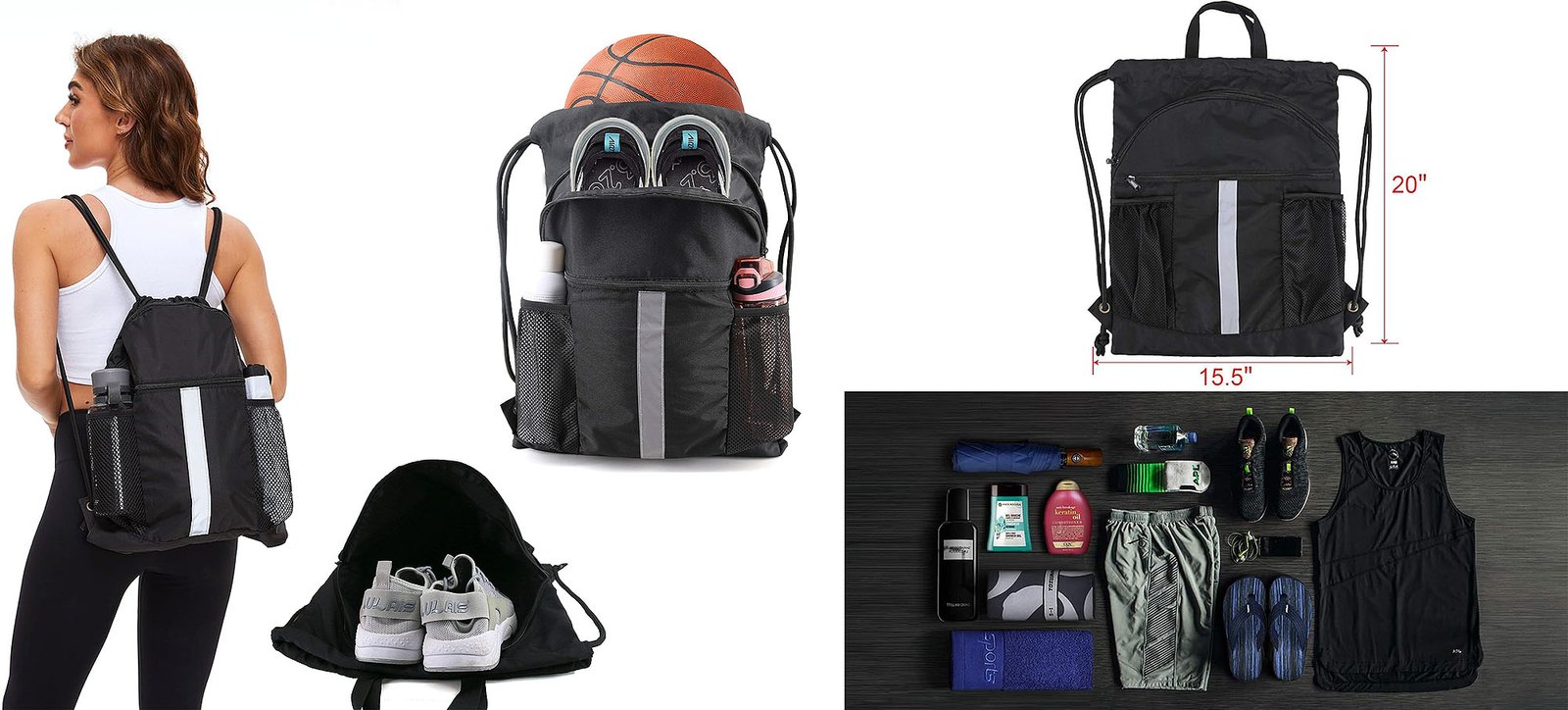
I always tell my clients to think backward from the end user. Do not start with the bag; start with the activity. I have seen buyers order small bags for a marathon event. They wanted to save money. But the runners could not fit their water bottles and finishers' t-shirts inside. The bags were thrown away immediately. That is a waste of marketing budget.
Here is how I break down the dimensions based on typical use cases:
1. The Gym or Sports Event For this, the bag is a backpack. It needs to sit on the user's back comfortably. If the bag is too short, it sits too high on the back. If it is too narrow, it looks funny. The sweet spot is 14x18 inches (35x45cm). This fits a pair of adult sneakers, a light towel, and a water bottle. If you are targeting a male audience with larger shoe sizes, I recommend going up to 15x19 inches.
2. Promotional Trade Shows7 Here, the bag is a container for other swag. You need to know what else is going in there. Is it just a flyer and a pen? A 10x12 inch bag is fine. But if attendees are collecting catalogs and big boxes from other booths, they will use the biggest bag they can find. If you give them a large 17x20 inch bag, they will put everyone else's small bags inside yours. Your logo becomes the walking billboard.
3. Retail Product Packaging8 This is where precision matters. If you are selling a luxury handbag and want a dust bag, or selling a pair of shoes in a box, the fit must be tight but not impossible. You should measure your product's Length, Width, and Height. Add them up. The bag needs to be wider than the product width + height. We can customize this exactly. Do not guess on retail packaging. Send the physical product to the factory and let us test the fit.
What Capacity Does Each Drawstring Bag Size Hold (Shoes, Clothing, Kits)?
It is hard to visualize volume when you only have flat measurements. You might guess wrong and end up with a bag that bursts at the seams.
Capacity is determined by the volume of items, not just their flat size. A standard medium bag (14x18) typically holds about 10-12 liters, which is enough for a pair of shoes and a light jacket, while a large bag holds over 20 liters.
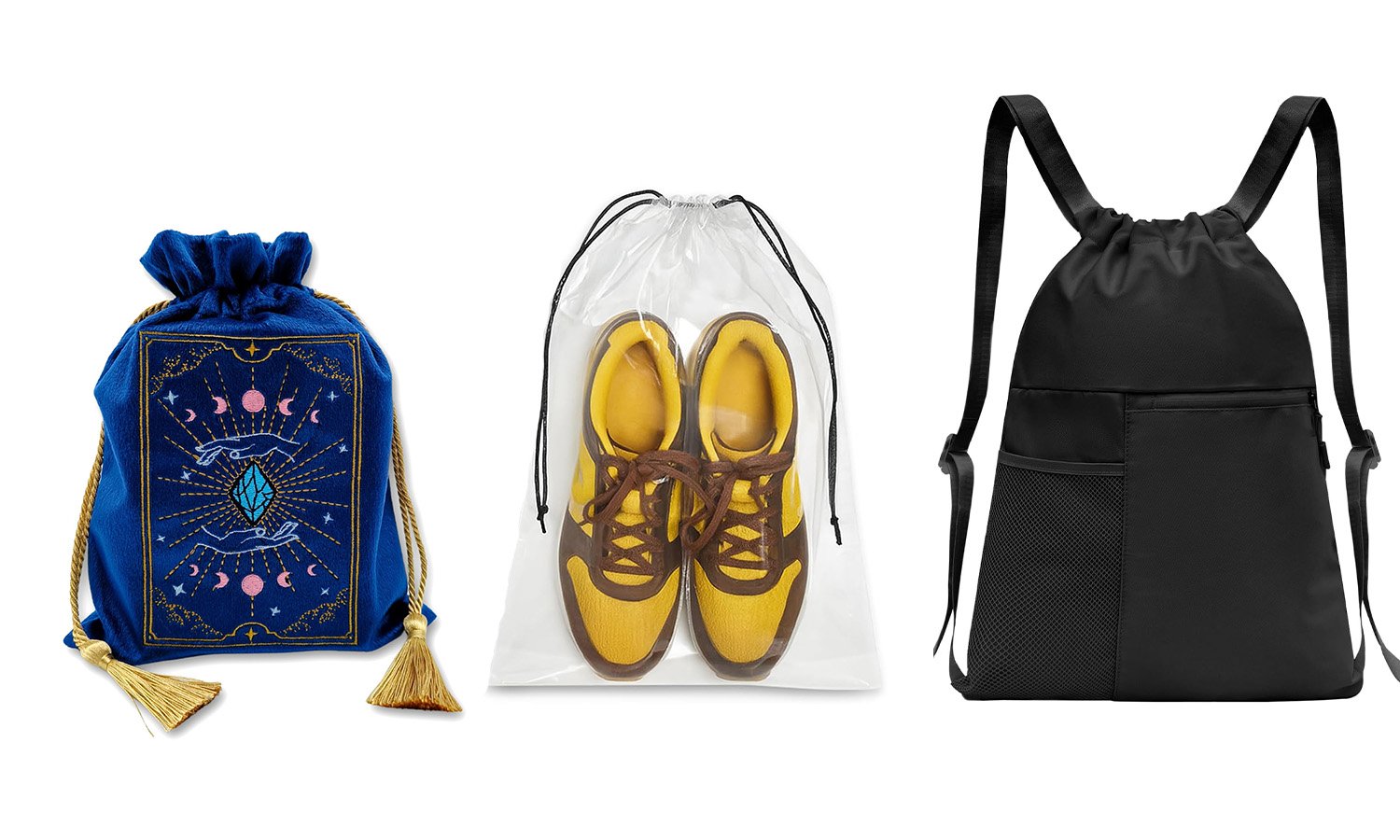
When you talk to your design team or your boss, saying "14 by 18 inches" might not mean much to them. You need to speak in terms of what fits inside. This helps you sell the product internally and ensures you are buying the right tool for the job.
I have broken down the capacity based on common items we pack for our clients:
Small Bags (Approx. 8x10 inches)
- Capacity: 1-2 Liters.
- What fits: A smartphone, a wallet, keys, and a pair of sunglasses.
- Reality Check: You cannot fit a standard water bottle in here comfortably. It will stick out of the top. This is strictly for small accessories.
Medium Bags (Approx. 14x18 inches)
- Capacity: 10-12 Liters.
- What fits: One pair of adult running shoes (up to size 11 US), a rolled-up t-shirt, and a 500ml water bottle. Alternatively, it can hold a basketball, but it will be a very tight fit and the bag will become round.
- Reality Check: This is the universal size. If you are unsure what your customer will carry, buy this size. It is safe.
Large Bags (Approx. 17x20 inches)
- Capacity: 18-25 Liters.
- What fits: A full winter coat, or a full change of gym clothes including shoes, towel, and toiletries. It can also fit a motorcycle helmet, though it depends on the helmet shape.
- Reality Check: These bags can get heavy. If you choose this size, you must upgrade the fabric thickness. A large bag made of thin material will tear because people will stuff it full of heavy things.
Remember, these capacities assume a flat bag. If you add a "bottom gusset2" (a rectangular base), the capacity increases significantly. A gusset allows the bag to stand up and expand. If you need to fit bulky items like shoe boxes, a flat bag is bad. You need a bag with a bottom structure9.
Which Drawstring Bag Size Works Best for Logo Printing and Branding?
You design a beautiful, large logo, but when the bag is closed, the logo gets crunched up. Your branding becomes unreadable and looks cheap.
The printable area is always smaller than the bag's physical size. You must leave at least 2 inches of space from the top for the drawstring bunching and 1 inch from the seams, meaning a 14x18 bag has a safe print zone10 of roughly 10x12 inches.
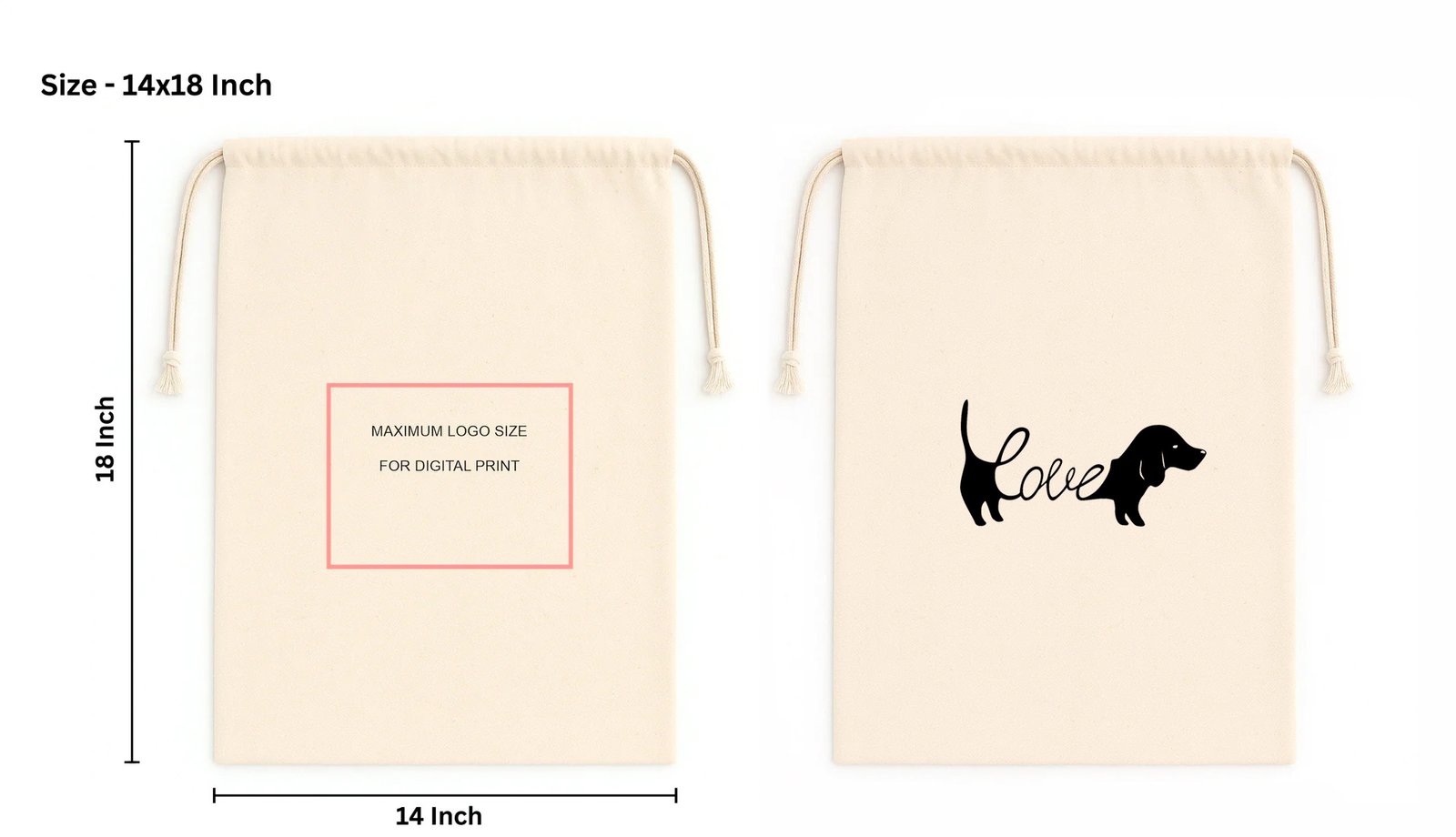
This is a mistake I see on artwork proofs every single week. Designers look at the template on a computer screen. They stretch the logo from edge to edge because it looks "bold." But in production, this is a disaster.
Here is the critical thinking you need for logo sizing:
1. The "Bunching" Effect11 A drawstring bag works by pulling the strings at the top. This gathers the fabric. The top 2 to 3 inches of the bag will wrinkle and fold when closed. If your logo is too high, the top half of your brand name disappears into the folds. You must keep the design lower.
2. The Seam Allowance We sew the bags inside out and then turn them. This takes up space. Also, screen printing frames cannot go right to the edge of the fabric. We need a margin to hold the bag flat during printing.
3. Visual Balance
- Small Bags: Keep logos simple. Small text will blur during printing on textured canvas or polyester.
- Medium/Large Bags: You have more room, but "bigger" is not always better. A logo that fills the whole space can make the bag look like a cheap billboard. A logo with some empty space around it often looks more premium and retail-quality.
4. Printing Methods vs. Size If you have a complex, colorful image (like a photo), we use heat transfer printing. This is a sticker-like layer. If you make this too big on a flexible bag, the print feels stiff. It feels like a plastic shield on your back. For large sizes, screen printing is better because the ink sinks into the fabric and stays soft.
Before you approve a mass order, ask your supplier for a digital mockup that shows the "safe zone." Even better, ask them to print one sample. Put things inside the sample bag and pull the strings. Look at the logo. Is it still readable? If not, shrink the logo or move it down.
What Size Chart Details Should Buyers Confirm Before Production (Tolerance, Gusset, Seam)?
You receive 10,000 bags and they are all 1 inch shorter than you expected. The factory says it is "within tolerance," and you have no legal ground to complain.
You must confirm the "Size Tolerance12" (usually +/- 1cm), the type of gusset (bottom vs. side), and the specific seam construction in your purchase contract. These technical details directly affect the internal volume and the final quality consistency of your order.
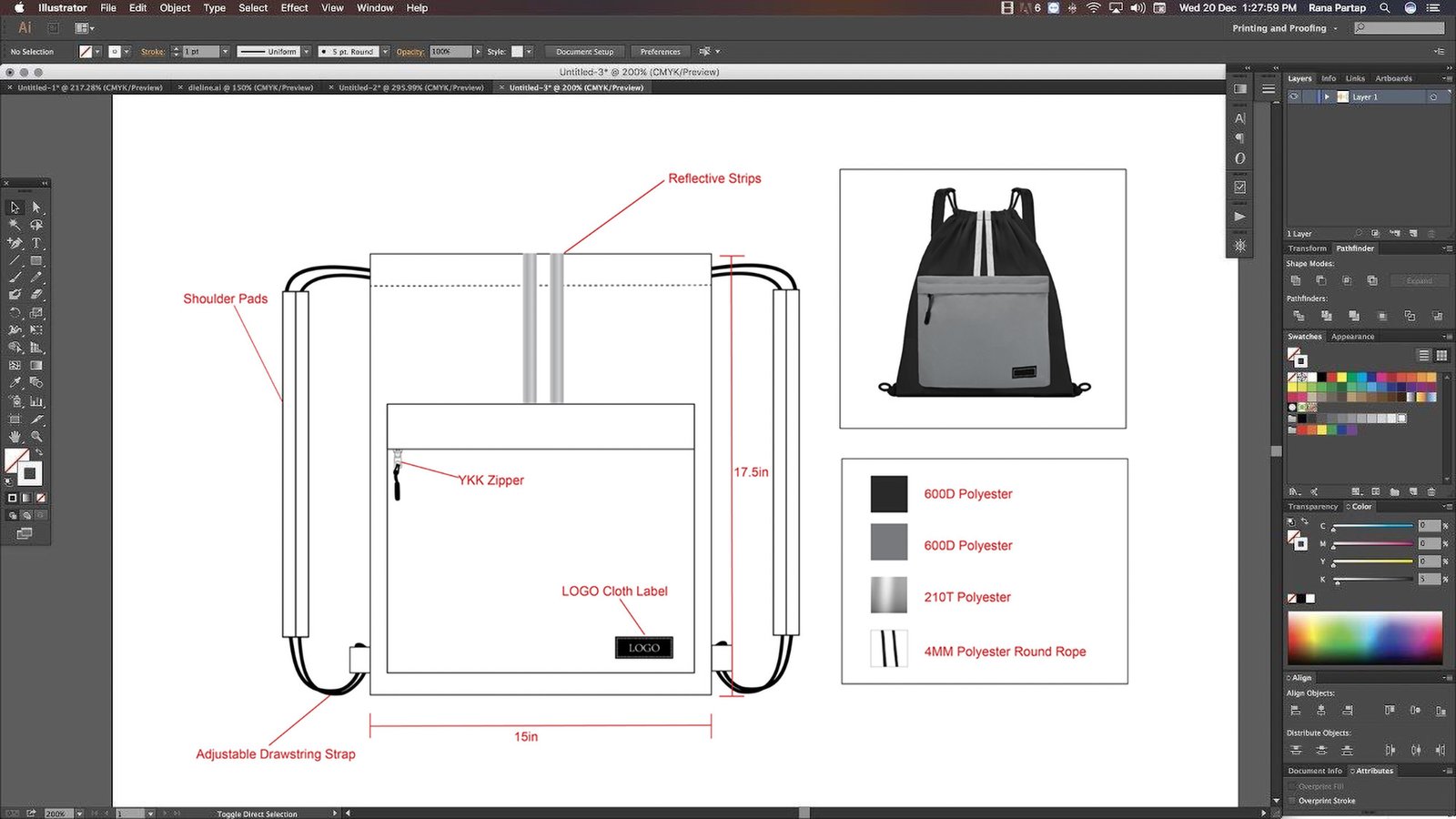
This is the section where you protect your business. In my factory, we have strict quality control, but fabric is a flexible material. It is not like plastic or metal. It stretches and shrinks.
Here are the technical specs you need to discuss with your supplier before you pay the deposit:
1. Size Tolerance12 (The Error Margin) Every textile factory has a tolerance. Usually, it is +/- 1cm to 2cm. If you order a 40cm high bag, receiving a 39cm bag is considered "passable" in the industry unless you specify otherwise. If your product is exactly 39cm long, that bag will not fit. You need to write in the contract: "Target size 40cm, Tolerance +/- 0.5cm." Or, simply order the bag 2cm larger to be safe.
2. Gusset Types13 A "Gusset" is an extra piece of fabric that adds depth.
- No Gusset (Flat): Cheapest. Good for documents or t-shirts.
- Bottom Gusset: The bag has a rectangular floor. It can stand up. This increases volume for shoes or boxes.
- Full Gusset (Side and Bottom): Like a shopping tote. Maximum capacity. Do not assume the factory knows you want a bottom. You must ask for it. It costs more because it uses more fabric and labor.
3. Drawstring Length14 This is often overlooked. If the string is too short, you cannot open the bag wide enough to put things in. If it is too long, it hangs down to the user's knees. A good rule is that the loop length should be equal to the bag height plus 10%.
4. Material Shrinkage15 If you are buying cotton canvas bags, they will shrink after washing. If you are printing a size chart for your customers, you need to warn them, or you need to buy "pre-washed" canvas16 (which is more expensive). Synthetic materials like polyester (Oxford cloth) do not shrink.
5. Hem and Tunnel Size17 The "tunnel" is where the string goes through at the top. If this is too narrow, the string gets stuck. If it is too wide, it wastes vertical space. A standard tunnel is about 2-3cm. Ensure this is accounted for in your total height measurement.
Conclusion
To summarize, picking the right drawstring bag size requires more than just guessing. You must match the dimensions to the specific use case, calculate the real capacity, and account for production tolerances.
Always request a pre-production sample18 to test the actual fit with your products before committing to a bulk order19.
Understanding how fabric thickness reduces usable space helps you order bags that truly fit your products, avoiding costly sizing mistakes. ↩
Knowing when to add a bottom gusset prevents overstuffed, awkward bags and gives bulky products—like boxes or shoes—a better, more stable fit. ↩
Learning how gussets add depth and volume lets you upgrade basic flat bags into higher‑capacity packaging without drastically changing outer dimensions. ↩
Knowing how much space seams consume helps you calculate true inner size, so your items fit comfortably instead of straining or tearing the bag. ↩
Seeing practical capacity examples for 14x18 bags helps you decide if this common “universal” size matches your gym, promo, or retail needs. ↩
Optimizing sizes for low fabric waste often reduces your per-unit cost, letting you keep quality high while staying competitive on price. ↩
Choosing the right trade show bag size makes people carry your bag over others, turning attendees into walking billboards for your brand. ↩
Precise sizing for dust bags or shoe bags avoids returns and protects your brand image by delivering packaging that feels tailored and premium. ↩
Exploring bottom-structured bags shows you how to significantly increase volume and presentation quality for boxy or heavier items. ↩
Understanding safe print areas keeps your logo visible and crisp after the bag is cinched, avoiding distorted or cut-off branding in real use. ↩
Accounting for fabric bunching at the top ensures your logo stays readable when the bag is closed, protecting your design investment. ↩
Clarifying tolerance standards prevents disputes with factories and ensures your product actually fits inside the finished bags you receive. ↩
Comparing gusset options helps you pick the most cost-effective construction that still delivers the right capacity and usability for your project. ↩
Optimizing drawstring length improves user comfort and access, avoiding bags that are hard to open or strings that hang uncomfortably low. ↩
Planning for shrinkage keeps your post-wash bag dimensions within spec, preventing unhappy customers and mismatched product–bag fits. ↩
Learning about pre-washed canvas helps you decide if paying more upfront is worth it to control shrinkage and maintain consistent bag sizing. ↩
Designing the right tunnel width ensures smooth string movement and accurate height, improving both usability and dimensional reliability. ↩
Testing with a pre-production sample lets you verify fit, print, and feel in real life, reducing the risk of expensive mass-production mistakes. ↩
A pre-bulk checklist for size, print, and specs protects your budget and reputation by catching issues before thousands of bags are produced. ↩