Sourcing bulk bags involves tight margins1. If you choose the wrong printing method2, your costs skyrocket, and your profit disappears. You need to stop this bleeding now.
Gravure printing saves more on massive orders (50,000+ units) because high speeds and durability lower the unit cost3 significantly. Flexo printing is cheaper for small to medium runs4 due to lower setup fees. Your choice depends entirely on your total volume and required print quality5.
I have seen many buyers make mistakes here. They look only at the plate cost and forget the unit cost3. Or they want photo quality but choose the wrong machine. I will explain exactly how to choose the right method for your budget.
How Do Flexo and Gravure Printing Differ in Bag Production?
You see technical terms on quotes and get confused. If you do not understand the mechanics, you cannot negotiate the best price for your production run.
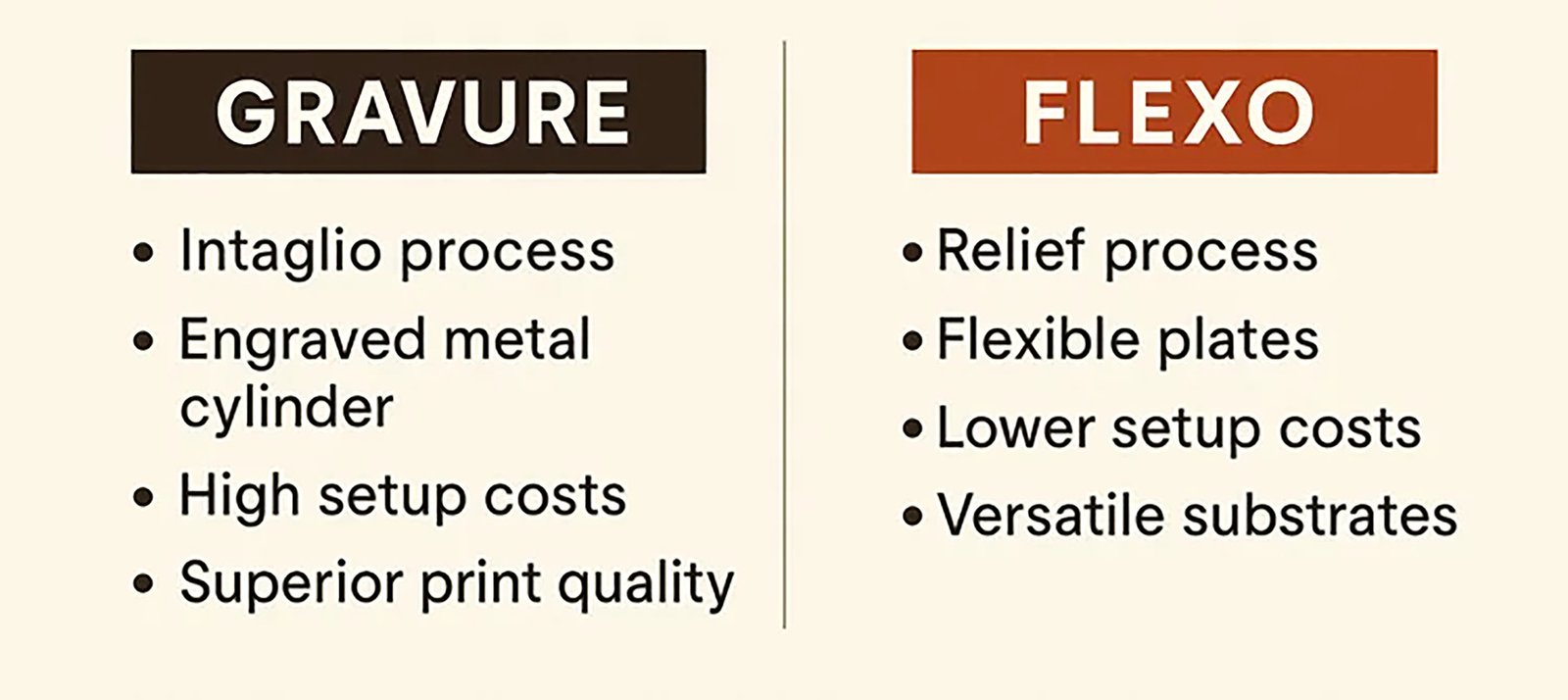
Flexo uses flexible relief plates6 like a rubber stamp to transfer ink. Gravure uses metal cylinders with etched cells7 to hold ink. Flexo is faster to set up, while Gravure offers higher detail and consistency for long-running jobs.
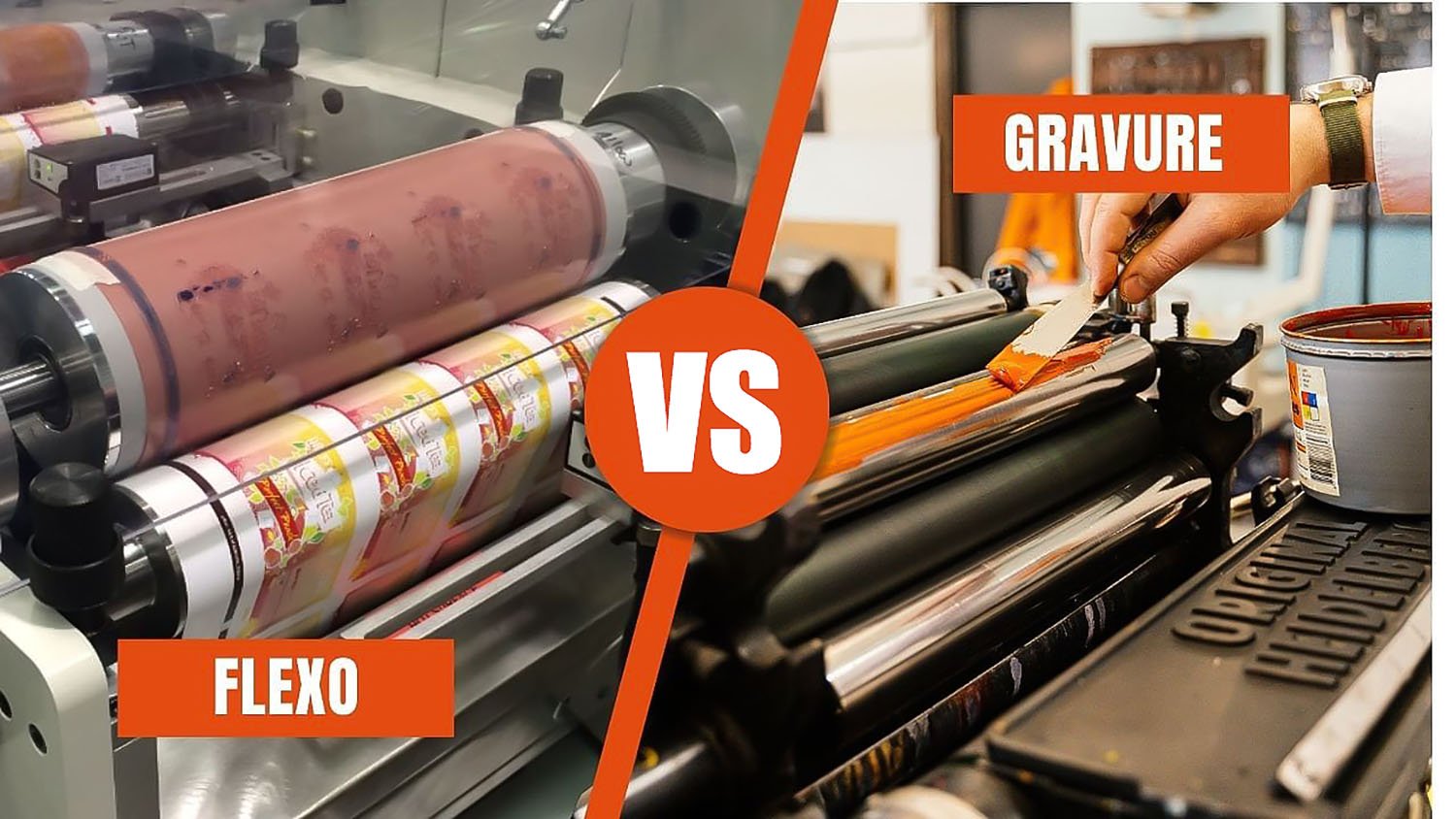
I remember walking through my factory floor last week. On the left, the Flexo machine was running simple logos on non-woven bags. On the right, the Gravure press was printing complex patterns on laminated film. The difference is physical and it impacts your product directly.
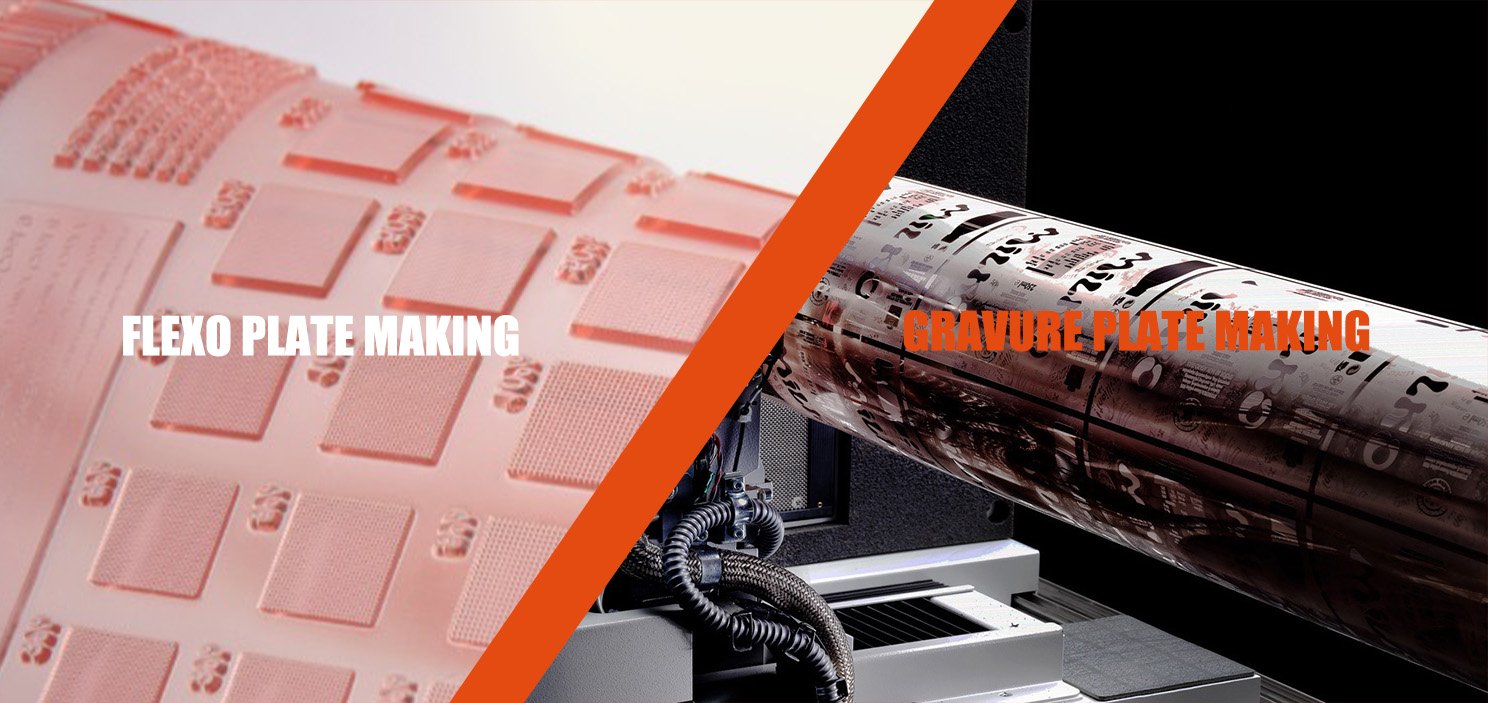
Flexography (Flexo) works with a flexible plate made of polymer. Think of it like a giant rubber stamp. We wrap it around a cylinder. The ink sits on the raised parts of the plate. When it touches the bag material, it transfers the image. This method is forgiving. It works well on rough surfaces like basic non-woven fabrics or corrugated boxes. However, because the plate is soft, it squashes a little bit. This creates a "halo" effect around letters.
Rotogravure (Gravure) is completely different. We use a heavy steel cylinder plated with copper. We etch the image into the metal using a laser or diamond. The ink sits inside these tiny holes (cells). A blade wipes the excess ink off the surface. Then, the cylinder presses against the material. The ink is sucked out of the holes onto the bag.
Why does this matter to you?
- Durability: Gravure cylinders are hard metal8. They can print millions of bags without wearing out. Flexo plates get soft and lose detail after a while.
- Substrate: Flexo is the go-to for simple, uncoated materials. Gravure is the king of laminated bags9 (like PP Woven or Laminated Non-Woven).
- Ink Load: Gravure puts down a precise amount of ink10. The colors look richer and more solid.
Here is a simple breakdown of the mechanics:
| Feature | Flexo Printing | Gravure Printing |
|---|---|---|
| Plate Material | Polymer/Rubber | Copper-plated Steel |
| Ink Transfer | Relief (Raised surface) | Intaglio (Sunken cells) |
| Edge Definition | Slight "halo" effect | Sharp, jagged edges (under zoom) |
| Setup Time | Short (Hours) | Long (Days) |
Which Printing Method Offers the Best ROI for High-Volume Bag Orders?
You want the lowest landed cost per bag. If you ignore the Return on Investment (ROI) of the setup fees, you might lose money on big orders.
Gravure offers the best ROI for high-volume orders11. Although the metal cylinders cost more upfront, the running speed is faster, and the ink cost per unit drops. For orders over 50,000 pieces, the savings on the unit price cover the tooling cost.
Let’s talk about money. This is where my experience at Coraggio helps you. I had a client from Canada, maybe like you. He ordered 100,000 cooler bags. He wanted Flexo because the "setup fee" was $500 cheaper. I told him to stop. I showed him the math.
Flexo plates are cheap. You might pay $200 for a set. But the machine runs slower. The labor cost per hour adds to the unit price. Also, we often have to stop the machine to clean the plates because the ink dries on the rubber. Every stop costs money.
Gravure cylinders are expensive. One cylinder can cost $150 to $300. If you have a 6-color design, that is a big bill upfront. It scares some buyers away. But you must look past the first invoice. Once the Gravure machine starts, it flies12. It prints thousands of meters per hour. The consistency is perfect. We do not stop.
For a 100,000 piece order, if Gravure saves you just $0.02 per bag in production efficiency, that is $2,000 in savings. That easily pays for the expensive cylinders. Plus, the cylinders are yours13. If you reorder next year, the setup cost is zero. Flexo plates might degrade and need replacement.
ROI Checklist for Buyers:
- Order Size: Under 10k? Go Flexo. Over 50k? Go Gravure.
- Reorder Frequency: One-off promo? Flexo. Annual product? Gravure.
- Material Cost: Gravure reduces waste on expensive films because it gets the color right immediately. Flexo wastes more material during setup.
How Does Your Choice of Printing Affect the Branding of Custom Bags?
Your brand image relies on print quality. If the logo looks blurry or the colors vary between batches, your customers will think your product is cheap.
Gravure provides superior branding for complex designs and photos14. It handles gradients and shadows perfectly. Flexo is suitable for simple vector logos and solid colors but struggles with fine details. Choose Gravure if your design requires high-definition imagery.
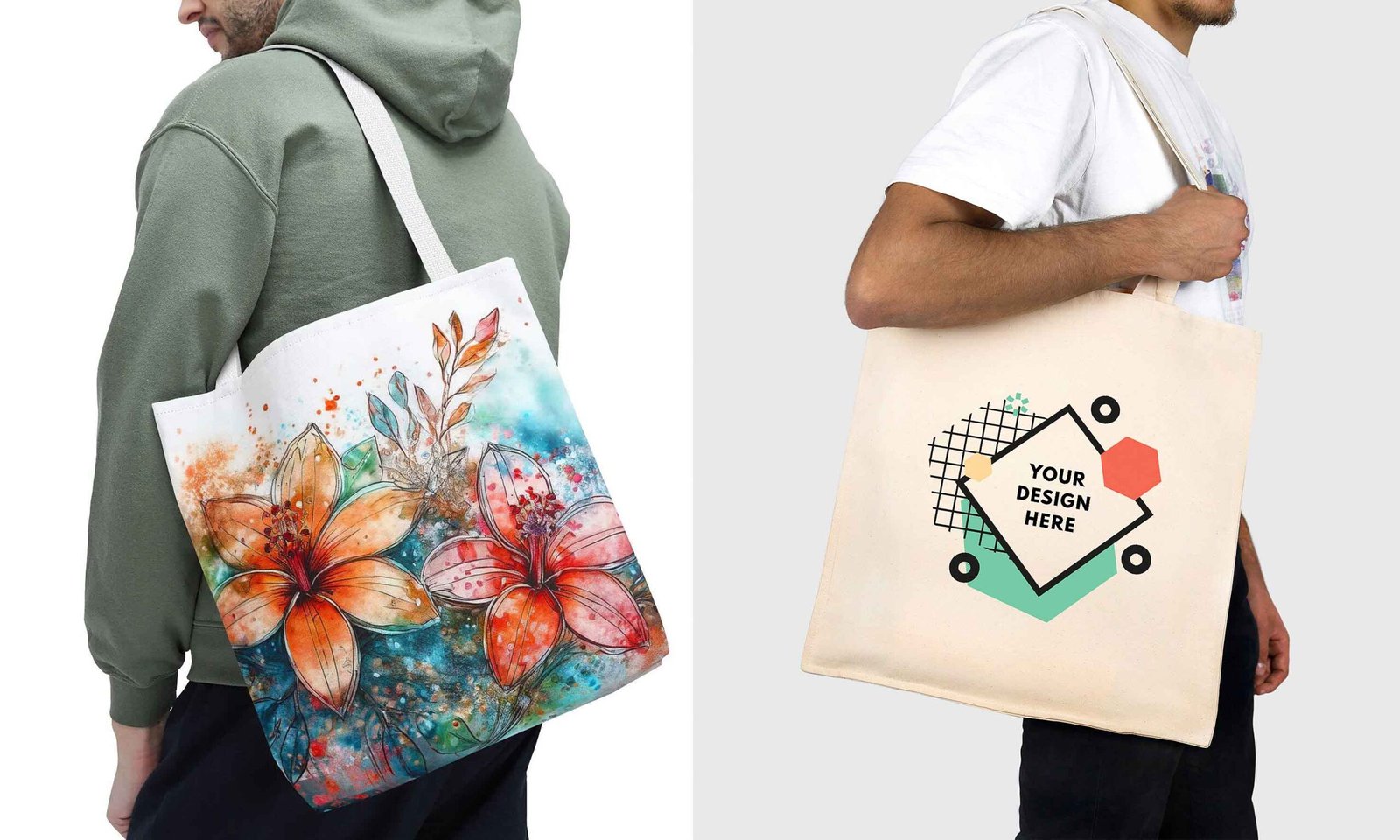
Branding is not just a logo. It is a feeling. When you sell bags to a supermarket or a boutique, the print quality is the first thing they see. I inspect bags every day. I can tell you that the difference in shelf appeal is huge.
Visual Impact: Gravure prints "continuous tone15." This means it can look like a photograph. If your bag design has a picture of fruit, a human face, or a landscape, you must use Gravure. The dots are so small you cannot see them with the naked eye. The color saturation is high. It looks premium.
Flexo is great for bold text and simple graphics. But if you have a gradient (fading from red to blue), Flexo often shows a "hard edge." It looks grainy. It cannot handle the soft transition of colors very well. If your brand relies on subtle shading, Flexo will disappoint you.
Consistency is Key: With Flexo, the pressure changes slightly during the run. The color might be dark at the start and light at the end. This is a nightmare for strict brand guidelines. With Gravure, the first bag looks exactly like the 100,000th bag. The steel cylinder does not change shape. This is crucial for big retail brands who need every item to look identical on the shelf.
Design Limitations:
- Small Text: Flexo ink spreads. It fills in small letters (like the trademark symbol ™). Gravure keeps them sharp and readable.
- Registration: This is how well the colors line up. Gravure holds tight registration16. Flexo can shift, causing white gaps between colors.
Branding Decision Matrix:
- Simple 1-2 Color Logo: Flexo is sufficient.
- Photographic Image: Gravure is mandatory.
- Metallic Inks: Gravure is better.
- Fine Legal Text: Gravure is safer.
Flexo vs Gravure: Which Is More Cost-Effective for Different Order Sizes?
You are worried about your budget. If you pick the expensive setup for a small test order, you destroy your margins before you even start selling.
Flexo is more cost-effective for small orders (under 5,000 pieces) because the initial plate cost is low. Gravure becomes cost-effective only when the volume is high enough to dilute the expensive cylinder costs across many units.
Let’s break down the cost structure. This is the most common question I get at Coraggio. "Why is the mold charge so high?" You need to understand the amortization.
The Short Run (The Trial Order): Imagine you order 3,000 tote bags for a local event.
- Flexo Setup: $100 total.
- Gravure Setup: $1,500 total. Even if the Gravure unit price is slightly lower, that $1,500 adds $0.50 to every bag. That is too much. For this size, Flexo wins. The quality might be lower, but the price makes sense for a giveaway item.
The Long Run (The Retail Order): Now imagine you order 200,000 shopping bags for a chain store.
- The $1,500 setup is now only $0.0075 per bag. It is basically free.
- The Gravure machine runs faster, saving you $0.05 per bag on production labor and efficiency.
- Total Savings: You save $10,000 on the order by choosing Gravure.
Understanding the Break-even Point17: There is a middle ground. Usually, around 10,000 to 20,000 pieces. In this range, the total price is similar.
- If you plan to reorder this design again, choose Gravure. The cylinders last for years.
- If it is a one-time job, choose Flexo. Save the cash flow.
Cost Components Table:
| Cost Type | Flexo | Gravure |
|---|---|---|
| Plate/Cylinder | Low ($) | High ($$$) |
| Ink Cost | Medium | Low (at scale) |
| Make-ready Waste | High | Low |
| Labor per Unit | Higher (slower speed) | Lower (high speed) |
Which Printing Technology Ensures a Faster Lead Time for Mass Production?
Time is money in your business. If your bags arrive late, you miss the season. You need a method that guarantees speed without sacrificing quality.
Gravure printing ensures a faster lead time for mass production18 because the press runs at incredibly high speeds. Once the cylinders are made, production flies. Flexo is faster to start, but slower to finish large quantities.
Lead time is not just printing time. It is the total time from "Order Confirmed" to "Goods Shipped." You need to look at the whole timeline.
The Setup Phase: Flexo is quick here. We can make polymer plates in 1 day. If you need a sample tomorrow, Flexo is the only way. Gravure takes time. Engraving steel cylinders takes 5 to 7 days. If you are in a rush for a small order, Gravure might be too slow to even start.
The Production Phase: This is where Gravure shines. A modern Gravure press is a beast. It prints huge rolls of material very fast. If you have a 500,000 piece order, Flexo might take 3 weeks to print because the machine runs slower. Gravure might finish it in 1 week. The speed difference is massive.
The Drying Bottleneck: Flexo inks are often water-based or UV. They take time to dry. We have to run the machine slower to let the ink set, or the bags will stick together. Gravure inks are solvent-based (usually). They dry instantly in the heating tunnel. We can run the machine at full speed without worrying about smudging.
My Advice for Planning:
- If you need 5,000 bags next week: Flexo.
- If you need 100,000 bags next month: Gravure. Do not force a Flexo machine to do a mass production job. It will clog your supply chain and delay your shipment.
Also, consider the weather. In humid months, Flexo drying slows down even more. Gravure uses high-heat ovens, so it is less affected by the environment. For reliable delivery on big orders, Gravure is the safer bet.
Conclusion
To summarize, use Flexo for small, simple, urgent orders to save on setup. Choose Gravure for large, complex, recurring orders to minimize unit cost3s and ensure premium quality.
Learn strategies and benchmarks to keep your bulk bag projects profitable when every cent of margin counts. ↩
Understand the financial and quality risks so you avoid a printing choice that quietly destroys your project ROI. ↩
See real-world cost breakdowns so you can compare per-bag prices and negotiate better with suppliers. ↩
Get a clear explanation of how Flexo setup economics work so you choose it confidently for the right volumes. ↩
Avoid overpaying for quality you don’t need, or under-specifying and hurting your brand image. ↩
See diagrams and demos of Flexo plate technology so technical terms on quotes finally make sense. ↩
Understand Gravure mechanics so you can judge when its higher tooling cost is justified for your bags. ↩
Find out how many impressions you can realistically expect before re-engraving is needed. ↩
See technical comparisons that explain why laminated substrates typically perform better with Gravure. ↩
Discover why Gravure prints look richer and more consistent, especially for high-end retail packaging. ↩
Review modeled cost-per-unit examples to decide when it’s time to upgrade from Flexo to Gravure. ↩
Quantify speed differences so you can forecast lead times and capacity for large campaigns. ↩
Learn how cylinder ownership works and how it cuts costs on repeat orders over several years. ↩
See visual comparisons that show how Gravure elevates the look of premium branded bags. ↩
Understand how continuous tone enables photo-like images that impress retail buyers and consumers. ↩
Learn why tight registration is critical for multi-color logos and how each process performs. ↩
Use formulas and examples to pinpoint the exact quantity where Gravure becomes cheaper overall. ↩
Learn how to plan timelines for large campaigns by leveraging Gravure’s high-speed throughput. ↩