Many buyers want recycled bags1, but many suppliers use vague claims2. I know this creates risk, higher checking costs, and hard talks when proof is missing.
In 2026, bag suppliers must meet GRS material, traceability, chemical, environmental, and social rules3. A bag can apply for GRS with at least 20% recycled content4, but it usually needs 50% or more recycled content5 to carry the GRS logo on the product.
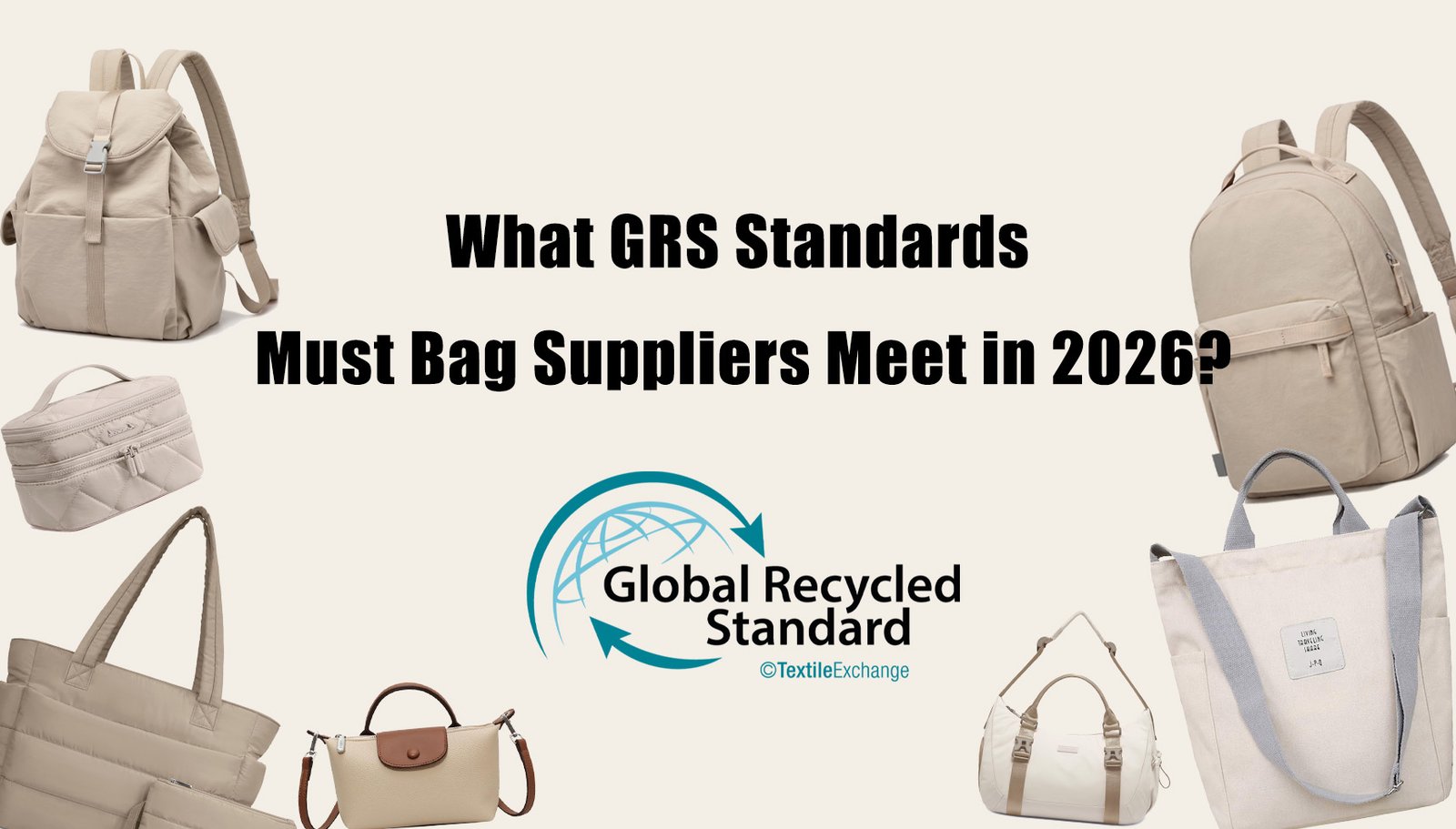
I have seen many buyers ask one simple question: “Is this bag really recycled?” I think that question is fair. I also know the answer is not simple. A real GRS program is not just about one fabric test. It is about the whole chain, from recycled raw material to finished shipment. If one link is weak, the claim becomes weak too. That is why I want to break this topic into clear parts, so a buyer can check suppliers with less guesswork and more control.
What Is GRS Certification and Why Does It Matter for Bags?
Many suppliers say “eco-friendly6,” but that word alone proves nothing. I have seen buyers lose time and trust when recycled claims were only marketing lines.
GRS stands for Global Recycled Standard7. For bags, it matters because it verifies recycled content, checks supply chain traceability8, and reviews chemical, environmental, and social practices, so buyers get stronger proof than a simple self-declaration.
When I explain GRS to buyers, I start with one basic point: GRS is not only a product claim. It is also a system claim. The standard checks whether recycled materials are real, whether the chain is traceable, and whether the factory meets key rules on chemicals, labor, and the environment. That is why many serious brands ask for GRS instead of just asking for “RPET fabric.”
I have noticed that bag buyers often care about three things: proof, consistency, and risk control9. GRS helps with all three. It gives a recognized framework. It makes documents easier to compare. It also reduces the chance that one supplier says one thing and delivers another.
Here is how I usually frame it:
| GRS Area | What It Checks | Why It Matters to Buyers |
|---|---|---|
| Recycled content | Whether the material really contains recycled input | Helps prevent false green claims |
| Traceability | Whether each step is documented | Makes audits and claim checks easier |
| Chemical control | Whether restricted chemicals are managed | Lowers compliance and safety risk |
| Environmental practice | Wastewater, waste handling, resource control | Supports responsible sourcing goals |
| Social practice | Wages, working conditions, no forced labor | Protects brand reputation |
I once worked with a buyer who only checked fabric content. Later, he found that the upstream process had gaps. That experience stayed with me. Since then, I always say that GRS matters because it looks wider than a single test report. For bags, that wider view is often the real value.
How Much Recycled Content Do GRS-Certified Bags Require?
Many buyers hear “GRS bag” and assume every product has a high recycled percentage. I have learned that this assumption often causes confusion during product approval.
A bag can apply for GRS certification with at least 20% recycled material. But if a supplier wants to use the GRS logo on the bag or related claim materials, the recycled content usually needs to reach 50% or more.
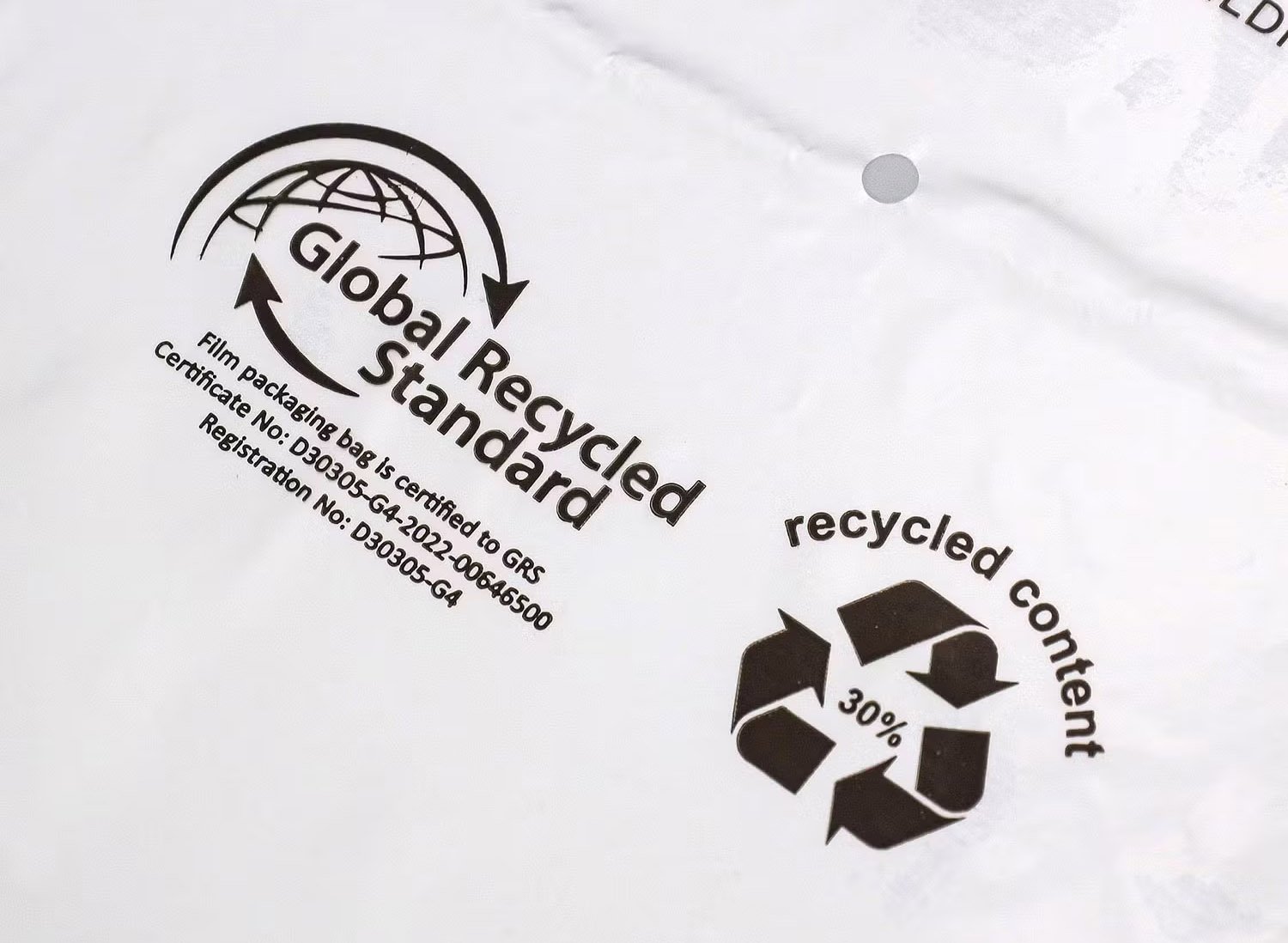
This is one of the most important points in bag sourcing. I often see buyers mix up two different thresholds. The first threshold is the minimum recycled content needed to enter the GRS scope for certification. That level is 20%. The second threshold is the level tied to stronger product claims, such as use of the GRS logo. That level is usually 50% or above.
This difference matters in real buying work. A supplier may say, “Our bag is GRS certified.” That may be true in the system sense. But the buyer still needs to ask, “What is the actual recycled percentage in this specific style?” The answer can affect packaging claims, hangtags, online product text, and retailer approval.
I find this table useful in daily work:
| Scenario | Recycled Content | What It Means |
|---|---|---|
| Entry-level GRS product scope10 | At least 20% | Product may qualify within GRS certification scope |
| Stronger on-product GRS claim or logo use | Usually 50% or more | Needed for stricter claim use |
| Buyer marketing claim review | Varies by market and customer rule | Must match documents and approvals |
I also remind buyers that the percentage should be checked at product level, not only material level. A bag may use recycled outer fabric, but zippers, webbing, foam, lining, coating, and metal trims can change the final percentage. I have seen this happen with backpacks and cooler bags many times. A supplier may quote recycled fabric, but the total bag content ends up lower than the buyer expected.
So, when I review a style, I ask for a bill of materials11, the recycled share for each part, and the final calculation method. That simple habit saves many problems later.
Which Factories in the Bag Supply Chain Need GRS Certification?
Many buyers think only the final bag factory needs GRS. I have seen this mistake delay orders when one upstream partner had no valid certification.
In a GRS bag program, every relevant processing site in the supply chain12 should be certified if it handles or transforms the recycled material. This can include recyclers, yarn makers, fabric mills, dyeing plants, printers, coating factories, trim suppliers, and the final sewing factory13.
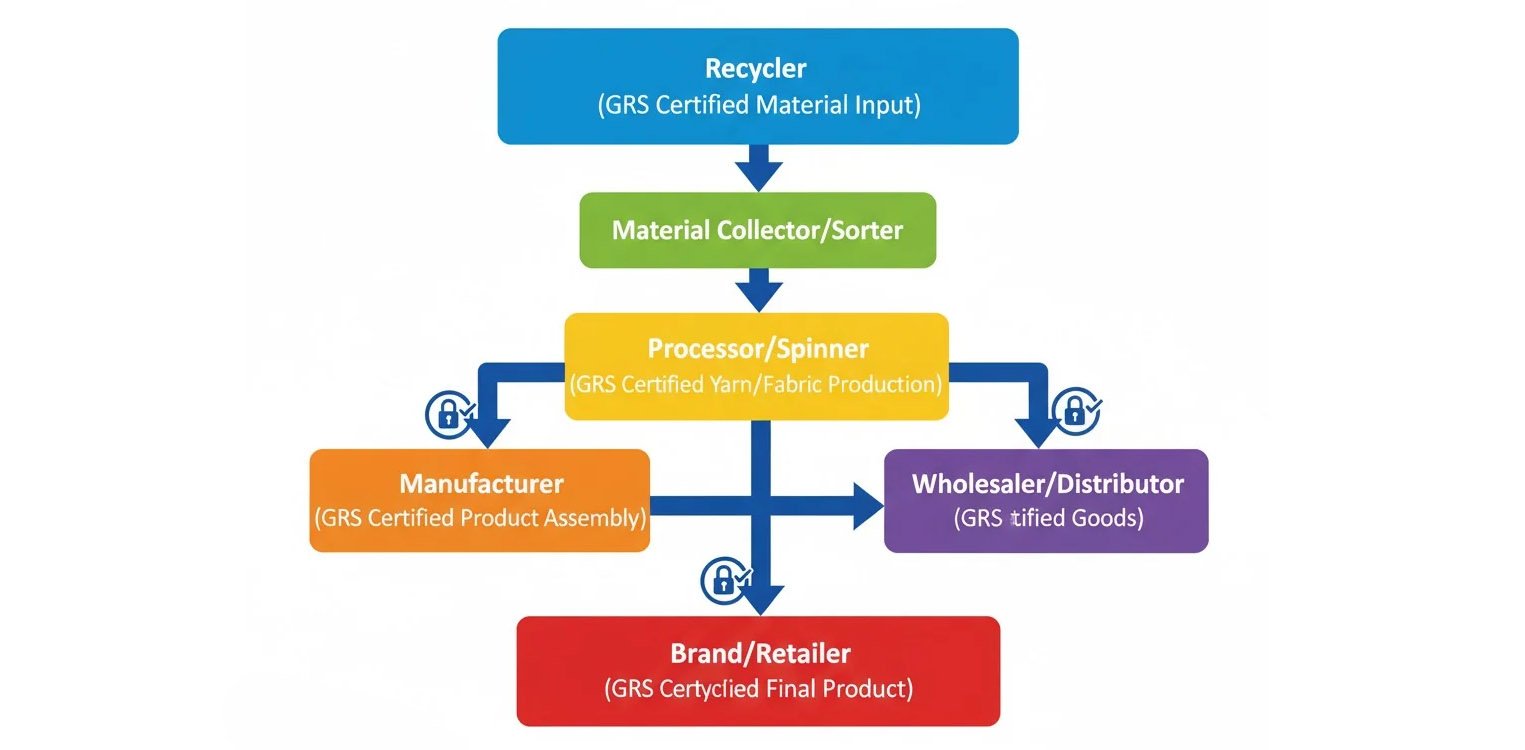
This is where many sourcing plans become hard. GRS works best when the whole chain is connected. If recycled material starts at one certified source but then passes through a non-certified processing step, the chain may break. That broken chain can stop the final product from being sold as GRS under the required claim process.
In bag production, the chain is often longer than buyers first think. A simple tote bag may still involve recycled chip or flakes, yarn spinning, weaving, dyeing, coating, printing, cutting, sewing, and packing. A more complex backpack may add foam lamination, zipper production, webbing, labels, and metal hardware finishing. Not every component must always follow the same route, but every relevant certified claim path must remain traceable.
I usually map it like this:
| Supply Chain Step | Example Factory Type | GRS Relevance |
|---|---|---|
| Recycled raw material | Recycler, chip/flakes supplier | Starts the recycled claim |
| Intermediate material | Spinner, yarn factory | Converts recycled input |
| Fabric processing | Weaver, knitting mill, dye house | Maintains traceability |
| Surface treatment | Coating, printing, lamination unit | Must meet chemical rules |
| Accessory processing | Webbing, label, zipper, hardware suppliers | Needed if included in claim scope |
| Final assembly | Bag sewing factory | Issues final product under certified chain |
I have learned that dyeing, coating, and metal treatment deserve special attention. These processes often involve chemicals, and GRS does not only care about recycled content. It also cares about restricted substances and management systems. So if a bag uses coated fabric or treated hardware, I ask more questions there.
In my own factory discussions, I push for a supply chain map early in development. That map shows who does what, who holds valid certificates, and where documents will come from. It is simple work, but it makes later verification much easier.
How Do Buyers Verify GRS Compliance Through Transaction Certificates?
Many suppliers show one certificate and expect full trust. I have seen buyers accept that too quickly, then struggle when shipment-level proof was missing.
Buyers should verify GRS compliance through Transaction Certificates, or TCs14. A TC is issued for a specific shipment or batch and confirms that the goods moved through the certified supply chain with the declared recycled content and certified parties.
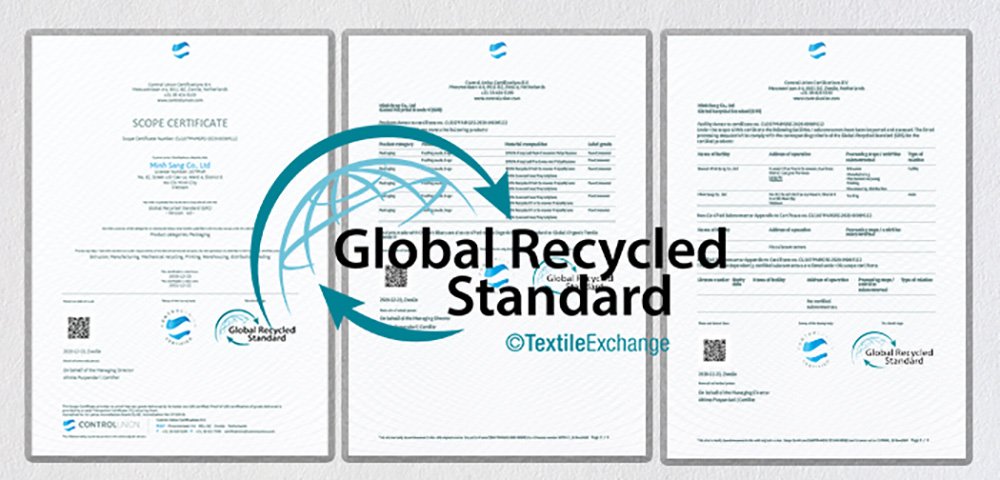
If I had to name one document that buyers should never ignore, it would be the TC. A factory certificate only shows that a company has been audited and approved within a period. It does not prove that a specific batch of bags shipped under that certified chain. The TC does that job.
I always tell buyers to think of the factory certificate as a license, and the TC as the shipment proof15. You need both, but for order verification, the TC is the sharper tool.
A buyer can check a TC in a practical way:
| Check Point | What I Look For | Why It Matters |
|---|---|---|
| Supplier name | Matches selling party | Avoids document mismatch |
| Product description | Matches ordered bag style or category | Confirms relevance |
| Quantity and weight | Fits shipment data | Helps catch overclaim risk |
| Recycled content statement | Matches approved claim | Protects label accuracy |
| Certified companies listed | Shows chain participants | Supports traceability |
| Certificate dates and issuer | Valid and current | Reduces invalid claim risk |
I also compare the TC with the purchase order, packing list, invoice, and bill of materials11. If the bag is sold as GRS with a certain recycled content, the story across all documents should stay consistent. If one paper says 100% recycled fabric and another says mixed source, I stop and ask.
I remember one case where a supplier sent a valid GRS certificate but could not provide a TC for the shipped lot. That moment changed the whole discussion. The buyer thought he had proof. In fact, he had only partial proof. Since then, I treat TCs as a must-have check, not an extra check.
For large buyers and supermarkets, this matters even more. Internal compliance teams often need shipment-level evidence. If a supplier can provide clean and timely TCs, the buyer saves time and lowers approval risk.
What Happens If a Bag Supplier Fails GRS Audit Requirements?
Many buyers assume a failed audit only affects paperwork. I have seen it lead to delayed claims, blocked orders, and damaged trust across a whole program.
If a bag supplier fails GRS audit requirements, it may lose certification, stop using GRS claims, face shipment delays, and need corrective action. Serious issues can involve traceability gaps, labor violations, poor wastewater control, or restricted chemical misuse16.
A failed GRS audit is not a small matter. In many cases, it means the supplier cannot continue making certified claims until problems are fixed. For buyers, that can affect production plans, label approval, customs documents, retailer submission, and launch timing.
The risks usually fall into a few main groups. First, there are traceability failures. These happen when records are incomplete, input and output do not match, or non-certified material mixes into certified flow without control. Second, there are environmental issues, such as poor wastewater treatment or weak waste handling. Third, there are social issues, like wage problems, poor working conditions, or forced labor concerns. Fourth, there are chemical issues, especially in dyeing, coating, printing, or hardware finishing.
I often explain it in this way:
| Audit Failure Type | Example Problem | Likely Buyer Impact |
|---|---|---|
| Traceability failure | Missing records or mixed material flow | Shipment claim may be rejected |
| Social compliance failure | Wage, overtime, forced labor issue | Brand risk and order hold |
| Environmental failure | Wastewater or waste control gap | Compliance risk and factory review |
| Chemical management failure | Restricted substances not controlled | Product safety and claim risk |
| Document control failure | Missing TCs or invalid records | Delays in approvals and payments |
I have learned that buyers should not only ask whether a supplier “has GRS.” They should ask how the supplier manages GRS daily. I want to know who keeps records, who checks incoming materials, how batches are separated, how chemicals are approved, and how labor and environmental issues are reviewed.
In one project, I saw a supplier with good pricing but weak document control. That weakness did not show up in the sample stage. It showed up during compliance review. The order became slow. Everyone felt pressure. That is why I now see GRS as an operating discipline, not just a certificate on the wall.
For 2026, I expect buyers to ask more about harmful substance limits17 too. Fabric dyeing, coating, and hardware treatment all need closer control. If the chemical management side is weak, the recycled claim alone will not protect the supplier.
Conclusion
In 2026, I believe smart bag buyers18 should check GRS in full: recycled content, certified supply chain, TCs, labor, environment, and chemical control before trusting any recycled claim.
Understanding how recycled bags are verified helps you reduce greenwashing risk and choose suppliers that truly support sustainability goals. ↩
Learning how vague claims are viewed by regulators helps you tighten your marketing language and avoid greenwashing accusations. ↩
Seeing the full scope of GRS requirements gives you a checklist to evaluate if your bag suppliers are genuinely compliant, not just certified on paper. ↩
Clarifying the 20% threshold helps you set minimum recycled content expectations and avoid overclaiming sustainability in product specs. ↩
Knowing the 50% rule protects you from misusing the GRS logo and ensures that your on-product claims meet standard requirements. ↩
Understanding how loose terms like eco-friendly are judged helps you write claims that are honest, specific, and regulator-ready. ↩
A solid overview of GRS shows you how it integrates into textile supply chains and what you should demand from certified partners. ↩
Learning how traceability is proven helps you design documentation flows that can withstand audits and client due diligence. ↩
Exploring these three pillars helps you move from ad-hoc checks to a structured compliance and documentation program. ↩
Knowing what qualifies as entry-level helps you onboard more products into GRS while planning for higher-claim ranges later. ↩
Mastering BOM-based calculations lets you verify real recycled content in complex bags instead of relying only on fabric claims. ↩
Mapping which sites must be certified keeps your chain intact and prevents losing GRS status due to one missing link. ↩
Clarifying component-level needs helps you decide which partners must be upgraded or replaced to keep claims valid. ↩
Learning to read and request TCs is key to proving shipment-level compliance and passing internal or retailer audits. ↩
Seeing this distinction helps you avoid the common mistake of relying only on a factory certificate for product claims. ↩
Knowing common failure points lets you prioritize pre-audits and corrective actions before issues hit your orders. ↩
Understanding applicable limits supports safer chemical selections and alignment with both GRS and market regulations. ↩
Studying leading buyer practices gives you a roadmap to strengthen your own sourcing, documentation, and claim controls. ↩