Trade shows are overwhelming, and picking the wrong bag supplier costs you time and money. AI tools1 can streamline your vetting process instantly.
Bag buyers use AI to scan exhibitor lists2 for specific criteria like certifications3 and material capabilities4 before the show. On-site, AI apps analyze business cards5 and product data to flag inconsistencies immediately, ensuring you only spend time with legitimate, capable manufacturers.

I have spent 15 years in the bag industry, and I see buyers struggle with this every year. Let me show you exactly how to use technology to verify suppliers like us efficiently.
How can you use AI to shortlist suppliers before the trade show?
You hate walking thousands of steps to find one good factory. It is exhausting and inefficient. Start your search before you even pack your bags.
Use AI tools1 to scrape exhibitor lists2 and filter them by your specific needs, such as eco-friendly materials or specific ISO certifications6. This creates a targeted "must-visit" list, saving you hours of walking.
Processing the Exhibitor List
Most trade show7s provide a massive PDF or Excel file of exhibitors. Reading this line by line is impossible. I recommend you copy this data into an AI tool. You can give the AI a command to filter the companies. You should look for keywords that match your business model. For example, since you want direct factories, filter for terms like "Manufacturer," "OEM," or "Factory." Exclude companies that describe themselves as "Trading" or "Import/Export" if you want the best price.
Keyword Matching for Specific Needs
If you are looking for specific products, like cooler bags or cosmetic bags, ask the AI to highlight those rows. You can also look for material keywords. If your market demands sustainability8, filter for "RPET," "Organic Cotton," or "Recycled." This turns a list of 2,000 names into a manageable list of 50 potential partners.
| Search Criteria | AI Prompt Example | Benefit |
|---|---|---|
| Business Type | "List only companies with 'Manufacturer' in the description." | Avoids middlemen. |
| Product Focus | "Highlight companies listing 'Duffle Bag' or 'Backpack'." | Saves relevance time. |
| Compliance | "Flag companies that mention BSCI or ISO9001." | Ensures quality standards. |
By doing this work early, you enter the exhibition hall with a plan. You go straight to the booths that matter. This saves your energy for the actual negotiation9.
What AI checks can confirm a supplier is legitimate on-site?
Fake trading companies often pretend to be factories. You risk poor quality and higher prices if you get fooled. Spot the fakes instantly.
Take photos of their booth signage and business cards5. AI text recognition can cross-reference this data with government registration databases or their website claims in real-time to spot inconsistencies in their location or factory size.
Real-Time Location Analysis
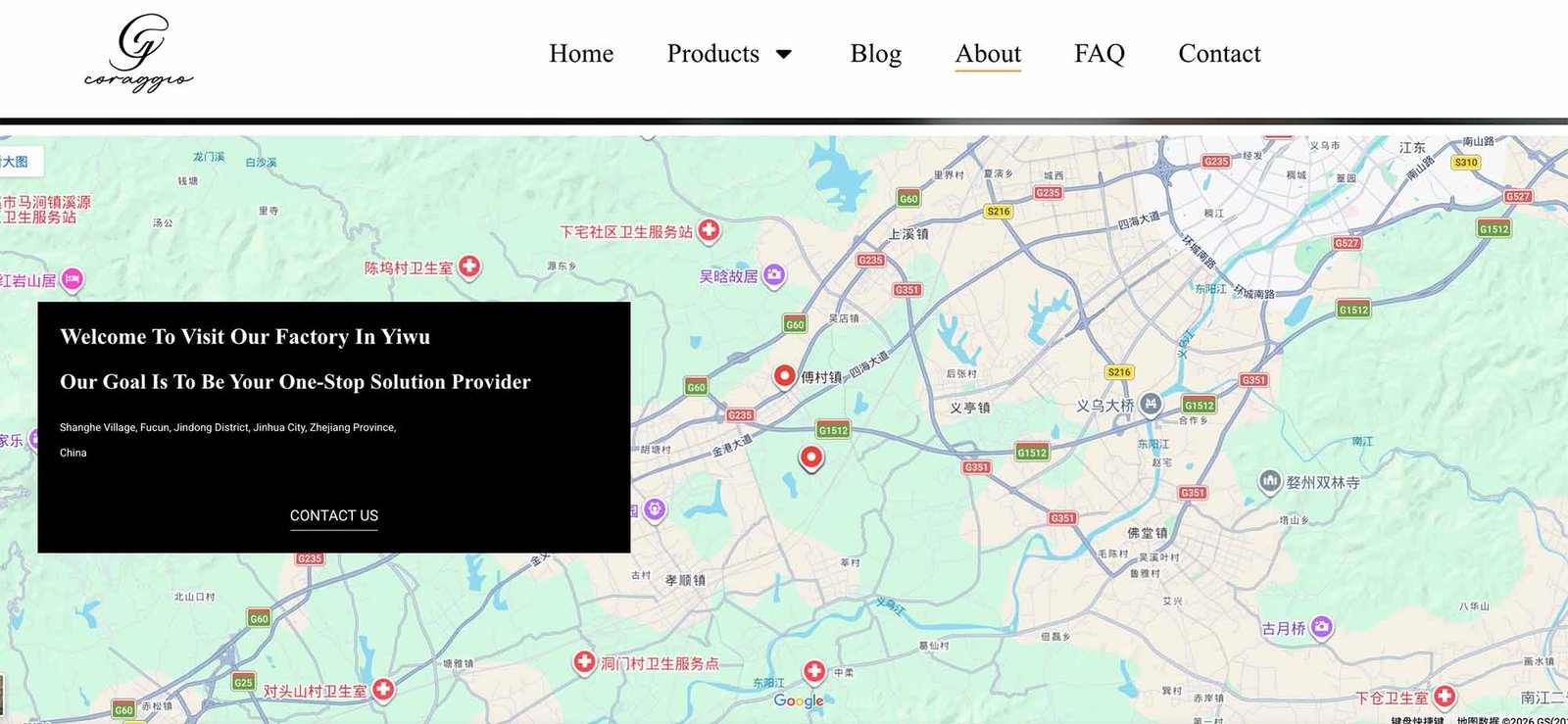
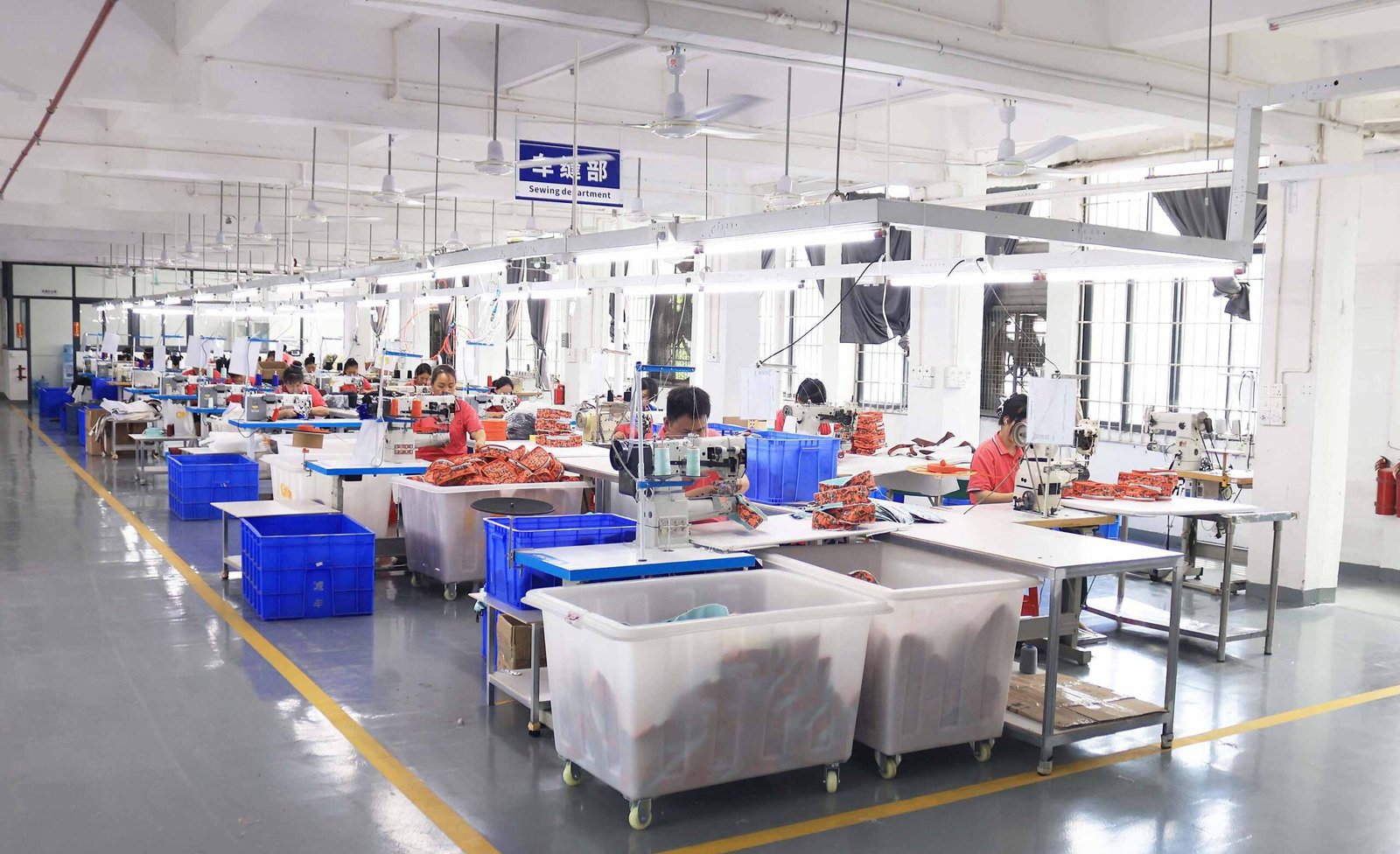
When you get a business card, use an AI tool to check the address. Factories like ours need space. We have 3,000 square meters for our production lines. If the address on the card points to a residential building or a small office tower in a city center, it is likely a trading company. AI maps can show you the street view instantly. You want to see an industrial zone.
Product Portfolio Consistency
A real factory usually specializes. We focus on bags. If you see a supplier offering bags, phone cases, and kitchenware, be careful. You can take a photo of their product catalog10 and ask AI to analyze the variety. If the product range is too wide, they are outsourcing. This means you pay a higher price and have less control over quality.
| Verification Point | What to Check | Red Flag Indicator |
|---|---|---|
| Address | Google Maps / Baidu Maps | Located in a high-rise finance tower. |
| Product Range | Catalog Photo | Selling unrelated items (e.g., Bags + Toys). |
| Staff Knowledge | Technical Questions | Sales rep cannot explain the stitching process. |
Using AI to check these details while you are standing at the booth gives you power. You can walk away immediately if the data does not add up.
Which questions should you ask suppliers (with AI help) to vet them fast?
Generic questions get rehearsed sales answers. You learn nothing about their actual capability. Ask sharper questions to expose their weaknesses.
Input the supplier's company profile into an AI tool and ask it to generate specific technical questions about their production capacity, material sourcing, and quality control processes11 to test their knowledge on the spot.
Generating Technical Questions
You might be a great buyer, but you may not know every technical detail about sewing. That is okay. AI can bridge that gap. Before you speak to a supplier, tell your AI tool what product you want. For example, "I need a waterproof duffle bag." Ask the AI to generate five technical questions to ask the factory owner. This helps you sound like an expert.
Testing Quality Control Processes
A good question might be about "needle detection" or "fabric tension." If you ask a supplier, "How do you handle fabric shrinkage for 600D Oxford material?" and they hesitate, that is a bad sign. A real factory manager knows these answers instantly.
| Question Category | Standard Question (Weak) | AI-Generated Question (Strong) |
|---|---|---|
| Capacity | "Can you make this bag?" | "How many production lines are currently dedicated to backpack assembly?" |
| Quality | " is your quality good?" | "What is your AQL standard for final inspection, 2.5 or 4.0?" |
| Materials | "Do you have eco fabric?" | "Can you provide a GRS certificate for your RPET material sourcing?" |
These questions force the supplier to be honest. It separates the real manufacturers from the people just trying to make a quick sale.
How can AI compare suppliers by MOQ, price, capacity, and lead time?
Comparing messy handwritten notes from twenty booths is a nightmare. You miss critical details and make bad choices. Organize your data effortlessly.
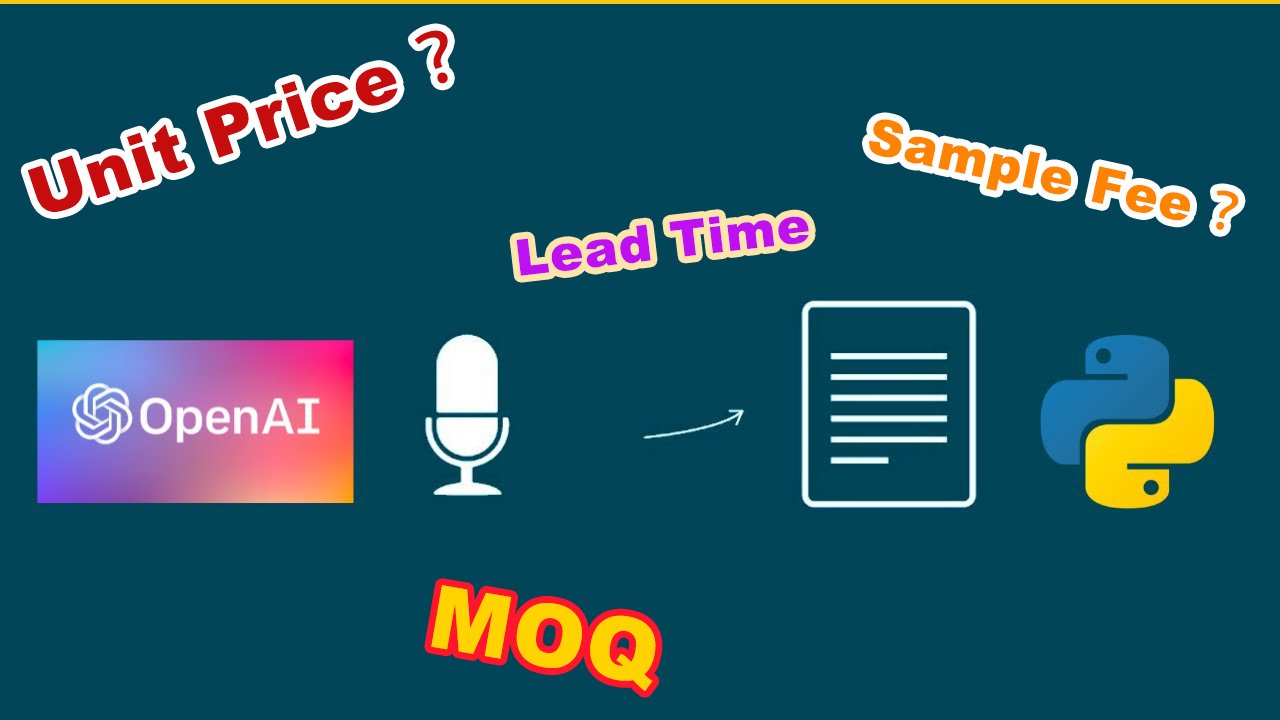
Voice-record your conversation or snap photos of price sheets. Upload these to an AI tool to automatically extract and tabulate key metrics like Unit Price, Minimum Order Quantity (MOQ)12, and delivery dates for side-by-side comparison.
Digitizing Your Notes
At a trade show7, you talk to many people. By the end of the day, you forget who offered the best price. Instead of writing in a notebook, record a voice memo after leaving each booth. Say the key details out loud: "Booth A, MOQ 500, Price $4.50, Lead time 30 days." Later, AI can transcribe this and put it into a table for you.
The Decision Matrix
Once the data is in a table, you can compare them objectively. You need to balance price with other factors. Maybe Supplier A is the cheapest, but their lead time13 is too long. Supplier B might have a higher price, but they have a lower MOQ which is good for testing a new market.
| Metric | Supplier A | Supplier B (Coraggio) | Supplier C |
|---|---|---|---|
| Unit Price | $4.20 | $4.35 | $5.00 |
| MOQ | 2000 pcs | 500 pcs | 1000 pcs |
| Lead Time | 60 Days | 35 Days | 45 Days |
| Sample Fee | $100 | Free (Refundable) | $50 |
AI helps you see these trade-offs clearly. You can make a decision based on data, not just a feeling. This ensures you choose a partner that fits your business model.
What should you do after the show to verify the factory and reduce risk?
The supplier promised everything at the show. Now they might disappear or change terms. Secure your order before paying a deposit.
Use AI to draft detailed follow-up emails that reference specific conversation points. Also, have AI analyze their audit reports14 and certifications3 to ensure the documents match the company name and are currently valid.
Document Forensics
After the show, ask the supplier for their business license15 and certificates. You can upload these images to an AI tool. Ask the AI to check dates and names. Does the name on the ISO certificate match the name on the bank account? Mismatches are huge risks. It often means they are using someone else's documents. We always provide documents that match our company name exactly to build trust.
Communication Continuity
Speed is important. Use AI to write your follow-up emails. The AI can remind the supplier of what you discussed. "Hi, we talked about the blue cooler bag with the custom logo." This shows you are paying attention. It makes the supplier take you seriously.
| Verification Step | Action | AI Role |
|---|---|---|
| Bank Check | Compare Invoice to License | Detects name mismatches. |
| Cert Check | Verify Expiry Dates | Ensures ISO/BSCI is valid. |
| Email Recap | Summarize Meeting | Generates professional minutes. |
By using these tools, you protect your investment. You ensure the factory you met is the factory that will make your goods.
Conclusion
AI transforms trade show7 chaos into clear data. By using it to filter lists, verify claims, and compare quotes, you minimize risk and secure the best manufacturing partner for your business.
Explore how AI tools can enhance your supplier vetting process, saving you time and ensuring quality. ↩
Learn strategies to utilize exhibitor lists for better supplier selection at trade shows. ↩
Understand essential certifications that ensure quality and compliance in bag manufacturing. ↩
Discover the importance of material capabilities in selecting the right bag supplier. ↩
Find out how to effectively verify business cards to avoid scams at trade shows. ↩
Explore the significance of ISO certifications in ensuring manufacturing quality. ↩
Get tips on maximizing your trade show experience for better supplier connections. ↩
Learn about sustainable practices in bag manufacturing and their importance. ↩
Explore negotiation strategies that can help you secure better deals with suppliers. ↩
Get insights on creating effective product catalogs that showcase your offerings. ↩
Understand the best practices in quality control to ensure product excellence. ↩
Learn about MOQ and its implications for your purchasing decisions. ↩
Discover how to accurately calculate lead time to manage your supply chain effectively. ↩
Understand the key components of audit reports that ensure supplier reliability. ↩
Learn the steps to verify a supplier's business license to mitigate risks. ↩