You need to keep products cold or hot, but choosing the wrong bag ruins inventory. Are you wasting money on the wrong thermal protection for your logistics?
Insulated bags use foam layers to slow heat transfer, ideal for short trips. Thermal bags add a reflective foil lining to trap internal temperatures, making them superior for long-distance transport and strict cold-chain requirements. Choosing correctly depends on your required duration of temperature control.
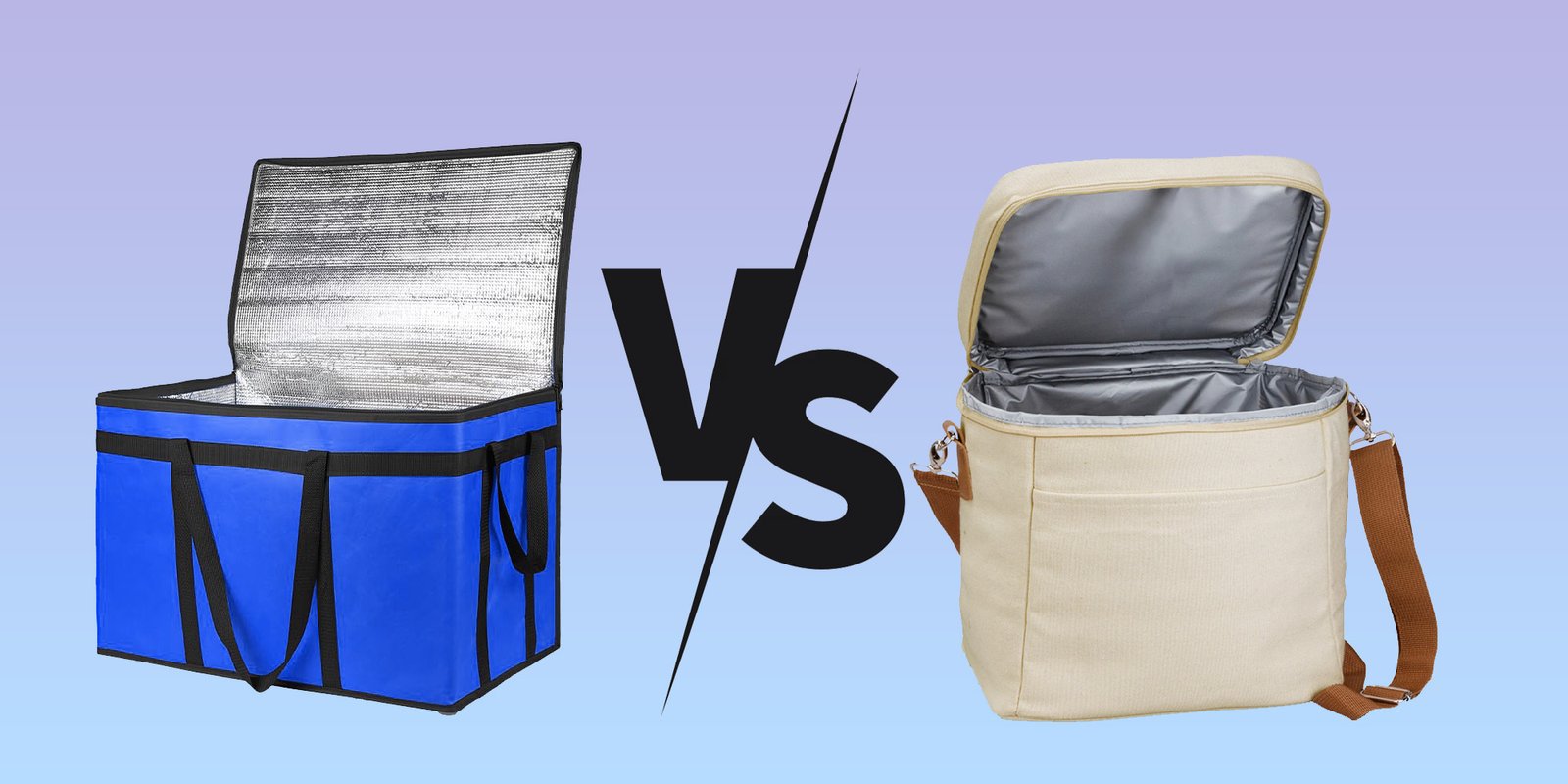
Many buyers think these bags are the same. I have seen this mistake cause huge losses. Let me explain the real differences so you can buy the right product.
How Do Material Layers Differ in Insulated vs. Thermal Bags?
You open a sample bag and see silver lining or just white foam. Does the lining material actually change the bag's performance?
Insulated bags rely on closed-cell foam (EPE or PE)1 sandwiched between fabric to create an air barrier. Thermal bags upgrade this by adding a reflective aluminum foil or PEVA lining2. This reflective layer actively bounces heat radiation back, rather than just slowing conduction.
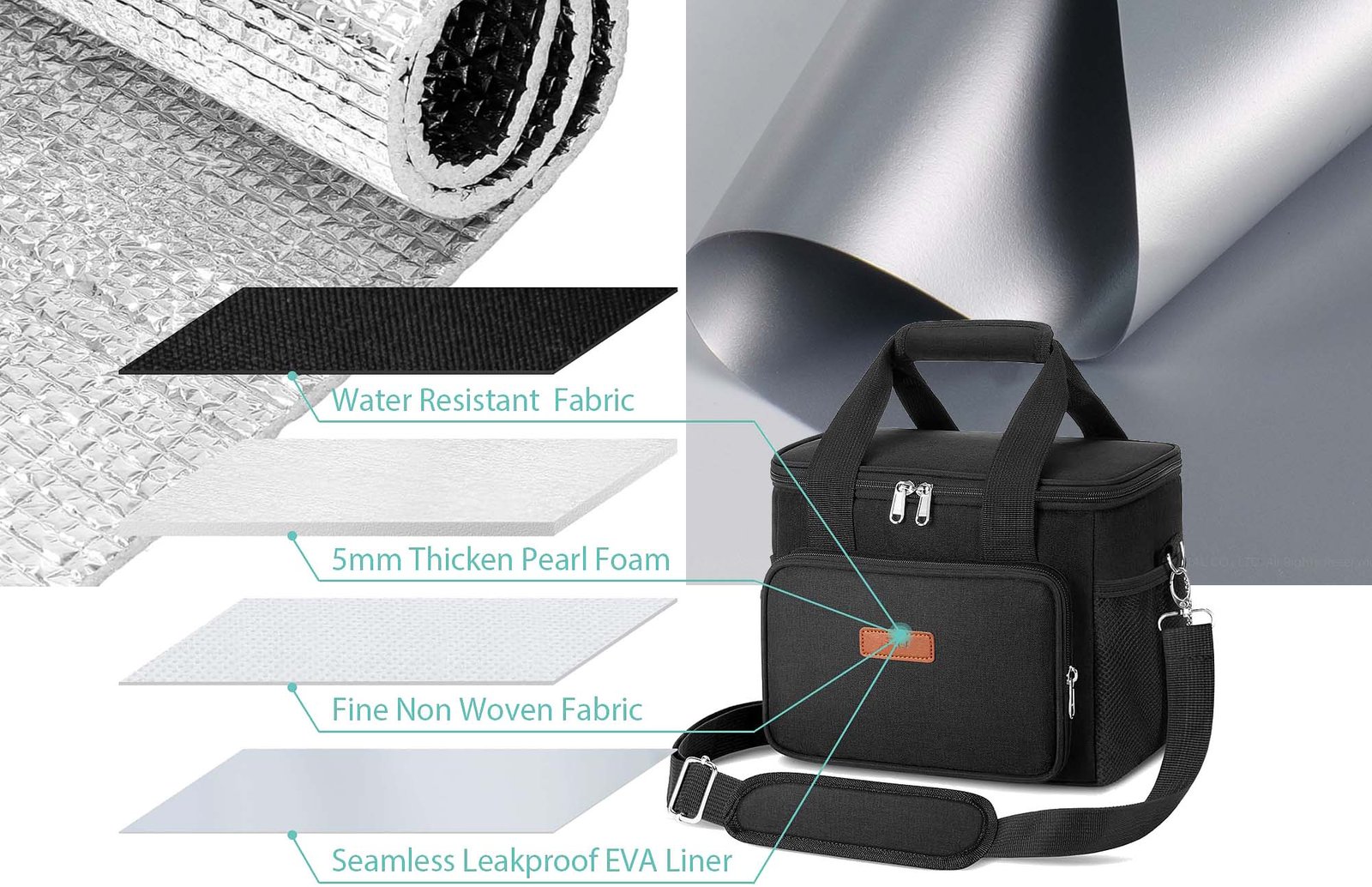
I have manufactured bags for 15 years, and I see buyers confused by material sheets often. To understand the price and performance, you must look at the "sandwich" structure of the bag wall. Both bags use an outer layer of durable fabric, usually Oxford cloth or Nylon. The difference is inside.
A standard insulated bag has three layers. The outer skin, a middle layer of EPE foam, and an inner layer of PE or PVC plastic. The foam holds air. Air is a poor conductor of heat. This stops the outside heat from touching your cold items quickly. It works like a winter jacket.
A thermal bag has a more complex structure. It also uses foam, but the inner lining is different. We use Aluminum Foil or a thick PEVA sheet with a reflective coating. This layer acts like a mirror. It reflects heat waves. If you put hot food inside, the heat bounces back to the food. If you put cold food inside, the external heat reflects away.
Here is a breakdown of the typical material composition I use in my factory:
| Feature | Standard Insulated Bag | High-Performance Thermal Bag |
|---|---|---|
| Outer Layer | 420D or 600D Polyester3 | 600D or 1680D Heavy Duty Nylon4 |
| Middle Layer | 2mm - 3mm EPE Foam | 5mm - 8mm High-Density Foam5 |
| Inner Lining | White PE / Grey PVC | Silver Aluminum Foil / PEVA |
| Primary Function | Air Insulation | Heat Reflection & Insulation |
When you order, you must specify the inner material. If you do not, a supplier might give you cheap PE plastic instead of foil to save money.
Which Bag Type Maintains Temperature Stability for Longer?
Your client complains that the ice melted before delivery. Is your current bag failing to hold the temperature for the required time?
Standard insulated bags typically maintain temperature for 2 to 4 hours, which is enough for grocery runs. High-quality thermal bags with foil lining can extend this to 6 or even 12 hours depending on the foam thickness and seal quality.
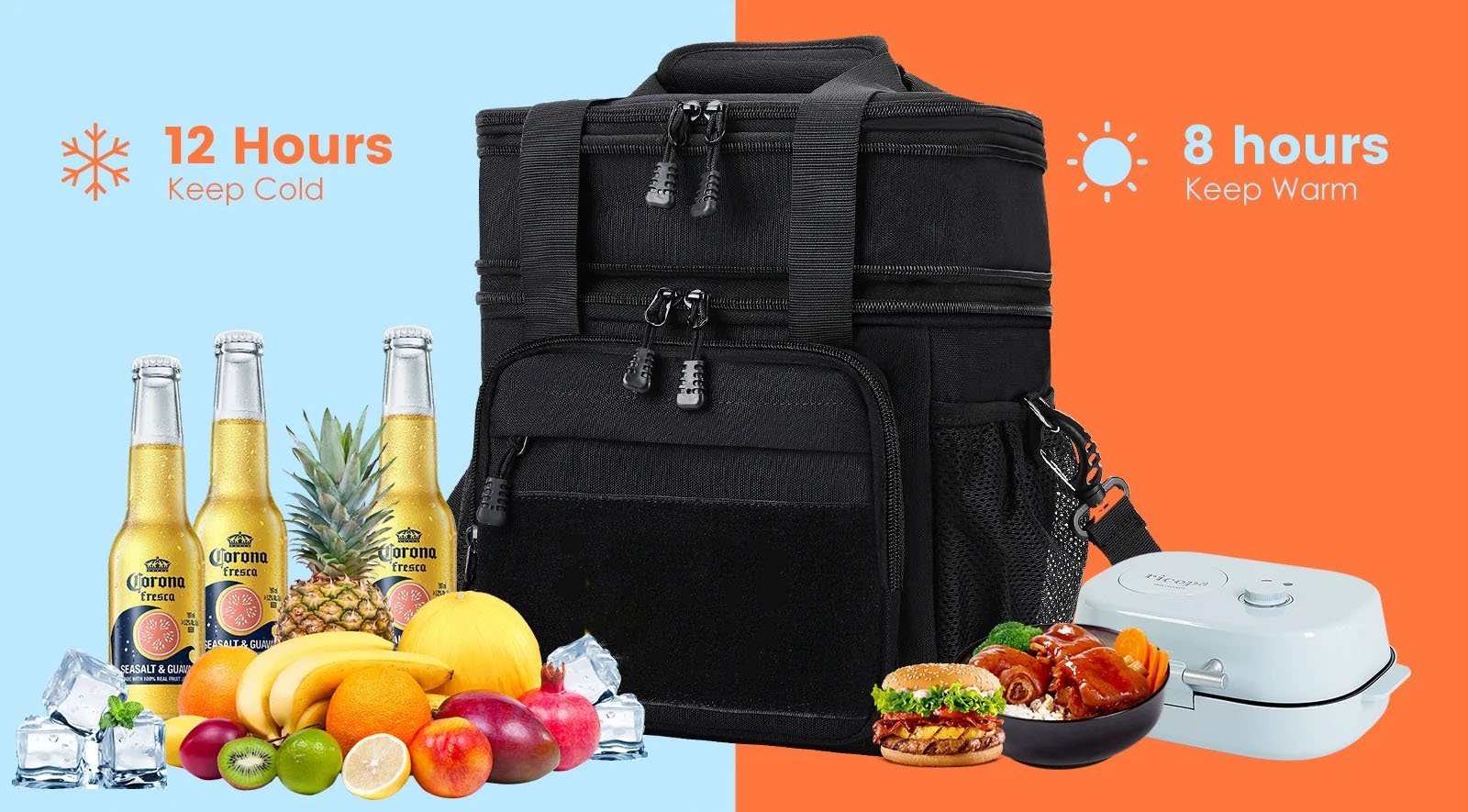
Time is the most important factor in logistics. I always ask my clients: "How long is the journey?" If the journey is short, simple insulation is fine. If the journey is long, you need thermal protection.
Let's look at the science simply. Heat moves in three ways. Conduction, convection, and radiation.6 Foam stops conduction. Foil stops radiation. When you combine thick foam and foil, you stop heat movement on all fronts.
In my factory testing room, we put ice packs in different bags.
- The Basic Bag: In a bag with 3mm foam and no foil, the ice melts significantly after 3 hours at room temperature.
- The Thermal Bag: In a bag with 5mm foam and aluminum lining, the ice stays solid for over 6 hours.
However, the bag structure matters too. A zipper that leaks air will ruin a good thermal bag. You must check the closure. For maximum time, I recommend thermal bags with Velcro flaps over the zippers7. This seals the air inside.
If you are shipping frozen meat or seafood across a country8, a basic insulated bag will fail. You will lose the product. You must invest in the thermal option with at least 5mm of foam.
Are Thermal Bags or Insulated Bags Better for Food Delivery?
Pizza arrives cold and customers get angry. You need a solution that guarantees hot food, but which bag handles daily abuse better?
For hot food delivery, thermal bags with aluminum lining are essential because they reflect steam and heat back into the food. Basic insulated bags absorb moisture and lose heat faster, making them better suited for dry or pre-chilled grocery items.
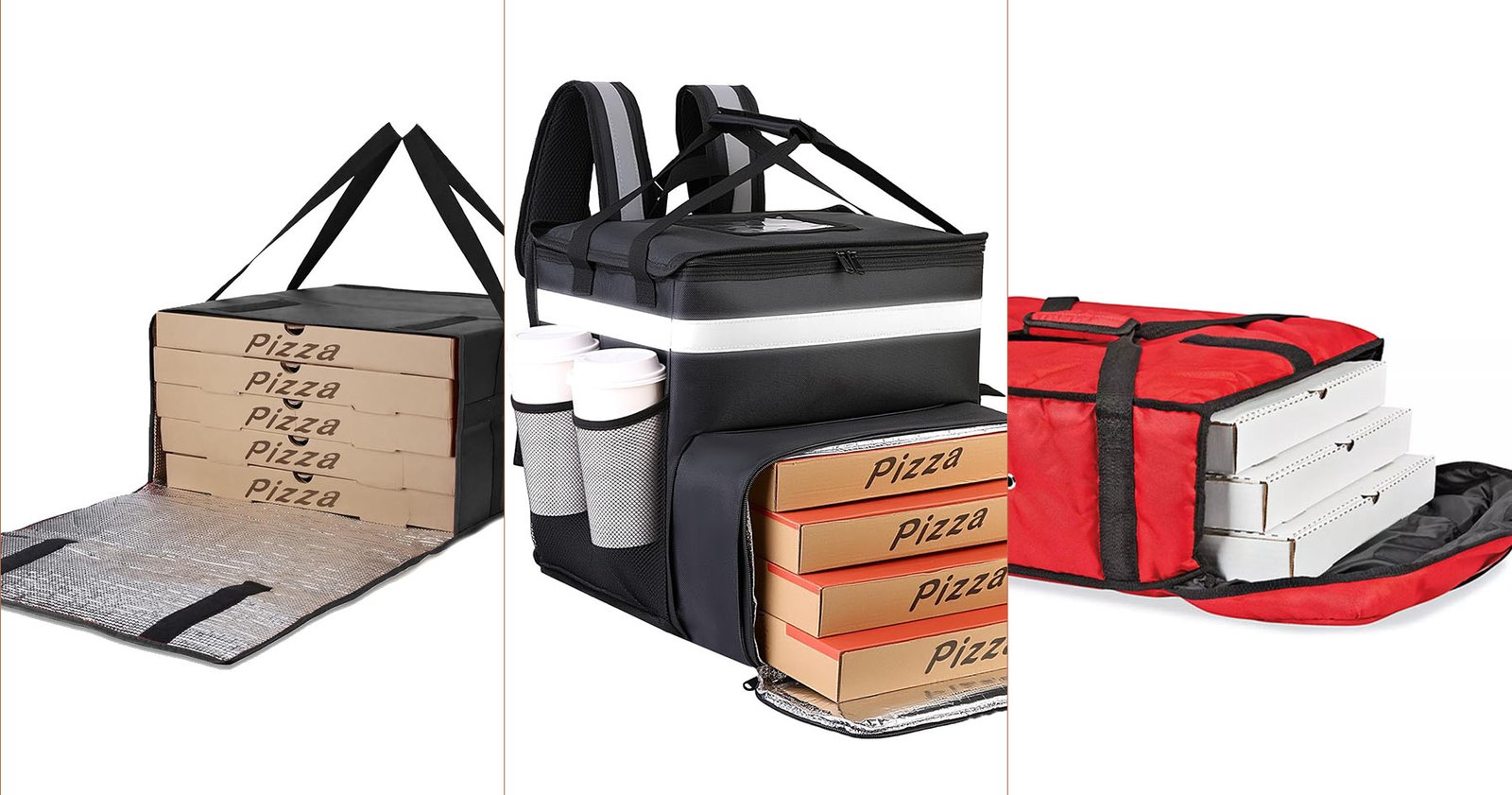
The food delivery business is tough. Drivers are in a hurry. The bags get dirty. The food must stay hot.
I strongly advise against using basic insulated bags for hot food. The inner PE layer in basic bags can melt if the food is too hot (over 80°C)9. Also, basic foam absorbs smells. After one week of delivering curry or pizza, that bag will smell terrible.
Thermal bags with aluminum foil are the standard for a reason.
- Heat Retention: The foil reflects the infrared heat from the pizza back to the pizza10. It acts like an oven.
- Moisture Control: High-quality thermal linings are waterproof. If soup spills, you wipe it up. It does not soak into the foam.
- Sanitation: You can sanitize foil easily11. This is vital for food safety laws in Canada and Europe.
I had a client in Toronto who tried to save money. He bought 1,000 basic nylon bags for pizza delivery. The steam from the pizza soaked into the nylon. The bags became soggy and cold. He had to replace all of them in two months. It was a waste of money.
If you are buying for a supermarket selling frozen peas, buy insulated bags. If you are buying for a restaurant delivering hot meals, buy thermal bags.
Do Thermal Bags Offer Higher ROI for Commercial Logistics?
You want to save money on procurement, but cheap bags might cost you more later. Does paying extra for thermal bags actually pay off?
Thermal bags cost about 20-30% more upfront but last longer and reduce product spoilage claims. For commercial logistics involving perishable goods, the higher ROI comes from reduced waste and consistent customer satisfaction, whereas insulated bags are better for low-risk giveaways.
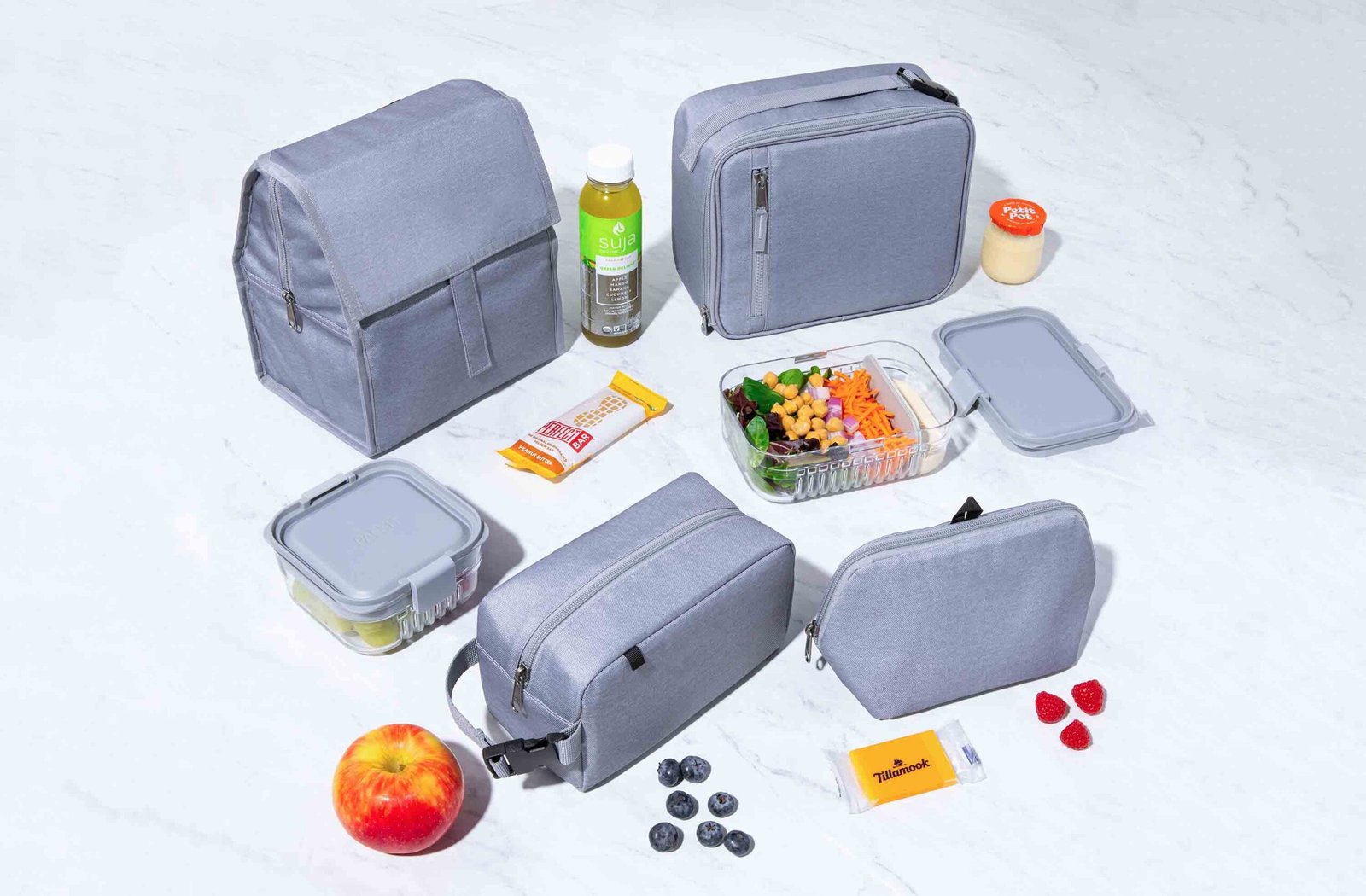
As a buyer, you look at the unit price. I understand this. A basic insulated bag might cost $1.50. A thermal bag might cost $2.20. You think, "I will save $0.70 per unit." But you must look at the Return on Investment (ROI).
ROI in bags comes from two things: Usage Life12 and Product Safety.
Usage Life12: Thermal bags usually use stronger materials. The aluminum foil is laminated to a strong mesh. It does not tear easily. A basic PE lining tears if you put a sharp box inside. A thermal bag can last for 500 trips.13 A basic bag might last for 100 trips. If you have to buy the bag five times, the cheap bag is actually expensive.
Product Safety: Imagine you are transporting expensive steaks or medicine. If the temperature rises, you throw the product away. One spoiled shipment costs more than the difference in bag prices for the whole year.
I worked with a logistics company in Japan. They switched from basic bags to high-end thermal bags. Their unit cost went up by 25%. However, their "spoiled goods" reports dropped by 90%14. At the end of the year, they saved $50,000.
If your business model is giving away a free bag at a trade show, buy the cheap insulated one. If the bag is a tool for your business operations, the thermal bag pays for itself very quickly.
What Critical Factors Should Buyers Consider Before Ordering?
You are ready to place a bulk order for 5,000 units. Do you know exactly what specifications to ask the factory for?
Buyers must define the required 'keep-cold' time, the specific product weight, and the closure mechanism. Always ask for a sample to test the foam density and the thickness of the aluminum layer, as these directly impact performance and unit price.
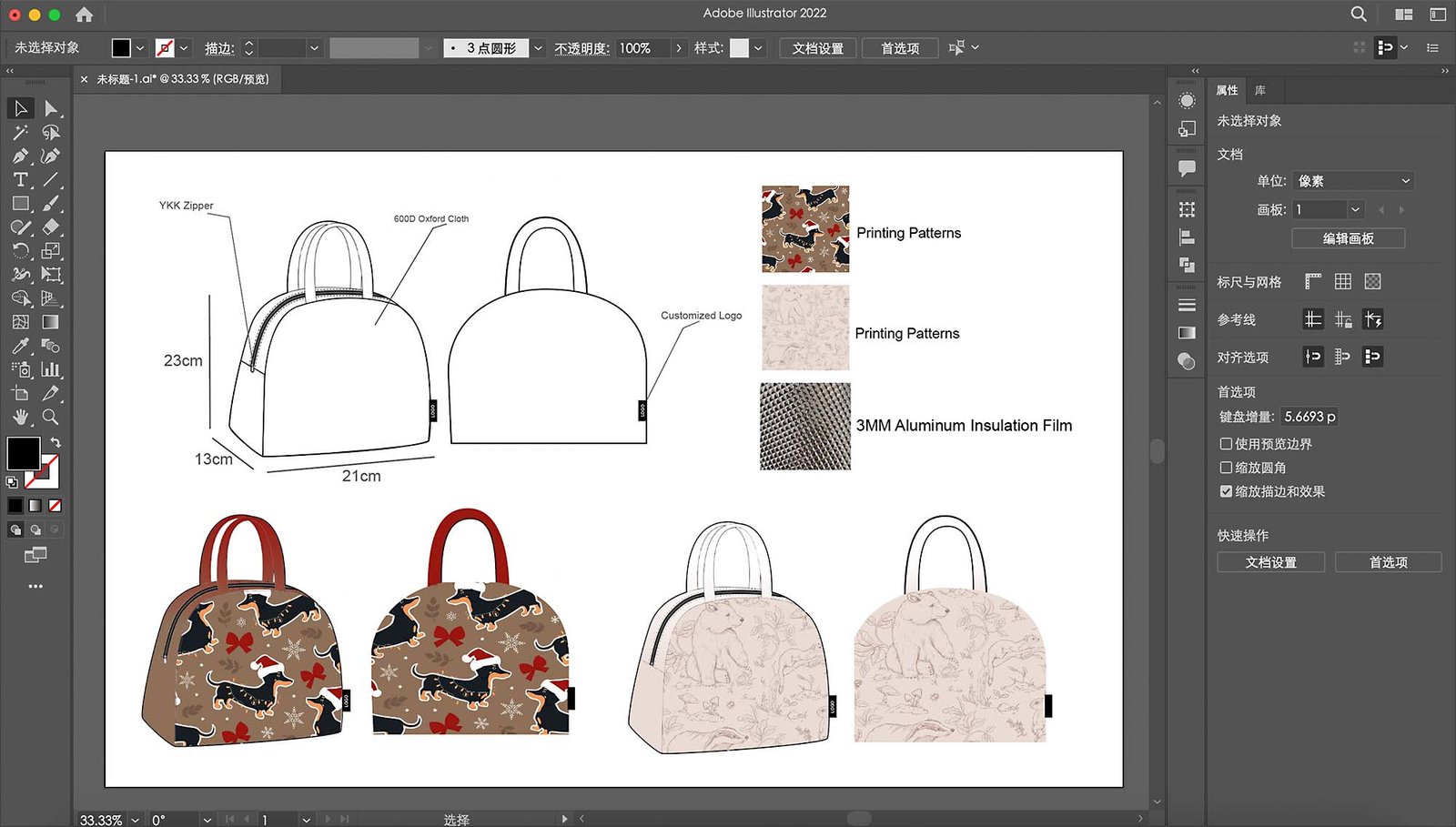
When you send an inquiry to a factory in China, vague requests lead to bad products. You cannot just say "I want a good thermal bag." You must be specific.
Here is a checklist I give to my new clients to ensure they get what they need:
- Define the Payload: What are you carrying? Six cans of soda need different support than 10kg of frozen meat. This decides the handle stitching and fabric strength.
- Foam Density: Ask for "5mm EPE foam15." If you just say "foam," some factories will give you 2mm. It feels thin and works poorly.
- Lining Material: Specify "Aluminum Foil Laminated16" for thermal or "White PEVA" for waterproof insulation. Do not leave this open to interpretation.
- The Handle Test: The handle is the first thing to break. Ask for "X-stitching" or reinforced cross-stitching on the handles.
- Logo Printing: Aluminum bags have a specific texture. If you want a logo, ask if it will be screen printed on the outside pocket or the main body.
The Golden Sample Rule: Always pay for a pre-production sample17. When you get it, cut it open. Yes, destroy it. Measure the foam. Check the lining. Ensure the factory used the materials they promised.
At Coraggio, we welcome this. We want you to see the quality inside. But many traders will send a good sample and ship a bad product. Knowing these specs protects your business.
Conclusion
Insulated bags suit short trips, while thermal bags with foil suit long-haul logistics. Choose based on your time requirements to save costs and protect your goods.
Understand how closed-cell EPE or PE foam actually works so you can specify the right insulation core instead of guessing from a spec sheet. ↩
Learn how foil and PEVA linings control radiant heat so you can justify higher-cost thermal constructions to stakeholders. ↩
Compare durability, weight, and cost of 420D vs 600D polyester to choose the right fabric strength for your logistics bags. ↩
See why heavy-duty nylon grades resist daily abuse, making them ideal for commercial delivery fleets and long-term use. ↩
Discover how thicker, denser foam dramatically extends temperature hold time and when the extra thickness is worth paying for. ↩
Get a simple technical grasp of the three heat transfer modes so you can evaluate bag designs with real engineering logic. ↩
See tests showing how flap designs cut air leakage, helping you choose closures that genuinely extend cold-retention time. ↩
Explore proven cold-chain setups for long-distance frozen shipments to avoid costly spoilage and customer complaints. ↩
Check material softening points to ensure your current bags are safe for very hot food and won’t deform in daily use. ↩
Understand the physics behind foil reflection so you can choose pizza bags that keep orders hot from oven to customer. ↩
Learn approved sanitation methods to keep foil-lined bags compliant with local health rules and free from cross-contamination. ↩
Identify construction details that most impact lifespan so you can select bags that survive hundreds of trips, not dozens. ↩
Check independent durability reviews to validate lifespan claims before committing to a large procurement contract. ↩
Review case studies where better bags slashed spoilage, helping you build a business case for upgrading your fleet equipment. ↩
Learn how exact foam specs affect performance so suppliers can’t quietly downgrade materials to cut corners on your order. ↩
Understand why laminated foil outperforms plain plastic linings in both insulation efficiency and long-term durability. ↩
See sourcing best practices that use pre-production samples to verify materials and prevent bait-and-switch from suppliers. ↩