You want to protect your business reputation1, but fake packaging2 is everywhere. If you cannot identify the difference between a high-end original and a cheap copy, you risk losing money and customer trust.
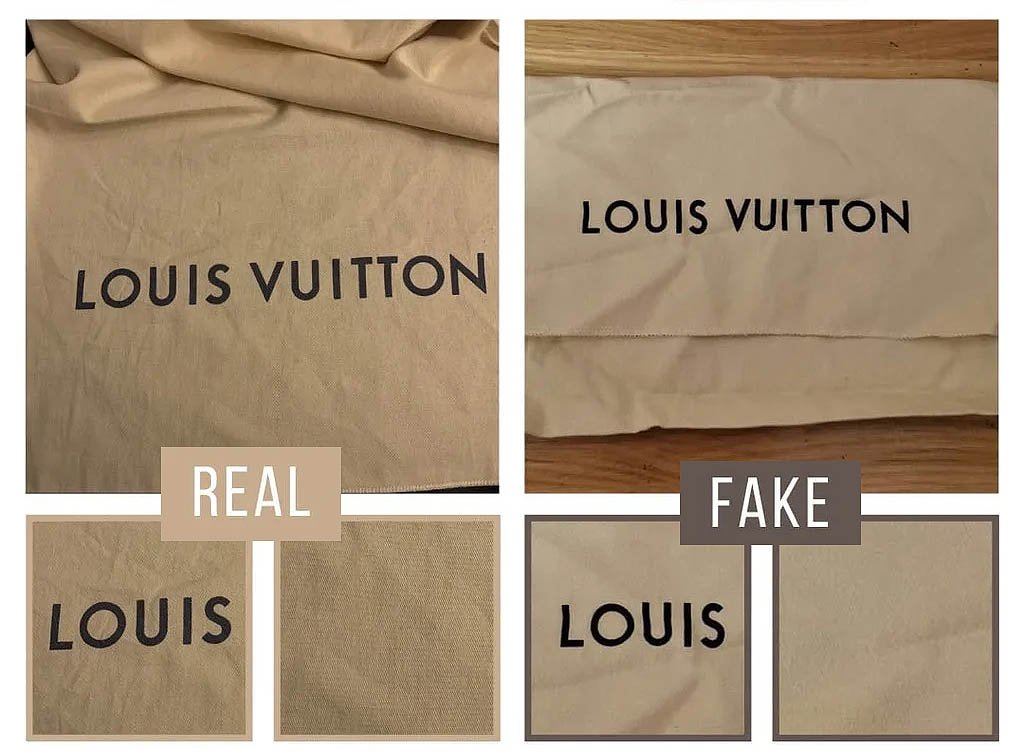
A genuine LV dust bag features 100% cotton flannel3 with a distinct texture, neat stitching, and a perfectly centered "LOUIS VUITTON" logo4 in dark blue or brown. The drawstrings are thick and braided, not flimsy ribbon. Always check the internal tag for "Made in India5" or "Made in Italy."
I have spent 15 years in the bag manufacturing industry in China. I run a factory with 120 workers, and I see materials every single day. I know how factories make products to save costs, and I know what real quality looks like. Many buyers come to me confused about the packaging they receive from other suppliers. They do not know if the quality is good or bad. This guide uses my factory experience to help you spot the fakes. It also shows you how to get better packaging for your own business.
What Does a Genuine LV Dust Bag Look Like?
Visual inspection is your first line of defense against bad products. Ignoring the overall look leads to accepting low-quality goods that damage your credibility.
Genuine bags have a soft, slightly beige or cream color6, never stark white. The material feels thick and substantial, not thin or synthetic. The shape is perfectly rectangular with sharp corners, unlike the rounded or uneven shapes often found in mass-produced replicas.
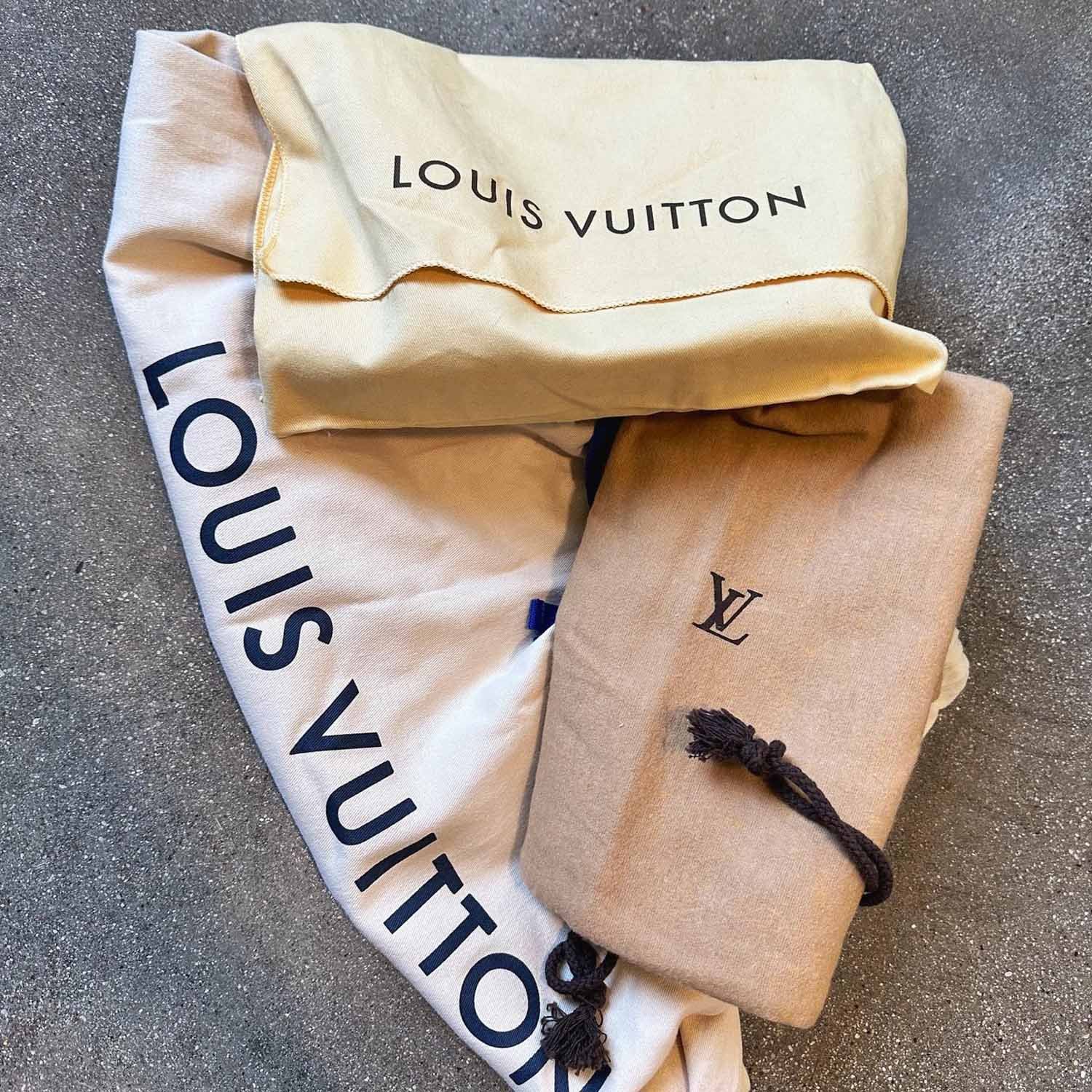
When you look at a dust bag, you are looking at the history of the brand. In my factory, we pay attention to these changes because they tell us about the production era. Before 2003, LV dust bags were a light tan or soft brown color with dark brown logos. If you are buying vintage items, this is normal.
However, modern bags (post-2016) are a very specific creamy, light beige color. They are never pure white. If a supplier sends you a bright white bag, it is a fake. The material should not reflect light. Cheap polyester reflects light and looks shiny. The real bag uses high-quality cotton that absorbs light7. It looks matte and feels soft.
We also look at the "hand feel8." In the textile industry, this means how the fabric reacts when you touch it. A real bag has weight. It does not wrinkle easily like a piece of paper. When you fold it, it holds a soft shape. The logo on the front is the most obvious visual cue. It should be dark blue, almost looking black in some lighting. If the logo is a light washed-out blue or a reddish brown on a modern bag, it is incorrect.
| Feature | Authentic (Modern) | Authentic (Vintage) | Common Fake |
|---|---|---|---|
| Color | Cream / Light Beige | Tan / Light Brown | Bright White or Yellowish |
| Logo Color | Dark Blue (Navy) | Dark Brown | Black or Faded Blue |
| Feel | Thick, Soft Cotton | Soft Flannel | Thin, Slippery, Stiff |
Which Materials and Stitching Details Signal Authenticity?
Poor materials scream "fake" immediately. If you miss the subtle tactile cues, you might be stocking inferior packaging solutions.
Authentic stitching is tight, uniform, and does not have loose threads. The material is typically 100% cotton flannel3 with a soft nap. Fakes often use polyester blends that feel slippery or overly smooth. The hem should be cleanly folded without raw edges visible inside.
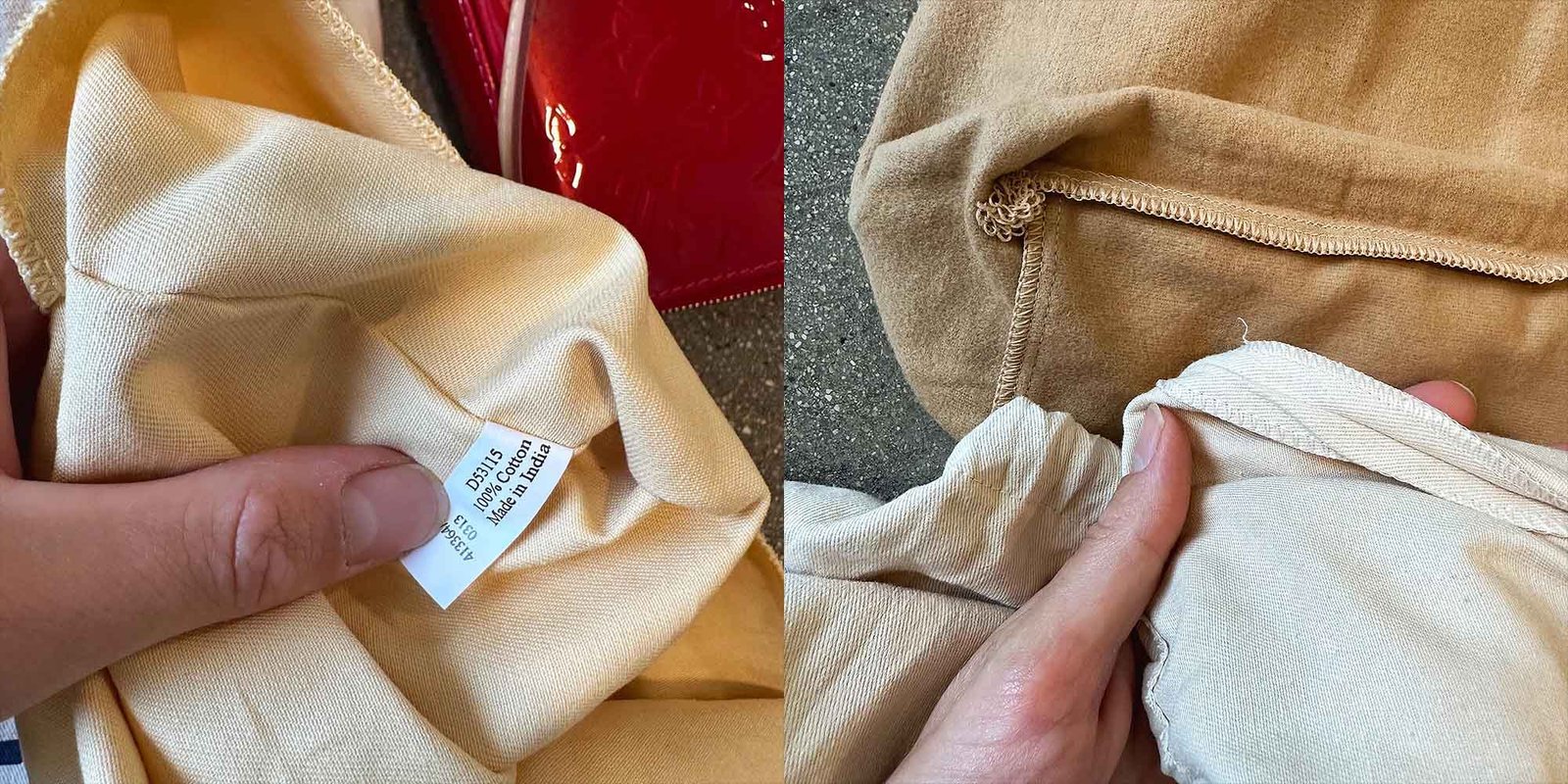
In my 3,000 square meter factory, I tell my workers that stitching is the soul of the bag. You can tell a lot about a product by looking at the lines. On a real LV dust bag, the stitching is invisible or very subtle. They use a thread that matches the bag color perfectly. The lines are straight. There is no "wandering" where the line goes up and down.
When we inspect goods, we look for "SPI" (Stitches Per Inch). High-end brands use a high SPI. This means the stitches are small and tight. Fakes want to save time. They use long stitches because it makes the machine run faster. If you see long, loose stitches, it is a sign of cheap production.
Also, look at the edges. We call this the "finishing." Turn the bag inside out. A real bag has "overlocking9" or clean seams inside. You will not see messy fabric edges that are fraying. The material itself is vital. Real dust bags use heavy cotton. It feels like a thick shirt or a soft blanket. Fake factories use polyester mixed with cotton. This makes the bag feel slippery. It also makes a "swish" sound when you rub it. Cotton is quiet. Real luxury is quiet10.
- Check the corners: Are they sharp or rounded? Real ones are sharp.
- Check the thread ends: Are there loose strings? Real ones are trimmed clean.
- Check the density: Can you see through the fabric? You should not be able to see through a real bag.
What Are the Most Common Fake LV Dust Bag Red Flags?
Identifying errors saves you money. Failing to spot red flags puts you at risk of fraud and customer complaints.
The biggest red flag is the font quality11. Real bags have crisp, dark blue lettering with perfect spacing. Fakes have bleeding ink, uneven letters, or the wrong shade of brown. Also, watch out for synthetic, shiny drawstrings that unravel easily.
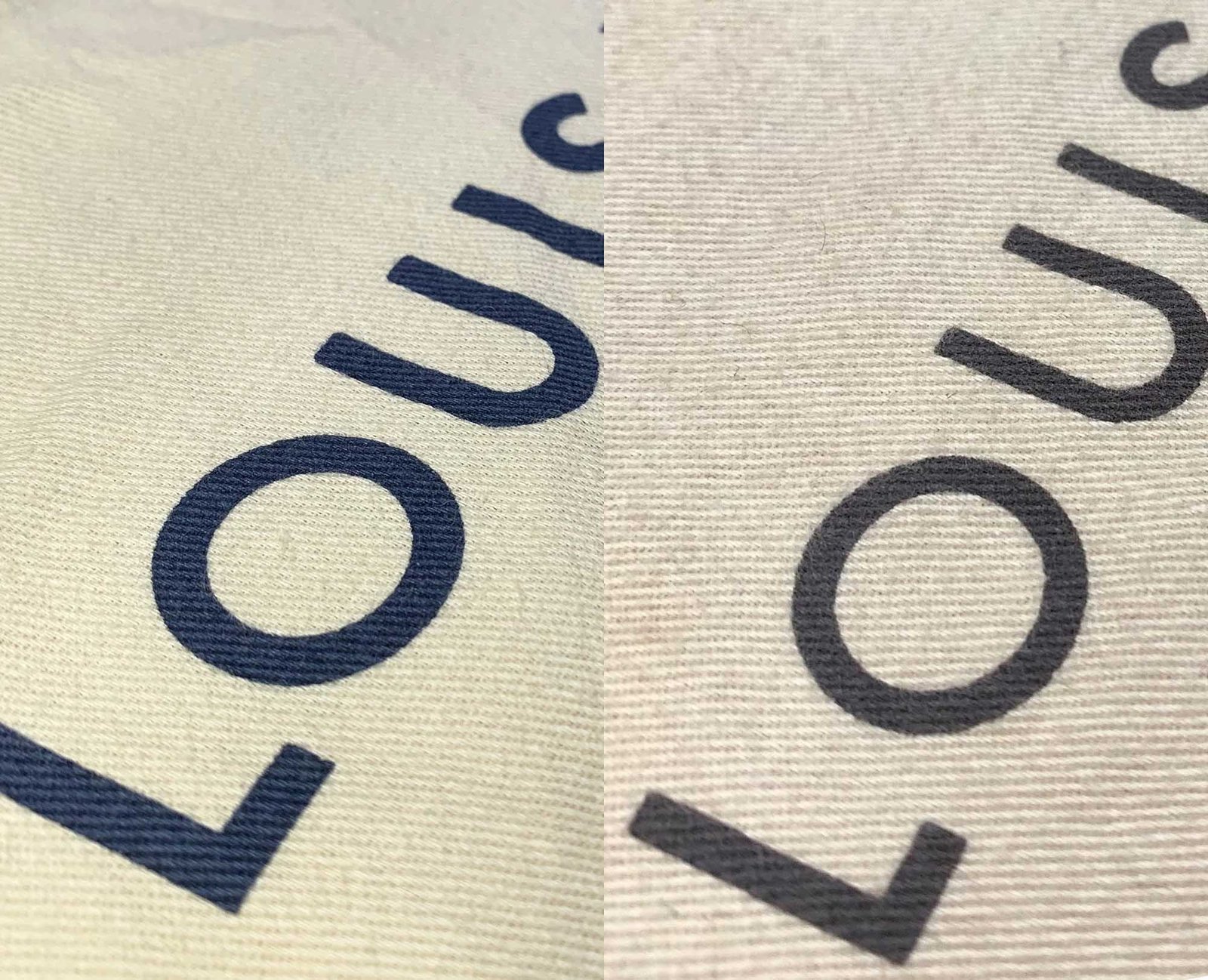
Printing on fabric is difficult. I have a design team of 10 people, and we know that getting a clean print on cotton takes skill. The ink can "bleed" into the fabric if it is not done right. This makes the edges of the letters look fuzzy.
On a real LV bag, the "LOUIS VUITTON" text is perfectly sharp. The edges of the letters are crisp. The spacing between the letters is exactly the same. In fake bags, the letters might be too close together or too far apart. Sometimes the "O" is an oval instead of a perfect circle. In the authentic font, the "O" is very round.
Another major red flag is the positioning. The logo must be perfectly centered. Fake factories often rush. They might print the logo a little bit to the left or right. Or they might print it crooked. You can fold the bag in half to check if the logo is in the middle.
We also see issues with the ink durability. On a fake bag, if you scratch the logo with your fingernail, the paint might peel off. Or if you wash it, the color might fade. Authentic printing penetrates the fabric deeply. It does not sit on top like a sticker.
List of Instant Red Flags:
- The Letter "O": It looks like a tall zero (0) instead of a round circle (O).
- The Letter "L": The bottom leg is too short or too long.
- Ink Bleeding12: The blue paint looks like it soaked into the surrounding fabric.
- Smell: Cheap fakes often smell like strong chemicals or glue13. Real bags smell like clean cotton.
Can You Verify Size, Print, and Drawstring Details Quickly?
Time is money in procurement. You need a fast verification method to avoid wasting hours on quality control inspections.
Yes, you can quickly verify by checking the drawstring and tag. Real drawstrings are thick, braided cotton14. The internal tag must say "100% Cotton" and usually "Made in India5." Sizes are standardized; any variance in width or height across a batch indicates a fake.
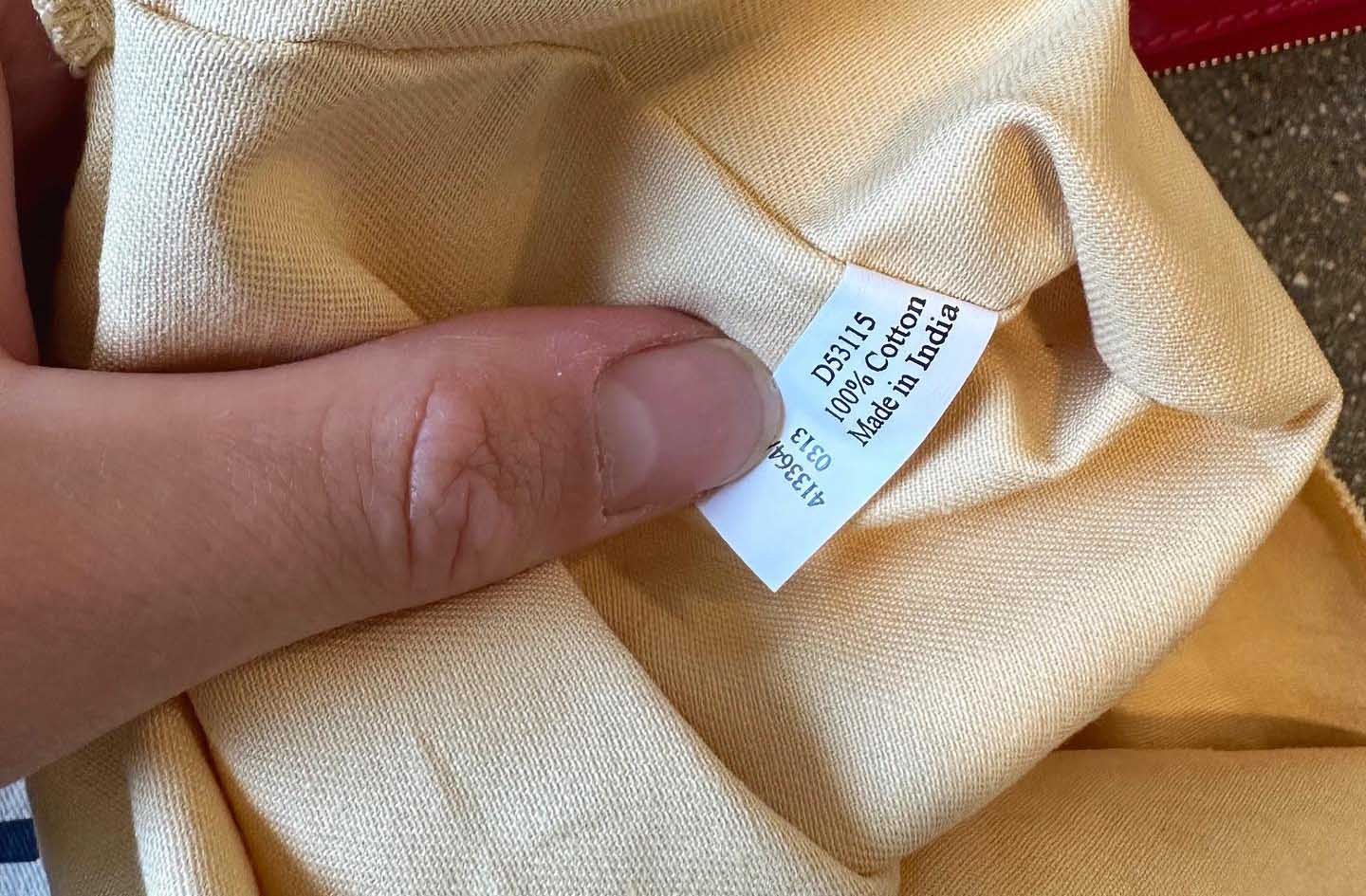
When you buy in bulk, consistency is the most important thing. If you order 1,000 bags, every single one should be the same. In my factory, we have strict QC (Quality Control). If one bag is 1cm smaller than the others, we reject it.
Fake suppliers do not have this control. You might verify the size of one bag, but the next one is different. Authentic dust bags come in standard sizes. They do not vary. If you measure five bags and they are all different sizes, they are fake.
Let's talk about the drawstring. This is a detail many people miss. The rope on a real bag is thick. It is made of braided cotton fibers. It feels strong. The ends are usually knotted simply but tightly. Fake bags use nylon rope. It is shiny, thin, and slippery. The knot often comes undone.
Finally, look inside for the tag. It is a small white tag. It should verify the material and origin.
- Material: It must say "100% Cotton".
- Origin: Most authentic dust bags are "Made in India5" or sometimes "Made in Italy".
- Text Quality: The text on the tag should be clear, not blurry.
If the tag says "Made in France" or "Made in Paris," be very careful. While LV bags are made there, the dust bags are almost always sourced from textile hubs like India. If the bag has no tag at all, it is definitely a fake.
Where Can Buyers Source Bulk Dust Bags as Gift Alternatives?
Relying on luxury brands for bulk gifts is expensive. You need cost-effective, high-quality alternatives to build your own brand identity.
For bulk procurement, source directly from OEM manufacturers in China15. We offer customizable cotton, canvas, or recycled material dust bags. This allows you to print your own logo, control the fabric quality, and ensure on-time delivery at a fraction of the cost of luxury branded packaging.
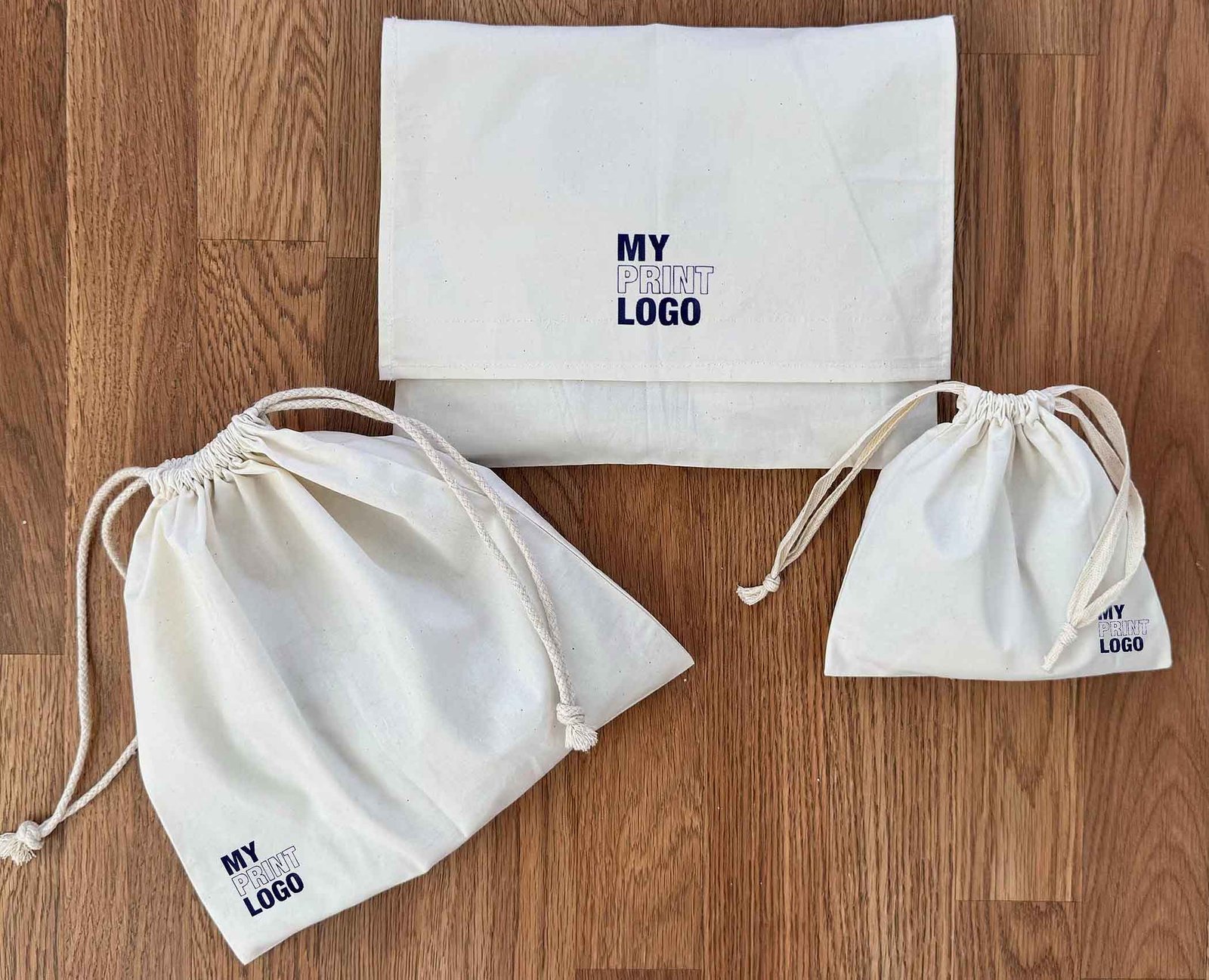
Why are you buying fake LV bags? Usually, it is because you want your product to look expensive. But using a fake bag carries a high risk. If your customer finds out, you lose their trust. A better strategy is to create your own high-quality packaging.
At Coraggio, we help buyers like you create your own brand assets. We have 8 production lines and can make dust bags that are even better quality than the luxury ones. We use eco-friendly materials like organic cotton, heavy canvas, or RPET16 (recycled plastic).
Benefits of Custom OEM Dust Bags:
- Brand Building: We print your logo, not someone else's. This makes customers remember you.
- Cost Control: A custom bag costs much less than buying "replica" packaging. You get factory-direct pricing.
- Consistency: We guarantee the size and quality. You will not get one batch that is good and one that is bad.
- Customization: You can choose the drawstring color, the fabric thickness, and the size. We can make a bag that fits your specific product perfectly.
We handle everything from design to delivery. We have a 10-person design team to help you with the artwork. We export to Europe and North America, so we understand the quality standards you need. Don't risk your business on fakes. Build your own value with professional packaging.
Conclusion
Real LV dust bags have thick cotton, dark blue logos, and perfect stitching. To grow your business safely, avoid fakes and choose custom, high-quality OEM dust bags17 from reliable manufacturers.
Understanding reputation risks from fake packaging helps you prevent customer backlash and protect your brand’s long‑term credibility. ↩
Learning the impact of fake packaging will show why you must tighten your sourcing and quality control processes immediately. ↩
Knowing how real cotton flannel looks and feels helps you instantly distinguish genuine packaging from low‑grade synthetics. ↩
Mastering logo alignment checks gives you a fast, visual way to screen out counterfeit dust bags in seconds. ↩
Clarifying where genuine dust bags are produced helps you spot false origin labels that signal counterfeit goods. ↩
Precise color cues prevent you from accepting stark white or off‑tone bags that customers will recognize as fake. ↩
Learning simple light and touch tests helps you evaluate fabric quality without special equipment. ↩
Understanding hand feel lets you make quick, expert-level judgments about material quality during inspections. ↩
Recognizing proper overlocked seams lets you differentiate refined manufacturing from sloppy, fraying edges. ↩
Exploring this concept sharpens your eye for subtle, non-flashy quality markers that define true premium goods. ↩
Detailed font checks—edges, spacing, and letter shapes—offer a reliable way to filter out counterfeits. ↩
Spotting ink bleeding helps you recognize poor printing methods commonly used in counterfeit operations. ↩
Learning how smell correlates with material and production quality gives you another quick authenticity test. ↩
Comparing real cotton ropes to synthetics prevents you from overlooking a key authenticity and durability indicator. ↩
Learning best practices for working with OEMs lets you cut costs while maintaining strict quality standards. ↩
Exploring these materials helps you choose eco-friendly, premium options that enhance your brand image. ↩
Building your own premium dust bags lets you avoid legal risks, lower costs, and strengthen your brand identity. ↩