Most brands treat GWP makeup bags as a giveaway cost. But that mindset hides a real opportunity. Some bags get used daily. Others sit in a drawer. The difference matters more than you think.
A custom GWP makeup bag can boost brand loyalty when it is built for daily use, not just box appeal. Each time the consumer reaches for it, your logo earns a fresh impression1. That turns a one-time gift into ongoing, paid brand media — if the spec floor is right.

In the projects we've handled at Coraggio over the past 15 years, the GWP briefs that produce real loyalty lift share one trait. They are scoped like media buys, not like packaging. Let me walk through what we see from the factory seat.
Why Do Brands Use GWP Makeup Bags for Promotion?
Brands need a reason for shoppers to add another item to the cart. A free bag works. But many brands stop thinking after that point. The bag ships, the campaign ends, and the value is assumed gone.
Brands use GWP makeup bags because they drive short-term conversion at counter or online checkout2. The deeper reason, though, is reach. A well-made bag keeps showing the logo for months after the campaign ends, which most marketing assets cannot do.
The Second-Use Reframe
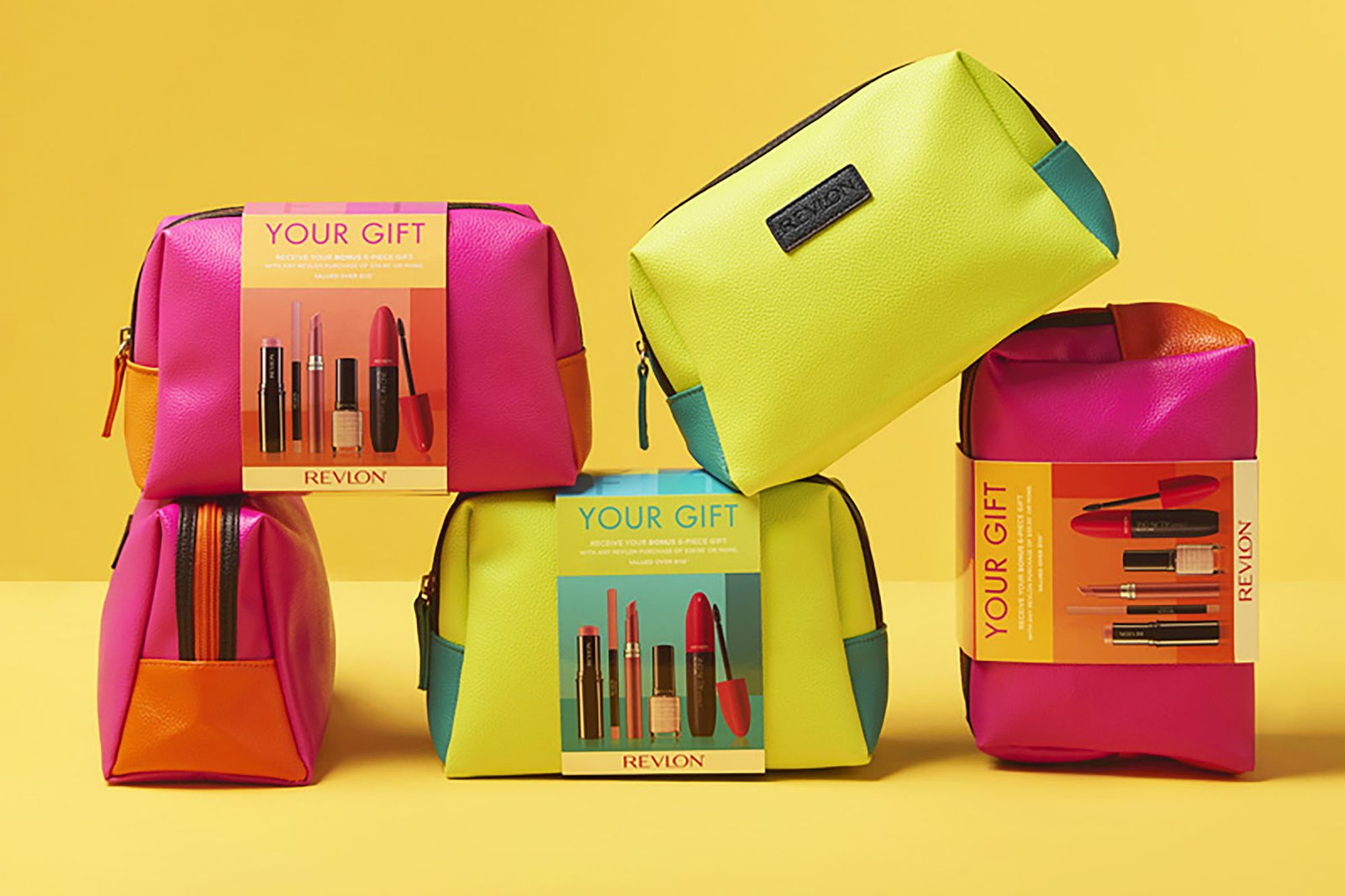
In the briefs we get, most marketing teams price the GWP bag against unit cost. I think that is the wrong frame. A GWP bag should be priced on cost per impression, the same way you would judge an ad spend3.
Here is how I see the math break down:
| Bag Type | Unit Cost | Likely Daily Uses | Effective CPM Logic |
|---|---|---|---|
| Box-only bag | Low | 1–3 times | High cost per impression |
| Standalone daily-use bag | Medium | 50+ times over months | Low cost per impression |
A bag that the consumer carries into her gym, her office, or her travel kit divides its cost across hundreds of brand exposures. A bag that looks pretty in the unboxing photo and then gets shelved gives you one impression for the same money. So when a procurement manager pushes hard on unit price alone, the loyalty thesis often dies before production starts.
What Makes a GWP Makeup Bag Valuable to Customers?
End consumers are picky. They get free stuff all the time. Most of it ends up in a drawer or in the trash. So the question is not "does she like it" but "will she actually use it next Tuesday."
A GWP makeup bag is valuable when the silhouette, closure, interior layout, and durability match a real daily ritual the consumer already has. Without that fit, even a beautiful bag becomes one more unused freebie.
What "Standalone Usable" Really Means
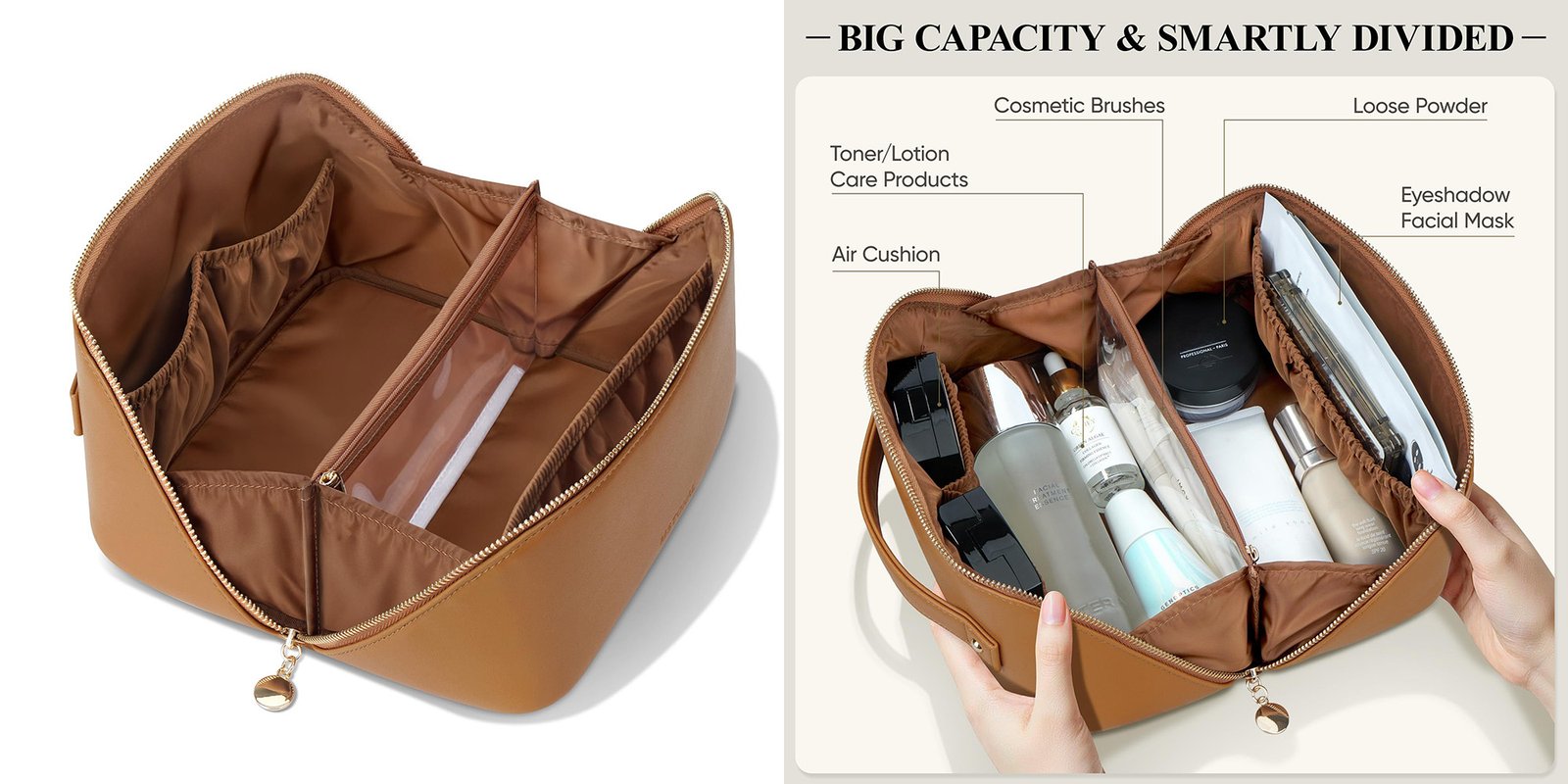
When we review a brief, we look for four signals that the bag was designed to live outside the gift box:
| Spec Area | Box-Only Bag | Standalone Daily-Use Bag |
|---|---|---|
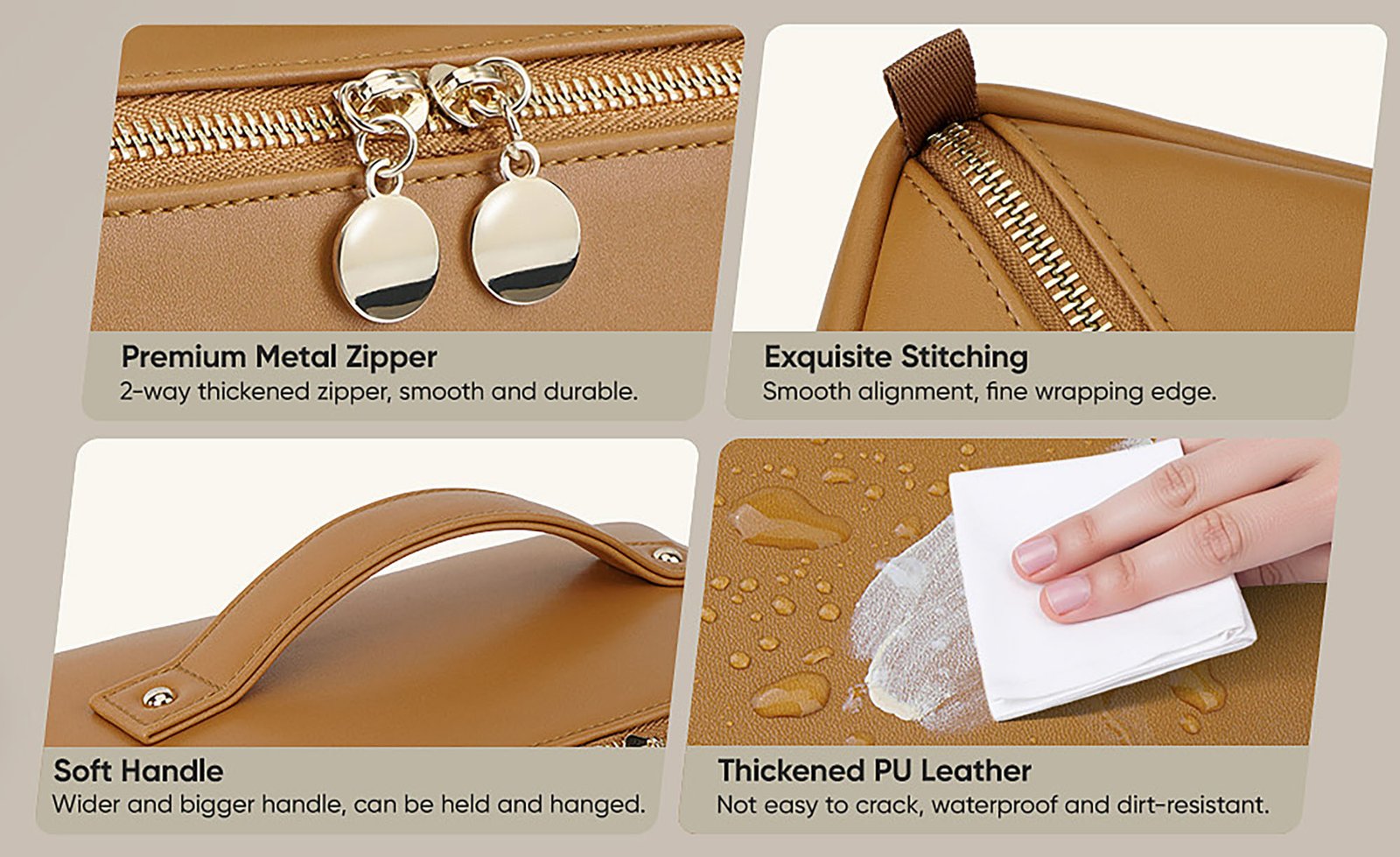
| Closure | Open top or weak zipper | Smooth metal zipper |
| Interior | Single flat pocket | Divided pockets, brush slots |
| Material | Thin PU, easy to crease | Coated canvas, thick PU, or PVC4 |
| Silhouette | Flat envelope | Structured, holds shape when filled |
These are not luxury upgrades. They are the floor for a bag that survives being thrown into a tote daily. In our experience, when one of these is missing, end-consumer complaints show up on social media within weeks of the campaign launch. And those complaints usually tag the brand, not the factory5.
How Can Custom Cosmetic Bags Improve Brand Recall?
Logo placement matters. But logo placement alone does not build recall. The bag has to be in the consumer's hand often enough for the logo to register without effort.
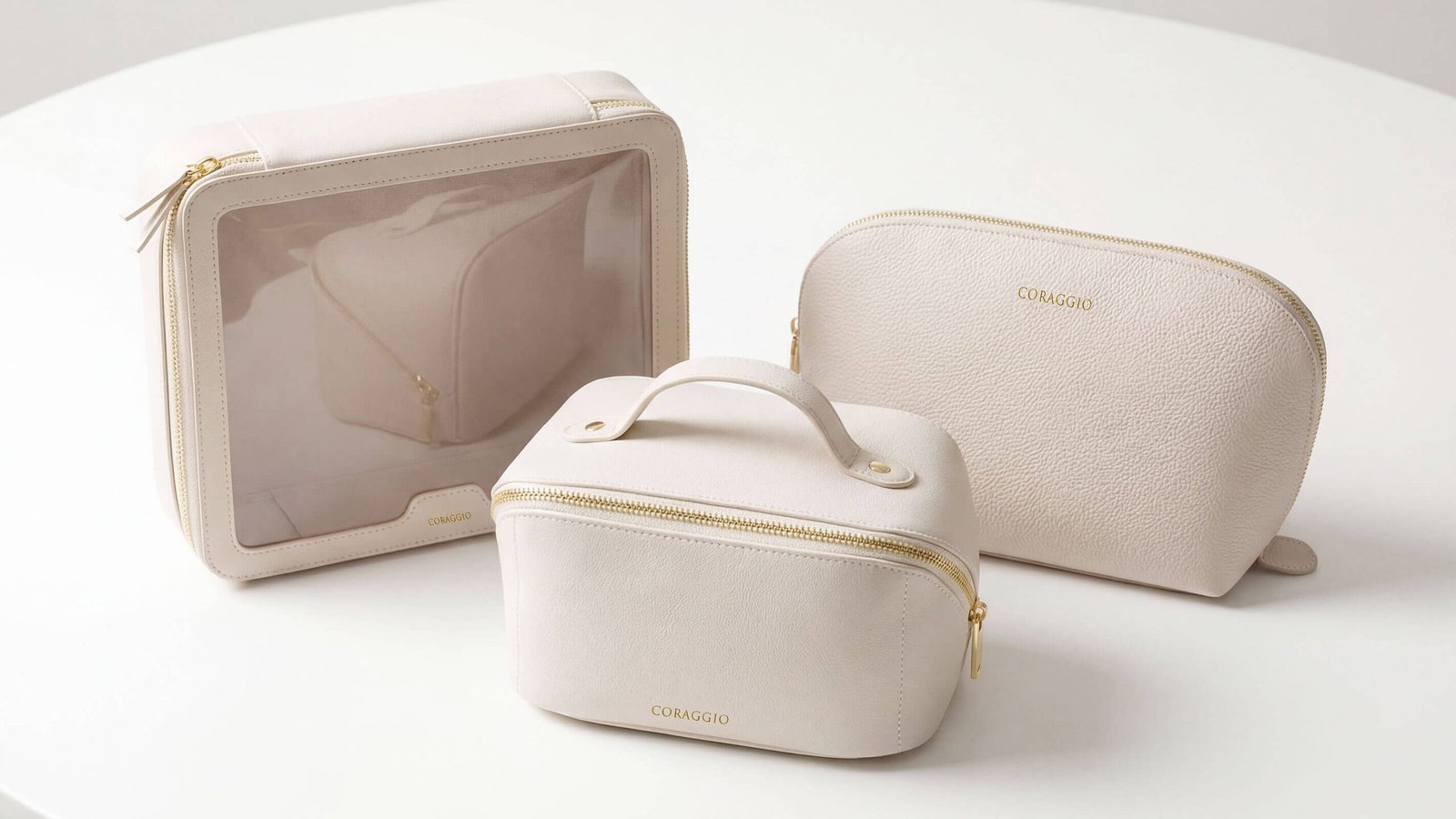
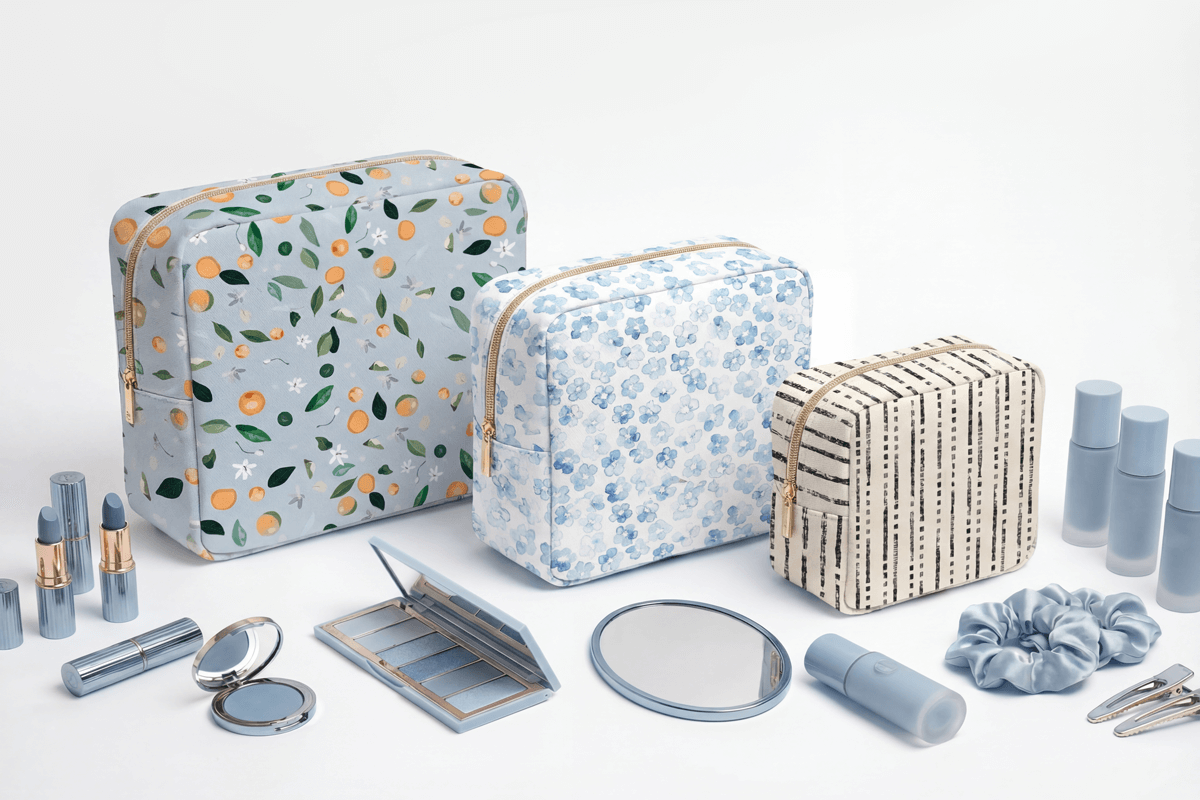
Custom cosmetic bags improve brand recall by combining repeated daily contact with a finish that feels considered6. Foil stamping, embossing, woven labels, or color-matched hardware7 turn a generic bag into something the consumer associates with the brand, not with "free gift."
MOQ Is a Design Lever
This part surprises most procurement managers. They treat MOQ as a number to negotiate down. But MOQ is what unlocks the craft tier of the gift itself.
| MOQ Range | What's Typically Accessible |
|---|---|
| Under 1,000 pcs | Stock material, printed logo, basic hardware |
| 3,000–5,000 pcs | Custom PU color, foiling, embossing |
| 10,000+ pcs | Custom-woven fabric, custom hardware molds, specialty linings |
If a brand wants embossing or custom-color hardware but only orders 500 units, the math does not work. The tooling cost gets spread across too few pieces. So the brand either pays a high unit cost or the factory substitutes a cheaper finish to hit the budget. Either way, the recall-driving detail gets lost. I usually tell marketing teams: tell me your finish dream first, and I will tell you what MOQ unlocks it.
What Should Buyers Consider When Ordering GWP Makeup Bags?
Procurement teams tend to focus on unit price, lead time, and certifications. Those matter. But there is a hidden cost stack that often gets under-modeled in the brief stage.
Buyers should consider tooling fees, custom material minimums, sampling rounds, and QC standards alongside unit price. A "low" quote that ignores these usually means the factory has already planned to downgrade somewhere — material weight, stitching density, or hardware grade — to hit the number.
The Hidden Cost Stack
Here is what we typically see sit behind a quote:
| Cost Layer | Often Under-Modeled? | What Gets Cut to Hide It |
|---|---|---|
| Tooling (molds, dies) | Yes | Custom hardware swapped for stock |
| Custom material MOQ | Yes | Fabric switched to off-the-shelf |
| Sampling rounds | Yes | First sample becomes production sample |
| QC inspection | Yes | Looser AQL, fewer pulled units8 |
When these layers are not spelled out, the brand thinks it got a great deal. Then production arrives, the lining is thinner, the zipper sticks, and the social media complaints start. We have had brands come back and re-order a higher spec after the first round failed. The total spend ended up higher than if they had set the spec floor correctly the first time.
How Can a GWP Makeup Bag Encourage Repeat Purchases?
Loyalty is not built by the bag itself. It is built by the loop the bag creates. Use, remember, return.9
A GWP makeup bag encourages repeat purchases when the consumer's daily use of it keeps the brand top of mind between campaigns10. The next time she runs out of mascara or sees a launch email, your name is already familiar — because she touched your logo this morning.
Brief Quality Predicts Outcome
The briefs that produce strong repurchase signals share one trait. They answer use-context questions up front. The briefs that arrive with only "color plus logo" force us to guess.
| Question We Ask Back | Why It Matters |
|---|---|
| What occasion is the bag for? | Travel, gym, and desk drawer need different sizes |
| Which channel is it bundled in? | E-commerce needs ship-flat; counter needs shelf appeal |
| Who is the target consumer? | A 22-year-old and a 45-year-old want different silhouettes |
| What ritual does the brand want to be part of? | Morning skincare versus evening touch-up changes the interior |
When a brief answers these, we can build a bag that fits a real moment in the consumer's day. When it does not, we build a generic bag, and the loyalty thesis quietly dies. From what we typically see, the brands that treat the brief as a strategy document — not a purchase order — get visibly better word-of-mouth from the campaign.
Conclusion
A GWP makeup bag is brand media, not a giveaway. Spec it for daily use, model the real cost stack, and write a brief that answers use-context.
"[PDF] THE ATTITUDINAL EFFECTS OF MERE EXPOSURE by Robert B ...", https://cdn.isr.umich.edu/pubFiles/historicPublications/Theattitudinaleffects_2360_.PDF. Psychological literature on the mere exposure effect and advertising repetition shows that repeated incidental contact with a stimulus increases familiarity and recall, a mechanism foundational to frequency-based media planning. Evidence role: mechanism; source type: paper. Supports: Repeated exposure to a stimulus, including brand cues, can increase recognition, recall, and preference.. Scope note: Effects depend on attention, context, and saturation; lab findings do not map one-to-one onto branded merchandise use. ↩
"[PDF] Understanding the Benefits of the Choice of Free Gifts in Consumer ...", https://digitalcommons.georgiasouthern.edu/cgi/viewcontent.cgi?article=1014&context=amtp-proceedings_2026. Marketing research on premium-based promotions documents measurable short-term lifts in purchase incidence and basket size, though effects vary by product category and gift fit. Evidence role: mechanism; source type: paper. Supports: Empirical support that free-gift or premium promotions raise short-term purchase rates relative to no-promotion baselines.. Scope note: Most studies cover general consumer goods rather than beauty GWP specifically, so the magnitude in cosmetics retail is inferred. ↩
"Cost per impression - Wikipedia", https://en.wikipedia.org/wiki/Cost_per_impression. Cost per mille is the established media-buying metric expressing the price of one thousand advertising impressions and is widely used to compare reach efficiency across channels. Evidence role: definition; source type: encyclopedia. Supports: Standard definition of CPM (cost per mille / per thousand impressions) as a media-buying benchmark.. Scope note: The framework is conventionally applied to paid media, so its extension to branded merchandise is analogical rather than directly sourced. ↩
"Coated fabrics - Wikipedia", https://en.wikipedia.org/wiki/Coated_fabrics. Material references describe polyurethane and PVC coatings, along with treated canvas, as common substrates in bag and accessory production owing to abrasion resistance and form retention. Evidence role: definition; source type: encyclopedia. Supports: Standard descriptions of PU, PVC, and coated canvas as synthetic and treated materials used in accessory and bag manufacturing for abrasion resistance and structure.. Scope note: Performance varies by coating thickness and base substrate; cited references describe general material classes rather than GWP-specific specifications. ↩
"Consumers blame both manufacturer and retailer when products fail ...", https://mendoza.nd.edu/news/consumers-blame-when-products-fail/. Consumer behavior research on product-harm crises and attribution finds that responsibility for quality failures is generally assigned to the brand of record, with limited disaggregation toward upstream suppliers. Evidence role: expert_consensus; source type: paper. Supports: Consumers tend to attribute product failures and quality issues to the consumer-facing brand rather than to suppliers or manufacturers.. Scope note: Findings come largely from food, automotive, and electronics contexts; transfer to beauty promotional items is inferential. ↩
"Hand-Feel Touch Cues and Their Influences on Consumer ... - PMC", https://pmc.ncbi.nlm.nih.gov/articles/PMC6678767/. Consumer research on packaging and haptic cues finds that material quality, finish, and tactile attributes shift perceived brand quality, supporting a link between considered finishes and stronger brand associations. Evidence role: mechanism; source type: paper. Supports: Sensory and material cues in packaging influence perceived brand quality and downstream brand evaluations.. Scope note: Most studies examine primary product packaging rather than promotional gift items, so applicability to GWP bags is inferred. ↩
"Hot stamping - Wikipedia", https://en.wikipedia.org/wiki/Hot_stamping. Foil stamping, embossing, and woven labeling are documented finishing processes in print and textile manufacturing, used to add tactile and visual differentiation to branded goods. Evidence role: definition; source type: encyclopedia. Supports: Standard descriptions of foil stamping, embossing, and woven label production as established decoration and finishing processes.. ↩
"[PDF] ISO 2859-1 - UNT Chemistry", https://chemistry.unt.edu/~tgolden/courses/iso2859-1.pdf. ISO 2859-1 and ANSI/ASQ Z1.4 define Acceptable Quality Limit sampling plans, formalizing how inspection level and lot size determine the number of units pulled and the pass/fail threshold. Evidence role: definition; source type: institution. Supports: Definition of AQL and the ISO 2859 / ANSI/ASQ Z1.4 sampling framework that governs lot inspection severity.. ↩
"[PDF] Customer Loyalty, Repurchase and Satisfaction: A Meta-Analytical ...", https://commons.erau.edu/cgi/viewcontent.cgi?article=1017&context=db-management. Behavioral research on habit formation describes a cue-routine-reward structure in which repeated environmental cues drive automatic responses, a mechanism marketing scholars have linked to behavioral brand loyalty and repurchase patterns. Evidence role: mechanism; source type: paper. Supports: Behavioral research on habits and loyalty links repeated contextual cues to automatic brand selection and repeat purchase.. Scope note: The general habit literature does not isolate the contribution of promotional merchandise as a cue, so the mapping to GWP bags is interpretive. ↩
"[PDF] Conceptualizing, Measuring, and Managing Customer-Based Brand ...", https://people.duke.edu/~moorman/Marketing-Strategy-Seminar-2015/Session%203/Keller.pdf. Brand equity research, including Keller's customer-based brand equity model, identifies salience and top-of-mind awareness as antecedents of consideration and choice in repeat-purchase categories. Evidence role: expert_consensus; source type: paper. Supports: Brand salience and top-of-mind awareness are linked to inclusion in the consideration set and to purchase likelihood.. Scope note: These models describe general brand effects rather than the specific contribution of promotional merchandise. ↩