Bulk buyers often lose time and money on the wrong garment bag sizes. I have seen stock sit still, orders get delayed, and end users complain because the fit was simply wrong.
The garment bag sizes bulk buyers really need1 are usually 40 to 60 inches for most suits, dresses, and coats. I suggest stocking 40, 47, 54, and 60 inches first. For wedding gowns or stage wear, I add 61 to 72 inch extra-long sizes.
I have worked with many buyers who thought one size could cover everything. That idea sounds easy, but it often causes trouble later. A short bag can crush a long coat. A slim bag can wrinkle several suits. A very large bag can also raise cost and waste space. That is why I always start with size planning before production2. When I do that, I help buyers cut risk, move stock faster, and match real market demand more closely.
What Are the Standard Garment Bag Sizes for Wholesale?
Many buyers ask for "standard size" garment bags, but that phrase is often too vague. I have seen this create sampling mistakes, price changes, and bulk orders that do not match the product.
The standard garment bag sizes for wholesale3 usually range from 40 to 60 inches in length4. The most stable and practical sizes are 40, 47, 54, and 60 inches5. These sizes cover most commercial needs for suits, dresses, uniforms, and coats.
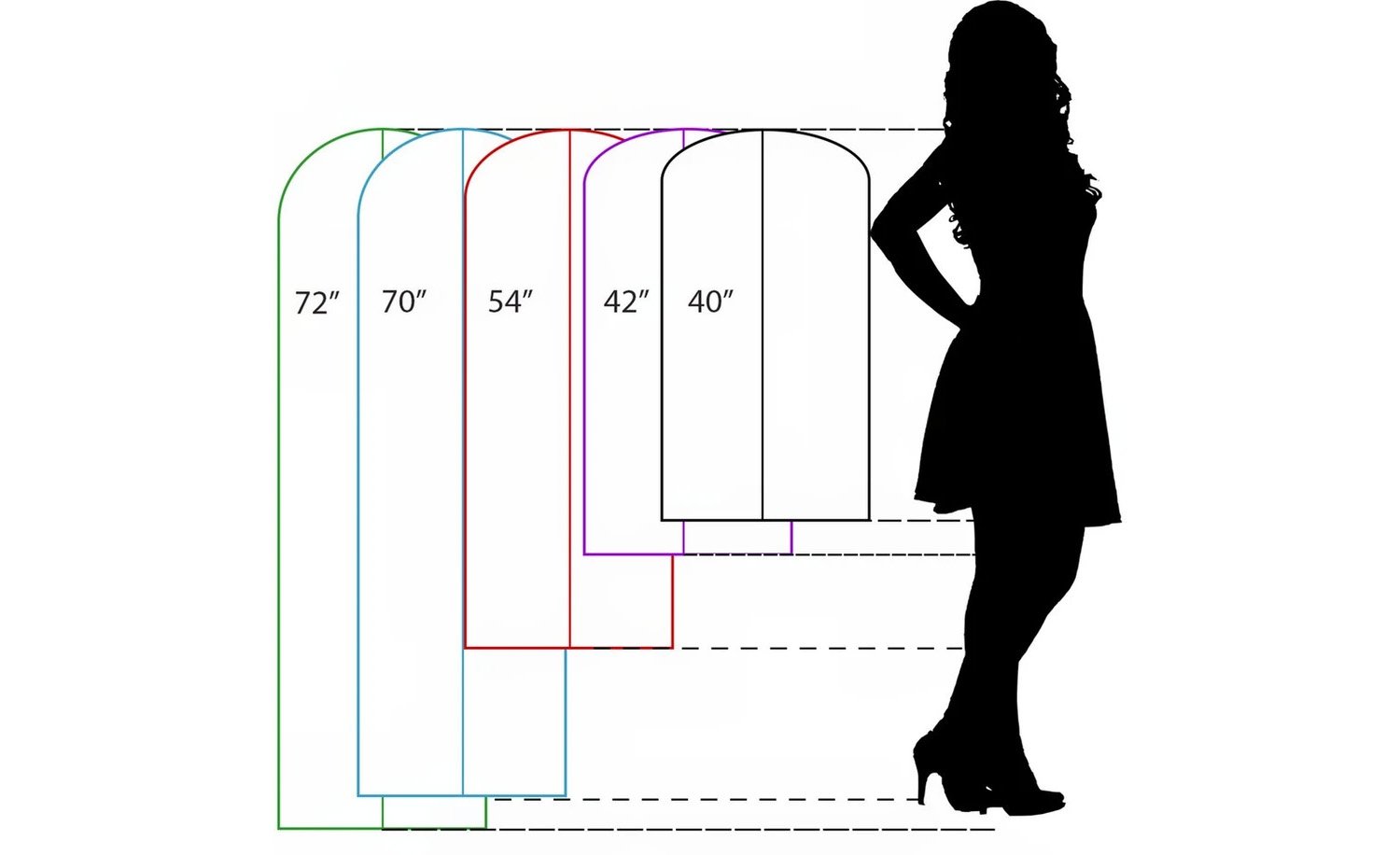
When I speak with wholesale buyers, I do not begin with fabric or logo first. I begin with use case. That is because size drives many other decisions. A 40-inch garment bag works well for short jackets, uniforms, and some folded formalwear. A 47-inch size is often a safe option for regular suits and short dresses. A 54-inch size gives more room for longer dresses and medium coats. A 60-inch size is one of the most useful options for long coats and formal garments.
I have found that these four sizes are the most dependable in bulk buying because they fit the widest range of needs without causing too much dead stock. If a buyer wants a balanced size mix6, I often suggest starting here.
| Standard Size | Common Use | Buyer Demand Level | Stock Risk |
|---|---|---|---|
| 40 inch | Suit jackets, uniforms, short garments | High | Low |
| 47 inch | Suits, short dresses | Very high | Low |
| 54 inch | Dresses, longer uniforms, medium coats | High | Low |
| 60 inch | Long coats, formalwear | Very high | Low |
| 61-72 inch | Wedding gowns, stage costumes | Niche but important | Medium |
In my experience, buyers who keep 40, 47, 54, and 60 inch options in regular inventory are usually in a safer position. They can react faster to retail and hotel orders. They also avoid too much pressure from rare custom sizes. If a project is for weddings or performance wear, I then add 61 to 72 inch lengths. That step is simple, but it prevents a very costly mismatch.
Which Garment Bag Size Fits Suits, Dresses, and Coats?
Buyers often know the product type, but they still guess the bag size. I have seen good garments packed into bad sizes, and that small mistake can lower the final value fast.
For suits, I usually recommend 40 to 47 inches. For dresses, 47 to 54 inches often work best. For coats, 54 to 60 inches are more common. For wedding gowns or stage costumes, 61 to 72 inches are often necessary.
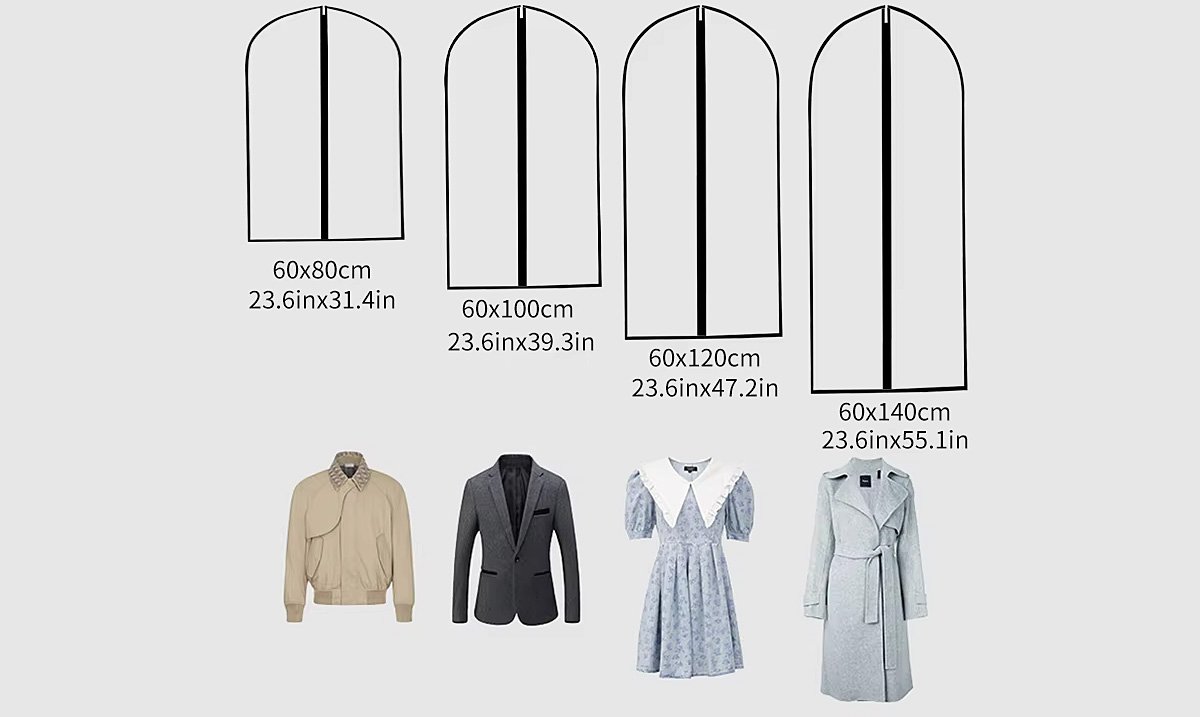
I like to match garment bag size to the actual hanging length7 of the item, not just the name of the category. For example, one buyer may say "dress," but that can mean a short retail dress or a full-length evening dress. The same issue happens with coats. A waist-length coat and a full overcoat need very different lengths.
This is why I usually break the discussion into product groups. Suits are often easier. A standard men's suit, when hung well, usually fits comfortably in a 40 or 47 inch bag8. If the buyer wants a cleaner premium look with more room at the bottom, 47 inches is often the safer pick. Dresses need more care. A short dress may fit in 47 inches, but a longer dress often needs 54 inches. Coats often need 54 or 60 inches, based on cut and market.
| Garment Type | Recommended Length | Why It Works |
|---|---|---|
| Suit jacket or uniform | 40 inch | Good for shorter hanging length |
| Full suit | 47 inch | Covers most standard suit needs |
| Short dress | 47 inch | Good for regular retail dresses |
| Long dress | 54 inch | Adds needed drop length |
| Medium coat | 54 inch | Better for daily outerwear |
| Long coat | 60 inch | Protects full-length garments |
| Wedding gown / stage wear | 61-72 inch | Needed for extra-long volume |
I remember one project where a buyer used 47-inch bags for long winter coats. The price looked good at first. Then the coats pressed into the bottom seam. The customer complained about shape and wrinkles. We changed the order to 60 inches in the next run. The issue stopped. That case reminded me again that fit is not a detail. Fit is the product9.
How Many Pieces Can One Garment Bag Hold for Shipping?
Many buyers focus only on length and width, but they forget capacity. Then they receive bags that fit one piece only, when their customer wanted a multi-piece shipping solution.
One garment bag can hold from one piece to several pieces, depending mainly on gusset width10. A 4-inch gusset often fits two to three garments11. If buyers need to hold more pieces at one time, I usually suggest a 10-inch or larger gusset12.
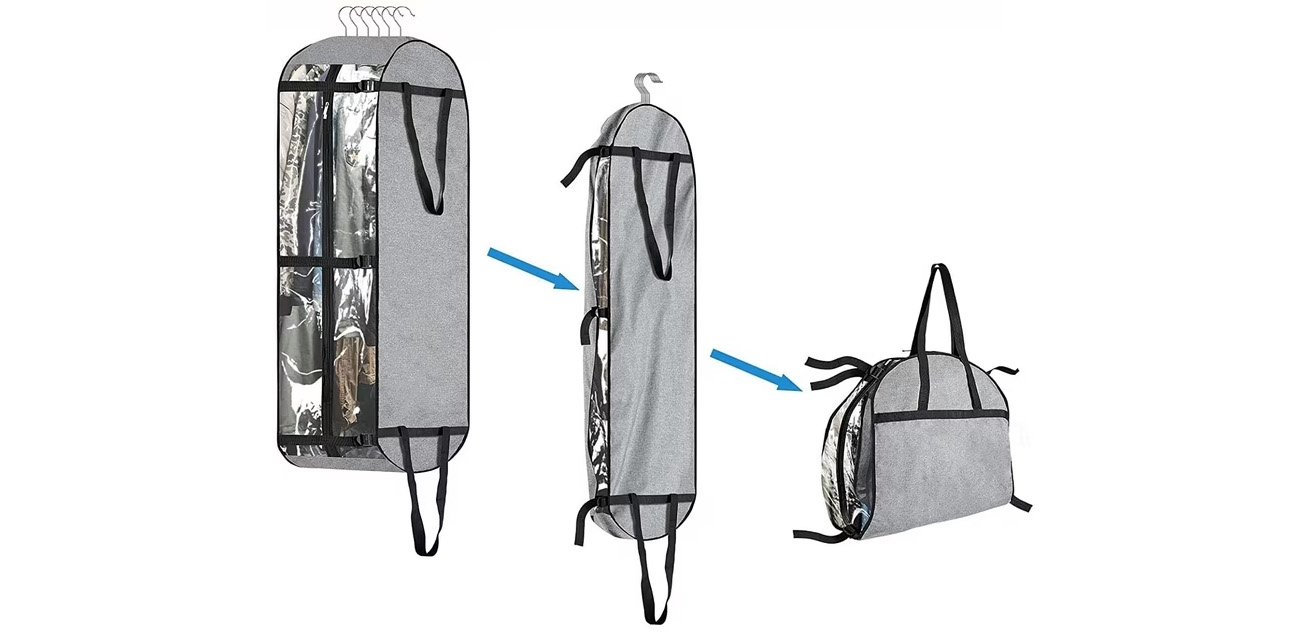
This question matters a lot for shipping, storage, and end use. A slim flat garment bag may look clean and cost less, but it may not solve the buyer's real problem. If a hotel, retailer, or uniform program needs to group several pieces together, capacity becomes the key point. That is where gusset width10 matters.
I usually explain it in a simple way. Length tells me if the garment fits top to bottom. Width tells me if the shoulders fit left to right. Gusset tells me how many layers the bag can accept without crushing the contents. A 4-inch gusset is a common and useful option for two or three pieces. That is often enough for a suit set or a small group of uniforms. If a buyer needs to hold many items together, such as multiple outfits, heavy coats, or bulk transport samples, I move to 10 inches or more.
| Gusset Width | Typical Capacity | Best Use |
|---|---|---|
| 0-2 inch | 1 piece | Single suit or dress display |
| 4 inch | 2-3 pieces | Standard multi-piece packing |
| 6-8 inch | 3-5 pieces | Uniform sets or grouped garments |
| 10 inch+ | 5+ pieces | Bulk transport or hotel use |
I have seen buyers miss this point during sampling. They approve the front view and forget to check side depth. Later, the user tries to place three garments inside, and the zipper strains or the fabric wrinkles. That is why I always ask one direct question: how many pieces should one bag carry in real use13? That answer changes the spec sheet right away.
What Size Garment Bag Do Hotels and Retailers Order Most?
Hotels and retailers do not always want the same thing, but many buyers assume they do. This can lead to slow-moving stock and product specs that fit neither channel well.
Hotels and retailers most often order garment bags in the 47 to 60 inch range14. In my experience, 47, 54, and 60 inches move most steadily because they fit common suits, uniforms, dresses, and coats in daily business use.
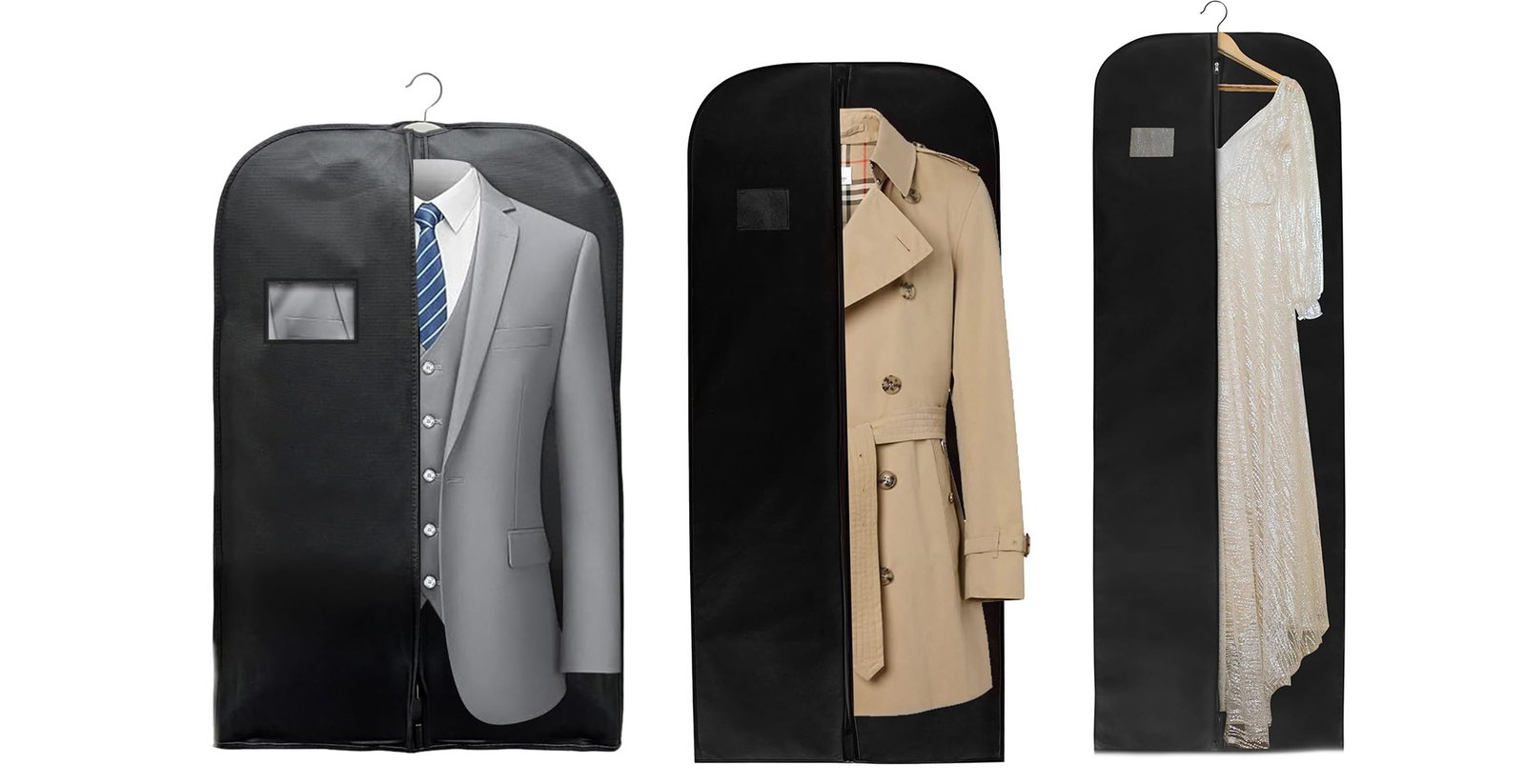
I often see clear patterns by channel. Hotels usually want practical protection, easy handling, and repeat ordering15. Their garment bags are often used for guest services, staff uniforms, laundry return, or premium room amenities. In these cases, 47-inch and 54-inch sizes are common. They fit most suits, jackets, and service uniforms without taking too much space.
Retailers often need more variety. A fashion retailer may carry short dresses, suits, and long coats at the same time. That is why 47, 54, and 60 inches tend to sell better. These sizes help them serve more categories with fewer stock units16. If they work with bridal or formalwear, they then add 61-inch and above options.
| Buyer Type | Common Sizes | Main Reason |
|---|---|---|
| Hotel | 47, 54 inch | Uniforms, guest garments, easy storage |
| Department store | 47, 54, 60 inch | Mixed categories and broad fit |
| Suit retailer | 40, 47 inch | Standard men’s formalwear |
| Fashion retailer | 47, 54, 60 inch | Dresses and outerwear mix |
| Bridal retailer | 60, 61-72 inch | Long and bulky garments |
In one order I handled, a buyer wanted one universal hotel size to lower SKU count. I suggested 54 inches instead of 47 inches because the end use included both guest suits and staff outerwear. That small change reduced complaints and repeat adjustments. I have learned that the best-selling size is not just about volume. It is about how many common use cases one size can solve well.
Does Garment Bag Gusset Width Matter for Bulk Orders?
Some buyers treat gusset width10 as a small side detail. I do not. I have seen it affect capacity, shipping cost, user experience, and even reorder rates.
Yes, garment bag gusset width matters a lot for bulk orders17-about-gussets/)10 matters a lot for bulk orders. A 4-inch gusset is often enough for two or three garments. If the buyer needs to carry more pieces or bulkier garments, 10 inches or more is the better choice.
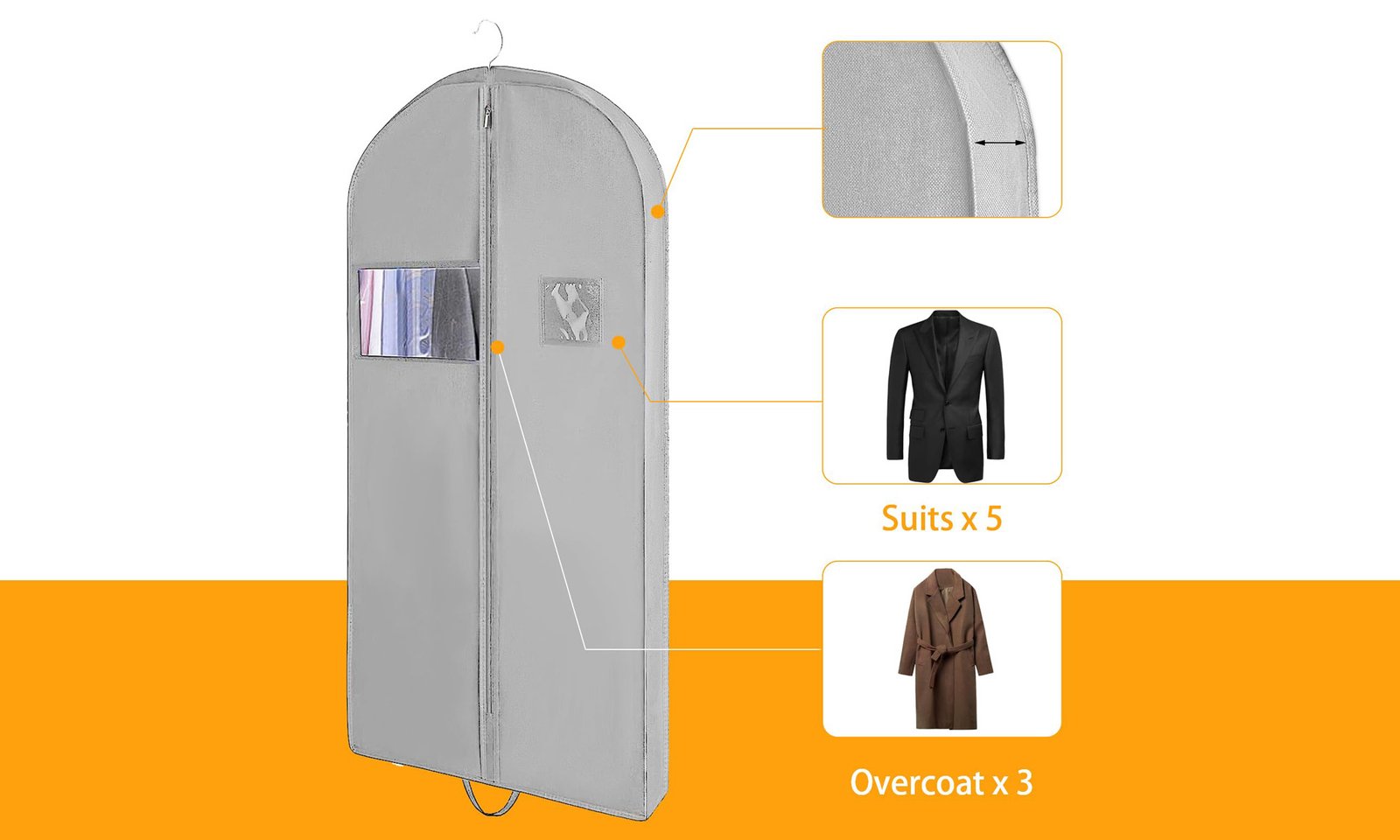
I think gusset width10 is one of the most underrated specs in garment bag development. Many buyers focus on front size because it is easy to see on a drawing. The gusset is less obvious, but it often decides whether the product works in real life. If the gusset is too narrow, the bag may close badly, wrinkle garments, or break faster under stress. If the gusset is too wide, the bag may cost more than needed and take up extra shipping space.
So I do not choose gusset width10 by guesswork. I tie it to garment quantity, garment bulk, and transport method. A slim suit cover for showroom display may need little or no gusset. A retail transport bag for several garments often needs 4 inches. A hotel or uniform service project may need 6 to 10 inches. Heavy coats or grouped garments may need even more.
| Order Need | Suggested Gusset | Result |
|---|---|---|
| Single premium display | 0-2 inch | Clean look, low bulk |
| Two to three garments | 4 inch | Most balanced choice |
| Multi-piece set | 6-8 inch | Better packing flexibility |
| Bulk carrying use | 10 inch+ | Higher capacity, less compression |
I usually tell buyers that length solves coverage, but gusset solves function. If they ignore that point, they may save a little on unit cost but lose much more in customer satisfaction. In bulk business, that is never a good trade.
Conclusion
I find that 40, 47, 54, and 60 inch garment bags cover most bulk needs18, while 61 to 72 inch lengths and the right gusset width10 solve special orders well.
Shows which sizes actually move in the market so you can avoid dead stock and focus purchases on the dimensions that really sell. ↩
Explains how to plan sizes in advance so your bulk orders match real demand, cutting returns, waste, and rework. ↩
Clarifies confusing “standard” terminology, helping you negotiate clearer specs and avoid costly sampling mistakes. ↩
Helps you understand why this length range dominates, so you can align your catalog with common global expectations. ↩
Guides you toward a proven size set that covers most needs while keeping SKU counts and inventory risk low. ↩
Shows how to combine sizes strategically so you can serve more use cases without overstocking slow movers. ↩
Teaches a practical method to measure and match bags to garments, preventing crushing and wrinkles in use. ↩
Helps you choose the optimal suit cover size for both protection and cost-efficiency in formalwear programs. ↩
Reframes packaging as part of the product experience, helping justify better specs to clients and management. ↩
Clarifies a commonly overlooked spec so you can design bags that hold the right number of pieces without damage. ↩
Provides real-world benchmarks for capacity, preventing under- or over-specifying your bulk orders. ↩
Shows when high-capacity bags make sense, avoiding excessive costs while meeting heavy-duty needs. ↩
Helps you ask the right questions of clients so the final specs match actual on-site handling patterns. ↩
Reveals the sweet-spot sizes for two key channels, guiding you toward SKUs that are easier to resell. ↩
Shows how to design bags that hotel clients will reorder consistently, improving your long-term accounts. ↩
Helps streamline your product range so you reduce inventory complexity while covering varied garments. ↩
Explains how side-depth decisions influence shipping cost, breakage, and customer satisfaction at scale. ↩
Validates a compact core size set, helping you build an efficient standard range before adding special sizes. ↩