Sustainable packaging claims often sound simple, but buyers quickly run into vague wording, missing documents, and mixed materials that do not match the sales promise. I see this often in bag sourcing. The fix is practical: verify each claim by component, document, and production use before approving samples or orders.
Bag buyers can verify sustainable packaging claims by checking exactly which packaging component the claim refers to, then matching that claim with supporting documents such as certificates, material declarations, and specifications. A reliable review compares paper, inserts, coatings, inks, bags, and labels line by line, instead of accepting one broad “eco-friendly” statement for the whole packaging set.

When I discuss packaging with procurement teams, the confusion rarely starts with bad intent. It usually starts with broad language. A supplier says “sustainable packaging,” while the buyer assumes that statement covers the full box set. That gap creates risk. So below, I will break down how I would verify claims in a real sourcing workflow.
Why Are Packaging Buyers Asking for Verified Sustainability Claims?
Sourcing teams face pressure from internal compliance, retailers, and end customers. A loose sustainability statement can create marketing risk, audit issues, and shipment delays later1. I have seen buyers approve a sample too quickly, only to discover that the confirmed claim covered just one paper layer, not the full packaging set.
Packaging buyers ask for verified sustainability claims because they need proof that specific environmental statements match the actual packaging components used in sampling and production. Verification reduces compliance risk, protects brand credibility, and helps buyers avoid misunderstandings about recycled content, recyclability, and certification scope.2

In real B2B bag projects, this question usually appears when the buyer moves from product approval to packaging approval. At that stage, the buyer is no longer asking for a nice presentation. The buyer is asking whether the claim can survive internal review.
The real procurement pressure
Large companies and supermarket groups usually have several checkpoints:
- Compliance review
- Packaging approval
- Marketing review
- Supplier qualification
- Import or market-specific documentation checks
If one packaging statement fails at any point, the order can slow down. That is why verified sustainability claims matter.
Three mistakes I see buyers make
I have seen these three mistakes many times:
Confusing recyclable with recycled content
A box may be recyclable in some markets, but that does not mean it contains recycled fiber.3Assuming one certificate covers the whole packaging set
A paper certificate may apply only to the outer box board, not to tissue paper, sticker glue, handle rope, coating, or insert tray.4Treating one eco claim as proof for the entire bag package
If the polybag changes, the print finish changes, or a magnetic closure is added, the original claim may no longer describe the final packaging accurately.
I always tell buyers to change the first question. Do not ask, “Is this packaging sustainable?” Ask, “Which component does this claim apply to, and what document proves it?”
Why this matters commercially
The risk is not only technical. It is also commercial.
| Risk area | What happens if claims are vague |
|---|---|
| Marketing | Brand messaging may overstate what the packaging really is |
| Compliance | Internal teams may reject the pack after sampling |
| Sourcing | Buyer and supplier may approve different assumptions |
| Delivery | Rework or document requests may delay production |
| Reputation | Retail customers may challenge unsupported claims |
For a procurement manager like Mark Porter, speed matters. But speed without verification often creates a more expensive delay later. I would rather spend one more day checking documents than lose two weeks fixing a packaging claim after production starts.
What Materials Work for Product Presentation Boxes?
Buyers want presentation boxes that look premium, protect the bag, and still support credible sustainability claims. The problem is that presentation boxes often combine many materials. I often see beautiful samples with rigid board, laminated paper, magnets, foam, ribbon, and plastic sleeves. That mix makes verification harder.
Materials that work for product presentation boxes include paperboard, rigid board, molded pulp, corrugated structures, tissue paper, and selected water-based or low-impact finishes.5 Buyers should review each material separately because a premium custom packaging box often includes multiple components with different sustainability claims and document needs.
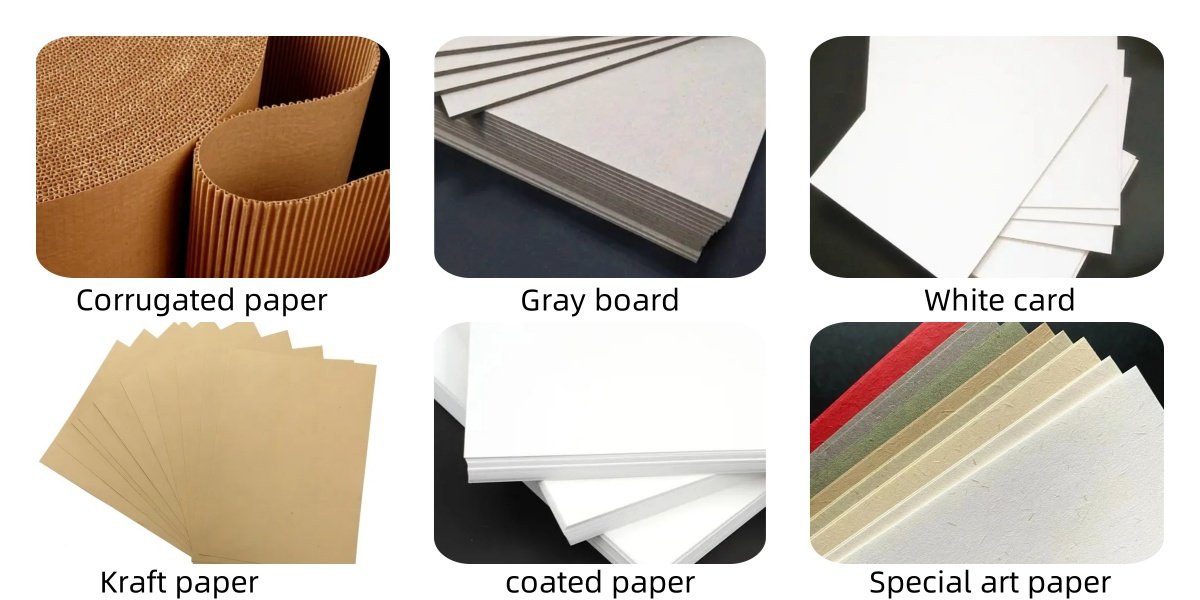
When buyers ask me for a “sustainable gift box,” I slow the discussion down. I ask what they mean by sustainable. Do they want recycled content, recyclability, reduced plastic use, certified paper sourcing, or lighter shipping weight? These are not the same target.
Common materials in custom packaging boxes
Here are the materials I most often discuss with buyers:
Folding paperboard
- Good print quality
- Works for lighter products
- Easier structure for many retail boxes
Rigid board
- Strong premium feel
- Common in gift-style presentation
- May involve extra wraps, glue, and decorative elements
Corrugated board
- Better shipping protection
- Efficient for transit cartons and some retail-ready solutions
- Can support simpler sustainability messaging if structure stays clean
- Often used instead of plastic trays
- Need fit testing for the actual bag shape and accessories
Tissue paper and paper sleeves
- Useful for presentation
- Need separate review for paper type, coating, ink, and print area
What complicates sustainable packaging claims?
The box itself is rarely just “paper.” A typical packaging set may include:
- Outer box
- Inner wrap
- Sticker or label
- Hangtag
- Insert card
- Desiccant bag
- Polybag
- Adhesive tape
- Printing ink
- Surface finish
That means one sustainable packaging claim may apply to only one or two of those parts.
A practical way to evaluate materials
I prefer this line-by-line review:
| Packaging component | Material | Claim stated | Proof available | Final check needed |
|---|---|---|---|---|
| Outer box | Paperboard | Recycled content | Material declaration | Confirm % and supplier scope |
| Insert | Molded pulp | Plastic-free | Spec sheet | Confirm production version |
| Tissue wrap | Printed paper | FSC or similar sourcing claim | Certificate copy | Check print mill/source |
| Sticker | Adhesive label | Recyclable | Supplier statement | Needs market-specific review |
| Polybag | PE or recycled PE | Recycled content | Declaration/test report | Confirm exact thickness/spec |
This method sounds basic, but it works. It stops the conversation from floating at slogan level.
Which Certifications and Documents Should Buyers Request?
Many buyers ask for “the certificate” as if one file will answer everything. In practice, sustainable packaging claims need a document set, not a single document. I always suggest that buyers request proof based on the exact claim being made and the exact component being supplied.
Buyers should request certifications and documents that match the specific packaging claim and component, such as certificate copies, material declarations, technical data sheets, recycled content statements, and component specifications. The key is to confirm certificate scope, issuing party, validity period7, and whether the document covers the actual packaging materials used in production.

I need to be careful here. I am not a certification body, and market rules differ. Still, from a supplier discussion point of view, buyers should expect clear evidence, not broad language.
What buyers should ask suppliers to show
A supplier should be able to show some combination of:
- Certificate copy relevant to the claim
- Material declaration
- Technical data sheet
- Specification sheet
- Recycled content statement, if claimed
- Component breakdown
- Test report, where relevant
- Artwork or packaging BOM
- Sample confirmation sheet
What to verify in each document
Do not stop at receiving the PDF. Check:
- Who issued it?
- What entity does it cover?
- What material does it cover?
- Is it valid now?
- Does it match the sample specification?
- Does it cover the actual packaging component, not just a raw material upstream?
A simple buyer checklist
| Document type | What it helps prove | Common buyer mistake |
|---|---|---|
| Certificate | Scope of a stated standard or sourcing system | Assuming it covers every packaging part |
| Material declaration | Exact material used | Ignoring coatings, glue, or mixed layers |
| Technical data sheet | Performance and composition details | Not matching it to the final approved item |
| Recycled content statement | Presence of recycled input | Confusing this with recyclability |
| Component spec sheet | What production should use | Not checking if sample and mass production match |
My rule in real sampling discussions
When a buyer asks me whether a box is eco-friendly, I do not answer with yes or no. I answer with a list:
- Which box board is used
- Whether the wrap paper is separate
- What finish is applied
- Whether inserts are paper pulp or plastic
- Whether the shipping polybag is virgin or recycled content
- Which documents can support each point
That approach avoids overclaiming. It also protects both sides.
How Can Brands Balance Premium Display and Shipping Protection?
Buyers often want packaging that looks expensive on the shelf and survives long-distance shipping at the same time. That is possible, but not by guessing. In my experience, many packaging failures happen because the display box and the shipping method are designed separately.
Brands can balance premium display and shipping protection by designing the packaging system in layers8: a presentation box for appearance, protective internal fitments for stability, and an outer transit solution for shipment. Buyers should verify that each layer supports both performance goals and any sustainable packaging claims made for the final pack.

I have worked on bag orders where the retail box looked excellent in the meeting room but collapsed after long-distance transport. I have also seen the opposite: strong export packaging that looked too cheap for the customer’s retail channel. The answer is not to choose one over the other. The answer is to separate functions.
Think in packaging layers
A better structure is:
Primary presentation layer
The visible box, sleeve, wrap, or insert that creates the brand experience.Protection layer
Internal support that prevents deformation, scratches, or hardware damage.Transit layer
Outer carton, dividers, and loading method that protect goods in shipping.
Premium does not always mean complex
Some buyers assume a premium look requires more mixed materials. Not always. A simpler box can still feel high-end9 if these details are right:
- Strong structural design
- Clean printing
- Consistent color
- Good opening experience
- Accurate fit around the bag
- Reduced empty space
A simple paper-based structure may also be easier to explain when making sustainable packaging claims, because fewer components need separate verification.
Questions I would ask before approving the packaging design
- Will this box be sold in-store, shipped by e-commerce, or both?
- Does the bag need shape support?
- Are metal accessories likely to scratch the product?
- Will humidity or stacking pressure affect the structure?
- Which parts of the packaging are customer-facing?
- Which parts are only for transit?
Compare two common approaches
| Approach | Display quality | Shipping protection | Claim verification difficulty |
|---|---|---|---|
| Rigid gift box with multiple decorative parts | High | Medium unless packed well | Higher |
| Simplified paperboard box plus strong transit carton | Medium to high | High | Lower |
In many B2B projects, the best answer is a hybrid: keep the retail-facing box simple and well-finished, then add shipping protection outside it. That way, the sustainability discussion stays clearer, and the damage rate stays lower.
What Should Buyers Send Before Sampling Custom Packaging Boxes?
Sampling delays often start because the buyer sends only a logo and says, “Please propose eco packaging.” That is too broad. Suppliers then guess, and the sample may look good but fail the buyer’s compliance or cost target. I always get better results when the buyer provides a complete brief from the start.
Before sampling custom packaging boxes, buyers should send the product dimensions, target market, packaging structure preference, required claims, artwork needs, testing expectations, and any certifications or restricted-material standards that matter internally. A clear pre-sampling brief helps suppliers align materials, documents, cost, and sustainable packaging claims from the first sample.

This is one area where I see a direct difference between smooth projects and chaotic ones. Clear input saves time, money, and misunderstanding.
What I want from a buyer before sampling
I usually ask for these items:
- Bag size and weight
- Photos or physical sample of the product
- Target market
Europe, North America, Japan, and Singapore may have different expectations.10 - Use scenario
Retail display, gift presentation, supermarket shelf, export transit, or e-commerce - Claim target
Recycled content, reduced plastic, certified paper source, or something else - Packaging components needed
Box, insert, tissue, label, polybag, carton, sticker - Printing and finish preferences
- Target price range
- Sampling deadline and mass production timing
- Required documents
A sample brief works best when it is specific
Here is a better instruction than “Need sustainable box”:
We need a presentation box for a tote bag, suitable for Canada retail and ocean shipment. Please propose a mainly paper-based structure. Please state which parts contain recycled content, which parts are recyclable in principle, and what documents support each claim. Please avoid mixed materials unless necessary.
That kind of brief gives the supplier a path to follow.
The most important attachment: component-level claim table
I strongly recommend buyers send or request a table like this before sample approval:
| Component | Requested material | Intended claim | Required proof |
|---|---|---|---|
| Outer box | Paperboard | Recycled content | Declaration + spec |
| Insert | Molded pulp | Plastic-free | Material sheet |
| Tissue | Printed paper | Certified source if available | Certificate scope |
| Polybag | Recycled PE | Recycled content | Supplier declaration |
| Label | Paper sticker | Paper-based | Spec confirmation |
This table forces clarity early. It also makes it easier to compare different suppliers fairly.
Frequently Asked Questions
Can one certificate prove the whole packaging set is sustainable?
No. One certificate usually covers a specific material, supplier system, or scope. Buyers should check whether it applies to the outer box only or also to inserts, tissue, labels, coatings, and other packaging parts.
Is recyclable packaging the same as recycled-content packaging?
No. Recyclable means the material may be processed in suitable waste systems.11 Recycled content means the material already includes recycled input. These are different claims, and each needs separate proof and market-specific review.
Should buyers verify sustainable packaging claims during sampling or only before mass production?
Buyers should start during sampling. Early verification helps align design, cost, and claim language. Then buyers should confirm again before production, because materials or components sometimes change after sample approval12.
What is the fastest way to check supplier packaging claims?
The fastest reliable method is a line-by-line component review. Match each packaging part with its material, stated claim, and supporting document. This method is much safer than accepting one broad supplier statement.
Do all export markets expect the same packaging proof?
No. Requirements and expectations can differ by market, customer type, and internal brand policy. Buyers should confirm what evidence is needed for their own target market and sales channel before final approval.
Conclusion
Sustainable packaging claims should never be treated like a simple yes-or-no label. I always advise buyers to verify what the claim covers, which document supports it, and whether that proof matches the actual packaging components used in samples and production. That one habit reduces sourcing risk, protects brand credibility, and improves communication with suppliers. If you are sourcing bags and need help aligning packaging structure, materials, and claim documentation, contact me at Coraggio. I can help you review the details before sampling turns into a costly mistake.
"Protecting and empowering consumers in the green transition (EN)", https://www.oecd.org/content/dam/oecd/en/publications/reports/2025/05/protecting-and-empowering-consumers-in-the-green-transition_c23ea601/12f28e4f-en.pdf. Government guidance on environmental marketing claims explains that broad or unqualified sustainability statements may be misleading unless adequately substantiated, supporting the article’s point that vague claims can create compliance and commercial risk; however, such guidance does not by itself document a specific shipment delay in every case. Evidence role: general_support; source type: government. Supports: Official guidance should support that unqualified or misleading environmental marketing claims can create compliance and enforcement risk, which can affect product approvals and commercial processes.. Scope note: Support is contextual from regulatory guidance rather than a direct study of shipment delays. ↩
"Guides for the Use of Environmental Marketing Claims", https://www.ftc.gov/sites/default/files/attachments/press-releases/ftc-issues-revised-green-guides/greenguides.pdf. Standards and regulatory guidance on self-declared environmental claims distinguish recycled-content claims from recyclability claims and require claims to be substantiated, supporting the article’s statement that verification helps prevent confusion about claim type and scope. Evidence role: expert_consensus; source type: institution. Supports: Standards or official guidance should support that recycled content, recyclability, and certification-related statements are distinct claim categories that require specific substantiation.. ↩
"Recycling Basics and Benefits", https://www.epa.gov/recycle/recycling-basics-and-benefits. Authoritative definitions of environmental claims state that ‘recyclable’ refers to the capability of a product to be collected and reprocessed in an appropriate system, whereas ‘recycled content’ refers to the share of recovered material contained in the product, confirming that one claim does not imply the other. Evidence role: definition; source type: institution. Supports: An authoritative definition should support that recyclability refers to the potential for collection and reprocessing, whereas recycled content refers to the proportion of recovered material already present in a product.. ↩
"Group Chain of Custody (CoC) FSC Certification Manual", https://cfwc.ca.uky.edu/sites/cfwc.ca.uky.edu/files/cfwc_coc_group_certification_manual_revised_2_16_2018_0.pdf. Chain-of-custody certification systems describe certificate scope in terms of defined entities and product groups, supporting the article’s point that a paper-related certificate may cover certain board materials without automatically covering adhesives, coatings, or other components in the finished package. Evidence role: mechanism; source type: institution. Supports: Certification system documentation should support that certificate scope is limited to specified entities, product groups, or materials, not automatically all packaging components in a finished set.. Scope note: This support is based on how certification scope is structured and may not address every individual certificate program. ↩
"Molded pulp", https://en.wikipedia.org/wiki/Molded_pulp. Packaging reference sources identify paperboard, corrugated fiberboard, and molded pulp among the standard materials used in protective and presentation packaging, supporting the article’s list of common materials used for presentation boxes. Evidence role: general_support; source type: encyclopedia. Supports: Reference material should support that paperboard, rigid or box board structures, corrugated fiberboard, molded pulp, and tissue-based papers are standard packaging materials used for product presentation and protection.. Scope note: The source would support common use of these materials broadly rather than proving suitability for every product category. ↩
"Molded pulp products for sustainable packaging - BioResources", https://bioresources.cnr.ncsu.edu/resources/molded-pulp-products-for-sustainable-packaging-production-rate-challenges-and-product-opportunities/. Packaging research describes molded pulp as a fiber-based material used for protective inserts and trays and discusses its role as an alternative to plastic packaging components, supporting the article’s characterization of molded pulp inserts as substitutes for plastic trays. Evidence role: general_support; source type: research. Supports: Research or technical sources should support that molded pulp is widely studied and used as a fiber-based alternative to plastic packaging inserts and trays.. Scope note: The support is general and does not establish that molded pulp is preferable or feasible in every packaging application. ↩
"Directive on specific requirements for certification bodies - Chain of Custody", https://connect.fsc.org/es/document-centre/documents/retrieve/c3c4ddf5-dfe9-4593-acd8-5ac8c0d057e6. Certification-system guidance commonly requires checking the certificate holder, scope, status, and validity period to determine whether a claim applies to the relevant material or product, supporting the article’s recommended document review steps. Evidence role: mechanism; source type: institution. Supports: Certification guidance should support that users must verify certificate scope, status, and issuer to determine whether a document applies to the claimed material or product.. ↩
"PRIMARY, SECONDARY & TERTIARY PACKAGING ...", https://openlab.citytech.cuny.edu/comd3412packagingdesignfall2021mariapaularennis/primary-secondary-tertiary-packaging-definition/. Packaging engineering sources distinguish packaging levels and functions, including product-facing presentation, internal protective elements, and outer transport packaging, supporting the article’s layered approach to balancing display quality and shipping protection. Evidence role: mechanism; source type: education. Supports: Educational or technical packaging sources should support that packaging systems are commonly designed in functional layers or levels, with distinct roles for product presentation, protection, and transport.. Scope note: The source would support the design framework generally rather than proving that a specific layered design will succeed for every bag product. ↩
"The Impact of Visual Elements of Packaging Design on Purchase ...", https://pmc.ncbi.nlm.nih.gov/articles/PMC11851823/. Studies on packaging perception report that consumers infer quality and premium value from design cues such as structure, finish, color consistency, and opening experience, supporting the article’s claim that a simpler package can still appear high-end when those elements are executed well. Evidence role: general_support; source type: paper. Supports: Consumer or design research should support that perceived package quality and premium impression depend on structural and visual cues, not only material complexity.. Scope note: Perception findings are context-dependent and may vary by product category, market, and consumer segment. ↩
"Environmental Claims (EN)", https://www.oecd.org/content/dam/oecd/en/publications/reports/2011/03/environmental-claims_g17a209c/5k9h3633prbq-en.pdf. Government and intergovernmental sources show that environmental-claim guidance and packaging-related labeling or waste-management frameworks differ across jurisdictions, supporting the article’s statement that buyer expectations may vary by target market. Evidence role: historical_context; source type: government. Supports: Official sources should support that packaging-related environmental claims, labeling frameworks, or waste-management expectations vary by jurisdiction, making market-specific review necessary.. Scope note: This supports variation in regulatory and market context rather than measuring expectations of every buyer in those regions. ↩
"Part 260 – Guides for the Use of Environmental Marketing Claims", https://www.ftc.gov/sites/default/files/attachments/press-releases/ftc-issues-revised-green-guides/greenguides.pdf. Authoritative environmental-claim guidance defines a recyclable product as one that can be collected, separated, or otherwise recovered and reprocessed through an appropriate waste-management system, supporting the article’s explanation of recyclability. Evidence role: definition; source type: institution. Supports: A standard or official guidance should define recyclability in terms of collection, separation, and reprocessing through appropriate systems.. ↩
"Questions and Answers on Current Good Manufacturing Practice", https://www.fda.gov/drugs/guidances-drugs/questions-and-answers-current-good-manufacturing-practice-regulations-production-and-process. Manufacturing quality-control literature describes the need to verify production materials and specifications after sample or pre-production approval because configuration changes and process deviations can occur before mass production, supporting the article’s recommendation to reconfirm claims before production begins. Evidence role: mechanism; source type: research. Supports: Quality-management or manufacturing-control sources should support that changes between sample approval and production can occur and that configuration or specification verification before production is a recognized control step.. Scope note: The evidence would come from general manufacturing quality practice rather than packaging-specific field data. ↩