Insulated medical sample bags can look similar on a quote sheet, but buyers often run into problems when the real transport task does not match the bag design. That gap leads to spoiled samples, wasted budget, and supplier frustration1. I solve this by starting with the transport workflow first, then matching the bag specification.
To buy insulated medical sample bags in bulk, I first define what samples will be carried, how long they must stay within target temperature, what ice-pack setup will be used, and what internal layout is required. The right bulk order is not the thickest or cheapest bag. It is the bag that fits the real cold-chain task, container size, and handling process.
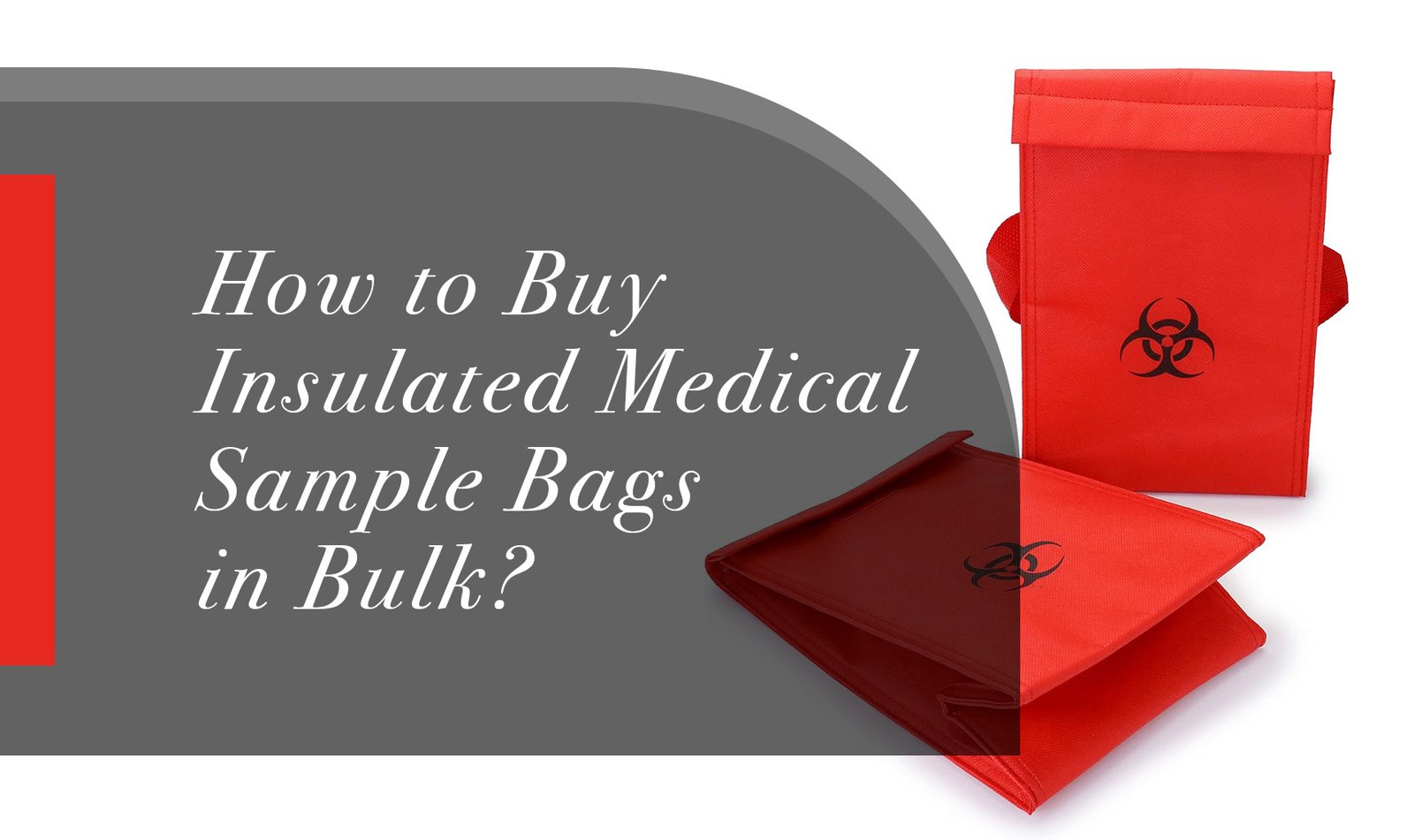
I have handled many OEM discussions where the first request sounds simple: “We need a medical cooler bag.” Then, after a few questions, the actual need turns out to be blood tubes, diagnostic kits, swab boxes, or small specimen containers with very different space and cooling requirements. That is where smart buying starts. Below, I break down how I would evaluate insulated medical sample bags before asking for bulk pricing.
What Is an Insulated Medical Sample Bag Used For?
Buyers often use broad words like “medical bag” or “cooler bag,” and that creates confusion fast. The problem gets worse when a bag looks acceptable in photos but does not fit the sample format, handling steps, or required hold time. I avoid that by defining the transport purpose first.
An insulated medical sample bag is used to transport temperature-sensitive medical or diagnostic items2 such as sample tubes, specimen containers, test kits, or related materials during short-duration handling and transfer. The exact design depends on the payload, container type, cooling method, and required workflow.
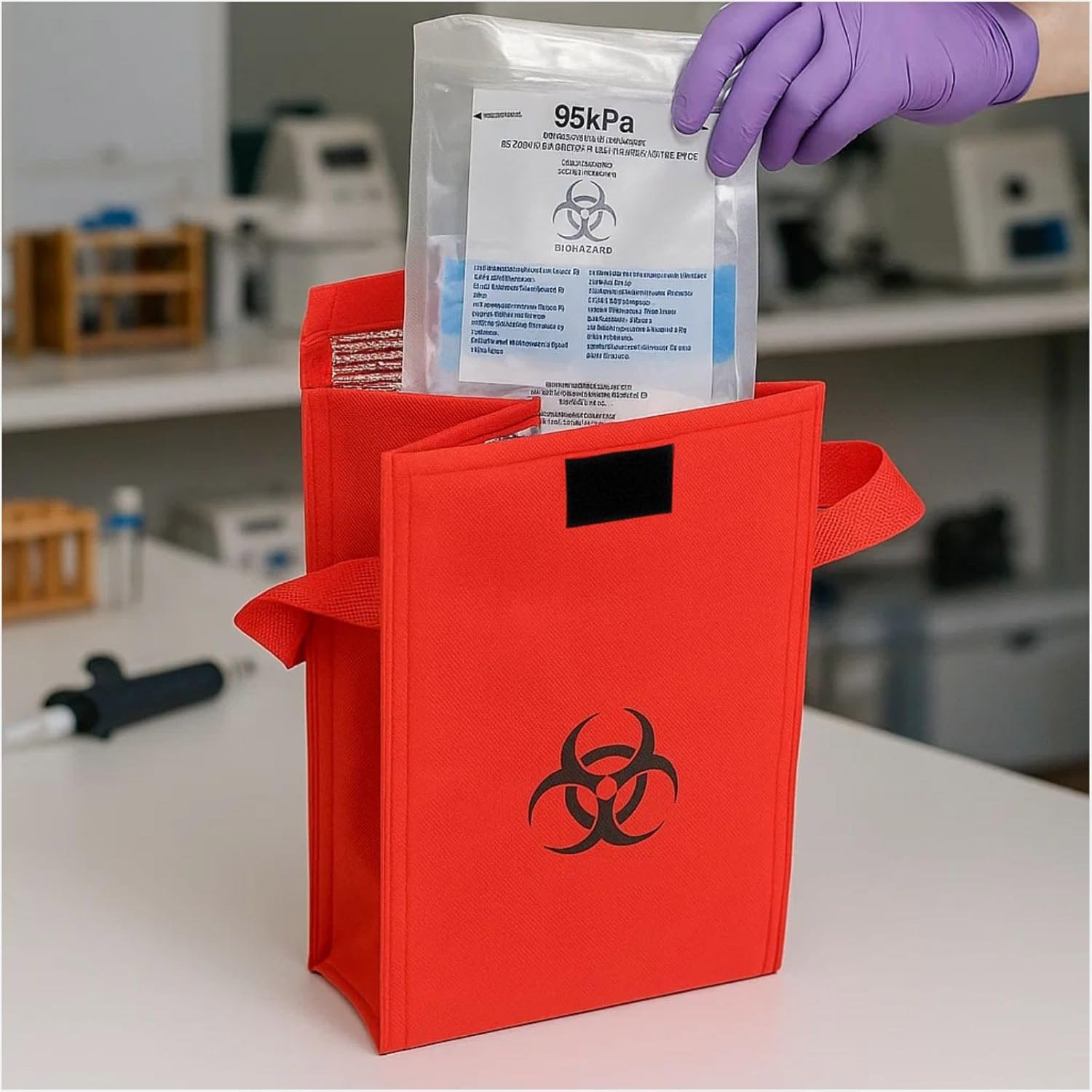
When I talk with buyers, I usually hear one of these real use cases:
- Blood collection tubes
- Urine or specimen containers
- Swab test kits
- Diagnostic reagents
- Small boxed medical items
- Lab pickup and short-route transfer sets
The mistake is assuming these all need the same bag. They do not.
Why the use case changes the bag design
A buyer may ask for a 10-liter bag with foil lining and thick foam. That sounds reasonable. But if the actual payload is 48 upright blood tubes plus two gel packs and paperwork, the issue is not just volume. The issue is:
- upright vs flat storage
- risk of tube collision
- divider structure
- leakage control
- paperwork separation
- access speed during pickup rounds
I have seen buyers focus on outer size while ignoring usable internal size3. That is dangerous in bulk orders. A bag can measure large outside but lose critical space due to insulation thickness, seam allowance, lid shape, or pocket construction.
Generic cooler bag vs sample transport bag
A medical sample bag is not automatically a regulated medical transport solution. It is also not just a picnic cooler in a different color.
Here is the difference I usually explain:
| Type | Typical purpose | Main design focus | Main risk |
|---|---|---|---|
| Generic soft cooler bag | Food or general cold storage | Price and simple insulation | Poor fit for specimen workflow |
| Insulated medical sample bag | Sample or kit transfer | Layout, access, ice-pack position, documentation | Wrong configuration for actual use |
| Validated cold-chain container | Controlled transport with defined testing | Performance verification and compliance support | Higher cost, more documentation required |
That table matters because many inquiries sit in the middle. The buyer needs something better than a basic cooler, but may not need a highly validated transport box for every route. So I always ask: What exactly are you moving, and what transport standard must you meet?
My practical buyer filter
Before I compare suppliers, I write down:
- What is inside the bag?
- How many units per trip?
- Must items stay upright?
- What temperature range matters?
- How long is the trip?
- What coolant is used?
- Who opens the bag and how often?
That short list saves a lot of wasted sampling.
When Is a Soft Cooler Bag Not Enough for Regulated Cold Chain?
Some buyers assume any insulated bag can serve a medical cold-chain task if the insulation is thick enough. That sounds efficient, but it can create serious mismatch. The problem is not always the material. The problem is often the lack of validated performance and workflow design.
A soft cooler bag is not enough for regulated cold chain4 when the transport task requires verified temperature performance, specific documentation, market-specific compliance5, or protection beyond simple short-term insulation. Buyers should confirm these requirements before ordering.

I want to be careful here. I am not giving clinical or regulatory approval advice. I am speaking from supplier-side procurement discussions. In many inquiries, buyers use the phrase “medical sample bag” when they actually mean one of two very different things:
- a practical insulated transport bag for local handling or distribution
- a regulated cold-chain solution that may need validation, testing, and documentation
Those are not the same purchase.
Signs a basic soft bag may be insufficient
I tell buyers to slow down when they mention any of these points:
- strict temperature window6
- long transport duration
- multiple handoff points
- high-value or sensitive specimens
- audited transport process
- market-specific compliance requirements
- need for qualification or validation records
If those apply, the buying conversation should go beyond bag thickness and zipper quality.
What buyers should confirm with internal teams
I often suggest buyers ask their technical or compliance side these questions before sourcing:
- Does this transport require tested temperature retention data?
- Does the bag need to work with a specific pack-out protocol?
- Is there a required cleanability standard for inner materials?
- Is there any need for tamper evidence, labels, or tracking windows?
- Will this be used only for last-mile transfer, or for longer chain movement?
A cheaper bag can become expensive very fast if:
- samples do not fit the planned tray or rack
- ice packs touch the product directly when they should not
- internal pockets block airflow
- users overfill the bag
- there is no place for chain-of-custody paperwork
I remember one buyer who first asked only for “thick PE foam and foil lining.” After more discussion, the real need included specimen cups, absorbent pads, two frozen packs, and an outer document sleeve. The first bag they liked would have failed their daily workflow, even though the material looked fine on paper.
So my position is simple: if the transport requirement is regulated or highly controlled, a standard soft cooler approach may not be enough without further validation.
Which Linings and Insulation Materials Should Buyers Compare?
Many inquiries start with material names. Buyers ask for aluminum foil, EPE foam, PEVA, EVA, or waterproof lining. Material matters, but material alone does not decide whether insulated medical sample bags will work well. Structure and intended use matter just as much.
Buyers should compare linings and insulation materials based on cleanability, leak resistance, flexibility, durability7, and the full bag structure. Better insulation is not simply more thickness. The right combination depends on transport duration, payload type, and pack-out design.

This is one of the biggest misconceptions I see: thicker is always better8. In reality, thicker insulation can reduce internal capacity, change bag shape, increase weight, and make packing less efficient. If the ice packs no longer fit correctly, extra thickness may hurt more than help.
Common lining options buyers compare
Here are the lining discussions I see most often:
| Material | Common strengths | Common concerns | Typical fit |
|---|---|---|---|
| Aluminum foil laminate | Reflective, cost-effective, common | Can crease, may look less premium | Basic insulated bag applications |
| PEVA | Smooth, water-resistant, practical | Depends on thickness and construction | Easy-clean inner surfaces |
| EVA | Soft, durable feel | Cost may be higher | Better finish and structure |
| TPU/PVC-based options | Good barrier performance in some designs | Must confirm project needs and market acceptance | Specialized builds |
I do not choose lining only by label. I look at:
- seam finish
- wipe-clean performance
- leak behavior
- odor
- flexibility in cold use
- compatibility with divider attachment
Insulation is more than foam thickness
Insulation performance depends on the total system:
- outer fabric
- foam type and density
- lining
- seam construction
- lid fit
- zipper leakage points
- coolant placement
- empty space inside the bag
That last point matters a lot. Too much empty air can reduce performance consistency9. A well-planned internal arrangement often helps more than blindly increasing foam thickness.
What I usually ask suppliers to clarify
When comparing sample offers, I ask for:
- Foam type and thickness
- Lining material and thickness
- Actual internal dimensions after assembly
- Whether dividers are removable
- Whether seams are stitched, heat-sealed, or both where applicable
- Recommended ice-pack positions
- Any real temperature test data, if available
I never assume “medical-grade” wording means the bag is right for my use. I tie every material choice back to the transport task.
For most B2B buyers, the best decision is usually a balance of cost, workable insulation, easy cleaning, and layout stability rather than simply the thickest construction available.
How Should Buyers Design Ice Pack Space and Document Pockets?
A bulk order can fail even when the materials are acceptable. I see this happen when the internal layout does not match the real packing routine. The bag may hold the right total volume, but the ice packs, samples, and documents compete for space in the wrong way.
Buyers should design insulated medical sample bags around the real pack-out process: sample format, ice-pack size, divider layout, document storage, and user handling. Internal dimensions and cooling-space allocation matter more than outer appearance.
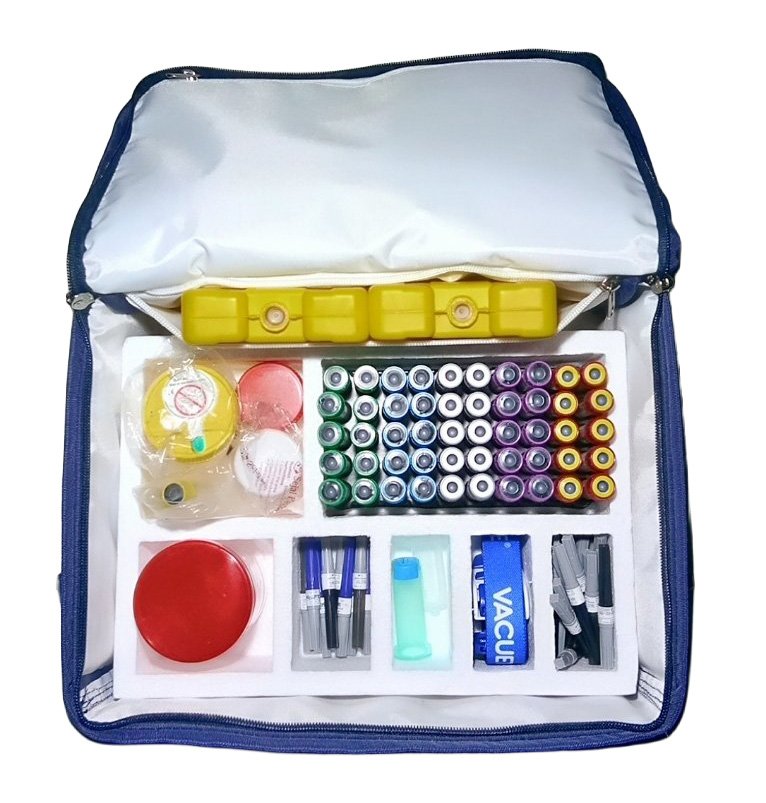
This is where many OEM conversations become useful. Once I ask for photos of the actual sample tubes, racks, cups, or kit boxes, the project becomes much clearer.
Start with the payload, not the bag shell
I build the layout from the inside out.
Ask these questions first:
- What exact container goes inside?
- What are its dimensions?
- Does it need to remain upright?
- How many units per route?
- How many ice packs, and what size?
- Should the coolant touch the product directly?
- Is paperwork placed inside or outside?
Common ice-pack layout options
Different workflows need different layouts:
Top-only ice packs
Good for simple loading, but cooling may be uneven10.Top and side ice packs
Common for better surrounding cooling.Lid pocket for gel pack
Saves interior space, but depends on weight and lid structure.Separated coolant chamber
Better protection from direct contact, but reduces usable volume.
Document pocket design matters more than many buyers expect
In medical or diagnostic transport, paperwork is not an afterthought. Buyers may need space for:
- chain-of-custody forms11
- route sheets
- collection logs
- barcode labels
- user instructions
I usually recommend buyers decide between:
| Pocket type | Advantage | Limitation |
|---|---|---|
| Outer transparent sleeve | Fast document visibility | Less protection from rough handling |
| Zipper front pocket | Better security | May add bulk |
| Inner mesh pocket | Keeps papers inside bag | Risk of moisture exposure |
| Separate document pouch | Better organization | Extra component to manage |
My pre-inquiry checklist for bulk orders
This is the checklist I would send before asking for a quote on insulated medical sample bags:
- Intended use
- Target temperature range
- Expected holding time
- Sample tube/container type
- Quantity per bag
- Internal usable dimensions
- Divider or tray requirement
- Ice-pack quantity and size
- Document pocket requirement
- Outer fabric preference
- Logo and branding method
- Order quantity and target price
That list prevents vague requests like “Please quote your best medical cooler bag.” In my experience, the more specific the pack-out details, the faster suppliers can give a useful offer and sample.
What Claims Should Suppliers Avoid Without Validation?
In this category, words can create false confidence. Buyers often see claims like “medical grade,” “8-hour cooling,” or “compliant for transport” without enough detail behind them. That creates risk, especially in bulk purchasing where one wrong assumption can affect an entire shipment plan.
Suppliers should avoid making claims about insulated medical sample bags that imply verified medical, regulatory, or temperature performance unless those claims are supported by clear validation, scope, and testing conditions. Buyers should ask what exactly has been proven and under what setup.

I say this as someone on the supplier side: cautious wording builds more trust than broad promises.
Claims that need careful review
I would question or ask for evidence when I see claims like:
- medical grade
- compliant for all medical transport
- keeps temperature for 8/12/24 hours12
- leakproof
- tested cold-chain performance
- suitable for vaccines or lab transport
- certified insulated medical sample bag
Those phrases may be partly true in a narrow context, but they are not meaningful without conditions.
What buyers should ask instead
When a supplier makes a strong claim, I ask:
- What was tested?
- Under what ambient temperature?
- What payload was inside?
- How many ice packs were used?
- Was the bag opened during testing?
- What starting temperature was used?
- Was this internal testing or third-party testing?
- Does the claim apply to this exact size and structure?
Better supplier language
I trust wording like this much more:
- “This design is intended for short-duration insulated transport.”
- “Temperature retention depends on coolant setup and payload.”
- “Any regulated use should be confirmed by the buyer based on local requirements.”
- “Testing data is available for this specific pack-out configuration.”
That language is honest. It also helps procurement teams avoid buying based on labels alone.
Why overclaiming hurts both sides
Overclaiming creates three problems:
- buyers assume protection that was never verified
- suppliers inherit complaints caused by misuse
- projects slow down when compliance teams ask for proof later
So if I were buying insulated medical sample bags in bulk, I would prefer a supplier who asks more questions and promises less, not the other way around.
Frequently Asked Questions
How do I choose the right size for insulated medical sample bags?
I choose size based on usable internal dimensions, not outer dimensions. I first confirm the exact sample containers, quantity, divider needs, and ice-pack size. Then I leave enough space for easy loading without creating too much empty air inside the bag.
Are insulated medical sample bags the same as cooler bags?
No. Some insulated medical sample bags may look similar to cooler bags, but the intended use, internal layout, documentation needs, and temperature-control workflow are different. A generic cooler may work for simple transfer, but it may not suit stricter transport tasks.
What information should I send a supplier before asking for a quote?
I send intended use, target temperature, holding time, sample container type, quantity per bag, ice-pack setup, internal size requirement, pocket layout, branding details, and order quantity. That gives the supplier enough detail to match the design instead of guessing.
Does thicker insulation always mean better performance?
No. Thicker insulation can reduce internal capacity and may not improve real performance if the ice-pack placement, lid sealing, or payload arrangement is poor. I look at the full structure and pack-out method, not thickness alone.
Can suppliers claim medical transport compliance by default?
They should not. Compliance and transport suitability depend on market, use case, testing, and workflow. Buyers should confirm what has actually been validated and avoid relying on broad “medical” wording without supporting detail.
Conclusion
Buying insulated medical sample bags in bulk is really a specification-matching exercise, not a simple price comparison. I focus on the transport task first: what goes inside, how long it travels, what cooling setup is used, and how users pack and open the bag. That approach reduces bulk-order risk far more than chasing the thickest insulation. If you are sourcing OEM or ODM insulated transport bags, contact Coraggio at info@coraggiobag.com or visit https://coraggiobag.com/ to discuss your sample setup and get a bag design matched to your real workflow.
"Specimen Storage and Shipping Guidance", https://www.cdc.gov/laboratory/specimen-submission/pdf/specimen-packing-and-shipping-guidance-infectious-diseases-laboratories.pdf. Public-health guidance on specimen transport and preanalytical laboratory error literature note that unsuitable transport conditions, including temperature excursions and poor packaging, can compromise sample integrity and necessitate recollection or other corrective action, increasing operational costs. Evidence role: general_support; source type: government. Supports: Guidance and research should show that improper specimen transport conditions, including temperature-control failures, can compromise sample integrity and create downstream operational waste.. Scope note: The evidence typically addresses specimen transport broadly rather than insulated bag procurement decisions specifically. ↩
"Laboratory specimen", https://en.wikipedia.org/wiki/Laboratory_specimen. Clinical specimen transport guidance from public-health and laboratory institutions describes defined temperature conditions for many specimen types to preserve analyte stability and diagnostic reliability during transfer. Evidence role: general_support; source type: institution. Supports: Authoritative specimen-handling guidance should confirm that many clinical specimens and some diagnostic materials require specified temperature conditions during transport to preserve integrity.. Scope note: Temperature requirements vary by specimen and test type, so no single source will apply equally to all items listed. ↩
"Mathematical Models for Insulating Packages and ...", https://digitalcommons.memphis.edu/cgi/viewcontent.cgi?article=1137&context=etd. Packaging design references note that the internal capacity of insulated containers is reduced by wall thickness, liners, seams, and closure geometry, so exterior dimensions do not directly represent usable payload space. Evidence role: mechanism; source type: education. Supports: Packaging or thermal-container design sources should explain that wall thickness and construction details reduce internal volume relative to external dimensions.. Scope note: Most sources discuss insulated containers generally rather than soft medical sample bags in particular. ↩
"Annex 9 Model guidance for the storage and transport of time", https://www.who.int/docs/default-source/medicines/norms-and-standards/guidelines/distribution/trs961-annex9-modelguidanceforstoragetransport.pdf?sfvrsn=b80e925f_2. Cold-chain guidance from health authorities and good-distribution-practice frameworks distinguishes routine insulated transport from controlled temperature distribution processes that require specified procedures, records, and performance control. Evidence role: historical_context; source type: government. Supports: Governmental or international cold-chain guidance should show that certain healthcare goods require controlled temperature transport with documentation and defined procedures.. Scope note: The applicable rules differ by product category, jurisdiction, and whether the item is a specimen, diagnostic reagent, or pharmaceutical product. ↩
"Temperature-controlled transport operations by road and by air", https://cdn.who.int/media/docs/default-source/medicines/norms-and-standards/guidelines/distribution/trs961-annex9-supp12.pdf. Temperature-controlled transport standards and sector guidance commonly require documented qualification or performance verification under defined ambient conditions and pack-out configurations rather than reliance on insulation thickness alone. Evidence role: expert_consensus; source type: institution. Supports: Standards and guidance should confirm that temperature-controlled transport programs often require documented qualification or validation under defined test conditions.. Scope note: Such requirements are strongest in regulated distribution contexts and may not apply to every local short-route transfer. ↩
"General Immunization Transport Recommendations The vaccine ...", https://www.hhs.nd.gov/sites/default/files/documents/Public%20Health/Immunizations/immunization-transport-guidance-exception.pdf. Cold-chain and thermal-packaging literature indicates that when acceptable temperature excursions are narrow, transport systems generally require validated pack-out methods and demonstrated thermal performance to manage risk. Evidence role: mechanism; source type: research. Supports: Thermal packaging and cold-chain sources should show that narrow allowable temperature ranges increase the need for validated pack-out design and performance control.. Scope note: This supports the principle of increased control needs, not a categorical rule that every soft bag is inadequate. ↩
"Transporting Biological Materials", https://ehs.usc.edu/research/bio/bua/transporting-biological-materials/. Laboratory and transport-container guidance commonly evaluates interior material selection in terms of cleanability, liquid containment, mechanical durability, and fitness for routine handling and decontamination. Evidence role: general_support; source type: institution. Supports: Relevant guidance should indicate that transport container materials are evaluated for properties such as cleanability, liquid containment, mechanical durability, and suitability for repeated handling.. Scope note: The exact priority of these criteria depends on whether the bag is intended for reusable specimen transport, kit distribution, or general cold storage. ↩
"THERMAL DESIGN OF SHIPPING CONTAINERS FOR BENEFICIAL ...", https://www.ars.usda.gov/ARSUserFiles/30200525/396thermaldesignofshippingcontainersforbeneficialinsects.pdf. Thermal-packaging studies report that hold time is determined by the whole system—including insulation properties, closure leakage, payload thermal mass, void space, and refrigerant placement—so increased insulation thickness alone does not guarantee better field performance. Evidence role: mechanism; source type: paper. Supports: Thermal analysis or packaging studies should show that overall heat transfer depends on container design, closure leakage, payload, and coolant configuration in addition to insulation thickness.. Scope note: The magnitude of the effect varies by package geometry and test protocol. ↩
"Space Cold Chain", https://ntrs.nasa.gov/api/citations/20190029051/downloads/20190029051.pdf. Experimental work on insulated transport packages shows that payload loading and internal void space can influence temperature distribution and repeatability by altering convective air movement and the thermal mass within the container. Evidence role: mechanism; source type: paper. Supports: Research should show that payload loading and void space affect thermal stability and repeatability in insulated packages.. Scope note: Findings are often package-specific and may not translate directly to every soft-bag configuration. ↩
"Temperature mapping of storage areas", https://cdn.who.int/media/docs/default-source/medicines/norms-and-standards/guidelines/distribution/trs961-annex9-supp8.pdf. Temperature-mapping studies of insulated transport packages indicate that refrigerant placement influences internal temperature gradients, with single-sided cooling configurations often producing less uniform temperature distribution than more balanced pack-outs. Evidence role: mechanism; source type: research. Supports: Temperature-mapping or thermal-packaging studies should demonstrate that refrigerant placement affects internal temperature uniformity.. Scope note: The effect depends on bag geometry, payload arrangement, and whether contents are tightly packed or loosely loaded. ↩
"Chain of Custody - StatPearls - NCBI Bookshelf - NIH", https://www.ncbi.nlm.nih.gov/books/NBK551677/. Laboratory and forensic handling guidance documents the use of chain-of-custody procedures to record specimen possession and transfer when traceability and documented control are required. Evidence role: case_reference; source type: government. Supports: Government or laboratory guidance should show that chain-of-custody documentation is used in specimen workflows where traceability and transfer records are required.. Scope note: This practice is routine in some specimen categories, such as forensic or regulated testing, but not universal for all routine diagnostic transport. ↩
"PQS Type-testing protocol | WHO/PQS/E004/CB02-VP.1", https://extranet.who.int/pqweb/key-resources/documents/pqs-type-testing-protocol-e004cb02-vp1-large-capacity-vaccine-cold-box. Thermal qualification standards and cold-chain guidance treat hold-time claims as conditional on defined test parameters, including ambient profile, starting temperature, payload, refrigerant configuration, and access events; duration statements without such conditions are not directly comparable. Evidence role: expert_consensus; source type: institution. Supports: Testing standards and guidance should establish that temperature-retention claims are interpretable only with specified ambient profiles, payload assumptions, refrigerant quantity, and opening conditions.. Scope note: The source supports the need for contextual test conditions rather than proving any specific supplier claim false. ↩