rPET laptop backpacks look like an easy sustainability win, but many buyers get stuck between vague eco claims, suspiciously low quotes, and internal pressure to control cost. That gap creates real compliance risk.1 I think the smart solution is to source with a verification-first process, not a price-first one.
Buyers should source rPET laptop backpacks by checking three things in order: whether the recycled material claim is verifiable, whether the quoted price makes commercial sense, and whether the backpack specifications fit real employee use. A low quote is not automatically a good quote if the certification scope, certificate validity, or product-level claim does not hold up.2
When I speak with overseas buyers, I notice the same pattern. They usually start by asking for the best eco price. Then, after a few emails, the real concern comes out: Can I defend this recycled claim to my company, my client, or my market? That is where the sourcing process becomes much more important than the headline price.
What Is a Recycled PET Laptop Backpack?
Many buyers hear “recycled PET” and assume the whole bag is recycled, fully certified, and automatically compliant. That assumption can create problems later. The material claim, the certification claim, and the finished-product claim are related, but they are not the same thing.
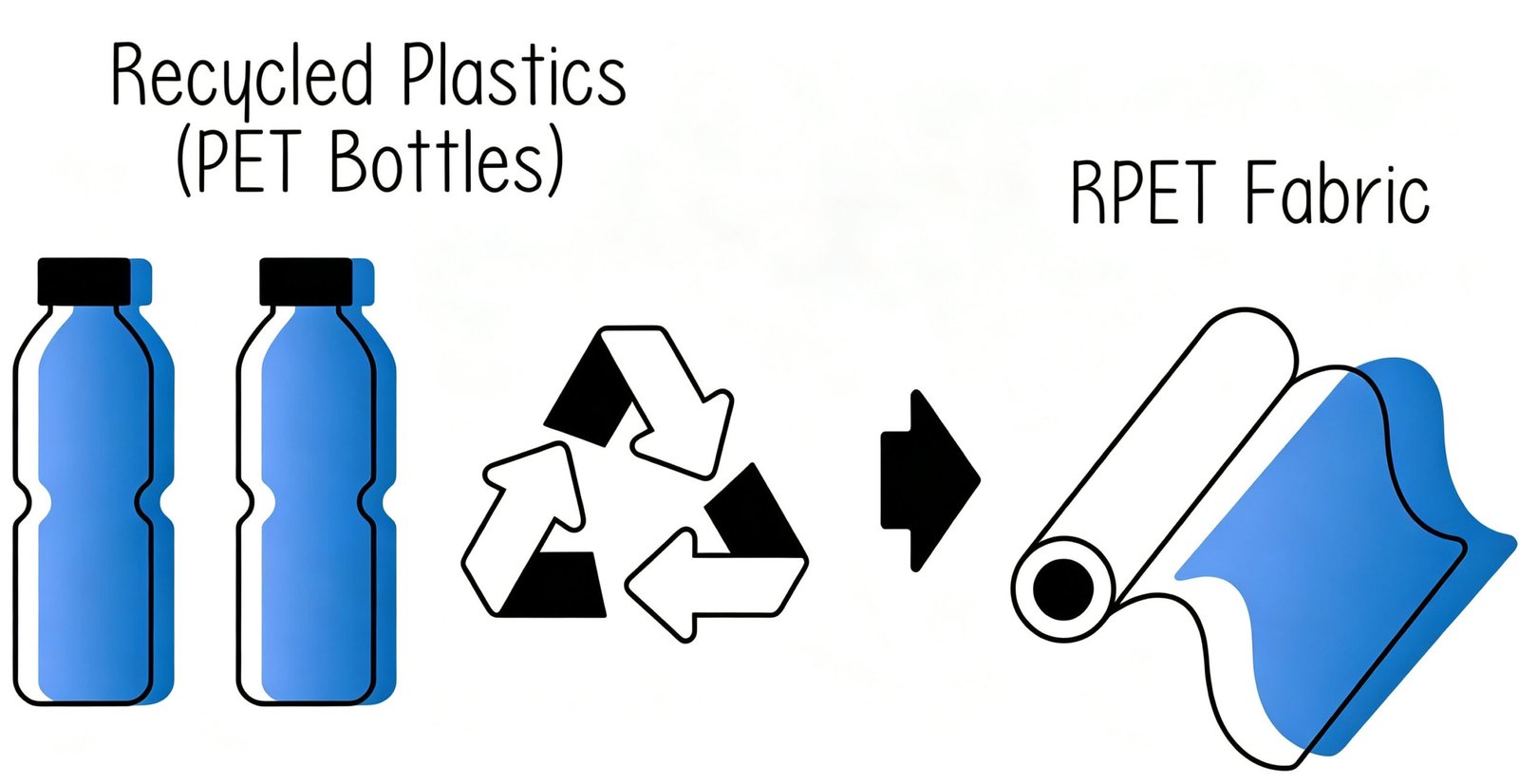
A recycled PET laptop backpack is a backpack made with polyester derived partly or mainly from recycled PET feedstock, often from post-consumer plastic bottles3. However, buyers still need to confirm what part is actually recycled, whether the claim is certified, and whether the finished bag falls within the supplier’s valid certification scope.
A lot of confusion starts with the phrase itself.
What “rPET” usually means
In normal sourcing conversations, rPET usually refers to polyester yarn or fabric produced from recycled PET material. In backpacks, this may apply to:
- Outer fabric
- Lining fabric
- Webbing
- Mesh
- Some accessory textiles
It does not automatically mean every component is recycled. Zippers, foam, buckles, laptop padding, and reinforcement parts may follow different material logic.
Why that distinction matters
If you are buying for staff programs, gifts, or corporate merchandise, your internal team may simply ask, “Is this backpack recycled?” But from a sourcing perspective, that question is too broad. I usually suggest buyers break it into smaller questions:
- Which component is rPET?
- What claim is being made?
- Who certified it?
- Does the certificate cover this product category?
That last point matters a lot. I have seen suppliers show a yarn-related document or a generic recycled statement and treat it as if it proves the complete laptop backpack is certified. It does not.
Do not mix up two separate questions
Buyers often combine these into one concern:
- Is rPET durable enough for commuter use?
- Is this rPET claim genuine and supportable?
Those are two separate checks.
A backpack can be practical for daily use and still have weak documentation. On the other hand, a product can have proper paperwork and still not be designed well for office staff. I always advise treating performance review and compliance review as independent steps.
If your brand faces reputational risk, the bigger sourcing mistake is usually not “the fabric felt weak.” It is “the sustainability claim could not be verified later.”4
Which Laptop Backpack Features Matter for Employee Programs?
Many employee backpack projects fail because buyers focus too much on eco language and too little on actual usage. Staff members will judge the bag by comfort, laptop protection, and daily convenience long before they care about the hangtag.5
For employee programs, the most important laptop backpack features are laptop compartment size, carrying comfort, fabric practicality, organization, and branding restraint. Buyers should match the backpack to commuting habits and job role, not just choose the cheapest recycled-looking style.
I have seen simple backpack projects become surprisingly complicated once the buyer asks who will actually carry them.
Features I would check first
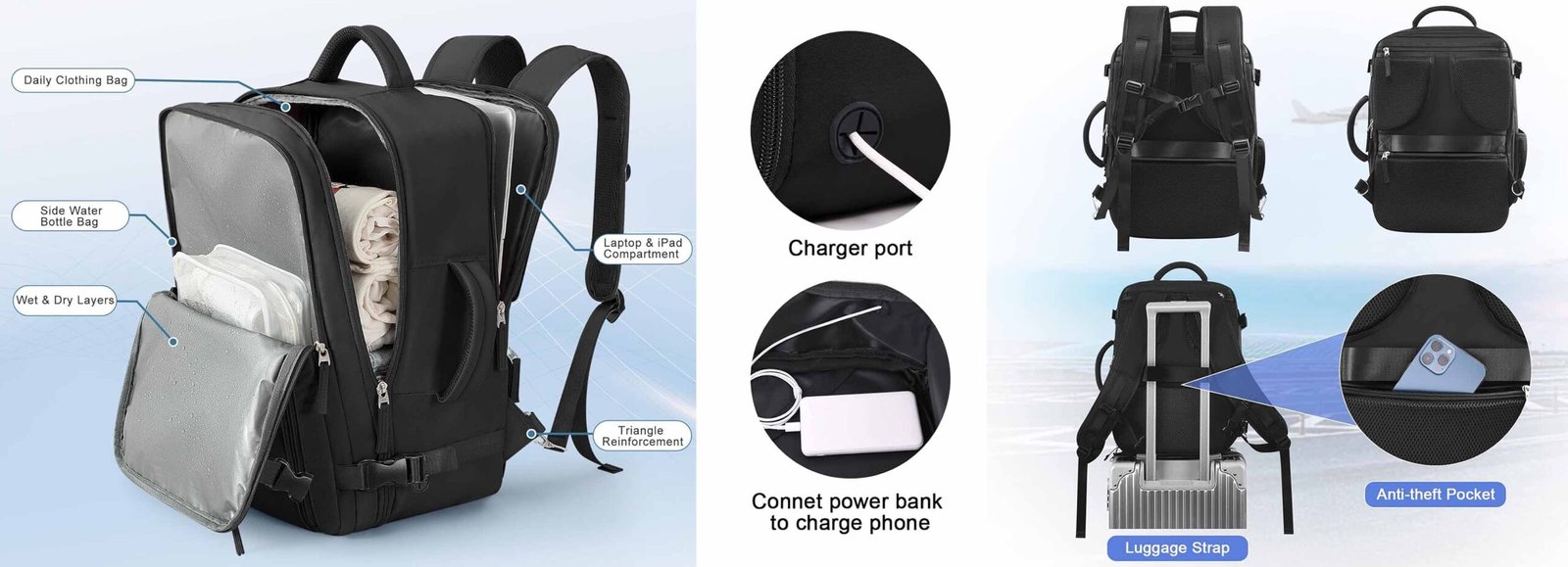
For office, retail, and corporate staff programs, these are usually the key points:
- Laptop compartment fit
Common target sizes are 13", 15.6", and sometimes 17". If the pocket size is vague, ask for actual inner dimensions. - Back padding and shoulder comfort
A nice eco story does not help if the bag feels flat or uncomfortable. - Structured shape
A backpack for staff should look clean and hold shape better than a promotional giveaway bag. - Trolley sleeve or luggage strap
This matters for managers, sales teams, and frequent travelers. - Water-resistant surface
Not “waterproof” by default, but practical resistance is useful for commuting. - Internal organization
Charger, notebook, pens, bottle, badge, and documents all need a place.
A practical feature comparison
| Feature | Basic staff use | Better corporate use |
|---|---|---|
| Laptop sleeve | Single padded sleeve | Suspended padded compartment |
| Straps | Standard foam | Thicker ergonomic padding |
| Organization | 1–2 pockets | Admin panel + bottle pocket + hidden pocket |
| Fabric handfeel | Simple polyester look | Cleaner texture, more premium finish |
| Travel function | None | Trolley strap, quick-access pocket |
Why feature balance matters in B2B orders
A recycled claim can support your project, but the bag still needs to serve a purpose. For example, a supermarket buyer may need a cost-controlled employee bag. A tech company may need a more polished onboarding gift. A distributor may want a model that works across several client industries.
I usually tell buyers not to overbuild and not to underbuild. If you add too many details, the project loses price competitiveness. If you strip the design too far, employees will not use it. In practice, the best-performing corporate backpack projects often sit in the middle: clean silhouette, secure laptop section, modest branding, and one or two features that improve daily convenience.
How Should Buyers Verify rPET Laptop Backpacks Material Claims?
This is the heart of the issue. In my experience, the biggest risk in sourcing rPET laptop backpacks is not whether a supplier can say “recycled.” It is whether that statement survives document review, customer scrutiny, or downstream compliance checks.
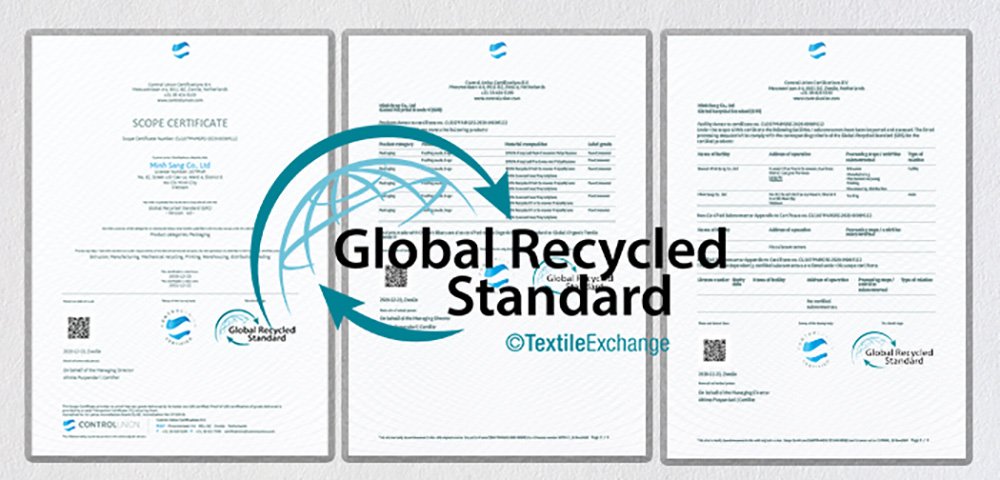
Buyers should verify rPET claims by checking the certificate number, issuer, validity dates, certified scope, and supply-chain relevance to the quoted backpack. A logo on a website or product image is not proof.6 The buyer needs documents that match the actual product and supplier relationship.
I want to be direct here: cheap recycled claims often deserve more scrutiny, not less7.
A practical certificate-checking checklist
When a supplier says a laptop backpack is GRS or recycled certified, I would ask for:
- Certificate number
- Issuing body
For example, recognized third-party organizations such as Control Union or SCS8 - Validity period
- Company name on certificate
- Certified product scope
- Whether the quoted product line falls within that scope
- Transaction-level or order-level support documents if needed
What buyers often miss
A supplier may show one of these:
- A fabric mill certificate
- A yarn supplier certificate
- A recycled statement without product linkage
- An expired certificate
- A valid certificate that does not cover the backpack category being quoted
That does not automatically mean fraud. But it does mean you should not assume the final claim is safe to use.
Why an unusually low quote can be a warning sign
I am careful with price because every project differs by size, structure, branding, packaging, and accessories. Still, from a factory-side quoting perspective, buyers should know this principle:
If an rPET backpack quote looks much lower than the normal market logic for a similar spec, ask why before you negotiate further.
Possible reasons include:
- Fabric weight is lower than expected
- Construction is simplified
- Recycled content claim is partial, not full
- Material is blended
- Certification coverage is weaker than implied
- The quote excludes details you assume are included
A directional price logic framework
I do not want to present fixed price promises, because real quotes depend on specs and volume. But for standard commuter-style laptop backpacks in B2B orders, I usually encourage buyers to compare quotes using these factors:
| Quote factor | Usually pushes price lower | Usually pushes price higher |
|---|---|---|
| Material claim | Generic recycled wording | Verified certified rPET sourcing |
| MOQ | Larger quantity | Smaller quantity |
| Structure | Soft basic body | Padded laptop construction |
| Branding | Simple print | Woven label, metal logo, multiple placements |
| Packaging | Bulk simple pack | Individual retail-ready presentation |
If one supplier offers a dramatically lower rPET quote than several others on a similar spec, I would not celebrate first. I would investigate first.
What Branding Options Work for Corporate Backpacks?
A staff backpack should represent the company well without turning into a walking advertisement. Buyers often make the best long-term choice when branding is subtle, durable, and consistent with the bag’s intended use.
The best branding options for corporate backpacks are usually low-profile logo applications9 such as woven labels, tonal embroidery, small screen prints, or molded patches. Buyers should choose branding that supports daily employee use and does not undermine the premium or sustainable positioning of the backpack.
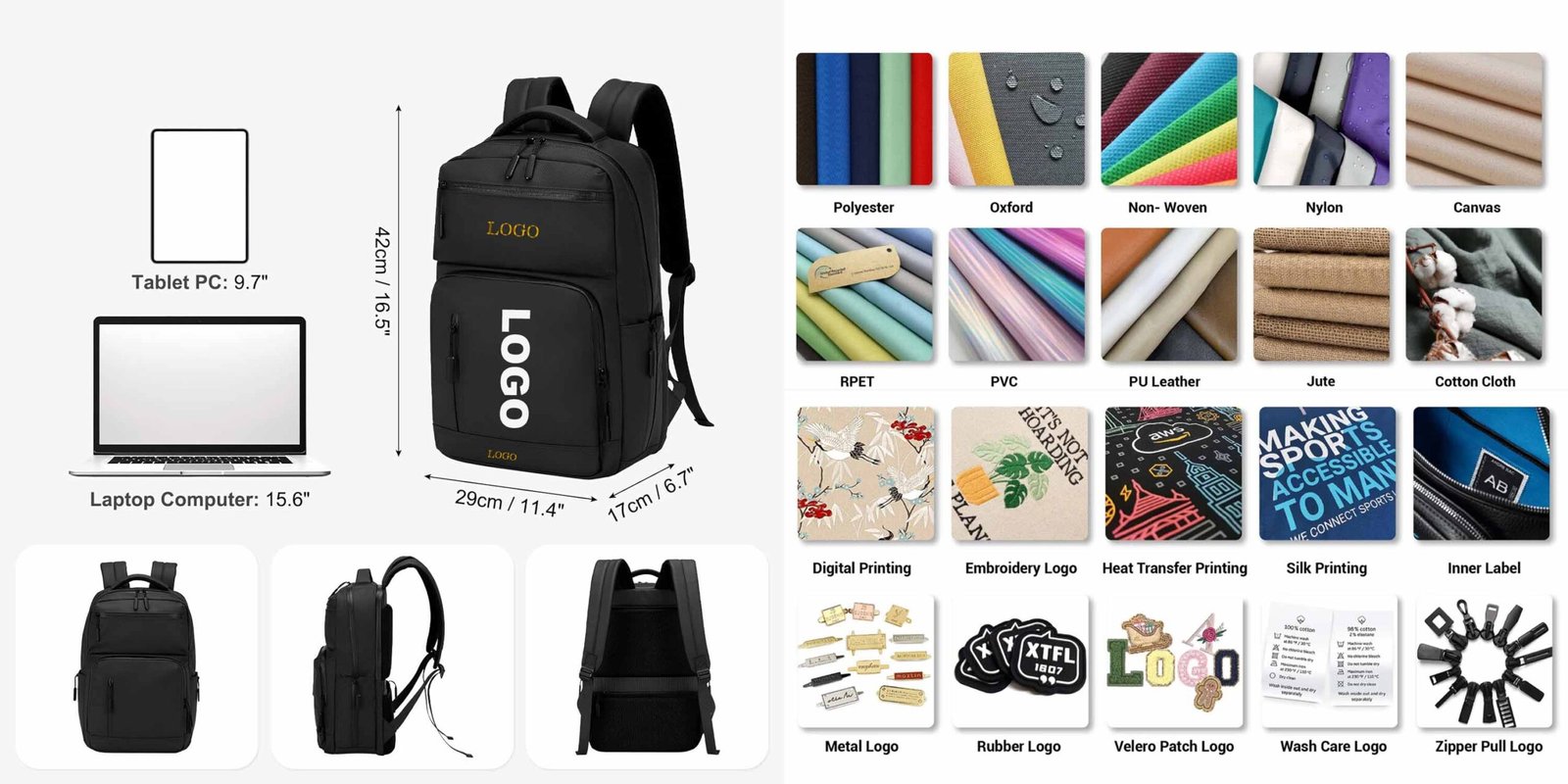
I have noticed that many procurement teams ask for a logo first and branding strategy second. I think that order should be reversed.
Branding methods that usually work well
- Woven label
Clean, cost-effective, and easy to place - Silk screen print
Good for simple logos, especially on flatter panels - Embroidery
Strong visual quality, but it may not suit every fabric style - Rubber or TPU patch
Modern look for tech-oriented or lifestyle brands - Metal logo plate
More premium, but needs careful cost control
Match branding to program purpose
Here is how I usually think about it:
- Employee onboarding: understated, professional branding
- Retail support or distributor gifting: logo visibility can be slightly stronger
- Sustainability campaign: combine logo with recycled-material messaging carefully
- Executive/internal events: cleaner and smaller branding often looks better
One common mistake
Some buyers add too many messages:
- Main logo
- Sustainability icon
- Recycled message
- Department tagline
- Event slogan
That can make the bag look cluttered. It can also create claim risk if the recycled wording is not tightly controlled. I generally recommend keeping the visual branding simple and handling material claims through approved labels, packaging, or documentation where appropriate.
What Should Procurement Teams Confirm Before Sampling?
Sampling is where many future problems can still be prevented. Once the sample direction is approved without enough checks, buyers often lose leverage or discover compliance gaps too late.
Before sampling rPET laptop backpacks, procurement teams should confirm the claimed material basis, certificate relevance, target specifications, branding method, testing expectations, and commercial assumptions such as MOQ and price range. A clear pre-sampling checklist reduces wasted time and protects the buyer from false comparison.10

I always prefer buyers to slow down slightly before sampling, because that usually saves much more time later.
My recommended pre-sampling checklist
1. Confirm the claim language
Ask:
- Is the bag made from certified rPET fabric?
- Which parts are recycled?
- Can this exact claim be supported in documents?
2. Confirm the certificate path
Ask for:
- Certificate copy
- Validity date
- Issuer
- Scope
- Relevance to the quoted item
3. Confirm product specs in writing
Include:
- Bag size
- Laptop size fit
- Fabric type
- Pockets
- Padding
- Zippers
- Logo position
- Color standard
4. Confirm quote assumptions
Do not compare two prices unless you know both cover the same things.
Check:
- MOQ
- Packaging
- Branding method
- Sample charges
- Lead time
- Shipping terms
Why this matters commercially
I have seen buyers request samples from three or four suppliers and think they are making a clean comparison. But often each sample is based on a different assumption. One is using generic polyester with a recycled claim in conversation. Another includes actual certified sourcing. Another removes features to reduce price.
That is not a fair comparison. It only creates confusion.
A better approach is to align the RFQ logic first, then sample. In practice, that gives buyers stronger negotiation power and much clearer internal reporting. If you need to justify the project to a sourcing manager or sustainability team, documented pre-sample alignment helps a lot.
Frequently Asked Questions
Is a cheaper rPET laptop backpack quote always better?
No. A much cheaper quote can indicate weaker materials, reduced features, unclear recycled content, or certification gaps. I always suggest asking why the quote is lower before treating it as a sourcing win.
Does a GRS logo on a catalog prove the backpack is certified?
No. A logo alone proves nothing. Buyers should verify the certificate number, issuer, validity period, and whether the certified scope actually covers the backpack product being quoted.
Are rPET laptop backpacks suitable for daily employee commuting?
They can be, but buyers should evaluate structure, padding, comfort, and organization separately from the recycled claim. Usability and certification are two different checks11, and both matter.
What is the safest way to compare suppliers?
Use the same specification sheet, same branding requirements, same packaging assumption, and the same certification questions for every supplier. That creates a more reliable apples-to-apples comparison.
Should buyers ask which parts of the backpack are recycled?
Yes. That question is important. Some suppliers may refer only to the fabric, while buyers assume the whole product is recycled. Clear component-level confirmation reduces misunderstanding and claim risk.
Conclusion
Sourcing rPET laptop backpacks well is really about buyer protection. I believe the best process starts with verification, then moves to price logic, then to product fit for staff use. A low quote is not automatically a smart quote if the recycled claim cannot be defended later. If you are comparing suppliers for a corporate backpack program and want a practical review of spec, certification scope, and quote logic, you can reach me at info@coraggiobag.com or visit https://coraggiobag.com/.
"Green Guides", https://www.ftc.gov/news-events/topics/truth-advertising/green-guides. Regulatory guidance on environmental marketing claims states that marketers should possess competent and reliable evidence for claims such as recycled content and should avoid unqualified or misleading representations, supporting the article's point that weakly substantiated eco claims can create compliance risk. Evidence role: general_support; source type: government. Supports: Regulators require environmental marketing claims to be truthful, specific, and substantiated, so unsupported recycled-content claims can expose firms to compliance risk.. ↩
"Recycled Claim Standard (RCS) + Global ...", https://textileexchange.org/recycled-claim-global-recycled-standard/. Certification frameworks for recycled materials explain that claims depend on a valid scope certificate and chain-of-custody documentation for the relevant product category, which supports the article's view that a low quote is not meaningful if certificate scope or validity does not support the claimed backpack. Evidence role: mechanism; source type: institution. Supports: Recycled-content certification systems rely on valid scope certificates and chain-of-custody documentation; a claim is not established by price or by a generic statement alone.. Scope note: This support is contextual because certification rules establish how claims are validated, rather than proving that any specific low quote is unreliable. ↩
"Polyethylene terephthalate", https://en.wikipedia.org/wiki/Polyethylene_terephthalate. Reference material on polyethylene terephthalate recycling notes that post-consumer beverage bottles are a major feedstock for recycled PET and can be processed into polyester fiber, supporting the article's description of typical rPET sourcing. Evidence role: general_support; source type: encyclopedia. Supports: PET bottles are a common post-consumer feedstock for recycled polyester fiber production.. ↩
"Protecting and empowering consumers in the green ...", https://www.oecd.org/content/dam/oecd/en/publications/reports/2025/05/protecting-and-empowering-consumers-in-the-green-transition_c23ea601/12f28e4f-en.pdf. Research and policy discussions on greenwashing describe unsupported sustainability claims as a source of reputational and regulatory risk for firms, which supports the article's emphasis on verifying environmental claims before use. Evidence role: general_support; source type: research. Supports: Unsupported sustainability claims are associated with reputational, legal, and governance risk for firms.. Scope note: The support is contextual because it addresses the general risk of unverifiable claims rather than ranking that risk against all product-performance issues in every sourcing case. ↩
"The Effects of Environmental Sustainability Labels on Selection ...", https://pmc.ncbi.nlm.nih.gov/articles/PMC8384304/. Consumer-behavior studies on sustainable products commonly report that functional quality, usability, and price remain primary drivers of choice, while environmental labels influence decisions more strongly when core performance expectations are already met; this supports the article's claim about employee use priorities. Evidence role: general_support; source type: paper. Supports: Consumer research often finds that functional performance and convenience remain primary determinants of product evaluation, with sustainability attributes acting as secondary factors.. Scope note: This evidence is indirect because it concerns consumer preference patterns broadly rather than employee reactions to laptop backpacks specifically. ↩
"Certification mark applications", https://www.uspto.gov/trademarks/apply/certification-mark-applications. Certification-program guidance on logo and claim use indicates that marks must be backed by valid certification records and approved claim conditions, supporting the article's statement that a logo in marketing material is not proof by itself. Evidence role: mechanism; source type: institution. Supports: Certification marks are governed by usage rules and must correspond to valid certification documentation; the presence of a logo alone does not establish product certification.. ↩
"Abnormally Low Abnormally Low Bids and Proposals", https://thedocs.worldbank.org/en/doc/780841478724671583-0290022017/original/ProcurementGuidanceidentificationandtreatmentofAbnormallyLowBidsandProposals.pdf. Procurement and due-diligence literature identifies unusually low prices as a common red flag requiring additional verification of specifications, provenance, and documentation, which supports the article's call for greater scrutiny of very cheap recycled-content claims. Evidence role: expert_consensus; source type: research. Supports: Due-diligence frameworks treat implausibly low prices or unusually favorable terms as red flags that warrant additional verification.. Scope note: This support is contextual because it applies to due diligence and red-flag assessment broadly, not exclusively to recycled-textile claims. ↩
"Certification Bodies - Textile Exchange", https://textileexchange.org/certification-bodies/. Program documentation and certification-body materials identify Control Union and SCS Global Services as certification bodies operating within recycled-material standards, supporting their use in the article as examples of third-party issuers. Evidence role: case_reference; source type: institution. Supports: These organizations act as certification bodies used within recycled-material certification systems such as the Global Recycled Standard.. ↩
"Neuroscientific Analysis of Logo Design - PMC - NIH", https://pmc.ncbi.nlm.nih.gov/articles/PMC12024241/. Studies on brand prominence and product design find that subtle logo placement can support perceptions of quality and understated professionalism, which aligns with the article's recommendation for low-profile branding on corporate backpacks. Evidence role: general_support; source type: paper. Supports: Research on brand prominence suggests that more understated logo treatments can better support perceptions of quality, professionalism, or premium positioning in some contexts.. Scope note: The support is indirect because the literature often addresses fashion and branded goods generally rather than corporate backpacks in particular. ↩
"Tools and Strategies for Quality Improvement and Patient Safety", https://www.ncbi.nlm.nih.gov/books/NBK2682/. Procurement and quality-management literature shows that standardized specifications and checklists improve bid comparability and reduce omissions, supporting the article's statement that pre-sampling alignment helps prevent false comparisons and wasted effort. Evidence role: mechanism; source type: research. Supports: Standardized specifications and checklists improve comparability across bids and reduce avoidable process errors.. ↩
"Conditions and Requirements for Relying on Component ...", https://www.federalregister.gov/documents/2011/11/08/2011-27677/conditions-and-requirements-for-relying-on-component-part-testing-or-certification-or-another-partys. Conformity-assessment and quality-assurance frameworks distinguish between testing whether a product performs as intended and verifying whether documentary claims such as certified recycled content are valid, supporting the article's statement that usability and certification are separate checks. Evidence role: definition; source type: institution. Supports: Performance evaluation and certification/document verification address different questions within conformity assessment and quality assurance.. ↩