A tech organizer pouch spec sheet often looks simple at first, but that simplicity causes problems fast. I often see buyers send only a sketch and a size, then feel frustrated when quotes shift, samples miss expectations, or factories keep asking questions. The fix is a spec sheet that removes guesswork before pricing starts.
A tech organizer pouch spec sheet should include the exact external size, opening structure, internal compartment dimensions, material stack, padding, trims, branding method, and packing requirements. In OEM/ODM sourcing, the goal is not just to describe the pouch. The goal is to give a factory enough clear information to quote accurately and make a first sample without assumptions.
If you source bags at scale, this matters more than it seems. In my daily OEM/ODM communication work, the real issue is rarely “missing paperwork.” The real issue is that the supplier cannot judge cost, construction, or feasibility from vague inputs. That is where re-quotes, sample mismatch, and timeline loss begin.
What Is a Tech Organizer Pouch?
A tech organizer pouch sounds straightforward, but many buyers use the term too broadly. That creates confusion in quoting because one buyer means a slim cable case, while another means a padded travel electronics organizer with layered compartments. If the category is unclear, the whole quote starts on weak ground.
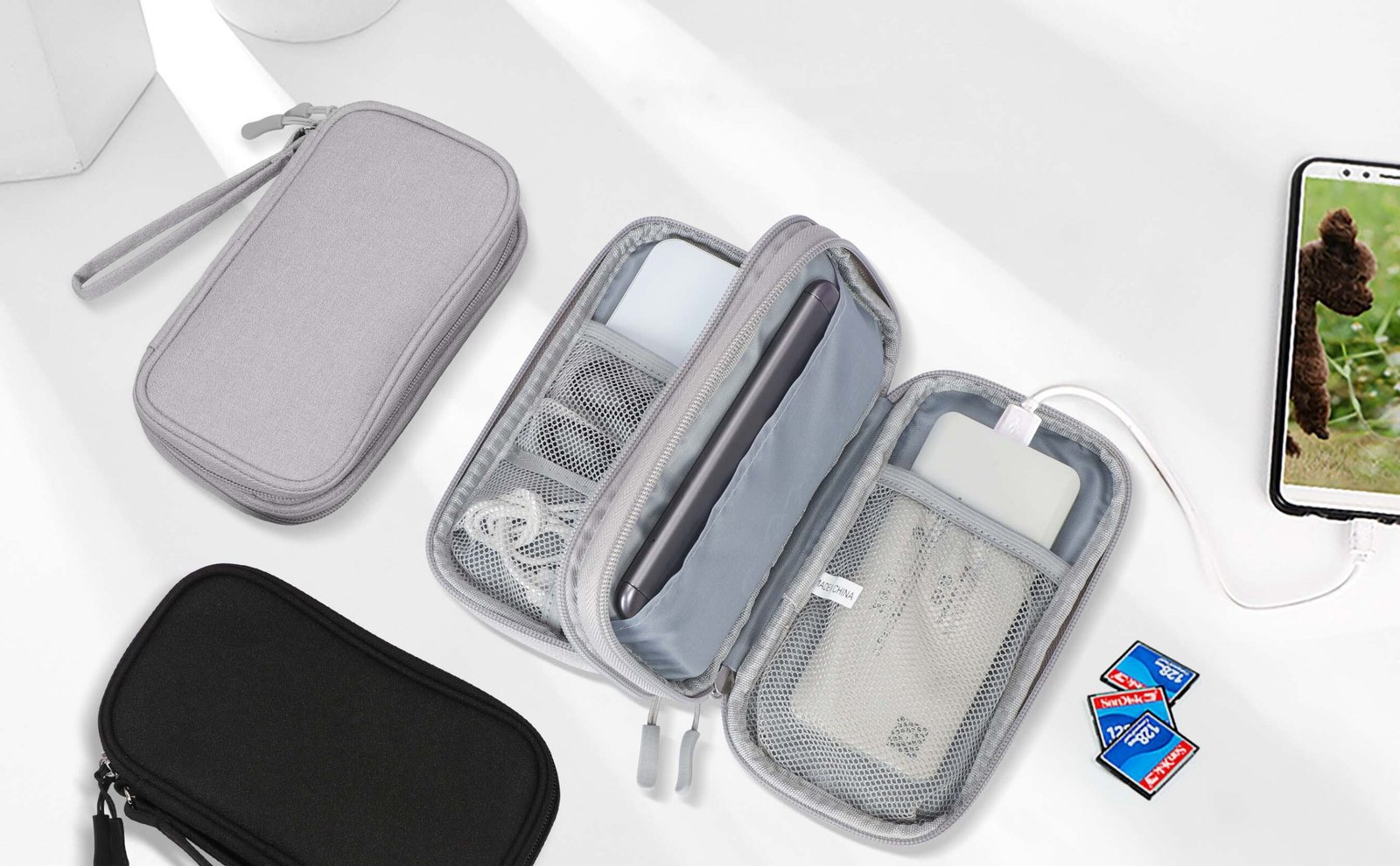
A tech organizer pouch is a bag or case designed to store and organize electronic accessories such as chargers, cables, adapters, power banks, mice, pens, and small devices. For quoting and sample alignment, the important point is not the name itself. The important point is the pouch’s actual structure, capacity, and intended use scenario.
In sourcing, category names are only a starting point. I have seen “tech pouch,” “electronics case,” “digital accessories bag,” and “cable organizer” used for products that are built very differently.
Why the product definition matters for factories
When a buyer says “I need a tech organizer pouch,” a factory still needs to know:
- Is it flat or gusseted?
- Does it open 180 degrees or only from the top?
- Is it designed for daily office carry or travel protection?
- Does it hold only cables, or also chargers, mice, hard drives, or tablets?
- Is the structure soft, semi-rigid, or heavily padded?
Each choice changes labor, material use, and pattern making.
Common tech organizer pouch types
Here is a simple breakdown:
| Type | Typical Use | Cost Impact | Sampling Risk if Vague |
|---|---|---|---|
| Flat zipper pouch | Cables, chargers | Low | Capacity gets underestimated |
| Gusset organizer | Bulkier tech items | Medium | Final depth may not fit items |
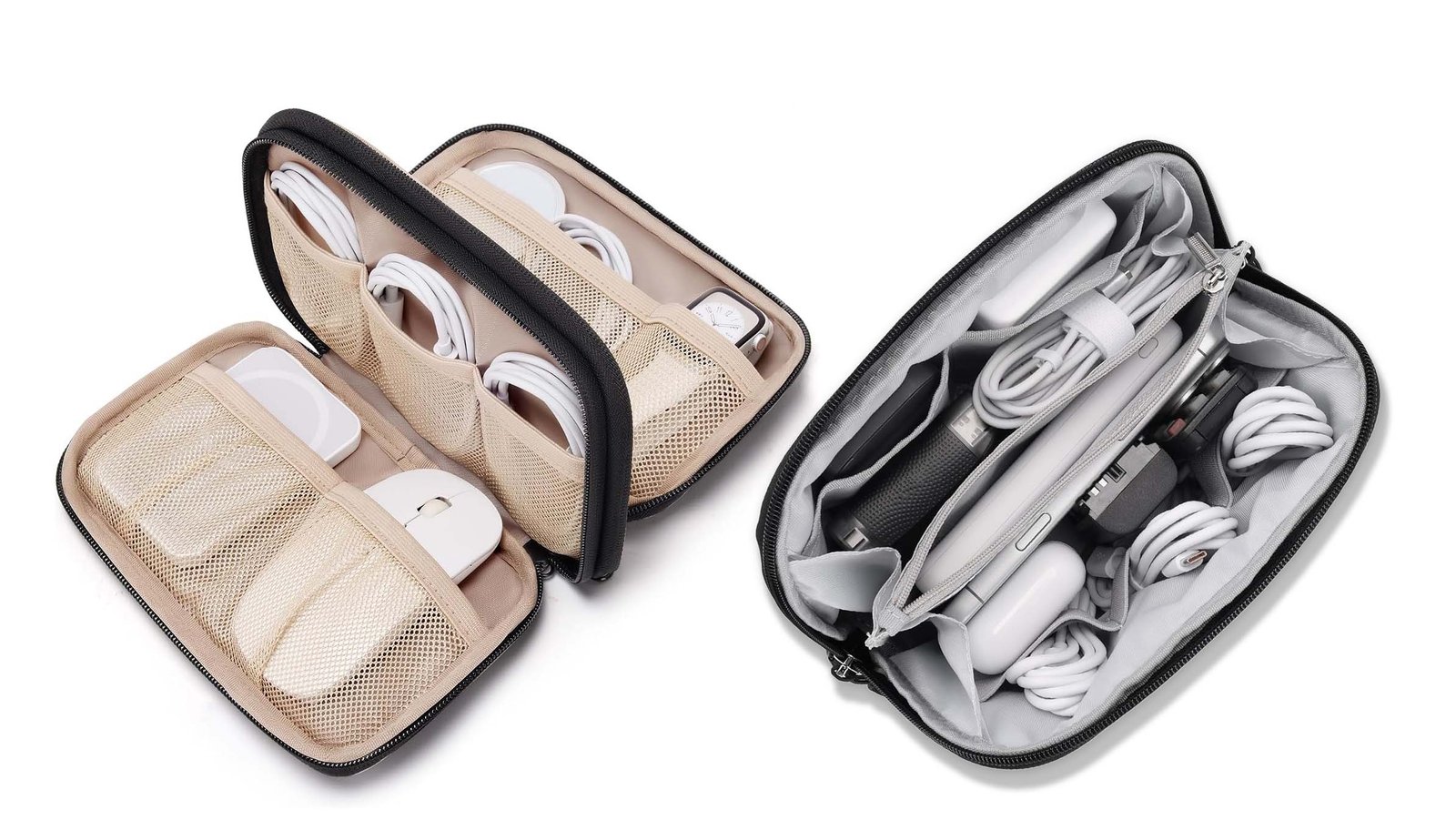
| Book-style organizer | Elastic and mesh layout | Medium to high | Internal layout may not match intended items |
| Semi-rigid EVA case | Protection for devices | High | Structure and tooling assumptions affect quote |
A lot of buyers think the factory can infer the right version from a reference photo. In my experience, that is risky. A photo shows appearance, but it does not tell us foam thickness, panel stiffness, lining construction, or pocket sizing.1 That is why the spec sheet must define the product beyond the category name.
In our sampling communication experience, the product name helps start the conversation, but it never gives enough detail for a reliable quote.
So, if you ask me what a tech organizer pouch is in procurement terms, I would answer like this: it is a storage pouch for electronics accessories, and its commercial meaning depends on its structure, capacity, and internal organization. That is exactly why the spec sheet matters.
Which Items Should a Corporate Tech Pouch Hold?
A tech organizer pouch spec sheet fails quickly when the intended contents are not clear. Buyers often list “cables and accessories,” but that phrase is too broad. A pouch built for charging cables is very different from one built for a power bank, mouse, wall charger, and notebook.
A corporate tech pouch should hold the exact items your end user is expected to carry, with their approximate sizes. For supplier quoting and sample making, item list and item dimensions are more useful than general use descriptions because they define compartment size, pouch depth, and internal layout.2
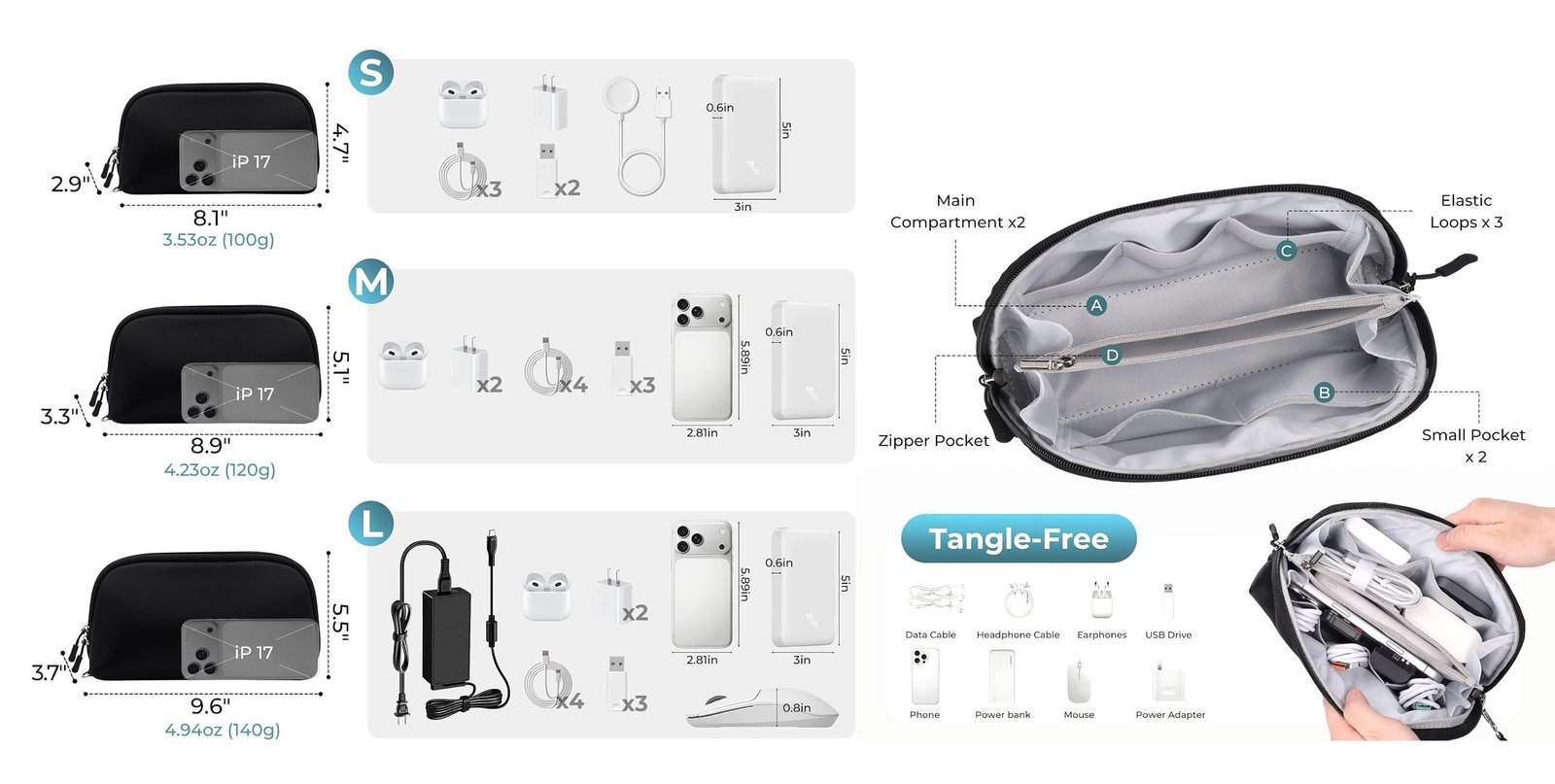
This is one of the most overlooked parts of a spec sheet. I have seen buyers give us a clean outer design, then leave the inside undefined. That always creates trouble later because interior function drives both pattern and cost.
Why the item list affects pricing
Internal storage is not decoration. It controls:
- How many compartments are needed
- How wide and deep each pocket should be
- Whether elastic loops can hold the intended item securely
- Whether padding is needed to protect heavier electronics
- Whether the pouch needs more depth or panel support
For example, a pouch designed for:
- 1 mouse
- 1 wall charger
- 1 power bank
- 3 cables
- 1 USB drive
- 1 pen
will need a completely different internal layout from a pouch that only stores:
- 4 charging cables
- 2 adapters
- 1 SIM pin
- 1 memory card
What buyers should specify
I usually suggest that buyers list contents like this:
- Item name
- Quantity
- Approximate size
- Need fixed position or flexible storage
- Need protection or not
Example:
| Item | Qty | Size | Storage Type | Protection Need |
|---|---|---|---|---|
| Wall charger | 1 | 70 x 55 x 30 mm | Mesh pocket | Medium |
| Mouse | 1 | 110 x 60 x 35 mm | Main compartment | Medium |
| Charging cable | 3 | 1 m each | Elastic loops | Low |
| Power bank | 1 | 140 x 70 x 18 mm | Slip pocket | Medium |
This level of input helps us judge whether the internal dimensions are realistic. It also reduces one common mistake: the buyer wants a slim profile, but the selected items physically require more depth than the pouch allows.
The real procurement risk
If the item list is vague, three things happen:
- The supplier makes assumptions
- The first quote is less accurate
- The sample often comes back with compartments that do not fit the intended accessories
That leads to re-design, re-quote, and wasted time.
I always tell buyers this: a pouch is not defined by what you call it. It is defined by what it must hold. If your current spec sheet does not clearly show that, it is not ready for executable pricing.
How Should Buyers Choose Elastic Loops, Mesh Pockets, and Padding?
A tech organizer pouch can look neat in a sketch, but the inside often fails in practice. Buyers sometimes request “elastic loops and mesh pockets” as if these are standard parts with fixed behavior. They are not. Width, tension, placement, and support all affect usability and cost.
Buyers should choose elastic loops, mesh pockets, and padding based on the actual item size, retention need, and protection level. For quoting and sample alignment, the key is to specify dimensions, placement, sewing method, and material type instead of naming the component only.
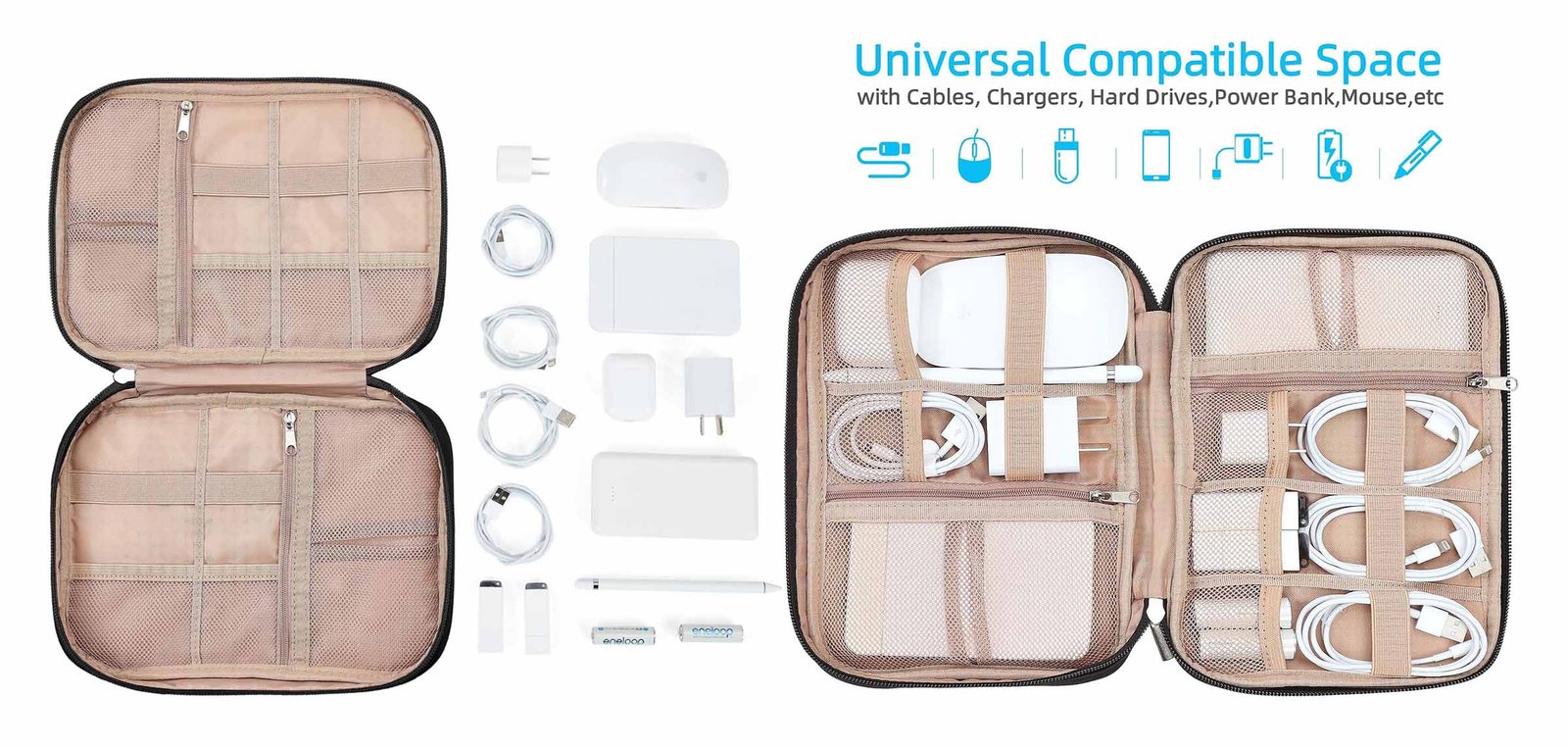
This is where broad descriptions create hidden risk. In sampling communication, “add some elastic loops” is one of the least actionable comments a factory can receive.
Elastic loops: simple idea, tricky execution
Elastic loops vary by:
- Width, such as 15 mm, 20 mm, 25 mm
- Elastic strength
- Stitch spacing
- Single-item or multi-item holding design
- Position on base panel or divider
If the loops are too loose, cables slip out. If they are too tight, chargers and adapters do not fit.3 If spacing is wrong, the loop can distort after use.
What to specify for elastic loops
- Elastic width
- Number of loops
- Width of each usable slot
- Intended item for each loop
- Sewing position
Mesh pockets: visibility is not enough
Mesh pockets sound convenient, but they vary a lot in function.
Key variables include:
- Mesh type: fine mesh or larger-hole mesh
- Stretch or non-stretch
- Pocket depth
- Opening style: top open, zipper, elastic edge
- Whether the pocket sits flat or has volume
A shallow mesh pocket may be fine for memory cards but useless for a bulky charger. A stretch mesh may hold shape poorly if the item is heavy.4
Padding: where vague wording causes big assumptions
The phrase “with padding” is not enough. A factory still needs to know:
- Foam type
- Foam thickness
- Which panels need padding
- Whether padding is for shape, protection, or both
For example, 3 mm foam on front and back panels is very different from full-body padded construction with reinforced divider panels.
| Component | Must-have spec | What goes wrong if vague |
|---|---|---|
| Elastic loops | Width, slot size, quantity | Items do not fit or slip out |
| Mesh pocket | Material, size, opening type | Pocket becomes unusable |
| Padding | Thickness, location, purpose | Quote shifts and sample feels wrong |
In my experience, internal components create many of the “this is not what we expected” comments after first sampling. The outside often looks acceptable. The inside is where mismatch appears.
That is why I do not treat internal organization as a small detail. For a tech organizer pouch spec sheet, these choices directly affect labor time, usable capacity, and final product feel.
What Materials Work for Travel and Daily Office Use?
A tech organizer pouch spec sheet often becomes weak at the material section. Many buyers write “polyester” or “nylon” and stop there. That is not enough for a factory to price correctly because material cost depends on fabric weight, backing, finish, lining, and padding stack.5
For travel and daily office use, common workable materials include polyester, nylon, RPET, or canvas-based options with suitable lining, foam, and surface treatment. For quoting and sample making, the important point is not just the face fabric name. The important point is the full material structure.
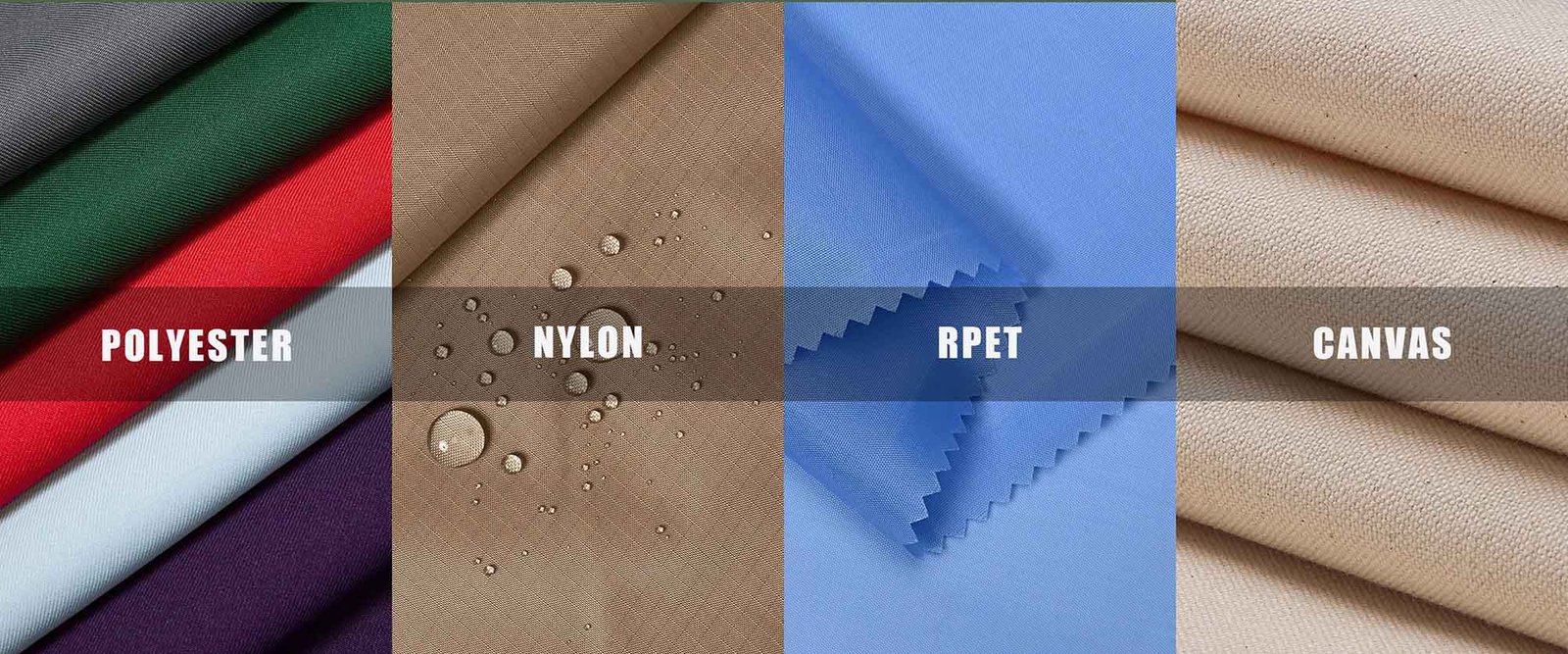
This is one of the two biggest buyer mistakes I see most often. The first is thinking overall dimensions are enough. The second is thinking a broad material label is enough.
Why “polyester” is not a usable spec by itself
A factory needs more detail such as:
- 600D polyester or 300D polyester
- PU backing or PVC backing
- Water-resistant coating6 or no coating
- Matte finish or shiny finish
- Recycled content or conventional material
- Lining type and weight
- Foam type and thickness
These details affect:
- Material cost
- Sewing behavior
- Shape retention
- Water resistance
- Print compatibility
- Final appearance
Material stack is what buyers should define
I prefer buyers specify the material as a stack, not a single word.
A better format looks like this:
- Outer fabric: 600D RPET polyester7 with PU backing
- Lining: 210D polyester
- Padding: 3 mm PE foam on front/back panels
- Reinforcement: PP board at bottom divider if needed
- Surface treatment: water-repellent finish
Travel use vs office use
Here is a practical comparison:
| Use Scenario | Better Material Direction | Why |
|---|---|---|
| Daily office carry | 300D–600D polyester, soft structure | Lighter weight, easy handling |
| Frequent travel | Higher denier polyester or nylon, added foam | Better durability and shape |
| Eco-focused corporate gifting | RPET polyester with documented claim | Supports sustainability positioning |
| Premium promotional line | Nylon or refined coated fabric | Better hand feel and finish |
In B2B projects, buyers also care about price targets. So material choice should fit the channel. A supermarket promotion, a corporate gift, and a branded distributor program may all need different cost-performance balance.
The procurement risk of vague material specs
If the material section is broad, factories may quote different constructions under the same material name. That creates apples-to-oranges comparison between suppliers.8 Then later, after sample review, the buyer requests stronger shape, better lining, or more protection, and the quote changes.
That is why I always push for material clarity early. For a tech organizer pouch, the material line should tell the supplier what to buy and how to build, not just what family of fabric to imagine.
What Should Be Included in a Tech Pouch Spec Sheet?
A tech organizer pouch spec sheet should include all information needed for a factory to quote and sample without assumptions. Buyers often ask for a field checklist, but the better question is this: what must be clear enough that the supplier can make an executable judgment on cost, construction, and feasibility?
A complete tech pouch spec sheet should prioritize external dimensions, opening and construction layout, internal compartment dimensions, material stack, trims, branding, and packing details. These are the must-have inputs that most affect quote accuracy, sample alignment, and project speed.
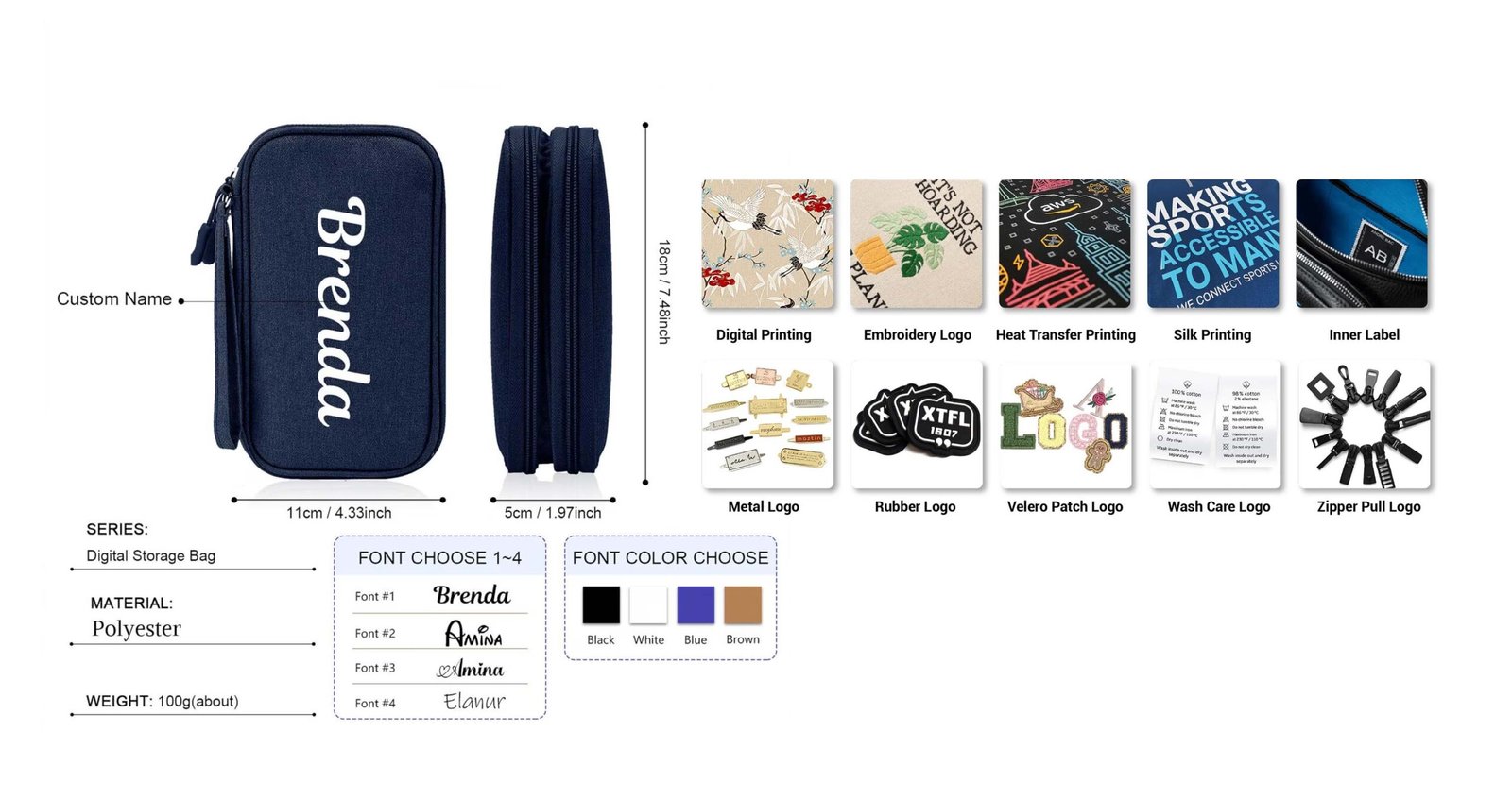
This is the core of the whole article, and I want to be practical here. Not every detail has equal importance. Some details are nice to have. Some are critical for getting a reliable first quote.
The must-have spec items
1. External dimensions
You need:
- Length x width x depth
- Tolerance if relevant
- Closed size and, if useful, open size
Why it matters: size drives material usage and capacity. But size alone is not enough.
2. Opening and construction layout
You need:
- Top zip or book-style zip-around
- Opening angle
- Flat pouch or gusseted body
- Number of main panels or dividers
Why it matters: this changes labor, shape, and user access. A 180-degree opening organizer is built differently from a simple top-zip case.9
3. Internal compartment dimensions
You need:
- Pocket width/depth
- Elastic slot size
- Divider count
- Mesh pocket size
- Space for key items
Why it matters: this is where many first samples fail. If internal sizing is not defined, the supplier guesses based on appearance.
4. Material stack details
You need:
- Outer fabric
- Lining
- Foam/padding
- Board/reinforcement if any
- Surface finish
Why it matters: this is essential for cost and feel. “Polyester” is not enough.
5. Trims and accessories
Include:
- Zipper type and size
- Puller style
- Binding or edge finish
- Handle or grab loop
- Label and hardware details
6. Branding method
Include:
- Logo size
- Placement
- Print, embroidery, patch, metal plate, or deboss
- Artwork file reference if available
7. Packaging requirements
Include:
- Individual polybag or not
- Insert card
- Barcode label
- Carton quantity
- Carton size limits if needed
A simple priority view
| Priority | Spec Item | Why It Matters Most |
|---|---|---|
| High | External dimensions | Basic material and capacity baseline |
| High | Opening/construction layout | Labor and build method |
| High | Internal compartment dimensions | Usability and sample accuracy |
| High | Material stack | Cost and structure |
| Medium | Trims and branding | Detail cost and appearance |
| Medium | Packaging | Freight and final delivery prep |
What happens when these are vague?
In our sampling communication experience, vague specs usually create one of three problems:
- Inaccurate quote now
- Re-quote later after clarification
- Sample comes back different from buyer expectation
That is why I call the spec sheet the minimum decision document. It does not need to answer every imaginable question. But it must answer the questions that let a factory move forward responsibly.
A sketch plus overall dimensions is not a spec sheet. A broad fabric name is not a material spec. If the supplier still has to guess key build details, the document is not complete enough for quoting and sampling.
Frequently Asked Questions
Is a reference photo enough for a tech organizer pouch quote?
No. A photo helps communicate style direction, but it does not define internal dimensions, material stack, foam thickness, or construction details. A factory can only give a rough estimate from a photo. Accurate quoting needs written specs that remove key assumptions.
What is the most important part of a tech pouch spec sheet?
For quoting and sample alignment, I would prioritize external dimensions, opening structure, internal compartment dimensions, and material stack. These four items affect cost and feasibility the most. If any of them are vague, price accuracy and sample consistency both suffer.
Can a supplier fill in missing details based on experience?
A supplier can suggest options, but that is not the same as safe decision-making. If key details are missing, the supplier must assume. Those assumptions may not match your market, target price, or intended use.10 That is how re-quotes and sample revisions start.
Should I specify every internal item size?
Yes, if the pouch is designed around organization. You do not need engineering-level drawings, but you should list the key items, approximate dimensions, and storage method. That gives the factory enough information to size loops, pockets, and depth correctly.
Do packaging details belong in the spec sheet?
Yes. Packaging affects material cost, carton planning, labeling, and export prep.11 In B2B orders, packaging details also affect warehouse handling and retail presentation. It is not the first priority, but it should be defined before final quote confirmation.
Conclusion
A tech organizer pouch spec sheet should do more than summarize a design. It should give a factory enough clear information to quote with confidence and build a first sample without guesswork. If I strip it down to the essentials, the must-have inputs are size, opening structure, internal compartment dimensions, and full material stack. Those details protect you from bad pricing, delayed clarification, and samples that miss the brief. If you are developing an OEM/ODM bag project and want a supplier-side review of your pouch specs, contact Coraggio and I can help you turn a rough idea into a quote-ready document.
"knowledge creation and conversion within a small apparel ...", https://repository.library.northeastern.edu/files/neu:cj82qh44c/fulltext.pdf. Educational guidance on sewn-product development commonly notes that images communicate style but do not substitute for written specifications covering dimensions, materials, and construction details needed for manufacturing decisions. Evidence role: general_support; source type: education. Supports: That manufacturing specifications for sewn products typically require written details on dimensions, materials, and construction beyond visual references.. Scope note: The support is contextual from analogous sewn-product specification practice rather than a direct study of tech organizer pouch quoting. ↩
"Design Assessment: Consumer ReportsStyle", https://www.purdue.edu/trails/wp-content/uploads/2019/06/25.Consumer-reports-article_Kelley.pdf. Product-design guidance generally derives compartment geometry from the dimensions and quantity of the items to be stored, which supports using an item list with measurements rather than relying only on broad use descriptions. Evidence role: mechanism; source type: education. Supports: That storage product dimensions and compartment layouts are typically derived from the size and number of intended contents.. Scope note: This is a design principle applied contextually; it does not independently verify outcomes for every OEM pouch project. ↩
"Do Penis Extenders Really Work: An Evidence-Based ...", https://rnojournal.binghamton.edu/plugins/generic/pdfJsViewer/pdf.js/web/viewer.html?file=%2Findex.php%2Findex%2Flogin%2FsignOut%3Fsource%3D%2Enutrao%2Eshop%2Fmale%2F&id=3XJxiR. Human-factors and product-retention research indicates that secure holding systems depend on appropriate fit and tension; insufficient tension reduces retention, while excessive tension impairs insertion and use. Evidence role: mechanism; source type: research. Supports: That retention systems depend on appropriate fit and tension, and that under- or over-tension can reduce usability or secure holding.. Scope note: The support is based on general retention and usability principles rather than tests of elastic loops in tech organizer pouches specifically. ↩
"Effect of Laundering on Dynamic Elastic Behavior of Cotton ...", https://jtatm.textiles.ncsu.edu/index.php/JTATM/article/viewFile/2593/1790. Textile studies on stretch fabrics report greater elongation and shape change under load than more dimensionally stable constructions, supporting the caution that stretch mesh pockets may deform when used for heavier items. Evidence role: mechanism; source type: paper. Supports: That elastic or stretch textile structures can experience greater deformation and reduced dimensional stability under load, affecting pocket shape retention.. Scope note: The support is based on general textile behavior and does not directly test a specific mesh-pocket design in a pouch. ↩
"Economic Impact Analysis of the Fabric and Textiles Printing, Coating ...", https://www.epa.gov/sites/default/files/2020-07/documents/fabric_eia_neshap_final_02-2003.pdf. Apparel and sewn-product costing guidance treats fabric weight, coatings or backings, finishes, and additional material layers as cost-relevant variables, supporting the claim that a broad fabric label alone is insufficient for accurate material costing. Evidence role: general_support; source type: education. Supports: That textile and sewn-product costs vary with fabric specifications and finishing details, not just fiber category.. Scope note: This provides general manufacturing-cost context rather than a pouch-specific cost model. ↩
"Durable water repellent", https://en.wikipedia.org/wiki/Durable_water_repellent. Textile finishing references describe water-repellent coatings and finishes as established methods for modifying fabric performance, supporting the inclusion of water resistance as a distinct material specification. Evidence role: definition; source type: encyclopedia. Supports: That water-repellent or water-resistant textile finishes are established fabric treatments used to alter performance characteristics.. Scope note: This supports the relevance of the treatment category rather than quantifying its effect for any particular pouch fabric. ↩
"Polyethylene terephthalate", https://en.wikipedia.org/wiki/Polyethylene_terephthalate. Institutional and reference sources define RPET as polyester made from recycled polyethylene terephthalate, supporting its treatment as a distinct material specification in products marketed with recycled-content attributes. Evidence role: definition; source type: institution. Supports: That RPET refers to recycled polyethylene terephthalate used to make polyester materials, making it a distinct specification relevant to recycled-content claims.. Scope note: This defines the material category but does not by itself verify the recycled content of any specific supplier's fabric. ↩
"Virginia Public Procurement Act", https://law.lis.virginia.gov/vacodepopularnames/virginia-public-procurement-act/. Procurement guidance typically states that clear, detailed specifications are needed to obtain comparable bids, supporting the warning that vague material descriptions can lead suppliers to price different assumptions. Evidence role: expert_consensus; source type: government. Supports: That clear specifications are necessary to obtain comparable bids or quotations from suppliers.. Scope note: This is a general procurement principle and does not directly measure variation in pouch quotations. ↩
"Adaptive Clothing Resource Guide", https://cdn.vanderbilt.edu/vu-URL/wp-content/uploads/sites/255/2023/09/01121849/The-Adaptive-Clothing-Resource-Guide.pdf. Sewn-product construction guidance indicates that opening configuration influences pattern layout, zipper application, and assembly sequence, which supports the claim that a full zip-around organizer is built differently from a simple top-zip case. Evidence role: mechanism; source type: education. Supports: That opening style and access geometry affect pattern pieces, zipper configuration, and assembly method in sewn products.. Scope note: The support is based on general construction principles rather than a controlled comparison of organizer pouch production. ↩
"Demystifying Ambiguity in The Design of Amorphous ...", https://web.mst.edu/lib-circ/files/Special%20Collections/INCOSE/Demystifying%20Ambiguity%20in%20The%20Design%20of%20Amorphous%20Systems.pdf. Research on requirements ambiguity in design and manufacturing shows that incomplete specifications increase interpretive assumptions and the risk of misalignment between delivered outputs and buyer intent. Evidence role: general_support; source type: research. Supports: That ambiguous or incomplete requirements in product development and sourcing increase the need for interpretation and can lead to mismatches with intended outcomes.. Scope note: The evidence is from broader requirements-management literature rather than a study focused solely on OEM bag sourcing. ↩
"Export Labeling Approval Chart", https://www.fsis.usda.gov/sites/default/files/media_file/2020-08/export-labeling-chart.pdf. Government export guidance commonly treats packaging, carton marking, and labeling as factors that affect shipment preparation, handling, and compliance, supporting the claim that packaging details influence cost and export planning. Evidence role: general_support; source type: government. Supports: That packaging choices affect shipping configuration, labeling requirements, and export readiness in international trade.. Scope note: The support is logistical and regulatory context; it does not calculate the precise cost effect for a specific pouch order. ↩