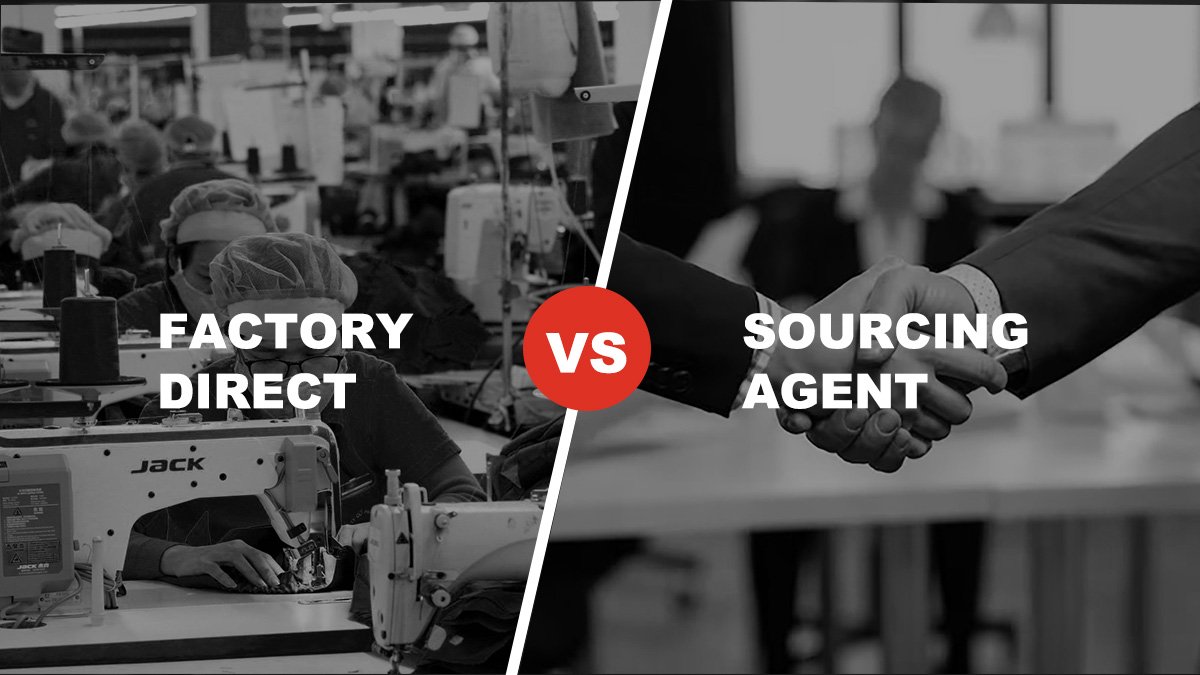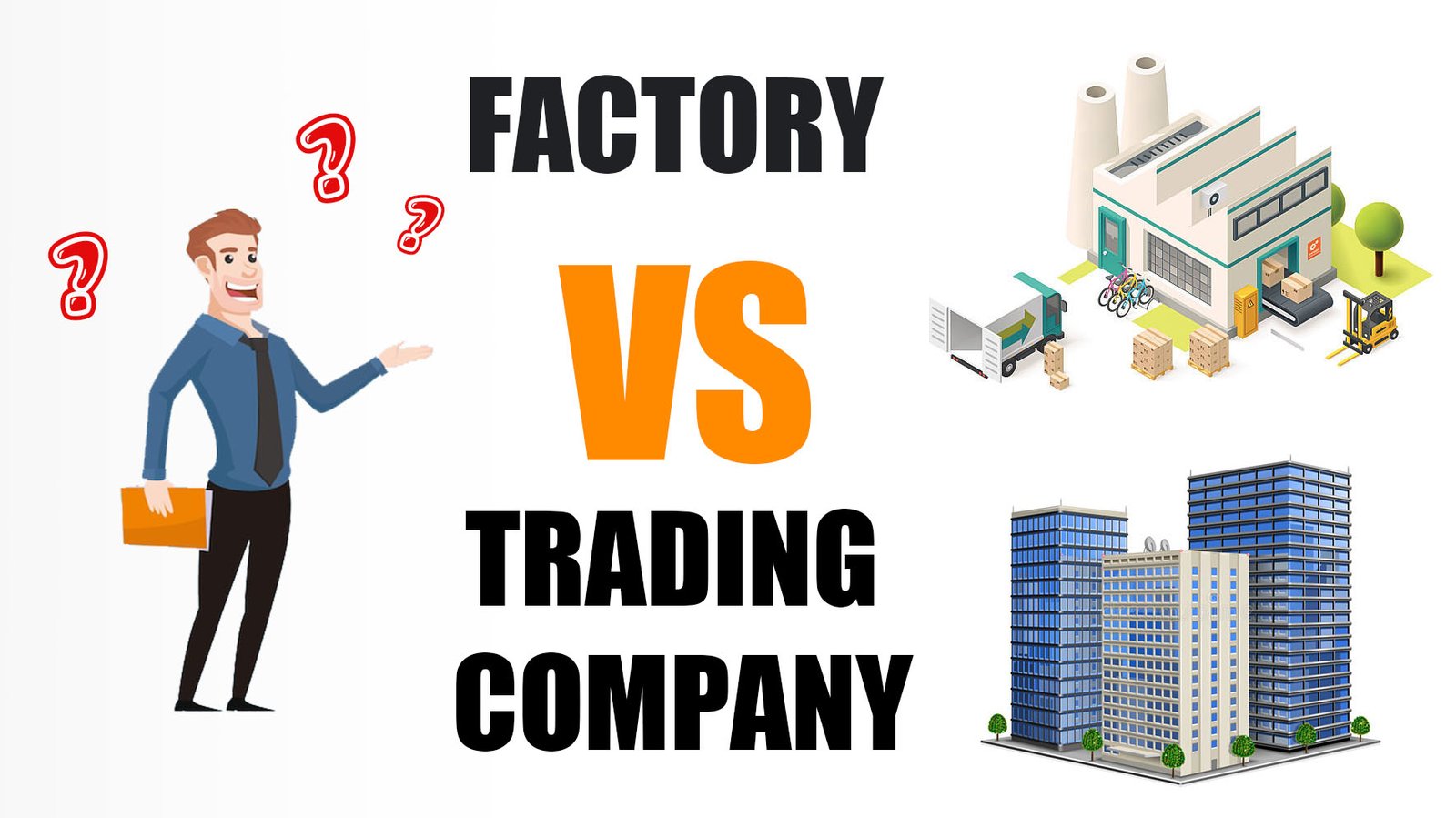
Many bag buyers chase the lowest quote and then face delays, defects, and complaints. I have seen this trap too often. It looks cheap at first, but it costs more later.
Bag buyers can learn that long-term supplier trust1, stable quality, and strong supply chain control2 matter more than the lowest price. I believe buyers win more when they work closely with a few reliable factories instead of switching suppliers again and again.
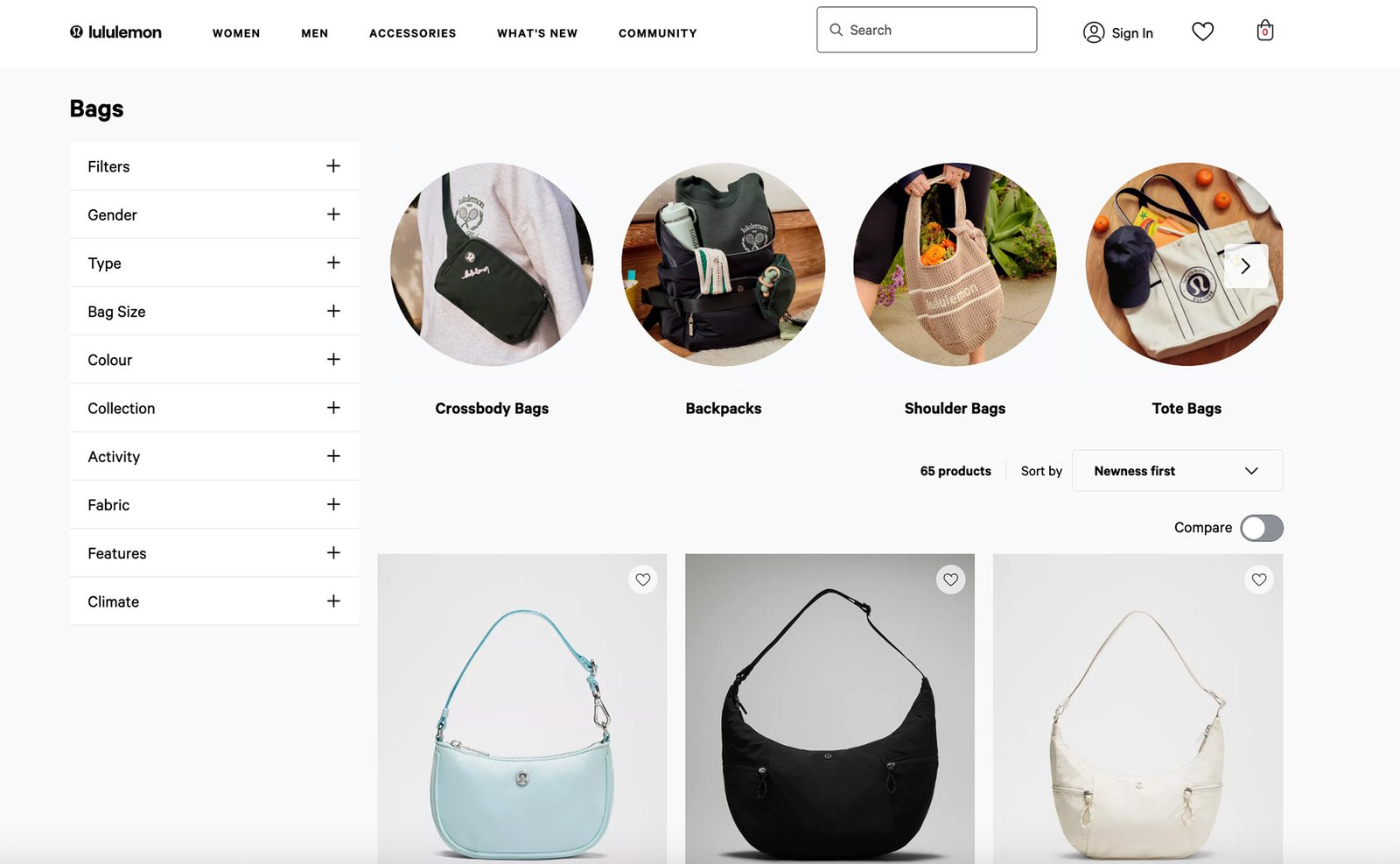
I think this is why Lululemon gives bag buyers a useful lesson, even if the brand is known more for apparel than bags. I have worked with many buyers who wanted fast quotes from many factories. I understand that instinct. Every buyer wants margin. Every buyer wants safety too. Still, I have learned that price pressure alone often weakens the very supply chain that should protect the business. When a brand chooses partners only by unit price, it often loses control over quality, delivery, and product consistency. That loss shows up later in claims, stock issues, and damaged customer trust. I want to break down what buyers can really take from this model, and why this idea matters so much in B2B bag sourcing today.
How Does Lululemon Select and Manage Its Suppliers?
Many buyers keep changing factories to save a few cents. Then they get unstable quality and slow replies. I have seen this pattern hurt growth again and again.
Lululemon’s supplier model focuses on fewer trusted factories3, regular audits, close cooperation, and shared improvement. I think this helps create stable quality, better planning, and fewer supply problems than a low-price-only buying strategy.
When I look at Lululemon’s model, I do not see a company chasing the cheapest vendor in the market. I see a company building a controlled supplier base4. That is a big difference. In my experience, strong buyers do not need the highest number of suppliers. They need the right suppliers. A smaller supplier list can improve communication, speed up decision-making, and make quality standards easier to enforce.
I have found that deep supplier management usually includes a few clear actions:
| Supplier Practice | Why It Matters for Buyers | Likely Result |
|---|---|---|
| Fewer core factories | Easier control and stronger trust | More stable output |
| Regular audits5 | Problems are found early | Lower defect risk |
| Joint development6 | Factory understands brand needs | Better product fit |
| Long-term planning7 | Supplier can prepare materials and labor | Better delivery |
| Shared standards8 | Less confusion in production | More consistency |
I once worked on a project where the buyer changed factories almost every season. The prices looked attractive. The results did not. Fabric shade changed. Stitching varied. Packaging was inconsistent. The buyer spent more time fixing issues than building sales. That is why I believe supplier management is not a back-office issue. It is a profit issue.
When a buyer works closely with a factory over time, the factory learns the buyer’s standards, target market, and tolerance levels. This reduces mistakes. It also helps with custom work, because the supplier already knows the product direction. In bag manufacturing, this matters a lot. A backpack, tote bag, or cooler bag may look simple, but details like fabric weight, zipper grade, logo method, and sewing tension all affect the final result. Strong management turns these details into repeatable performance.
Why Do Big Buyers Prefer Quality Over Low-Cost Sourcing?
Many buyers say they want low cost first. Then customer complaints rise and margins disappear. I have seen cheap orders become expensive problems in a very short time.
Big buyers prefer quality because stable products reduce returns, protect brand reputation, and support repeat business. I believe a slightly higher unit cost often creates better total profit than cheap sourcing with defects, delays, and inconsistency.

I think this is one of the most important lessons in sourcing. Many people talk about cost, but fewer people talk about total cost9. These are not the same thing. A factory can offer a lower price per bag, but if the order arrives late, fails inspection, or creates complaints, the real cost becomes much higher.
Big buyers often think beyond invoice price. They look at the full business effect:
| Buying Factor | Low-Price Focus | Quality Focus |
|---|---|---|
| Unit cost | Lower at first | Slightly higher |
| Defect rate10 | Often less stable | Usually lower |
| Returns and claims | More likely | Less likely |
| Brand image | Easier to damage | Easier to protect |
| Repeat orders | Less certain | More likely |
| Team workload | More issue handling | More growth work |
I remember one buyer who wanted to save a small amount per piece on a cosmetic bag line. The cheaper factory used weaker zippers and thinner lining. At first, the sample looked acceptable. After shipment, failure rates increased in retail use. The buyer lost time, money, and confidence. The savings on paper disappeared.
That is why I believe quality is not a luxury. It is a business tool. Big buyers, especially those serving supermarkets, chain stores, and retail brands, need reliability. Their customers do not care that the buyer saved a few cents. They care whether the product performs as promised.
Lululemon’s premium position did not come from marketing alone. I think it came from product trust. If a product feels consistent every time, customers come back. In bags, the same rule applies. Durable handles, clean stitching, neat branding, and on-time delivery support the buyer’s market position. If those basics fail, low price cannot save the relationship.
What Makes Lululemon's Supply Chain Strategy So Effective?
Many companies talk about supply chain strength, but their systems break under pressure. I have seen weak planning turn normal orders into urgent problems.
Lululemon’s supply chain works well because it combines focused supplier partnerships, quality control, planning discipline, and continuous improvement. I believe this creates product stability, faster response, and stronger long-term margins.
When I study effective supply chains, I usually find that the success is not based on one trick. It is based on many simple things done well over a long time. I think Lululemon’s strategy stands out because it treats supply chain work as a core business function, not just a purchasing task. That mindset changes everything.
A strong supply chain usually depends on these parts working together:
| Supply Chain Element | What It Means | Why It Helps |
|---|---|---|
| Reliable supplier base | Fewer but stronger partners | Better control |
| Standardized quality checks11 | Clear inspection steps | Fewer surprises |
| Forecast and capacity planning12 | Order visibility for factory | Better lead time |
| Product development teamwork13 | Brand and factory solve issues together | Better execution |
| Performance review14 | Ongoing supplier evaluation | Constant improvement |
In my own work, I have noticed that supply chain problems often start before production. The trouble starts when specs are unclear, timelines are unrealistic, or the supplier does not fully understand the product use case. That is why an effective system needs close communication from development to shipment. A bag order is not just about cutting fabric and sewing pieces. It includes material sourcing, trim confirmation, logo application, testing, packing method, carton rules, and shipping schedule. If one part slips, the whole order can suffer.
I also think supply chain strength creates pricing power. This is not always obvious to buyers at first. Many believe low price gives an edge. Sometimes it does in the short run. But supply chain strength gives something deeper. It gives dependable delivery and dependable quality. Those two things help a brand sell with confidence. That confidence supports stronger pricing in the market. In simple words, stable execution can help create premium value.
How Can Bag Brands Build Long-Term Wholesale Relationships?
Many brands focus only on closing the next order. Then trust stays weak and problems keep repeating. I have learned that real growth needs stronger relationships.
Bag brands build long-term wholesale relationships by choosing reliable partners, setting clear standards, communicating often, and helping factories improve. I believe both sides grow faster when they treat each other as long-term business partners, not just price negotiators.
I believe long-term wholesale relationships do not happen by accident. They are built through repeated good decisions. A brand needs to be clear about its goals. A factory needs to be honest about its ability. When both sides do this well, trust grows. That trust reduces risk for future orders.
Here are the relationship habits I think matter most:
| Relationship Habit | What I Mean | Business Value |
|---|---|---|
| Clear product standards15 | Detailed specs and approval steps | Less confusion |
| Honest delivery planning | Realistic timelines and updates | Better scheduling |
| Open issue reporting16 | Problems raised early | Faster fixes |
| Shared growth mindset | Work on process improvement together | Better long-term results |
| Stable order support | Repeat business to proven factories | More commitment from supplier |
I have seen buyers damage good supplier relationships by using only pressure tactics. They ask for lower pricing every round, but they do not share forecasts, target quantities, or market feedback. The supplier then protects itself. It may reduce service effort, use lower-grade support teams, or avoid flexible arrangements. That weakens the relationship.
I have also seen the opposite. Some buyers give clear plans, quick feedback, and fair expectations. Those buyers often receive better service. Their urgent requests get attention. Their quality issues get faster support. Their new developments move faster too.
For bag brands, this matters even more when customization is involved. OEM and ODM projects17 need close teamwork. The more a factory understands the brand’s market, design style, and quality target, the better it can suggest material options, structure changes, and cost improvements. That kind of value usually comes from a long relationship, not a one-time transaction.
What Should Bulk Bag Buyers Look for in a Manufacturing Partner?
Many bulk buyers compare quotes first and ask questions later. Then hidden risks appear. I have seen this cause costly mistakes in quality, timing, and service.
Bulk bag buyers should look for quality control, production capacity, customization ability, communication speed, and delivery reliability. I believe the best manufacturing partner reduces sourcing risk while helping the buyer grow with stable and scalable supply.
When I speak with professional buyers, I notice they want more than a supplier. They want a partner who can support volume, protect quality, and solve problems fast. That is exactly what a manufacturing partner should do. A factory should not just produce bags. It should help the buyer reduce uncertainty.
These are the main things I believe buyers should review:
| What to Check | Key Questions | Why It Matters |
|---|---|---|
| Quality system18 | Are inspections clear and consistent? | Reduces defects |
| Production capacity | Can the factory handle volume and peak seasons? | Prevents delay |
| Custom ability | Can it support fabrics, logos, packaging, and design changes? | Supports branding |
| Communication | Does the team reply clearly and quickly? | Saves time |
| Delivery record | Does it ship on time? | Protects sales plan |
| Compliance and testing | Can it support market requirements? | Reduces risk |
| Development support | Can it improve samples and suggest solutions? | Adds value |
In my view, communication is often underrated. A factory may have good machines and workers, but if communication is slow or vague, the project becomes harder than it should be. Many buyers, especially those without technical backgrounds, need a supplier who can explain material choices, construction risks, and production timelines in simple language. That support creates confidence.
I also think buyers should pay attention to whether a factory is built for long-term cooperation. Does it welcome audits? Does it track quality data? Does it keep development records? Does it invest in process control? These signs tell me whether the factory is serious.
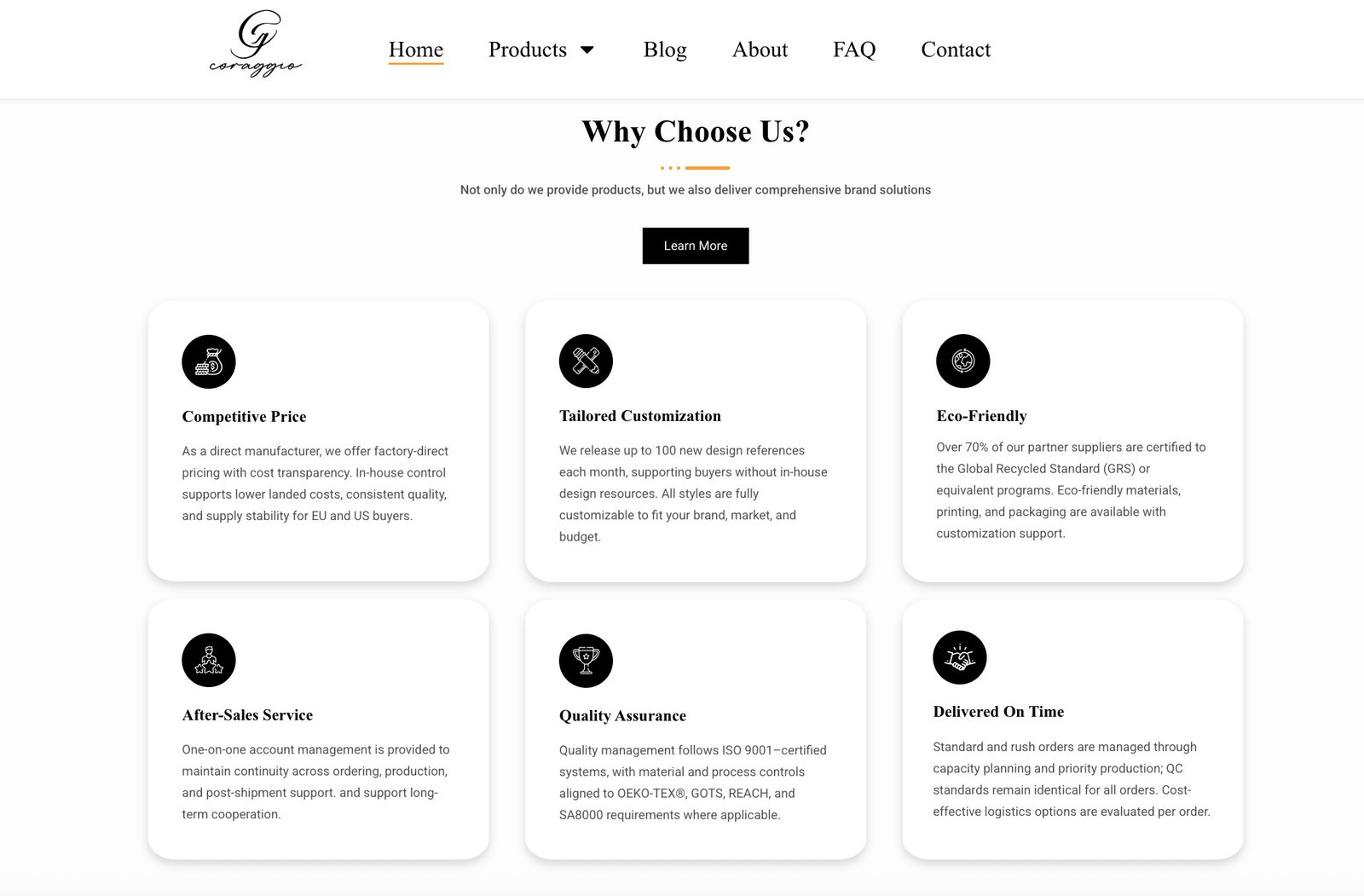
At Coraggio, this is the kind of partnership I believe buyers need. With 15 years of experience, a 3,000㎡ facility, 8 production lines, 120 workers, and a 10-person design team, I understand how factory-direct control19 can support bulk bag programs. For buyers in Europe, North America, Japan, and Singapore, stable OEM and ODM support is not just convenient. It is a competitive edge. In my experience, the right partner helps a buyer do more than place an order. The right partner helps the buyer build a stronger business.
Conclusion
I believe the biggest lesson is simple: buyers win more with trusted factories, stable quality, and strong supply chain control2 than with the lowest quote alone.
Shows how trust-driven partnerships reduce hidden costs, stabilize quality, and protect margins better than constant supplier switching. ↩
Explains how better control over each supply step cuts delays, defects, and surprises that quietly drain profit and reputation. ↩
Helps you see why a focused factory base can simplify management, deepen cooperation, and improve consistency across orders. ↩
Clarifies how selecting and managing a core group of suppliers leads to better visibility, compliance, and predictable performance. ↩
Shows how systematic audits uncover issues early, driving lower defect rates and fewer costly surprises after shipment. ↩
Reveals how codesigning with suppliers creates bags that better match your market, brand standards, and cost targets. ↩
Explains how sharing forecasts and plans helps factories secure materials and labor, reducing late deliveries and rush costs. ↩
Shows how aligned specs and procedures cut confusion, rework, and inconsistency across different orders and seasons. ↩
Helps you move beyond price-per-piece thinking to include returns, delays, and brand damage in your cost calculations. ↩
Connects quality metrics to real business outcomes like claims, wasted time, and repeat purchase behavior. ↩
Shows how consistent inspection steps prevent surprises at shipment and keep quality stable across multiple runs. ↩
Explains how better visibility of demand lets suppliers schedule production more efficiently and avoid bottlenecks. ↩
Demonstrates how early collaboration prevents design flaws, reduces sampling rounds, and speeds time to market. ↩
Guides you on using data and KPIs with your factories to steadily raise quality, delivery, and cost performance. ↩
Helps you draft detailed specs that cut misunderstandings, revisions, and disputes with manufacturing partners. ↩
Shows how transparent problem sharing leads to faster fixes, fewer repeats, and stronger mutual trust. ↩
Clarifies which model fits your brand so you can leverage factory capabilities for customization and innovation. ↩
Helps you evaluate if a factory’s QA/QC framework can reliably deliver the standards your market expects. ↩
Explains why working directly with the manufacturing site improves transparency, responsiveness, and long-term growth support. ↩