Private label buyers often start with the wrong question: “Can you make a sample?” I see this often in pre-sampling talks, and it creates avoidable risk. A sample can look fine but still miss the user, the retail setting, or the production goal. The better starting point is to define who will use the tote and what it must do.
Private label buyers should ask about end users, use scenarios, capacity needs, structure, materials, handle comfort, compartments, branding, and packaging before tote sampling begins. In my experience, these questions improve sampling efficiency and decision quality because they connect the sample to real market fit instead of just appearance.
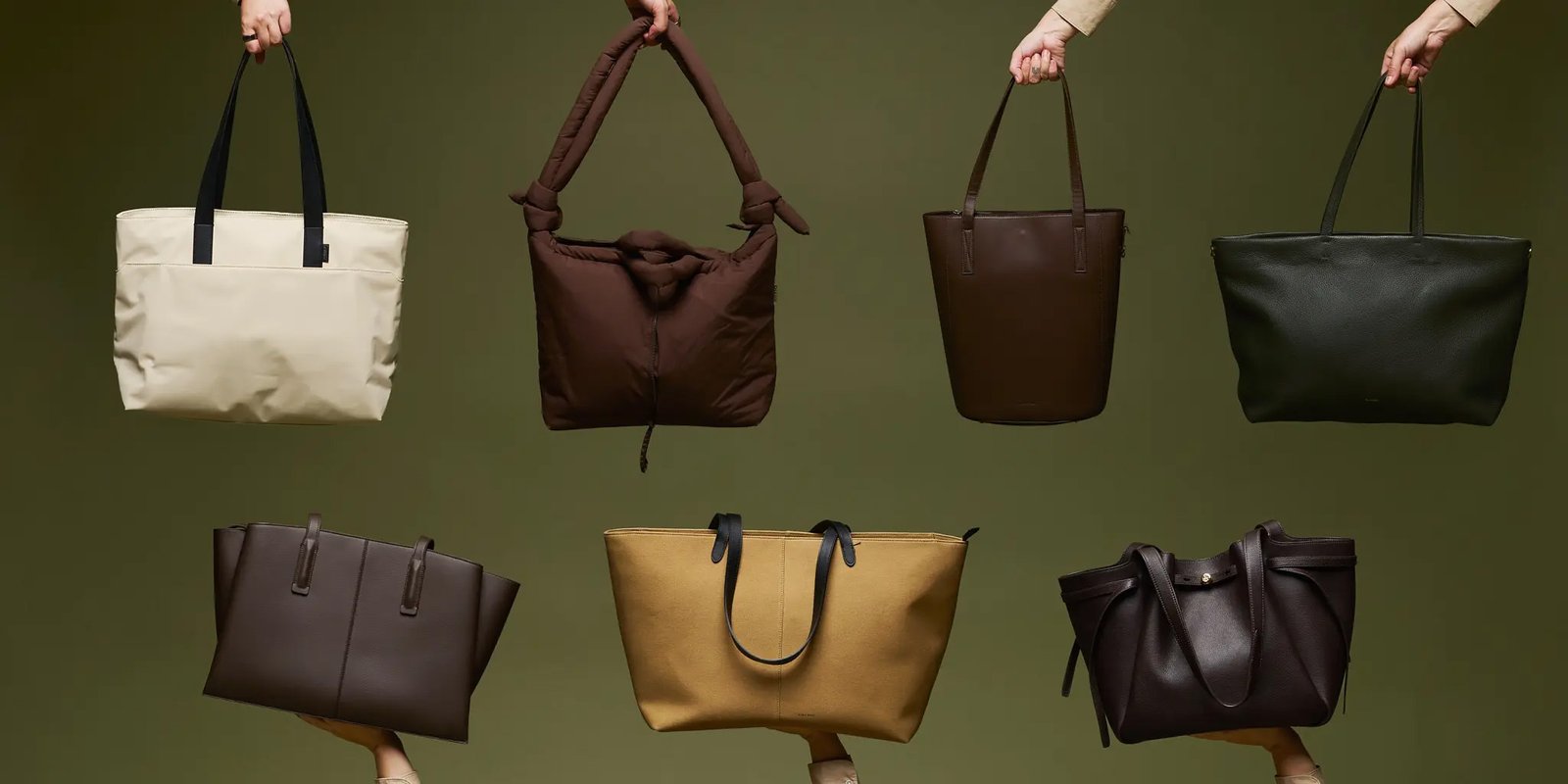
If that sounds simple, it is. But buyers often skip it. In our pre-sampling discussions, the missing details usually appear after the sample is already underway. Then the feedback loop gets messy. A tote that looked “almost right” suddenly becomes the wrong size, the wrong shape, or the wrong product direction.
What Is a Structured Work Tote?
A lot of tote requests begin with a photo and a short message. That sounds efficient, but it often hides the real problem. The buyer wants a “clean office tote,” yet no one defines what “structured” means for that end user. Then sampling starts on assumptions instead of decisions.
A structured work tote is a tote designed to hold its shape during daily office or commuting use.1 It usually has firmer materials, reinforced panels, a stable base, and organized compartments.2 For private label buyers, structure matters because it affects appearance, function, comfort, and how the product is judged by the target customer.
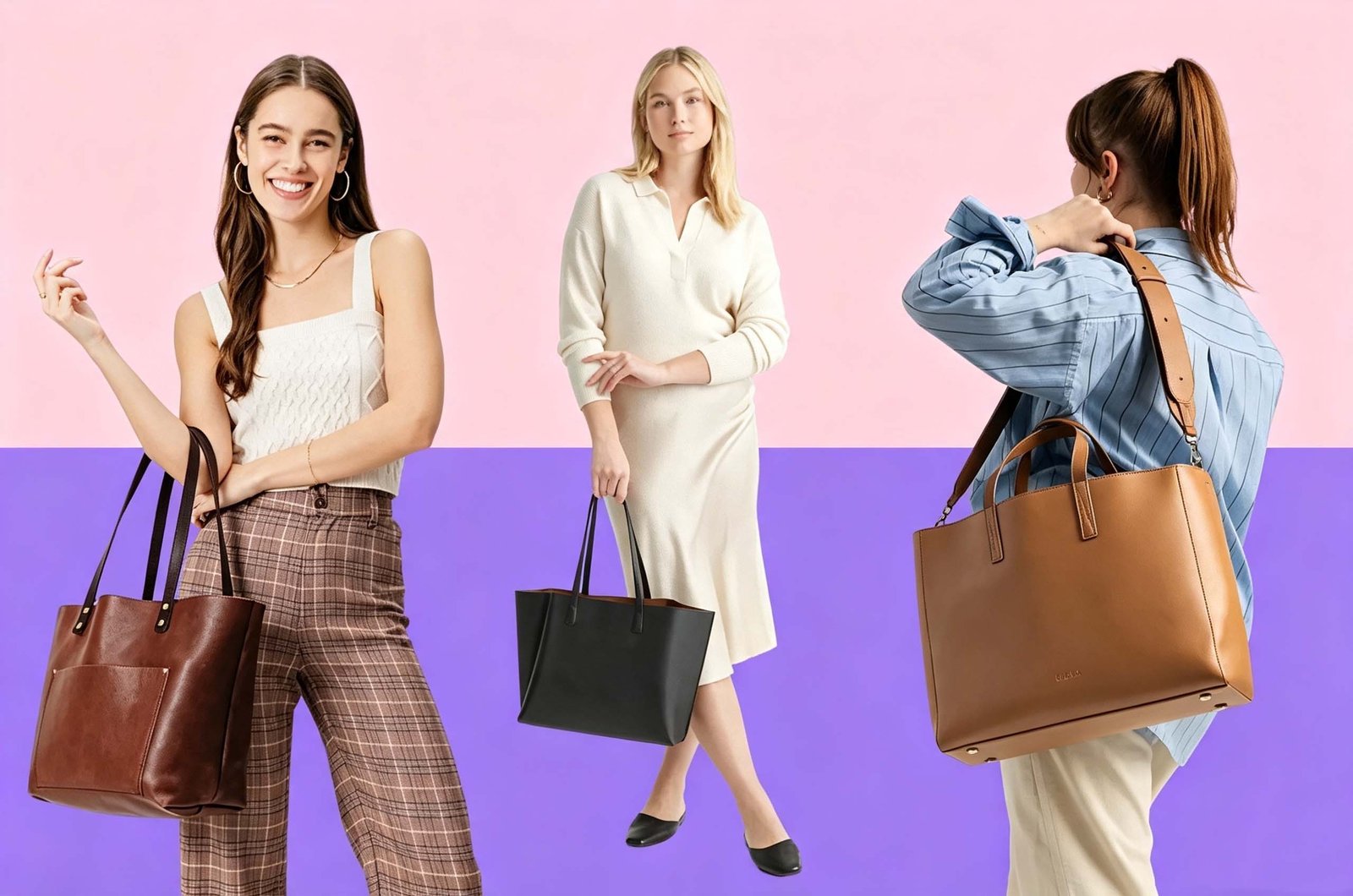
When I speak with buyers before sampling, “structured” is one of the most misunderstood words. Some buyers use it to mean “premium-looking.” Others use it to mean “stands upright.” Still others mean “does not collapse when carrying a laptop.” Those are related ideas, but they are not the same requirement.
Why the definition matters
A work tote for office commuters usually has a different job than a promotional tote or a casual weekend tote.3 If the final user takes it into meetings, places it beside a desk, and stores electronics inside, the bag needs to do more than carry items.
A structured work tote often needs:
- A stable silhouette
- Better weight distribution
- Cleaner panel alignment
- A base that resists sagging
- Interior organization for work essentials
- Handles that remain comfortable under real load
If a buyer does not define those needs upfront, the sample can easily become misleading. It may look polished in photos, but once filled with daily items, it may slouch, tilt, or feel awkward.4
What buyers often overlook
In our pre-sampling discussions, buyers often focus on visual references first:
- “I want this shape.”
- “I want this color.”
- “I want this logo placement.”
Those points matter. But they are not enough. I usually need to ask follow-up questions like:
- Will the end user commute by car, train, or walking?
- Will they carry a laptop every day?
- Should the bag stand on its own?
- Is the style aimed at corporate gifting, retail shelves, or supermarket programs?
- Does the customer expect a soft casual feel or a more formal office look?
These answers change the whole direction of sampling.
A simple way to define “structured”
Here is a practical framework I use in conversation:
| Level of structure | What it feels like | Typical use case |
|---|---|---|
| Soft | Flexible, collapses easily | Casual tote, promotional bag |
| Semi-structured | Holds shape with light support | Everyday work and commuting |
| Structured | Stands better, cleaner silhouette | Office, laptop carry, retail premium positioning |
A buyer does not need engineering language. The buyer needs clear intent. Once that intent is clear, the sample becomes a test of the right idea—not just a factory’s ability to make a bag that resembles a picture.
What Laptop and Office Items Should a Work Tote Fit?
Many tote sampling problems begin with size assumptions. A buyer says “It should fit a laptop,” but that phrase is too vague. One user carries a slim 13-inch device. Another carries a 15.6-inch laptop, a charger, a notebook, a bottle, and documents. Those are very different bags.
A work tote should be sized around the real carry set, not just one headline item.5 Private label buyers should define the laptop size, document format, bottle size, charger volume, and other office essentials before sampling. This helps avoid a sample that looks correct but fails in actual daily use.
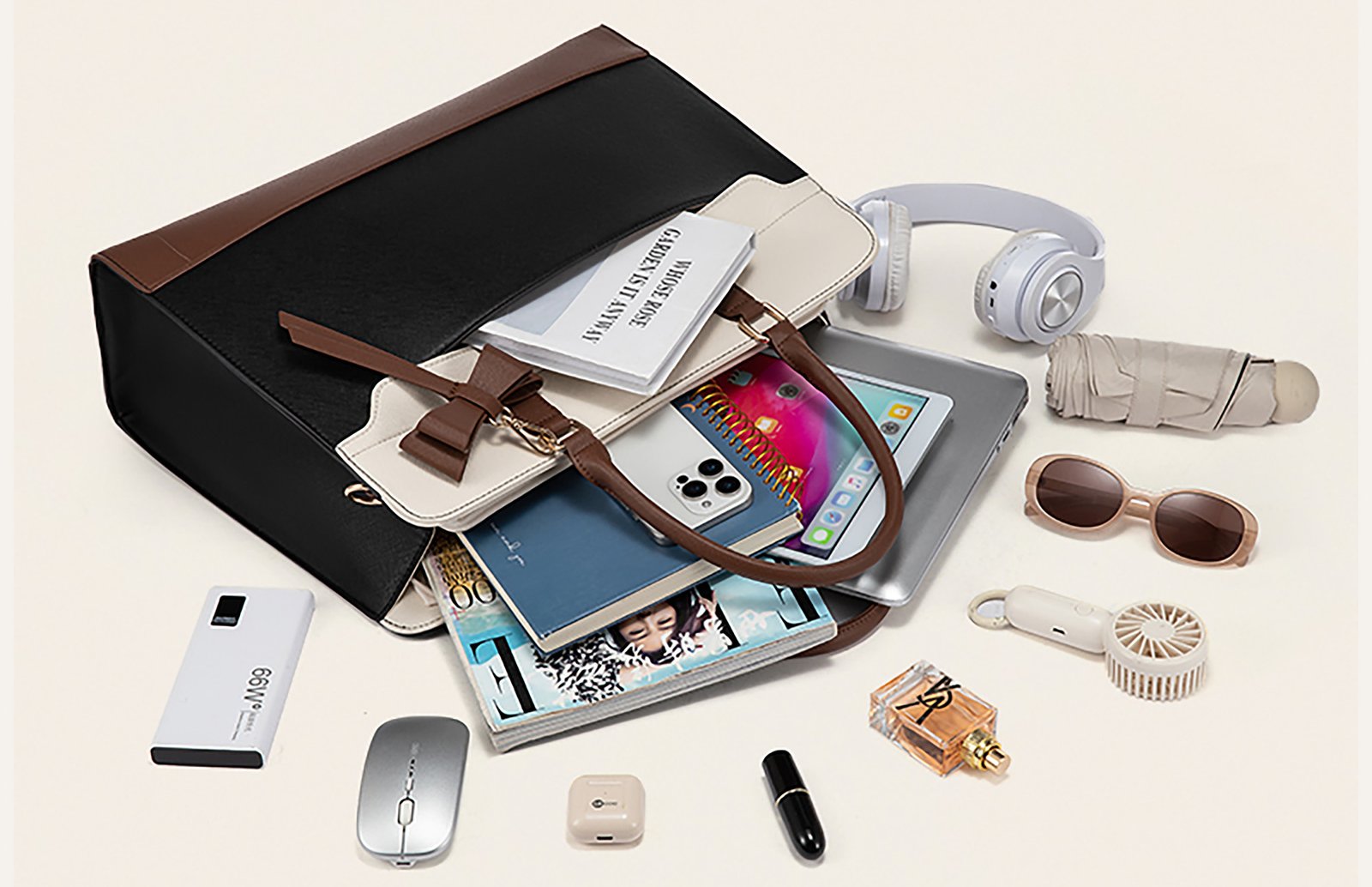
I have seen this issue many times. The first sample arrives, and the feedback says, “The laptop fits, but the zipper is tight,” or “The bottle makes the tote bulge,” or “The tote looks too big when not full.” None of those are random problems. They usually come from an unclear item list before sampling.
Start with the actual carry profile
I like to ask buyers to describe the user’s daily loadout. That conversation is much more useful than just requesting dimensions.
A typical office carry profile may include:
- 13" to 15.6" laptop
- Charger and cable pouch
- A4 documents or folders
- Notebook or planner
- Water bottle or tumbler
- Small cosmetic pouch
- Phone and keys
- Wallet or badge holder
That list tells me much more than “office tote.”
Why one item changes the whole bag
A laptop usually drives width and height. A bottle usually affects depth.6 A charger can influence interior pocket design. A folder may require a straighter top opening. If the buyer wants a zipper closure, the opening geometry becomes even more important.
Here is a simple comparison:
| Item requirement | What it affects |
|---|---|
| 15.6" laptop | Width, padding area, top opening |
| A4 folder | Interior height and shape |
| 750ml bottle | Depth, side support, balance |
| Charger pouch | Pocket size, compartment volume |
| Daily commuting use | Handle comfort, weight tolerance |
The best question is not “What size is the tote?”
The better question is: What should the tote fit without looking strained or feeling unstable?
That difference matters. A tote can technically fit the items and still perform poorly. It may become too heavy, too wide under the arm, or too open at the top. A good sample should test practical carry, not just box dimensions.
A sample that “fits everything” on paper can still fail the end user in motion.
A quick pre-sampling checklist for capacity
Before sampling, I suggest buyers define:
- Laptop size range
- Whether a sleeve or padded compartment is needed
- If A4 documents must stay flat
- Bottle size and position
- Whether the tote should zip closed when fully packed
- Whether the bag should still look neat at half load
In my experience, this is where private label buyers can save a lot of time. Once the item list is clear, comments become sharper, revisions become fewer, and the sample starts serving a real decision.
Which Materials Help a Tote Keep Its Shape?
Buyers often ask for a tote that “looks premium” or “stands better,” but they do not always connect that goal to material behavior. Then the sample feedback becomes subjective. One person says it feels too soft. Another says it feels too stiff. The real issue is that structure was never translated into material intent.
Materials that help a tote keep its shape usually include heavier outer fabrics, laminated or coated constructions, reinforced linings, interlinings, foam or board support, and stronger base panels.7 For private label buyers, the right choice depends on the target look, daily load, and retail positioning—not just on appearance in a sample photo.
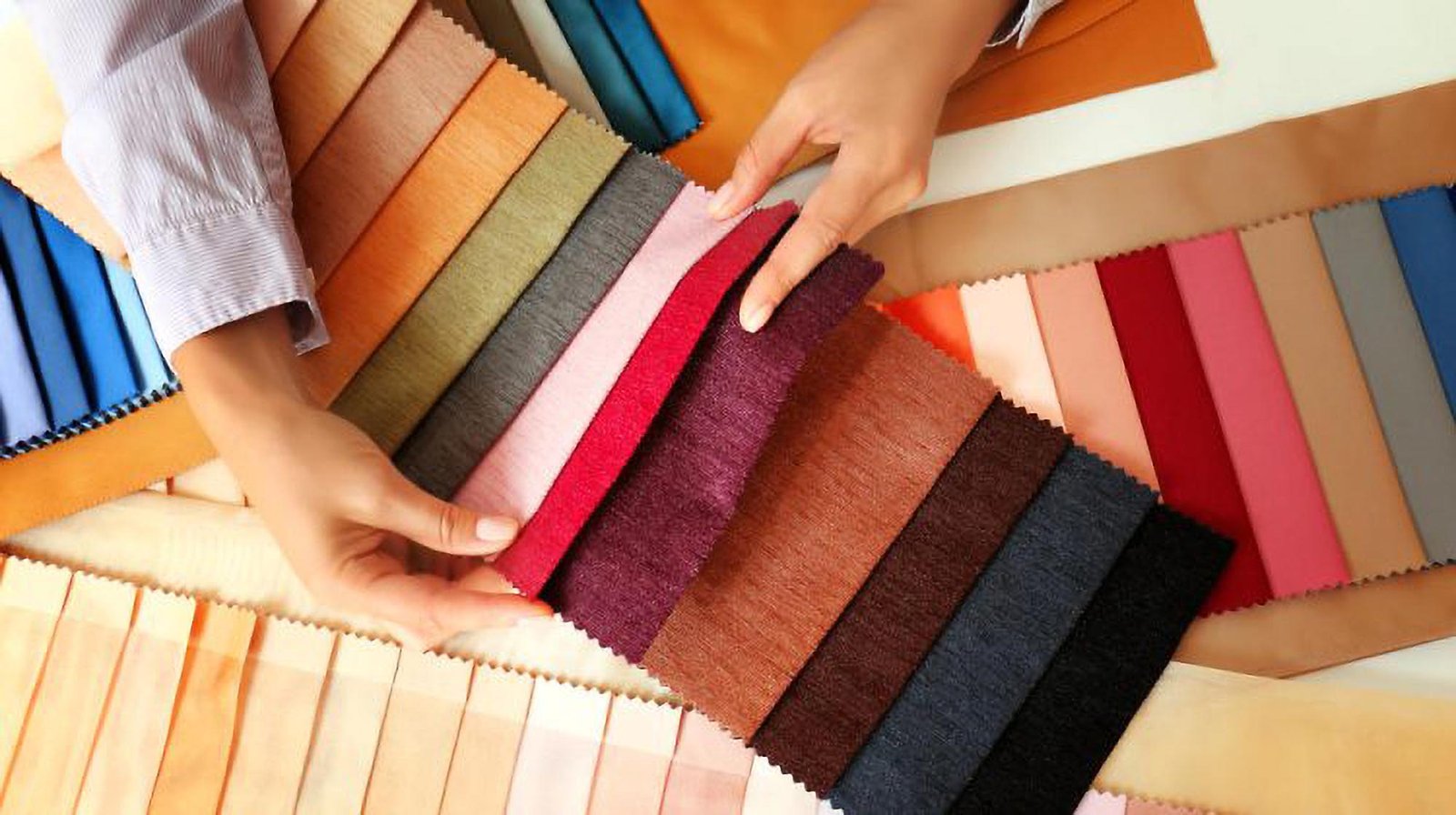
In our pre-sampling discussions, material choice often changes after buyers explain the use case more clearly. That is normal. A tote for office commuting and a tote for supermarket promotion may look similar in a mood board, but they should not be built the same way.
Material affects more than feel
When buyers think about material, they often focus on:
- Color
- Surface texture
- Sustainability claims
- Print effect
Those matter, of course. But for a work tote, material also affects:
- Shape retention
- Edge definition
- Weight
- Handle stress response
- Wrinkling
- Ease of cleaning
- How “full” or “empty” the tote looks
Common material directions for structure
Here is a practical comparison:
| Material direction | Shape support | Visual effect | Common trade-off |
|---|---|---|---|
| Canvas, lighter weight | Low to medium | Casual, relaxed | Can collapse easily |
| Heavy canvas with backing | Medium | More stable, still natural | Added weight |
| RPET with reinforcement | Medium | Clean and modern | Structure depends on backing |
| PU or faux leather style | Medium to high | Polished, office-friendly | Surface feel can vary |
| Laminated fabric + support | High | Crisp shape | Can feel less soft |
Structure usually comes from combination, not one fabric8
This is important. Buyers often ask, “Which fabric keeps the shape?” But shape usually comes from a system:
- Outer material
- Lining
- Reinforcement layer
- Base support
- Construction method
A bag made from a good-looking material can still fail structurally if the support layers are wrong. That is why a nice sample surface is not enough.
What I ask buyers before material confirmation
I usually ask:
- Should the tote stand on a desk or floor when partly filled?
- Should the user see a soft drape or a crisp outline?
- Is low weight more important than strong shape?
- Will the tote be used in retail, gifting, or everyday commuting?
- Does the buyer want eco-friendly positioning, and if so, how visible must that story be?
These answers guide the material direction much better than trend words alone.
A visually acceptable sample is not proof of a good private label product. If the material only performs well when the tote is empty on a table, the buyer still has not tested the real market fit.
How Should Buyers Compare Handles, Straps, and Compartments?
This is where many buyers realize too late that the tote “works” but does not feel right. The body looks fine. The logo placement is fine. Yet the user experience is weak. In my experience, that weakness often comes from handle drop, strap width, and compartment logic.
Buyers should compare handles, straps, and compartments based on actual carrying behavior, weight, comfort, and access needs.9 For a structured work tote, these details shape daily usability. They also affect whether the sample gives reliable feedback for production decisions.
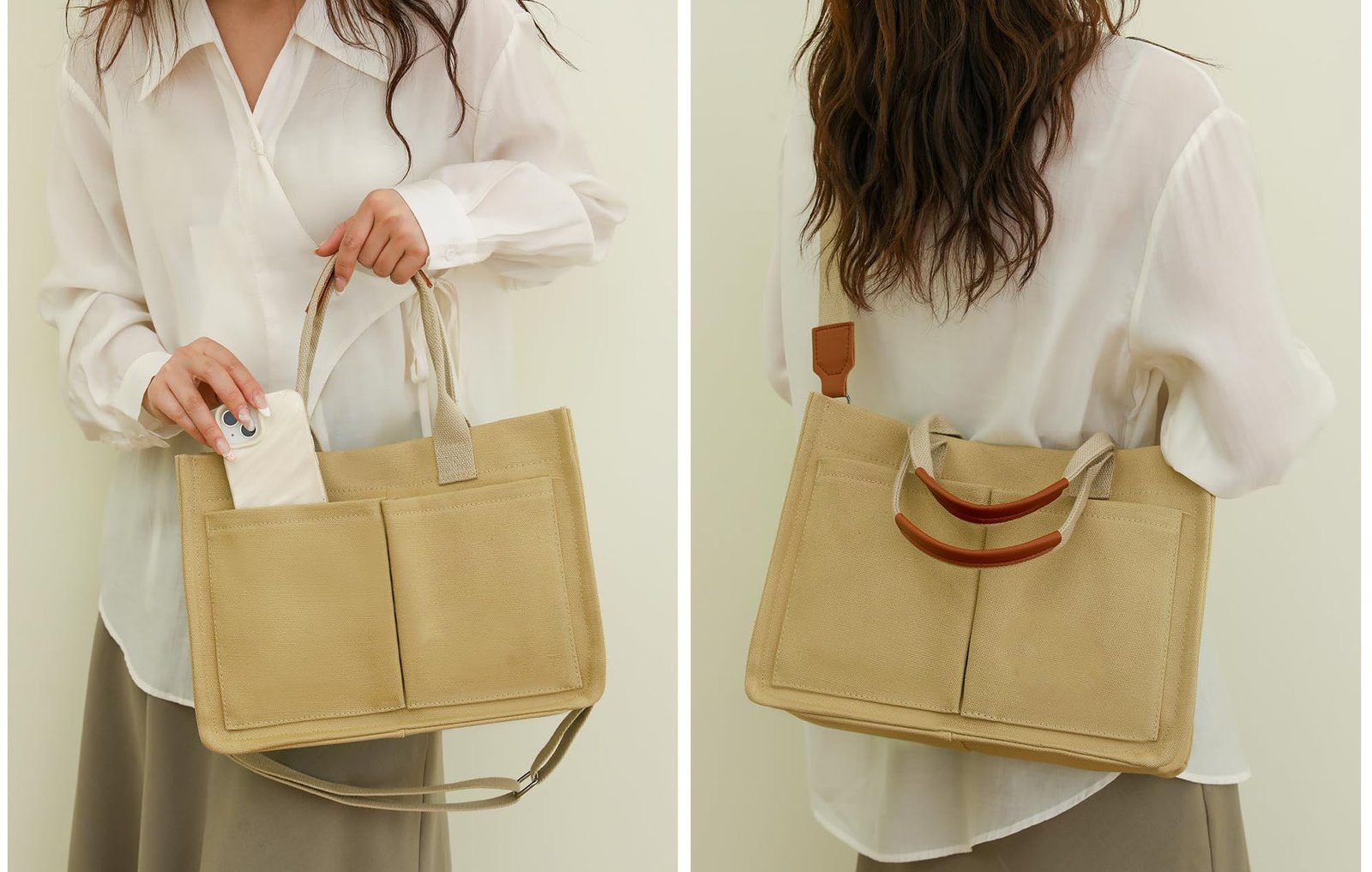
A tote is not judged only when it sits on a table. It is judged when someone lifts it, wears it, opens it in a hurry, reaches for a charger, and carries it for 20 minutes.
Handle and strap questions that matter
Here are the questions I wish more buyers asked before sampling:
- Will the tote be hand-carried, shoulder-carried, or both?
- What is the expected loaded weight?
- Does the user wear a coat or blazer?
- Should the straps sit close to the body or hang lower?
- Is comfort more important than a slim visual profile?
These answers matter because handle design can make a good-looking tote feel cheap or inconvenient.
Compare the key features
| Feature | What to compare | Why it matters |
|---|---|---|
| Handle drop | Short, medium, long | Affects shoulder fit and access |
| Strap width | Narrow vs wider10 | Affects comfort under load |
| Attachment point | Reinforced or simple | Affects durability perception |
| Compartments | Open vs divided | Affects organization and speed |
| Closure | Zip, magnet, open top11 | Affects security and shape |
Compartment logic should follow the use case
Some buyers ask for “more pockets” because it sounds useful. But too many compartments can make the tote bulky, heavy, or harder to manufacture consistently. The better approach is to ask what the user needs to access quickly and what needs protection.
A good work tote compartment layout often supports:
- Laptop separation
- Fast access to phone or keys
- Stable bottle placement
- A secure zip area for valuables
- Clear visibility inside the bag
I often see this pattern:
- A sample is made with standard handles and simple compartments.
- The buyer says, “Please adjust strap length.”
- Then they say, “Please add inside divisions.”
- Then they say, “Now the top opening feels narrow.”
That is not bad luck. That is a chain reaction. Handle design, opening width, and compartment bulk interact with each other. If buyers compare them one by one without a full use scenario, the sample can move further away from the right product while looking more detailed.
What Should Private Label Buyers Check Before Sampling?
This is the main question, and it matters because the risk is not simply making a sample. The real risk is approving the wrong direction. I have learned this from many pre-sampling conversations. Buyers often come in ready to act fast, but the missing details create slower alignment later.
Before tote sampling, private label buyers should check end user, use scenario, must-fit items, structure level, material direction, handle comfort, compartment needs, branding method, packaging, and what exactly the sample is meant to validate. These points improve sampling efficiency and reduce the chance of approving a good-looking but commercially weak tote.12
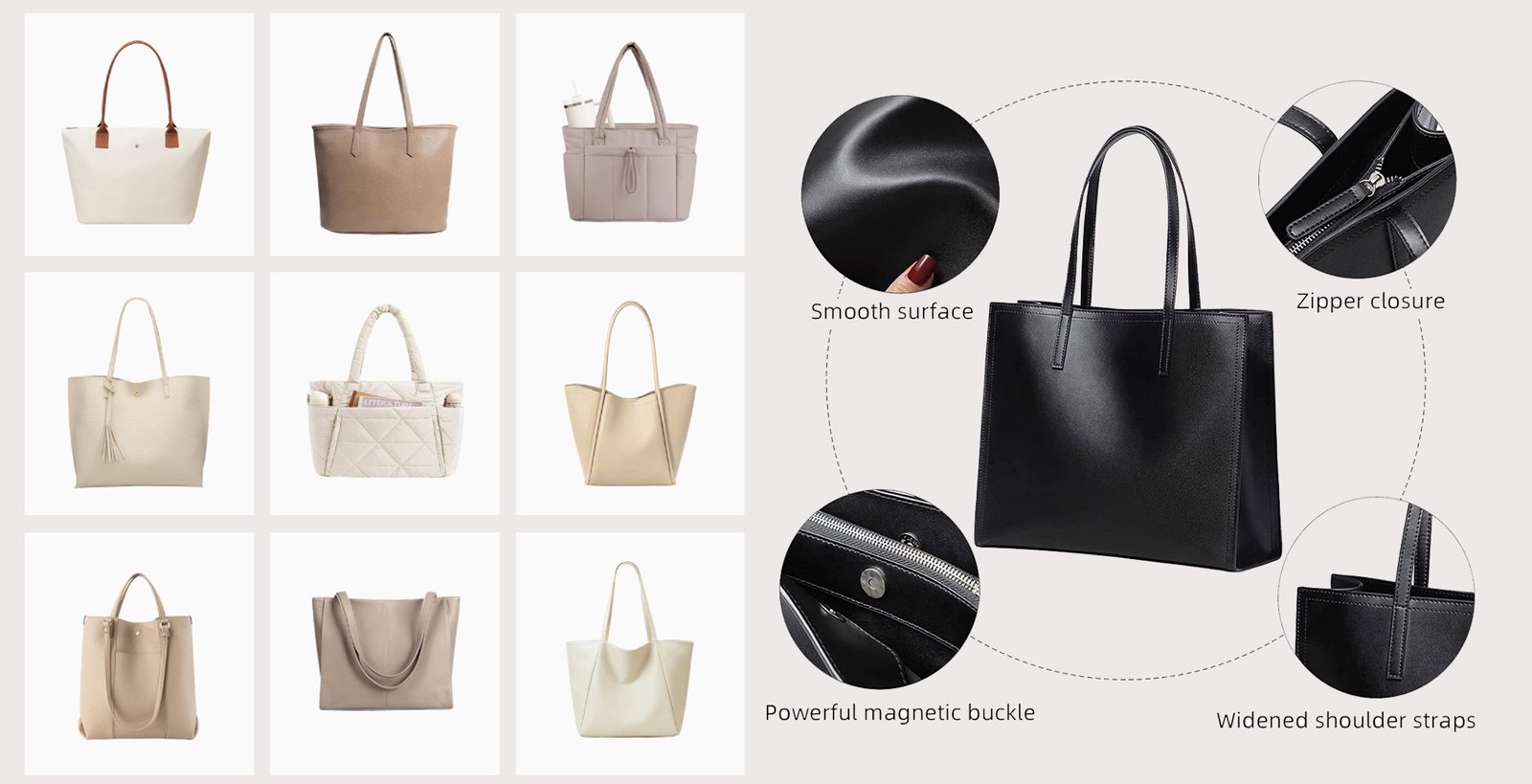
The most useful shift is mental. Instead of asking, “Can you make me a sample?” I think buyers should ask, “What decisions must this sample help me make?”
The five pre-sampling questions I find most valuable
1. Who is the end user, exactly?
Not “women” or “office people.” I mean: retail shopper, company employee, supermarket buyer, business traveler, or gift recipient?
The narrower the user picture, the better the sampling direction.
2. In what setting will the tote be used?
Daily commute? Corporate gifting? Seasonal retail launch? Back-to-office promotion?
The setting changes size, style, structure, and even packaging expectations.
3. What must the tote do well?
Examples:
- Fit a 15-inch laptop
- Keep a clean silhouette
- Carry comfortably on the shoulder
- Match a premium private label look
- Use eco-friendly materials
This helps separate must-haves from nice-to-haves.
4. What is the sample supposed to prove?
This is a big one. A sample may be used to test:
- Visual direction
- Material feel
- Capacity
- Retail presentation
- Internal approval
- Supplier communication alignment
If the sample goal is unclear, feedback becomes fuzzy.
5. What risks are we trying to avoid?
This is where decision quality improves fast. Common risks include:
- Wrong consumer fit
- Wrong price-value position
- Overbuilt or underbuilt structure
- Misleading material expectations
- Unclear path from sample to production
A practical pre-sampling framework
I use a simple table like this in my own thinking:
| Area | Key question | Risk if unclear |
|---|---|---|
| End user | Who will use it? | Weak market fit |
| Use case | Where and how will it be used? | Wrong function assumptions |
| Capacity | What must fit inside? | Size failure |
| Structure | Should it stand, drape, or balance both? | Poor performance |
| Components | What handles, straps, compartments are needed? | User discomfort |
| Branding | What print or logo effect is required? | Wrong presentation |
| Packaging | How will it be packed and presented? | Retail mismatch |
What buyers often miss
In our pre-sampling discussions, buyers often share these details in stages, not upfront. That is understandable. Teams are busy. Internal alignment is incomplete. But delayed details usually cause:
- Rework
- Slower decision cycles
- Confusing sample comments
- Approval based on looks instead of function
That is why I believe the best buyer questions are the ones that connect product details to downstream risk. The goal is not to ask more questions for the sake of process. The goal is to ask the few questions that prevent the wrong sample from feeling “good enough.”
Frequently Asked Questions
Should private label buyers ask for a sample first?
Not ideally. I think private label buyers should first define end user, use scenario, and must-have functions. A sample made before those points are clear can look acceptable but still send the project in the wrong product direction.
What is the biggest mistake before tote sampling?
The biggest mistake is treating the sample as proof of product success. In my experience, a sample should test assumptions about user fit, capacity, structure, and design direction. It should not be judged only by appearance.
How detailed should a buyer be before sampling?
A buyer should be detailed enough to explain who will use the tote, what it must carry, how structured it should feel, and what the sample needs to validate. That level of clarity usually improves communication and reduces revisions.
Do all work totes need strong structure?
No. Some work totes can be soft or semi-structured, depending on the brand position and user habits. But the buyer should define that choice clearly. “Work tote” alone does not tell the supplier enough.
Why do good-looking samples still fail?
A good-looking sample can still fail because it may not reflect real daily use, true carry needs, or scalable production intent. That is why private label buyers should judge the sample against the user and scenario, not just the visual result.
Conclusion
Private label buyers should not begin tote development by asking only for a sample. I believe the smarter first step is to define the user, the setting, and the job the tote must do. That clarity shapes size, structure, materials, handles, and compartments in a way that a photo alone never can. If you are preparing a private label tote project and want cleaner pre-sampling communication, you can explore more bag development options at Coraggio or reach out at info@coraggiobag.com.
"Tote bag", https://en.wikipedia.org/wiki/Tote_bag. General reference sources on tote bags and handbag construction describe tote bags as large carry bags and distinguish structured styles by their ability to retain form through construction and reinforcement. Evidence role: definition; source type: encyclopedia. Supports: General definitions of tote bags and structured handbags can support the article's use of the term "structured work tote" as a shape-retaining subtype.. Scope note: This support is contextual because "structured work tote" is not a standardized technical category. ↩
"A Review of Fusible Interlinings Usage in Garment Manufacture", https://pmc.ncbi.nlm.nih.gov/articles/PMC6290625/. Technical instruction on bag construction notes that interlinings, reinforcement panels, and base supports are commonly used to improve form retention and internal organization in structured carry goods. Evidence role: mechanism; source type: education. Supports: Educational or technical sources on bag construction should explain how firmer materials, reinforcement, and base panels contribute to shape retention and functional organization.. ↩
"Consumers' Intention to Bring a Reusable Bag for Shopping in China", https://pmc.ncbi.nlm.nih.gov/articles/PMC8955543/. Consumer-use research on bags and personal carry items indicates that commuting, promotional distribution, and casual leisure contexts involve different expectations for durability, organization, and appearance. Evidence role: general_support; source type: research. Supports: Research or market studies on consumer bag use should support that different use contexts impose different functional requirements.. Scope note: Such evidence is likely to support the distinction at the level of use context rather than this exact product comparison. ↩
"Impact of Backpacks on Ergonomics: Biomechanical and Physiological ...", https://pmc.ncbi.nlm.nih.gov/articles/PMC9180465/. Ergonomics literature on carried loads shows that load placement, asymmetry, and bag construction affect stability and comfort during use, so unloaded visual assessment may not predict in-use performance. Evidence role: mechanism; source type: research. Supports: Ergonomics and load-carrying studies should support that carried load changes stability, comfort, and perceived usability relative to unloaded inspection.. Scope note: The evidence would support the mechanism of performance change under load rather than these exact outcomes for every tote. ↩
"Leveraging Ergonomics and Human Factors (E/HF) for ... - PMC", https://pmc.ncbi.nlm.nih.gov/articles/PMC12264029/. User-centered design literature recommends defining product dimensions from realistic use scenarios and complete task requirements rather than from a single nominal item. Evidence role: expert_consensus; source type: research. Supports: User-centered design sources should support sizing products according to realistic use scenarios and complete task requirements.. Scope note: This support is methodological and does not by itself establish one universal sizing rule for all tote categories. ↩
"Length Width Height | How to Measure and Read Dimensions", https://ipacku.com/blog/length-width-height-guide/?srsltid=AfmBOooMKmsMqEoUomHyvpF4urOlqRc8BY3zqvec7f974BH5wbPEgHDL. Pattern-making and product-design instruction commonly relates bag dimensions to the geometry of intended contents, with flat devices influencing width and height while cylindrical items often increase required depth and volume allowance. Evidence role: mechanism; source type: education. Supports: Design and pattern-making sources should explain how the geometry of contained objects influences width, height, and depth decisions in carry products.. ↩
"Mechanical Properties and Durability of Textile Reinforced ...", https://pmc.ncbi.nlm.nih.gov/articles/PMC10534829/. Textile and sewn-product construction references report that fabric weight, coatings, interlinings, foam inserts, and base reinforcements increase stiffness and improve shape retention in structured bags. Evidence role: mechanism; source type: research. Supports: Textile and construction sources should support that reinforcement layers and stiffer materials increase form retention in sewn products and bags.. ↩
"Fashion Product: Bag Design & Construction", https://courses.newschool.edu/courses/PSOF2015/. Educational materials on sewn-product construction describe structural performance as the result of combined outer fabric, lining, reinforcement, and assembly choices rather than of shell fabric alone. Evidence role: mechanism; source type: education. Supports: Construction and product-design sources should support that final structural performance emerges from layered materials and assembly methods.. ↩
"Impact of Backpacks on Ergonomics: Biomechanical and ...", https://pmc.ncbi.nlm.nih.gov/articles/PMC9180465/. Ergonomics studies of carried products evaluate comfort and usability in relation to load, carrying posture, contact area, and access tasks, supporting assessment under realistic use conditions. Evidence role: expert_consensus; source type: paper. Supports: Ergonomics literature should support evaluating carried products using actual use behaviors, load conditions, and access tasks.. Scope note: The literature may focus on backpacks and shoulder bags broadly rather than tote compartments specifically. ↩
"The effect of shoulder strap width and load placement on ...", https://pubmed.ncbi.nlm.nih.gov/29254136/. Biomechanics research on load carriage shows that strap width alters contact area and pressure distribution at the shoulder, which can affect perceived comfort under load. Evidence role: mechanism; source type: paper. Supports: Biomechanics or ergonomics studies should support that strap width influences pressure distribution and perceived comfort during load carriage.. Scope note: Most studies examine backpacks or instrumented straps, so application to tote handles is inferential. ↩
"Pedagogical Content Knowledge and Industrial Design ... - ERIC", https://files.eric.ed.gov/fulltext/EJ906152.pdf. Product-design references on closure systems note that zippers, magnetic closures, and open tops differ in item retention and in how they constrain the bag opening, which can influence perceived structure. Evidence role: mechanism; source type: education. Supports: Design references should support that closure systems differ in containment security and may influence opening geometry and apparent structure.. Scope note: Evidence is likely to be functional and comparative rather than a direct ranking of all closure types. ↩
"Design Decisions in Research", http://obssr.od.nih.gov/sites/g/files/mnhszr296/files/Design-Decisions-in-Research.pdf. Product-development literature consistently finds that better-defined early requirements and validation criteria reduce iteration and rework, improving the quality of downstream decisions. Evidence role: expert_consensus; source type: paper. Supports: Product development research should support that clearer early requirements reduce rework and improve downstream decision quality.. Scope note: The support applies to product development generally and is contextual rather than tote-specific proof. ↩