Custom wellness lunch bags often get judged by logo placement and unit cost first. That creates problems later. A bag can look fine in photos but disappoint in daily use. I always suggest a more practical path: define the use case, then check structure, cleanability, and production consistency before approval.
Buyers should check custom wellness lunch bags by starting with real usage: who will use them, how often, and what needs to fit inside. Then they should review size, liner cleanability, leak-resistance details, customization options, and bulk production consistency. In my experience, these checks reduce the risk of choosing a bag that looks good but performs poorly at scale.
When I speak with procurement teams, I notice the same pattern. Decorative questions come early, while practical questions come late. That order should be reversed. Below, I break down the buyer-side checks that matter most when evaluating custom wellness lunch bags for wellness programs, employee gifting, and branded distribution1.
Why Are Lunch Cooler Bags Used in Wellness Gifting?
A lot of gifting projects start with branding goals alone. That sounds simple, but it creates friction later. If the bag does not support actual daily habits, recipients may not use it. Then the gifting value drops, even if the item looked attractive at launch.
A lunch cooler bag works well in wellness gifting because it connects branding with routine use. It supports meal prep, commuting, and healthier workplace habits.2 For buyers, that means the product should be evaluated as a functional item first, not only as a promotional surface.
In buyer conversations, I often hear a version of the same question: “Will this look premium enough for our program?” That is reasonable, but it is usually incomplete. A better question is: “Will people actually use it three or four times a week?3” If the answer is uncertain, the gifting value becomes weak.
Daily-use logic matters more than catalog appearance
For enterprise gifting, lunch cooler bags usually serve one of these purposes:
- Employee wellness programs
- Onboarding kits
- Seasonal appreciation gifts
- Healthcare staff meal-carry solutions
- Branded community outreach or retail support
These uses sound similar, but they are not identical. A one-time appreciation gift may prioritize presentation more. A daily-use employee item should prioritize cleaning, carry comfort, and fit.
I have seen buyers ask about insulation terms very early. I understand why. Those words sound technical and reassuring. But I usually encourage buyers to step back and define actual use first:
- Will recipients carry cold meals, room-temperature snacks, or mixed items?
- Will they commute by car, train, or on foot?
- Will they use the bag occasionally or every workday?
- Will they pack one container or a full meal setup?
Without those answers, buyers can over-focus on surface material or padding thickness and miss the practical experience.
Why wellness gifting creates higher user expectations
A wellness item is different from a generic promo giveaway. Recipients often expect it to fit into healthy daily routines. That raises the standard. The bag should feel easy to carry, easy to wipe, and easy to store. If it becomes annoying to use, people stop bringing it.
In my experience, buyers ask too late whether the bag must handle real meal containers, drink bottles, utensils, or ice packs. That should be clarified at the inquiry stage, not after sample approval.
Here is a simple way to think about evaluation:
| Buyer focus | Better buyer question |
|---|---|
| Logo visibility | Will the bag be used repeatedly in real life? |
| Budget only | Does the structure support the intended use? |
| Catalog size | What exact items must fit inside? |
| Sample appearance | Can bulk production stay consistent? |
For B2B buyers, especially in supermarket, gifting, or corporate procurement, the safest choice is usually not the flashiest one. It is the lunch bag that supports routine behavior with reliable everyday practicality.
What Size Works for Office and Healthcare Teams?
Buyers often ask for a “standard size,” but that phrase can mislead. There is no one best format for every program.4 A bag that works for office staff may fail for healthcare teams with longer shifts, drink bottles, or extra food needs5.
The right size for custom wellness lunch bags depends on the actual packing list. Buyers should map size to meal box dimensions, bottle height, utensils, and carry style. Capacity only becomes meaningful when linked to real contents.
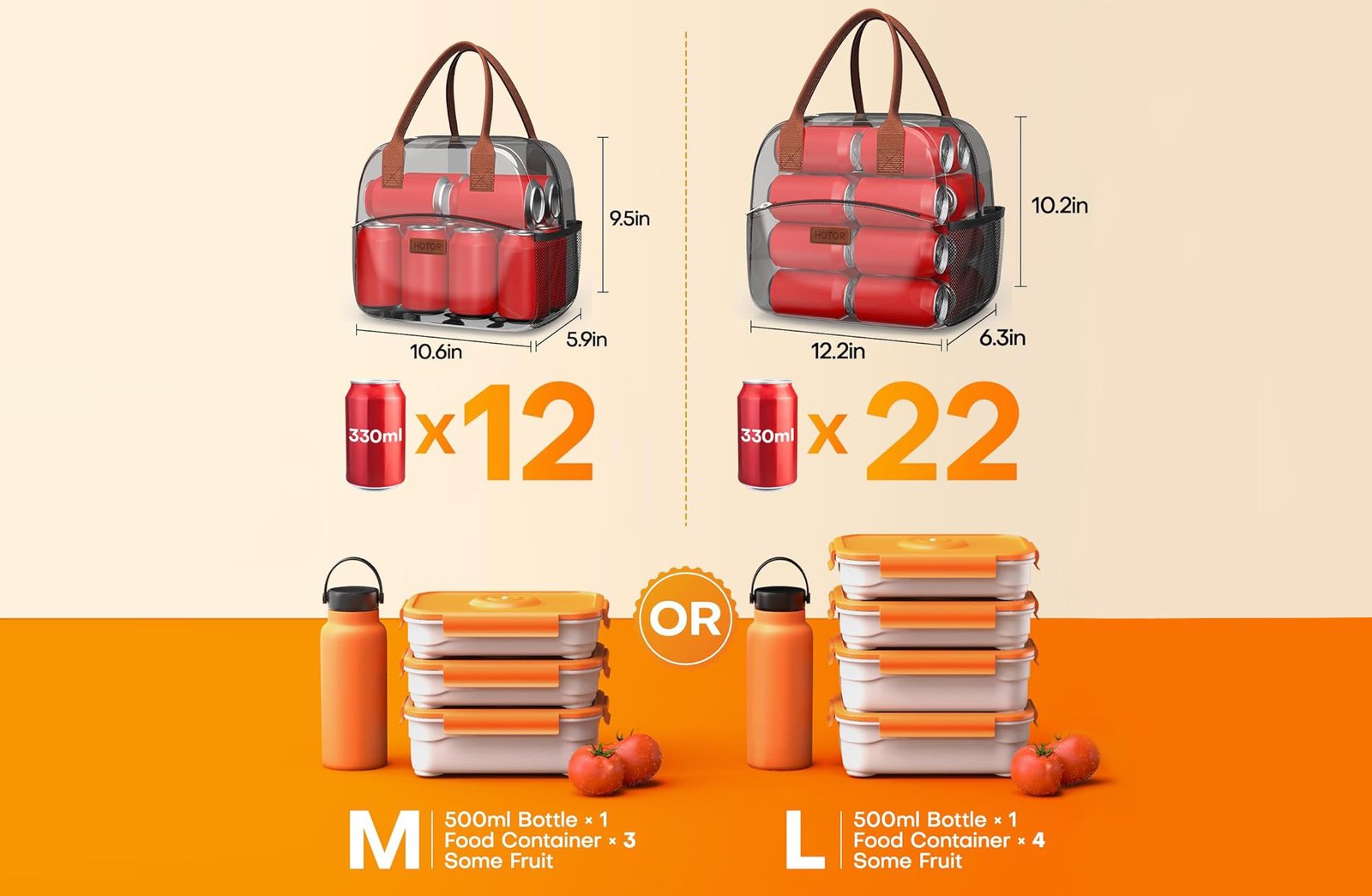
This is one of the most common issues I see in inquiry and sampling stages. A buyer approves a neat-looking sample, then later realizes that the main food container barely fits, or the zipper closes awkwardly once a bottle is added. That kind of mistake is avoidable.
Start with contents, not liters alone
I suggest that buyers list what the recipient is expected to carry:
- One meal box
- One fruit box or snack pouch
- One 350–500 ml drink bottle
- Utensils
- Napkin or tissue pack
- Ice pack, if needed
This simple list changes the discussion quickly. A “compact” bag may fit one rectangular lunch box well, but not the drink bottle. A taller format may solve that issue, but then it could feel bulky for desk storage or locker placement.
Office vs. healthcare use scenarios
Here is a practical comparison:
| User group | Typical need | Size implication |
|---|---|---|
| Office employees | One lunch + drink | Medium, balanced shape |
| Healthcare staff | Longer shifts, extra snacks | Slightly larger, more flexible depth |
| Event gifting recipients | Light occasional use | Smaller acceptable if clearly positioned |
| Commuters on public transit | Easy carry, not bulky | Compact width, controlled height |
For office teams, I often see success with moderate-capacity formats that fit a lunch box, bottle, and small extras without becoming oversized. For healthcare teams, a bit more internal flexibility often matters. Staff may carry longer-shift food setups, and convenience becomes more important than a sleek silhouette.
Questions buyers should ask before confirming size
I recommend these pre-order questions:
- What exact container dimensions should fit?
- Should the bottle stand upright or lie flat?
- Does the bag need room for cooling accessories?
- Will users carry it inside another bag or by itself?
- Will the bag be stored in lockers, cabinets, or shared refrigerators?
These details can affect shape more than buyers expect. A wide base helps some meal containers. A taller body helps bottles. A more squared opening may improve access and cleaning. None of these are “better” in isolation. They are better only in context.
This is why I do not like evaluating custom wellness lunch bags by generic size labels alone. Small, medium, and large do not tell buyers enough.6 A useful procurement review should connect dimensions to realistic packing and daily handling.
Which Linings Are Easy to Clean After Daily Use?
A bag can pass visual review and still fail in practice if the inside becomes hard to wipe, holds odor7, or traps food residue. Buyers often spend too much time on outer fabric and not enough on the liner, even though the liner shapes the daily user experience.
For custom wellness lunch bags, easy-to-clean linings usually matter more than decorative details. Buyers should check wipeability, seam finish, corner construction, and how the lining behaves after repeated use. These are practical verification points, not assumptions based on material names alone.
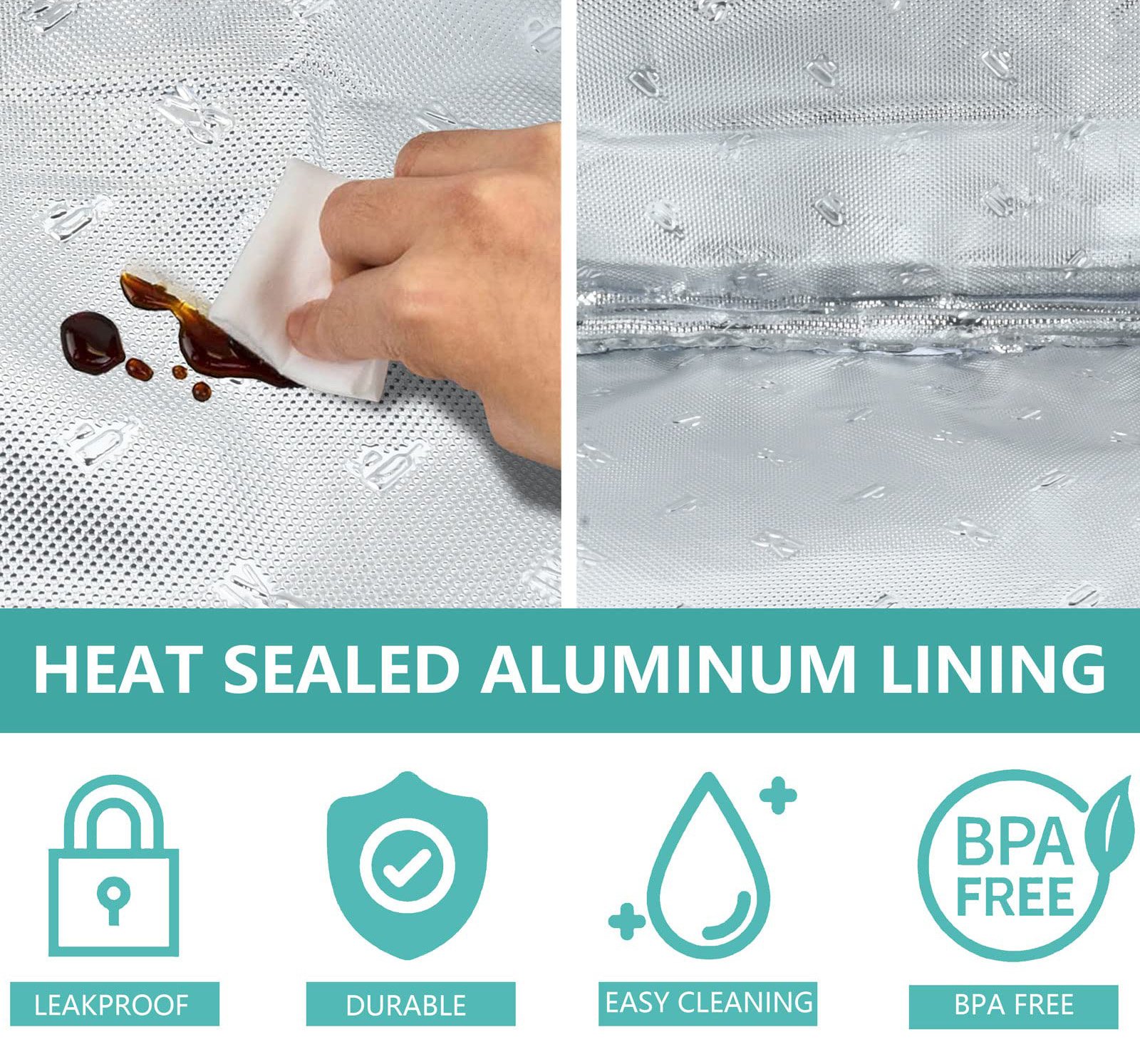
This section is where many sourcing discussions become too abstract. Buyers hear liner terms, foil terms, or insulation terms and assume that one technical-sounding option must be superior. In reality, user experience depends on the whole inside structure.
What makes a lining easier to clean?
From a buyer’s perspective, the easiest-clean interiors often share a few traits:
- Smooth inner surface8
- Less residue-trapping texture
- Corners that can be wiped without struggle
- Seams that do not invite leakage easily9
- Openings wide enough for hand access
That last point gets missed often. A lining may be acceptable, but if the opening is narrow, cleaning becomes annoying. Users do not evaluate components separately. They experience the bag as a whole.
What to inspect in samples
When I review lunch bag samples with buyers, I suggest they check these points directly:
- Wipe a small area with a damp cloth
- Look at corner construction
- Check whether crumbs or drops would collect in folds
- Open and close the bag repeatedly
- Put a real container inside and remove it several times
These are not lab tests. They are buyer-side practicality checks. They help teams understand whether the bag is suitable for daily use.
A clean-looking sample on a table does not tell you much about daily maintenance. The better question is whether an employee can wipe it quickly after lunch without frustration.
Lining review table
| Check item | Why it matters | What buyers should verify |
|---|---|---|
| Surface feel | Affects wipeability | Is it smooth and easy to clean manually? |
| Corner shape | Food residue can collect there | Are corners too tight or awkward? |
| Seam finish | Helps assess leak-risk areas | Are seams neat and consistent? |
| Opening access | Makes cleaning easier | Can a hand reach key areas easily? |
| Odor retention | Important for repeated use | Ask supplier what should be verified in use testing |
I would also remind buyers not to treat “leak resistant” or similar wording as a guaranteed performance claim unless verified through their own approval process or qualified testing. For procurement teams, the safer habit is to treat these points as items to confirm, not promises to assume.
How Can Buyers Add ID Pockets, Logos, and Inserts?
Customization is useful, but it should come after function is defined. I have seen projects become too logo-focused too early. Then buyers try to force practical features into a bag shape that was chosen mainly for appearance.
Buyers can add ID pockets, logos, and inserts effectively when the base structure already supports the intended use. The best custom wellness lunch bags balance branding with usability, so added features do not interfere with cleaning, carrying, or packing efficiency.
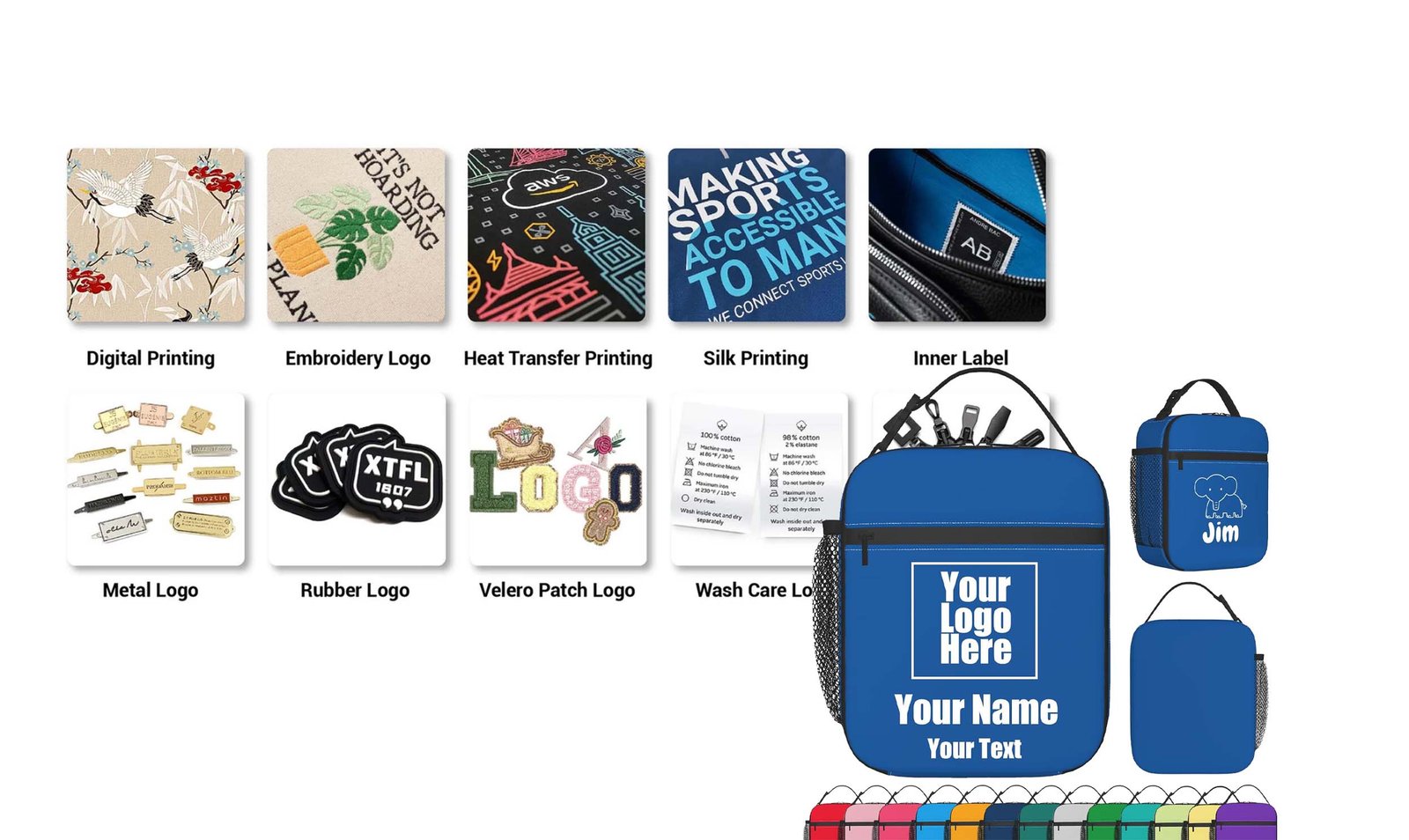
For wellness gifting and employee distribution, customization often has a legitimate purpose beyond decoration. An ID slot may support internal distribution. An insert may explain wellness messaging. A logo may align with program identity. The key is making sure those additions do not reduce usability.
Useful customization options
Here are common add-ons buyers ask about:
- Front ID pocket or card window
- Printed or embroidered logo
- Hangtag or insert card
- Internal message card
- Color matching to brand guidelines
- Zipper pull customization
- Labeling for employee programs or departments
These features can be valuable, especially when bags are distributed across multiple teams or locations. But each feature creates decisions about placement, cost, and production consistency.
Practical questions before approving custom features
I usually recommend buyers ask:
- Will the ID pocket make the bag bulkier or less clean-looking?
- Will logo application affect flexibility or surface feel?
- Can the insert stay neat during packing and shipping?
- Will extra trim pieces slow production or create inconsistency?
- Does the customization interfere with easy cleaning?
That final question matters more than people expect. For example, some decorative details may look good in a presentation sample but create maintenance issues later.
Customization should support distribution, not distract from use
Here is a simple evaluation framework:
| Feature | Value to buyer | Risk if overused |
|---|---|---|
| Logo | Brand recognition | Can dominate decision-making |
| ID pocket | Useful for organized distribution | May add bulk or visual clutter |
| Printed insert | Supports messaging | Can wrinkle, shift, or be discarded |
| Extra compartments | More organization | Can reduce usable main space |
For enterprise buyers, I think the best custom wellness lunch bags usually feel quietly practical. They carry the brand, but they still function like a real daily-use item. That balance matters more than trying to add every possible decorative detail.
What Should Procurement Teams Test Before Bulk Orders?
A strong sample is helpful, but it is not the finish line. The bigger procurement risk is whether the same structure, materials, and workmanship will remain consistent in bulk. That is the issue buyers should focus on before confirming production.
Procurement teams should test custom wellness lunch bags for real-use fit, cleaning practicality, closure behavior, stitching consistency, and sample-to-bulk repeatability. They should also verify any compliance or material documents separately and use qualified evaluation for application-specific requirements.
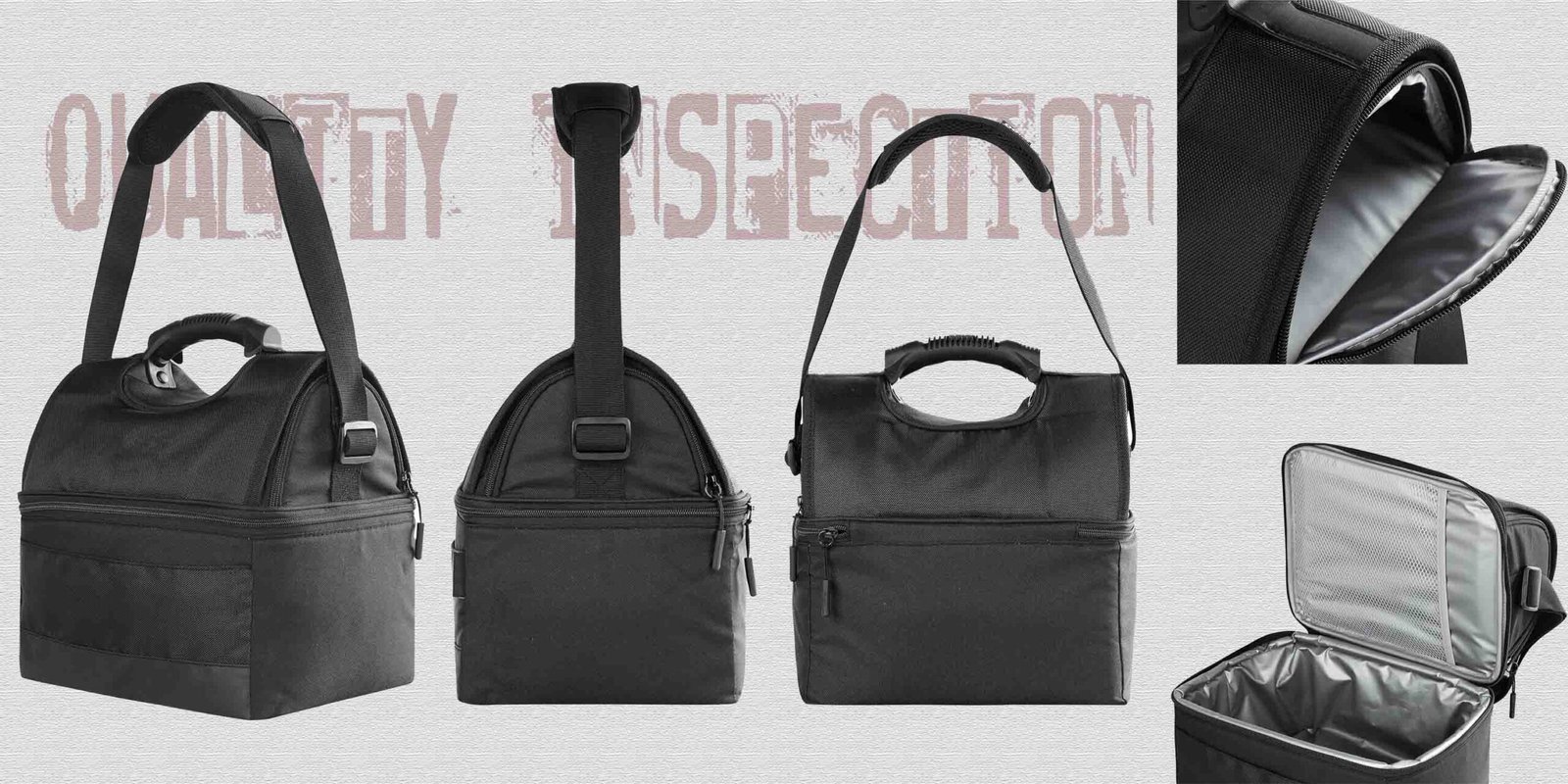
This is the part I care about most in B2B projects. A bag can photograph well and still become risky in mass production. In my experience, buyers often ask the right bulk questions too late, after they already feel committed to the approved sample.
Separate sample approval from bulk risk review
These are not the same thing:
- Sample approval = “This version seems usable.”
- Bulk readiness = “Can this be repeated consistently at scale?”
That distinction matters. A supplier may produce an acceptable sample with close attention, while production variation later affects stitching, panel shape, zipper alignment, liner finish, or print placement.10
Pre-bulk checks I suggest buyers use
1. Real packing test
Use actual meal containers, bottles, and utensils.
2. Open-close repetition
Check zipper movement and opening shape over repeated handling.
3. Wipe-clean review
Simulate light daily mess and check ease of cleaning.
4. Workmanship review
Inspect stitching, handles, binding, and internal finish.
5. Carton and packing check
Confirm how bags will be folded, packed, and protected in shipment.
6. Bulk consistency plan
Ask how the supplier controls production across lines and batches.
For B2B buyers, especially those sourcing from overseas factories11, this consistency discussion is essential. At Coraggio, for example, our team often sees buyers become much more confident once they move beyond the sample itself and ask how workmanship is controlled across production lines, inspections, and packing stages. That is a healthier conversation than discussing logo size for the fifth time.
A simple procurement checklist
| Check | Why it matters |
|---|---|
| Fit test with actual contents | Confirms real usefulness |
| Lining and seam review | Helps assess maintenance and leak-risk areas |
| Closure and handle inspection | Supports everyday durability review |
| Customization placement check | Avoids branding errors in bulk |
| Packaging confirmation | Reduces shipping and presentation issues |
| Document verification | Buyers should verify certifications or claims |
I would also strongly suggest that procurement teams request clear pre-production confirmation on:
- Final dimensions and tolerances
- Approved color references
- Logo method and placement
- Inner structure details
- Packing method
- Inspection standards
These steps do not eliminate risk completely. But they reduce preventable surprises. For custom wellness lunch bags, that is usually the difference between a smooth bulk order and a frustrating one.
Frequently Asked Questions
Are custom wellness lunch bags suitable for one-time gifts and daily use?
Yes, but buyers should define the purpose first. A one-time gift may accept a simpler structure. A daily-use item needs better attention to size, liner cleanability, and carrying comfort. I always suggest matching the bag design to the expected frequency of use.
What is the most common mistake buyers make with custom wellness lunch bags?
The most common mistake is focusing on logo and price before defining what users will actually pack. If buyers do not confirm meal box size, bottle needs, and cleaning expectations early, the bag may look fine but perform poorly in daily use.
Should buyers rely on a single approved sample before placing a bulk order?
No. A sample only shows one approved version. Buyers should also review how the supplier will maintain consistency in bulk production. That includes workmanship control, packing standards, and repeatability of dimensions, lining finish, and logo placement.
Do thicker materials always mean better lunch bag performance?12
No. Thickness alone does not guarantee better user experience. Buyers should look at the complete structure, including size, opening, liner wipeability, seam finish, and how the bag handles real packed contents. Practical fit matters more than buzzwords.
What documents should procurement teams verify?
Procurement teams should verify any compliance, material, or testing documents directly with the supplier and according to their own requirements. For application-specific decisions, buyers should use qualified professional evaluation rather than relying on general marketing statements.
Conclusion
Custom wellness lunch bags should be evaluated as daily-use functional products, not just branded gift items. I believe the safest buying process starts with real use: who will carry the bag, what will go inside, how often it will be used, and how easy it will be to clean. Then buyers should review customization and bulk consistency with the same discipline. If you are sourcing OEM or ODM lunch bags for wellness programs, I recommend discussing your packing scenario, sample priorities, and bulk quality checkpoints with us early at Coraggio.
"Employers | Active People, Healthy Nation", https://www.cdc.gov/active-people-healthy-nation/php/tools/employers.html. Public health guidance on workplace wellness commonly addresses healthy eating and food environment supports, while reference sources on promotional merchandise describe the use of branded practical goods in employee and outreach settings; together these sources support the article’s characterization of lunch bags as a functional item used in wellness gifting and branded distribution. Evidence role: general_support; source type: government. Supports: Authoritative workplace-health and promotional-merchandise sources can contextualize lunch bags as plausible tools in employee wellness and branded distribution programs.. Scope note: This would provide contextual support for the stated use cases rather than direct proof that lunch cooler bags are the most common or most effective item in such programs. ↩
"Time Spent on Home Food Preparation and Indicators ... - PMC", https://pmc.ncbi.nlm.nih.gov/articles/PMC4254327/. Studies on meal preparation and food planning have reported associations between preparing and carrying meals and healthier dietary patterns, which supports the article’s statement that a lunch bag can fit meal prep and workplace healthy-eating routines. Evidence role: general_support; source type: paper. Supports: Research on meal preparation and workplace healthy-eating behavior can support the statement that carrying prepared meals is associated with healthier routines.. Scope note: Such studies usually concern behavior and diet patterns rather than the causal effect of any specific bag design. ↩
"(PDF) The Role of Brand Recall, Brand Recognition and Price ...", https://www.researchgate.net/publication/326552304_The_Role_of_Brand_Recall_Brand_Recognition_and_Price_Consciousness_in_Understanding_Actual_Purchase. Research on promotional merchandise commonly treats repeated practical use as an important condition for recipient recall and perceived value, which supports the article’s framing of frequent weekly use as a meaningful evaluation criterion. Evidence role: general_support; source type: research. Supports: Neutral research on promotional-product effectiveness and repeated use can support the article’s emphasis on frequent practical use as a determinant of gifting value.. Scope note: This would support the general logic of repeated use, not validate the specific threshold of 'three or four times a week' as a universally established benchmark. ↩
"Research Methods | NIST", https://www.nist.gov/itl/iad/human-centered-technologies/methodology. Human-centered design and ergonomics frameworks emphasize that product suitability depends on intended users, tasks, and environments, supporting the article’s claim that no single bag format is best for every program. Evidence role: expert_consensus; source type: institution. Supports: Human-centered design and ergonomics guidance can support the idea that product specifications should be matched to intended users and contexts rather than one universal format.. Scope note: This is conceptual support from design standards and guidance rather than evidence specific to lunch bags. ↩
"Examining the impact of 12-hour day and night shifts on ... - PMC", https://pmc.ncbi.nlm.nih.gov/articles/PMC11080398/. Occupational-health studies report that many healthcare workers, particularly nurses and hospital staff, work extended shifts such as 12-hour schedules; this supports the article’s suggestion that healthcare users may need bags accommodating additional food and drink. Evidence role: general_support; source type: paper. Supports: Occupational-health literature on healthcare shift duration can support the statement that healthcare staff often work long shifts, making extra food or drink carriage plausible.. Scope note: The evidence would support the shift-length context, while the exact packing needs remain a practical inference rather than directly measured in the cited studies. ↩
"Guide for Labeling Consumer Package by Weight, Volume, ...", https://nvlpubs.nist.gov/nistpubs/SpecialPublications/NIST.SP.1020.pdf. Measurement and labeling guidance generally treats explicit dimensions and capacity as more reliable descriptors than nominal size categories alone, supporting the article’s statement that labels such as 'small,' 'medium,' and 'large' are insufficient for procurement evaluation. Evidence role: general_support; source type: research. Supports: Standards or consumer-information sources on measurement and labeling can support the idea that descriptive size terms are less informative than actual dimensions.. Scope note: The support would be general to product sizing and labeling, not specific to lunch cooler bags. ↩
"Role of oxygen absorbers in food as packaging material, their ...", https://pmc.ncbi.nlm.nih.gov/articles/PMC9908507/. Materials studies on food-contact polymers report that some surfaces can absorb or retain volatile compounds associated with food odor, supporting the article’s statement that an interior lining may hold odor after repeated use. Evidence role: mechanism; source type: paper. Supports: Materials research on polymers and food-contact surfaces can support the statement that some interior materials may absorb or retain odors more than others.. Scope note: Such evidence usually concerns material classes under test conditions and may not directly compare the exact bag linings discussed in the article. ↩
"Guide on Microbial Hazards of Fresh-cut Fruits and ...", https://www.fda.gov/regulatory-information/search-fda-guidance-documents/guidance-industry-guide-minimize-microbial-food-safety-hazards-fresh-cut-fruits-and-vegetables. Food-safety guidance commonly specifies smooth, nonabsorbent, easily cleanable food-contact surfaces because roughness and porosity can increase residue retention; this supports the article’s statement that a smooth inner surface is generally easier to clean. Evidence role: mechanism; source type: government. Supports: Food-safety and sanitation guidance can support the claim that smooth, nonporous surfaces are generally easier to clean than rough or absorbent ones.. Scope note: The support is based on sanitation principles and does not directly test every lunch-bag liner construction. ↩
"(PDF) A STUDY OF WATERPROOF SEAMS", https://www.academia.edu/124375232/A_STUDY_OF_WATERPROOF_SEAMS. Studies of textile and package seam integrity show that seam construction and sealing quality can materially affect resistance to liquid escape, supporting the article’s claim that seam finish is relevant to leakage risk. Evidence role: mechanism; source type: paper. Supports: Engineering or textile research on seam integrity can support the statement that seam design and finishing influence leakage behavior.. Scope note: This would support the general mechanism; actual leak resistance of a given lunch bag still depends on the full material and construction system. ↩
"3.1.3.2. Process Variability - Information Technology Laboratory", https://www.itl.nist.gov/div898/handbook/ppc/section1/ppc132.htm. Quality-control and process-capability literature recognizes that variation in manufacturing processes can produce differences between prototype or sample units and mass-produced output, supporting the article’s warning that acceptable samples do not by themselves guarantee bulk consistency. Evidence role: expert_consensus; source type: institution. Supports: Manufacturing quality-control literature can support the statement that production variation can affect consistency between samples and bulk output.. Scope note: The support is general to manufacturing systems and does not document the performance of any specific supplier. ↩
"Global value and supply chains", https://www.oecd.org/en/topics/global-value-and-supply-chains.html. Supply-chain and international sourcing literature commonly notes that cross-border procurement can increase coordination, quality assurance, and inspection challenges, supporting the article’s emphasis on consistency review for buyers sourcing from overseas factories. Evidence role: general_support; source type: institution. Supports: International trade and supply-chain sources can support the general point that cross-border sourcing often requires stronger quality assurance and supplier oversight.. Scope note: This is contextual support for sourcing risk management and does not imply that overseas factories are inherently lower quality. ↩
"Practical Residential Wall Systems: R-30 and Beyond", https://www1.eere.energy.gov/buildings/publications/pdfs/building_america/high_r_walls.pdf. Research on insulation and textile performance shows that functional outcomes depend on material type, structure, density, air layers, and overall construction rather than thickness alone, supporting the article’s statement that thicker materials do not automatically produce better lunch-bag performance. Evidence role: mechanism; source type: paper. Supports: Materials and insulation research can support the statement that performance depends on multiple properties and construction factors, not thickness alone.. Scope note: Such evidence is typically general to insulation systems and does not directly test every lunch bag design or user-experience outcome. ↩