Corporate mini backpacks often get customized from the outside in, and that creates a problem. Buyers focus on logos, colors, and extra details first, then realize too late that the bag is too small, too stiff, or simply awkward to use. The smarter solution is to customize for the real job first.
Buyers should customize corporate mini backpacks based on use case, not maximum features. The best starting points are size, structure, material, and basic pocket layout. After that, logo placement and visual branding should support function. In many corporate orders, practical customization creates better value than adding more decorative details.
I have noticed this pattern in many conversations with gift buyers and procurement teams. The first questions often sound visual, but the real risks are usually practical. Once I walk through capacity, structure, and daily use, the whole buying decision becomes clearer and the spec becomes much more cost-effective.
Why Are Mini Backpacks Appearing in Corporate Gift Kits?
Buyers often choose gifts that look trendy but do not get used. That wastes budget and weakens the brand impression. Corporate mini backpacks are appearing more often because they sit in a useful middle ground: more functional than a pouch, more interesting than a tote, and easier to position as a modern branded item1.
Mini backpacks appear in corporate gift kits because they combine portability, branding space, and perceived value in a compact format2. For many programs, they work well for employee onboarding, event giveaways, youth campaigns, and retail-style promotions. Their appeal comes from usefulness, not just appearance.
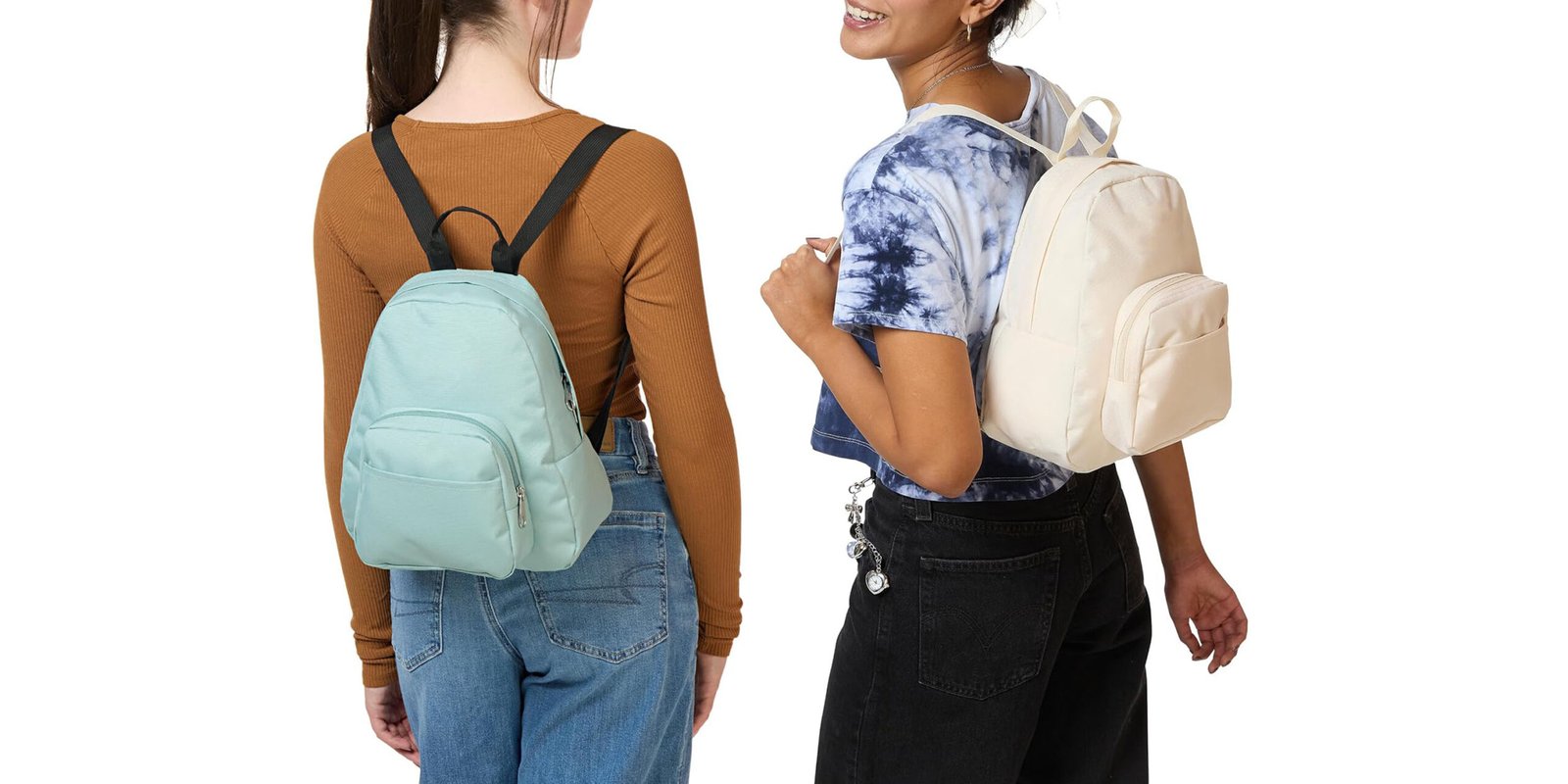
In many buyer conversations, I hear the same concern: “We want something that feels more premium than a basic giveaway, but still fits budget.” That is exactly where mini backpacks start to make sense.
Why buyers like them now
Mini backpacks fit several current purchasing trends at once:
- They feel newer than common tote bags
- They suit casual office culture and hybrid work
- They are easier to style into a branded campaign
- They can target younger users without feeling childish3
- They often create better “gift set value perception” than small accessories4
A common mistake is treating a mini backpack as just a cute version of a regular backpack. It is not. Its value depends heavily on the intended use. If the bag only needs to hold a phone, notebook, badge kit, snacks, or a few welcome-pack items, then it can work very well. If buyers expect it to carry a laptop, full documents, and daily commuting gear, it will disappoint quickly.
Common use cases where mini backpacks make sense
| Use case | Why mini backpacks work | Main customization priority |
|---|---|---|
| Event giveaway | Easy to carry on-site | Size and lightweight structure |
| Employee welcome kit | Feels more premium than a pouch | Capacity and pocket layout |
| Retail promotion | Better shelf appeal | Material and visual finish |
| Youth marketing program | Trend-driven and casual | Color and logo style |
| Supermarket gift campaign | Compact and budget-sensitive | Cost control and durability |
I usually tell buyers to ask one simple question first: What job should this bag do after the unboxing moment? If the answer is weak, the item may only create short-term excitement. If the answer is clear, customization becomes much easier and more disciplined.
What Size Works for Events, Desk Drops, and Welcome Packs?
The biggest buyer frustration often appears after sampling. The bag looks good in pictures, but real items do not fit well. That happens because corporate mini backpacks have tight physical limits. Buyers who overestimate capacity end up paying for a product that is branded but not practical.
The right size depends on the program. Event giveaways usually need a light, compact size. Desk drops need a bag that fits a few curated items neatly. Welcome packs often need slightly more depth and better structure. For many orders, size and shape are the highest-value customization decisions5.
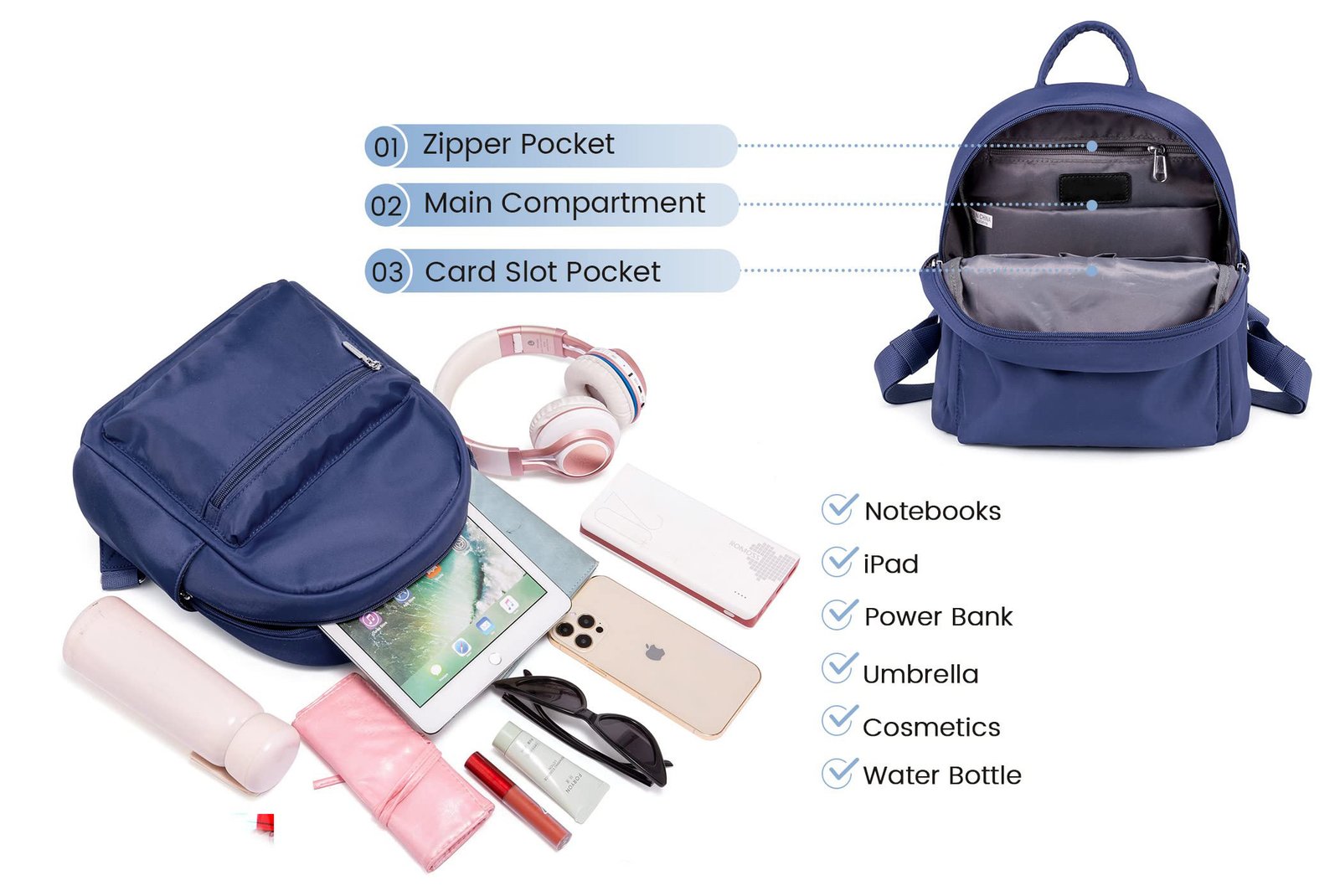
In my experience, this is where many projects either become smart or become wasteful. Buyers often ask for “mini but useful,” yet those two goals need careful balance.
Start with the item list, not the bag sketch
I prefer to build sizing decisions around what the bag must actually carry. For example:
Event giveaway bag
- Phone
- Brochure
- Badge
- Pen
- Small water bottle or snack
Desk drop bag
- Notebook
- mug or tumbler accessory
- HR materials
- small tech accessory
- branded welcome items
Welcome pack bag
- A5 notebook
- compact apparel item
- charger or mouse
- ID kit
- small personal care item
If buyers skip this exercise, they usually guess wrong. A mini backpack can become too shallow, too narrow, or too tall but unstable.
Practical size thinking
Instead of chasing exact dimensions too early, I suggest buyers think in three bands:
Small mini backpack
- Best for event handouts
- Lowest cost and easiest transport
- Limited carry function
Medium mini backpack
- Best for onboarding kits and desk drops
- Better balance of look and usability
- Usually the safest corporate choice
Large mini backpack
- Best for retail-style use or stronger repeat use
- Better capacity
- Risks drifting out of the “mini” category
A common mistake is adding too many compartments before confirming core capacity. Internal space disappears quickly in mini formats.
Structure matters as much as dimensions
Two mini backpacks with the same outer size can perform very differently. Structure changes everything6:
- Soft body vs semi-structured body
- Wide opening vs narrow top opening
- Flat base vs rounded base
- Single main compartment vs split interior
For many corporate orders, I recommend prioritizing:
- usable opening width
- stable base shape
- enough depth for real contents
- simple internal organization
That approach prevents the classic outcome: a nice-looking mini backpack that becomes storage clutter after one use.
Which Materials Make a Mini Backpack Feel Retail-Quality?
Many buyers want a mini backpack to look “premium,” but they define that too vaguely. They chase visual surface effects first and ignore how the bag feels in hand. In corporate mini backpacks, material choice shapes quality perception more than many decorative extras.
Materials that make corporate mini backpacks feel retail-quality usually balance appearance, hand feel, durability, and structure. In many corporate projects, polyester, recycled fabric, canvas blends, or PU accents work well when paired with the right thickness, lining, and hardware choices7.
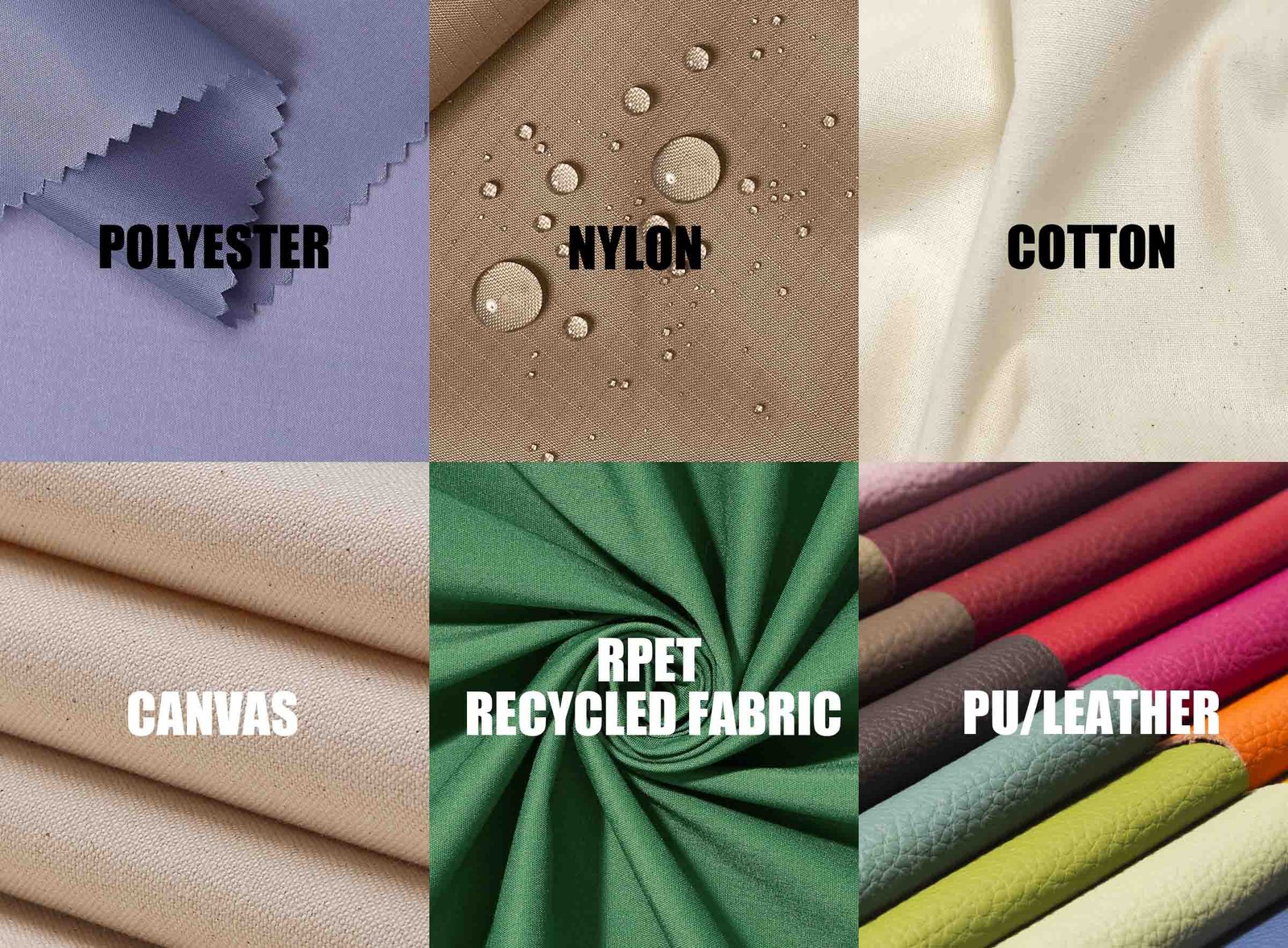
I have seen buyers spend heavily on custom visual details while choosing a weak base fabric. That is usually the wrong order. If the fabric feels thin, noisy, limp, or cheap, the whole product loses value fast.
Material should match the job
Here is how I usually frame it in conversations:
| Material type | Best for | Perceived feel | Notes |
|---|---|---|---|
| Polyester | Large-volume promo orders | Practical and cost-efficient | Good for printing and consistency |
| Recycled polyester | Sustainability-focused programs | Modern and brand-friendly | Claims should be verified by certification |
| Canvas or cotton blend | Lifestyle or gift-style kits | Softer and more casual | Heavier and sometimes less shape-stable |
| PU / faux leather accents | Premium visual effect | More polished | Best as detail, not always full body |
| Nylon | Lightweight daily use | Clean and functional | Can feel more retail if well finished |
What often matters more than the material name
A buyer may ask, “Should we use recycled fabric8 or canvas?” My follow-up is usually, “What feeling do you want when the user touches it?” Material quality is not just fiber category. It also includes:
- Fabric weight
- backing or reinforcement
- lining quality
- zipper smoothness
- edge finishing
- webbing thickness
- hardware color consistency
These factors often shape retail feel more than the headline material itself.
Small bags expose weak materials faster
Mini backpacks have less room to hide bad structure. If the fabric collapses too much, the silhouette looks sloppy. If it is too stiff, the bag feels awkward. If the zipper is poor, the user notices it immediately because access is tighter than on larger bags.
For many corporate orders, a smart middle path works best:
- durable outer fabric
- simple but clean lining
- basic reinforcement in stress points
- smooth zipper opening
- modest but consistent hardware finish
More expensive materials do not automatically create better perceived value9. Buyers usually get stronger results when the material supports the intended use, brand tone, and target cost range.
How Should Buyers Place Subtle Logos on Mini Backpacks?
Brand teams often begin with logo size, but users do not carry a bag just because the logo is big. In corporate mini backpacks, visual branding works best when it supports product use and keeps the item wearable in real life. If the branding is too loud, repeat use drops10.
Buyers should place subtle logos on mini backpacks where they stay visible but do not overpower the bag. Common choices include the front pocket, upper center panel, woven labels, zipper pulls, and tonal debossed patches. For many programs, restrained branding increases actual carry use.
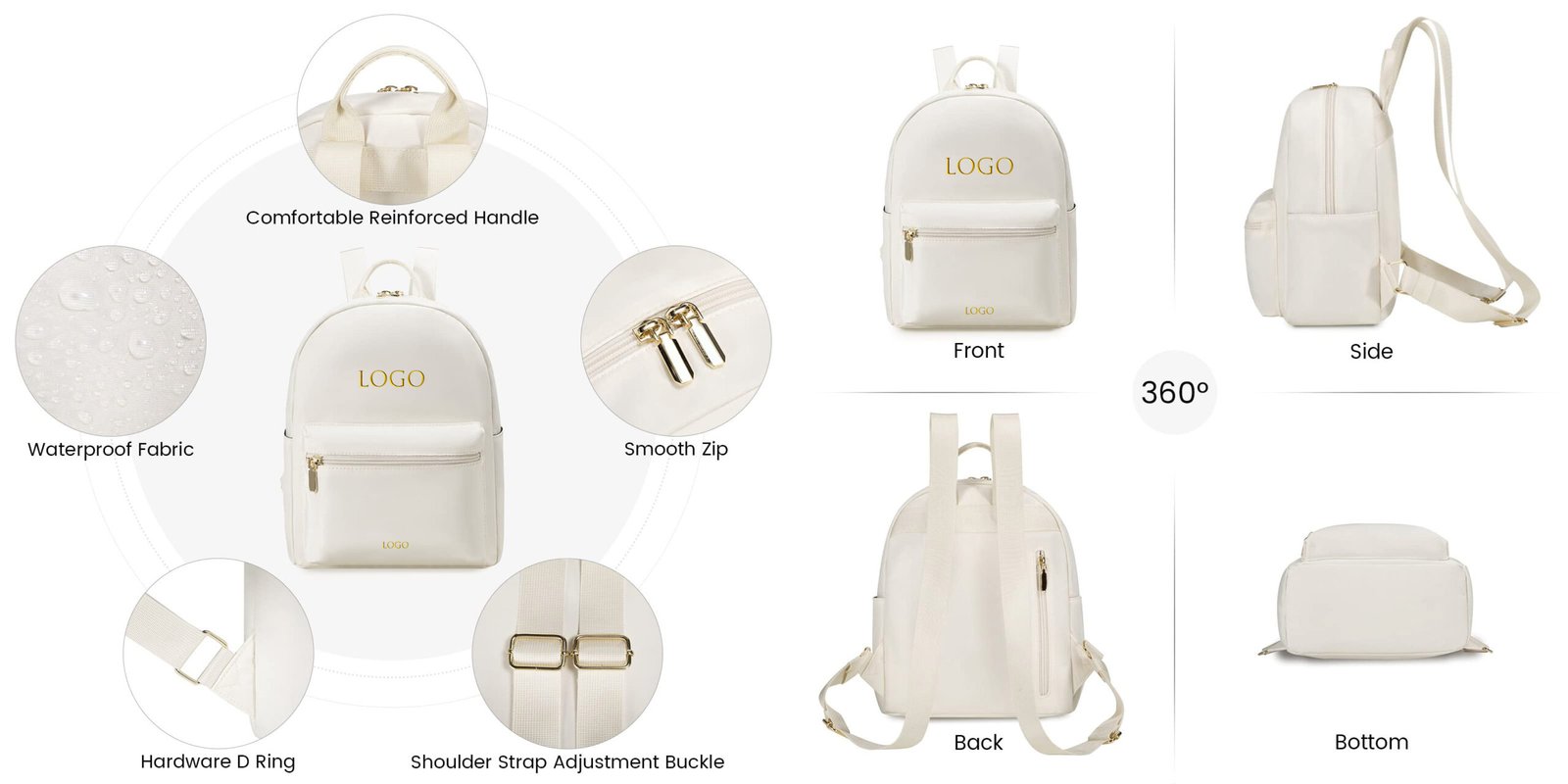
This is one of the most consistent patterns I see. Buyers often imagine that stronger branding means stronger impact. In practice, many end users prefer items that look close to retail products.
Good logo placement depends on viewing distance and context
Think about where the bag will be seen:
- At a conference
- in office circulation
- on public transit
- in a supermarket promotion
- as part of a welcome photo moment
A giant front logo may photograph well once. A subtle mark may get used 50 times after that. For many corporate gifts, the second outcome is better.
Practical logo options
1. Front center logo
- Best for clear brand visibility
- Easy to standardize
- Can feel too promotional if oversized
2. Small top patch
- Looks more retail-inspired
- Good balance of visibility and restraint
- Works well with woven or rubber labels
3. Front pocket corner mark
- Subtle and modern
- Good for lifestyle positioning
- Less dominant in photos
4. Zipper pull or hardware branding
- Very discreet
- Adds premium detail
- Limited for brand recognition alone
Color matters as much as size
I often suggest that buyers evaluate:
- contrast logo vs tonal logo
- matte vs glossy finish
- embroidery vs print vs patch
- logo position relative to seams and pocket curves
A common mistake is forcing a strong logo into a poor area just because it is “the center.” On mini backpacks, panel space is limited. Seams, zippers, pocket cuts, and curved surfaces can distort the logo or crowd the design.
In many buyer conversations, I recommend finalizing bag shape first and branding second. Once the front panel and pocket line are fixed, logo placement becomes much easier and more elegant.
A subtle logo does not mean weak branding. It often means better product judgment.
What Timeline Should Procurement Teams Plan for Bulk Orders?
Procurement teams often lose time not in production, but in indecision. They revise size, material, and branding too late, then the delivery window gets tight. For corporate mini backpacks, timeline planning should include not just manufacturing days, but also sampling, approvals, and shipping risk.
Procurement teams should plan bulk corporate mini backpack orders by working backward from the required in-hand date11. A realistic timeline usually includes concept confirmation, sampling, revisions, production, quality checks, and shipping buffer. The more custom the structure or material, the more lead time buyers should allow.
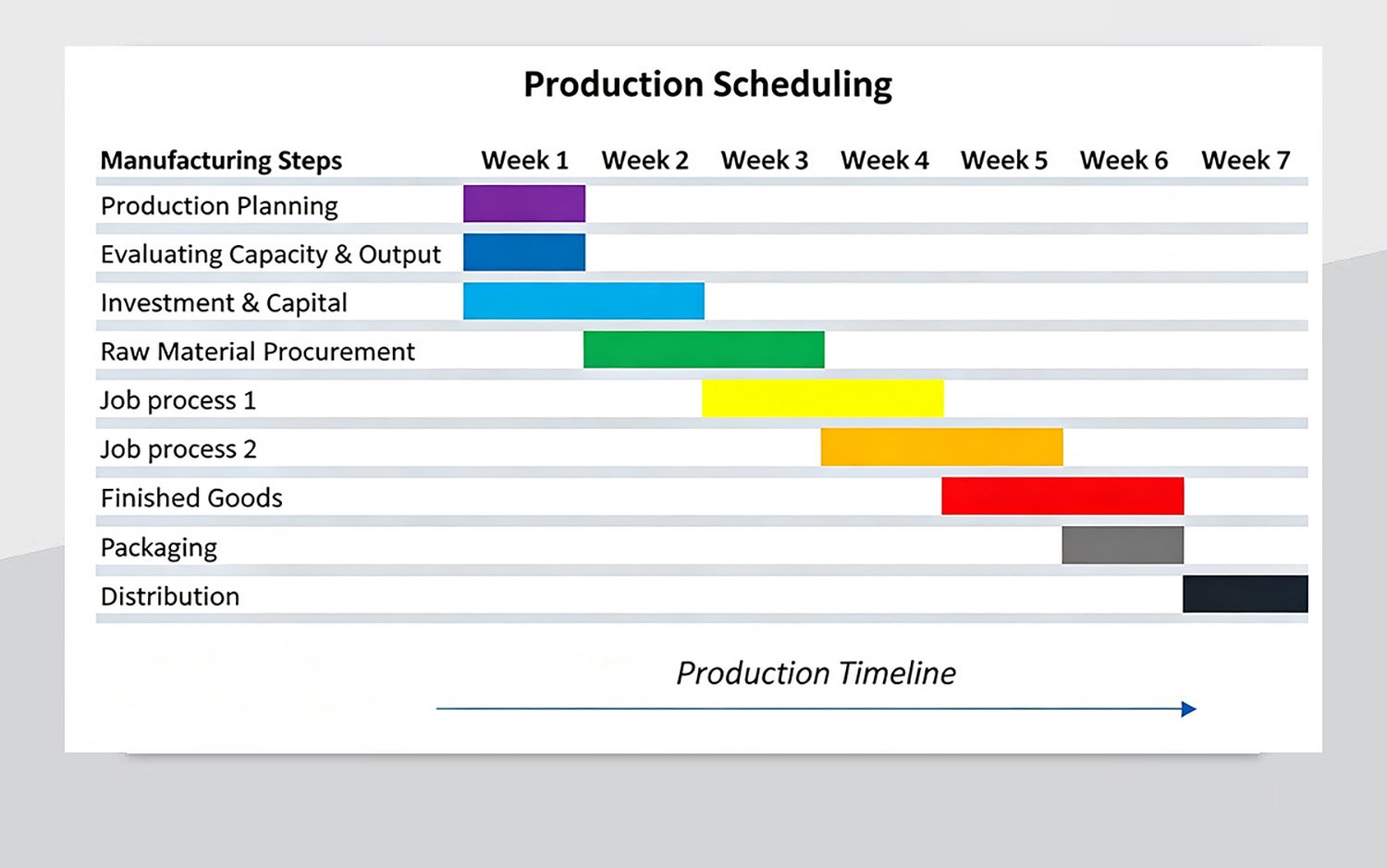
I have seen simple-looking projects become delayed because the team kept changing details that should have been decided first. Usually, the biggest delays come from unclear priorities, not from one factory process alone.
A practical planning framework
Here is a simple timeline model for many bulk projects:
| Stage | Typical focus | Risk if delayed |
|---|---|---|
| Requirement briefing | Use case, target price, quantity | Wrong product direction |
| Design/spec confirmation | Size, structure, material, logo method | Repeated revision cycles |
| Sample development | Fit, feel, usability check | Hidden problems found too late |
| Sample revision | Correcting pockets, shape, branding | Production pushback |
| Mass production | Cutting, sewing, printing, packing | Schedule compression |
| QC and shipment | Inspection and logistics | Missed delivery date |
What buyers should lock first
To save time, I suggest locking these items early:
- Use case
- target dimensions
- structure and opening style
- base material
- logo method
- packaging needs
- target ship date
If these points are still unclear during sampling, delays are very likely.
Build buffer for real-world issues
For many corporate orders, buyers should expect possible friction from:
- artwork revisions
- material color mismatch
- logo size adjustment
- sample approval delays across departments
- freight schedule changes
- holiday disruptions
I never think of timeline as just “factory lead time.” Procurement success depends on decision speed as much as production speed. A bag project moves faster when the buyer knows what truly matters and avoids over-customizing low-value details.
The most efficient orders are usually not the most complex ones. They are the ones with a clear purpose, disciplined spec, and realistic approval process.
Frequently Asked Questions
What is the most important customization in a corporate mini backpack?
For many buyers, the most important customization is size and structure. If the bag cannot hold the intended items comfortably, other upgrades lose value. I usually suggest confirming use case, capacity, and opening style before discussing decorative options.
Are mini backpacks good for employee welcome kits?
Yes, mini backpacks can work well for welcome kits if the contents are compact and curated. They often feel more modern than a pouch and more premium than a simple tote. The key is making sure the bag fits the actual welcome items without wasted space.
Which logo method looks best on mini backpacks?
The best logo method depends on brand style and bag material. Embroidery, woven labels, screen print, rubber patches, and debossed patches can all work. For many corporate mini backpacks, subtle and well-placed branding usually feels more retail-friendly than large loud logos.
Should buyers choose recycled materials for mini backpacks?
Recycled materials can be a strong option for sustainability-focused programs and modern brand positioning. Buyers should still evaluate hand feel, structure, durability, and certification support. A recycled fabric is only a good choice if it also performs well for the intended product use.
How far in advance should buyers place bulk orders?
That depends on customization level, quantity, approvals, and shipping method. In many cases, buyers should plan several weeks for development and production, plus extra buffer for revisions and transit. I always recommend starting earlier if the project includes custom structure or multiple approvals.
Conclusion
Corporate mini backpacks are worth customizing when buyers focus on purpose first, not feature count. In my experience, the smartest decisions usually involve size, structure, material, and simple usability before visual extras. That is what helps a mini backpack feel useful, branded, and budget-efficient at the same time. If you are planning a bulk OEM or ODM project, I recommend starting with the use case and item list, then building the spec around that. If you want help shaping a practical custom bag brief, you can reach out to me through Coraggio at https://coraggiobag.com/ or email info@coraggiobag.com.
"Backpack - Wikipedia", https://en.wikipedia.org/wiki/Backpack. Consumer and product-use research on carry formats indicates that backpacks typically provide greater organized carrying capacity and hands-free portability than small pouches, while tote bags offer simpler, less structured storage; this supports the article's positioning of mini backpacks as a functional middle-ground item. Evidence role: general_support; source type: research. Supports: Comparative research or industry-neutral analysis showing that backpacks generally offer greater carrying function than smaller pouches and may be perceived as higher-utility carry items than simple totes.. Scope note: Such evidence is usually about general bag categories rather than corporate mini backpacks specifically. ↩
"The Impact of Visual Elements of Packaging Design on Purchase ...", https://pmc.ncbi.nlm.nih.gov/articles/PMC11851823/. Studies of promotional merchandise commonly find that practical, reusable items with visible branding surfaces are more likely to be retained and valued by recipients, supporting the claim that compact backpacks can combine portability, brand visibility, and perceived value. Evidence role: general_support; source type: research. Supports: Evidence that practical promotional products with repeat-use potential and visible brand area tend to generate stronger value perception and retention than purely decorative items.. Scope note: Most available studies address promotional products broadly rather than mini backpacks as a distinct subcategory. ↩
"Backpack", https://en.wikipedia.org/wiki/Backpack. Fashion and consumer trend analyses have described small or mini backpacks as a youth- and young-adult-oriented accessory category rather than exclusively a children's item, supporting the article's claim about demographic fit. Evidence role: general_support; source type: research. Supports: Evidence that smaller backpack formats have been adopted in youth and young-adult fashion without being limited to children's products.. Scope note: Trend analysis may reflect fashion context more than corporate gifting outcomes. ↩
"More Expensive, More Attractive? The Effect of Pricing on Gift Evaluation", https://pmc.ncbi.nlm.nih.gov/articles/PMC9005789/. Consumer-behavior research on bundle evaluation suggests that recipients often infer higher value from gift sets containing larger or more evidently usable items, which supports the article's statement that a mini backpack may elevate perceived set value compared with small accessories. Evidence role: mechanism; source type: paper. Supports: Research on perceived value and packaging or bundle evaluation showing that larger, more usable items can raise recipient value perceptions relative to smaller accessories.. Scope note: The mechanism is general to bundle perception and may not directly measure corporate gift kits. ↩
"Comparison of features, usability, and load carrying design of ...", https://www.imse.iastate.edu/files/2014/03/EagleZoe-thesis.pdf. Human-factors and product-design research indicates that dimensions, shape, and access geometry are primary determinants of usability, supporting the article's claim that size and shape are high-value customization decisions for small carry products. Evidence role: mechanism; source type: research. Supports: Human-factors or product-design evidence showing that form factor, dimensions, and access strongly shape usability outcomes.. Scope note: The evidence is typically about usability principles across products rather than corporate mini backpack procurement specifically. ↩
"The Application of Human-Centered Design Approaches in Health ...", https://pmc.ncbi.nlm.nih.gov/articles/PMC8691403/. Design studies on access and storage products show that opening geometry, internal partitioning, and structural stability can significantly change ease of loading, retrieval, and packing efficiency independent of overall exterior dimensions, supporting the article's claim about structural performance differences. Evidence role: mechanism; source type: paper. Supports: Design research showing that internal layout, opening size, and structural stability can materially affect access, packing efficiency, and perceived usability even when external size is fixed.. Scope note: This support is based on general product-design principles rather than a controlled study of mini backpacks alone. ↩
"Hand-Feel Touch Cues and Their Influences on Consumer ...", https://pmc.ncbi.nlm.nih.gov/articles/PMC6678767/. Textile education sources note that the performance and appearance of bags depend not only on fiber type but also on construction variables such as fabric weight, backing, lining, reinforcement, and hardware, supporting the article's claim that multiple material options can achieve a retail-quality feel when properly specified. Evidence role: general_support; source type: education. Supports: Textile and product-construction sources explaining that bag performance and perceived quality depend on both material class and construction details such as fabric weight, lining, reinforcement, and hardware.. Scope note: These sources explain material behavior and construction factors but may not rank the cited materials for all corporate-use scenarios. ↩
"Green Guides", https://www.ftc.gov/news-events/topics/truth-advertising/green-guides. Textile standards bodies and sustainability guidance documents state that recycled-content claims for fabrics are more credible when verified through recognized certification and chain-of-custody systems, supporting the article's note that such claims should be verified. Evidence role: expert_consensus; source type: institution. Supports: Authoritative guidance that recycled textile content claims should be verified through recognized certification or chain-of-custody systems.. Scope note: Certification validates claims about material content and traceability, not whether a specific bag will perform better in use. ↩
"The Influence of Price on Purchase Intentions: Comparative Study ...", https://pmc.ncbi.nlm.nih.gov/articles/PMC7911682/. Consumer research on price-quality inference shows that higher input cost does not reliably translate into higher perceived value when usability, design coherence, and quality cues are weak, supporting the article's claim that more expensive materials do not automatically improve recipient value perception. Evidence role: mechanism; source type: paper. Supports: Behavioral or consumer research showing that perceived value depends on fit, usability, and overall quality cues rather than price or material cost alone.. Scope note: The evidence addresses general consumer evaluation mechanisms rather than mini backpack gifting specifically. ↩
"Consumer self-concept and digitalization: what does this mean ...", https://pmc.ncbi.nlm.nih.gov/articles/PMC9615632/. Research on self-presentation and branded merchandise suggests that recipients are more likely to use items that align with personal style and less likely to repeatedly use products with overly conspicuous branding, supporting the article's claim about loud logos reducing repeat use. Evidence role: mechanism; source type: research. Supports: Evidence that people are less likely to use branded items when the branding conflicts with personal identity, aesthetics, or public self-presentation preferences.. Scope note: The support is behavioral and contextual; it may not quantify the exact effect size for mini backpacks. ↩
"Schedule Assessment Guide", https://www.gao.gov/assets/d1689G.pdf. Project-management guidance commonly recommends reverse scheduling from a fixed completion or delivery date to map required milestones, dependencies, and contingency time, supporting the article's advice to plan bulk orders by working backward from the in-hand date. Evidence role: expert_consensus; source type: education. Supports: Project-management guidance endorsing reverse scheduling from a fixed deadline to define milestones, buffers, and dependencies.. Scope note: This guidance is general to project planning and procurement workflows rather than tailored to bag manufacturing alone. ↩