Cosmetic brush roll bags often get specified too vaguely. I often see buyers send only a size, a logo, and maybe a target price. That creates confusion, extra sample rounds, and avoidable cost changes. The better solution is to define how the bag must organize, protect, and carry brushes before discussing visual details.
Buyers should specify cosmetic brush roll bags based on brush count, brush length range, brush-head protection, opening layout, rolled thickness, closure method, and cleanable materials. In my experience, these functional details matter more than size and logo in the first round because they directly affect usability, quotation accuracy, and sample success.
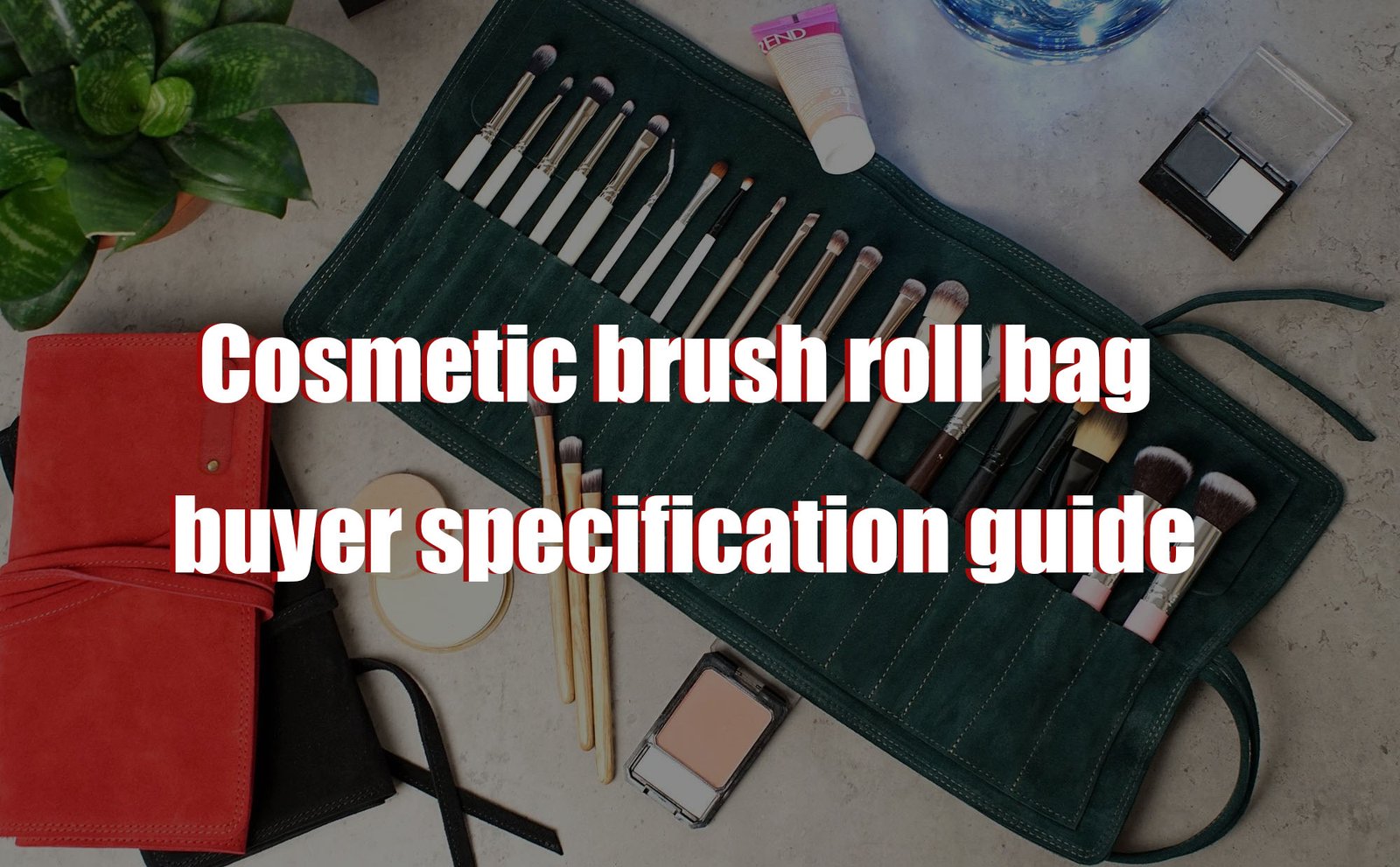
When I handle buyer inquiries, this is where many projects slow down. The issue is not that the product is complex. The issue is that a cosmetic brush roll bag is a use-based organizer, not a simple pouch. Once that point becomes clear, the whole specification process gets easier.
What Is a Cosmetic Brush Roll Bag?
A lot of buyers treat this item like a normal makeup bag. That creates problems fast. If the product must hold brushes in an orderly, protected way, then a flat pouch structure will not solve the real need. The right approach is to define the bag by function first.
A cosmetic brush roll bag is a task-based brush organizer that opens flat for easy access and rolls closed for compact carrying1. It usually includes brush slots, a flap or cover for brush heads, and a closure such as a tie, strap, or snap. Its structure depends on the brush set, not just the outer dimensions.
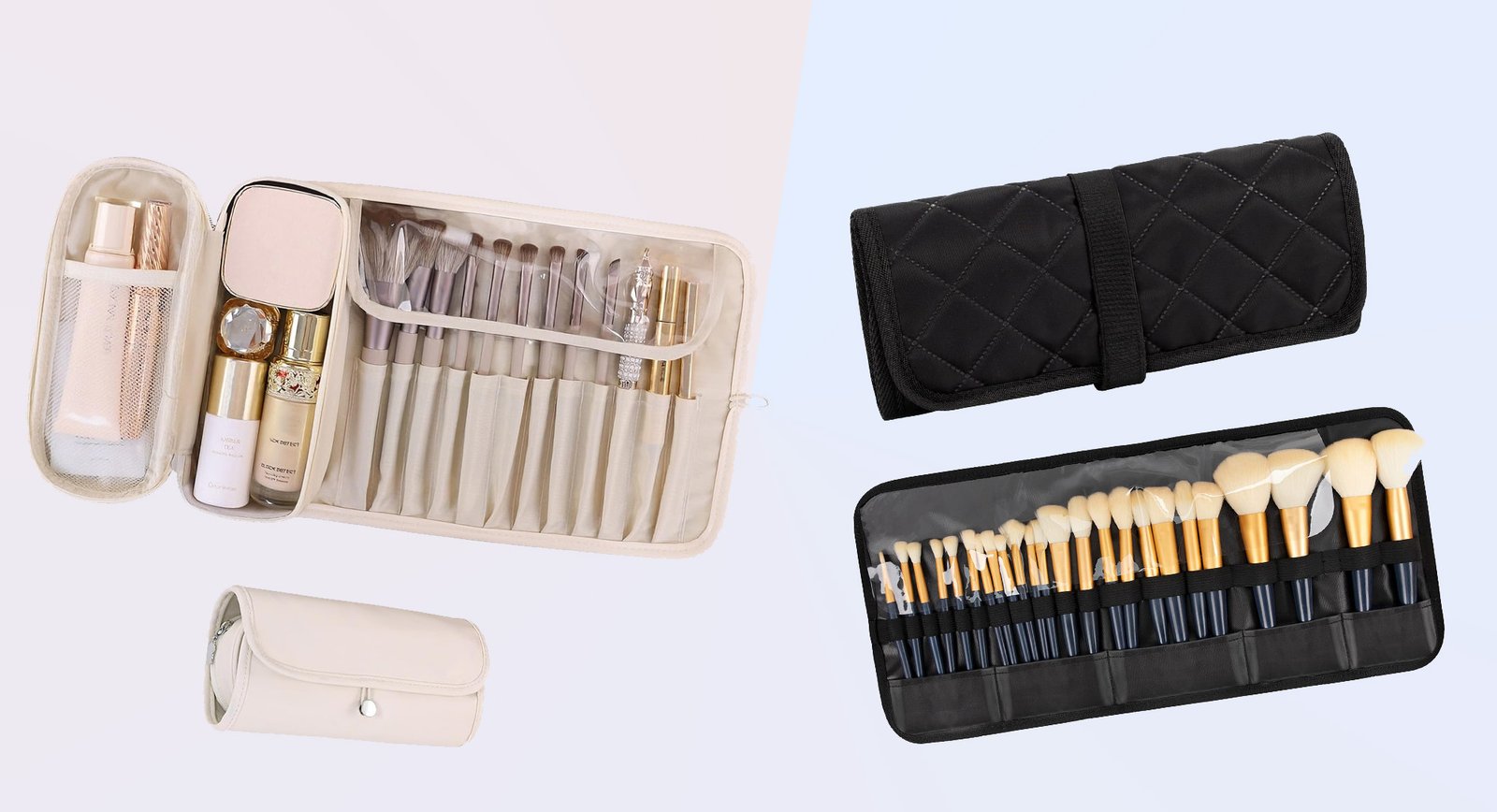
In buyer inquiries we often see one common mistake: the buyer says, “I need a cosmetic bag for brushes,” but the reference image is actually a roll organizer with slot spacing, head protection, and a closure system. Those are different products with different cost drivers.
Why this product is not the same as a standard cosmetic bag
A standard cosmetic pouch is mainly about storage volume2. A cosmetic brush roll bag is about brush control. That difference affects almost everything:
- Internal structure
- Brush slot count
- Slot width variation
- Protective flap height
- How thick the bag becomes when rolled
- How secure the closure must be
If I only get bag length and width, I still cannot judge whether the design will work. I need to understand the brush assortment.
The real starting point: the brush set
For quoting and sampling, suppliers usually need these tool-related inputs first:
- How many brushes will go inside?
- What is the shortest and longest brush length?
- Are handles mostly slim, mixed, or bulky?
- Do brush heads need full coverage or partial coverage?
- Will users carry it daily, use it at home, or include it in gift sets?
These answers shape the product more than branding at the beginning.
What buyers should clarify in the first round
I usually advise buyers to separate must-have functional specs from later visual refinements.
| Priority | Must clarify first | Can refine later |
|---|---|---|
| High | Brush count | Logo technique |
| High | Brush length range | Pantone shade |
| High | Slot layout | Decorative trim |
| High | Brush-head protection | Packaging insert graphics |
| High | Closure type | Exact label placement |
| Medium | Cleanable lining | Edge stitch styling |
That order helps reduce back-and-forth. It also prevents a sample that looks good in photos but fails in use.
In real sampling discussions, the most misleading sample is not the ugly one. It is the pretty one that cannot hold the actual brushes properly.
How Many Brush Slots Should Buyers Specify?
Many buyers ask for “about 10 to 12 slots” without sharing the actual brush mix. That sounds reasonable, but it often causes fit problems. If the slot plan does not match the real brush set, some brushes will fall out, bunch together, or create an oversized roll.
Buyers should specify brush slots based on the actual brush assortment, not a generic number. In most projects, the supplier needs the total brush count, the approximate diameter mix, and whether slot widths should be uniform or mixed. This helps avoid wasted space, overcrowding, and misleading samples.
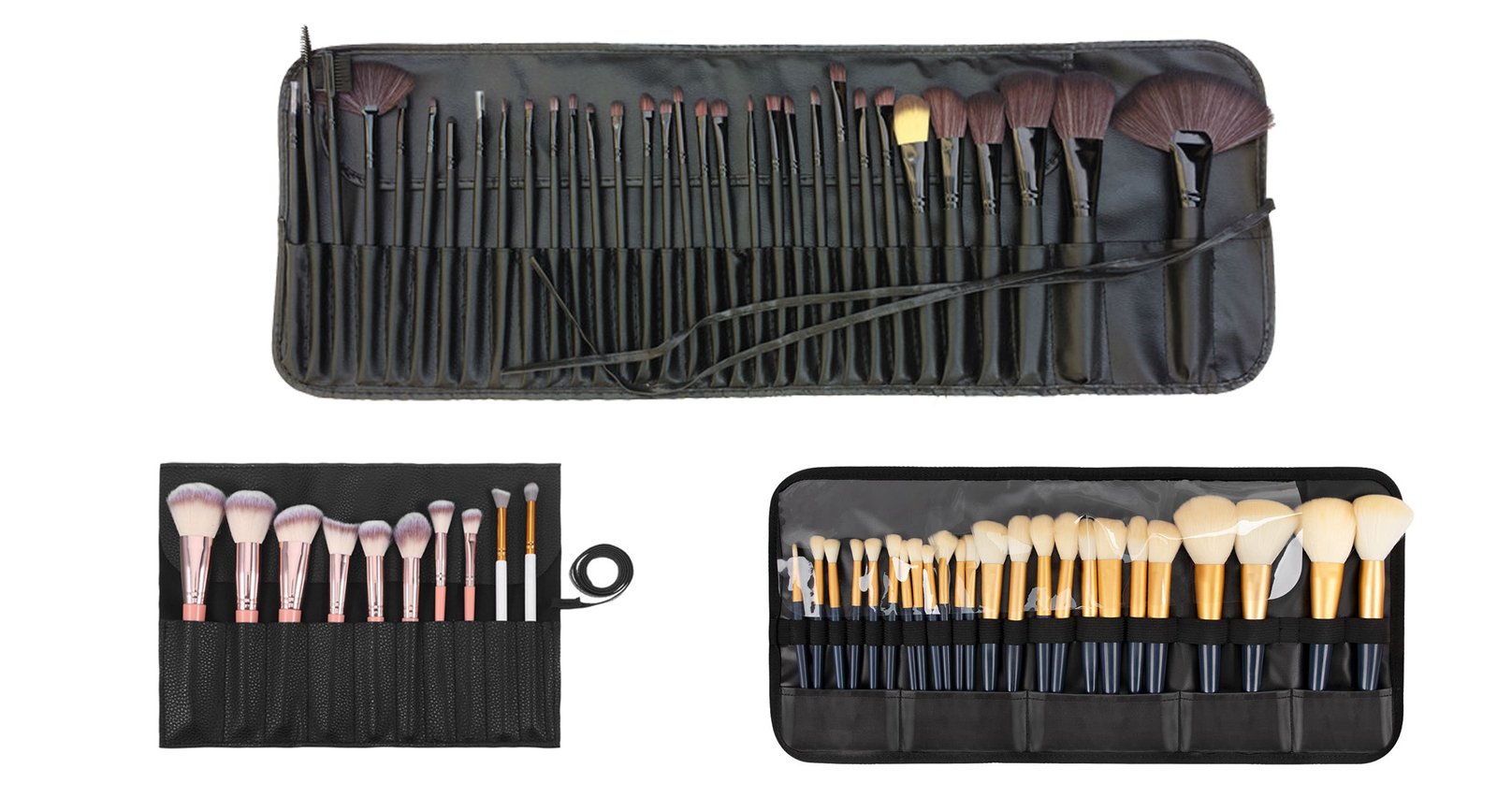
I have seen buyers request 15 slots because it “sounds premium,” but their actual set includes only 9 brushes. The result is a loose, floppy organizer. I have also seen the opposite case: 8 slots for a mixed brush set with thick face brushes, where the roll becomes too tight when closed.
Slot count is not the same as product quality
More slots do not always mean better value. The right number depends on:
- Brush set size
- Size variation between eye brushes and face brushes
- Whether one slot can hold one tool only
- Whether there should be extra room for future assortment changes
Uniform slots vs mixed-width slots
This is a key choice that many buyers forget to mention.
Uniform slots work best when:
- The brush set is consistent
- The bag is part of a simple retail SKU
- Cost control matters
- Visual layout should look neat and balanced
Mixed-width slots work better when:
- The set includes large powder or blush brushes
- The product needs a more practical fit
- Premium usability matters more than perfect symmetry
| Slot type | Best for | Pros | Cons |
|---|---|---|---|
| Uniform | Similar brush sizes | Simple production, clean look | May not fit large brushes well |
| Mixed-width | Varied brush assortment | Better usability, better retention | More spec work, slightly more complexity |
What I usually ask buyers to provide
For a usable first sample, I prefer these details:
- Total number of brushes
- Longest brush length
- Shortest brush length
- Number of thick-handle brushes
- Number of slim brushes
- Need for spare slots or not
- Whether each slot should fit tightly or loosely
If the buyer has no final brush set yet, I suggest creating a simple planning range, such as:
- 4 slim eye brushes
- 3 medium brushes
- 2 large face brushes
- 1 spare tool slot
That is already much better than saying “10 slots, please.”
Rolled thickness matters too
This point gets ignored often. A cosmetic brush roll bag may look compact when open, but once loaded and rolled, thickness changes a lot. More slots can create:
- A bulky roll
- Uneven shape
- Closure strain
- Higher packing volume
That means slot planning affects both user experience and shipping efficiency3. For retail beauty brands, this can even affect carton quantity and display planning.
Which Linings Are Easier to Clean?
Buyers often choose lining by color or price first. Then they realize later that powder, foundation residue, and brush dust make the bag look dirty very fast. That creates a product complaint issue, even if the sewing quality is fine.
The easiest linings to clean are usually wipeable synthetic options such as PU-coated, polyester with a smooth finish, or similar low-absorption materials4. For cosmetic brush roll bags, buyers should prioritize stain visibility, wipeability, and long-term feel, not just lining cost or softness.
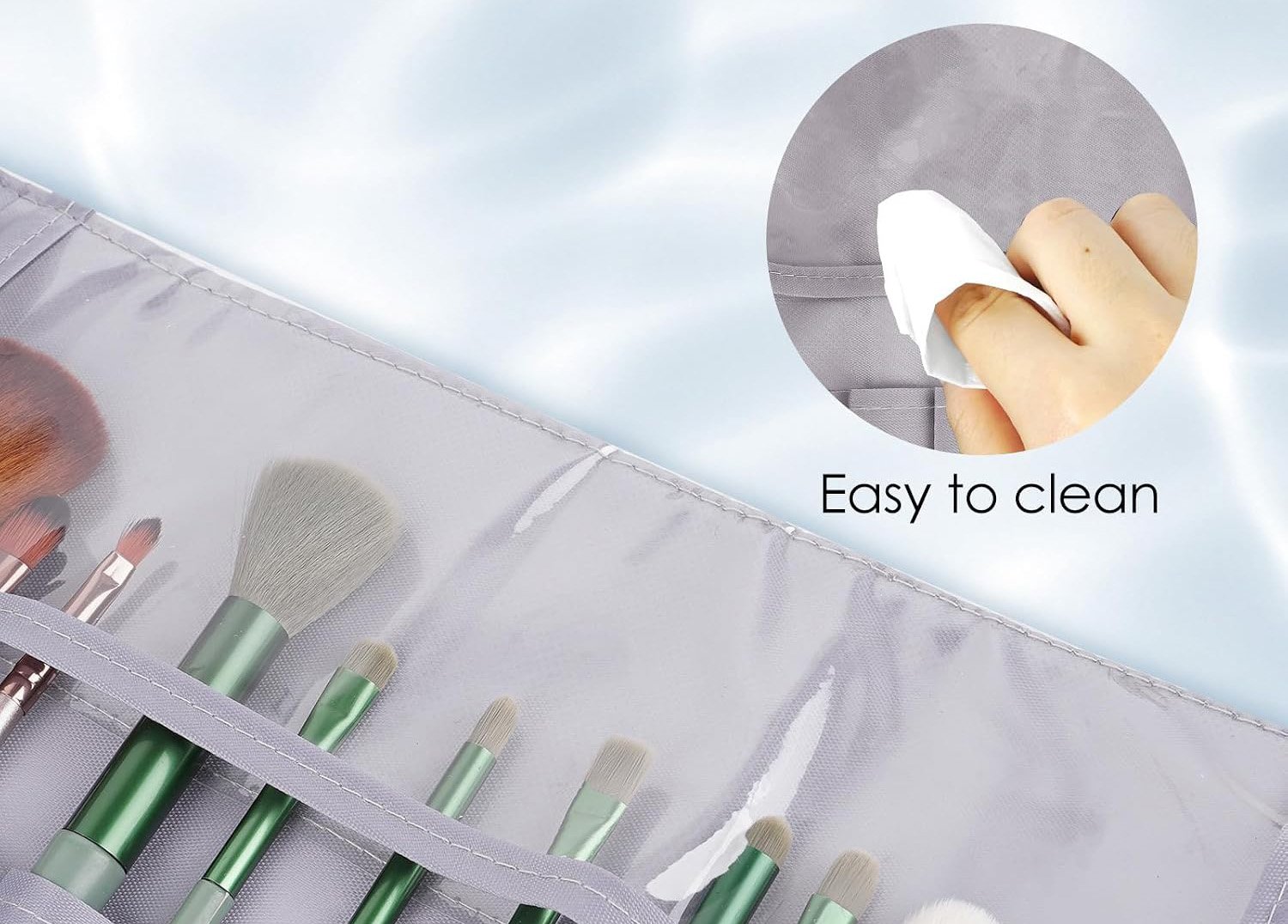
In buyer inquiries we often see a mismatch between the outer look and inner practicality. A brand may love a soft, elegant lining, but if it traps powder and oil marks, the product quickly looks worn.
What makes a lining easier to maintain?
A practical lining usually has these traits:
- Low absorbency
- Smooth surface
- Easy wipe performance
- Resistance to powder buildup
- Less visible staining
That does not mean every project needs the same lining. It means the buyer should match the lining to the expected use.
Common lining options for brush roll bags
| Lining type | Cleanability | Feel | Typical use note |
|---|---|---|---|
| Smooth polyester | Good | Light, common | Cost-effective and practical |
| PU-coated lining | Very good | Slightly structured | Easier to wipe, useful for messy use |
| Nylon lining | Good | Durable, smooth | Often reliable for repeated handling |
| [Cotton lining | Fair]5 | Soft, natural | Looks nice, but stains more easily |
Why lining affects repeat use
A cosmetic brush roll bag gets handled differently from a standard pouch. Users remove brushes one by one. They put them back repeatedly. Powder residue and brush oils collect in the same areas6. So the lining becomes part of the product experience.
I usually tell buyers to think about these questions:
- Will users clean the bag often?
- Will brushes be inserted dry only, or sometimes after immediate use?
- Should stains be hidden by darker lining colors?
- Is a wipe-clean finish more important than a soft hand feel?
My practical advice for first-round sampling
If a buyer is still deciding materials, I recommend narrowing the first sample to one of these directions:
Cost-focused practical version
Smooth polyester lining, darker color, simple cleaning.Premium easy-care version
PU-like or coated wipeable lining, better stain resistance.Natural-look version with warning
Cotton-feel lining only if appearance matters more than easy maintenance.
This helps buyers compare the trade-offs clearly. It is much better than choosing a lining only from a swatch book photo.
How Can Beauty Brands Customize Brush Roll Bags?
Some brands jump straight into logo size, zipper pull style, or printed artwork. Those details matter, but they should come after the functional brief. Otherwise the sample may match the branding and still fail at the actual job.
Beauty brands can customize cosmetic brush roll bags through layout, materials, closure style, slot configuration, protective flap design, logo application, color, and packaging7. The most effective customization starts with usage needs first, then adds branding details that support the product’s positioning and price target.
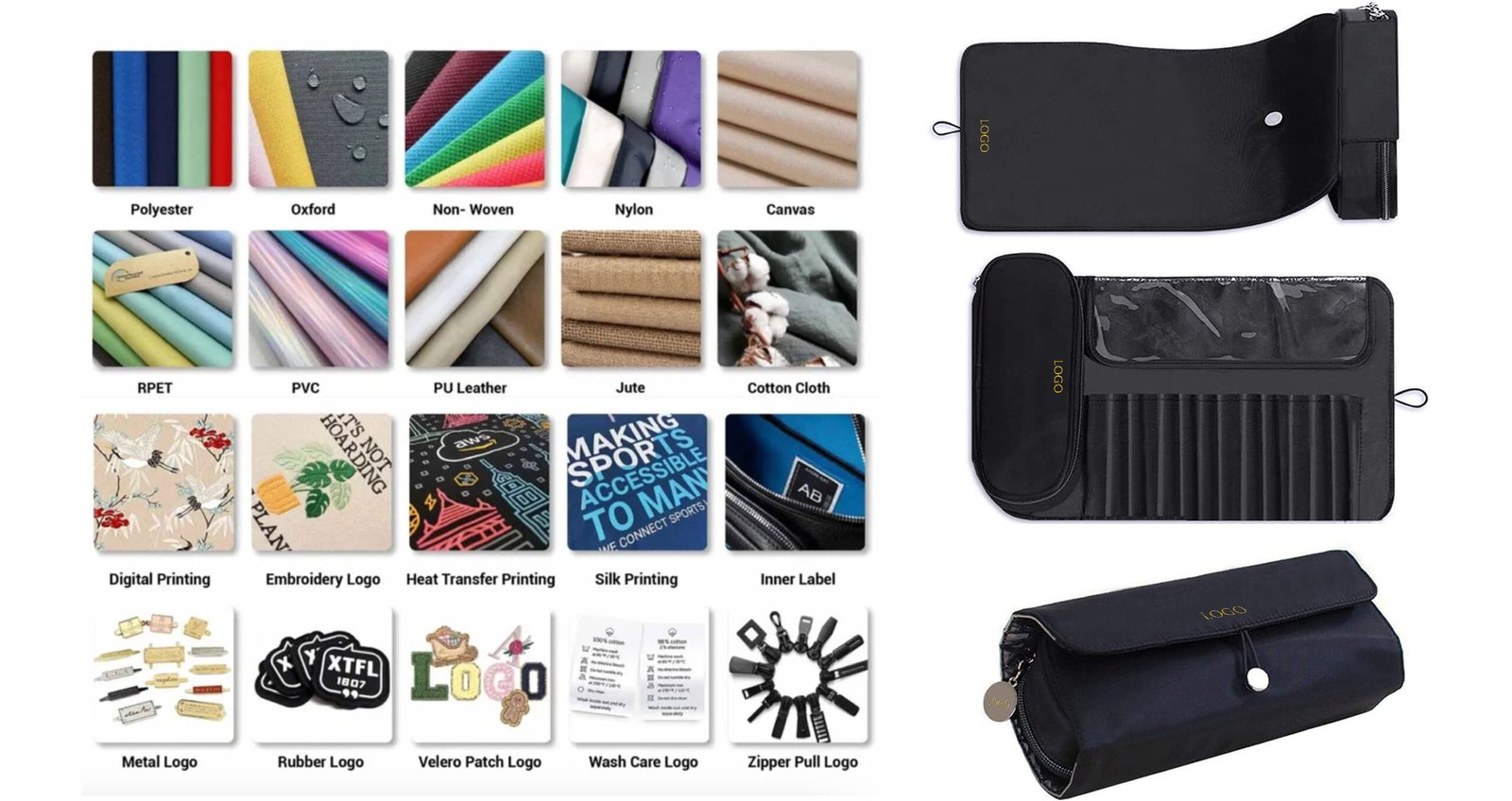
I like customization when it solves a real business need. In B2B projects, good customization should improve at least one of these outcomes:
- Better shelf appeal
- Better user convenience
- Better cost control
- Better brand recognition
- Better fit for the brush assortment
Functional customization comes first
For a cosmetic brush roll bag, I would prioritize these custom points first:
1. Closure method
Options often include:
- Tie ribbon
- Elastic band
- Snap tab
- Buckle strap
- Hook-and-loop closure
Each option changes convenience and visual feel. A premium gift set may prefer a refined tie or snap. A practical salon-oriented item may prefer faster closure.8
2. Protective flap design
The flap helps keep brush heads cleaner and more protected. Buyers should clarify:
- No flap
- Half flap
- Full flap
- Fold-over flap with fixed seam
This affects both function and sewing complexity.
3. Carrying format
Some buyers want only a roll. Others want:
- A carry handle
- A hanging loop
- A removable strap
- A pouch-plus-roll hybrid concept
Visual customization comes second
Once the structure is right, beauty brands can refine presentation:
- Screen print logo
- Heat transfer
- Embossed patch
- Woven label
- Metal logo plate
- Custom color matching
- Printed pattern lining
- Retail gift box
A simple way to separate priorities
| Stage | Customization focus | Why it matters |
|---|---|---|
| Stage 1 | Slots, flap, closure, materials | Determines usability and quote accuracy |
| Stage 2 | Color, logo, trim, packaging | Refines branding and market positioning |
That order saves time. It also prevents sample waste.
I often see projects improve as soon as the buyer stops asking “How can it look?” first and starts asking “How should it work?” first.
What Should Buyers Check in Pre-Production Samples?
This is where many avoidable mistakes can still be caught. Some buyers approve a pre-production sample by looking mainly at color and logo. Then bulk production reveals fit issues, awkward rolling, or weak closure tension9.
In pre-production samples, buyers should check whether the cosmetic brush roll bag works with the real brush set, rolls evenly, closes securely, protects brush heads, feels easy to clean, and matches the approved construction details. Function should be checked before visual perfection.

I always believe this step should simulate real use as much as possible. A pre-production sample is not only for confirming appearance. It is the last low-cost chance to catch structural mismatch.
The most important sample checks
1. Test with actual brushes
This sounds obvious, but buyers do not always do it. Use the real brushes if possible. If not, use a size-equivalent set.10
Check:
- Does each brush enter easily?
- Do slim brushes slip out?
- Do thick brushes distort the panel?
- Does the flap cover the heads properly?
2. Test open-to-roll behavior
A cosmetic brush roll bag must work in both states.
Ask:
- Does it lie flat when opened?
- Does it roll naturally or fight back?
- Does the closure hold without overpulling?
- Is the rolled size still practical?
3. Check sewing and spacing consistency
Even if the design is correct, poor execution can still ruin function.
Look for:
- Crooked slot stitching
- Uneven slot width
- Misaligned flap edge
- Weak stress points at closure attachment
A useful pre-production checklist
Here is a simple list I would use:
- Brush count fits confirmed
- Longest brush fully protected
- Shortest brush still retained
- Roll shape acceptable when full
- Closure length correct
- Lining acceptable after wipe test
- Logo position correct
- Material matches approved spec
- Edge finishing clean
- Packaging method confirmed
Why this step protects budget and timeline
When missing details reach bulk production, the risks rise quickly:
- Rework cost
- Delayed shipment
- Packaging mismatch
- Buyer complaint
- Inconsistent retail presentation
For procurement teams, this is not only a quality issue. It is a schedule control issue. If the sample approval criteria are practical and clear, the order usually moves much more smoothly.
Frequently Asked Questions
Should I send only dimensions for a cosmetic brush roll bag?
No. Dimensions alone are not enough for a cosmetic brush roll bag. I suggest sending brush count, brush length range, slot preference, flap requirement, closure idea, and lining expectation. These details help the supplier quote more accurately and prepare a more useful sample.
Is a brush roll bag better than a zipper cosmetic pouch?
It depends on the use case. A brush roll bag is usually better for organized brush storage and easy visibility. A zipper pouch is better for mixed cosmetics and loose items. If brushes are the main focus, the roll format often works better.
What is the best closure for cosmetic brush roll bags?
There is no single best closure. Tie straps look refined. Elastic closures are fast and practical. Snap tabs can feel premium. I usually recommend choosing based on target user, loaded thickness, and desired brand positioning.
Should the lining be dark or light?
Dark lining often hides powder marks better and looks cleaner over time11. Light lining can make the inside feel more premium or easier to inspect visually. For frequent use, I usually prefer a practical darker wipeable lining.
What causes the most sample revisions?
In my experience, the biggest cause is missing usage information. Buyers often omit brush count, brush size range, and protection level. Then the sample looks acceptable at first glance but does not perform well with the actual brush set.
Conclusion
A good cosmetic brush roll bag specification starts with how the brushes will be used, stored, and protected. I would always clarify brush count, size range, slot layout, flap coverage, closure, and lining before focusing on logo or decorative details. That order reduces quoting errors, sample revisions, and bulk production surprises. If you are sourcing custom brush roll bags for your beauty brand, feel free to contact me through Coraggio at https://coraggiobag.com/ or info@coraggiobag.com/ and I can help you turn a rough idea into a clearer OEM or ODM brief.
"Toolbox", https://en.wikipedia.org/wiki/Toolbox. Reference works and collection descriptions of roll-up cases describe them as organizers that lay open for access to individual tools and are then rolled into a compact form for storage or transport. Evidence role: definition; source type: encyclopedia. Supports: That roll-up organizers characteristically open flat for access and are rolled for compact storage or transport.. Scope note: Such sources usually describe roll-up organizers generally rather than cosmetic brush roll bags specifically. ↩
"Toiletry bag", https://en.wikipedia.org/wiki/Toiletry_bag. General reference descriptions of cosmetic and toiletry pouches characterize them as containers for storing and carrying personal-care items, supporting the distinction between volume-based storage and tool-specific organization. Evidence role: general_support; source type: encyclopedia. Supports: That cosmetic pouches or toiletry bags are generally defined as flexible containers intended for carrying or storing personal-care items rather than organizing individual tools by fixed positions.. Scope note: This supports the category contrast at a general level and does not establish that every pouch design prioritizes volume over other functions. ↩
"PACKING AND SHIPPING INSTRUCTIONS", https://www.usap.gov/logistics/documents/tl-man-0002.pdf. Packaging and logistics literature shows that packed dimensions and volume influence transport efficiency through space utilization, while ergonomics research indicates that organized layouts affect ease of access and use; together these findings support the claim that slot planning can influence both user experience and shipping outcomes. Evidence role: mechanism; source type: research. Supports: That internal product layout can affect usability, while package size and packed volume affect shipping efficiency through cube utilization and transport density.. Scope note: The support is mechanistic and contextual rather than a direct test of cosmetic brush roll bags. ↩
"The Future of Functional Clothing for an Improved Skin and Textile ...", https://pmc.ncbi.nlm.nih.gov/articles/PMC8226598/. Textile research on coated and synthetic fabrics reports lower absorbency and improved surface cleanability relative to absorbent untreated textiles, supporting the use of wipeable synthetic linings where residue removal is a priority. Evidence role: mechanism; source type: paper. Supports: That coated or low-absorbency synthetic textile surfaces generally resist liquid uptake and are easier to wipe clean than more absorbent fabrics.. Scope note: Cleaning performance depends on the specific coating, weave, finish, and the type of cosmetic residue. ↩
"Particle Shedding from Cotton and Cotton-Polyester Fabrics in the Dry ...", https://pmc.ncbi.nlm.nih.gov/articles/PMC10421144/. Comparative textile studies commonly find that cotton absorbs more moisture and can retain staining more readily than polyester or coated synthetic fabrics, which supports rating cotton linings as less easy to clean in repeated-use cosmetic applications. Evidence role: general_support; source type: paper. Supports: That cotton is generally more absorbent and more prone to retaining stains than polyester or coated synthetic fabrics.. Scope note: Actual cleanability varies with fabric construction, dyeing, finishing treatments, and the contaminant involved. ↩
"Assessing the Levels and Types of Bacterial Contamination in ... - PMC", https://pmc.ncbi.nlm.nih.gov/articles/PMC12074853/. Studies on cosmetic brush hygiene document the accumulation of cosmetic residues and skin oils on brushes during repeated use; this provides contextual support for the expectation that storage surfaces contacting the same brush areas will also accumulate residue over time. Evidence role: mechanism; source type: research. Supports: That cosmetic brushes accumulate product residue, oils, and microorganisms during use, implying that storage surfaces in repeated contact zones can collect similar residues.. Scope note: The evidence is indirect because most studies measure contamination on brushes rather than on brush roll bag linings. ↩
"Packaging Design", https://www.fitnyc.edu/academics/academic-divisions/art-and-design/packaging-design/index.php. Educational and industrial design sources on soft goods development describe customization across structural layout, material selection, closure systems, visual branding, and packaging, supporting the article's list of major customization variables. Evidence role: general_support; source type: education. Supports: That soft goods products are commonly customized through structural, material, closure, aesthetic, and packaging variables.. Scope note: Such sources usually address soft goods broadly rather than cosmetic brush roll bags as a distinct product category. ↩
"Reflections on the Cloak of Convenience - PMC - NIH", https://pmc.ncbi.nlm.nih.gov/articles/PMC12575533/. Consumer and product-design research indicates that closure systems can affect both perceived product quality and ease of use, providing contextual support for differentiating closure choices by premium presentation versus operational convenience. Evidence role: general_support; source type: research. Supports: That closure design can influence perceived quality and convenience, with some closure types associated more strongly with aesthetic refinement and others with speed of access.. Scope note: The relationship is interpretive and category-dependent rather than a direct proof for cosmetic brush roll bags or salon users specifically. ↩
"Functional testing (manufacturing)", https://en.wikipedia.org/wiki/Functional_testing_(manufacturing). Quality-management and product-development literature consistently treats prototype and pre-production testing as a means to detect fit, performance, and manufacturability problems before scale-up, supporting the warning that untested issues may emerge during bulk production. Evidence role: expert_consensus; source type: research. Supports: That prototype and pre-production testing are used to identify functional and manufacturability issues before full-scale production, reducing downstream defects and rework.. Scope note: The evidence supports the process principle generally rather than documenting these exact failure modes for cosmetic brush roll bags. ↩
"Testing and Labeling Pertaining to Product Certification ...", https://www.federalregister.gov/documents/2012/12/05/2012-29204/testing-and-labeling-pertaining-to-product-certification-regarding-representative-samples-for. Quality-testing standards and guidance generally require representative test specimens and use conditions when evaluating fit and performance, supporting the use of actual brushes or size-equivalent substitutes during pre-production assessment. Evidence role: expert_consensus; source type: institution. Supports: That product testing should be conducted with representative specimens or actual-use equivalents when evaluating fit and functional performance.. Scope note: The support comes from general testing principles rather than a cosmetic-brush-specific standard. ↩
"High visibility colored fabrics for normal trichromats and individuals ...", https://pmc.ncbi.nlm.nih.gov/articles/PMC9480988/. Research on visual detection of surface contamination shows that color and contrast influence how readily marks are seen, supporting the claim that darker linings may reduce the visibility of certain powder residues and appear cleaner for longer. Evidence role: mechanism; source type: paper. Supports: That surface color influences the visual detectability of soils or marks, which can affect perceived cleanliness over time.. Scope note: Visibility depends on the residue color and lighting conditions; light-colored residues can remain conspicuous on dark materials. ↩