Backpack trends look exciting, but wrong choices create dead stock, late shipments, and price pressure before your private-label line even launches.
In 2026, I believe backpack buyers should watch trends that can become stable products. The most useful trends are recycled materials, lightweight commuter designs, multi-compartment structures, custom branding, and sustainable packaging1. I also check cost, MOQ, quality control, and delivery risk before I suggest any trend for bulk orders.
I look at backpack trends from the factory side, not only from the catalog side. I see buyer inquiries, sample changes, material delays, logo tests, cost targets, and bulk inspection problems. So I do not ask only, “Is this backpack style popular?” I ask, “Can I make it stable, repeat it, ship it on time, and keep the buyer’s margin safe?” That is the real question for 2026.
What Backpack Styles Will Buyers Source Most in 2026?
New backpack styles can look fresh, but a weak structure can create returns, delays, and extra sampling cost for buyers.
In 2026, I expect buyers to source more lightweight commuter backpacks, school and campus backpacks, travel backpacks, foldable daypacks, and private-label promotional backpacks2. I focus more on structure, storage layout, and production stability than on shape alone.
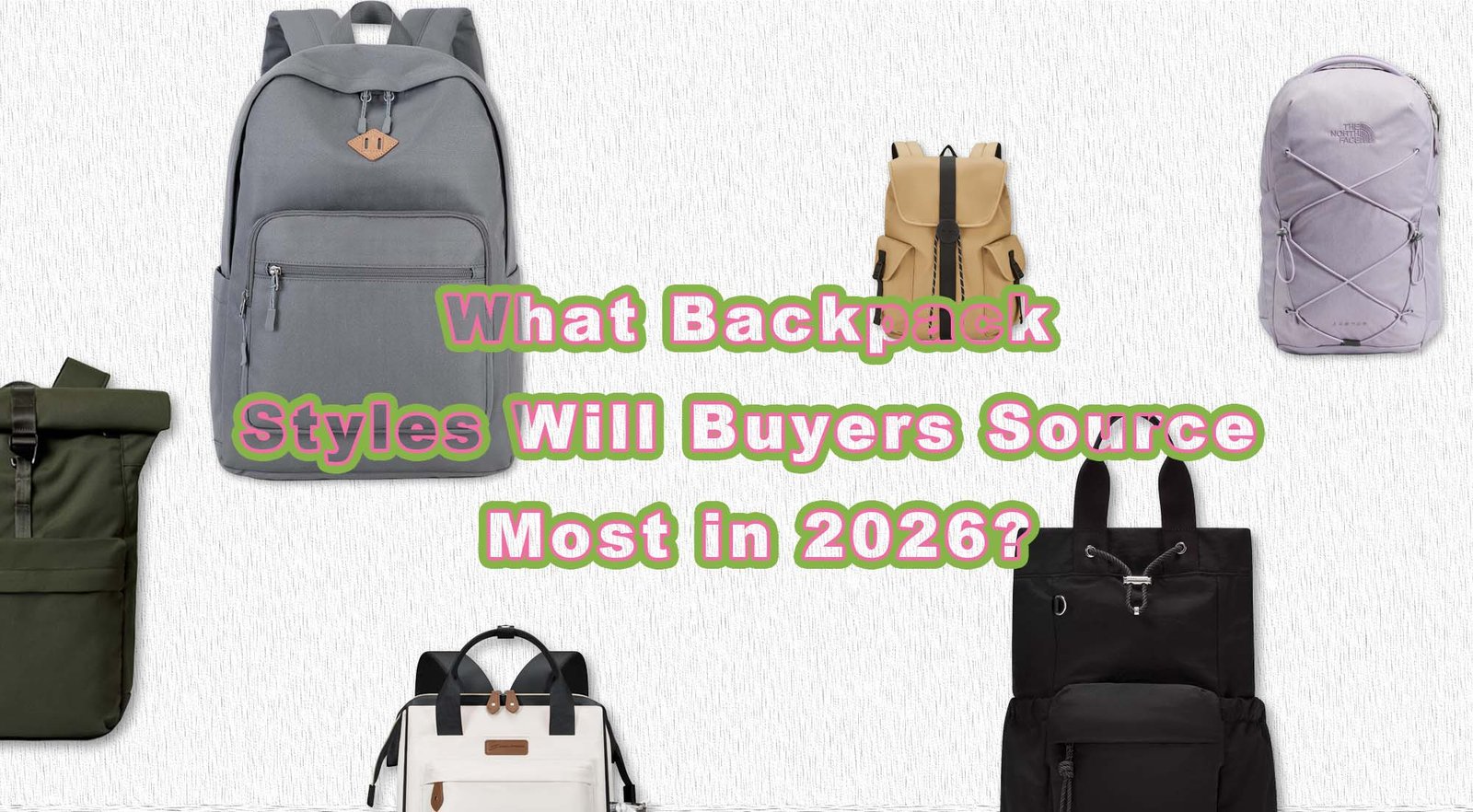
I judge style trends by sales use, not only by appearance
When I receive an overseas inquiry, many buyers send reference photos first. They may say, “I want this shape, but with my logo and a lower price.” I understand that request. I also know the hidden risk. A backpack style is not only a photo. It has fabric weight, lining choice, zipper grade, webbing width, foam thickness, stitching method, and packing size.
I see stronger interest in practical styles. Commuter backpacks need laptop storage, clean design, and good shoulder comfort. School backpacks need better price control and stronger seams. Travel backpacks need more compartments and better zipper strength3. Promotional backpacks need low cost, clear logo space, and fast production.
| Style direction | Buyer reason | Factory concern | Better sourcing action |
|---|---|---|---|
| Lightweight commuter backpack | Good for office and daily use | Fabric must not look too thin | Test fabric hand feel and loading weight |
| Multi-compartment school backpack | Easy to sell to broad users | More sewing time and more defect points | Confirm pocket layout before sampling |
| Travel backpack | Higher retail value | Zipper and strap stress are higher | Do load testing during sample stage |
| Foldable daypack | Lower shipping volume | Fabric and seam strength can be weak | Use stable ripstop or polyester |
| Promotional backpack | Large order potential | Price target can be too tight | Keep design simple and logo clear |
I usually suggest buyers keep basic functional backpacks as the core line. Then I suggest they test one or two trend styles in smaller quantities. This is safer. A basic backpack can support repeat orders. A trend backpack can test the market. If the sample passes, the MOQ works, and the cost still fits the buyer’s target, then the trend becomes useful. If it only looks new but fails cost or quality checks, I do not treat it as a good 2026 product.
Which Backpack Materials Are Gaining Popularity in 2026?
Material choice can make a backpack look better, but unstable material sourcing can break price, quality, and delivery plans.
In 2026, I see more demand for recycled polyester, lightweight polyester, nylon-look fabrics, water-resistant coatings, and textured materials. I still check availability, color stability, MOQ, test needs, and cost before I recommend them for bulk production.
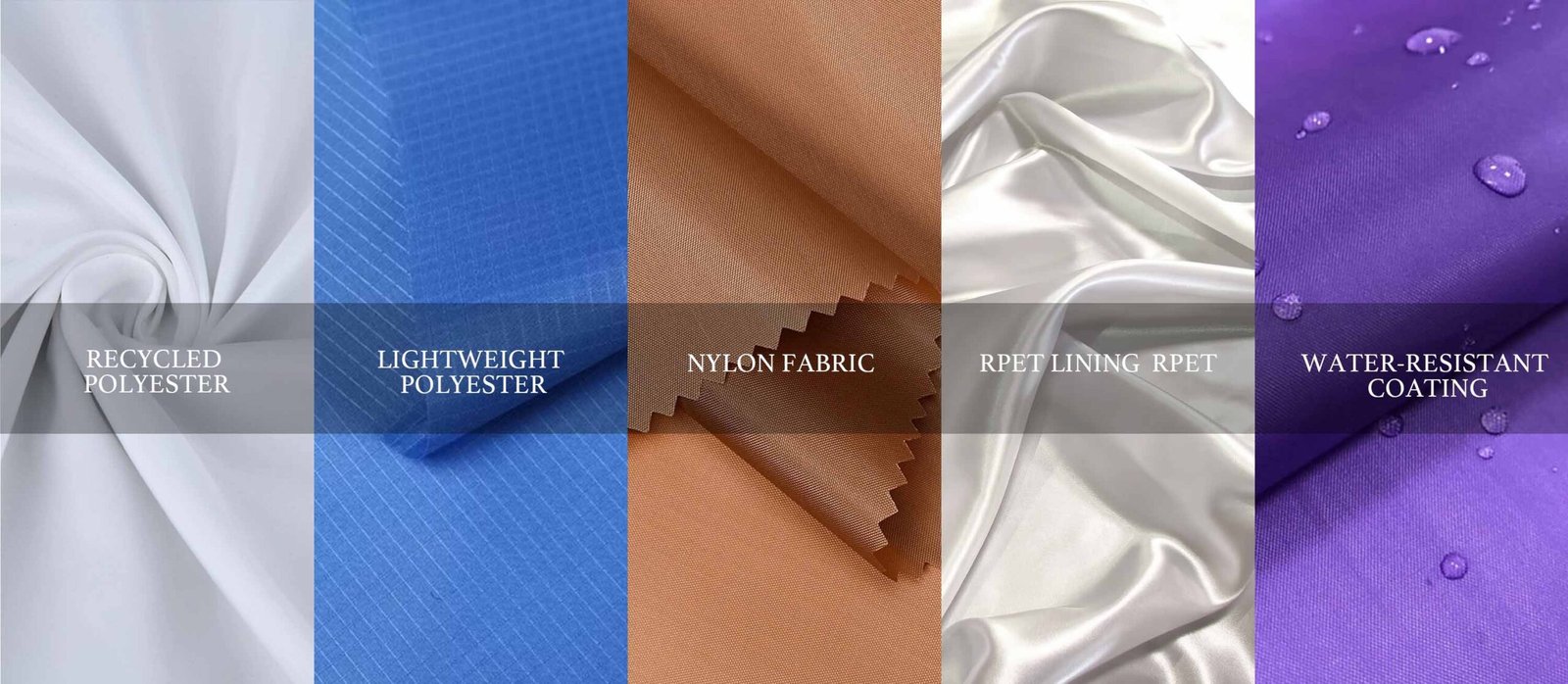
I check material supply before I confirm a trend
I have learned one simple lesson from sampling work. A good-looking material can create big problems if it is not stable. A buyer may choose a special fabric from a sample card. The sample looks great. Then the buyer asks for 10,000 pieces. At that point, the fabric mill may require high MOQ, longer lead time, or a color difference between batches. This is why I do not treat material trends as surface choices.
For 2026, recycled polyester is still a strong request4. Many buyers also ask for lighter fabrics because they want lower shipping weight and easier daily use5. Some buyers prefer a nylon-look surface because it looks cleaner and more premium. Water-resistant coating is also common, but I remind buyers that “water-resistant” is not the same as “waterproof.”6
| Material option | Main benefit | Common risk | My factory-side check |
|---|---|---|---|
| Recycled polyester | Supports eco positioning | Higher cost and document needs | Check certificates and supplier stability |
| Lightweight polyester | Reduces weight and cost | May feel too thin | Check tear strength and hand feel |
| Nylon-look fabric | More premium look | Higher price than basic polyester | Compare target price and order volume |
| RPET lining | Eco detail inside the bag | Buyer may ignore cost impact | Confirm if end customer values it |
| Water-resistant coating | Better daily use | Coating can crack or peel if poor | Check coating quality and test sample |
I often tell buyers to choose materials based on the final selling channel. A supermarket program may need strict price control. A brand line may accept higher fabric cost if the story and hand feel are stronger. A corporate gift order may care more about logo effect and fast delivery. The material must fit the buyer’s business model. I do not push expensive materials if they damage the buyer’s margin. I also do not suggest rare fabrics if the buyer needs repeat orders every season.
How Are Sustainability Trends Shaping Backpack Orders?
Eco claims can attract attention, but weak proof, unstable supply, and unclear cost can turn sustainability into a sourcing problem.
Sustainability is shaping backpack orders through recycled fabrics, eco packaging, lower-waste design, and better documentation.7 I treat it as a sourcing and verification task. I check material certificates, MOQ, price change, packaging options, and repeat supply before production.
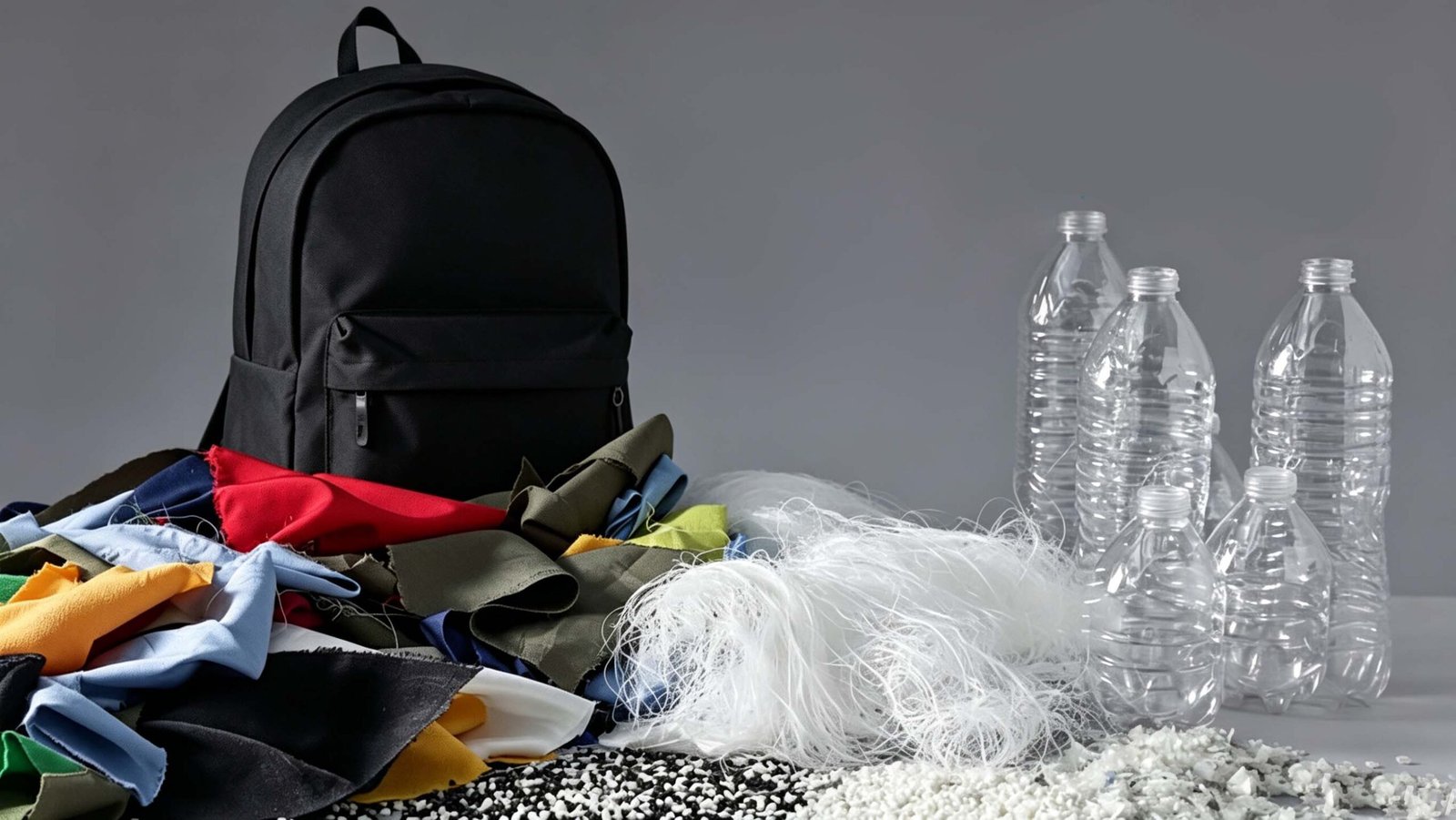
I treat sustainability as a production issue, not a slogan
Many buyers ask me, “Can you make this backpack eco-friendly?” I never answer only with yes. I ask what they need to prove. Do they need recycled fabric? Do they need recycled lining? Do they need FSC paper hangtags8? Do they need less plastic packaging? Do they need a supplier declaration or a specific test report? These details matter because every market and buyer program can be different.
Sustainable backpack orders often involve more than one choice. A buyer may use recycled polyester for the shell, normal polyester for the lining, and a recycled paper hangtag. Another buyer may use normal fabric but ask for plastic-free packaging. Both plans can make sense. The key is honesty and clear documentation.
| Sustainability choice | What it changes | Cost impact | Risk to manage |
|---|---|---|---|
| Recycled shell fabric | Main eco story | Medium to high | Certificate and fabric MOQ |
| Recycled lining | Hidden eco upgrade | Low to medium | Buyer may not want extra cost |
| Recycled webbing | More complete eco plan | Medium | Color matching may be harder |
| Kraft paper hangtag | Better retail presentation | Low | Print color needs approval |
| Less plastic packaging | Better packaging image | Low to medium | Carton protection must stay safe |
I also remind buyers that sustainable material still needs normal quality checks. Recycled fabric can still have color difference. Recycled lining can still tear. Eco packaging can still fail if it does not protect the product. I prefer a practical plan. I start with the parts that affect the buyer’s market most. If the buyer sells to a retailer that asks for documentation, I prepare the material path early. If the buyer only wants a small test order, I help them choose available recycled materials to avoid high MOQ. This is how sustainability becomes workable, not just nice wording.
What Features Do Customers Expect in Modern Backpacks?
A modern backpack can fail if it only looks good and does not solve daily carrying, storage, and comfort problems.9
Modern backpack customers often expect laptop protection, multiple pockets, lighter weight, comfortable straps, water-resistant fabric, easy-access storage, luggage strap options, and clean branding.10 I suggest buyers choose features based on target users and price level, not add every feature into one bag.
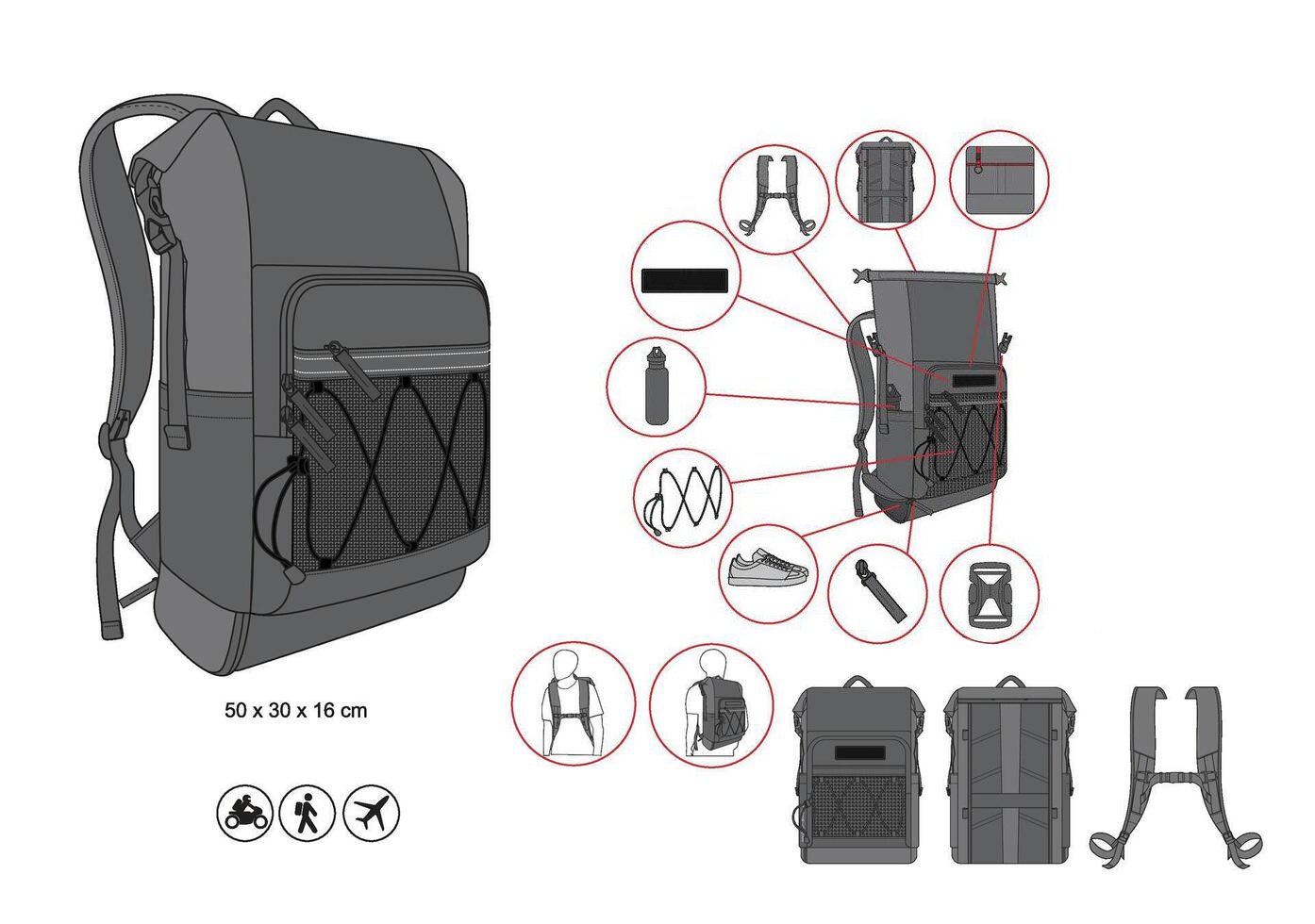
I balance useful features with cost and sewing risk
I often see buyers add too many features during sampling. They want a laptop pocket, USB hole, hidden pocket, front organizer, side bottle pocket, trolley strap, anti-theft pocket, EVA back panel, and custom zipper puller. Each feature may look small. But together, they increase sewing time, material cost, inspection points, and production risk.
Modern features should match the user. A commuter backpack may need a padded laptop sleeve and a clean front pocket. A school backpack may need strong zippers and a bottle pocket. A travel backpack may need a luggage strap and better back support. A promotional backpack may need a large logo area more than complicated storage.
| Feature | Best use case | Cost effect | Quality point |
|---|---|---|---|
| Laptop compartment | Office, school, travel | Medium | Foam thickness and size accuracy |
| Multi-pocket layout | Daily organization | Medium | Pocket alignment and zipper function |
| Padded shoulder straps | Comfort-focused bags | Medium | Foam recovery and seam strength |
| Water-resistant fabric | Outdoor daily use | Low to medium | Coating and zipper area |
| Luggage strap | Travel and commuter | Low | Bartack strength |
| Custom zipper puller | Brand detail | Low to medium | Mold cost or MOQ |
| Logo patch | Private label branding | Low to medium | Color, position, and adhesion |
I still remember one sampling discussion where a buyer wanted a very full feature list for a low-price retail program. I made the sample, but the cost moved too far from the target. We then removed two hidden pockets, changed one zipper pocket to an open pocket, and kept the laptop sleeve. The final backpack looked cleaner and was easier to produce. The buyer also had a better price. This is the kind of decision that matters in 2026. A feature is only good if the customer uses it, the factory can control it, and the buyer can still sell the bag with enough profit.
How Can Backpack Buyers Choose the Right Supplier in 2026?
The wrong supplier can make a trendy backpack look cheap, ship late, or fail inspection11 after the buyer has already committed to customers.
In 2026, backpack buyers should choose suppliers by checking sampling skill, material sourcing ability, MOQ flexibility, quality control, delivery planning, communication speed, and private-label support. A good supplier helps turn a trend into a stable product, not only a quotation.
I believe supplier choice decides whether a trend can scale
A buyer can find many backpack photos online. The hard part is not finding ideas. The hard part is turning an idea into a real product with stable fabric, clear cost, correct logo, strong seams, good packing, and on-time shipment. This is where supplier choice becomes important.
When I work with overseas buyers, I see that good communication saves time. A clear supplier should explain what is easy, what is risky, and what will raise the price. If the buyer asks for a special recycled fabric, the supplier should check availability before promising a delivery date. If the buyer asks for a low MOQ custom color, the supplier should explain fabric MOQ early. If the buyer needs private-label packaging, the supplier should confirm artwork, carton marks, and packing method before bulk production.
| Supplier ability | Why it matters | What I suggest buyers ask |
|---|---|---|
| Sampling support | Trends need testing first | Can you revise structure before bulk order? |
| Material sourcing | Fabric decides cost and lead time | Is this material in stock or made to order? |
| QC process | Backpacks have many stress points | Do you check stitching, loading, zipper, and logo? |
| MOQ flexibility | Trend testing may need small runs | Can you support a trial order before scaling? |
| Delivery planning | Late shipment hurts buyer trust | What is the real production lead time? |
| OEM/ODM support | Private labels need custom details | Can you support logo, color, packaging, and labels? |
| After-sales response | Problems need clear handling | How do you handle defects after shipment? |
I also suggest buyers share their real target price early. Some buyers worry that factories will only quote higher if they know the target. But without a target, the factory may build a sample that cannot work for the buyer’s market. A good supplier can suggest two or three cost plans. One plan can be basic. One plan can be balanced. One plan can be more premium. This helps the buyer compare value, not only unit price.
In 2026, I think buyers should also test trend backpacks before making large commitments. A trial order can reveal fabric stability, customer feedback, packaging issues, and real delivery timing.12 Once the product works, the buyer can scale it with less risk. This is how I prefer to support private-label backpack programs. I want the product to pass sampling, pass inspection, reach the warehouse on time, and be reordered without surprise.
Conclusion
I watch 2026 backpack trends through sourcing reality. I choose trends that can be sampled, priced, produced, inspected, delivered, and reordered with confidence.
"Sustainable fashion - Wikipedia", https://en.wikipedia.org/wiki/Sustainable_fashion. Independent market and consumer studies on luggage and everyday-carry products describe growing demand for recycled materials, practical commuter features, organizational storage, and packaging with lower environmental impact; these sources support the article’s characterization of major sourcing trends, although they may address bags or carry goods more broadly rather than backpacks alone. Evidence role: general_support; source type: research. Supports: Independent market or consumer research indicating rising interest in recycled materials, commuter-oriented functionality, organizational compartments, customization, or sustainable packaging in bag or backpack purchasing.. Scope note: Support is contextual if the source covers bags, luggage, or consumer accessories rather than backpacks specifically. ↩
"Comparison of features, usability, and load carrying design of ...", https://dr.lib.iastate.edu/etd/15904/. Industry segmentation and consumer-use surveys commonly classify backpacks by school, commuting, travel, and promotional use cases, indicating that these categories are established sourcing segments and, in some markets, areas of continued demand growth. Evidence role: general_support; source type: institution. Supports: Evidence that school, travel, commuter, packable, and promotional-style backpacks represent active or growing sourcing categories.. Scope note: Segment presence does not by itself prove that every listed category will increase specifically in 2026. ↩
"[PDF] Comparison of features, usability, and load carrying design of ...", https://www.imse.iastate.edu/files/2014/03/EagleZoe-thesis.pdf. Product-design and luggage durability literature notes that travel bags are expected to organize multiple items and withstand repeated loading, handling, and closure cycles, which helps explain why compartment layout and zipper performance are important in travel-backpack construction. Evidence role: mechanism; source type: research. Supports: Travel use places greater organizational and load-related demands on backpacks, making compartment layout and closure durability important design considerations.. Scope note: The evidence may justify the design logic without directly comparing travel backpacks against every other backpack category. ↩
"Textiles: Material-Specific Data | US EPA", https://www.epa.gov/facts-and-figures-about-materials-waste-and-recycling/textiles-material-specific-data. Textile-sector analyses and environmental institutions report substantial adoption of recycled polyester, especially rPET derived from recycled feedstocks, supporting the statement that recycled polyester has become a common buyer request in apparel and soft-goods supply chains. Evidence role: general_support; source type: institution. Supports: Neutral evidence that recycled polyester (including rPET) has become a widely used or increasingly demanded material in textiles and soft goods.. Scope note: Most sources address textiles broadly and may not isolate backpack orders specifically. ↩
"Impact of Backpacks on Ergonomics: Biomechanical and ... - PMC", https://pmc.ncbi.nlm.nih.gov/articles/PMC9180465/. Logistics guidance and ergonomics research indicate that lower product mass can reduce transport burden and improve carrying comfort, providing a neutral basis for the preference for lighter fabrics in everyday-use bags. Evidence role: mechanism; source type: education. Supports: Lower product weight can reduce transport burden and can improve carrying comfort in everyday use.. Scope note: The extent of shipping savings depends on shipment mode, packaging dimensions, and carrier pricing rules, not fabric weight alone. ↩
"Waterproofing - Wikipedia", https://en.wikipedia.org/wiki/Waterproofing. Technical references distinguish water-resistant materials, which resist limited water penetration, from waterproof materials, which are designed to prevent water ingress under defined conditions; this supports the article’s warning that the two terms are not interchangeable. Evidence role: definition; source type: encyclopedia. Supports: The technical distinction between water-resistant and waterproof performance claims.. ↩
"Responsible garment and footwear supply chains - OECD", https://www.oecd.org/en/topics/sub-issues/due-diligence-guidance-for-responsible-business-conduct/responsible-garment-and-footwear-supply-chains.html. Policy and supply-chain literature on textiles and consumer goods describes sustainability efforts as involving not only recycled inputs but also packaging changes, waste reduction, traceability, and documentation, which supports the article’s characterization of how sustainability can influence product orders. Evidence role: expert_consensus; source type: institution. Supports: Sustainability requirements in consumer-goods sourcing increasingly involve material selection, packaging changes, waste reduction, and documentation.. Scope note: Such sources often cover consumer-goods sourcing broadly rather than backpack procurement alone. ↩
"Forest Stewardship Council - Wikipedia", https://en.wikipedia.org/wiki/Forest_Stewardship_Council. The Forest Stewardship Council describes its certification system as applying to forest-based products, including paper goods, through chain-of-custody requirements; this provides the basis for referring to FSC paper hangtags as a documented packaging option. Evidence role: definition; source type: institution. Supports: FSC certification applies to paper and paper-based products such as tags or packaging when sourced through certified supply chains.. ↩
"Impact of Backpacks on Ergonomics: Biomechanical and ... - PMC", https://pmc.ncbi.nlm.nih.gov/articles/PMC9180465/. Ergonomics and user-experience research on load-carrying products indicates that comfort, accessibility, and functional organization strongly influence user satisfaction, supporting the article’s point that appearance alone does not make a backpack successful in everyday use. Evidence role: mechanism; source type: research. Supports: Backpack usability and user satisfaction depend on functional storage and carrying comfort, not appearance alone.. Scope note: The evidence supports the functional principle but does not directly measure commercial failure for all backpack designs. ↩
"Impact of Backpacks on Ergonomics: Biomechanical and ... - PMC", https://pmc.ncbi.nlm.nih.gov/articles/PMC9180465/. Consumer surveys and backpack usability studies frequently identify organization, laptop protection, carrying comfort, manageable weight, and resistance to light weather exposure as important product attributes, supporting the feature set listed in the article. Evidence role: general_support; source type: research. Supports: Consumer or product-use research identifying storage organization, device protection, comfort, low weight, and weather resistance as commonly valued backpack features.. Scope note: Branding preferences are more market-segment specific and may not be captured in general usability research. ↩
"impact of suppliers selection on product quality management in an ...", https://www.academia.edu/102870061/IMPACT_OF_SUPPLIERS_SELECTION_ON_PRODUCT_QUALITY_MANAGEMENT_IN_AN_ORGANISATION. Operations and supply-chain research consistently finds that supplier capability and reliability are associated with downstream quality performance and on-time delivery, which supports the article’s claim that poor supplier choice can undermine both inspection results and shipment timing. Evidence role: expert_consensus; source type: paper. Supports: Supplier selection and supplier performance are linked to product quality and delivery reliability in manufacturing supply chains.. Scope note: The literature generally addresses manufacturing supply chains broadly rather than backpack production specifically. ↩
"[PDF] Process Validation: General Principles and Practices | FDA", https://www.fda.gov/files/drugs/published/Process-Validation--General-Principles-and-Practices.pdf. Manufacturing and new-product introduction literature describes pilot runs and limited-market tests as mechanisms for identifying quality variation, packaging problems, schedule constraints, and early customer feedback before larger-scale production commitments are made. Evidence role: mechanism; source type: paper. Supports: Pilot production or small-batch testing can surface quality, packaging, scheduling, and market-response issues prior to scale-up.. Scope note: The evidence is process-oriented and may not directly use the term 'trial order' in a backpack sourcing context. ↩