Many buyers worry about choosing the wrong print method for cotton bags. I hear this often. A sample may look acceptable, but a full order can still fail in color, consistency, and repeatability.
Yes, you can sometimes get a visible sublimation-like result on a cotton bag sample, but in most custom cotton bag projects, standard sublimation is not the best choice for stable bulk production1. Buyers should judge by order consistency, artwork needs, fabric, and quality target.
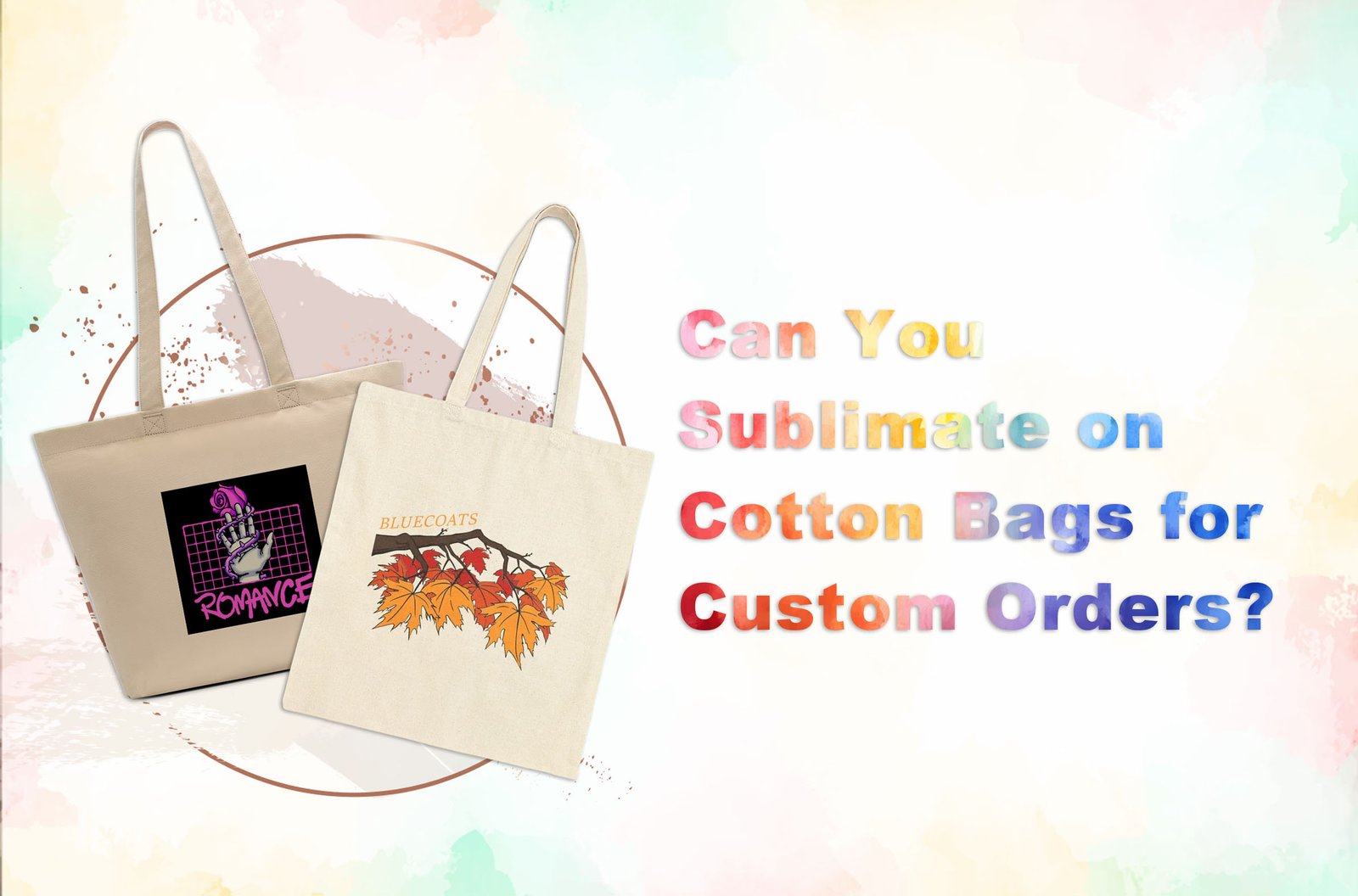
I have had many buyers ask me this exact question. At first, it sounds simple. But in real sourcing work, the real issue is not whether an image can show up once on a sample. The real issue is whether the result can stay clear, controlled, and repeatable across the whole order. That is where many custom projects become risky, and that is why this topic deserves a closer look.
Does Sublimation Work Well on Cotton Bags?
Many buyers see a sample and feel relieved too early. I understand that feeling. But one sample result does not always mean the method will work well for the full cotton bag order.
In general, standard sublimation does not work as naturally on cotton as it does on polyester2. A sample may show an image, but in most cotton bag projects, color depth, sharpness, and repeatability should be checked carefully before approval3.
When buyers ask me if sublimation works on cotton bags, I usually ask a different question back. I ask what they really need from the final product. I do this because the word “work” means different things to different buyers. For one buyer, “work” means the logo shows up on a one-piece sample. For another buyer, “work” means 10,000 bags arrive with the same color tone, same print position, and same look after use. These are not the same standard.
In most cotton bag projects, cotton fiber is not the natural match for standard sublimation. That is why a visible result on one sample should not be taken as proof of production stability. I have seen buyers send me a reference photo and say, “This looks fine. Can we do this?” My answer is usually, “Maybe, but we need to confirm what ‘fine’ means for bulk production.”
Here is how I usually help buyers think about it:
| Buyer concern | What it sounds like | What it really means in production |
|---|---|---|
| Can sublimation print on cotton? | Can the image appear? | Will the result stay consistent in bulk? |
| Does the sample look good? | One piece is acceptable | Can all pieces match the sample? |
| Can you do this logo? | Is the artwork printable? | Will color, detail, and placement stay stable? |
| Is it low risk? | The method seems possible | The method fits the fabric and order target |
This is why I always bring the discussion back to risk control. For B2B orders, print method choice should protect the order, not just pass the sample stage.
What Happens When You Sublimate Cotton Tote Bags?
Buyers often focus on the first visual result. I have done this with customers many times. But what happens after the first transfer matters much more in real order planning.
When you sublimate cotton tote bags, the image may appear lighter, less sharp, or less stable than on polyester4. In many cases, the result can vary by fabric, coating, treatment, and process control5, so sampling is essential.
I remember a buyer once sent me a simple message: “We only need a soft cotton tote with a bright full-color print.” On paper, that sounded easy. But once we looked at the fabric and artwork together, the discussion changed fast. The buyer wanted rich color, photo detail, and a natural cotton feel, all at a supermarket-level price. That mix is where sourcing decisions become real.
When sublimation is discussed for cotton tote bags, the first thing I explain is that the sample may not tell the whole story. A result can appear, yes. But the buyer should also ask these questions: Is the color strong enough? Is the image crisp enough? Is the look the same from bag to bag? Can this be repeated across the order quantity?
Several things can happen when buyers try this route on cotton:
| Possible result | What buyers may see | Why it matters |
|---|---|---|
| Lighter color | Print looks less vivid | Brand color may not meet expectation |
| Softer edge detail | Fine text or thin lines lose clarity | Small logos may not look professional |
| Inconsistent appearance | One sample differs from another | Bulk order may not match |
| Material-related variation | Different cotton weaves react differently6 | Reorder stability becomes harder |
In my experience, the risk grows when the buyer has strict visual standards. If the order is for retail shelves, promotions, or brand gift programs, small print variation can become a real problem. That is why I tell buyers not to stop at “Can we do it?” They should ask, “Can we do it in a stable way for the exact bag, artwork, and quantity we need?” That is the better question.
What Is the Best Printing Method for Cotton Bags?
Many buyers start with a print method name before they define the result. I see this often. That can lead to the wrong decision and wasted time during sampling.
The best printing method for cotton bags depends on artwork style, fabric type, order quantity, and quality expectation7. For most cotton bag projects, buyers should choose the method based on the target result, not based on whether one sample method seems possible.
This is where I try to slow the conversation down. A buyer may come to me and say, “We want sublimation.” I do not reject that right away. Instead, I ask what kind of design they have, how many units they need, what fabric weight they want, and how strict the color standard is. I do this because the print method should follow the order need.
In real cotton bag sourcing, the best method is usually the one that gives the most reliable balance of appearance, cost, and repeatability. The wrong method is often chosen when the buyer starts from a keyword instead of a product goal. I have seen this happen with gift companies and retail buyers who searched a term online and then tried to force that method onto a cotton item that needed a different process.
Here is the basic procurement logic I use in discussions:
| Decision factor | What I ask first | Why it changes the print choice |
|---|---|---|
| Artwork effect | Is it simple logo, text, or full color image? | Some methods suit bold logos, others suit image detail |
| Bag material | Is it pure cotton, blended fabric, or treated surface? | Print compatibility changes with fabric |
| Order quantity | Is this a small trial or a large roll-out? | Stable bulk output matters more at scale8 |
| Quality expectation | Is “good enough” okay, or must it match brand standard? | Higher expectation needs lower process risk |
| Budget target | Is price the first concern or is finish more important? | Cost and result must be balanced |
I always tell buyers that naming the print method too early can trap the project. It is much safer to define the result first. Then we can choose a method that fits the real business need.
Are Sublimated Cotton Bags Durable for Daily Use?
A print that looks good at first can still become a problem later. Buyers often focus on approval samples, but end users will judge the bag after repeated use9.
Sublimated cotton bags may not offer the same stable print performance buyers expect from polyester-based sublimation projects10. In daily use, durability should be confirmed through material-specific sampling, visual checks, and order-level expectation setting.
When a buyer asks me about durability, I know they are usually thinking ahead. They are not just buying bags. They are protecting a retail program, a promotion, or a customer relationship. That is why I never answer durability in a careless way. I say what I can say from project experience: durability is not only about whether the image transfers. It is about whether the result still meets expectation after handling, folding, shipping, and daily use.
For cotton bags, this becomes even more important because the buyer often wants both a natural fabric feel and a clean branded look. If the print result starts out weak, then normal use can make the weakness more visible. Even before wear, differences between lots can already create concerns.
I usually suggest that buyers review durability from these angles:
| Durability point | What to check | Why buyers should care |
|---|---|---|
| Visual stability | Does the print still look clear after handling? | Shelf appeal and brand image matter |
| Color consistency | Does the print tone stay close across units? | Mixed-looking batches create complaints |
| Fabric interaction | Does the cotton texture affect the print look? | Uneven surfaces can change appearance |
| Reorder reliability | Can the same look be repeated later? | Long-term sourcing needs consistency |
I have had buyers tell me, “The sample is okay, but I do not feel safe for the full order.” I think that is smart. In B2B buying, confidence matters. If the process leaves too much variation, then even a passable sample may still be the wrong choice for daily-use products.
Should Buyers Choose Sublimation for Custom Cotton Bags?
Buyers want a direct answer, and I respect that. Still, the safe answer depends on the order goal, not just on whether the method can produce one acceptable-looking piece.
Buyers should choose sublimation for custom cotton bags only after confirming the material, artwork effect, order quantity, and consistency standard. In most cotton bag projects, the better decision is the one that reduces bulk production risk, not the one that only passes the sample stage.
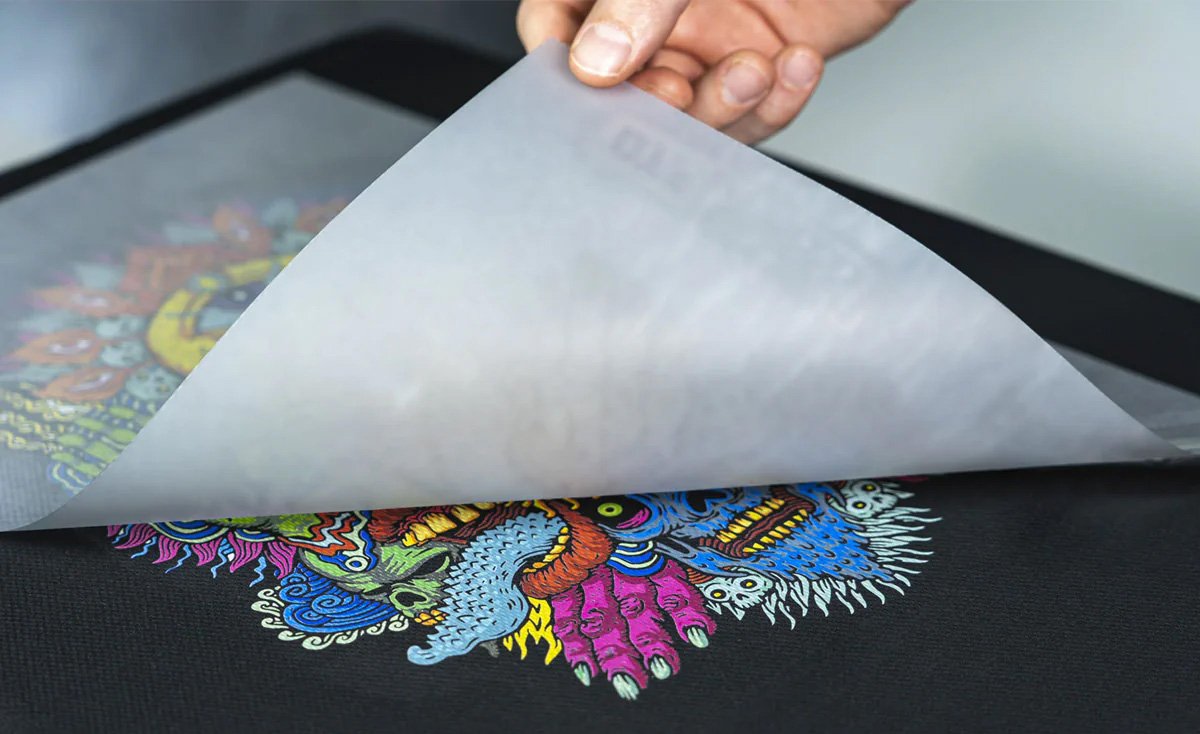
If I answer this from real customer discussions, I would say this: buyers should not make sublimation the default choice for custom cotton bags just because the term sounds modern or because a sample image appears on the fabric. The real decision point is not sample feasibility. The real decision point is production reliability.
I have worked with buyers who were under pressure to move fast. They wanted a quote first and process details later. I understand that pressure. But cotton bag printing is one of those places where rushing the method choice can create trouble later. A bag order can look simple, but print quality is where expectations rise very fast11. This is true for brand buyers, gift companies, and retailers.
Before I advise a customer, I usually walk through this checklist:
| Question | Why I ask it | What it helps prevent |
|---|---|---|
| What final look do you want? | The desired effect should lead the method | Wrong process selection |
| What is the exact bag fabric? | Cotton types can behave differently | Bad sample-to-bulk match |
| How many units do you need? | Scale changes risk level | Inconsistent mass production |
| How strict is color accuracy? | Brand standards vary a lot | Customer complaints |
| Do you need reorder consistency? | Future repeat orders matter | Unstable long-term supply |
My view is simple. If a buyer wants a low-risk custom cotton bag order, the method should be chosen for repeatability first12. A print method that looks possible is not always a method that is wise to scale. That difference matters a lot in procurement.
Conclusion
Yes, sublimation can sometimes appear on cotton bags, but for custom orders, I believe buyers should focus first on stable bulk results, not just on whether one sample looks acceptable.
"Digital textile printing - Wikipedia", https://en.wikipedia.org/wiki/Digital_textile_printing. Technical literature on dye-sublimation printing states that disperse dyes bond effectively with polyester and other polymeric surfaces under heat, whereas untreated cotton does not provide the same fixation mechanism; this supports the article’s caution that standard sublimation is a weaker choice for consistent cotton-bag production. Evidence role: mechanism; source type: paper. Supports: That conventional dye-sublimation printing is primarily designed for polyester or polymer-coated substrates, which helps explain why untreated cotton is less suitable for consistent production results.. ↩
"Dye-sublimation printing - Wikipedia", https://en.wikipedia.org/wiki/Dye-sublimation_printing. Reference sources on dye-sublimation printing describe the process as one in which disperse dyes are transferred into polyester or polymer-coated substrates under heat and pressure, providing general support for the claim that the method is inherently better matched to polyester than to cotton. Evidence role: definition; source type: encyclopedia. Supports: That dye-sublimation printing conventionally uses disperse dyes on polyester or polymer-coated materials rather than untreated cotton.. Scope note: This evidence establishes standard process compatibility rather than testing every modified cotton-printing workflow. ↩
"Evaluation of Various Printing Techniques for Cotton Fabrics", https://www.researchgate.net/publication/372423152_Evaluation_of_Various_Printing_Techniques_for_Cotton_Fabrics. Textile testing and quality-control frameworks commonly assess color consistency, image definition, and reproducibility across lots, which supports the article’s position that cotton-bag print samples should be evaluated for depth, sharpness, and repeatability before approval. Evidence role: general_support; source type: institution. Supports: That print evaluation for textiles commonly includes color consistency, image definition, and reproducibility across production.. Scope note: Such standards define relevant quality criteria but may not isolate sublimation on cotton bags specifically. ↩
"[PDF] Optimizing Sublimation Transfer Printing - Clemson OPEN", https://open.clemson.edu/cgi/viewcontent.cgi?article=5453&context=all_theses. Comparative studies of transfer printing report that conventional sublimation systems achieve stronger dye uptake and clearer image formation on polyester than on untreated cellulosic fibers, supporting the article’s statement that cotton results may appear lighter or less sharp. Evidence role: mechanism; source type: paper. Supports: That the lower affinity of conventional sublimation dyes for cotton helps explain weaker color yield and image definition compared with polyester.. Scope note: The evidence is contextual when derived from general fiber-behavior studies rather than tote-bag-specific production trials. ↩
"[PDF] A Study on the Effect of Fabric Structure and Finishing on Perceived ...", https://repository.rit.edu/context/theses/article/11243/viewcontent/PSharmaThesis5_2019.pdf. Textile-printing research shows that substrate composition, weave or surface structure, chemical finishing, coatings, and transfer conditions can materially affect print outcome, supporting the article’s statement that cotton-bag results may vary across fabric and process variables. Evidence role: mechanism; source type: research. Supports: That textile print performance is affected by substrate properties, surface treatments, coatings, and process parameters.. ↩
"Microbial Barrier Properties of Cotton Fabric—Influence of Weave ...", https://pmc.ncbi.nlm.nih.gov/articles/PMC7407755/. Studies on textile printability report that fabric structure and surface topology influence ink or dye transfer, edge definition, and apparent uniformity, supporting the claim that different cotton weaves can react differently in printed output. Evidence role: mechanism; source type: paper. Supports: That fabric structure, including weave and surface texture, influences ink transfer, edge definition, and visual appearance in textile printing.. Scope note: This support is general to textile printing and may not quantify the magnitude of difference for every cotton tote construction. ↩
"[PDF] The All New Print Production Handbook - sciphilconf.berkeley.edu", https://sciphilconf.berkeley.edu/ProductPdf/mL2013/600976/The%20All%20New%20Print%20Production%20Handbook.pdf. Educational and technical guidance on textile printing generally treats design complexity, substrate compatibility, production volume, and required quality as key criteria for choosing a printing process, supporting the article’s selection framework for cotton bags. Evidence role: expert_consensus; source type: education. Supports: That process selection in textile printing commonly depends on design characteristics, substrate, production quantity, and required quality.. ↩
"Ensuring Product Quality, Consistency and Patient Supply ...", https://pmc.ncbi.nlm.nih.gov/articles/PMC6182491/. Manufacturing quality literature emphasizes that process capability and repeatability become increasingly important in larger batch production because small variations can scale into substantial quality deviations across many units, supporting the article’s statement about bulk output at scale. Evidence role: general_support; source type: research. Supports: That process capability and repeatability are especially important in larger production runs because variability accumulates across volume.. Scope note: The evidence is about manufacturing generally rather than cotton-bag printing specifically. ↩
"Understanding garment durability through local lenses - PMC - NIH", https://pmc.ncbi.nlm.nih.gov/articles/PMC12504705/. Textile quality frameworks and durability standards treat retention of appearance after handling and repeated use as a core performance criterion, supporting the article’s point that a satisfactory initial sample does not alone establish product suitability in use. Evidence role: general_support; source type: institution. Supports: That durability and retention of appearance after use are recognized dimensions of textile product quality.. Scope note: The evidence supports the quality principle broadly rather than measuring user judgment for this exact bag category. ↩
"Polyester vs. Cotton for Sublimation Printing: 2025 Guide", https://szoneierfabrics.com/polyester-versus-cotton-2/. Research on transfer printing indicates that polyester substrates generally provide more effective fixation for sublimation dyes than untreated cotton, which supports the article’s claim that print performance on cotton may be less stable than in polyester-based sublimation applications. Evidence role: general_support; source type: paper. Supports: That polyester-based sublimation typically provides stronger and more stable dye fixation than untreated cotton, informing expected performance differences.. Scope note: This is contextual support unless the cited study includes direct durability testing on cotton bags. ↩
"New Data Reveals the Power of Promotional Products: 72 Research ...", https://www.heraldnews.com/press-release/story/132025/new-data-reveals-the-power-of-promotional-products-72-research-based-statistics/. Research on product appearance and brand presentation finds that visual fidelity and print quality substantially shape perceived quality, lending support to the article’s statement that expectations often become especially demanding around printed customization. Evidence role: general_support; source type: paper. Supports: That visual quality and print fidelity strongly influence perceived product quality and brand presentation in customized goods.. Scope note: This support is indirect if drawn from broader product-appearance studies rather than custom cotton bags alone. ↩
"A systematic review of decision tools for process selection and ...", https://pmc.ncbi.nlm.nih.gov/articles/PMC12592300/. Quality-management literature treats repeatability and process consistency as foundational to low-risk production planning, supporting the article’s conclusion that method selection for custom bag orders should prioritize repeatable output over one-off sample success. Evidence role: expert_consensus; source type: research. Supports: That process repeatability is a central criterion in low-risk manufacturing and sourcing decisions.. Scope note: The source would support the procurement principle generally rather than proving that one specific print method is always preferable. ↩