
I evaluate liners for cooler totes by asking where the water comes from—not just whether a material is described as waterproof. An attractive sample can still leave buyers with leakage or awkward cleanup. I start with the intended contents, moisture sources, and cleaning routine, then turn those requirements into a sample approval plan.
I recommend choosing a cooler-tote liner as part of the complete bag construction, not by material name alone. The right choice depends on condensation, melting ice, spills, seam construction, and the agreed cleaning routine. Buyers should approve representative samples against defined leakage and cleanup requirements before authorizing bulk production.
In my material-selection and sampling discussions at CoraggioBag, “waterproof” is often only the beginning of the conversation. I need to understand what buyers will put inside the bag and what users will do afterward. Those answers change what I recommend checking.
Why Does the Intended Contents Temperature Matter for Cooler Totes?
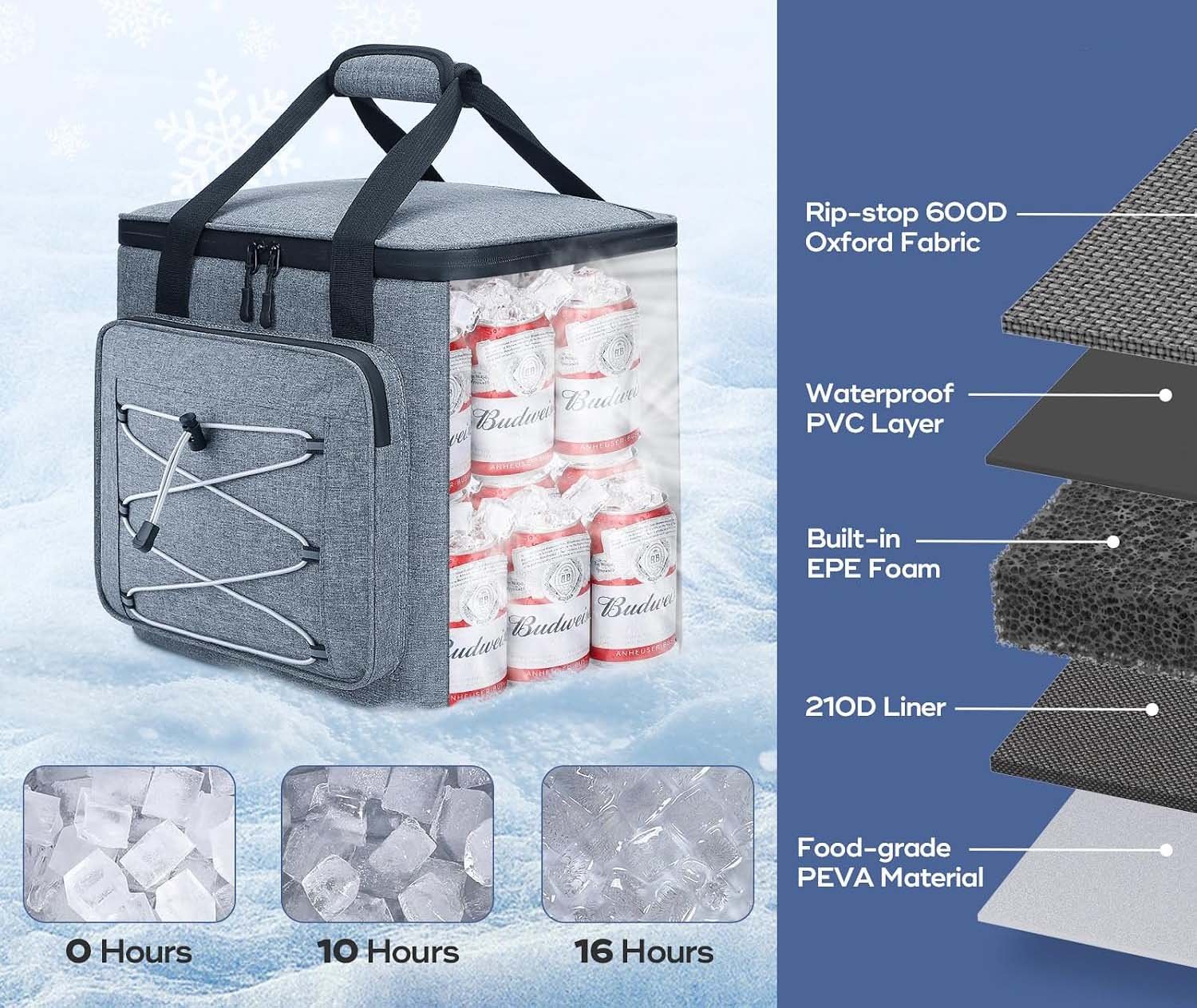
I find that a liner discussion becomes confusing when buyers describe every moisture problem as condensation. Cold packaging, melting ice, and spilled food can all leave water inside a tote, but they create different demands. I separate those sources before discussing material options.
I use intended contents temperature to help define the moisture scenario, not to select a liner automatically. Cold surfaces can collect condensation when conditions allow, while loose ice introduces meltwater directly. I also ask about ambient conditions, opening frequency, packaging, and carrying time before proposing sample checks.
I identify the water before discussing the liner
My first question is simple: What will make the inside of this bag wet?
I use three categories to organize the answer:
| Moisture source | What I ask the buyer | What I want the sample review to address |
|---|---|---|
| Condensation | Will cold bottles, cans, or food containers enter a warmer, humid environment? | Where moisture collects and whether it becomes trapped or escapes |
| Melting ice | Will users place loose ice inside the tote? | Whether the assembled liner and bag meet agreed water-containment requirements |
| Spills | Could drinks, sauces, or food liquids escape their packaging? | Access for cleaning, residue removal, and drying |
I do not treat these categories as interchangeable. A tote intended for sealed containers and reusable cold packs has a different moisture profile from one intended to carry loose ice. A food-retail program may also need to consider residue from damaged packaging, even if loose ice is prohibited.
I separate condensation from insulation claims
Condensation can form when a surface is below the dew point of the surrounding air.1 That means moisture behavior depends on more than the liner’s name. Contents temperature, humidity, insulation, thermal bridges, and opening patterns can all matter.2
I therefore do not promise that changing the liner will eliminate condensation. I also separate two approval questions:
- Does the tote provide the agreed temperature-holding performance?
- Does the tote manage moisture acceptably during the intended use?
One result does not prove the other.
For cooler totes, I ask buyers to describe the expected loading temperature and the realistic carrying environment. If a temperature-sensitive application requires validated performance, I recommend an appropriately qualified testing provider. My role in the sourcing discussion is to turn the intended use into a clear specification—not to substitute a material description for application-specific evidence.
How Do Liner Seams Affect Cleanup? Which Materials Need a Condensation Sample Check for Cooler Totes?
I have personally observed leakage while comparing cooler-tote samples. That observation supports a limited but important lesson: a waterproof liner description does not establish finished-bag leak resistance.3 It does not, by itself, identify the failure mechanism or prove that another material will perform better.
I review seams because they can affect both liquid containment and access for cleaning. I also request moisture checks for every proposed liner-and-construction combination where condensation matters. A smooth-looking surface or familiar material name cannot establish how the assembled tote will handle pooled water, residue, or repeated cleaning.
I inspect the places that a surface description cannot explain
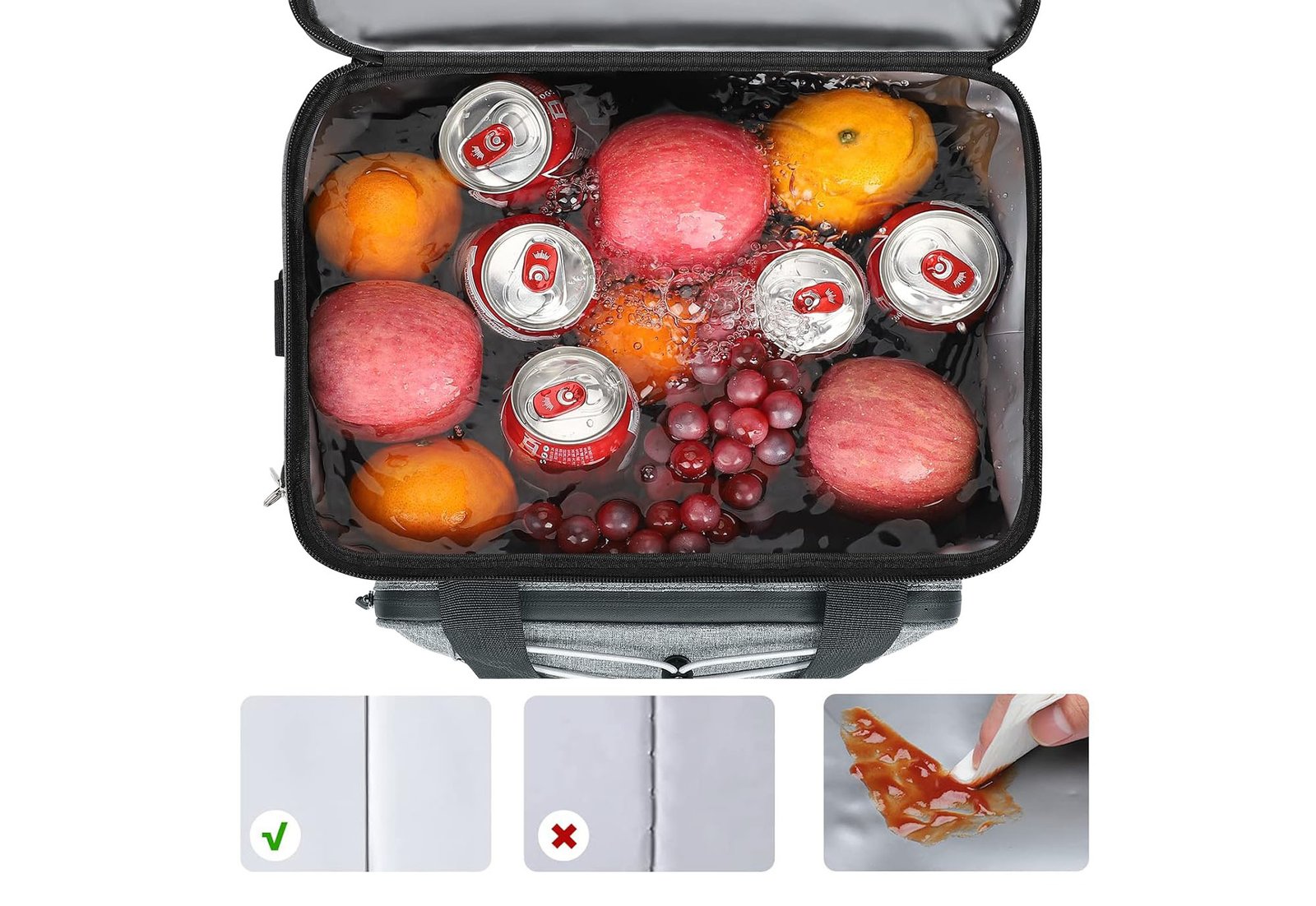
A liner sheet and an assembled liner are different things. Stitching, joining methods, corners, folds, and attachments introduce details that a material swatch does not show.4
During sample review, I ask:
- Does the seam construction match the supplier’s containment claim?
- Can the user reach the bottom corners with the agreed cleaning method?
- Do folds or overlapping edges create places where residue may collect?5
- Can the interior dry after cleaning without an impractical setup?
- Does the proposed production process match the approved sample?
I do not assume that a welded construction is automatically acceptable or that every stitched construction is unsuitable. I need the actual construction details, intended use, and relevant sample results. A joining method is part of the specification, not a complete performance guarantee.
I compare materials against a cleaning task
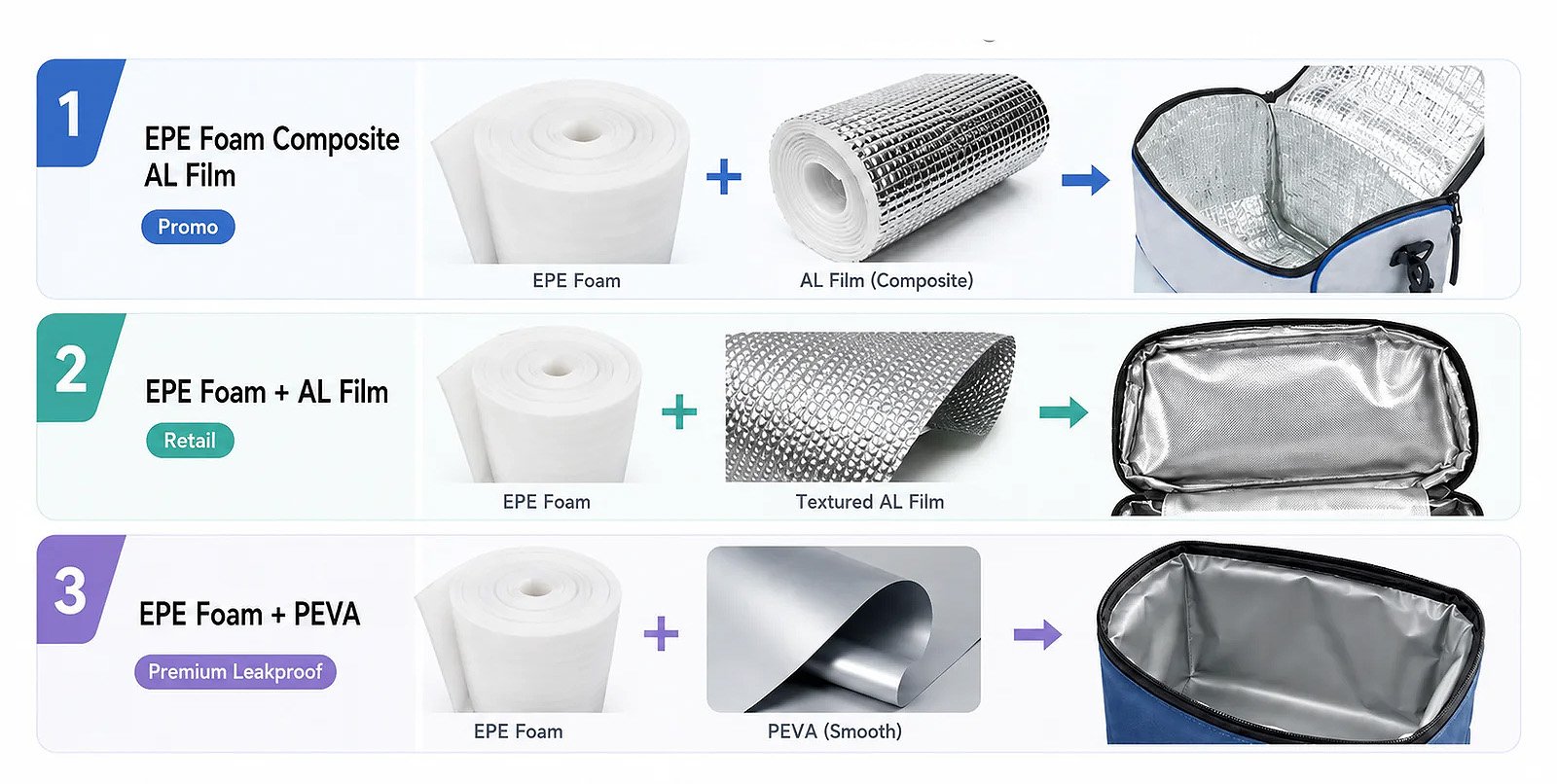
Buyers may encounter PEVA, EVA, TPU, or other coated and laminated liner options. I treat those names as starting points. Exact composition, thickness, backing, surface finish, and processing can differ between suppliers.6
Instead of creating a universal ranking, I use a comparison like this:
| Buyer’s intended cleanup task | Evidence I request |
|---|---|
| The user wipes away condensation after carrying sealed drinks | A representative moisture check followed by the agreed wiping and drying routine |
| The user removes a sugary beverage spill | An agreed representative residue check and an inspection after cleaning |
| The user cleans food residue from corners | A demonstration of access to seams, folds, and the base |
| The user washes a removable liner | Confirmation that removal, washing, drying, and reinstallation are supported by its design |
I apply a condensation sample check to every candidate configuration being considered for that use, rather than selecting materials for testing based on reputation alone.
I also keep “wipe-clean” narrowly defined. It does not establish that cooler totes are stain-proof, odor-free, hygienic, dishwasher-safe, or suitable for direct food contact.7 I ask suppliers to support each additional claim separately, using relevant documentation or testing.
How Should Buyers Review Liner-to-Shell Construction for Cooler Totes?
I do not approve a liner in isolation because buyers receive a complete bag, not a sheet of material. A promising interior can still be difficult to inspect or dry once it is attached to insulation, outer fabric, handles, and the opening.
I review liner-to-shell construction by tracing the interior, attachment points, opening, and possible moisture pathways through the assembled bag. I ask whether the design supports the intended loading, carrying, cleaning, and drying routine. Any containment claim should state its boundaries and be checked on representative finished samples.
I trace the complete construction
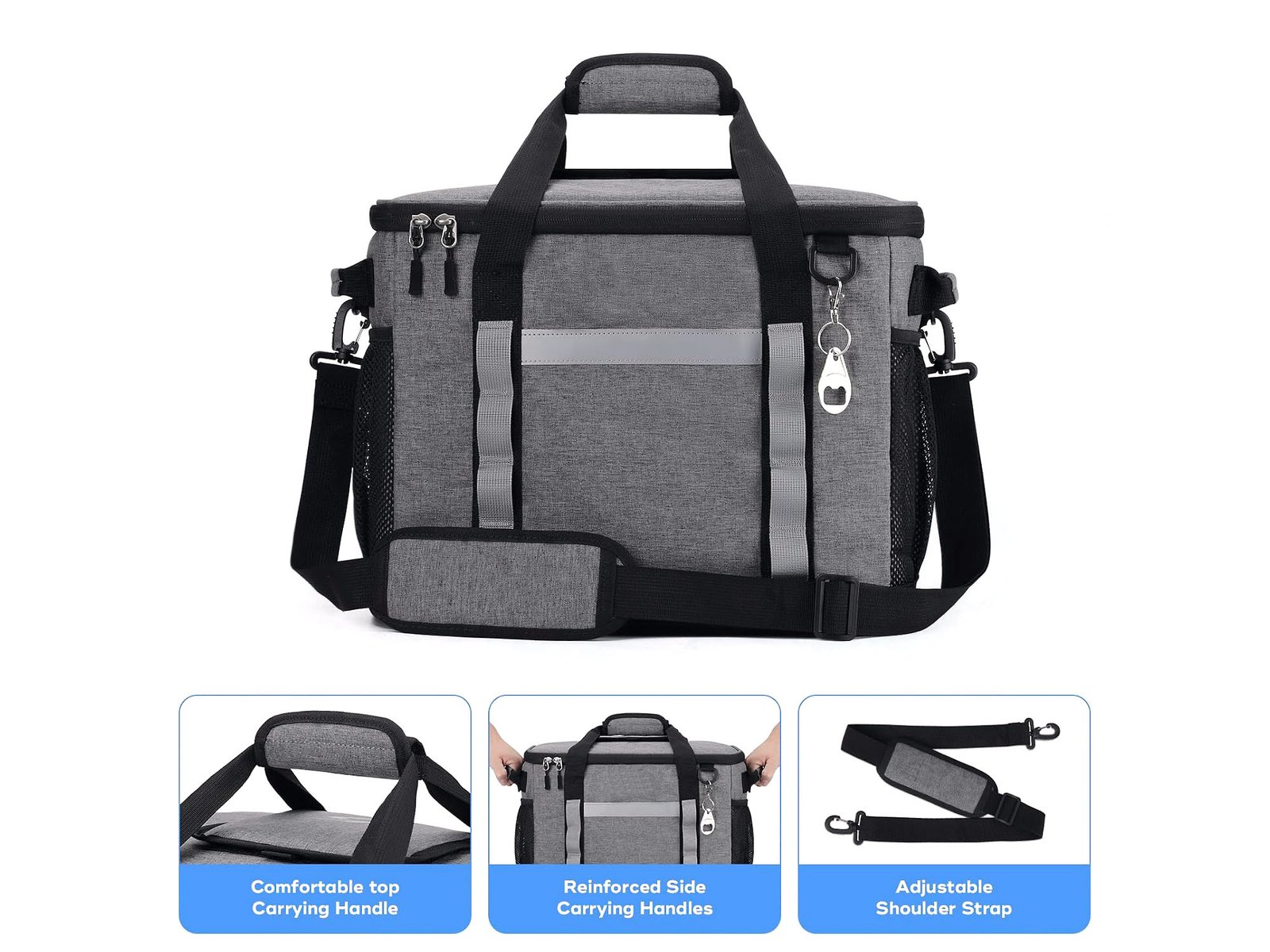
For cooler totes, I want to understand how the liner connects to the rest of the product. A simple construction drawing or annotated sample can make the discussion much more useful than a general claim such as “premium waterproof interior.”
I review four areas:
- The liner body: I check its shape, joins, corners, and base construction.
- The attachment points: I ask where the liner connects to the shell and whether those connections penetrate any intended containment area.
- The opening: I confirm whether the closure is intended to contain liquid or simply close the bag.
- The surrounding layers: I ask how buyers can identify moisture entering areas that are not readily visible.
I do not assume that a closure contains liquid just because the liner body does.8 I also avoid treating upright carrying, routine tilting, and complete inversion as equivalent requirements. Buyers should define which conditions belong in the acceptance plan.
I make drying part of the construction review
Cleanup does not end when the visible surface looks clean.9 I ask how the user will leave the tote after cleaning and whether the design makes the approved routine practical.
A fixed liner may require the bag to remain open during drying. A removable liner may provide better access, but I still need to check its attachment system, handling, and reinstallation. Neither approach earns an automatic recommendation.
At CoraggioBag, I participate in material-selection and sampling discussions for custom programs. I use those conversations to connect design decisions with buyer priorities, including appearance, cost, MOQ, and maintenance. However, I keep sample approval separate from production consistency. The approved construction, material reference, and inspection criteria must also be communicated to production.10
For application-specific decisions involving food contact, cleaning chemicals, or regulated claims, I recommend qualified technical review. A supplier’s general factory documentation does not establish that a particular cooler-tote construction is suitable for every application.
What Liner Details Belong in a Cooler Tote RFQ?
I find that vague RFQs make meaningful comparisons difficult. If one supplier quotes a tote for sealed lunch containers and another assumes loose ice, the prices do not describe the same requirement. I define the use and acceptance conditions before comparing proposals.
I include intended contents, moisture sources, loading method, liner specifications, seam construction, cleaning instructions, and leakage acceptance conditions in a cooler tote RFQ. I also request representative samples and written confirmation of any exclusions. This gives buyers a clearer basis for comparing quotations and approving production.

I give suppliers a usable specification
I do not expect every buyer to arrive with a finished technical pack. However, I need enough information to distinguish essential performance from preferences.
| RFQ field | What I ask the buyer to define |
|---|---|
| Intended contents | Sealed drinks, packaged meals, reusable cold packs, loose ice, or another load |
| Loading method | Contents arrangement, expected load, and how cooling elements enter the bag |
| Moisture sources | Condensation, meltwater, spills, or a combination |
| Carrying conditions | Upright handling, expected tilting, transport method, and duration |
| Liner proposal | Material identification, thickness where relevant, finish, and construction |
| Cleanup routine | Wiping or washing method, proposed cleaning agent, and drying expectations |
| Containment requirement | Where leakage is unacceptable and under which agreed conditions |
| Documentation | Applicable material, chemical, food-contact, or claim-supporting evidence |
| Sample approval | Required checks, acceptance criteria, and retained reference sample |
| Production control | Material and construction change approval, plus inspection requirements |
For cooler totes, I also ask whether loose ice is an intended use, an excluded use, or still an open question. That single clarification can prevent suppliers from quoting against different assumptions.
I turn the RFQ into a sample decision
Before quoting, I try to settle three practical points: how the tote will be loaded, how it will be cleaned, and what counts as unacceptable leakage.
I then recommend a written sample-review sequence:
- I confirm the sample identity. I record the proposed material and construction.
- I confirm the agreed conditions. I document contents, moisture source, loading, handling, and duration.
- I record observations precisely. I distinguish visible moisture from confirmed leakage and note the observed location.
- I review cleanup and drying. I use the agreed method rather than an improvised demonstration.
- I document the decision. I identify accepted features, required changes, and any limitations.
I do not use a clean-looking sample as proof of long-term durability.11 If repeated-use performance matters, I ask the buyer and supplier to agree on additional evaluation. I also recommend keeping an approved reference sample and requiring written authorization for relevant material or construction changes before bulk production.
Frequently Asked Questions
Is a waterproof liner enough to make a cooler tote leakproof?
I do not treat those claims as equivalent. A waterproof material describes only part of the construction. Seams, attachments, openings, and carrying conditions can affect finished-bag performance. I ask buyers to define the intended containment requirement and verify it on representative assembled samples.
Which cooler-tote liner material is easiest to clean?
I cannot recommend a universal winner from a material name alone. I compare the proposed liner against the buyer’s likely residue, cleaning method, seam access, and drying expectations. I request relevant specifications and sample evidence before supporting claims about cleanability, odor retention, or durability.
Can a different liner stop condensation inside cooler totes?
I do not promise that a liner change will stop condensation. Moisture can form when cold surfaces meet air under suitable temperature and humidity conditions. I review contents, ambient conditions, insulation, and opening patterns, then check how the complete tote manages the resulting moisture.
Should buyers test cooler totes with loose ice?
I recommend a loose-ice evaluation when loose ice is an intended use or a proposed product claim. I do not use it as a substitute for every other moisture scenario. Buyers should agree on loading, handling, duration, and acceptance conditions before interpreting the result.12
What documentation should buyers request from a supplier?
I request documents relevant to the actual product and target market, alongside material identification and construction details. I verify scope, validity, and applicability rather than relying on certification logos. Where food-contact suitability or chemical compliance matters, I recommend review by a qualified professional or testing provider.
Conclusion
I choose liners for cooler totes by starting with the water source and the cleanup task. Material names alone cannot establish finished-bag containment, easy maintenance, or suitability for a particular application. I want buyers to approve the liner, seams, attachments, and cleaning routine together under agreed conditions. At CoraggioBag, I can help turn those requirements into a custom sampling brief. Share your intended contents, carrying conditions, cleaning expectations, and order requirements so we can discuss a suitable OEM/ODM proposal before bulk production.
"DEW AND FROST DEVELOPMENT", https://www.weather.gov/source/zhu/ZHU_Training_Page/fog_stuff/Dew_Frost/Dew_Frost.htm. Dew point is the temperature at which air becomes saturated with water vapor; surfaces below the local dew point can therefore accumulate condensation. Evidence role: mechanism; source type: government. Supports: The relationship between surface temperature, dew point, and condensation.. ↩
"(PDF) Open and Closed Door Moisture Transport ...", https://www.academia.edu/2627391/Open_and_Closed_Door_Moisture_Transport_and_Corresponding_Energy_Consumption_in_Household_Refrigerator. Heat-transfer and refrigeration studies link condensation to local surface temperatures, thermal bridging, and humid-air exchange; these mechanisms provide context for cooler-tote behavior rather than validation of a particular tote design. Evidence role: mechanism; source type: paper. Supports: The effects of thermal bridges and humid-air exchange on surface temperatures and condensation.. Scope note: Evidence from buildings or refrigerated cabinets does not quantify these effects in flexible cooler totes. ↩
"How To Test Water Penetration of Fabric By Using Hydrostatic ...",
. Hydrostatic-pressure testing characterizes water penetration through a textile specimen; such results do not by themselves establish liquid containment by a finished bag with seams, attachments, and openings. Evidence role: general_support; source type: institution. Supports: The limited scope of fabric water-penetration tests relative to complete-product containment.. Scope note: A textile test is contextual support for the scope distinction, not a finished cooler-tote leakage test. ↩"Optimization of Sewing Parameters for Improving the ...", https://jtatm.textiles.ncsu.edu/index.php/JTATM/article/view/20809. Research on waterproof textile assemblies identifies stitch perforations and seam construction as potential water-entry pathways, demonstrating why sheet-material performance cannot fully characterize an assembled liner. Evidence role: mechanism; source type: paper. Supports: The influence of stitch holes and seam construction on water penetration.. Scope note: Results depend on the tested textiles, joining processes, and exposure conditions. ↩
"FDA Food Code 2022: Full Document", https://www.fda.gov/media/164194/download. Food-equipment hygiene guidance emphasizes accessible, smoothly joined surfaces and the avoidance of residue-retaining crevices; this principle is relevant to evaluating liner folds and overlapping edges. Evidence role: general_support; source type: government. Supports: The relationship between crevices, inaccessible joints, residue retention, and cleanability.. Scope note: Food-equipment guidance provides a design analogy and does not establish regulatory requirements or measured cleanability for every cooler tote. ↩
"Effects of ethylene vinyl acetate content on physical and ...", https://bioresources.cnr.ncsu.edu/resources/effects-of-ethylene-vinyl-acetate-content-on-physical-and-mechanical-properties-of-wood-plastic-composites/. Polymer research shows that formulation and processing influence film properties, so a material-family designation alone is insufficient to define the performance of a finished liner. Evidence role: general_support; source type: paper. Supports: The dependence of polymer-film properties on formulation and processing rather than material-family name alone.. Scope note: General polymer evidence does not establish differences between particular suppliers or rank the liner options discussed. ↩
"How FDA Regulates Substances that Come into Contact ...", https://www.fda.gov/food/food-packaging-other-substances-come-contact-food-information-consumers/understanding-how-fda-regulates-substances-come-contact-food. Food-contact safety frameworks evaluate substances and materials in relation to their intended contact conditions; a description such as “wipe-clean” does not establish that suitability. Evidence role: general_support; source type: government. Supports: The need to evaluate food-contact materials for their intended use independently of surface-cleaning descriptions.. Scope note: Food-contact guidance supports this specific distinction but does not substantiate stain resistance, odor resistance, hygiene, or dishwasher compatibility. ↩
"Current global standards for chemical protective clothing - PMC", https://pmc.ncbi.nlm.nih.gov/articles/PMC5718769/. Whole-product liquid-penetration assessments account for closures and other assembly features separately from the barrier material, supporting evaluation of a tote opening rather than inferring its performance from the liner body. Evidence role: general_support; source type: institution. Supports: The importance of evaluating closures and openings when assessing liquid penetration in assembled flexible products.. Scope note: Methods developed for other flexible products are contextual and do not define a cooler-tote acceptance standard. ↩
"FDA Food Code 2022: Full Document", https://www.fda.gov/media/164194/download. Food-hygiene guidance treats cleaning, sanitizing where applicable, and air-drying as distinct steps, indicating that a visually clean surface alone does not establish completion of a hygienic maintenance routine. Evidence role: general_support; source type: government. Supports: The distinction between cleaning, sanitizing, and drying in food-related hygiene practices.. Scope note: Food-service procedures do not automatically apply to every consumer cooler tote or authorize cleaning methods incompatible with its materials. ↩
"Manufacturing", https://www.nist.gov/manufacturing. Quality-management frameworks distinguish product approval from controlled production and emphasize documented requirements, acceptance criteria, and management of changes. Evidence role: general_support; source type: institution. Supports: The role of documented specifications, acceptance criteria, and controlled changes in production quality.. Scope note: These principles do not demonstrate that any named supplier implements an effective quality-management system. ↩
"Metrology for Accelerated Laboratory Weathering", https://www.nist.gov/programs-projects/metrology-accelerated-laboratory-weathering. Durability research assesses property changes after specified exposures or repeated cycles rather than inferring service life from initial appearance. Evidence role: general_support; source type: research. Supports: The need for defined aging, cycling, or repeated-use exposure when assessing durability.. Scope note: Laboratory exposure results do not directly predict cooler-tote service life unless their relationship to actual use is established. ↩
"Qualification of shipping containers", https://cdn.who.int/media/docs/default-source/medicines/norms-and-standards/guidelines/distribution/trs961-annex9-supp13.pdf?sfvrsn=bbacf511_2&download=true. Insulated-container qualification guidance defines loads, environmental exposures, test duration, and acceptance criteria before performance results are interpreted. Evidence role: general_support; source type: institution. Supports: The role of specified loads, exposure conditions, duration, and acceptance criteria in container qualification.. Scope note: Guidance for temperature-controlled transport supports the testing framework but does not prescribe a loose-ice leakage protocol for consumer cooler totes. ↩