A custom cooler bag can look roomy on a drawing and still make the lunch container awkward to remove once the ice pack is in place. If I catch that conflict after sample approval, even a small layout change can mean another round of sampling. I start with the actual container, ice pack, and loading sequence.
I place the ice pack wherever it fits alongside the intended lunch container without blocking loading or retrieval. In a custom cooler bag, top placement is an option, not a default. I keep it on the shortlist only if both items fit together and the container comes out in the intended order.
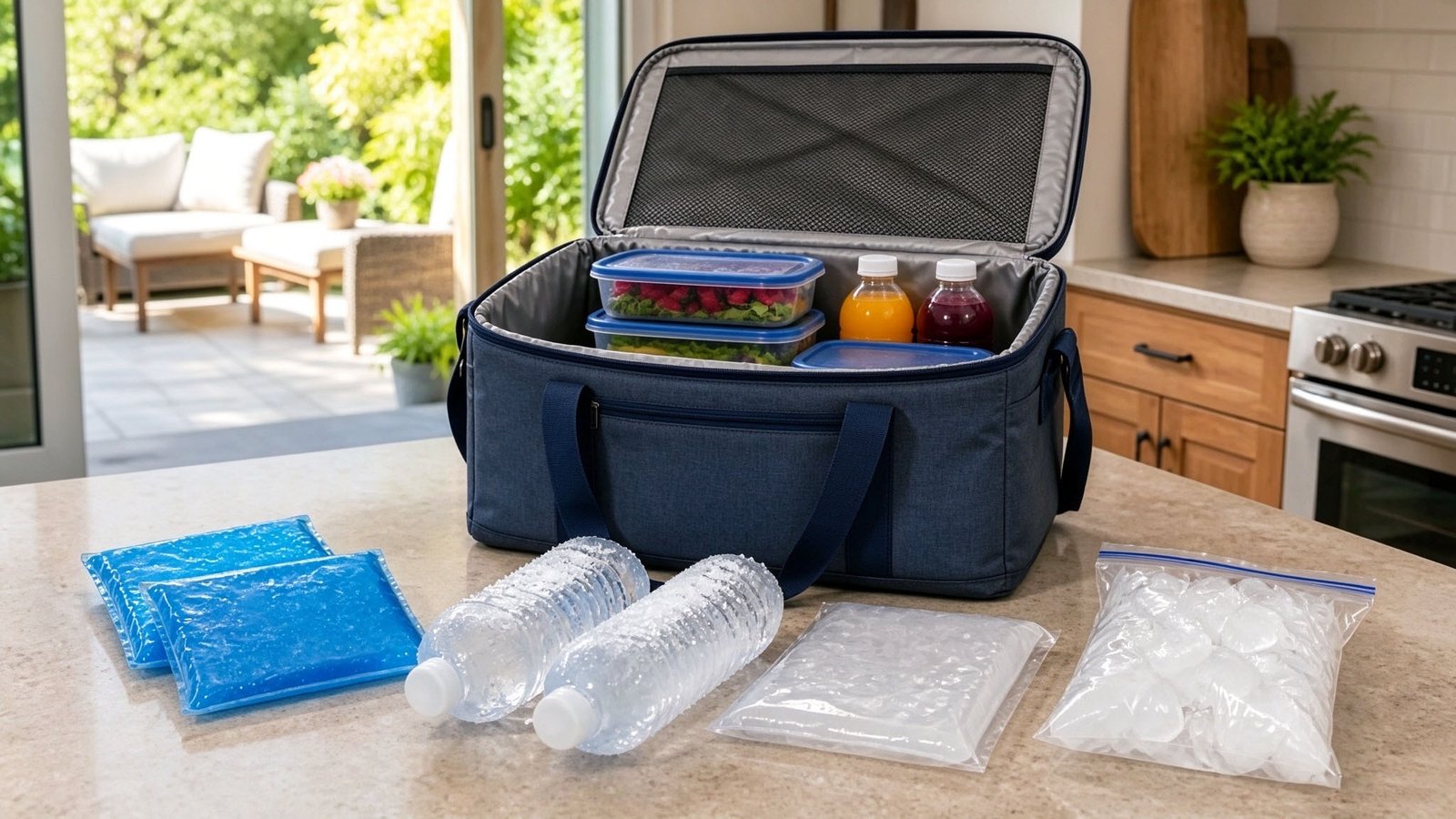
The position that looks best in a drawing is not always the easiest to use. I check what happens at the zipper, around the container lid, and during removal. Then I compare the workable layouts under the same conditions and keep usability approval separate from cooling validation.
Which Ice Pack Dimensions Should a Custom Cooler Bag Design Start With?
I often see briefs that list the bag’s outside dimensions but describe the ice pack only as “medium” or “slim.” That leaves too much room for interpretation. Two packs with similar face dimensions can differ in thickness, corner shape, and rigidity, which changes how they fit through the opening.1
I start with the ice pack’s maximum length, width, and thickness in the condition specified for loading. I also record the lunch container’s widest points, including its lid, clips, and handles. Then I ask the sampling team to check that both items fit together and can be loaded and removed as intended.

I ask for three things before sampling
| What I request | What I record | Why it matters |
|---|---|---|
| The intended ice pack | Model, maximum dimensions, corner shape, and rigidity in use | I need to know whether the pack can slide into position without bending or catching. |
| The intended lunch container | Maximum dimensions with the lid closed, including clips and handles | I need to allow for projections that the container body measurements may miss. |
| The loading and retrieval sequence | Which item goes in first, which comes out first, and whether either may be tilted | I need to check that an arrangement that fits when closed also works in use. |
I prefer physical samples because a drawing does not always show how rigid parts pass each other. In one prototype, the original ice-pack position conflicted with the actual lunch container. In that sample, I adjusted the layout in response to the fit conflict. I use that example to explain why I ask for both items before recommending a position. It was a fit observation, not a finding about cooling.
I also distinguish interior space from entry clearance. Insulation, lining, seam allowances, and zipper construction can make the usable opening smaller than the exterior dimensions suggest.2 A container might sit flat once inside but still need to tilt to clear the zipper. If the buyer wants it to stay level during loading and removal, I put that requirement in the brief. Otherwise, the sampling team may call it a fit while the buyer sees a usability problem.
How Do Bottom and Side Ice Pack Positions Change Usable Space in a Custom Cooler Bag?
I can have enough interior volume on paper and still lose clearance in the direction that matters. A bottom pack takes up height, while a side pack takes up width or depth.3 I look at which dimension the lunch container can least afford to lose.
I compare bottom and side positions by checking the space left after the pack is installed. I check bottom placement for lid and zipper clearance, then check side placement for room to insert and lift the container. I also confirm whether the user can remove the ice pack without moving the container.
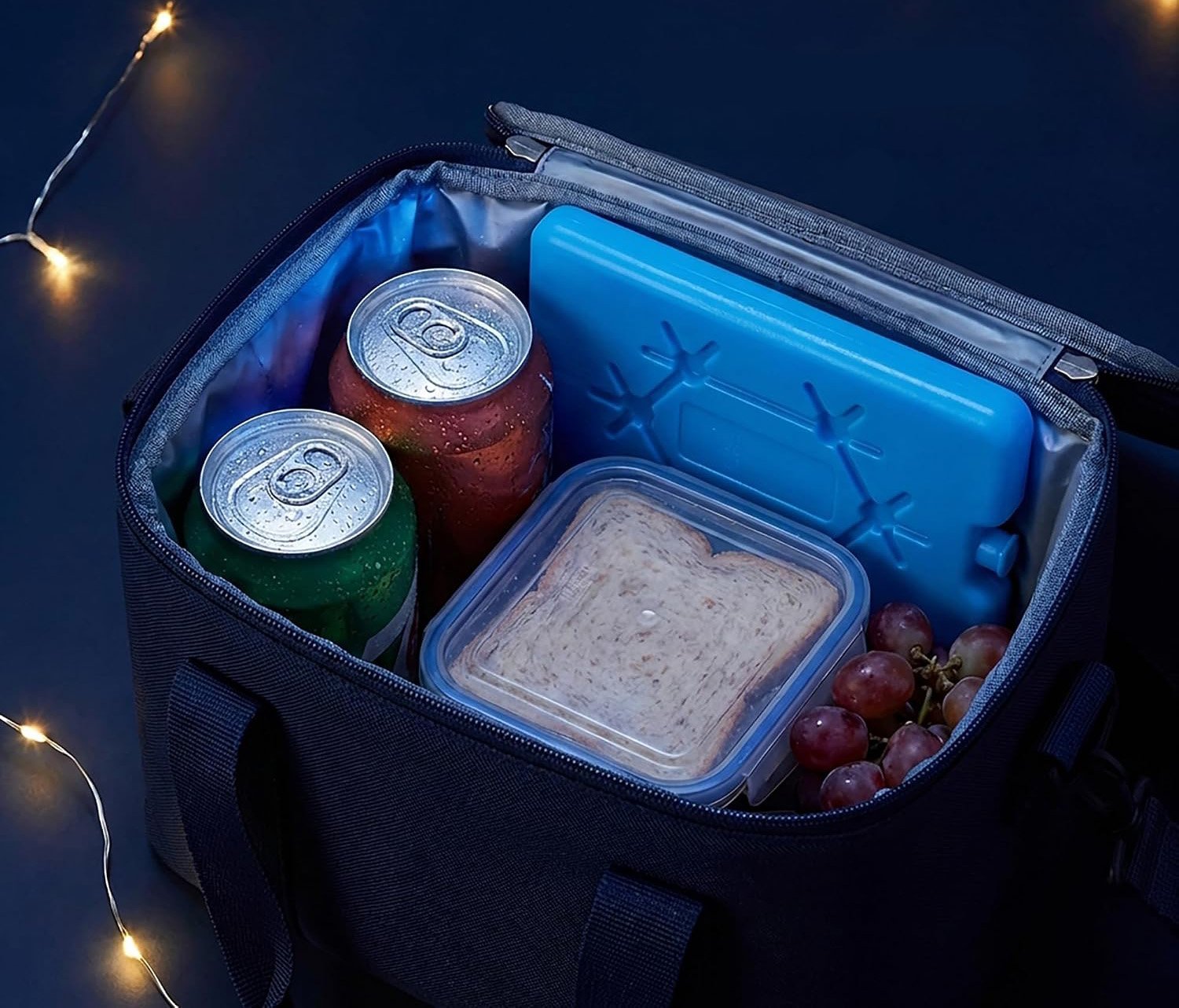
I check the movement, not just the final fit
| Ice pack position | Space I check first | Usability question I ask |
|---|---|---|
| Bottom | Height above the container lid | Can I close the bag naturally, and does the brief allow me to lift the container before reaching the pack? |
| Side | Width or depth beside the container | Can I lift the container past the pack without snagging a lid clip or turning it? |
| Top | Clearance above the lid and across the opening | Can I remove the container in the agreed order, or does the pack block it? |
A bottom position is worth sampling when the bag has enough spare height and the buyer does not need to retrieve the pack first. I check whether the container sits flat on the pack and whether the bag closes without pressing on the lid. If the pack has a raised edge or a thicker section, I check whether it changes the way the container sits. I make that observation with the specified pack, not a thin substitute.
A side position is worth sampling when the bag has spare width or depth. I pay particular attention to lid clips and handles. A container may slide down beside the pack and still catch when I lift it out. I also check whether the pack shifts into the container’s path after I remove the container. That matters if the next step is to put the container back.
I give top placement the same practical check. If the buyer wants the container to come out first, I try that sequence with the pack installed. I do not count a layout as a pass if I have to move the pack first and the brief says it should stay in place.
When Is a Separate Ice Pack Pocket Worth Adding to a Custom Cooler Bag?
I sometimes see an ice pack pocket added because it makes a sample look more finished. But a pocket that narrows the opening or catches the container lid creates a new problem. I add one only when it solves a specific issue I can demonstrate in the sample.
I consider a separate ice pack pocket when the loose pack shifts into the container’s path or when the brief calls for independent access to the pack. I keep the pocket only if it solves that problem without making the bag harder to load, close, clean, or manufacture consistently.
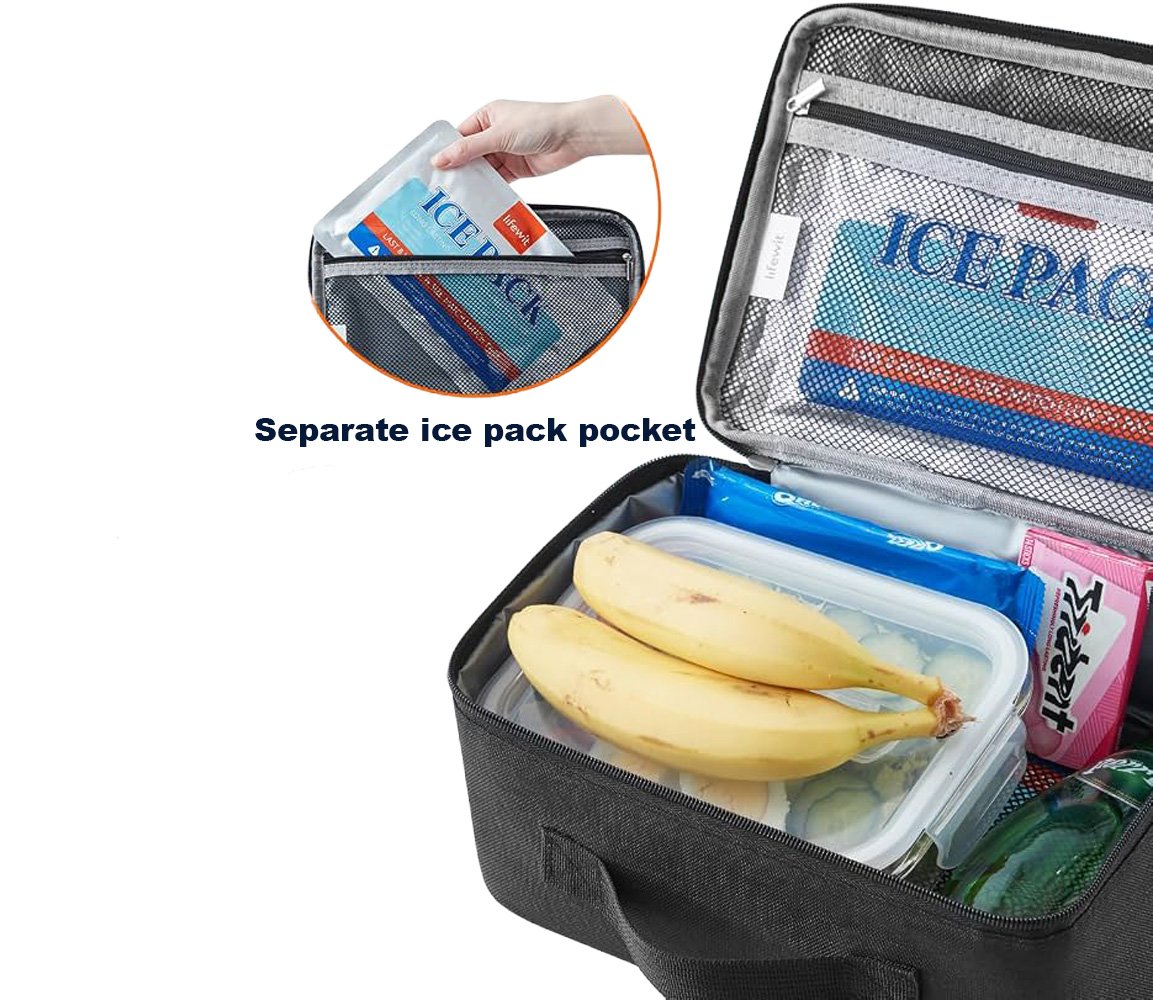
I compare the pocket with the simplest workable layout
I start by asking what the pocket must do. If the pack shifts, the pocket needs to hold it where the layout requires.4 If the user needs to remove the pack while leaving the container in place, the opening must be reachable with the container loaded. Those are different requirements. A pocket can meet one and miss the other.
I check four points before I recommend adding it:
- Opening clearance: I insert and remove the actual pack in its specified loading condition. I note whether I have to bend the pack, stretch the pocket, or hold the bag open with my other hand.
- Container clearance: I repeat the loading and retrieval sequence with the pocket occupied. An empty pocket can lie flat and hide a clearance problem.
- Cleaning access: I check whether I can reach the pocket corners and nearby lining for the cleaning method the buyer intends to specify.5
- Repeatable construction: I ask the supplier to identify the finished opening size and pocket position on the specification. I want production staff and inspectors to know which measurements affect fit.
I also ask for the price difference between the version with the pocket and the simplest alternative. Extra material and sewing can be justified if the pocket prevents a recurring usability issue.6 If the buyer cannot identify a clear benefit in a side-by-side sample check, I would rather leave the pocket out than pay for a feature that takes up room.
How Should Buyers Compare Layouts Under the Same Test Conditions?
I can learn very little from a comparison if one sample uses a thinner pack or a smaller lunch container. It is also easy to favor the sample I have handled most often. I reduce both problems by using the same items, sequence, and pass criteria for every layout.
I compare layouts using the same container, ice pack, target load, and loading and retrieval sequence.7 I note any other construction differences that could affect the result. I use this fit check to judge usability. If the buyer needs a cooling-duration claim, I ask for a separate evaluation under defined conditions.
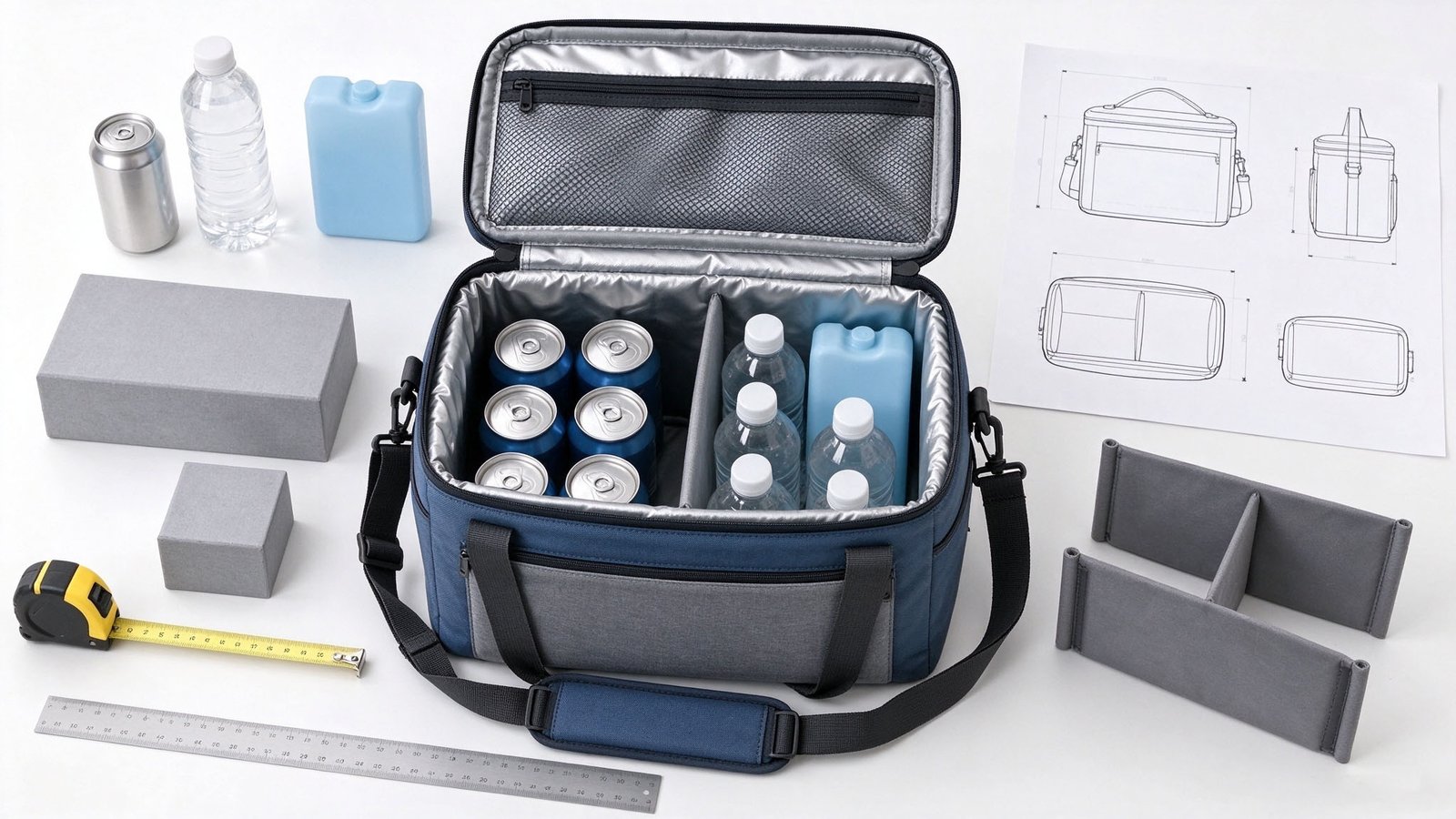
I run the same fit check on each sample
- I record the setup. I note the sample revision, container and ice pack models, and anything else the buyer expects the bag to hold.
- I load the bag in the intended order. I note any unplanned tilt, repositioning, or force needed to get the items through the opening.
- I close and handle the sample as agreed. I check for zipper interference and note whether normal handling causes the pack to shift.
- I remove the first item named in the brief. I record whether I have to move anything else to get it out.
- I document what happened. I use a short video when movement is the issue. A still photo of both items inside does not show a clip catching during removal.
I agree on pass criteria before comparing samples.8 For example, if the brief says the container must come out first without tilting, that is the criterion for every layout. If the brief allows the pack to come out first, I do not mark a design down for requiring that step. The goal is to check the layout against the intended use, not against my personal packing preference.
I keep cooling validation separate
A successful fit check does not tell me how long the contents stay cold.9 If the buyer needs to support a thermal claim, I recommend that a qualified testing professional define the method and acceptance criteria. The evaluation should document factors such as starting temperatures, ambient conditions, contents, pack preparation, opening frequency, and the measurement location.10 I do not use a fit video or an informal temperature reading to support a cooling-duration or food-safety claim.
What Layout and Performance Evidence Should Buyers Approve for a Custom Cooler Bag?
I have seen how easily “sample approved” can mean different things to a buyer and a factory. The buyer may mean that the lunch container came out cleanly. The factory may take it to mean that all construction details are final. I record what was approved and what still needs verification.
I approve the layout against an identified sample revision, a written fit record, and a production specification. I ask for evidence that the actual pack and container fit and that retrieval works as agreed. If the product carries a cooling claim, I ask for separate performance evidence tied to the relevant configuration.
I ask for evidence the factory and buyer can both use
| Approval item | Evidence I request |
|---|---|
| Sample identity | A revision number or date that links the physical sample, drawings, photos, and fit record |
| Layout and access | Photos showing both items in place and a short video showing the agreed loading and retrieval sequence |
| Production construction | Finished opening and pocket dimensions, material and component specifications, and agreed tolerances at fit-critical points |
| Routine quality control | An agreed inspection step for the opening, zipper operation, pocket placement, and fit with the specified items |
| Cooling performance, where claimed | A separate report that identifies the evaluated configuration, method, conditions, and results |
I ask the supplier to flag any bulk-production change that could affect fit. A thicker lining, a shifted pocket seam, or a different zipper construction may narrow the usable opening even if the outside dimensions stay the same. When a change touches a fit-critical point, I ask for a new fit check rather than assuming the earlier approval still applies.11
I also keep supplier documentation separate from product approval. At CoraggioBag, we can provide applicable factory certification or audit records and discuss documented material options. I recommend that buyers verify the scope and validity of any record they plan to rely on. A factory audit may help qualify a supplier, but it does not show that a particular lunch container fits or that a particular bag meets a cooling claim.12
Frequently Asked Questions
Should the ice pack always go on top of a custom cooler bag?
No. I keep top placement on the shortlist only when the pack and container fit together and the container can come out in the intended order. If the brief calls for container-first retrieval and the pack blocks that movement, I compare another layout rather than changing the sequence to suit the sample.
Can I approve a layout before I have the actual lunch container?
I can review a drawing or use a dimensioned stand-in to narrow the options, but I treat that decision as provisional. Before final approval, I prefer to check the actual closed container and ice pack together. Lid clips, handles, and rigid corners can affect movement in ways a stand-in may miss.
What if the same bag needs to fit several containers?
I ask the buyer to name the required container models and check each one against the intended pack. I do not assume the largest container is the only difficult one. A smaller model with a projecting handle or rigid lid clip may be harder to pass through the same opening.
Does a fit check tell me how long the bag will stay cold?
No. I use a fit check to confirm that the pack and container fit and that the user can load and remove them as intended. For a cooling-duration or food-safety claim, I recommend qualified evaluation under defined conditions that match the intended use and the specific claim.
Conclusion
I choose an ice pack position for a custom cooler bag only after I know which container and pack the buyer intends to use, how they go in, and what needs to come out first. I approve that layout in a physical sample and keep any cooling claim subject to separate validation. If you are planning a B2B bulk order, send CoraggioBag your container and ice pack dimensions, reference photos or samples, and preferred retrieval sequence. We can review the brief and recommend which layouts are worth sampling.
"Interactive Modeling of Mechanical Objects", https://cims.nyu.edu/gcl/papers/gilureta2016imm.pdf. Assembly-design principles distinguish nominal part size from the clearance required along an insertion path, which depends on part geometry, orientation, and any permitted deformation. These principles do not establish whether either ice pack fits the bag in question. Evidence role: mechanism; source type: education. Supports: Insertion clearance depends on the part's full geometry, its orientation during movement, and whether it can deform.. Scope note: General assembly principles do not substitute for a fit check with the specified ice pack. ↩
"Zippers Made Easy - BE BOLD. Shape the Future.", https://pubs.nmsu.edu/_c/C221/index.html. In sewn-product measurement, the finished opening and the exterior dimensions are separate points of measure. Construction details explain why the exterior dimensions alone cannot establish the usable opening, but they do not quantify the clearance of this bag. Evidence role: mechanism; source type: education. Supports: The finished zipper opening is a separate measurement from exterior dimensions, and seam and lining construction can affect the usable passage.. Scope note: The effect of each component must be determined from the finished sample or its construction specification. ↩
"Dense Robotic Packing of Irregular and Novel 3D Objects", https://motion.cs.illinois.edu/papers/TRO2021-Wang-DenseRoboticPacking-preprint.pdf. Three-dimensional packing models distinguish total occupied volume from geometric feasibility along each axis. This distinction explains why changing pack placement can change the clearance available to the container, although static packing models do not establish whether the container can be removed. Evidence role: mechanism; source type: paper. Supports: Three-dimensional fit depends on occupied extent along each axis, not just on total volume.. Scope note: Static packing models do not account for retrieval paths or deformation of a soft-sided bag. ↩
"Art in Transit: Handbook for Packing and Transporting Paintings", https://repository.si.edu/bitstreams/79fbe982-578b-4c0c-a4e5-a858cfbb48b3/download. Packaging-design guidance distinguishes containment from restraint: an internal feature limits movement only to the extent that its geometry and construction restrict displacement during handling. This principle does not demonstrate that a particular cooler-bag pocket restrains the pack adequately. Evidence role: mechanism; source type: education. Supports: Internal restraint is designed to limit movement during handling; an enclosure can hold an item without preventing it from shifting.. Scope note: Packaging restraint guidance is contextual; pocket performance depends on the actual pack, materials, and handling conditions. ↩
"FDA Food Code 2022", https://www.fda.gov/media/164194/download. Food-equipment cleanability guidance identifies access and the geometry of seams and corners as factors that affect cleaning. This provides a rationale for inspecting pocket corners but does not establish that food-equipment requirements apply to a lunch bag or that the bag can be cleaned effectively. Evidence role: general_support; source type: government. Supports: Cleanability guidance treats accessibility and surface geometry as factors that affect whether a cleaning method can be applied.. Scope note: Guidance for food equipment is contextual, not a cooler-bag cleaning standard or validation. ↩
"(PPT) SCAP", https://www.academia.edu/24523764/SCAP. Sewn-product costing methods account for both material consumption and sewing labor, so an added pocket can change unit cost through either input. The size of any price increase and whether the usability benefit warrants it are not established by the costing method. Evidence role: mechanism; source type: education. Supports: Sewn-product cost models account for material consumption and labor associated with construction operations.. Scope note: The actual cost depends on the construction, production volume, and supplier quote. ↩
"5.3.3.2. Randomized block designs", https://www.itl.nist.gov/div898/handbook/pri/section3/pri332.htm. Experimental-design guidance distinguishes the factor under study from other variables that can influence results. Keeping the contents and task sequence fixed makes layout comparisons easier to interpret, but it does not eliminate the effects of other construction differences. Evidence role: general_support; source type: government. Supports: Controlling variables other than the design factor under study improves the interpretability of a comparison.. Scope note: A controlled fit comparison does not isolate layout effects if the samples also differ in relevant construction details. ↩
"NASA Systems Engineering Handbook", https://www.nasa.gov/wp-content/uploads/2018/09/nasa_systems_engineering_handbook_0.pdf. Requirements-verification guidance treats success criteria as part of the test plan, allowing each result to be judged against the same documented requirement. The guidance supports the timing of the decision, not any particular retrieval order or no-tilt threshold. Evidence role: general_support; source type: government. Supports: Verification plans define success criteria in advance so that observed results can be evaluated against documented requirements.. Scope note: The relevant pass criteria must come from the buyer's intended use. ↩
"PQS performance specification TITLE: Vaccine cold box with freeze- ...", https://extranet.who.int/pqweb/key-resources/documents/pqs-performance-specification-e004cb053-vaccine-cold-box-freeze-prevention. Passive cold-container test protocols define cold-holding duration using elapsed time and a specified temperature limit under stated conditions. A fit check measures neither, and thresholds used in cold-chain protocols do not establish food-safety limits for packed lunches. Evidence role: definition; source type: institution. Supports: Cold-holding duration is measured by elapsed time relative to a specified temperature limit under defined conditions.. Scope note: Cold-chain protocols illustrate the measurement principle but do not validate a consumer cooler bag or its food-safety performance. ↩
"Qualification of shipping containers", https://cdn.who.int/media/docs/default-source/medicines/norms-and-standards/guidelines/distribution/trs961-annex9-supp13.pdf?sfvrsn=bbacf511_2&download=true. Passive-container thermal qualification ties temperature measurements to the specified ambient profile, payload, coolant preparation, and sensor locations. Where the intended use includes opening the container, the opening schedule is part of the scenario to which the result applies. Evidence role: mechanism; source type: institution. Supports: Passive-container thermal protocols document boundary conditions, payload and coolant preparation, and sensor placement; opening events are relevant when the use scenario includes them.. Scope note: Shipping protocols may assume a closed container; they do not supply a universal opening schedule for cooler-bag testing. ↩
"NASA Systems Engineering Handbook", https://www.nasa.gov/wp-content/uploads/2018/09/nasa_systems_engineering_handbook_0.pdf. Configuration-control guidance links verification evidence to the tested configuration and calls for assessing the effect of changes on previously verified requirements. This supports rechecking clearance when the construction changes in a way that may affect fit. Evidence role: general_support; source type: government. Supports: Change control evaluates whether prior verification remains applicable to requirements affected by a revised configuration.. Scope note: General change-control guidance does not prescribe a mandatory retest procedure for cooler bags. ↩
"ISO - Certification", https://www.iso.org/certification.html. Conformity-assessment guidance distinguishes management-system certification from product certification. An audit of a factory's management system therefore does not, by itself, demonstrate the fit or thermal performance of a particular bag configuration. Evidence role: definition; source type: institution. Supports: Management-system audit evidence concerns the audited system and scope, whereas product claims require evidence applicable to the product and characteristic at issue.. Scope note: An audit may reference product test records; those records must be evaluated separately for relevance and scope. ↩