I help buyers specify drawstring shoe bags that fit their intended use, but a fabric weight alone cannot define the right product. A bag can meet a purchasing specification yet disappoint in fit, presentation, or closure feel. I start with the shoes, packing method, and reuse expectations before proposing materials.
I recommend choosing fabric weight and cord specifications for drawstring shoe bags through a use-case brief and finished-sample approval. Buyers should define shoe size, packing method, presentation, reuse expectations, and budget, then verify the proposed fabric, cord, channel construction, and closure together rather than approving isolated material values.

In my CoraggioBag inquiries, the most useful starting question is not “What GSM should I order?” I first ask what the bag needs to do. The five questions below show how I turn that conversation into an approval brief.
Which Shoes and Packing Method Define the Bag Size?
I start with fit because an attractive material cannot correct the wrong bag dimensions. A specification based only on shoe length can overlook width, sole thickness, or the space needed to close the opening.1 Those omissions can leave buyers approving a bag that is awkward to pack.
I define the size of drawstring shoe bags around the actual footwear and its intended packing arrangement. I ask whether each bag holds one shoe or a pair, how the shoes sit together, and how much clearance the opening needs. I then confirm the finished dimensions with representative shoes inside.

I define the bag’s job before its dimensions
I distinguish three common purchasing briefs:
| Intended use | What I clarify first | What I prioritize during approval |
|---|---|---|
| Footwear-brand packaging | Shoe range, presentation, and whether the bag sits inside a box | Fit, appearance, branding, and packing consistency |
| Reusable travel or sports storage | Footwear bulk, packing arrangement, and expected reuse | Loading access, closure usability, and construction |
| Promotional giveaways | Intended footwear, distribution format, and budget | Useful capacity, logo presentation, and agreed cost |
I do not assume that a promotional shoe pouch needs the same construction as reusable travel storage. Equally, I do not assume that every footwear brand wants a thick, structured presentation.
I request the dimensions that affect packing
When a buyer cannot send footwear, I ask for the length, widest width, and overall height of representative shoes. I also ask whether the specified size represents the largest footwear in the planned range.
I clarify the packing arrangement separately. A pair placed side by side creates a different shape from shoes positioned heel to toe. Individual shoe sleeves create another requirement.
My size brief normally records:
- The buyer’s intended shoe type and size range.
- The number of shoes per bag.
- The position of the shoes inside the bag.
- The required finished bag width and height.
- The usable space below the drawstring channel.
- The agreed measurement method and dimensional tolerances.
I distinguish overall bag height from usable packing height because the channel occupies part of the construction. I also check whether the loaded opening gathers as intended without forcing the shoes into place.
For drawstring shoe bags covering several footwear styles, I recommend checking representative bulky and smaller pairs. I would rather identify an awkward compromise during sampling than discover it during bulk packing.
How Does Fabric Weight Change Protection and Opacity?
I often receive inquiries that begin with a requested GSM, or grams per square meter2. That number is useful, but it does not describe the entire fabric. If I treat weight as a complete quality specification, I can miss the buyer’s expectations for softness, coverage, drape, and appearance.
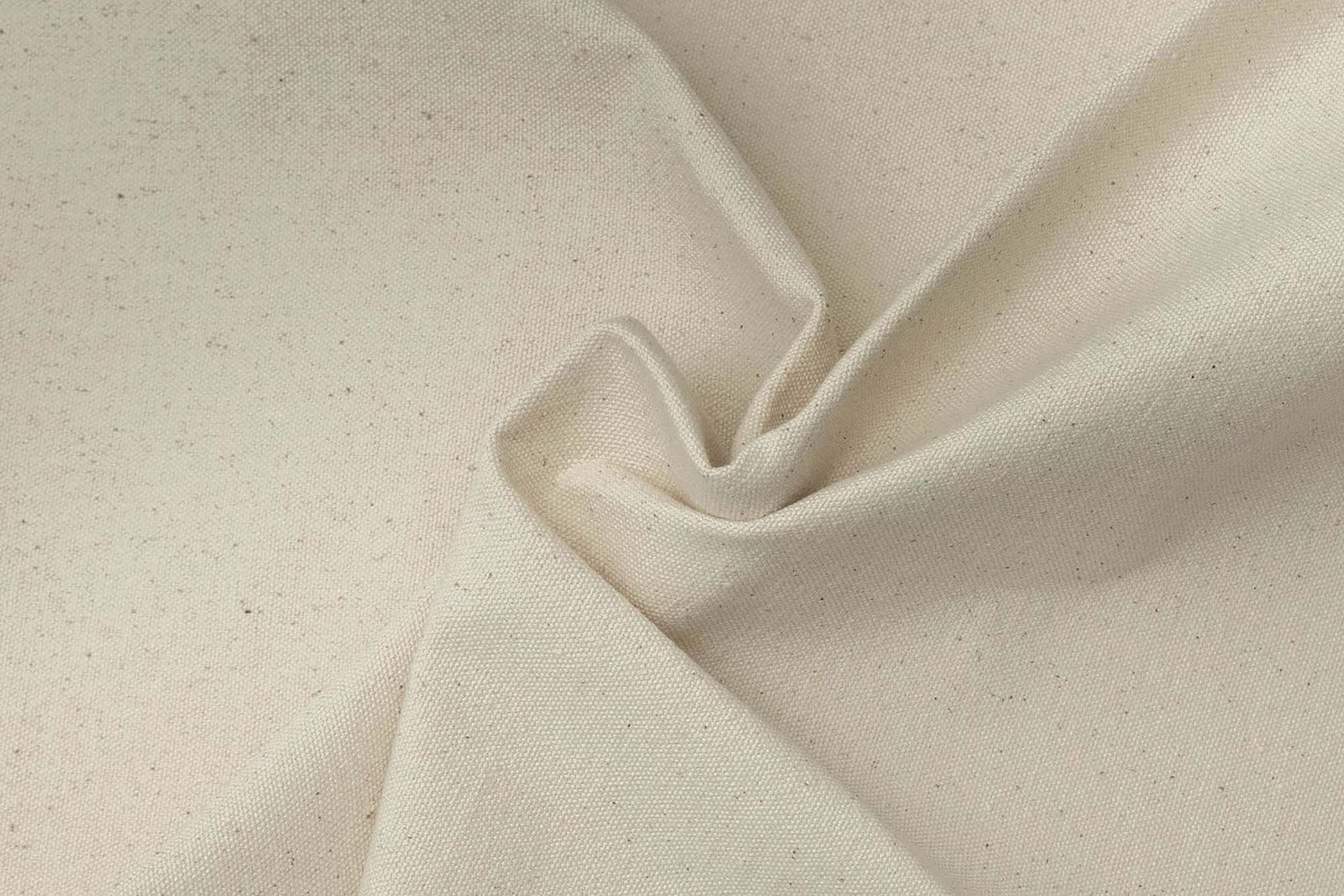
I use fabric weight as one specification for drawstring shoe bags, not as a stand-alone measure of protection or quality. Fiber composition, fabric construction, finish, and color also influence the result.3 I compare proposed materials and inspect the finished sample for hand feel, coverage, gathering, and the buyer’s intended presentation.
I separate measured weight from the result a buyer wants
In my own shoe-bag sample comparisons, heavier fabrics have not always produced the hand feel or appearance a customer wanted. That observation is why I ask about presentation before recommending weight. It is not evidence that a lighter material is more durable or that one fabric will last longer.
I ask buyers to describe “protection” more precisely. They may mean separating footwear from clothing, reducing direct contact between shoes, or keeping the contents less visible. Those are different requirements. A simple drawstring closure also does not create a sealed enclosure.4
My material discussions usually separate these points:
| Specification or observation | What I use it to clarify |
|---|---|
| Fiber composition and fabric construction | The identity of the proposed material |
| Fabric weight | The agreed mass per unit area |
| Surface finish and hand feel | The tactile result the buyer expects |
| Color and opacity | How visible the footwear is through the fabric |
| Drape and gathering | How the material behaves in the completed bag |
| Printing or embroidery appearance | Whether the branding suits the selected material |
I review opacity with the intended contents
I do not approve opacity from weight alone. I compare the sample with representative shoes inside, under agreed viewing conditions. Dark footwear inside a light-colored bag may reveal a presentation issue that an empty fabric swatch does not show.5
I also inspect the gathered opening. A material that looks appealing when laid flat may create a closure shape the buyer dislikes.
For drawstring shoe bags with specific abrasion, color-transfer, or other performance requirements, I recommend agreeing on appropriate evaluation methods with a qualified testing provider. I keep those requirements separate from subjective approval of softness or appearance. A preferred hand feel does not establish verified protective performance.6
Which Cord Materials and Ends Suit Repeated Use?
I treat the drawstring as part of the finished closure, not as a minor trim choice. An unspecified cord can leave the factory and buyer working toward different expectations. A cord that looks suitable on its own may also feel awkward once it passes through the selected channel.
I ask the factory to specify cord material, construction, diameter or width, cut length, closure configuration, and end treatment. For drawstring shoe bags intended for repeated use, I review those details in the finished sample and agree on a practical opening-and-closing check. I do not prescribe a universal cord diameter.

I specify the cord beyond its color
I want the quotation and sample record to identify the actual proposed drawstring. “Matching cord” leaves too much room for interpretation.
My cord checklist includes:
- Material: The supplier identifies the fiber composition.
- Construction: The supplier describes whether the cord is braided, twisted, flat, or another proposed form.
- Size: The supplier records diameter for a round cord or width for a flat drawstring, with the measurement method.
- Length: The supplier distinguishes cut length from the exposed length on the finished bag.
- Configuration: The sample shows the intended single- or opposing-pull arrangement.
- Ends: The sample includes the proposed knots, folded finishes, aglets, or other treatments.
- Color: The buyer approves the cord against the bag and branding.
I may discuss cotton or synthetic cord options, but I do not infer service life from the material name. I ask the supplier to propose a combination suitable for the requested construction and budget.
I judge usability at the channel
I evaluate the cord and channel together.7 I check whether I can open the bag sufficiently for packing, gather the opening without excessive effort, and reopen it without awkward handling.
I also look at the exposed ends when the bag is both open and closed. Excess length can interfere with the desired presentation, while insufficient length can make handling inconvenient. I confirm those details through the sample rather than a universal formula.
For repeated-use drawstring shoe bags, I ask buyers to define their expected handling conditions. We can then agree on a sample review procedure and, where necessary, obtain qualified advice on a suitable test protocol. An informal opening-and-closing check can reveal usability problems, but I do not present it as proof of long-term durability.8
How Should Eyelets and Channel Seams Be Reviewed?
I pay attention to the opening because it brings the fabric, stitching, and cord into one small area. A neat-looking panel does not establish that the closure is well executed. If I overlook the exits and channel seams, I may miss problems that only become obvious during handling.
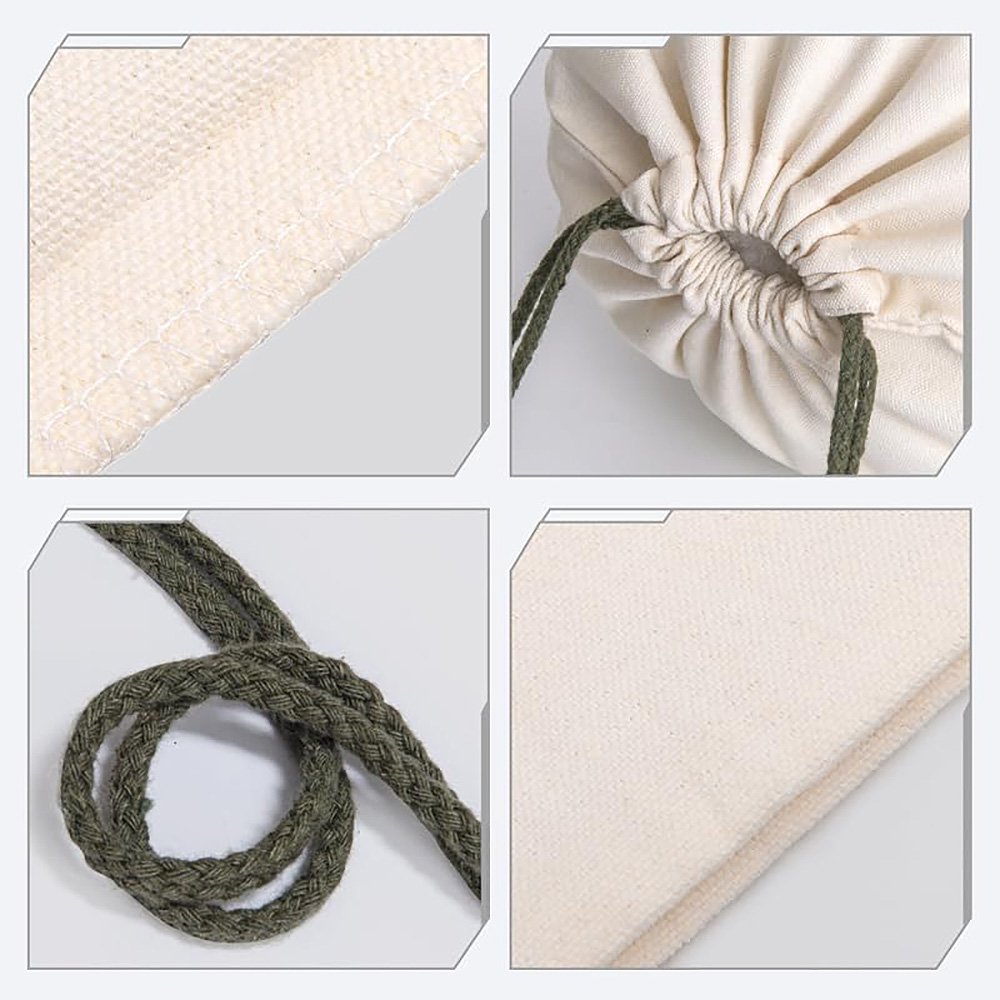
I review eyelets, cord exits, and channel seams as a connected construction. I check the approved exit type, edge finishing, reinforcement, stitching, and cord clearance on the finished sample. I do not assume metal eyelets are necessary; I ask the factory to explain the proposed construction and confirm it through sampling.
I first confirm whether the design uses eyelets
Some drawstring shoe bags use metal eyelets. Others use sewn openings or cord exits formed within the channel design. I record the selected approach so that a later substitution does not pass unnoticed.
When a proposal includes eyelets, I ask about their material, finish, dimensions, and attachment method. I inspect the sample for visible distortion, rough edges, loose attachment, or contact points that could affect handling. These observations are sample checks, not a substitute for a defined attachment-strength test.
For sewn exits, I look at edge finishing and the reinforcement specified by the factory. I ask how the construction will be kept consistent in bulk production.
I inspect the channel from both sides
I turn the sample inside out where the design allows it. I want to see whether the construction matches the approved proposal, not just whether the outside photographs well.
My review covers:
| Review point | What I look for |
|---|---|
| Channel dimensions | The factory has followed the agreed construction |
| Stitch placement | The stitching does not visibly catch or obstruct the cord |
| Seam appearance | The sample has no obvious skipped stitches, open sections, or unwanted puckering |
| Cord exits | The exits match the approved position and finishing |
| Internal finishing | The finish matches the buyer’s presentation requirements |
| Loaded closure | The channel gathers acceptably with the intended shoes inside |
I avoid prescribing one stitch count or reinforcement detail for every material.9 I ask the factory to propose construction appropriate to the fabric and design, then document the approved result.
For bulk purchasing, I also recommend defining defect categories and inspection criteria before production.10 A photograph of one neat seam cannot replace a clear quality-control agreement for the complete order.
What Sample Checks Confirm the Shoe Bag Specification?
I see sample approval as the point where a collection of material choices becomes a product decision. A fabric swatch cannot show shoe fit or closure usability. If I approve components separately without checking the complete bag, I leave important interactions unresolved before bulk production.
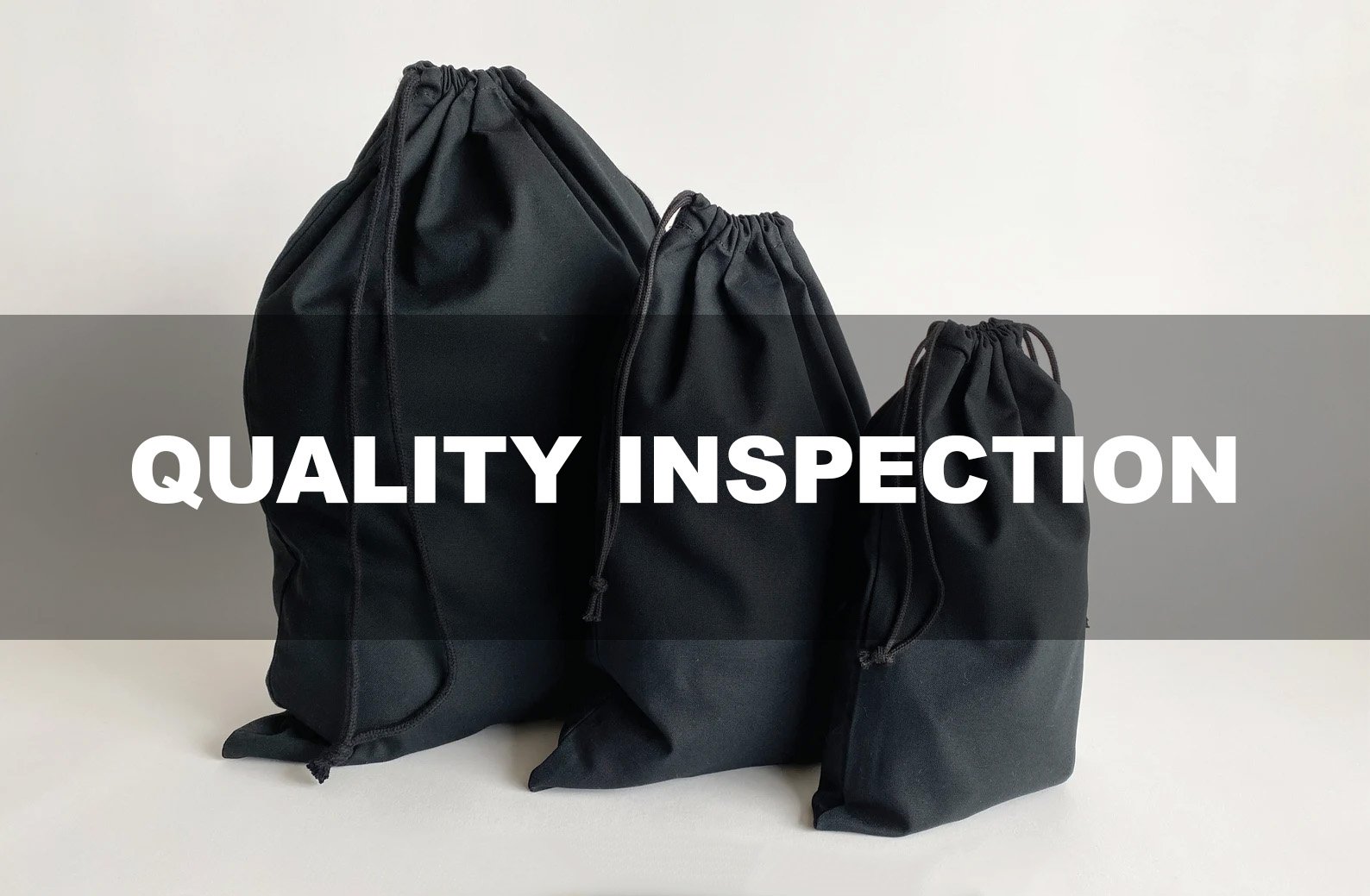
I approve drawstring shoe bags through a finished-sample checklist covering fit, fabric identity and weight, hand feel, opacity, branding, cord details, channel construction, and packing. I record changes and acceptance criteria in writing. Where the intended application requires verified performance or compliance, I recommend qualified evaluation rather than relying on appearance.
I turn the inquiry into a usable approval brief
I ask buyers to provide enough context for a meaningful proposal. My starting brief includes the intended footwear or its dimensions, packing arrangement, expected reuse, desired presentation, target quantity, and budget.
I then request a proposed fabric-and-cord combination, rather than treating those decisions as unrelated purchases.
For drawstring shoe bags, I use a checklist like this:
| Approval item | What I record |
|---|---|
| Intended use | Brand packaging, reusable storage, or promotional distribution |
| Fit | Representative footwear and approved packing arrangement |
| Dimensions | Finished measurements, usable space, and agreed tolerances |
| Fabric | Composition, construction, weight, color, and finish |
| Appearance | Hand feel, opacity, shape, and branding |
| Closure | Cord specification, configuration, length, ends, and handling |
| Construction | Channel, exits, seams, and any specified reinforcement |
| Packaging | Folding method, labels, unit packing, and carton requirements |
| Order reference | Sample identifier, specification revision, and approval date |
I separate approval observations from verified claims
I can observe that a sample opens smoothly during a review. I cannot turn that observation into a guaranteed service life. Likewise, I can approve an appearance without claiming that the fabric meets an unrequested performance standard.
When buyers require recycled-content documentation, chemical testing, or particular factory audit records, I ask them to identify the applicable requirements early. I recommend verifying the documents’ scope, validity, and relevance to the actual material, facility, or order. A general certificate does not automatically establish every claim about the finished product.11
Finally, I retain an agreed reference sample and a written change record. If the fabric, cord, branding, or construction changes, I review the affected features again. I do not assume that approval of an earlier version covers a revised closure or material substitution.12
Frequently Asked Questions
What GSM should I specify for drawstring shoe bags?
I do not recommend one GSM for every order. I first clarify the footwear, packing arrangement, presentation, reuse expectations, and budget. I then compare proposed fabrics and approve the finished sample. Weight belongs in the specification, but it does not replace checks for hand feel, opacity, or closure behavior.
Does heavier fabric make a shoe bag better?
I have personally seen heavier shoe-bag fabrics miss the hand feel or appearance a buyer wanted. I therefore avoid treating weight as a quality ranking. I evaluate the complete material and construction against the brief, and I keep any durability claims separate from subjective sample preferences.
What cord diameter should I request?
I ask the factory to propose a cord size that works with the selected channel and closure configuration. I record its material, construction, dimensions, length, and end treatment. I then review opening and closing on the finished sample rather than treating a particular diameter as universally suitable.
Can I approve production from a fabric swatch?
I use a swatch to narrow material choices, not to approve the complete product. It cannot confirm shoe fit, channel gathering, cord handling, or finished branding. I recommend approving a representative finished sample and recording the agreed specifications before authorizing bulk production.
Should every shoe bag include metal eyelets?
I do not specify metal eyelets by default. I ask the factory to propose an appropriate cord-exit construction for the selected fabric and design. I review the completed sample for finishing and usability, and I request qualified testing when the purchasing brief requires verified attachment performance.
Conclusion
I choose specifications for drawstring shoe bags by starting with their job, not by searching for the heaviest fabric or a universal cord size. I define the footwear and packing method, compare materials for the desired presentation, and review the cord and channel as one closure. I then document the finished-sample approval. At CoraggioBag, I can help turn that brief into a custom B2B proposal. Share your shoe dimensions, intended use, quantity, presentation requirements, and budget so we can discuss a suitable sample combination.
"Packaging Design", https://www.fitnyc.edu/academics/academic-divisions/art-and-design/packaging-design/index.php. Packaging-design guidance treats product geometry and clearance as inputs to package sizing; this supports considering footwear width and height alongside length, but does not establish a universal allowance for drawstring shoe bags. Evidence role: general_support; source type: education. Supports: Package dimensions must accommodate the product's three-dimensional geometry and functional clearance.. Scope note: General packaging principles do not determine shoe-bag dimensions or closure allowances without product-specific checks. ↩
"ISO 3801:1977 - Textiles — Woven fabrics", https://www.iso.org/standard/9335.html. Textile mass-per-unit-area methods, including ASTM D3776/D3776M, quantify fabric weight per unit area, commonly expressed in grams per square metre. Evidence role: definition; source type: institution. Supports: Fabric mass per unit area is measured and reported using units such as grams per square metre.. ↩
"Textile", https://en.wikipedia.org/wiki/Textile. Textile research relates fabric behavior and appearance to fiber characteristics, structural parameters, finishing, and coloration, rather than to mass per unit area alone; the contribution of each variable depends on the property being evaluated. Evidence role: general_support; source type: research. Supports: Fiber characteristics, fabric structure, finishing, and coloration contribute to textile behavior and appearance.. Scope note: These variables do not affect every property equally, and general findings do not predict a particular bag's performance. ↩
"Evaluation of a passive method for determining particle ... - PMC", https://pmc.ncbi.nlm.nih.gov/articles/PMC10034564/. Barrier-performance research identifies openings and closure interfaces as potential pathways for ingress; this supports distinguishing a gathered opening from a verified seal, but does not quantify leakage through a particular shoe bag. Evidence role: mechanism; source type: research. Supports: Openings and closure gaps can compromise enclosure barrier performance.. Scope note: Evidence from other textile enclosures is contextual and does not establish the barrier performance of this product. ↩
"Improving color reliability of digital textile images via optimized ...", https://pmc.ncbi.nlm.nih.gov/articles/PMC12789604/. Research on textile transparency relates visible show-through to fabric optical properties and the contrast and illumination of the underlying background; this provides a basis for assessing coverage with representative contents rather than an unbacked swatch. Evidence role: mechanism; source type: paper. Supports: Fabric transparency and perceived coverage depend on optical transmission, background contrast, and viewing conditions.. Scope note: The degree of show-through remains specific to the fabric, footwear, and viewing conditions. ↩
"ISO 12947-2:2016 - Textiles — Determination of ...", https://www.iso.org/standard/61058.html. ISO 12947 addresses textile abrasion resistance, while ISO 105-X12 evaluates colour fastness to rubbing; these methods assess properties that are not established by approval of fabric hand feel. Evidence role: general_support; source type: institution. Supports: Abrasion resistance and color transfer require property-specific evaluations separate from tactile assessment.. Scope note: Results from these tests address specified properties and conditions, not every form of protection a shoe bag might be expected to provide. ↩
"Pulling apart the mechanisms that lead to jammed knitted ...", https://arxiv.org/html/2410.03940v1. Textile-friction research shows that resistance to sliding depends on interacting surfaces and contact conditions, providing a mechanical rationale for evaluating a cord within its intended channel rather than in isolation. Evidence role: mechanism; source type: paper. Supports: Pulling resistance in contacting textile components depends on their interacting surfaces and contact geometry.. Scope note: General friction findings do not specify acceptable pull forces or an optimal cord diameter for a shoe bag. ↩
"Information Technology Laboratory", https://www.nist.gov/itl. NIST reliability guidance treats life assessment as a statistical testing problem involving defined conditions and failure observations; a brief functional check therefore does not, by itself, establish long-term service life. Evidence role: general_support; source type: government. Supports: Reliability and lifetime claims require testing with defined conditions, durations, and failure criteria.. Scope note: General reliability guidance does not supply a validated cycling protocol for drawstring shoe bags. ↩
"Effect of Different Sewing Parameters on Lockstitch Seam ...", https://www.academia.edu/67471432/Effect_of_Different_Sewing_Parameters_on_Lockstitch_Seam_Strength_for_Denim_Fabric. Experimental seam studies relate seam strength and efficiency to fabric properties, sewing thread, stitch type, and stitch density, supporting material-specific construction choices rather than a universal stitch count. Evidence role: mechanism; source type: paper. Supports: Seam performance depends on interacting fabric, thread, stitch, and construction parameters.. Scope note: Findings for particular fabrics and seam configurations do not establish the best reinforcement for every drawstring channel. ↩
"6.2. Test Product for Acceptability: Lot Acceptance Sampling", https://www.itl.nist.gov/div898/handbook/pmc/section2/pmc2.htm. ISO 2859-1 provides an attribute-based acceptance-sampling framework using specified inspection and acceptance rules; its application requires defined criteria for judging conformity rather than reliance on a single attractive sample. Evidence role: general_support; source type: institution. Supports: Attribute-based acceptance inspection relies on defined nonconformities and sampling decision rules.. Scope note: Acceptance sampling informs lot decisions but does not guarantee that every item is defect-free or prescribe shoe-bag defect categories. ↩
"ISO 9000 family", https://en.wikipedia.org/wiki/ISO_9000_family. ISO distinguishes management-system certification from product certification, while laboratory accreditation applies to specified activities within an accredited scope; neither automatically substantiates every claim about a finished product. Evidence role: general_support; source type: institution. Supports: Management-system certification, laboratory accreditation, and product evidence have distinct scopes.. Scope note: The relevance of any particular certificate or report depends on its issuer, scope, validity, and connection to the material or order. ↩
"Clause 8.3.6 Design and development changes", https://davidbarker.consulting/iso9001/8-3-6-design-and-development-changes/. ISO 9001 includes controls for reviewing design and production changes and retaining relevant records, supporting reassessment when a material substitution or closure revision could affect conformity. Evidence role: general_support; source type: institution. Supports: Product and production changes should be reviewed and controlled to maintain conformity with requirements.. Scope note: The standard supplies a general change-control framework rather than a mandatory shoe-bag resampling procedure for every modification. ↩