We received a new inquiry last week: a beauty brand wanted a small cosmetic bag for a summer promo. Their brief? "Make it cute and cheap." That phrase alone creates a high risk of disappointment, and we have seen it before.
To create a GWP bag that buyers love, you need to match the bag to the giveaway's actual job, not just its appearance. The right GWP bag fits the product bundle, usage occasion, and brand expectation while staying executable within your cost and lead time constraints.
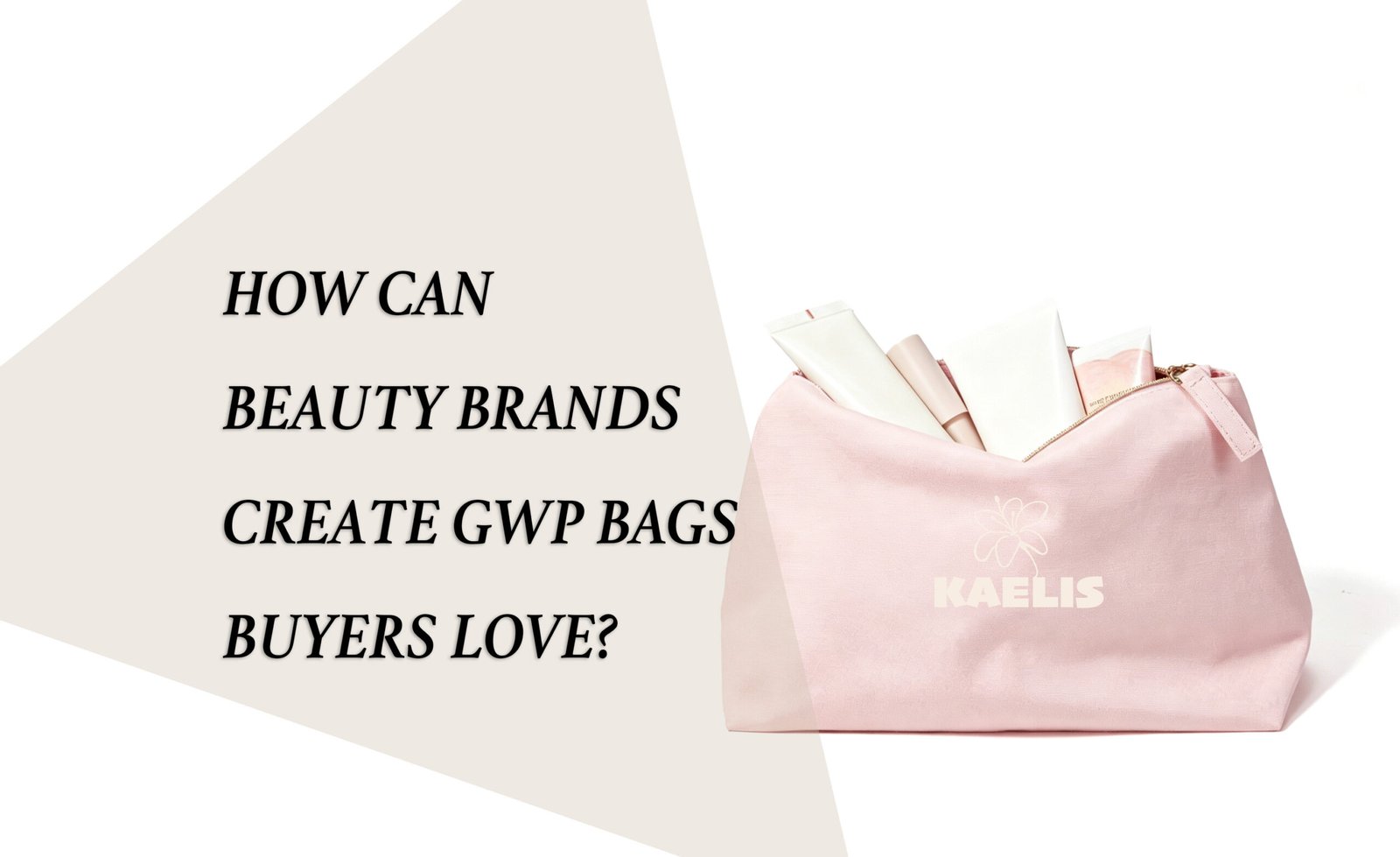
A gift-with-purchase bag is not just packaging. It is a brand touchpoint, a functional container, and a post-campaign object.1 If buyers only love the bag on the mockup but never use it after the promo, your GWP investment gets wasted. That is why we push back on vague briefs and ask what the bag must do before we quote.
What Makes a Cosmetic GWP Bag Feel Worth Keeping?
We see brands order thousands of bags that look good in product photos but lack one thing: a reason to keep them. A bag feels worth keeping when it solves a real problem for the user beyond the promo period.
A GWP bag feels worth keeping when it fits a daily carry need, holds the right shape, and feels better than a disposable pouch.2 Material texture, closure reliability, and size must support real after-use scenarios, not just photo appeal.
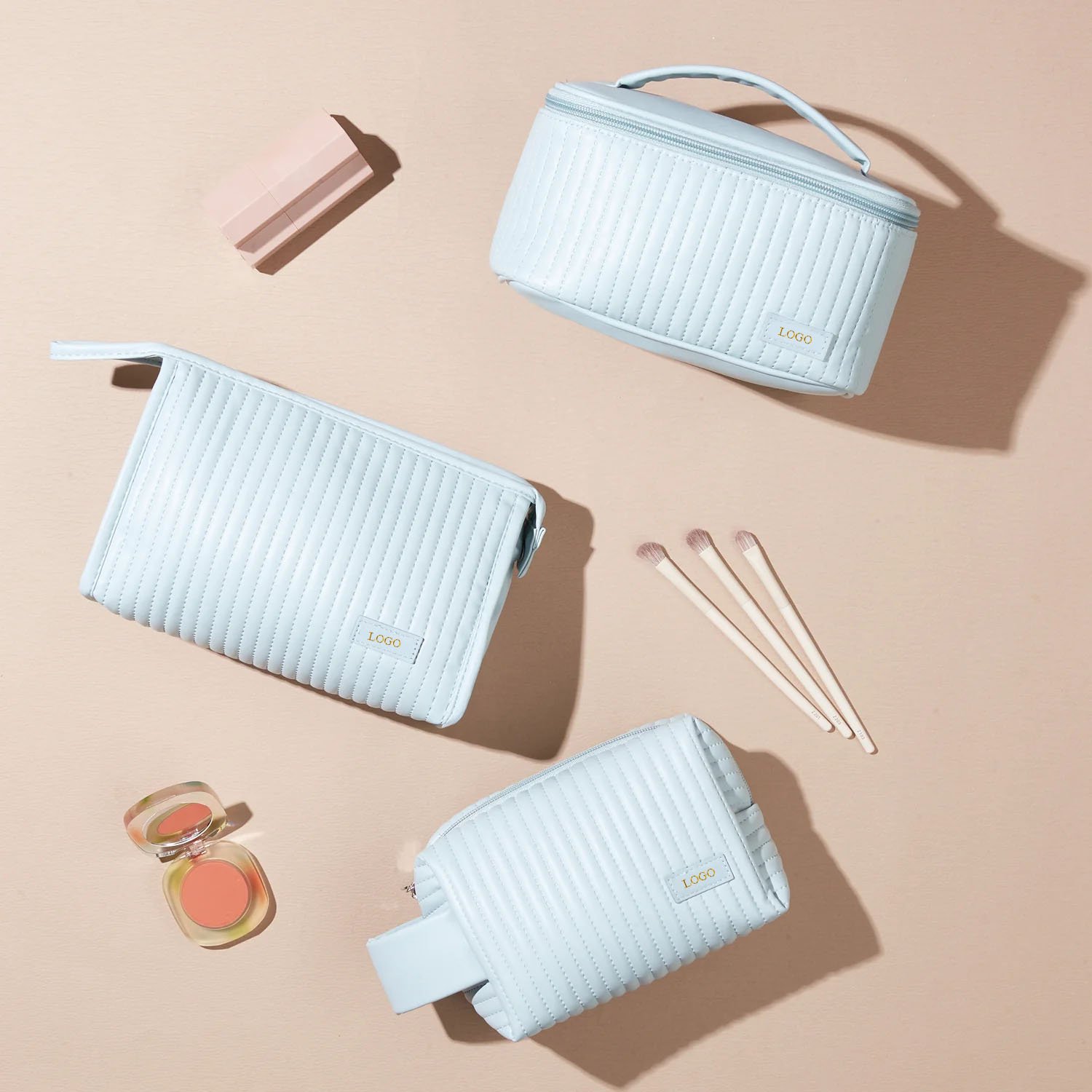
I once handled a project for a skincare brand. They wanted a flat zipper pouch for a kit that included three full-size bottles. The pouch looked fine on paper. Then we made the sample. The bottles rolled inside the pouch, creating an awkward bulge, and the zipper did not lie flat under the weight. The buyer realized users would never reuse it for travel. We revised the design into a box-shaped bag with internal dividers. The cost increased by 15%, but the buyer was confident the bag would not get thrown away immediately.
That is the core trade-off: you need to identify how the user will actually handle the bag. Will it sit on a vanity? Will it go into a gym bag? Will it travel? A flat pouch works for sheet masks but fails for bottles. A drawstring bag works for loose items but looks cheap if the fabric is too thin. A structured cosmetic bag can carry heavier products but costs more and requires stronger stitching and lining.
Ask yourself what products go inside the bag and what the user does after the giveaway. If the bag does not serve a realistic purpose, it becomes disposable no matter how pretty it is. We often send buyers a size and structure comparison chart with their sample so they can see which format fits their bundle and usage context best.
Which Materials Work Best for Beauty Gift Bags?
Buyers often ask for "premium-looking" bags but do not specify what that means in material terms. Premium feel comes from texture, weight, structure, and finish consistency, not just a fancy fabric name.
Canvas, polyester, nonwoven, and PU all work for beauty bags, but each material affects durability, print quality, washability, and eco-perception differently. Choose the material based on how the bag will be used and what finish you can control at scale.
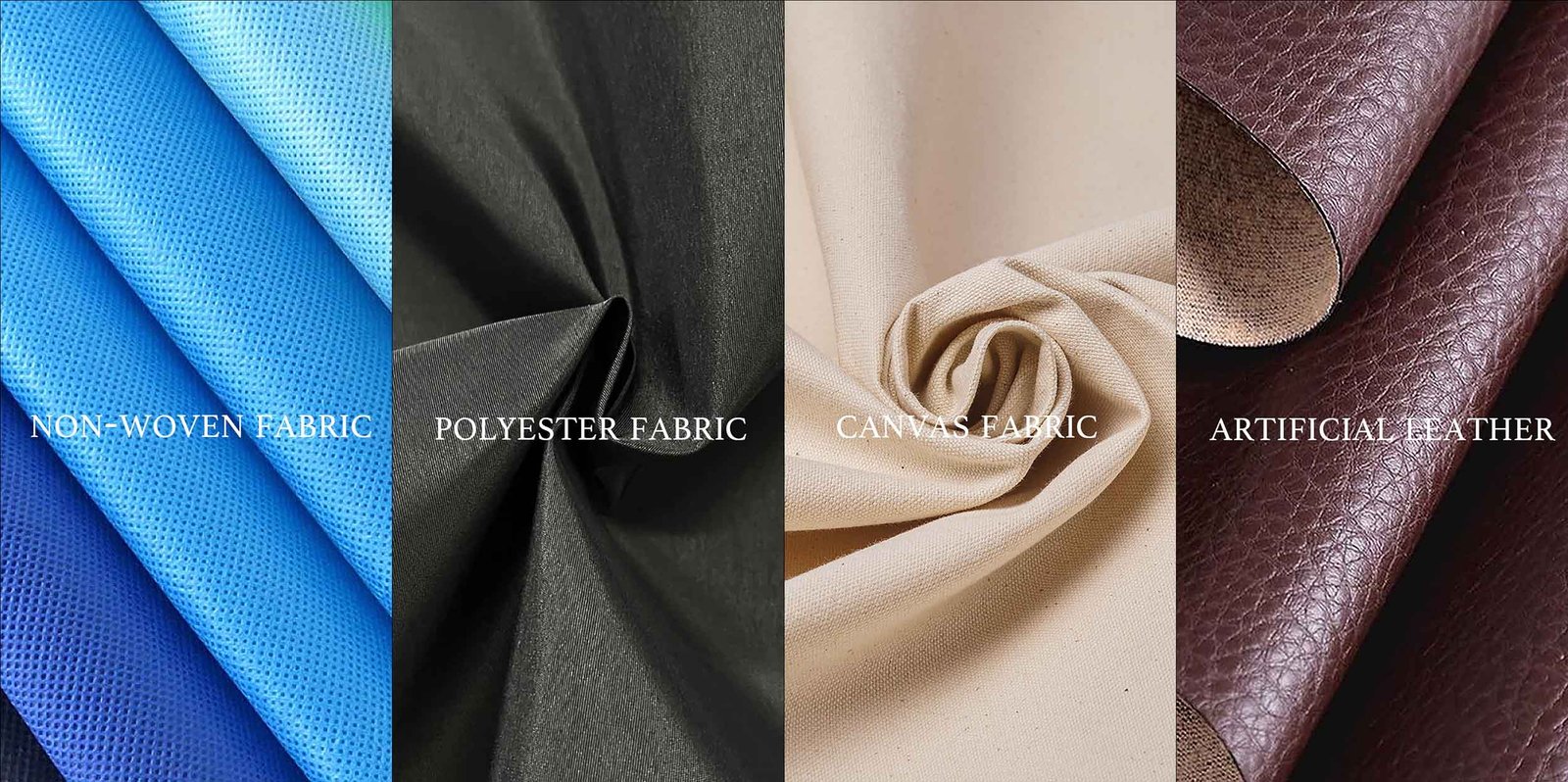
Canvas feels natural and fits eco-brand positioning, but it requires pre-wash treatment to avoid shrinkage and color bleed.3 Buyers who choose canvas must accept slightly longer lead times and some natural texture variation. We recommend canvas for bags that will be washed or reused frequently, such as a toiletry bag or a small tote for cosmetics.
Polyester offers the most print clarity and color consistency.4 It holds shape well, resists water, and supports high-volume production with fewer quality control issues.5 Most promo GWP bags we produce use polyester because it balances cost, appearance, and reliability. However, polyester feels less natural than cotton or linen blends, which may conflict with certain brand messaging.
Nonwoven is the lowest-cost option6 and works for short-term giveaways where reuse is not expected. It prints clearly and can be shaped into many formats, but it tears more easily and lacks structure. We suggest nonwoven only for flat pouches or simple drawstring bags used during events or sample distribution campaigns.
PU (polyurethane) looks like leather7 and feels smooth, which creates a higher-end impression. It costs more and requires more careful storage during production to avoid surface scratches. PU works well for small cosmetic pouches given as a bonus with high-value purchases, but it is less practical for large giveaway volumes where cost per unit must stay low.
| Material | Best Use | Cost Level | Print Quality | Washable |
|---|---|---|---|---|
| Canvas | Reusable toiletry, eco-focus | Medium | Good | Yes |
| Polyester | High-volume promo bags | Low-Medium | Excellent | Yes |
| Nonwoven | Event giveaways, samples | Low | Good | No |
| PU | Premium bonus gifts | High | Excellent | No |
We often recommend material based on the campaign type. If the brand runs a limited-time online promo with a bonus bag, polyester works. If the brand wants to create an upscale gift set sold at retail, PU or canvas makes more sense. The wrong material choice creates either unnecessary cost or a cheap-looking result that hurts brand perception.
How Can Brands Balance Cost and Premium Feel?
Buyers frequently ask if they can get a premium-looking bag at a low unit cost. The answer is yes, but only if they understand which features affect perceived quality and which do not.
Premium feel comes from structural details like reinforced seams, quality zippers, smooth lining, and consistent print finish.8 You can reduce cost by simplifying the bag shape, limiting color count, and choosing stock components instead of custom hardware.
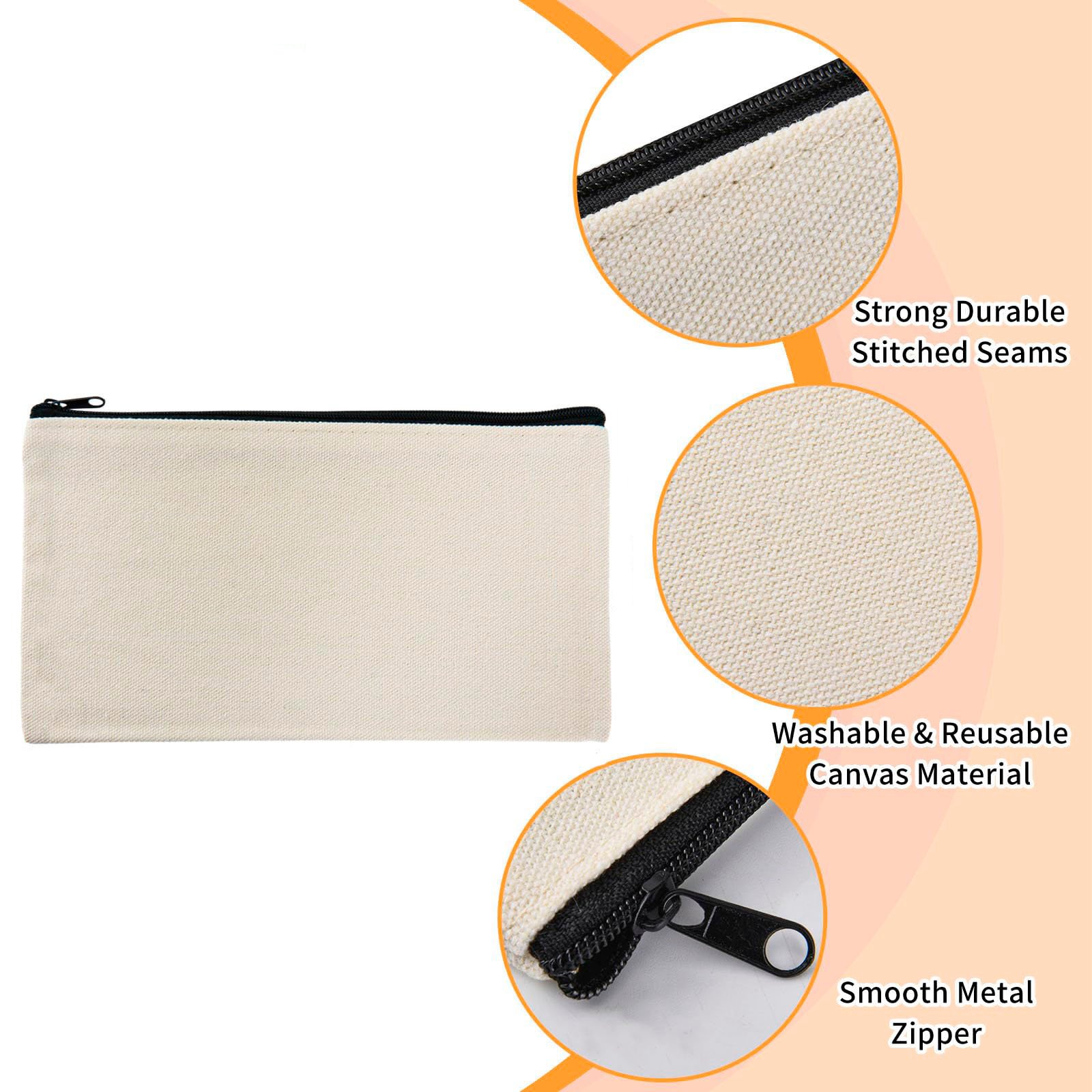
A buyer once sent us a reference image of a high-end cosmetic bag sold at $30 retail and asked if we could make something similar for $2 per unit at 5,000 pieces. We could not match the exact look because the reference bag used custom metal zippers, full lining, padded sides, and embossed logo hardware. All of those features require custom tooling or premium components that push unit cost higher. Instead, we proposed a simplified version with a standard nylon zipper, single-layer construction, and screen-printed logo. The bag looked clean and structured, but it did not try to replicate luxury-level details. The buyer approved the sample because it fit their budget and still felt more premium than a basic flat pouch.
Cost control starts with deciding which details matter most. If the logo must look sharp, invest in screen printing or heat transfer instead of a woven label. If structure matters, add a cardboard insert or use thicker fabric instead of adding complex stitching. If the closure must feel secure, use a quality zipper instead of a drawstring. Trying to maximize every feature at once will either blow the budget or force compromises that make the bag look inconsistent.
We usually suggest buyers rank their priorities: brand visibility, structure, material feel, or finishing details. Then we allocate cost toward the top two priorities and simplify the rest. This approach prevents the "cheap and premium" contradiction from ruining the final result.
What Sizes Work for Sample Kits and Travel Makeup?
Size mistakes are common. We see buyers order bags that are too small to fit the products comfortably or too large to feel like a useful accessory. Size planning must start with the product bundle, not with guessing what looks right.
Measure the products first, add 20% space for ease of access9, and choose a bag size that can be reused for similar items. Standard sizes like 18×12×6cm for small pouches and 22×16×10cm for travel bags work for most beauty kits.
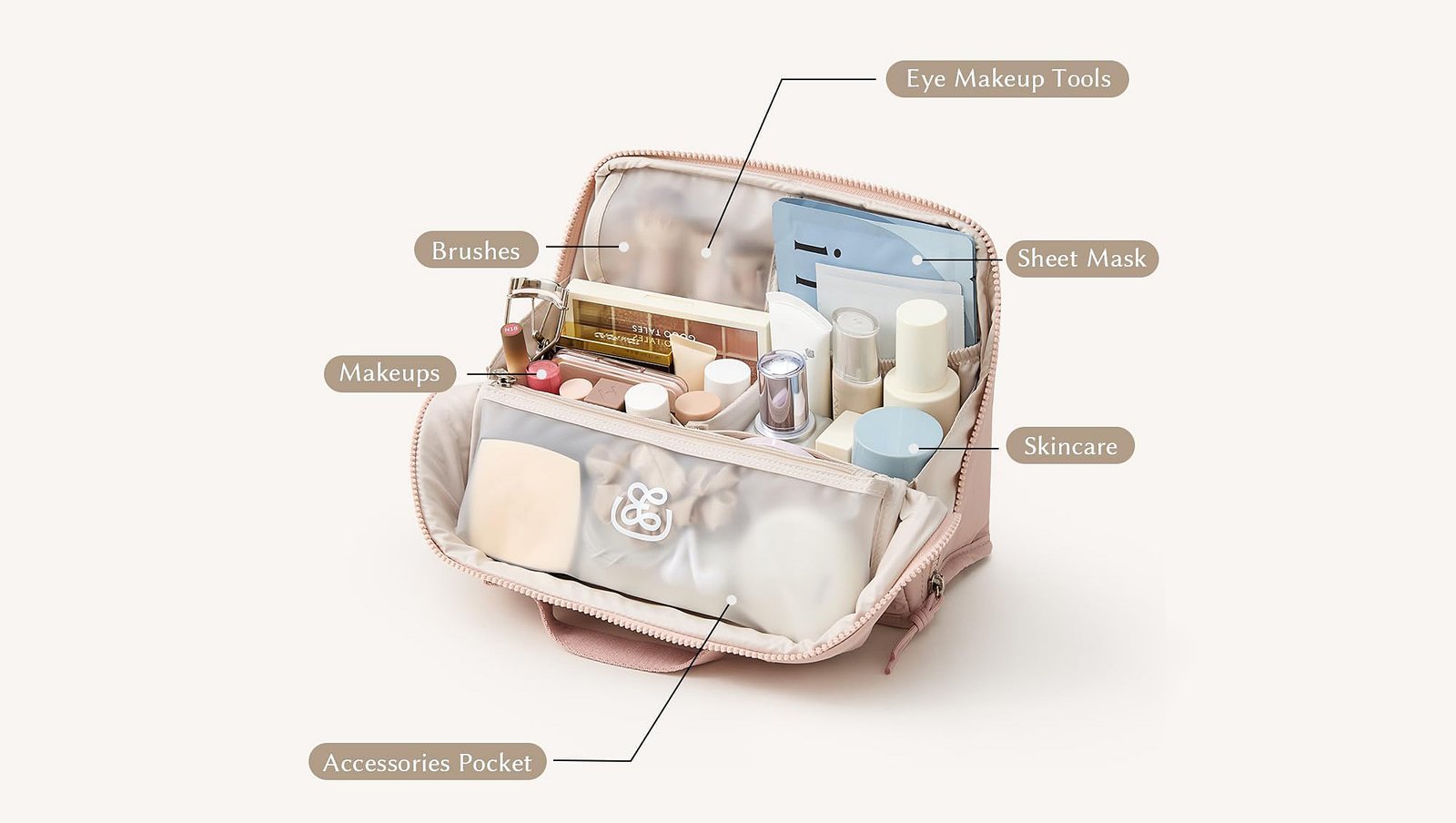
I worked with a buyer who wanted a GWP bag for a kit containing two 50ml bottles and one 30ml tube. They estimated a 15×10×5cm pouch would work. We asked them to send product dimensions. The bottles were 12cm tall and 4cm in diameter. A 15cm-wide pouch would not allow the bottles to stand upright, and a 5cm depth was too shallow for two bottles side by side. We recommended 20×14×8cm instead. The buyer was concerned about the larger size looking bulky, but once they saw the sample, they understood that a bag must accommodate the contents without forcing them in.
Size also affects after-use value. A tiny pouch that barely fits the promo products will not be reused because it is too small for most other cosmetics. A very large bag may seem generous but becomes awkward to carry and does not suit makeup storage. We recommend checking typical cosmetic sizes: a standard lipstick is about 8cm tall, a foundation bottle is 10-12cm, and a compact is around 6-7cm in diameter10. A good travel or sample-kit bag should hold at least three to five of these items comfortably.
If your brand runs frequent GWP campaigns, standardize on two or three bag sizes. This allows you to reorder without redesigning, reduces tooling cost, and creates consistency across campaigns. Buyers often skip this step and order custom sizes every time, which increases cost and lead time unnecessarily.
What Details Prevent a GWP Bag from Looking Cheap?
A cheap-looking bag is usually not cheap because of low cost. It looks cheap because small details are inconsistent or missing. These details do not add much to unit cost but make a large difference in perception.
Consistent stitching, smooth zipper movement, logo placement, and edge finishing prevent a GWP bag from looking cheap. Budget bags fail on these points because they skip quality checks or use mismatched components.
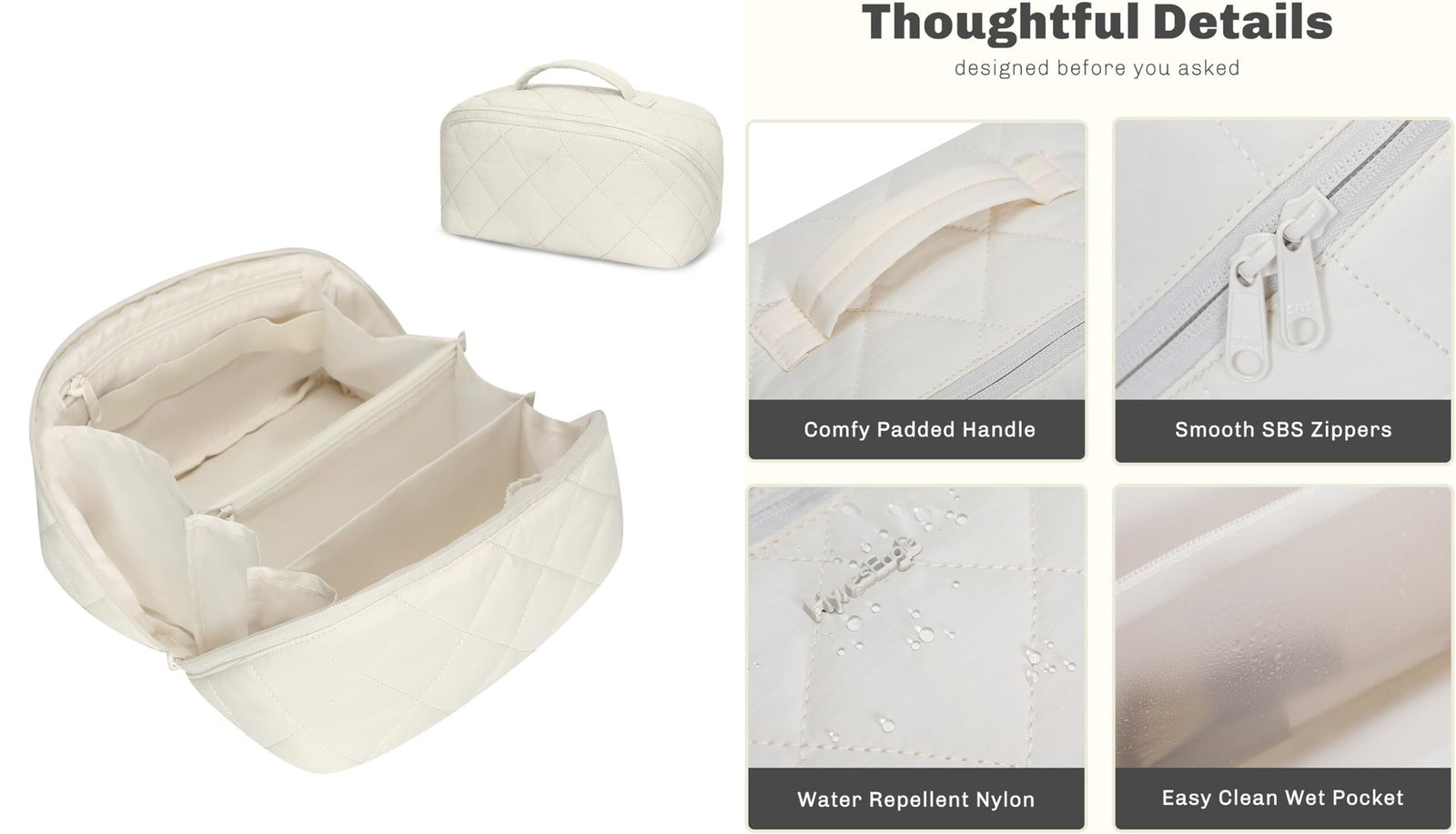
One buyer complained that the sample bag we sent looked cheaper than expected, even though the fabric matched the brief. I checked the production sample and found the issue: the zipper tape color did not match the bag body, and the stitching thread was slightly off-tone. These mismatches were subtle but noticeable, especially under retail lighting. We corrected both in the final production run. The buyer said the revised bags looked much better, even though we changed nothing about the fabric or structure.
Stitching must be straight and evenly spaced. Loose or crooked stitching is the fastest way to make a bag look low-quality. We run stitch-count checks during production to ensure consistency. Zippers must open and close smoothly without snagging. A cheap zipper will jam or separate after a few uses, and users will associate that failure with your brand. We source zippers from verified suppliers and test them during sampling.
Logo placement matters more than logo size. A logo that sits too high or too low on the bag looks unbalanced. A logo that is too large looks promotional rather than branded. We usually suggest a subtle logo on the front center or lower corner, sized proportionally to the bag. If the brand wants a larger logo for campaign visibility, we recommend placing it on the back or inside lining to avoid overwhelming the design.
Edge finishing separates finished bags from rushed ones. Raw edges must be bound or hemmed. Seams must be reinforced at stress points like zipper ends and handle attachment. Interior lining should cover rough seams if the bag will be used for cosmetics that could snag or stain. These steps add minimal cost but significantly improve perceived quality.
How Should Beauty Brands Plan GWP Bag MOQ and Packaging?
Many buyers ask about minimum order quantity and packaging options too late in the process. MOQ and packaging affect cost, lead time, and campaign execution, so they must be planned early.
Most bag factories set MOQ between 3,000 and 5,000 pieces for custom GWP bags11, with lower minimums available for stock designs. Plan packaging based on distribution format: polybags for bulk shipment, individual boxes for retail-style gifts.
Our standard MOQ is 5,000 pieces for fully custom bags with printed logos and custom sizes. This quantity balances tooling cost and production efficiency. For buyers who need smaller volumes, we offer semi-custom options: choose from stock bag shapes and sizes, then add a printed or embroidered logo. This reduces MOQ to 3,000 pieces and shortens lead time by one to two weeks.
Buyers sometimes ask if they can test a GWP bag with 500 or 1,000 pieces first. We explain that small test batches are possible but cost significantly more per unit because setup and tooling costs are spread across fewer pieces. If the buyer wants to validate the bag before committing to a full run, we suggest ordering samples in multiple sizes or materials instead. Samples cost more per piece but allow the buyer to test different options without locking into a large production order.
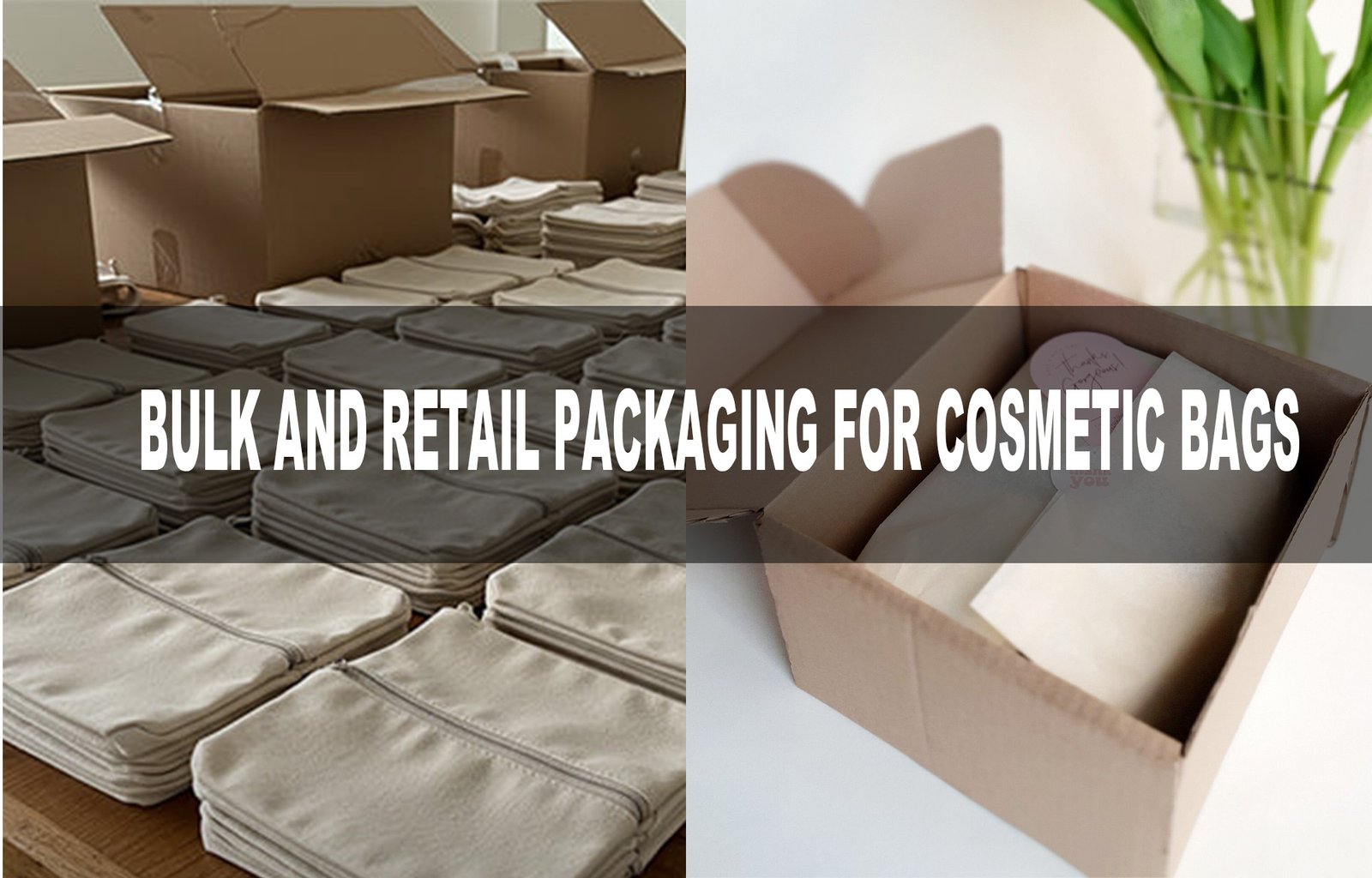
Packaging depends on how the bag will be distributed. If the bag goes into a promo kit assembled at your warehouse, polybag packaging works. We pack 50 or 100 bags per carton with protective layers to prevent dust and damage during shipping. If the bag will be handed out directly to customers or displayed at retail, individual packaging may be required. We can supply bags in printed boxes, drawstring dust bags, or branded sleeves, but this adds cost and lead time.
I worked with a buyer who ordered 10,000 GWP bags for a holiday campaign but did not specify packaging until two weeks before the shipment deadline. They wanted each bag in a printed box with a ribbon. We explained that custom box printing requires a separate supplier and adds at least three weeks to the timeline. The buyer had to choose between delaying the campaign or accepting polybag packaging. They chose polybags and added branded stickers to the outside, which worked but required last-minute adjustments. That is why we now ask about packaging during the initial brief, not after production starts.
Plan lead time carefully. Standard production takes four to six weeks after sample approval.12 Add one week for sampling and another one to two weeks if custom packaging is involved. Rush orders are possible but cost 20-30% more and increase the risk of quality issues. Buyers who plan GWP campaigns around peak shopping periods should place orders at least three months in advance to avoid delays.
Conclusion
Creating a GWP bag buyers love means matching the bag to the campaign's real requirements, not just its look. Focus on usability, material fit, and production consistency to make the bag feel worth keeping.
"Marketing communications - Wikipedia", https://en.wikipedia.org/wiki/Marketing_communications. Packaging research describes packaging as both a functional container and a communication medium that affects consumer perceptions of the product and brand, supporting the characterization of a GWP bag as more than mere packaging. Evidence role: general_support; source type: paper. Supports: That packaging can serve communicative, functional, and brand-related roles that influence consumer perception and post-purchase experience.. ↩
"Linking product design and durability: A review and research agenda", https://pmc.ncbi.nlm.nih.gov/articles/PMC9513616/. Studies on product attachment and perceived usefulness indicate that consumers are more likely to retain and reuse items that perform a practical function well and are perceived as durable, which is consistent with the claim that daily utility and structure make a GWP bag worth keeping. Evidence role: mechanism; source type: paper. Supports: That usefulness, quality perception, and suitability for real tasks are associated with product retention and continued use.. Scope note: This evidence is typically drawn from broader consumer-product research rather than studies focused specifically on cosmetic GWP bags. ↩
"Optimization and prediction of the cotton fabric dyeing process using ...", https://pmc.ncbi.nlm.nih.gov/articles/PMC10390507/. Textile care and fabric science references note that cotton-based fabrics such as canvas may shrink after laundering and can exhibit dye bleeding depending on finishing and dyeing conditions, supporting the need for pretreatment when washability and dimensional stability matter. Evidence role: mechanism; source type: education. Supports: That cotton/canvas fabrics can shrink and may bleed color if not pretreated or prewashed.. Scope note: The degree of shrinkage and bleeding varies with fabric construction, dye process, and finishing, so the source would support the risk in general rather than mandate pre-washing in every case. ↩
"Dye Sublimation | Media Commons", https://mediacommons.psu.edu/project/dye-sublimation/. Textile-printing literature reports that polyester, particularly in sublimation and related processes, is well suited to high-resolution image transfer and stable color reproduction, which supports the claim that polyester can deliver strong print clarity and consistency. Evidence role: mechanism; source type: research. Supports: That polyester is widely used for high-definition textile printing and can provide strong color consistency under appropriate printing methods.. Scope note: This support is contextual because print outcomes also depend on the printing method, coatings, fabric finish, and quality control, not only the fiber type. ↩
"Water-Repellent and UV-Resistant Properties of Polyester Fabric ...", https://pmc.ncbi.nlm.nih.gov/articles/PMC12138703/. Fiber-science references describe polyester as having relatively low moisture absorbency and good dimensional stability, properties that help explain its common use where shape retention and resistance to incidental moisture are desired. Evidence role: general_support; source type: education. Supports: That polyester fibers generally have good dimensional stability and low moisture absorbency, characteristics relevant to shape retention and water resistance.. Scope note: The source would directly support shape retention and moisture behavior, but any claim about fewer quality-control issues in high-volume production is contextual and depends on factory process control rather than fiber properties alone. ↩
""Evaluation of Durability of Nonwoven Polypropylene Grocery Bags ...", https://open.clemson.edu/all_theses/2476/. Nonwoven materials literature frequently identifies spunbond and related nonwovens as economical materials for disposable or short-use products, which supports the characterization of nonwoven as a low-cost option for promotional bags. Evidence role: general_support; source type: paper. Supports: That nonwoven polypropylene and similar nonwovens are commonly used in low-cost disposable or short-life packaging and bag applications because of economical production.. Scope note: This is contextual rather than a fixed price ranking, because actual unit cost depends on fabric weight, format, printing, and regional supply conditions. ↩
"Artificial leather - Wikipedia", https://en.wikipedia.org/wiki/Artificial_leather. Reference sources on synthetic leather describe PU leather as a polyurethane-coated material manufactured to imitate the appearance and some surface properties of leather, supporting the statement that PU looks like leather. Evidence role: definition; source type: encyclopedia. Supports: That PU leather is a polyurethane-based synthetic material designed to resemble leather.. ↩
"Role of Extrinsic Cues in the Formation of Quality Perceptions - PMC", https://pmc.ncbi.nlm.nih.gov/articles/PMC9359923/. Perceived-quality research shows that consumers infer product quality from observable workmanship cues, including fit, finish, materials, and consistency of details, which supports the claim that seams, zippers, lining, and print finish contribute to a bag's premium feel. Evidence role: mechanism; source type: paper. Supports: That consumers use workmanship and finishing cues to judge perceived quality in manufactured products.. Scope note: Most perceived-quality studies address consumer products broadly, so the support is conceptual rather than specific to cosmetic giveaway bags. ↩
"The Impact of Visual Elements of Packaging Design on Purchase ...", https://pmc.ncbi.nlm.nih.gov/articles/PMC11851823/. Packaging and ergonomic design guidance commonly emphasizes providing clearance beyond an item's exact dimensions so users can insert and remove contents without excessive force, which supports the rationale for allowing additional space in bag sizing. Evidence role: general_support; source type: other. Supports: That packaging and container usability often require dimensional allowance beyond exact object size to enable insertion, removal, and handling.. Scope note: The specific figure of 20% is likely a practical heuristic rather than a universally established standard, so external support would be contextual rather than a direct validation of that exact percentage. ↩
"Lipstick - Wikipedia", https://en.wikipedia.org/wiki/Lipstick. Category-level product specifications show that lipsticks, foundation containers, and compact cases commonly fall within the approximate dimensional ranges cited here, supporting their use as practical reference points for bag-size planning. Evidence role: general_support; source type: other. Supports: That common cosmetic formats such as lipsticks, foundation bottles, and compact cases typically occupy roughly these size ranges.. Scope note: This support would be approximate because cosmetic packaging dimensions vary significantly by brand, formula type, and dispenser style. ↩
"Minimum Order Quantities for Custom Mylar Bags - Brandmydispo", https://www.brandmydispo.com/blogs/news/minimum-order-quantities-for-custom-mylar-bags?srsltid=AfmBOorCxZ4UjplxQQqdQ6k9HD_3rhP38n_CdPIs9Df7UZJJIsE41iju. Manufacturing and sourcing references on made-to-order sewn goods note that customized production often requires minimum order quantities in the low-thousands because setup, material procurement, and production-line efficiency impose fixed costs, which is consistent with the MOQ range stated here. Evidence role: general_support; source type: other. Supports: That custom textile or promotional bag production commonly involves MOQs in the low-thousands due to setup, sourcing, and production efficiency constraints.. Scope note: The exact MOQ range is not universal and depends on construction complexity, decoration method, supplier location, and whether stock components are used. ↩
"a study on lead time management in garments industry", https://www.academia.edu/145106488/A_STUDY_ON_LEAD_TIME_MANAGEMENT_IN_GARMENTS_INDUSTRY. Sourcing guidance for custom sewn goods commonly reports production lead times of several weeks after sample approval, reflecting time needed for material procurement, cutting, sewing, finishing, and inspection; this provides context for a four-to-six-week schedule. Evidence role: general_support; source type: other. Supports: That custom sewn-product lead times commonly span several weeks after sampling and approval.. Scope note: The source would offer contextual industry norms rather than a guarantee, because actual lead time depends on order volume, material availability, seasonality, and shipping mode. ↩