Crossbody organizer bags often fail when buyers choose them by appearance alone. I have seen samples look polished in photos but miss the real travel task, which leads to weak sell-through and costly revisions. The better choice solves access, carry, and retail-fit problems at the same time.
Crossbody organizer bags that work for travel retail buyers are designed around real traveler behavior1, not just extra pockets. The best options hold daily essentials, allow quick access in transit, fit the retail channel, and stay practical for OEM/ODM production, pricing, customization, and repeat ordering.
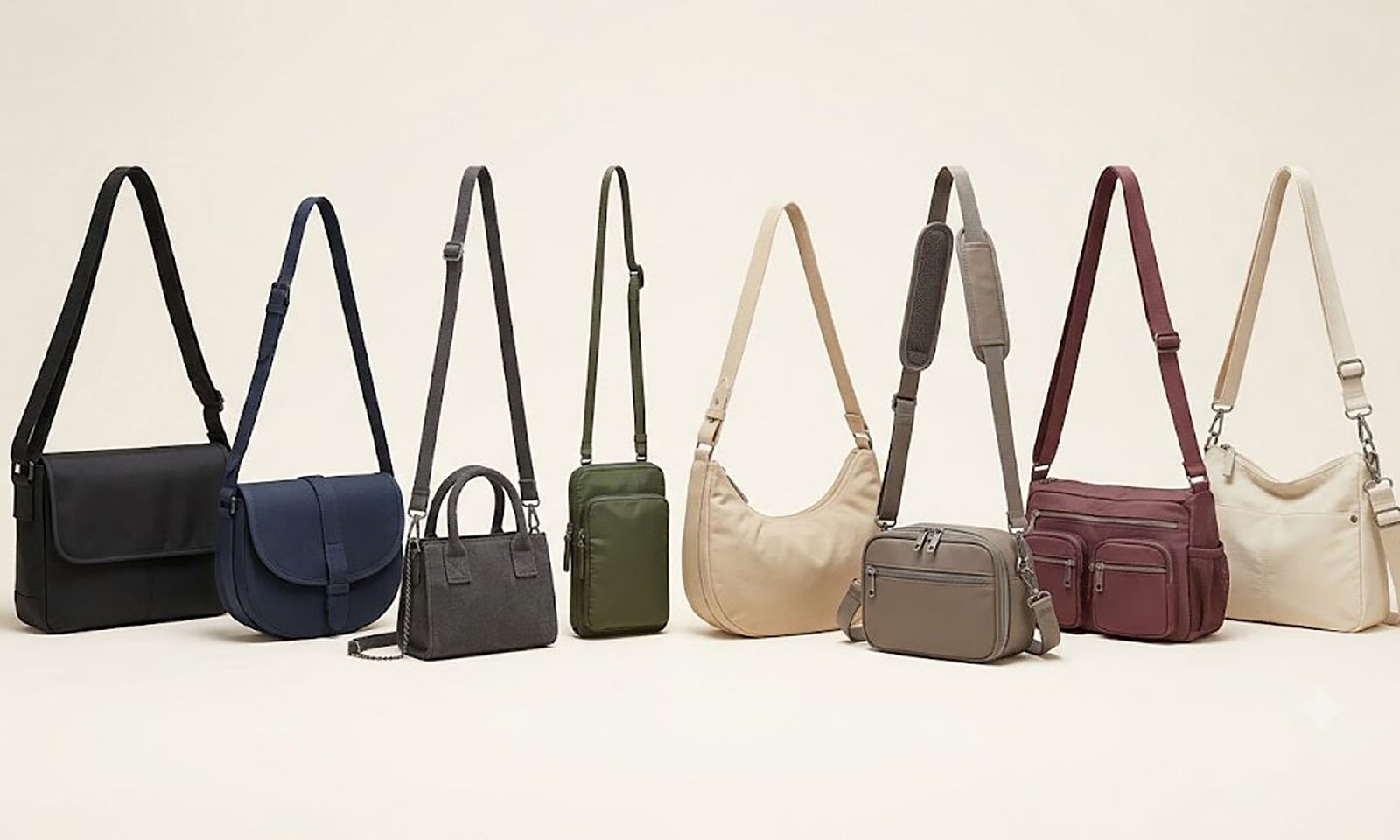
When I speak with buyers, I usually notice one pattern. They start with style references, but the real decision comes later: what should the bag help the traveler do, and can that idea survive sampling, cost targets, and reorders? That is where selection becomes much clearer.
What Is a Crossbody Travel Organizer Bag?
A crossbody organizer bag can look simple, but buyers often struggle because “organizer” means different things to different teams. One buyer wants quick passport access. Another wants a compact giftable item. If the intended use is vague, the product brief becomes weak and the sample often drifts.
A crossbody travel organizer bag is a compact shoulder-worn bag designed to help travelers carry and access key items efficiently while moving.2 In practice, it should prioritize easy reach, sensible layout, light weight, and travel relevance rather than piling on compartments that add bulk and confusion.
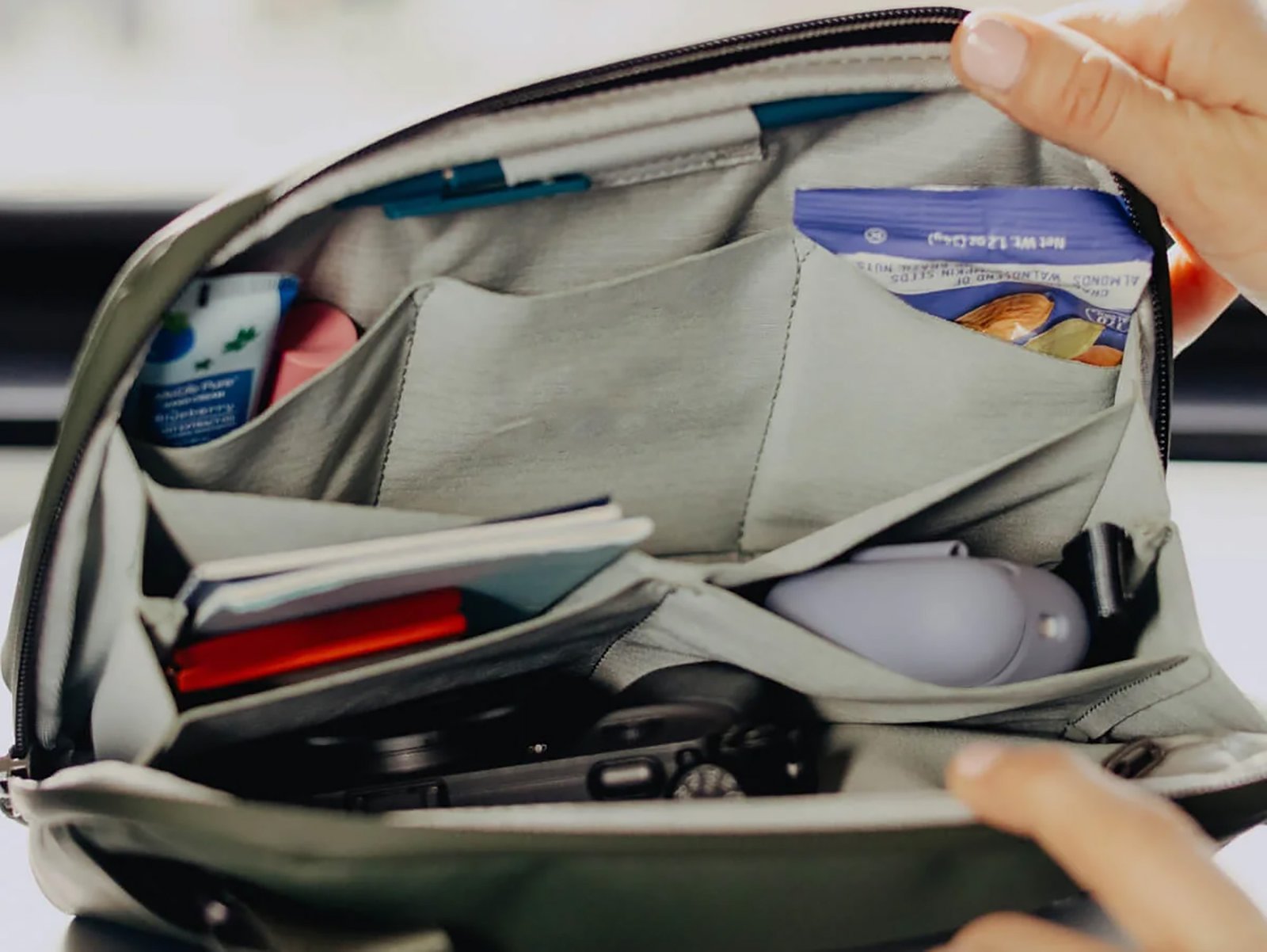
In our OEM/ODM work at Coraggio, I have found that this category gets misunderstood very easily. Many people hear “organizer bag” and imagine that more slots automatically create more value. I do not think that is true. A travel organizer bag is not a stationery case worn on the body. It is a moving-use product.3 That difference matters.
The real purpose is task support
The best structure starts with one basic question:
What is the traveler trying to do while walking, checking in, waiting, boarding, or sightseeing?
That question usually leads to better design decisions than asking how many zippers the bag should have.
For example, common travel tasks include:
- Reaching a passport or ID quickly
- Keeping a phone accessible but protected
- Separating payment items from personal items
- Carrying a small water bottle or not carrying one at all
- Moving hands-free through terminals or crowded streets
- Avoiding a bulky backpack for short outings
Why overbuilt organization often fails
I have seen bags with:
- 10+ compartments
- layered internal dividers
- multiple hidden zip pockets
- card slots that are too tight
- openings that force users to stop and search
These details may look impressive in a sample review. But in real use, they can create friction. Travelers usually want speed and clarity.4 If the bag makes them think too much, it stops being helpful.
Different buyers define “success” differently
This is also where many sourcing conversations go wrong. Not every travel retail buyer is buying for the same outcome.
| Buyer type | Main concern | What they often need from the bag |
|---|---|---|
| Airport or duty-free buyer | Fast retail appeal and travel relevance | Easy-to-understand function, compact display value |
| Gift or souvenir distributor | Broad sellability and price control | Safe design, giftable look, low return risk |
| Private-label retail buyer | Brand fit and repeatability | Custom details, consistency, reorder stability |
So when I define a crossbody organizer bag, I do not define it by style alone. I define it by the intersection of traveler task, selling context, and production practicality. That is the version buyers actually need.
Which Items Should a Tourist Organizer Bag Fit?
A tourist bag can become useless if it tries to fit everything. I often see buyers ask for too many functions at once. That creates a bigger silhouette, higher cost, and weaker carry comfort. A better organizer bag fits the essentials that travelers reach for repeatedly during short daily movement.
A tourist organizer bag should usually fit a phone, passport, wallet, keys, tickets, small charger, and a few personal items5 like sunglasses or lip balm. Some designs may also fit a mini bottle or compact umbrella, but the layout should still feel quick and intuitive rather than overpacked.
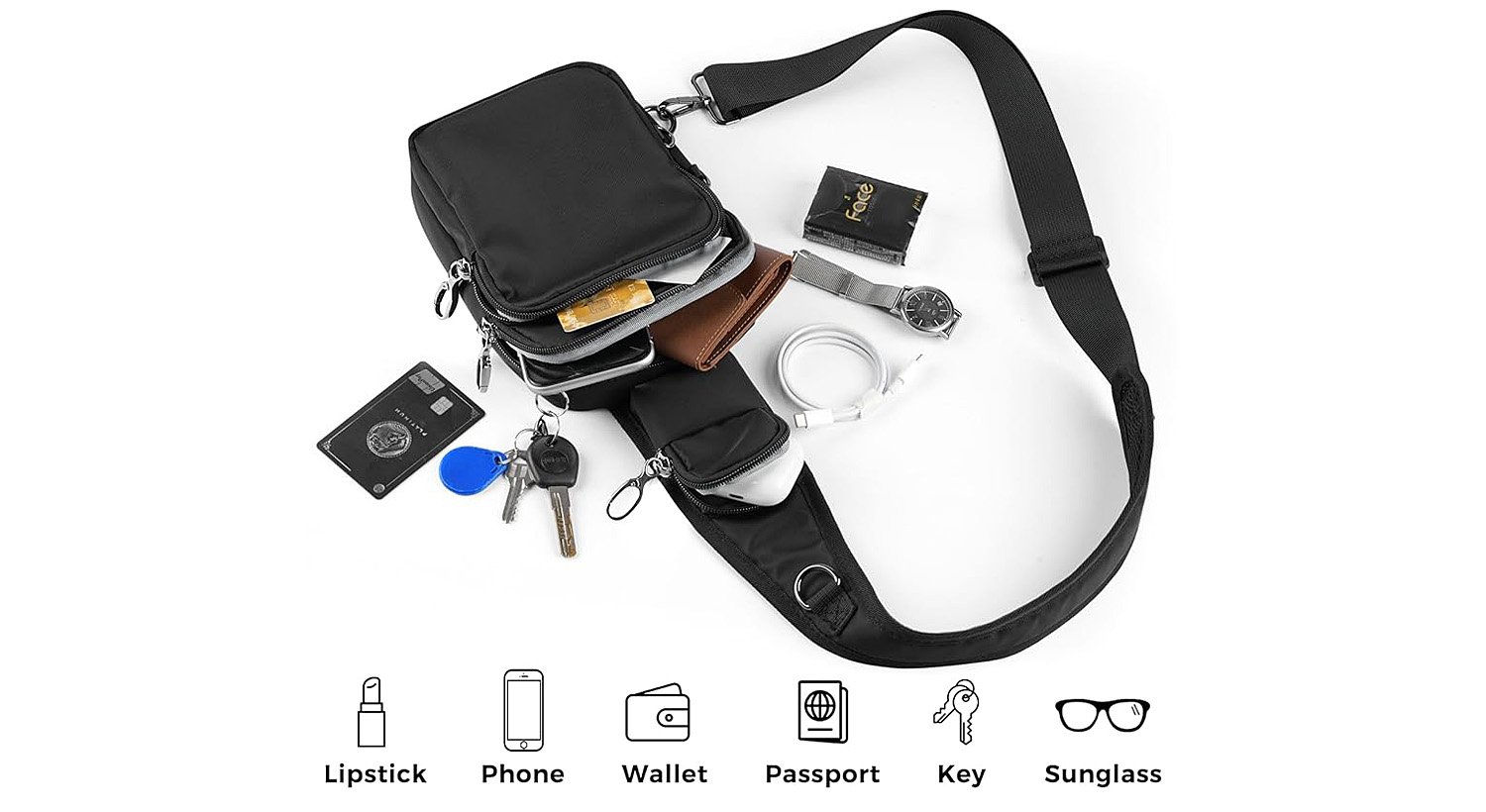
This is one of the most practical questions a buyer can ask, because capacity affects almost everything else: bag dimensions, weight, material choice, zipper length, panel construction, strap strength, and final cost.
Start with the actual travel carry set
Most travelers using this kind of bag are not trying to replace a suitcase or backpack. They are looking for a secondary active-use bag. In my experience, the most relevant item set often includes:
- Smartphone
- Passport or ID
- Wallet
- Boarding pass or travel documents
- Keys
- Earbuds
- Power bank or charging cable
- Sunglasses
- Tissues or wipes
- Small cosmetic or medication item
That list already tells us something important. The bag should support fast access to flat valuables and a few small 3D items, not endless storage.
A useful way to think about layout
I often suggest buyers separate items into three zones:
1. Fast-access zone
This area is for the phone, passport, ticket, or card holder.
It should:
- open quickly
- not be too deep
- avoid clutter
- stay secure enough for public movement
2. Secure core zone
This area holds the wallet, charger, keys, or compact valuables.
It should:
- have a zipper closure
- offer enough depth without becoming a black hole
- avoid too many tiny partitions
3. Soft-flex zone
This area can hold sunglasses pouch, tissues, or a small personal item.
It should:
- adapt to mixed shapes
- not force tight organization
- maintain overall bag shape
Why “fits more” is not always better
A tourist organizer bag that also fits a full-size bottle, large camera, snacks, travel pillow, and guidebook may sound attractive in development. But it often becomes:
- too heavy for comfortable crossbody wear6
- too large for easy merchandising
- too expensive for gift retail
- too complex for repeated production consistency
In many cases, buyers get better commercial results from a clear-use compact bag than from an all-in-one idea.
Suggested capacity thinking
| Use scenario | Recommended carry logic | Risk if oversized |
|---|---|---|
| Airport essentials | Documents + phone + wallet + charger | Bag looks empty or sloppy |
| City sightseeing | Daily valuables + small personal items | Weight hurts comfort |
| Gift retail | Easy “grab and go” function | Too many features raise price |
| Private label | Balanced utility and brand shape | Development becomes overcomplicated |
When I review tech packs or sample comments, I usually ask one simple thing: what must fit, what is optional, and what should never be forced in? That question saves time. It also leads to a cleaner product that travelers can understand immediately.
What Materials Work for High-Traffic Tourist Retail?
Material choices can ruin a good bag concept if they ignore retail reality. A fabric may look premium in the sample room but mark easily, wrinkle badly, or feel too seasonal. For high-traffic tourist retail, the best materials balance durability, appearance stability, price, and branding flexibility.
Materials that often work well for crossbody organizer bags in high-traffic tourist retail include recycled polyester, sturdy nylon, coated canvas-style fabrics, and easy-clean blended materials7. The right choice depends on target price, brand image, print needs, and how much abrasion, handling, and display stress the bag will face.
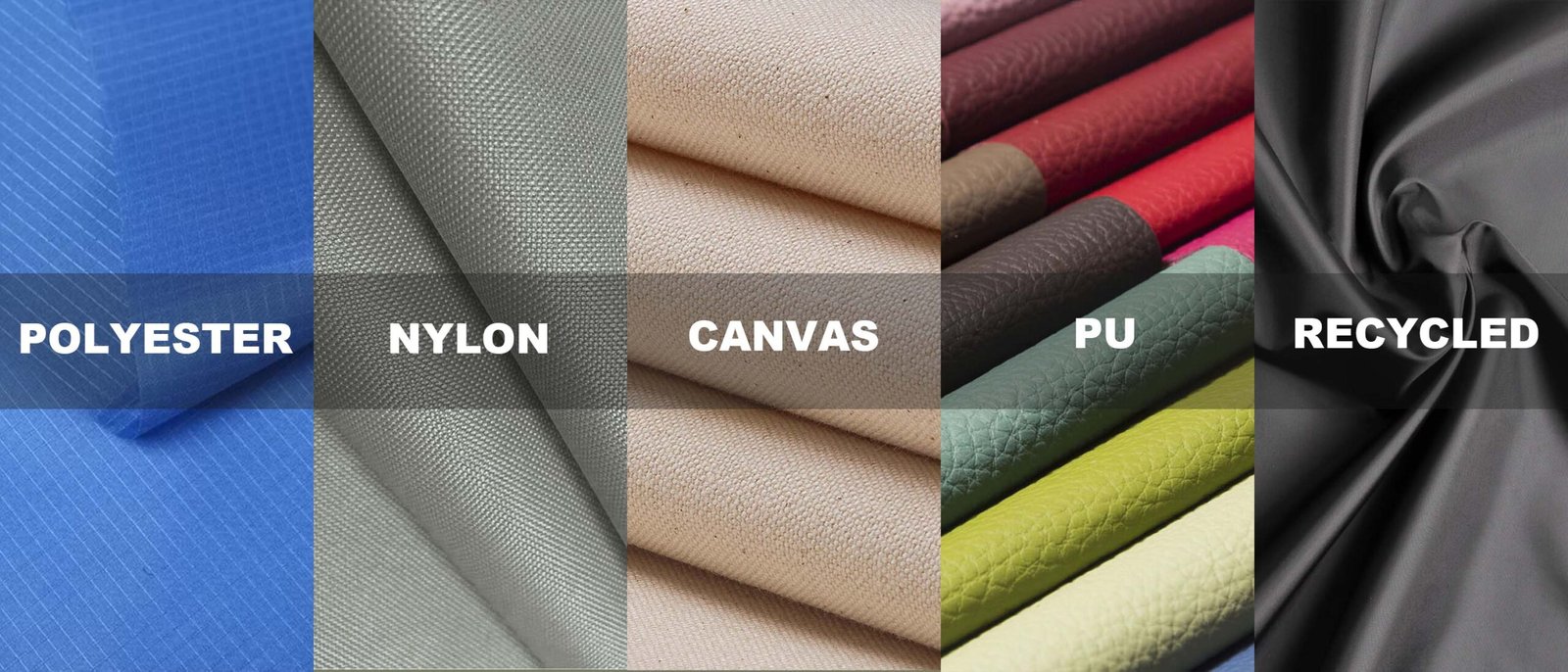
I do not think material selection should start with trend language alone. It should start with what happens in the real chain: display, touching, packing, shipping, unpacking, and repeat handling by travelers.
What high-traffic retail really demands
In tourist retail, products often face:
- frequent customer handling8
- shelf compression
- quick purchase decisions
- varied climate exposure
- gift-oriented expectations
- margin pressure
That means the material should not only “look good.” It should also remain stable through a rougher path from factory to shelf.
Common material options
Recycled polyester
This is a practical option for buyers who want an eco-friendly story without making production too difficult.
Strengths:
- supports sustainability positioning
- good print adaptability
- stable for many standard constructions
- competitive cost in many cases
Watch points:
- hand feel varies widely by supplier
- low-grade versions can feel too generic
Nylon
Nylon often gives a neat, functional travel look.9
Strengths:
- lightweight
- abrasion-resistant
- suitable for active-use styling
- often works well for simple organizer shapes
Watch points:
- some finishes can appear shiny in a low-end way
- color consistency must be checked carefully
Coated or laminated fabrics
These can help with wipe-clean function and visual structure.
Strengths:
- easy cleaning
- stronger shape retention
- good for printed or branded surfaces
Watch points:
- coating quality varies
- poor versions can crack or feel stiff
Material selection should match the channel
| Retail context | Better material direction | Why |
|---|---|---|
| Duty-free / airport | Lightweight, clean, functional fabrics | Travelers want practical relevance |
| Gift distribution | Easy-care, attractive, cost-balanced material | Broad appeal matters |
| Private label | Brand-specific texture and finish | Identity and consistency matter |
Do not ignore trim materials
Buyers sometimes focus only on the body fabric. But trim issues often create later complaints.
Check:
- zipper smoothness
- puller durability
- webbing hand feel
- buckle strength
- lining stability
- print or logo adhesion
I have seen otherwise solid bags lose value because the strap webbing felt scratchy or the zipper tape color looked slightly off-brand. Those details matter, especially when the bag is a branded retail item, not just a utility pouch.
My practical recommendation
If a buyer wants a commercially safe route, I usually lean toward:
- easy-clean recycled polyester or nylon
- medium-weight construction
- reliable zipper quality
- webbing that feels soft enough for direct wear
- branding that survives repeated handling
The best material is rarely the most dramatic one. It is the one that supports the concept, survives production, and still looks sellable after many customer touches.
How Can Buyers Customize Artwork and Straps?
Customization sounds simple until sampling begins. Many buyers request artwork and strap changes late, or they brief them too loosely. That creates delays, cost surprises, and inconsistent output. The best custom crossbody organizer bags come from clear decisions about brand visibility, artwork method, and strap function from the start.
Buyers can customize crossbody organizer bags through printed artwork, woven labels, patches, logo hardware, branded linings, and strap changes such as width, color, adjustability, jacquard branding, or detachable options. The key is to match customization with retail goals, MOQ, cost, and production feasibility.
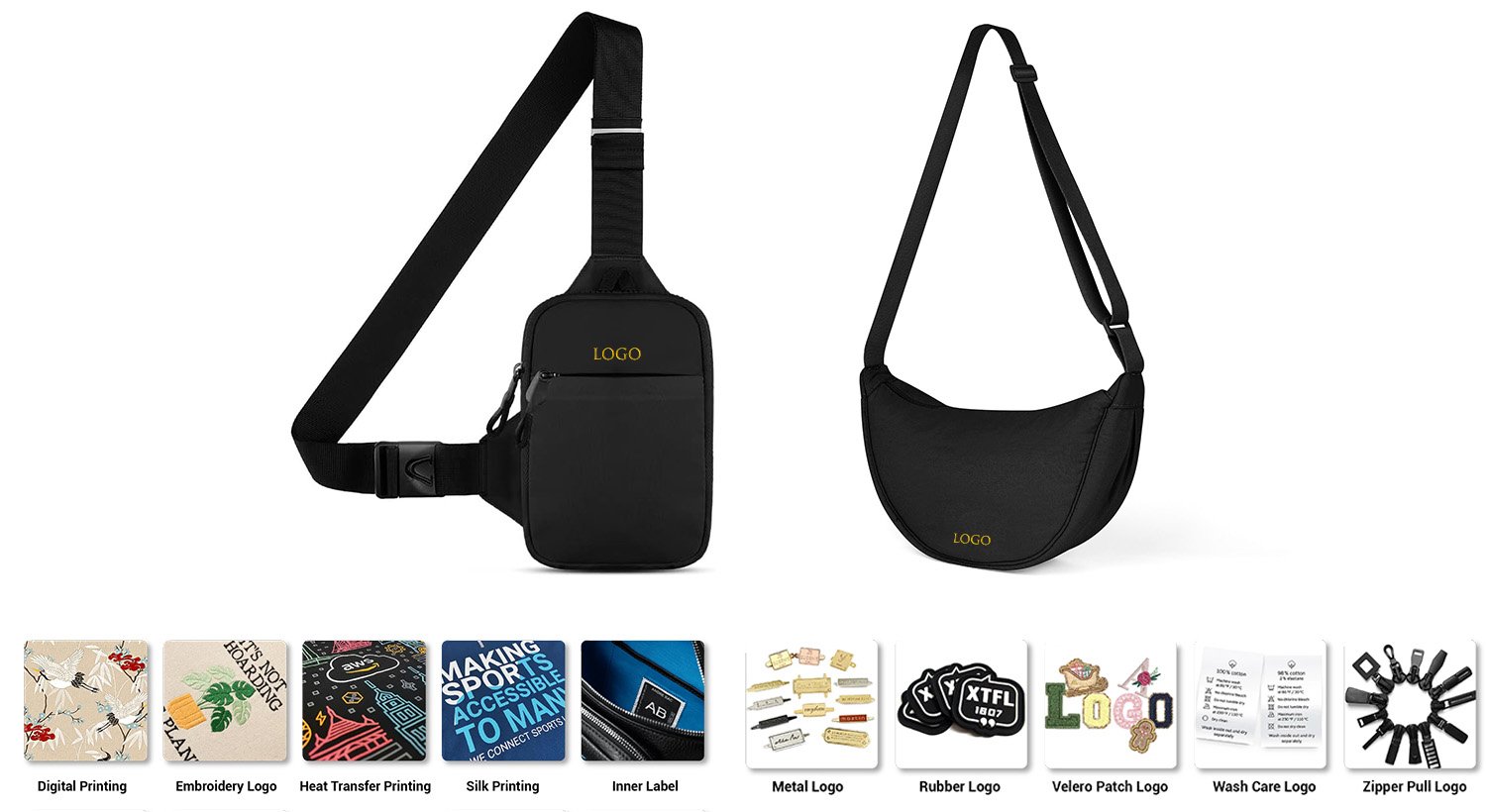
This is a topic I discuss very often with B2B buyers. Many people think customization means adding a logo near the end. In reality, artwork and strap decisions affect the whole product structure.
Artwork should serve the product role
Before choosing a print or logo method, I usually ask:
- Is this bag souvenir-driven, brand-driven, or function-driven?
- Does the customer need immediate visual impact?
- Will this be sold folded, hung, or front-faced?
- Is the design seasonal or repeatable?
Different methods fit different goals.
Common artwork options
- Silk screen print: cost-effective for simple logos
- Heat transfer print: good for sharper graphics
- Embroidery: tactile and premium-looking, but costlier
- Woven label: subtle and scalable
- Rubber patch or TPU badge: sporty and brand-forward
- All-over print: strong visual identity, but requires alignment control
Straps are not just decoration
A strap changes the wearing experience more than many buyers expect. Width, softness, adjustability, and attachment method all affect comfort and perceived value.
Strap decisions buyers should define early
Width
- Narrow straps look light but may dig into the shoulder10
- Wider straps feel more comfortable but can change the style
Material
- Standard webbing is practical
- Jacquard branded webbing adds identity
- Soft-touch webbing improves comfort
Adjustability
- Travel use usually needs a broad size range11
- Very limited adjustment can cause fit complaints
Detachable or fixed
- Detachable straps add flexibility
- Fixed straps reduce hardware complexity and cost
Customization and MOQ reality
This is where OEM/ODM experience matters. Some customization ideas look easy in mockups but become difficult at order stage.
| Custom item | Buyer appeal | Common production impact |
|---|---|---|
| Custom jacquard strap | Strong branding | Higher MOQ, longer lead time |
| All-over print | Visual shelf impact | Print alignment control needed |
| Metal logo plate | Premium feel | Cost and finish consistency matter |
| Contrast lining | Nice surprise detail | More material coordination |
I always encourage buyers to rank custom details by importance:
- Must-have
- Nice-to-have
- Can remove if cost pressure increases
That ranking helps during sampling. It also protects the commercial goal. A bag does not become stronger just because every possible custom detail is added. It becomes stronger when the branding feels intentional and executable.
What Should Retail Buyers Check Before Reordering?
Reorders look easier than first orders, but I have seen many problems begin here. Buyers assume the first production already solved everything. Then they skip key checks, and the next batch comes back with color variation, packing changes, trim inconsistency, or small layout shifts that matter in retail.
Before reordering crossbody organizer bags, retail buyers should review sales feedback, traveler-use fit, defect patterns, material consistency, trim quality, packaging performance, and any pain points from the first production. A good reorder is not just repeating a PO; it is improving what the first run revealed.

I think reorder discipline is one of the clearest differences between casual buyers and experienced buyers. The experienced buyer uses the first order to learn. The less experienced buyer treats it as finished.
Start with performance, not only sales
Sales matter, of course. But reorder review should include more than unit movement.
Ask:
- Did customers understand the bag’s function quickly?
- Did store teams find it easy to merchandise?
- Did any pocket layout confuse users?
- Did returns mention zipper issues, strap discomfort, or size mismatch?
- Did packaging protect the shape well enough?
These questions reveal whether the concept really worked.
Recheck the technical points
Even if the first order was acceptable, I recommend checking these areas again:
Construction consistency
- panel alignment
- seam neatness
- zipper insertion quality
- bartack reinforcement at stress points
Material consistency
- fabric color shade
- coating feel
- lining thickness
- print clarity
Trim consistency
- strap color
- buckle finish
- zipper pull shape
- logo placement
Use a reorder checklist
Here is a simple framework I like:
| Check area | What to confirm before reorder | Why it matters |
|---|---|---|
| Function | Best-selling layout still matches use | Avoid repeating weak design choices |
| Cost | Material or trim cost changes | Protect margin |
| Quality | Any defects or complaint patterns | Reduce risk in next batch |
| Packaging | Carton, polybag, labels, barcode | Prevent logistics errors |
| Lead time | Updated production schedule | Support accurate delivery planning |
| Custom details | Artwork file, strap spec, hardware finish | Prevent inconsistency |
Clarify what changed and what did not
This sounds basic, but it saves many problems. Buyers should confirm in writing:
- unchanged materials
- approved color references
- zipper brand or standard
- packaging method
- artwork size and position
- strap width and length range
I have seen reorders become messy because everyone assumed “same as before” meant the same thing. In production, that phrase is often too vague. Precision is safer.
For serious retail buyers, the reorder stage is not administrative. It is strategic. It protects consistency, improves future sellability, and makes the supplier relationship much more efficient.
Frequently Asked Questions
Are crossbody organizer bags better than regular crossbody bags for travel retail?
Not always. Crossbody organizer bags are better only when the internal layout supports real travel tasks. If the organization becomes too complicated, a simpler crossbody bag may sell better and be easier for travelers to use.
How many compartments should a travel organizer bag have?
There is no ideal number by itself. I usually suggest buyers focus on clear-use zones instead of counting pockets. Too many compartments can increase confusion, weight, and cost without improving the travel experience.
What size is best for a tourist crossbody organizer bag?
The best size fits daily essentials like a phone, passport, wallet, keys, and small accessories without becoming bulky. Buyers should define the must-carry items first, then build the size around those priorities.
Which customization adds value fastest for B2B buyers?
In many cases, branded straps, clean logo applications, and practical color customization add value faster than very complex decoration. These options often improve identity without making production overly difficult or expensive.
What should buyers prepare before asking for a sample?
I recommend preparing a clear item-fit list, target price, retail channel, artwork direction, preferred material, and must-have customization points. A stronger brief usually leads to faster sampling and fewer revision rounds.
Conclusion
Choosing the right crossbody organizer bags for travel retail is really about choosing the right use case, layout, and business logic. I have learned through many buyer discussions that the strongest bag is not the one with the most features. It is the one that solves a clear traveler problem and still works for sampling, cost, customization, and reorder control. If you are sourcing OEM/ODM travel bags for your retail program, contact Coraggio at info@coraggiobag.com or visit https://coraggiobag.com/ to discuss your next project.
"A Human-Centered Design Methodology to Enhance the ... - PMC", https://pmc.ncbi.nlm.nih.gov/articles/PMC5374275/. Human-centered design research and standards describe effective product development as beginning with user goals, tasks, and context of use rather than feature accumulation, which supports the article's emphasis on traveler behavior as a design basis. Evidence role: expert_consensus; source type: research. Supports: Human-centered design literature supports designing products around user tasks and behavior rather than adding features without demonstrated need.. Scope note: This evidence supports the design principle generally rather than proving outcomes for this specific bag category. ↩
"Messenger bag", https://en.wikipedia.org/wiki/Messenger_bag. Reference descriptions of crossbody and messenger-style bags identify them as shoulder-worn bags carried across the body for personal items, consistent with the article's functional definition centered on carrying and access while moving. Evidence role: definition; source type: encyclopedia. Supports: Reference sources on shoulder and messenger bags can support the description of a crossbody bag as a shoulder-worn form used for carrying personal items with access during movement.. Scope note: General reference definitions may not address the narrower subcategory of travel organizer bags directly. ↩
"Designing Mobile Health Applications to Support Walking for ...", https://pmc.ncbi.nlm.nih.gov/articles/PMC9964114/. Human factors studies of mobile, in-motion use show that tasks performed while walking benefit from simplified access and reduced interaction complexity, supporting the article's characterization of a travel organizer bag as a moving-use product rather than static storage. Evidence role: mechanism; source type: paper. Supports: Human factors and mobile interaction studies can support the idea that products used while walking must prioritize rapid, low-friction access and simple interaction.. Scope note: The support is contextual from mobile-use research rather than direct testing of organizer bags. ↩
"The Effects of Mind-Wandering, Cognitive Load, and Task ...", https://pmc.ncbi.nlm.nih.gov/articles/PMC10915650/. Usability and consumer-behavior research commonly finds that in time-sensitive environments users prefer convenience, low search effort, and clear organization, which supports the article's statement that travelers value speed and clarity. Evidence role: general_support; source type: research. Supports: Consumer and usability research can support the broader claim that people favor convenience, reduced search effort, and clear organization in time-pressured settings.. Scope note: This evidence is broad and may not isolate travelers purchasing or using crossbody bags specifically. ↩
"International Travel Checklist - Travel.gov - State Department", https://travel.state.gov/en/international-travel/planning/checklist.html. Official travel guidance routinely identifies passports or identification, payment methods, phones, keys, and travel documents as essential items travelers should keep accessible, supporting the article's proposed core carry set for a tourist organizer bag. Evidence role: general_support; source type: government. Supports: Official travel guidance and checklists can support that passports or ID, payment methods, phone, and travel documents are standard essential items travelers need ready access to.. Scope note: Government checklists support the importance of the items but do not prescribe bag design or exact capacity. ↩
"Impact of Backpacks on Ergonomics: Biomechanical and Physiological ...", https://pmc.ncbi.nlm.nih.gov/articles/PMC9180465/. Biomechanical studies of unilateral load carriage report that shoulder- and crossbody-style loads can reduce comfort and alter posture as carried weight increases, supporting the article's warning that oversized bags may become uncomfortable. Evidence role: mechanism; source type: paper. Supports: Biomechanics and load-carriage studies can support that unilateral shoulder or crossbody loads affect comfort and posture, especially as load increases.. Scope note: The evidence addresses load effects generally rather than specifying a precise safe weight for this bag type. ↩
"Evaluating the Abrasion Resistance of Different Fabric Types", https://www.testextextile.com/evaluating-the-abrasion-resistance-of-different-fabric-types/. Textile engineering literature describes nylon and polyester as widely used in luggage and bag applications for their favorable strength-to-weight ratio and abrasion performance, while coated fabrics can improve wipe-clean behavior and shape retention, supporting the material guidance given here. Evidence role: mechanism; source type: research. Supports: Textile engineering sources can support that nylon and polyester are commonly selected for luggage and bag applications because of durability, abrasion resistance, and maintenance properties, with coated fabrics adding surface protection.. Scope note: Material performance varies substantially by denier, weave, coating, and finishing, so category-level evidence is not a guarantee for every fabric specification. ↩
"Revisiting factors influencing consumer travel for purchasing ...", https://pmc.ncbi.nlm.nih.gov/articles/PMC11574177/. Retail and travel-retail research describes airport and tourist shopping as a high-traffic, high-touch environment with compressed decision time and substantial in-store product handling, which supports the article's description of material demands in this channel. Evidence role: historical_context; source type: institution. Supports: Retail and travel-retail studies can support that airport and tourist retail are high-touch environments characterized by fast decisions and heavy handling of merchandise.. Scope note: The evidence characterizes the retail context broadly and does not directly test material wear on this specific product. ↩
"Historical utilitarian bags throughout the ages", https://goodordering.com/blogs/blog/historical-utilitarian-bags-throughout-the-ages. Educational and historical sources on textile applications note nylon's longstanding use in luggage, backpacks, and outdoor gear because of its durability and low weight, which helps explain its common association with a functional travel aesthetic. Evidence role: historical_context; source type: education. Supports: Historical and educational sources can support nylon's longstanding use in utilitarian luggage, backpacks, and travel goods, which informs its functional visual association.. Scope note: This evidence explains the aesthetic association through historical use rather than proving consumer perception directly. ↩
"Mechanical Predictors of Discomfort during Load Carriage", https://pmc.ncbi.nlm.nih.gov/articles/PMC4631336/. Ergonomic load-carriage studies indicate that narrower straps can concentrate pressure over a smaller area of the shoulder, increasing discomfort relative to wider straps under similar loads, supporting the article's caution about narrow straps. Evidence role: mechanism; source type: paper. Supports: Ergonomic research can support that strap width affects pressure distribution on the shoulder and therefore influences discomfort during load carriage.. Scope note: Effects depend on total weight, padding, material, and duration of carry, so strap width is only one contributing factor. ↩
"Development and Experimental Verification of an Ergonomic ...", https://pmc.ncbi.nlm.nih.gov/articles/PMC7245669/. Anthropometric and inclusive-design guidance emphasizes accommodating variation in body size and use context through adjustability, which supports the article's statement that travel bags benefit from a broad strap adjustment range. Evidence role: expert_consensus; source type: research. Supports: Anthropometric and inclusive-design guidance can support the need for adjustable products to accommodate variation in body size, clothing bulk, and preferred fit.. Scope note: The support is based on general fit and inclusive-design principles rather than travel-bag-specific user testing. ↩