I often see buyers choose a stitching style by looks alone. That creates trouble later when the bag fabric, logo detail, or bulk production reality does not match the sample.
For custom bags, the best choice is not the one that looks most premium in a mockup. It is the one that fits the bag fabric, artwork, use case, and bulk production limits without causing distortion, inconsistency, or cost problems.
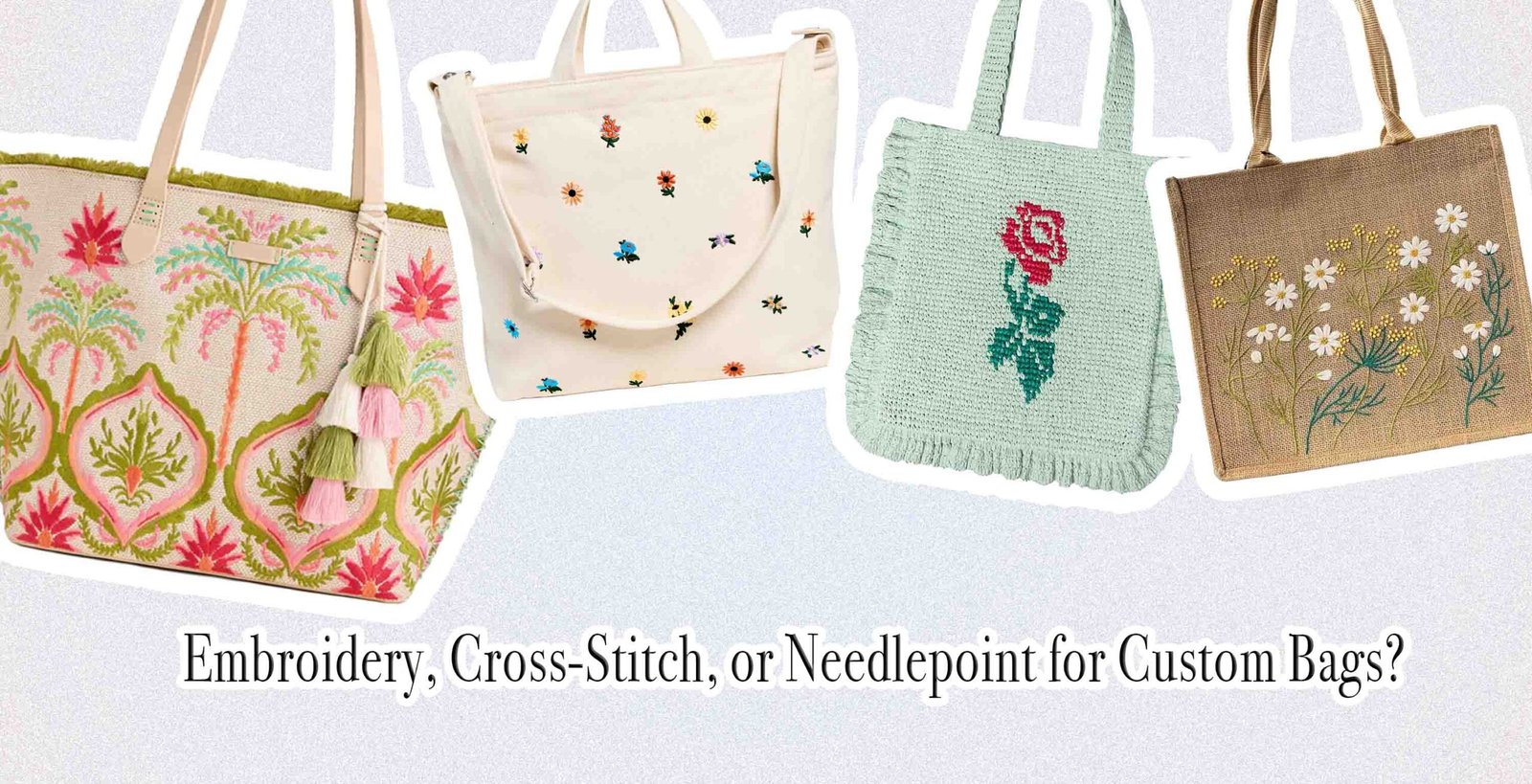
When I speak with buyers, I notice the same pattern again and again. A team falls in love with a decoration idea first. Then we test it on the real bag. Then the real bag pushes back. The surface may be too soft. The weave may be too loose. The logo may be too detailed. The order quantity may be too large for a slow handwork method. That is why I always bring the discussion back to use, material, and production fit before style.
What Is the Difference Between Embroidery, Cross-Stitch, and Needlepoint?
Many buyers group these three methods together as “stitched decoration.” That sounds simple, but it causes wrong decisions when they move from concept to a real bag sample.
Embroidery usually stitches a design directly onto fabric with flexible machine or hand techniques.1 Cross-stitch uses X-shaped stitches on an open grid.2 Needlepoint usually fills a canvas base with stitches, then gets applied as a decorative panel or patch.
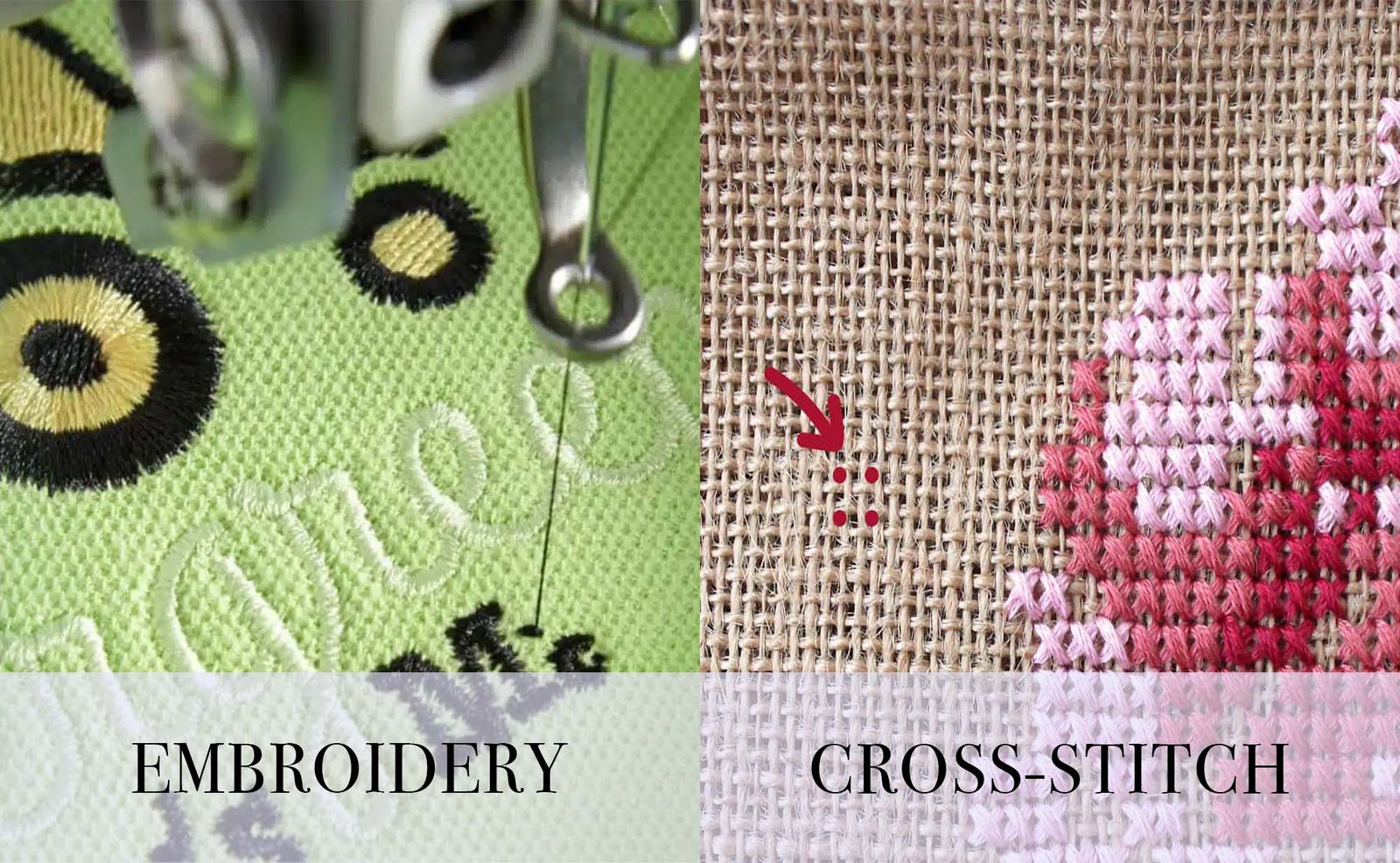
When I explain this to buyers, I do not start with hobby terms. I start with what happens on a bag line. Embroidery is usually the most direct method for bags because the stitching can go right onto the bag panel or onto a patch. It can work on canvas, polyester, nylon, cotton, and some blended materials3, but the exact result still depends on fabric thickness, backing, and panel shape. Cross-stitch needs a visible grid structure or an added base that supports even X-shaped stitches.4 That makes it less natural for many bag fabrics. Needlepoint often works more like a decorative insert, badge, or patch because it is usually built on a canvas-like foundation first.
I have seen buyers assume all three methods can reproduce the same logo on the same bag body. In real projects, that is often not true.
| Method | How it is usually applied on bags | Best early question to ask | Main production concern |
|---|---|---|---|
| Embroidery | Direct stitch or patch | Can the fabric hold clean stitches? | Puckering, thread density, detail limits |
| Cross-stitch | Grid-based decorative area or patch | Does the material support a visible grid? | Low flexibility on typical bag fabrics |
| Needlepoint | Decorative panel or patch | Is the design better as an insert than direct stitching? | Extra process steps and consistency |
For me, the key difference is not just visual texture. The real difference is how each method behaves on actual bag materials and how stable that behavior stays from sample to bulk order.
Which Stitching Method Is Best for Custom Bags?
Buyers often ask me this question as if there should be one winner. I understand the need for a quick answer, but quick answers often create expensive mistakes.
No stitching method is best for all custom bags.5 The right choice depends on bag function, fabric type, logo detail, decoration area, and whether the method can stay consistent in bulk production.
I usually ask three questions first. What is the bag used for? What material is the bag made from? What exactly must the artwork show? Those three questions remove most confusion. A work backpack, a cooler bag, and a gift tote do not behave the same way in production. A soft cotton canvas tote may accept direct embroidery well. A coated cooler bag may not be a good candidate for direct decorative stitching at all. A simple brand mark may run well in embroidery. A complex geometric pattern may look attractive in cross-stitch concept art, but that does not mean it will be practical on the chosen bag shell.
I remember one discussion where a buyer wanted a handcrafted look for a promotional tote line. The first idea was cross-stitch because the visual reference looked warm and premium. Once we checked the actual bag fabric and the order size, the idea became risky. The fabric did not support the stitch cleanly. The production route also looked too slow. We shifted to embroidery that imitated the same feeling in a more stable way.
| Decision factor | Embroidery | Cross-stitch | Needlepoint |
|---|---|---|---|
| Common fit for commercial bags | Often good | Often limited | Selective use |
| Fine logo control | Usually better | Usually less flexible | Depends on canvas and patch size |
| Direct application on bag panel | Common | Less common | Less common |
| Bulk consistency | Often stronger | Can be harder | Depends on patch process |
| Decorative craft look | Possible | Strong visual identity | Strong visual identity |
So when I answer “which is best,” I do not choose by taste first. I choose by production fit on the actual bag.
Is Embroidery More Suitable for Bulk Bag Orders?
A sample can look excellent in one piece. Bulk production is a different test. This is where many buyers need a more practical answer than a visual one.
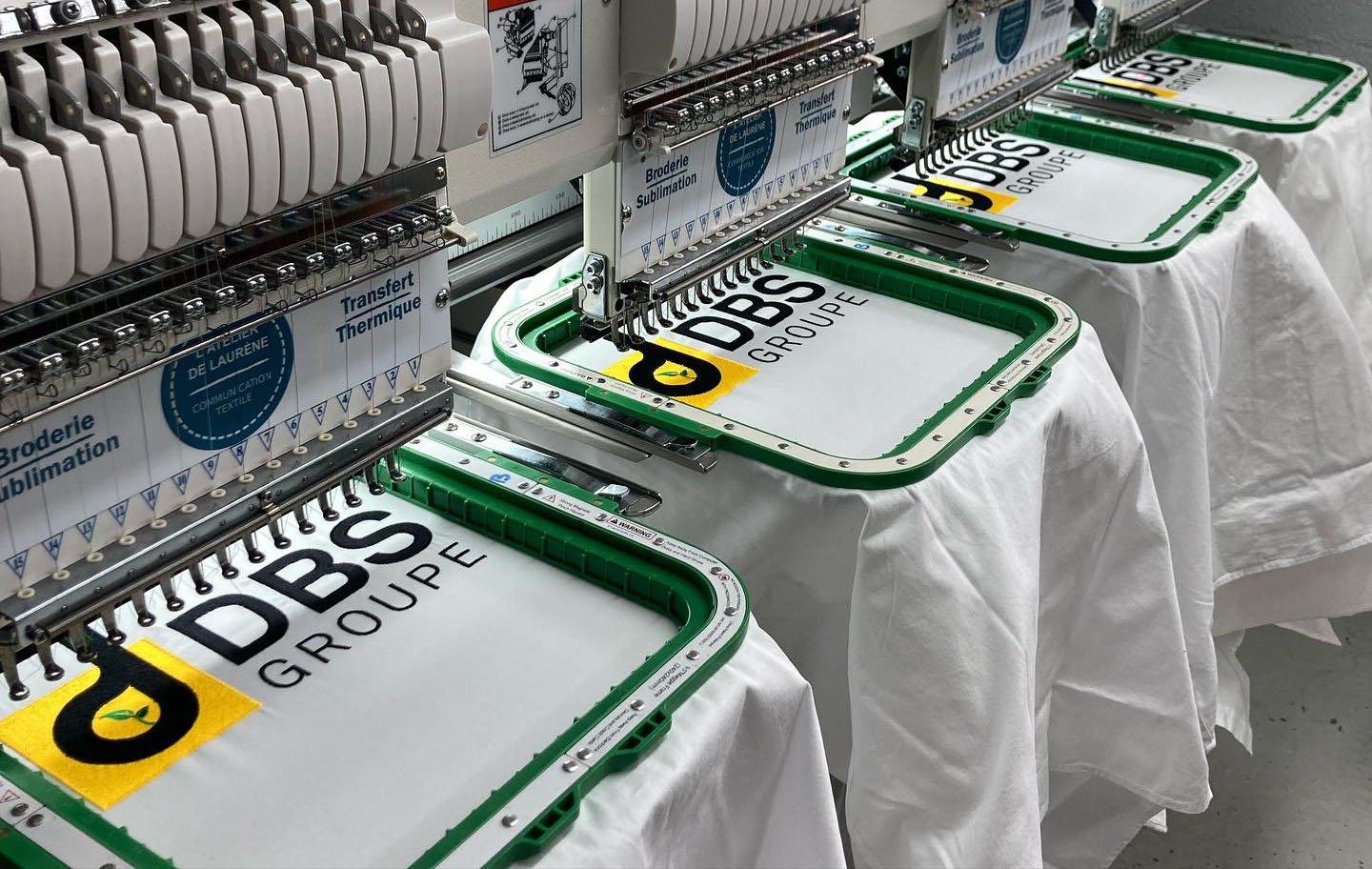
In many bag projects, embroidery is more suitable for bulk orders because it is usually easier to standardize, faster to repeat, and more compatible with common bag fabrics than cross-stitch or needlepoint.6
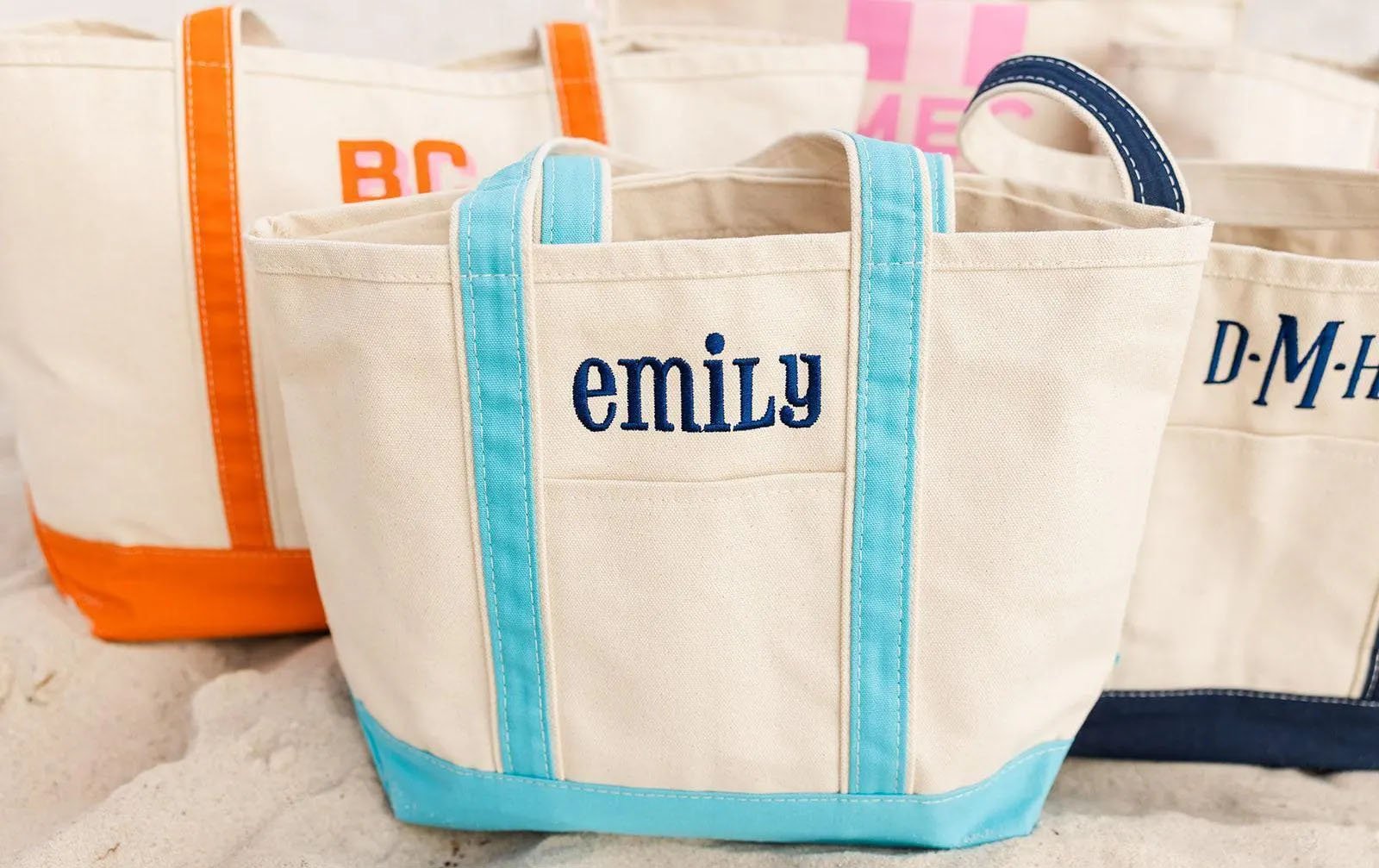
From my experience, embroidery often gives the cleanest path for B2B bag orders, especially when the artwork is a logo, a brand name, or a simple emblem. That does not mean embroidery is always easy. Dense fills can cause puckering.7 Small text can lose clarity. Curved bag panels can shift. Thin or stretchy materials can distort. Still, when I compare it with cross-stitch or needlepoint in a factory setting, embroidery is usually easier to plan, test, repeat, and inspect in quantity.
This matters for buyers like Mark, who care about delivery date, price, and consistency. A decoration method that needs too much manual variation can create problems in output, lead time, and defect rate. I always remind buyers that a style should survive the line, not just the sample table. If an embroidered logo is supported by the right backing, proper stitch count, and suitable placement, it often performs better in mass production than methods that rely on a grid or a separate stitched foundation.
| Bulk order factor | Why embroidery often fits better |
|---|---|
| Repeatability | Machine programs can keep design placement and stitch path more stable8 |
| Lead time | Production is usually faster than heavily manual decorative methods |
| QC control | Teams can inspect thread color, shape, and placement more easily |
| Cost planning | Unit cost is often easier to estimate at scale |
| Material range | More common across tote bags, backpacks, duffle bags, and cosmetic bags |
I still tell buyers to test real panels before approval. A good embroidery file on the wrong fabric can still fail. But in bulk bag sourcing, embroidery is often the safer first option.
When Should Bag Buyers Choose Cross-Stitch or Needlepoint?
Some buyers think these methods are old-fashioned. Some think they are automatically premium. I think both views are too simple. The right question is when they make sense on a bag project.
Bag buyers should choose cross-stitch or needlepoint when the design goal truly requires a handcrafted, grid-based, or tapestry-like look, and when that look can be achieved through patches or panels without hurting bag performance or production stability.
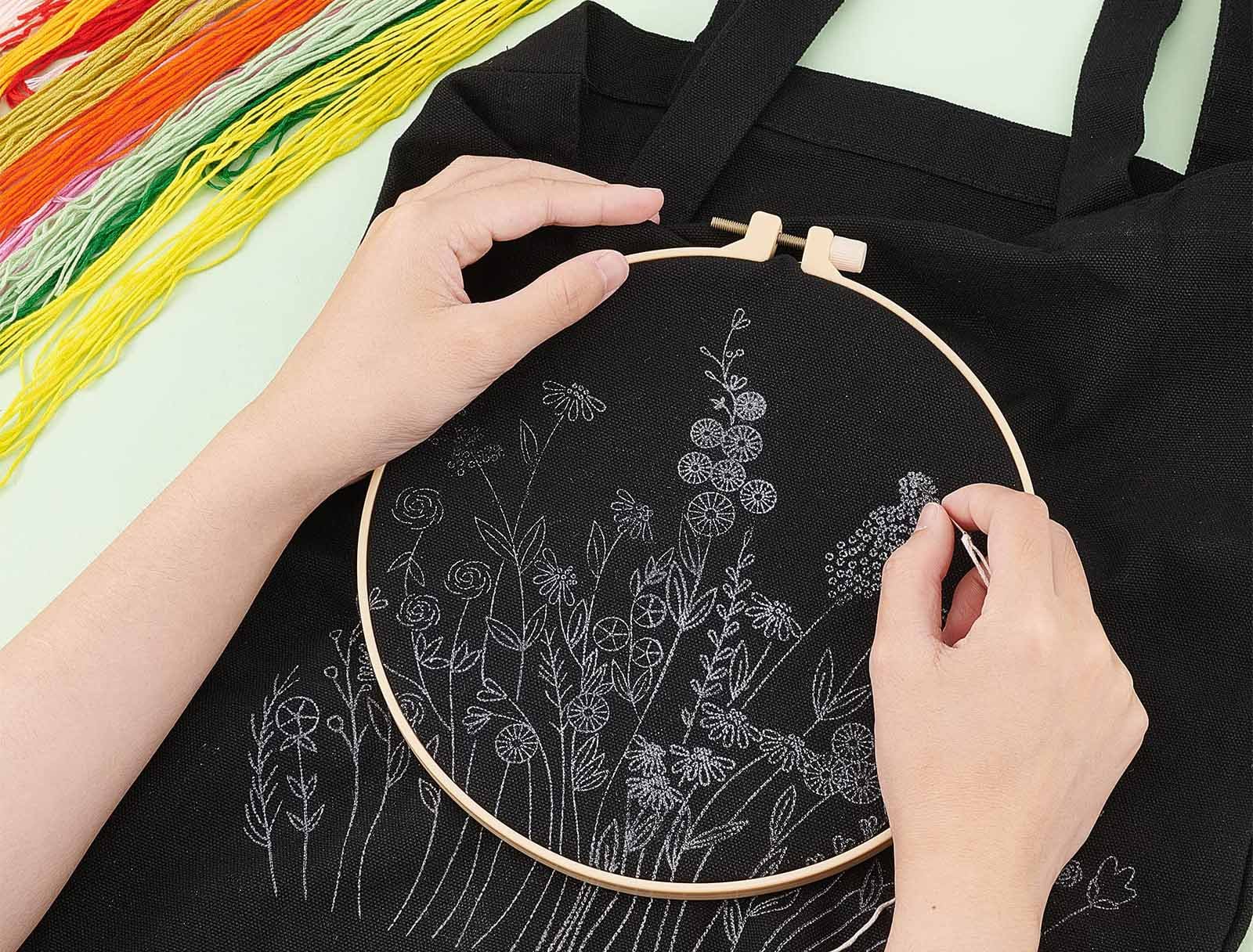
I usually suggest cross-stitch or needlepoint only when the visual identity depends on that exact stitched character. If the buyer only wants a textured logo, embroidery may do the job with fewer risks. If the buyer wants a heritage, craft, gift, or seasonal collection feel, then cross-stitch or needlepoint can be worth exploring. Even then, I rarely treat them as direct stitch methods for every bag type. In many cases, they make more sense as decorative patches, badge panels, or limited feature areas.
This is very important for commercial bags. Bags bend. Bags carry weight. Bags rub against clothes, shelves, and shipping cartons.9 A method that looks rich in a flat artwork file may feel bulky, unstable, or exposed once it goes onto a working bag. I have seen buyers get excited by a sample swatch, then hesitate once they hold the finished backpack or cooler bag in hand. The decoration felt too raised. The panel looked too stiff. The seam area became harder to handle.
| Good use case | Why cross-stitch or needlepoint may fit |
|---|---|
| Gift or seasonal bag line | Strong handcrafted feeling |
| Limited edition branding | Unique texture helps storytelling |
| Decorative patch application | Easier than forcing direct stitching on the bag shell |
| Heritage-themed collection | Visual style supports brand concept |
| Warning sign | Why I pause the project |
|---|---|
| Highly technical bag fabric | Stitch base may not hold cleanly |
| Large bulk order with short lead time | Manual or complex steps may slow output |
| Very detailed logo | Grid-based methods may lose accuracy |
| High-rub usage | Raised decorative surface may wear faster10 |
So I choose these methods only when the bag concept truly needs them and the bag structure can support them.
How Does Stitching Choice Affect Bag Cost and Production Time?
This is the part many buyers ask too late. By then, they already like a visual direction. I prefer to discuss cost and timing at the start.
Stitching choice affects bag cost and production time through setup complexity, stitch density, labor input, material compatibility, rejection risk, and whether the decoration is direct, patch-based, or partly manual.11
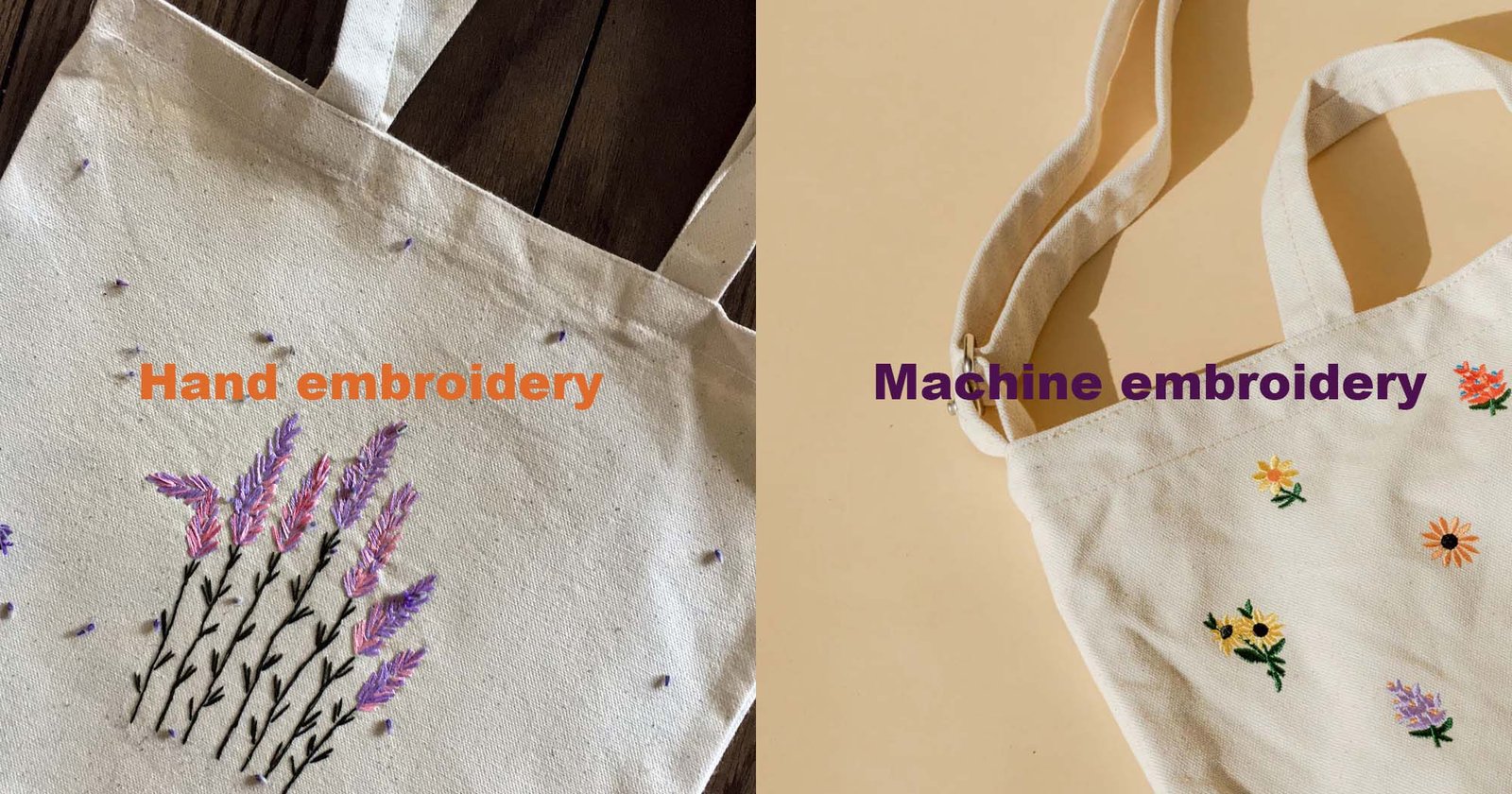
I have learned that decoration cost is never just “how many stitches.” Real bag costing includes many small production effects. Embroidery can look affordable at scale, but not if the logo is too dense, too large, or placed on a difficult panel. Cross-stitch and needlepoint can raise cost fast if they require separate bases, more handwork, slower sewing, or extra attachment steps. They can also increase sampling time because the first test may not show the same result as the final bag assembly.
Production time also changes with stability. A method that causes distortion, rework, or placement issues can slow an order even if the decoration itself is not expensive. That is why I tell buyers not to compare methods by surface look only. A cheaper-looking option on paper may become the expensive one after waste, delay, and remake risk.
| Cost or time driver | Embroidery | Cross-stitch | Needlepoint |
|---|---|---|---|
| Initial setup | Digitizing needed | Pattern planning needed | Canvas/panel prep needed |
| Labor intensity | Often moderate | Often higher | Often higher |
| Direct-on-bag speed | Usually faster | Often slower | Often slower |
| Rejection risk on wrong fabric | Moderate | High on unsuitable fabric | Moderate to high |
| Suitability for large runs | Often stronger | Often limited | Selective |
One buyer once asked me why two stitched options with similar visual size had very different prices. The answer was simple. One method fit the bag line. The other fought the bag line. In sourcing, that difference always shows up in money and time.
Conclusion
The safest stitching choice for custom bags is the one that fits the fabric, artwork, and production plan, not the one that only looks best in a sample.
"Schiffli embroidery machine - Wikipedia", https://en.wikipedia.org/wiki/Schiffli_embroidery_machine. Standard reference works define embroidery as the art or process of decorating fabric or other materials with needle and thread, commonly executed by hand or by machine. Evidence role: definition; source type: encyclopedia. Supports: A standard definition of embroidery as decoration stitched onto fabric or other materials by hand or machine.. ↩
"Cross-stitch - Wikipedia", https://en.wikipedia.org/wiki/Cross-stitch. Reference sources describe cross-stitch as a counted-thread embroidery technique formed by X-shaped stitches worked on an even, visible grid such as Aida or similar fabric. Evidence role: definition; source type: encyclopedia. Supports: That cross-stitch consists of X-shaped stitches typically worked on even-weave or grid-like fabric.. ↩
"Fabrics and Garments as Sensors: A Research Update - PMC", https://pmc.ncbi.nlm.nih.gov/articles/PMC6719058/. Educational embroidery and textile sources note that machine embroidery is routinely performed on fabrics such as cotton, canvas, polyester, and some synthetics, while emphasizing that stitch quality depends on substrate properties and stabilization. Evidence role: general_support; source type: education. Supports: That embroidery is commonly used on a range of woven and synthetic fabrics, with outcomes affected by fabric structure and stabilization.. Scope note: Such sources generally support broad material compatibility, but performance on any specific bag fabric still depends on construction, coatings, and backing. ↩
"Cross-stitch - Wikipedia", https://en.wikipedia.org/wiki/Cross-stitch. Instructional and textile references on counted-thread embroidery explain that cross-stitch relies on evenly spaced fabric intersections or a comparable grid, which is why irregular bag shells may require an added base or adapted ground. Evidence role: mechanism; source type: education. Supports: That cross-stitch depends on evenly spaced fabric intersections or an equivalent grid support for regular counted stitches.. ↩
"[PDF] Spark Ideas. Ignite Possibilities. Exploring Clothing Embellishment", https://4h.extension.illinois.edu/sites/default/files/2024-08/Clothing%20Embellishment%20Spark%20Sheet_0.pdf. Product-development and textile-manufacturing literature generally treats embellishment choice as contingent on substrate characteristics, performance requirements, and process limitations, rather than identifying a single best technique for all products. Evidence role: expert_consensus; source type: research. Supports: That decoration and embellishment methods are selected according to substrate properties, design requirements, and manufacturing constraints rather than by a single universal hierarchy.. Scope note: The support is contextual and methodological; it underpins the claim as a design principle rather than proving an absolute rule specific to every bag category. ↩
"CAREER: System-on-Cloth: A Cloud Manufacturing Framework for ...", http://ui.adsabs.harvard.edu/abs/2018nsf....1751454S/abstract. Manufacturing and textile-technology sources describe machine embroidery as a programmable process that improves repeatability and production efficiency relative to manual stitched techniques, supporting its general suitability for larger standardized runs. Evidence role: mechanism; source type: research. Supports: That machine embroidery supports repeatable, programmable production at scale and is generally more compatible with standardized manufacturing than heavily manual stitched methods.. Scope note: The comparison is indirect unless a source specifically contrasts embroidery with cross-stitch and needlepoint in bag production. ↩
"(PDF) Analysis of the Influence of Input Parameters and ...", https://www.researchgate.net/publication/361483114_Analysis_of_the_Influence_of_Input_Parameters_and_Development_of_Prediction_Model_for_the_Puckering_of_Textile_Fabrics_in_case_of_High_Speed_Embroidery. Embroidery technical guidance commonly identifies excessive stitch density as a cause of puckering, because concentrated thread and needle penetration can pull or compress the base fabric during and after stitching. Evidence role: mechanism; source type: education. Supports: That excessive stitch density contributes to embroidery puckering and fabric distortion.. ↩
"Precision Embroidery for Controlling Textile Tensile Properties - CURF", https://curf.clemson.edu/technology/computer-controlled-embroidery-design-and-stitching-for-precision-control-of-tensile-properties-of-woven-textiles/. Technical descriptions of computerized embroidery systems emphasize that digital pattern files and machine control enable repeatable stitch paths and more consistent placement across production runs. Evidence role: mechanism; source type: research. Supports: That computerized embroidery systems provide controlled, repeatable stitch paths and placement in production settings.. Scope note: Actual placement accuracy still depends on hooping, substrate stability, and operator setup. ↩
"Case Study Of Durability, Abrasion Resistance, And Colorfastness ...", https://ir.library.illinoisstate.edu/urs2021fcs/2/. Bag and luggage durability standards and testing literature commonly include abrasion, flexing, and load-bearing assessments, indicating that these products are routinely exposed to rubbing, bending, and carrying stresses in use. Evidence role: general_support; source type: institution. Supports: That bags and luggage are commonly evaluated for abrasion, flexing, and load-related durability because these are ordinary service stresses.. Scope note: Standards demonstrate recognized service conditions and test priorities, but they do not quantify the exact stress on every bag design. ↩
"Quantitative Assessment of Woven Fabric Surface Changes During ...", https://pmc.ncbi.nlm.nih.gov/articles/PMC12348827/. Textile wear and abrasion studies generally show that protruding or textured surface features are more exposed to frictional contact, which can accelerate visible wear relative to flatter surface constructions. Evidence role: mechanism; source type: research. Supports: That protruding or textured textile surfaces can experience greater abrasion exposure and wear than flatter constructions.. Scope note: The support is contextual; actual wear rate depends on thread type, stitch construction, placement, and how the bag is used. ↩
"[PDF] Unraveling employment trends in textiles and apparel", https://www.bls.gov/opub/mlr/1995/08/art6full.pdf. Operations and textile-manufacturing literature treats setup complexity, labor intensity, process compatibility, and quality-related rework or rejection as established drivers of unit cost and lead time, supporting the article's multifactor explanation. Evidence role: general_support; source type: research. Supports: That production cost and lead time in textile decoration are shaped by setup requirements, labor content, process stability, material-process compatibility, and quality losses.. Scope note: The source would support the general cost framework rather than provide bag-specific pricing for embroidery, cross-stitch, or needlepoint. ↩