Many buyers lose time by asking for one “EU safety certificate” for every bag. That sounds simple. In real projects, it causes wrong files, audit gaps, and shipment delays.
Bag buyers should prepare safety files based on the actual bag: its materials, trims, print, use, retail channel, and customer rules. One universal certificate is usually not enough.1 A solid file links each risk point to the right supporting document.

I hear this question from European buyers again and again. They ask me, “What certificate does this bag need for the EU?” I understand why they ask it that way. They want a short answer. They want a clean checklist. They want to move fast. But in my daily work as a China bag supplier, I have learned that this is often the wrong starting point. A tote bag, a cosmetic bag, a cooler bag, and a backpack can look similar in a quote sheet. Still, their risk points can be very different. The useful way to prepare is not to hunt for one magic file. It is to map the product first, then collect the right support before sampling turns into production.
What Is the GPSR and Why Should Bag Buyers Care?
Many buyers hear “GPSR” late in the project. Then panic starts. If the product file is thin, the goods may face onboarding issues, warehouse questions, or retailer review problems.2
GPSR usually matters because buyers need to show that a consumer product placed on the EU market is safe and supported by traceable information3. For bags, this often means building a product file around real risks, not just collecting one old test report.

In my experience, GPSR becomes important when the buyer moves from “Can the factory make this bag?” to “Can this bag survive internal review and market launch?” That is a very different stage. At that point, the bag is not just a product sample. It becomes a retail item with risk, traceability, and document pressure.
I am not writing this as a legal ruling. Buyers should still confirm final requirements with their compliance team, retailer program, or legal support. But from the supplier side, I can say this clearly: many European customers do not fail because the bag is bad. They fail because the file does not match the final bag.4
A common mistake is asking for a general “EU certificate.” In practice, buyers often need a mix of files. That mix may include test reports, material declarations, supplier information, product description, labeling details, and component records. This usually depends on the product and the sales channel.5
Here is how I explain it to buyers:
| Real question | Why it matters |
|---|---|
| What materials are used? | Fabric, coating, print, foam, lining, and webbing may carry different risks |
| What components are added? | Zippers, pullers, magnets, metal parts, buckles, and labels may need support |
| Who will sell it? | Supermarkets and large retailers often ask for stricter file sets |
| Has the design changed? | New color, print, trim, or supplier can break the old file logic |
When I help a buyer prepare, I do not start with regulation names alone. I start with the finished bag bill of materials and the intended sales path. That is usually where the confusion clears.
Which Bag Details Belong in a Product Safety File?
A weak file often starts with weak product details. If the buyer cannot describe the bag clearly, then the reports and declarations may not truly match the shipped goods.
A useful bag safety file should describe the exact product: style, materials, colors, prints, components, intended use, and supplier sources. The goal is simple: each document should clearly connect to the final bag being sold.
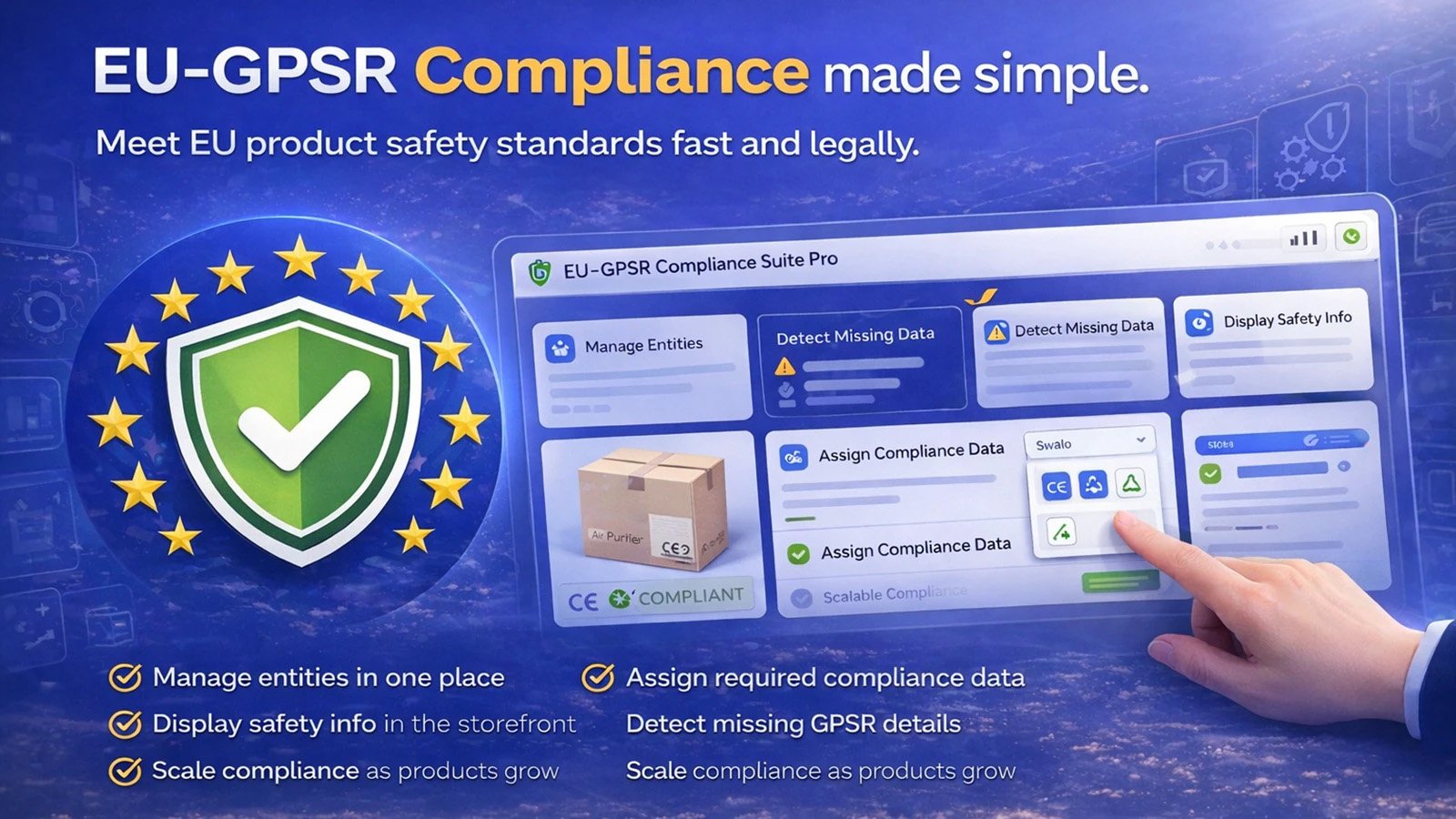
I have seen many cases where a buyer sends me a style photo and asks for “all safety files.” That is too broad. A product file needs structure. It should show what the bag is made of and where the main risk points sit. If not, the buyer may collect nice-looking papers that do not really support the final item.
I usually tell buyers to build the file around a material and component map. That means breaking the bag into pieces. Not every piece needs the same level of review. But each important piece should be visible.
Here is a practical map I use in discussions:
| File section | What should be listed | Why it helps |
|---|---|---|
| Basic product identity | Style number, product name, photo, dimensions, intended use | Stops confusion between similar styles |
| Main materials | Outer fabric, lining, foam, insulation, mesh, webbing | Links tests and declarations to actual materials |
| Decoration | Printing, embroidery, heat transfer, patches, coatings | Surface treatments can change risk6 |
| Hard components | Zipper, sliders, magnets, buckles, snaps, rivets | Metal and plastic parts often trigger extra review7 |
| Packaging and labels | Hangtags, sewn labels, polybags, cartons, warnings | Retail and traceability teams often check these |
| Supplier mapping | Which mill or trim supplier made each part | Makes follow-up and replacement control easier |
This is also where one old report often fails. A passed test from one fabric mill does not always cover a later fabric from a new mill. A black zipper from one supplier does not automatically cover a gold zipper from another source. A plain style does not always cover a printed style. I have had customers assume that one approved sample opened the door for all later versions. Then a revision happened. Then the document set no longer matched.
So I always push one point: file accuracy matters as much as file quantity.
What Labels and Supplier Information Should Buyers Collect?
Many buyers focus only on lab tests. Then later, the retailer asks for traceability, supplier details, or label review. That gap can stop launch even when testing looks fine.
Buyers should collect label content, product identification, manufacturer or importer details, and key supplier records early.8 These files support traceability, internal review, and retailer onboarding, especially for large chains and supermarket programs.9
In my daily work, this is one of the most overlooked parts. Buyers ask for test reports first. That makes sense. Tests feel technical and urgent. But many retail programs also want clear label and supplier information. If those details are missing, the file still feels incomplete.
For bags, I often see buyers needing support in these areas:
| Information type | Commonly requested content | Common problem |
|---|---|---|
| Product label info | Product name, style code, origin, care or use notes | Label text does not match listing or carton |
| Supplier identity | Factory name, address, contact details | Trading company and factory details get mixed up |
| Importer or responsible party info | EU-facing contact details if required by customer program | Left blank until late stage |
| Component supplier data | Fabric mill, zipper supplier, print vendor | No record kept for second-tier suppliers |
| Batch or production traceability | PO reference, date code, carton mark, production lot | Hard to trace after complaint |
I have learned that big retailers often care a lot about consistency. They may compare the test report, item spec, packaging, label artwork, and supplier form. If the style code changes in one place but not another, questions start. If the product description says “backpack” on one file and “school bag” on another, more questions start. These are small issues, but they can slow approval.
I remember one customer who had all the main lab reports ready. Still, the onboarding stalled because the label draft, importer info, and vendor form were not aligned. The product itself was not the problem. The paperwork path was the problem. That taught me to treat labels and supplier records as part of the safety file logic, not as separate admin work.
How Can Importers Prepare Without Slowing Down Sampling?
Many teams wait until pre-shipment to check documents. Then they rush, repeat tests, and argue over revisions. That costs both time and trust.
Importers can move faster by confirming product type, material map, sales channel, and customer-specific compliance requests during development. Early document planning reduces rework and avoids last-minute testing on samples that already changed.10
This is where I try to help buyers the most. I know procurement teams want speed. They do not want compliance work to block sampling. I agree. The answer is not to test everything too early. The answer is to ask the right questions early.
When I work with an experienced buyer, the best projects follow a simple rhythm. First, we define the product type. Next, we map the materials and trims. Then, we confirm the sales channel. After that, we review customer-specific requests. Only then do we decide what support is likely needed before bulk.
Here is the framework I use:
| Stage | What I ask the buyer | Why it saves time |
|---|---|---|
| RFQ stage | What market and channel is this for? | Helps avoid wrong assumptions |
| Sampling stage | What materials and trims are likely final? | Stops testing on temporary parts |
| Pre-order stage | Are there retailer-specific forms or restricted lists? | Prevents late surprises |
| Pre-production stage | Have any suppliers, colors, or prints changed? | Protects against invalid old reports |
| Pre-shipment stage | Does the file match the final approved bag? | Reduces audit and warehouse risk |
I do not suggest freezing every detail too early. That is not realistic. Sampling always changes. But buyers can set a “document checkpoint” before bulk materials are locked. That is enough to avoid most panic.
In my own projects, confusion often comes from one simple gap: the sourcing team and compliance team start too late with each other. When they talk early, the buyer does not need to slow development. The buyer just avoids doing the same work twice.11
What Questions Should EU Buyers Add to a Bag RFQ?
A weak RFQ creates blind spots. Then the buyer gets low prices, fast sample promises, and almost no usable compliance support.
EU buyers should add product-risk questions to the RFQ, including material breakdown, trim sources, print details, channel requirements, and document availability. Good RFQs help suppliers quote more accurately and prepare useful support from the start.12
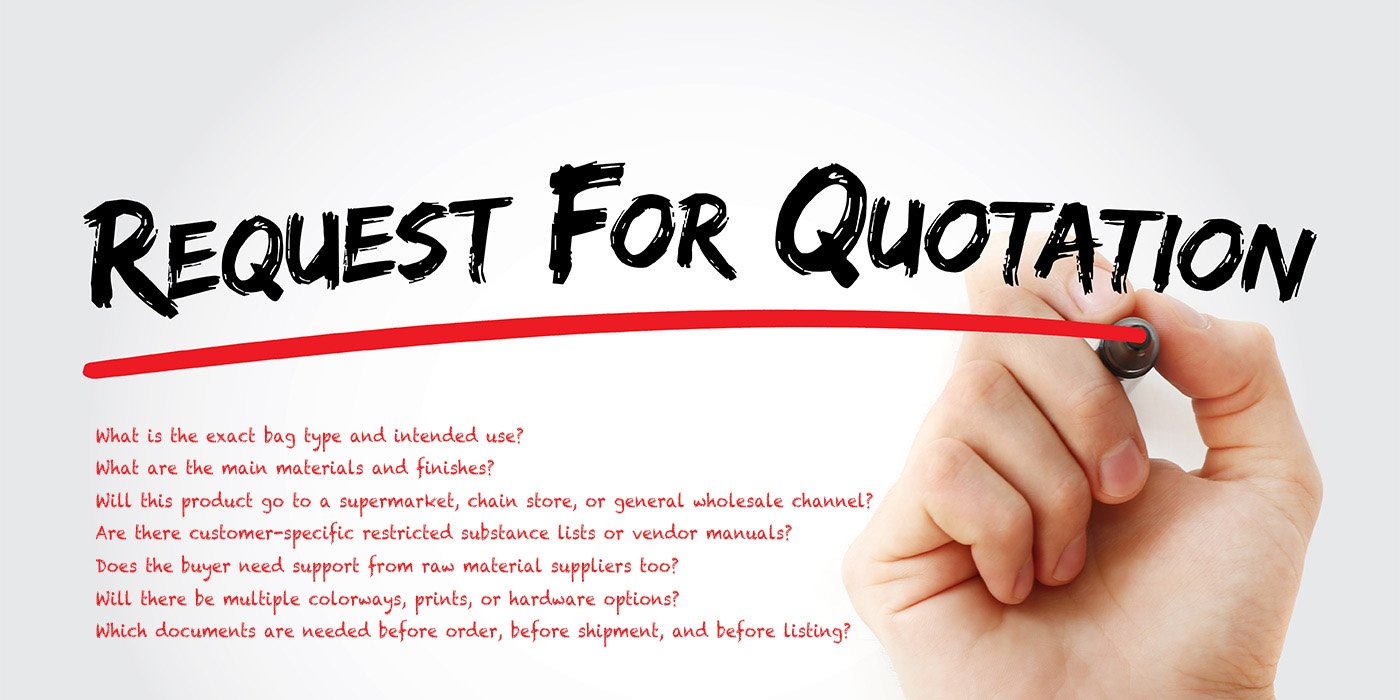
I like this topic because it is practical. A better RFQ can solve many later problems. Most RFQs cover price, MOQ, sample lead time, and packaging. That is normal. But if the product is for the EU, I think buyers should also ask a few compliance-facing questions from day one.
I am not saying the RFQ needs to become a legal document. I am saying it should capture the bag’s risk profile and file expectations. That helps both sides. I can quote more honestly. I can tell the buyer which documents are already available and which ones may depend on the final material choice.
These are the kinds of RFQ questions I think work well:
| RFQ question | What it reveals |
|---|---|
| What is the exact bag type and intended use? | Helps identify likely risk points |
| What are the main materials and finishes? | Flags coatings, prints, insulation, or special trims |
| Will this product go to a supermarket, chain store, or general wholesale channel? | Shows how strict onboarding may be |
| Are there customer-specific restricted substance lists or vendor manuals? | Avoids guessing based on general practice |
| Does the buyer need support from raw material suppliers too? | Sets traceability expectations |
| Will there be multiple colorways, prints, or hardware options? | Shows whether one file may not cover all versions |
| Which documents are needed before order, before shipment, and before listing? | Creates a usable timeline |
I have found that this kind of RFQ improves communication a lot. It also helps avoid unfair comparison between suppliers. One supplier may quote low because they assume no document support. Another may quote higher because they include test coordination and file preparation. If the RFQ is clearer, the buyer can compare suppliers more fairly.
For me, a strong RFQ is not extra paperwork. It is risk control at the cheapest stage.
Conclusion
Bag buyers should prepare EU safety files by product risk, not by a fake universal certificate. The best files match the final bag, the sales channel, and the buyer’s real compliance path.
"General Product Safety Regulation - Wikipedia", https://en.wikipedia.org/wiki/General_Product_Safety_Regulation. European Union product safety rules describe compliance as a product-specific process involving safety assessment, technical documentation, and traceability information, indicating that no single universal certificate is ordinarily sufficient for all consumer bags. Evidence role: expert_consensus; source type: institution. Supports: EU product safety compliance under the GPSR relies on product-specific safety information, traceability, and technical documentation rather than a single universal certificate applicable to all consumer bags.. ↩
"EU Consumer Goods General Product Safety Regulation (GPSR)", https://www.trade.gov/market-intelligence/eu-consumer-goods-general-product-safety-regulation-gpsr. Retailer and importer compliance documentation frameworks commonly require product identification, safety records, and supplier information before listing or distribution, which helps explain why incomplete files may delay onboarding or generate warehouse and review queries. Evidence role: general_support; source type: other. Supports: Retailer and importer compliance programs commonly require product documentation before onboarding, listing, or distribution, so incomplete files can delay acceptance or trigger additional review.. Scope note: Support is contextual because onboarding and warehouse procedures vary by retailer and logistics operator. ↩
"EU Consumer Goods General Product Safety Regulation (GPSR)", https://www.trade.gov/market-intelligence/eu-consumer-goods-general-product-safety-regulation-gpsr. The General Product Safety Regulation requires consumer products placed on the Union market to be safe and to carry traceability-related identification and economic-operator information, supporting the need for safety files tied to identifiable product records. Evidence role: definition; source type: government. Supports: The GPSR requires products placed on the EU market to be safe and accompanied by traceability and identification information relevant to economic operators and product records.. ↩
"EU - Import Requirements and Documentation", https://www.trade.gov/country-commercial-guides/eu-import-requirements-and-documentation. Importer and product-compliance guidance generally expects technical and traceability documentation to correspond to the product actually placed on the market, so a mismatch between records and the final bag can itself become a compliance problem. Evidence role: general_support; source type: institution. Supports: Compliance documentation is expected to correspond to the actual marketed product, so mismatches between records and the final item can trigger nonconformity findings or approval delays.. Scope note: This supports the importance of document-product consistency but does not directly quantify bag-specific failure rates. ↩
"Retailers: Product Safety and Your Responsibilities | CPSC.gov", https://www.cpsc.gov/Business--Manufacturing/Business-Education/Business-Guidance/Retailers-Product-Safety-and-Your-Responsibilities. Published supplier standards from major retail channels commonly combine product-specific safety requirements with channel-specific onboarding forms and traceability records, supporting the view that required documentation depends on both the item and the sales pathway. Evidence role: general_support; source type: other. Supports: Documentation expectations often vary by product category and by retailer or channel compliance programs, especially in large-chain or supermarket supply systems.. Scope note: Channel requirements are commercial rather than uniformly mandated by EU law. ↩
"Functional coatings for textiles: advancements in flame resistance ...", https://pmc.ncbi.nlm.nih.gov/articles/PMC11976222/. Research on textiles and consumer-product chemistry shows that coatings, inks, and finishing treatments may add substances not present in the base fabric, which explains why surface decoration can change the relevant risk profile. Evidence role: mechanism; source type: paper. Supports: Textile surface treatments such as coatings, prints, and finishes can introduce additional chemicals or alter exposure considerations compared with untreated materials.. ↩
"Toxic threats from plastic waste: human health impacts, challenges ...", https://pmc.ncbi.nlm.nih.gov/articles/PMC12557311/. Consumer-product safety literature and guidance treat discrete metal and plastic components as potential sources of separate chemical and mechanical hazards, which supports reviewing items such as zippers, buckles, magnets, and snaps individually. Evidence role: mechanism; source type: research. Supports: Separate components made of metal or plastic may present distinct chemical or physical hazards and therefore are often reviewed individually in product safety assessment.. Scope note: The relevance of any specific hazard depends on the product’s intended users and design. ↩
"EU - Labeling/Marking Requirements", https://www.trade.gov/country-commercial-guides/eu-labelingmarking-requirements. EU product-safety legislation requires or emphasizes product identification details, economic-operator information, and traceability elements, which supports early collection of labels, importer data, and supplier records. Evidence role: definition; source type: government. Supports: EU product safety rules emphasize product identification, economic-operator information, and traceability records as part of compliance documentation.. ↩
"Retailers: Product Safety and Your Responsibilities | CPSC.gov", https://www.cpsc.gov/Business--Manufacturing/Business-Education/Business-Guidance/Retailers-Product-Safety-and-Your-Responsibilities. Research on private standards in retail supply chains shows that large chains frequently impose supplier documentation and traceability requirements beyond minimum legal rules, providing context for stricter supermarket program expectations. Evidence role: historical_context; source type: paper. Supports: Large retailers often operate private standards and supplier onboarding systems that require documentation beyond baseline legal requirements.. Scope note: This is contextual support because specific documentation demands differ among retailers. ↩
"Combating Sequential Time Delays in Pharmaceutical Supply Chains", https://scm.mit.edu/news-and-events/combating-sequential-time-delays-in-pharmaceutical-supply-chains/. Product-development and quality-management research commonly finds that early definition of requirements and design inputs reduces downstream rework and schedule disruption, which supports the value of planning documentation before specifications change again. Evidence role: mechanism; source type: paper. Supports: Early clarification of requirements in product development is associated with less downstream rework, fewer late changes, and reduced project delay.. Scope note: The evidence is general to development processes and not specific to bag testing workflows. ↩
"Cross-Functional Teams | Product Management Success", https://online.merrimack.edu/cross-functional-teams-in-product-development/. Studies of cross-functional product development report that early coordination among commercial, technical, and compliance-related functions improves information transfer and reduces duplicated downstream effort, supporting the claim that earlier discussion can avoid doing the same work twice. Evidence role: mechanism; source type: education. Supports: Cross-functional coordination early in product development can reduce duplication, improve information quality, and lower the cost of later changes.. Scope note: This evidence is indirect because it addresses product-development teams broadly rather than bag-specific sourcing and compliance departments. ↩
"Quoting, Bidding, and RFP Processes | Illinois Institute of Technology", https://www.iit.edu/procurement-services/purchasing/purchasing-guidance/quoting-bidding-and-rfp-processes. Procurement research generally finds that clearer and more detailed specifications improve supplier bid accuracy and comparability, which supports the claim that stronger RFQs can also improve the relevance of early supporting documentation. Evidence role: general_support; source type: paper. Supports: Detailed and unambiguous procurement specifications improve bid comparability and supplier response quality, making quotations and supporting documentation more reliable.. Scope note: The connection to compliance-support documents is inferential unless the source directly studies regulated consumer products. ↩