I often see buyers lose time and money on the wrong supplier because the bag looks simple at first glance. A shoe compartment changes more than most people expect.1
The best place to source custom duffle bags with shoe compartments is from a supplier with proven functional bag development ability, not simply from a certain country.2 I judge suppliers by how they handle structure, stress points, sampling logic, and bulk consistency before I judge their location.
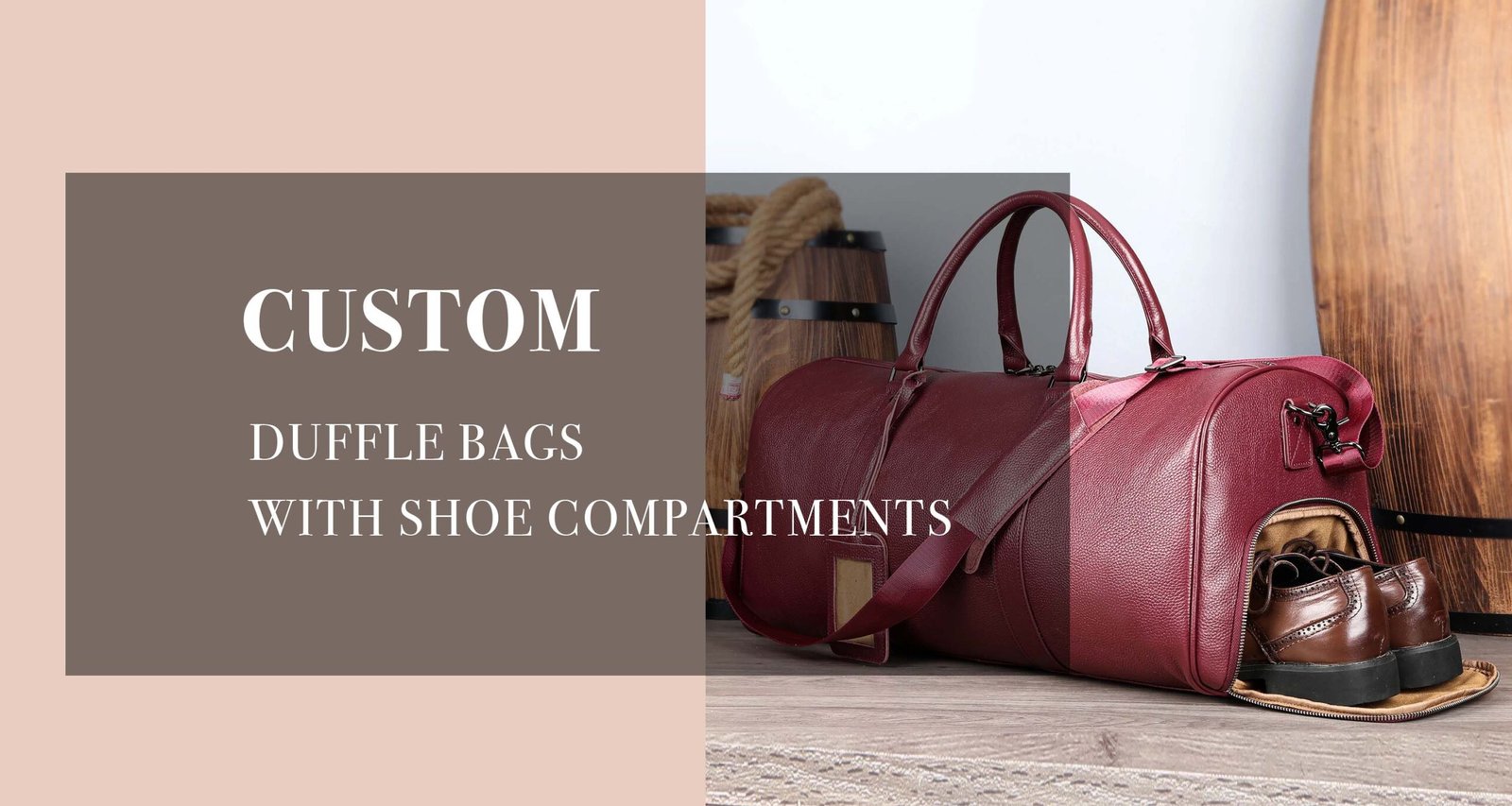
When I handle duffle bag inquiries, I notice that buyers often ask “where should I source this bag?” What they really mean is “how do I avoid a supplier who can quote fast but cannot build this bag well in bulk?” That is the real sourcing question. A shoe compartment is not just an extra space. It affects the shape, balance, zipper path, handle stress, and packing use.3 I have seen samples look fine in photos, yet bulk production comes out soft, twisted, or uneven. That is why I always start with supplier capability, not geography.
Why Do Buyers Ask for Shoe Compartments in Duffle Bags?
I often hear buyers say the feature looks small, so any bag factory should handle it. That idea causes many of the quality problems I see later.
Buyers ask for shoe compartments because they help separate dirty shoes from clean clothes, improve user convenience, and make the bag easier to sell.4 The feature also adds clear product value for gym, travel, team, and promotional use.
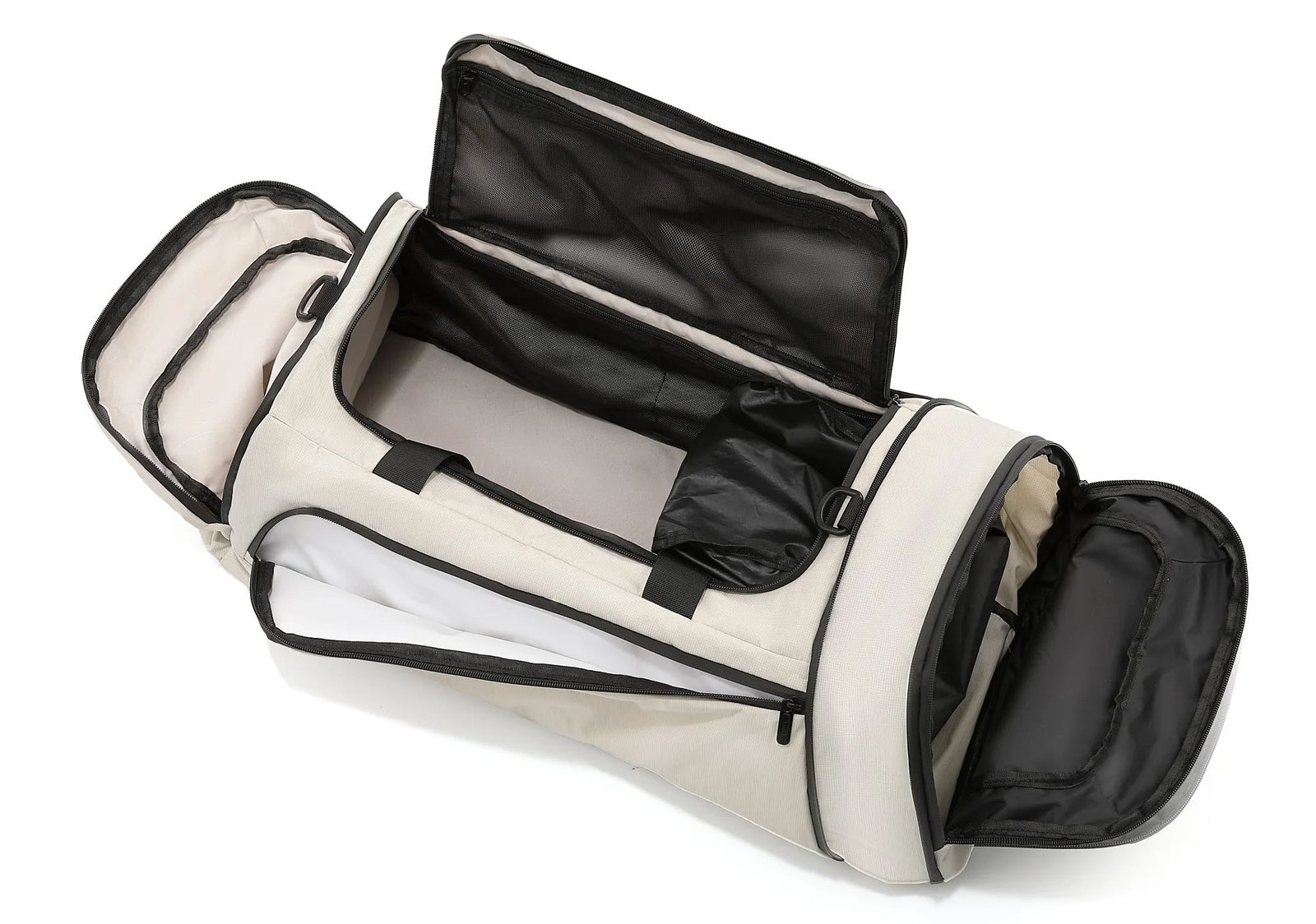
In my inquiry experience, buyers ask for shoe compartments for one simple reason: the end user understands the value right away. People want to keep shoes away from clean clothing, towels, or personal items. That makes the product easier to market. Still, a common issue buyers overlook is that this feature changes the whole bag layout. It is not just a side pocket added at the end.
I usually break the buyer need into three parts:
| Buyer goal | What it means in product terms | Common risk if ignored |
|---|---|---|
| Separate shoes | Lining, ventilation, and compartment depth matter | Shoes press into the main compartment |
| Keep shape | Panel support and pattern balance matter | Bag looks collapsed when filled |
| Sell the function | Access, size, and zipper opening matter | Feature looks good in sample but feels awkward in use |
I have seen buyers focus on the outside look and miss the inside space loss. A shoe compartment takes volume from the main body. It also changes where seams meet and where zippers take stress. If the supplier does not talk about those points before quoting, I take that as a warning sign. A capable supplier usually asks what shoe size range, use case, and target bag capacity the buyer needs. That tells me they understand the function, not just the picture.
What Capacity Works for Gym, Weekend, and Team Use?
Many buyers choose a capacity number too early. Then the shoe compartment steals space, and the finished bag no longer fits the real use.
Gym use often works around 25–35L, weekend use around 35–50L, and team use often starts from 45L and up.5 The right capacity depends on whether the shoe compartment is internal, external, or full-depth.
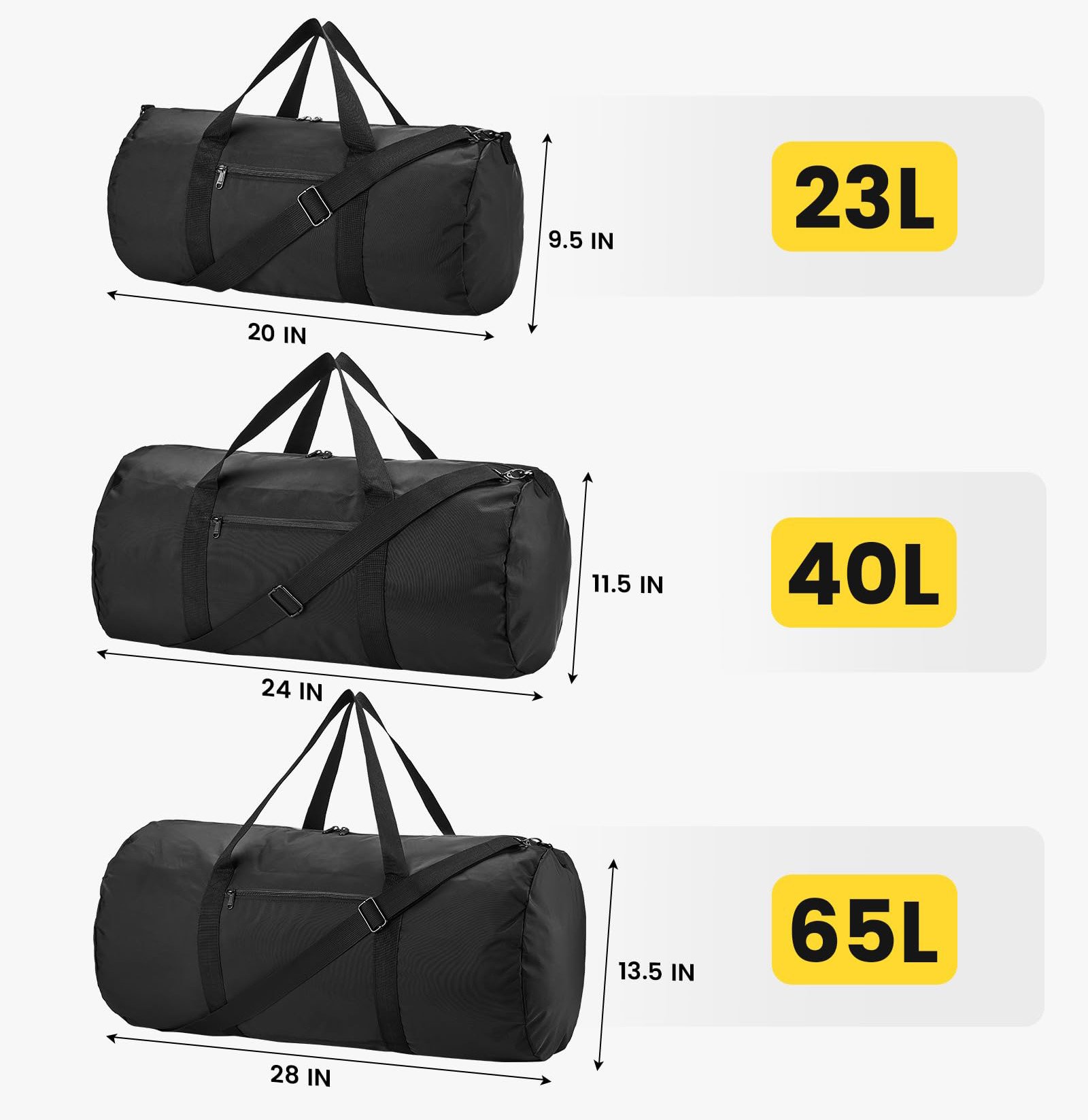
I always tell buyers that capacity decisions should come after function mapping, not before it. In many projects, a buyer asks for a 30L duffle and also wants a large shoe compartment, thick padding, side pockets, and a structured base. On paper, that sounds fine. In real production, the usable main space becomes much smaller than expected.
This is how I usually think about it:
| End use | Suggested capacity | What usually goes inside | Key sourcing note |
|---|---|---|---|
| Gym | 25–35L | Shoes, clothes, bottle, towel | Keep compact shape and easy carry |
| Weekend | 35–50L | Shoes, 2–3 days clothing, toiletry items | Balance travel volume and bag weight |
| Team/Sports | 45L+ | Shoes, uniform, gear, extras | Reinforcement becomes more important |
A common issue buyers overlook is shoe size. Men’s larger sizes can occupy much more space than expected.6 The compartment type matters too. An external end shoe compartment usually protects the main body space better. An internal divider can save cost, but it may reduce user satisfaction. A full-depth shoe compartment gives stronger separation, but it changes the bag’s profile and often adds stress to the side panel.
In sourcing, I watch how the supplier responds when I ask for volume advice. A strong supplier does not only repeat liter numbers. They ask how the user packs, whether the bag is for retail or promotion, and whether shape retention matters when partly filled. Those questions help prevent bulk complaints later.
Which Fabrics Are Durable Enough for Heavy Duffle Bags?
Some buyers treat fabric choice like a simple appearance issue. For heavy duffle bags, that approach usually leads to weak structure or cost that does not match the target market.
Durable fabrics for heavy custom duffle bags usually include polyester, nylon, and coated blends chosen by end use, weight, and structure needs.7 The best choice depends on load, shape retention, abrasion risk, and price target.
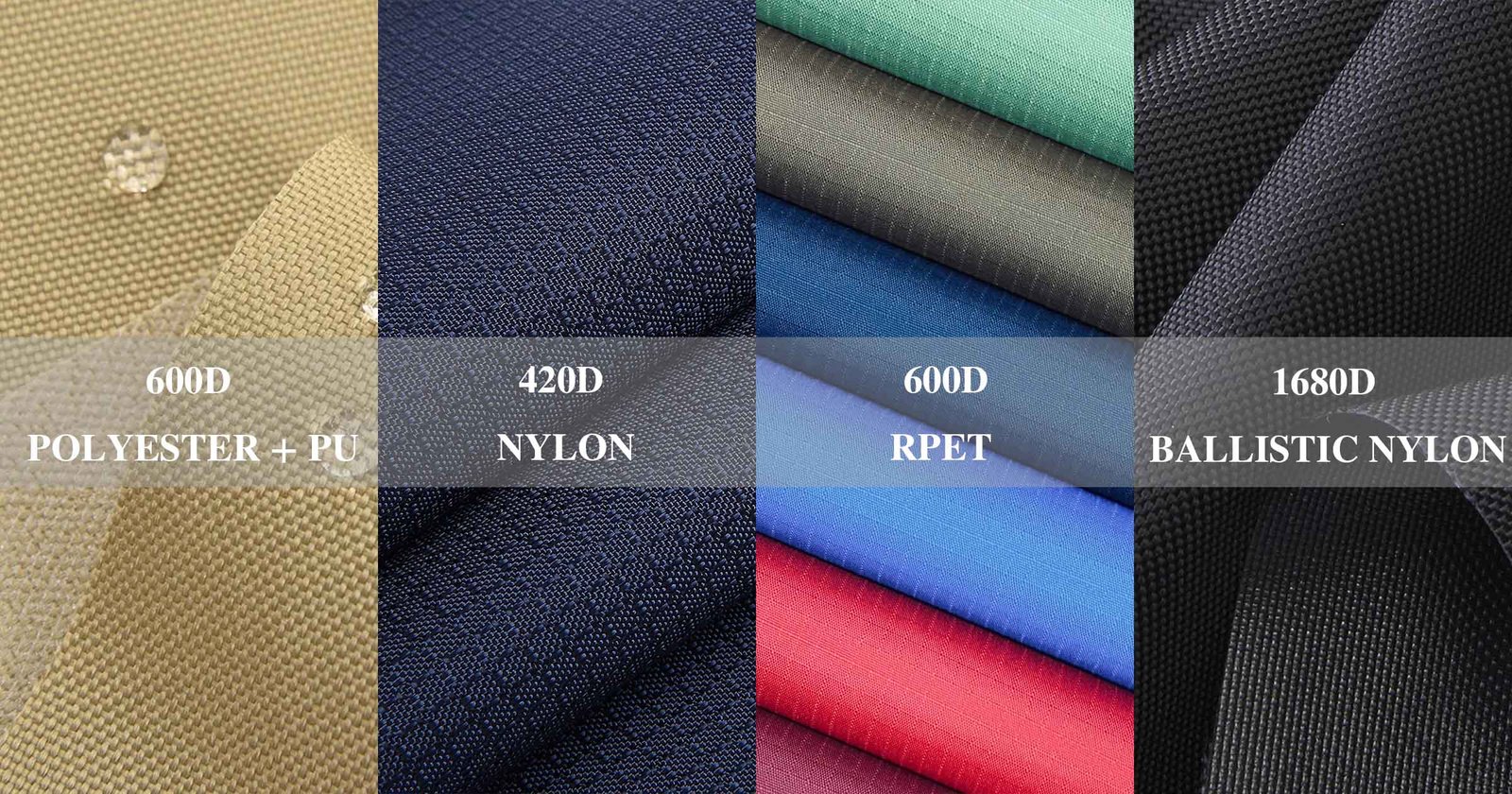
When I review custom duffle bag inquiries, fabric is one of the first places where supplier skill becomes visible. Buyers often ask for “strong material,” but that phrase is too broad. A shoe compartment usually means the bag carries heavier and harder items. Shoes add bulk. Team gear adds load. Weekend travel adds repeated pulling on handles and zippers. So the fabric has to support not only the body look, but also the full structure.
I usually compare materials like this:
| Fabric type | Usual strength level | Best for | Common watch point |
|---|---|---|---|
| Polyester | Good value | Promotional, gym, general retail | Quality range is wide |
| Nylon | Strong and durable | Premium functional bags | Cost is often higher |
| Coated fabric | Better water resistance | Travel and outdoor use | Can affect hand feel |
| Mixed construction | Balanced use | Bags needing cost and function balance | Needs good pattern planning |
A common issue buyers overlook is that fabric alone does not decide durability. Backing, lining, foam, webbing, piping, and reinforcement all matter.8 I have seen bags made with decent outer fabric still fail because the side panel was too soft for the shoe compartment shape. I have also seen zipper areas wrinkle because the material and construction did not match the compartment opening.
This usually affects bulk consistency more than sample appearance. A sample can be packed carefully. Bulk goods show the real pattern control. That is why I ask suppliers what fabric they recommend for the exact weight and use case, and why. If the answer is only a price list, I keep looking.
Where Should Logos Be Placed on Custom Duffle Bags?
Buyers often think logo placement is a branding choice only. In fact, logo position can affect function, visibility, and even production risk.
The best logo placement on custom duffle bags depends on how the bag is carried, displayed, and packed.9 Front panels, side panels, and shoulder straps are common, but the shoe compartment and seam layout can limit clean branding space.
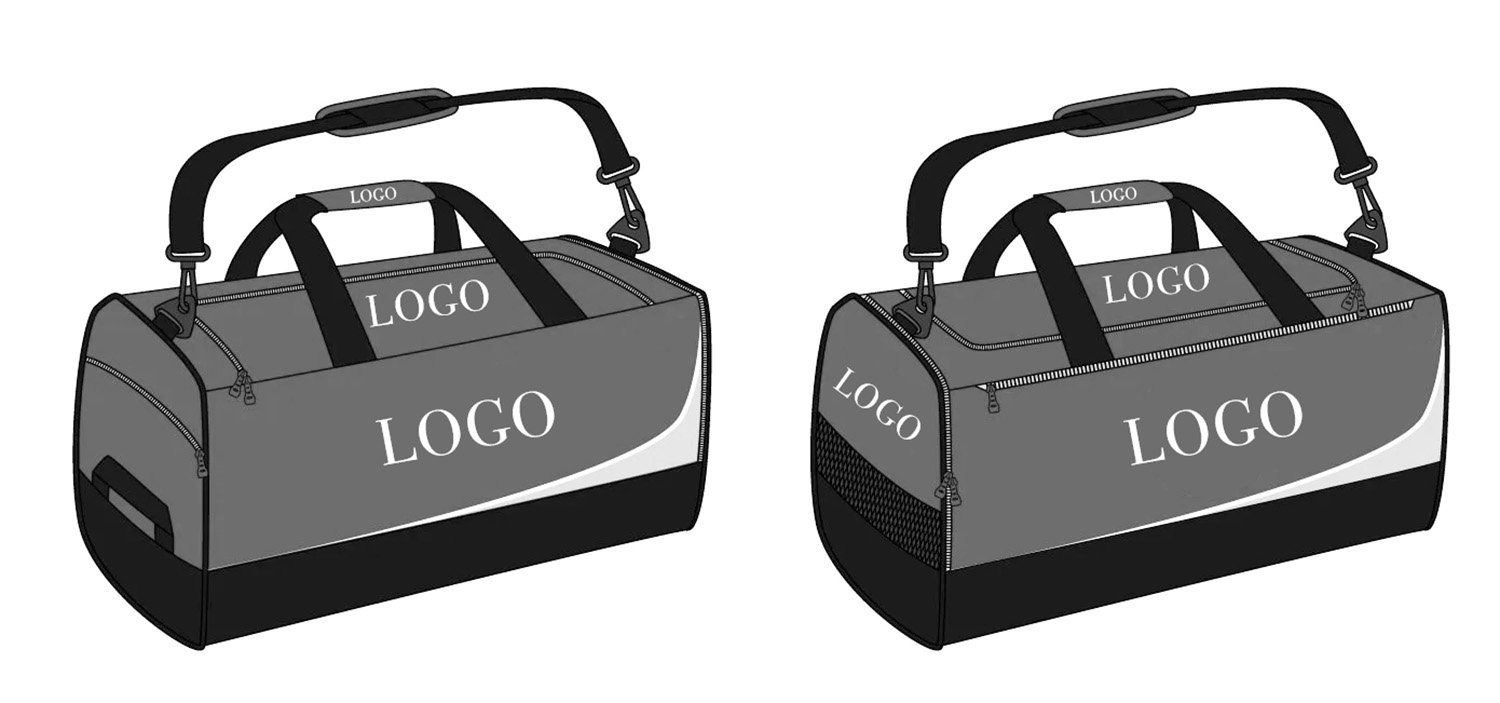
In real projects, logo placement often gets decided too late. Then the buyer finds that the best visual area is already interrupted by seams, zippers, handles, or the shoe compartment opening. I see this a lot on functional duffle bags because the structure takes away some of the clean flat surfaces that branding usually needs.
I often review logo options in this way:
| Placement area | Main benefit | Common limit | Best use |
|---|---|---|---|
| Front panel | High visibility | Can be broken by pockets or seams | Brand-forward retail styles |
| Side panel | Good for team or promo use | Shoe compartment may occupy this space | Simpler layouts |
| Top panel | Seen from above | Less visible in normal carry | Secondary branding |
| Shoulder strap/pad | Extra detail value | Small print area | Premium look |
| End panel | Clear on display | May compete with functional opening | Bold logos |
A common issue buyers overlook is print distortion. If the logo sits near a curved panel or a heavily loaded compartment, the graphic may bend in use. Embroidery can also pull softer fabrics.10 Heat transfer and screen print need flat and stable surfaces. So I always connect logo placement with structure planning early.
A capable supplier usually asks how the bag will be sold. Will it hang? Sit on a shelf? Be used as a gift with strong logo exposure? Will the end customer carry it mostly by hand or on the shoulder? Those details matter because branding should work with bag use, not fight it. Good placement makes the bag look cleaner and also reduces production trouble.
What Testing Should Importers Request for Handles and Zippers?
Many buyers only ask for a nice sample and a basic inspection. For a functional duffle bag, that is not enough if you want lower risk in bulk orders.
Importers should request practical testing for handle strength, zipper performance, seam security, and load-bearing consistency.11 The goal is to confirm that the bag can handle repeated use and that bulk production matches the approved sample.
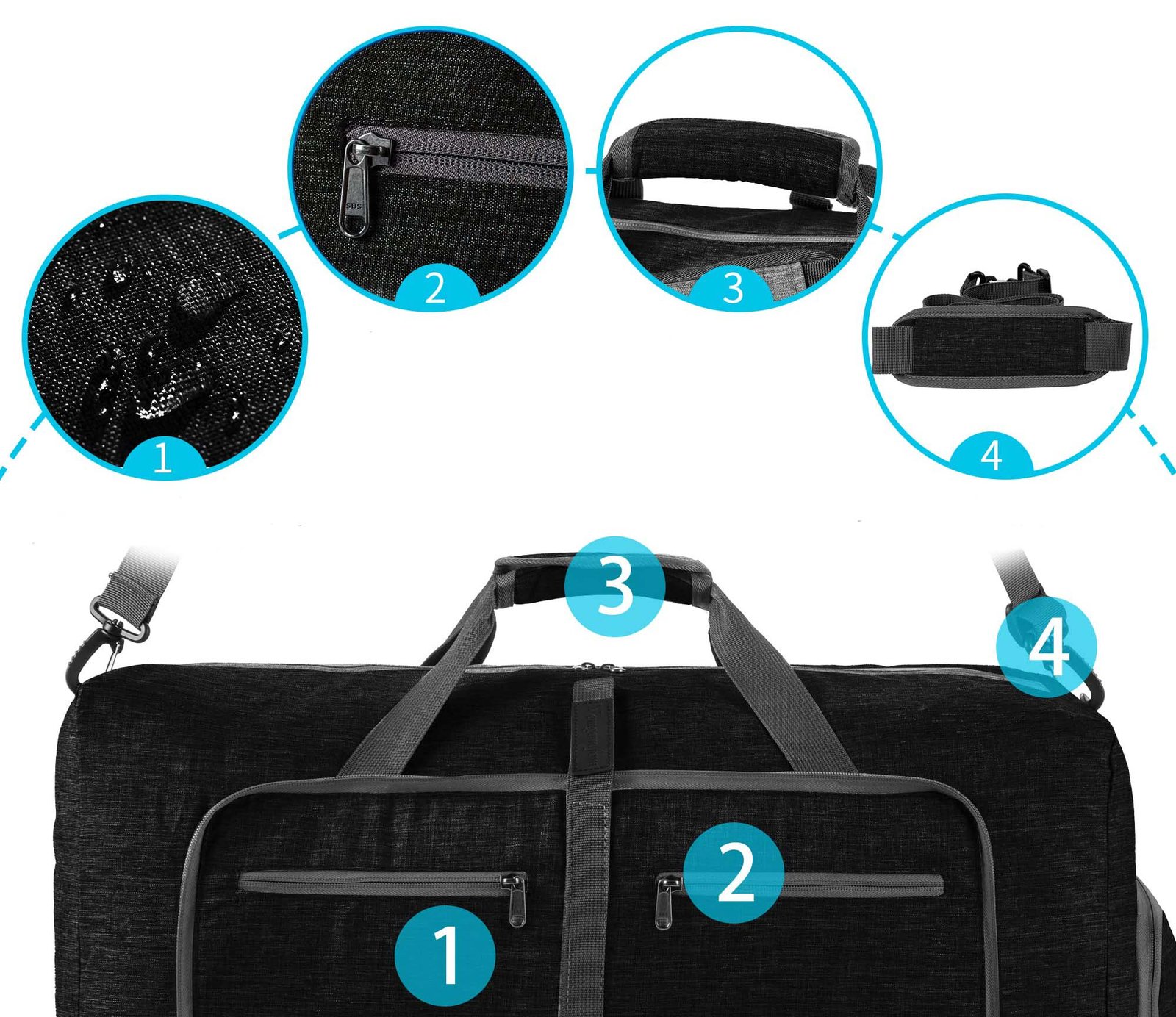
In my experience, the biggest sourcing risk is not a bad-looking sample. The bigger risk is a sample that passes while bulk goods fail under normal use. This usually happens in the handle join points, zipper runs, and shoe compartment seams. Those are the stress areas that change most when the bag gets full.
I usually ask buyers to focus on these points:
| Test area | Why it matters | What issue it helps detect |
|---|---|---|
| Handle load test | Handles carry full bag weight | Weak bartacks or poor reinforcement |
| Shoulder strap test | Dynamic pulling is different from static weight | Hook or webbing failure |
| Zipper open-close test | Shoe compartments get frequent use | Misalignment, snagging, weak teeth |
| Seam strength check | End panels take pressure | Bursting or distortion |
| Packed-use review | Real use shows shape issues | Sample passes, bulk collapses |
A common issue buyers overlook is that the shoe compartment creates uneven stress.12 One side of the bag can become heavier or firmer than the other. That changes how the handles pull. It also changes how the zipper line behaves when the bag is packed full. I do not present myself as a lab authority, but in supplier-screening work, I have learned that practical test requests reveal a lot about supplier maturity.
If a supplier understands the product, they usually talk about reinforcement points, zipper specification, and how they control consistency from sample to bulk. If they avoid those topics and only reassure me with general statements, I do not feel confident. The best sourcing decision comes from clear discussion of use risk before production starts.
Conclusion
I source custom duffle bags with shoe compartments by judging supplier capability first, because this feature changes structure, durability, and bulk consistency far more than many buyers expect.
"[PDF] Comparison of features, usability, and load carrying design of ...", https://www.imse.iastate.edu/files/2014/03/EagleZoe-thesis.pdf. Research on carried-product and luggage design indicates that internal compartment configuration affects usable volume, packing behavior, and load distribution, supporting the article’s point that a shoe compartment can alter bag performance beyond adding storage alone. Evidence role: mechanism; source type: paper. Supports: That adding compartments in carried products can change internal volume allocation, weight distribution, and user interaction with the product.. Scope note: Most ergonomic and luggage-design studies discuss compartments in general rather than shoe-specific duffle bag compartments. ↩
"Public Procurement, Trade and Industrial Policies | OECD", https://www.oecd.org/en/publications/public-procurement-trade-and-industrial-policies_64f22ae6-en/full-report/using-public-procurement-to-strengthen-national-economies-through-industrial-policies_0221d691.html. Supplier-selection research commonly treats technical capability, process control, and quality performance as core predictors of manufacturing outcomes, providing contextual support for prioritizing supplier capability over country of origin when sourcing complex sewn products. Evidence role: expert_consensus; source type: paper. Supports: That supplier evaluation frameworks commonly prioritize process capability, quality systems, and technical competence when predicting production performance.. Scope note: The support is general to supplier selection and not specific to duffle bags with shoe compartments. ↩
"Impact of Backpacks on Ergonomics: Biomechanical and ... - PMC", https://pmc.ncbi.nlm.nih.gov/articles/PMC9180465/. Studies of soft-goods and load-carrying product design show that compartment placement and load concentration influence deformation, seam stress, and user packing behavior, supporting the claim that a shoe compartment can affect shape, balance, and zipper and handle performance. Evidence role: mechanism; source type: research. Supports: That compartment layout and load placement in soft goods can affect stress concentration, shape retention, and user packing patterns.. Scope note: Available studies often focus on backpacks or luggage generally rather than duffle bags specifically. ↩
"[PDF] Comparison of features, usability, and load carrying design of ...", https://www.imse.iastate.edu/files/2014/03/EagleZoe-thesis.pdf. Consumer-product and travel-accessory studies report that organizational features and separation of clean and dirty items are associated with perceived convenience and product usefulness, which supports the article’s explanation for buyer interest in shoe compartments. Evidence role: general_support; source type: paper. Supports: That consumers value product features that separate clean and dirty items and improve convenience in travel or sports bags.. Scope note: Direct evidence on sales impact may be limited unless a market survey specifically measures purchase intent for shoe compartments. ↩
"Duffel bag - Wikipedia", https://en.wikipedia.org/wiki/Duffel_bag. General luggage and travel-sizing references describe smaller duffels as suitable for daily or gym use, mid-range volumes for short trips, and larger volumes for sports gear, supporting the article’s capacity bands as practical benchmarks. Evidence role: definition; source type: education. Supports: That common bag-capacity ranges are associated with day gym use, short trips, and larger sports or team loads.. Scope note: Capacity recommendations are contextual and may vary by packing style, bag dimensions, and whether shoes are stored in a separate compartment. ↩
"Shoe size - Wikipedia", https://en.wikipedia.org/wiki/Shoe_size. Footwear sizing standards and dimension charts show that larger adult shoe sizes correspond to longer and often bulkier shoes, supporting the article’s point that large men’s shoes can consume more compartment space than expected. Evidence role: definition; source type: institution. Supports: That shoe dimensions increase materially across larger adult sizes, affecting required compartment space.. Scope note: Sizing standards provide dimensional ranges, but actual packed volume also depends on shoe style, sole thickness, and pair arrangement. ↩
"Nylon - Wikipedia", https://en.wikipedia.org/wiki/Nylon. Textile engineering references describe nylon and polyester as common bag materials with distinct trade-offs in abrasion resistance, strength, weight, and cost, while coated constructions add water resistance, supporting the article’s material-selection framework for heavy duffle bags. Evidence role: mechanism; source type: education. Supports: That nylon, polyester, and coated textile constructions are commonly selected for load-bearing bags because of differing strength, abrasion, and water-resistance properties.. Scope note: Fabric durability depends not only on fiber type but also on denier, weave, coating, backing, and construction details. ↩
"[PDF] Textile Engineering (BS): Product Engineering Concentration", https://catalog.ncsu.edu/undergraduate/textiles/textile-engineering-chemistry-science/textile-engineering-bs-product-engineering-concentration/textile-engineering-bs-product-engineering-concentration.pdf. Sewn-product engineering literature shows that service life and failure risk depend on seam strength, reinforcement design, webbing performance, and component compatibility as well as outer-shell fabric properties, supporting the article’s statement that durability is a system-level outcome. Evidence role: mechanism; source type: paper. Supports: That durability in sewn bags is determined by components such as seams, webbings, reinforcements, and linings in addition to shell fabric.. Scope note: The evidence is typically based on sewn textile products broadly and may not isolate duffle bags as a separate category. ↩
"Neuroscientific Analysis of Logo Design: Implications for Luxury ...", https://pmc.ncbi.nlm.nih.gov/articles/PMC12024241/. Visual attention and merchandising research indicates that brand visibility varies with object orientation, viewing conditions, and use context, which supports the article’s claim that effective logo placement depends on how a bag is carried, displayed, and packed. Evidence role: mechanism; source type: paper. Supports: That visibility and recognition of branding depend on product orientation, viewing angle, and use context.. Scope note: Most branding studies analyze packaging or retail products generally rather than custom duffle bags specifically. ↩
"4 Tricks to Fix Puckering on your Designs | Embroidery Machine for ...", https://www.youtube.com/watch?v=ZNy6_XnvyB8. Textile decoration guidance notes that embroidery may create puckering or distortion on soft or unstable fabrics because stitching tension and substrate stability affect the finished surface, supporting the article’s caution about logo placement on softer bag materials. Evidence role: mechanism; source type: education. Supports: That embroidery can cause puckering or distortion, especially on soft or unstable fabrics, if stabilization and construction are not appropriate.. Scope note: The extent of distortion depends on stabilizer choice, stitch density, fabric structure, and embroidery setup. ↩
"[PDF] Laboratory and service tests of hand luggage", https://nvlpubs.nist.gov/nistpubs/Legacy/MP/nbsmiscellaneouspub193.pdf. Testing frameworks for luggage and sewn textile products commonly include assessments of handle attachment strength, seam strength, and closure durability, supporting the article’s identification of these areas as practical priorities for importer quality control. Evidence role: expert_consensus; source type: institution. Supports: That handle strength, seam strength, and fastener or zipper durability are standard performance areas in luggage or sewn-product testing.. Scope note: Exact protocols vary by jurisdiction, buyer specification, and whether the product is classified as luggage, sports bag, or general sewn article. ↩
"The Impact of Backpack Loads on School Children: A Critical ... - PMC", https://pmc.ncbi.nlm.nih.gov/articles/PMC6267109/. Mechanical and ergonomic studies of load-carrying systems show that localized or asymmetric packing changes force distribution and deformation, lending contextual support to the article’s claim that a shoe compartment may create uneven stress in a duffle bag. Evidence role: mechanism; source type: paper. Supports: That asymmetric or localized loads in soft carriers can alter force distribution and deformation patterns.. Scope note: The support is contextual because many studies examine backpacks or general load carriers rather than shoe-compartment duffle bags directly. ↩