Insulated picnic backpacks can look great in a catalog but disappoint fast when real buyers face leaks, awkward carrying, or weak finishing. That gap creates returns, complaints, and margin loss. I always suggest a simpler path: check the use scenario, load style, and carry risk before you trust insulation claims.
An insulated picnic backpack should be checked for scenario fit, internal layout, carrying comfort, material durability, and construction quality before buyers compare insulation claims. In real procurement, the best choice is not the bag with the biggest stated capacity or boldest cold-retention promise, but the one that matches how customers will actually pack, carry, and use it.
When I speak with supermarket buyers and promotional buyers, I hear the same early question: “How many hours does it keep cold?” That matters, of course. But it is rarely the first question that prevents trouble. The better question is whether the backpack design fits the outing, the load, and the customer expectation.
What Makes a Picnic Backpack Different from a Regular Cooler Backpack?
A lot of buyers group these products together too quickly. That creates a problem because a regular cooler backpack may store cold items well enough, yet still fail as a picnic product. Then the buyer ends up with a bag that looks right online but feels wrong in actual use.
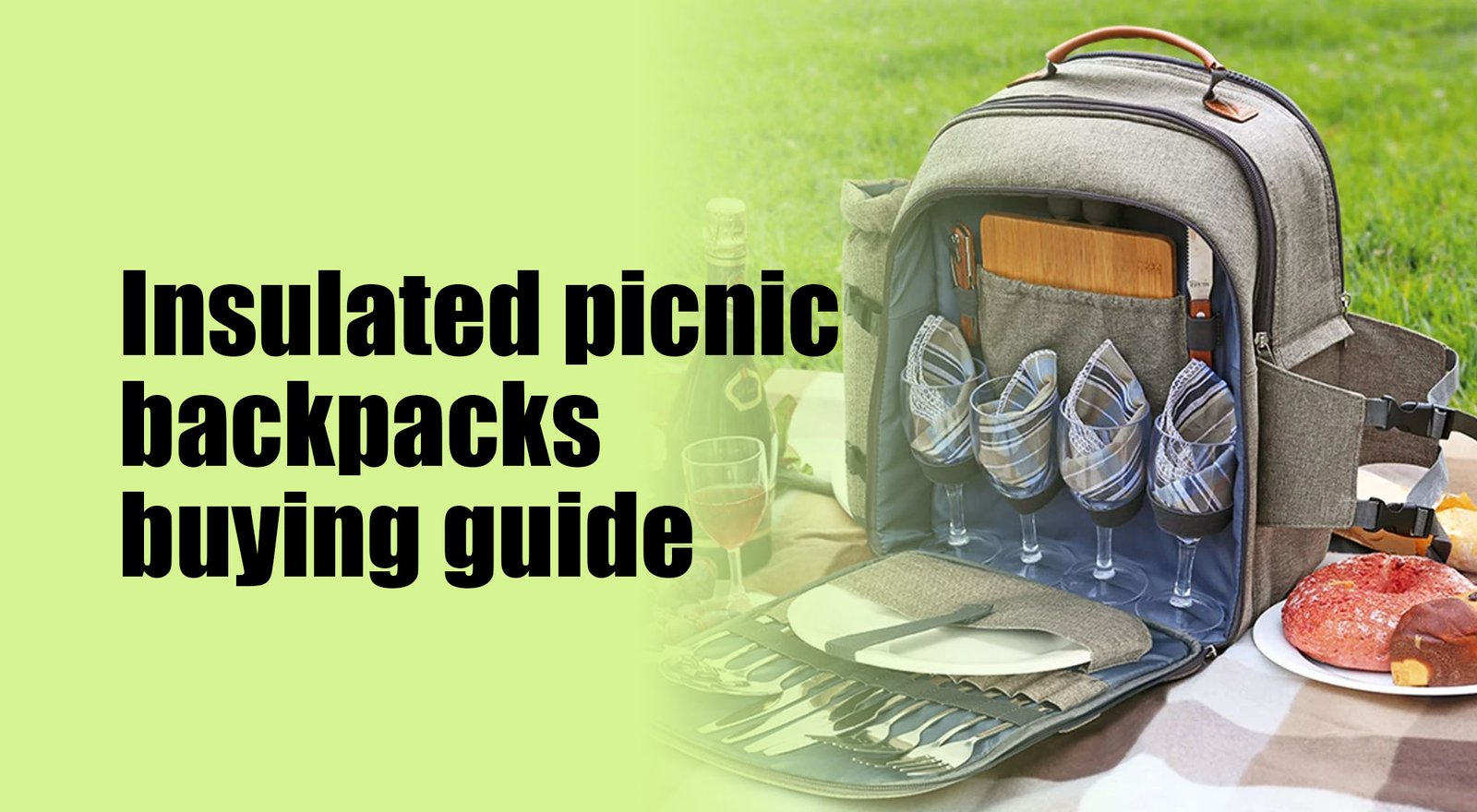
A picnic backpack is usually designed for organized outdoor dining, not just cold storage. It often combines insulation with tableware storage, bottle holders, cutlery organization, and a more lifestyle-oriented appearance. A regular cooler backpack usually focuses more on basic temperature retention and carrying volume.
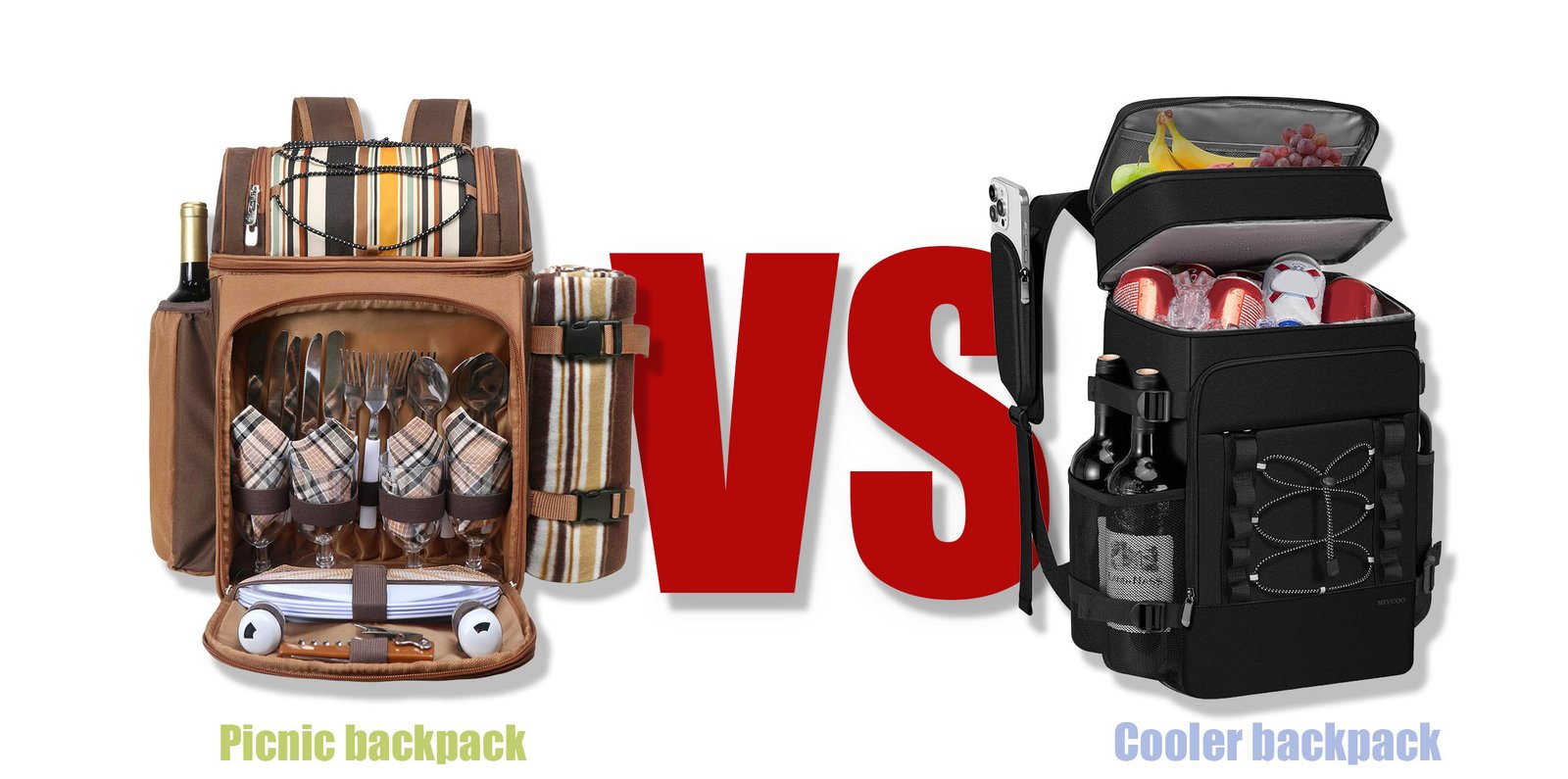
A more useful way to compare the two is to think about the retail promise behind each item.
Function drives expectation
When buyers source a regular cooler backpack, the core customer expectation is simple: carry chilled food or drinks from one place to another. That product can be fairly plain if it performs reliably.
When buyers source insulated picnic backpacks, the expectation becomes broader. Customers often expect:
- A more polished outdoor-lifestyle look
- Better organization inside and outside
- Space for plates, glasses, napkins, or cutlery
- Easier access during a short outing
- A shape that stays presentable when partly filled
That difference matters because complaints often come from expectation mismatch, not from one dramatic defect1.
Why this distinction matters in procurement
In supplier conversations, this point is commonly misunderstood. A factory may offer a cooler backpack with a picnic-style photo and call it a picnic backpack. But buyers should ask whether the structure actually supports a picnic occasion.
I usually tell buyers to check these five points early:
- Is it designed for meal service or just cold transport?
- Does the shape hold well when packed unevenly?
- Are accessories integrated cleanly or added as an afterthought?
- Does the styling fit supermarket shelves or branded gifting goals?
- Will end users find it easy to unpack and repack outdoors?
A simple comparison table
| Feature | Picnic Backpack | Regular Cooler Backpack |
|---|---|---|
| Main use | Outdoor dining and short outings | Food and drink temperature transport |
| Internal design | More organized, often multi-use | Simpler insulated cavity |
| Accessories | May include cutlery, plates, bottle tools | Usually minimal |
| Appearance | Lifestyle-focused, giftable | Utility-focused |
| Complaint risk | Layout mismatch, overpacking, accessory quality | Leakage, insulation disappointment |
For retail-chain buyers, shelf appeal and value perception often matter most. For promotional buyers, branding area, presentation, and target price may matter more. In both cases, though, the product still has to carry comfortably and survive normal use. That is why I never judge insulated picnic backpacks by appearance alone.
Which Compartments Matter for Food, Bottles, and Cutlery?
Many bags look feature-rich on paper, but too many compartments can create dead space, poor balance, and user frustration2. That is where buyers get caught. They see more pockets and assume higher value, but the wrong layout can make the bag harder to use and easier to complain about.
The most important compartments in an insulated picnic backpack are the ones that support real packing behavior: a stable insulated food area, practical bottle storage, and secure cutlery organization. Buyers should prioritize useful structure over maximum pocket count.
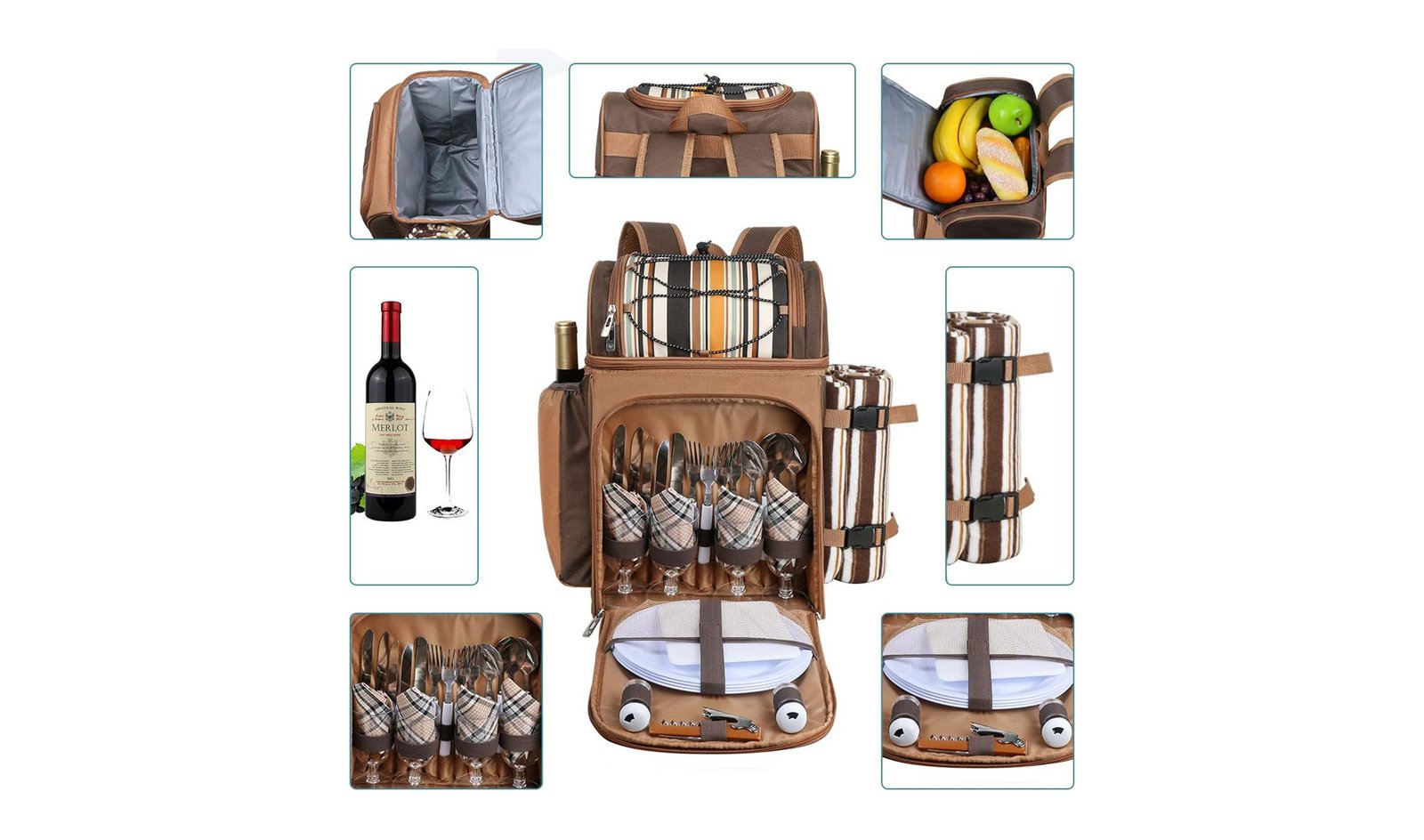
From what I hear in pre-sale discussions, buyers often focus on total capacity first. I think compartment logic is more important.
The three zones that matter most
1. Insulated main food compartment
This is the heart of the bag. Buyers should inspect:
- Opening width
- Ease of loading lunch boxes or containers
- Lining smoothness
- Leak-resistance design
- Bottom support
If the opening is too narrow, users struggle to load food neatly. If the bottom is too soft, the bag sags when heavier items are added.
2. Bottle storage
Bottle pockets should do more than exist. They should hold bottles without making the whole backpack unbalanced. Side bottle holders can work, but poor elastic tension or weak stitching causes fast wear.
Buyers should ask:
- Does the bag hold 1 or 2 bottles?
- Are bottles kept upright?
- Will full bottles pull the bag sideways?
- Is there enough reinforcement at stress points?
3. Cutlery and small accessory storage
This area shapes the “picnic” identity. However, this is also where cheap finishing becomes obvious. I have seen samples where forks, knives, corkscrews, and napkins were included, but the straps were loose, the stitching was messy, or the tools rattled badly.
Good compartment design is about sequence
A useful picnic backpack lets the user pack in a natural order:
- Place food inside the insulated cavity
- Add drinks without affecting balance too much
- Store cutlery where it stays clean and easy to reach
- Access small items without opening the cold compartment too often
That sequence reduces mess and improves perceived quality.
Red flags buyers should notice
A bag can have “many functions” and still work badly if the compartments fight each other.
Watch for these common issues:
- Cutlery section steals too much insulated volume
- Bottle pockets sit too high or too low
- Front panel accessories make the bag front-heavy
- Thin dividers tear at the seam
- Zippers open into awkward corners
- Wet and dry items have no separation
For supermarket programs, practical simplicity usually wins over gimmicks. For branded promotional projects, a cleaner layout often gives better logo presentation and fewer after-sales complaints. In both situations, the best insulated picnic backpacks feel intuitive, not crowded.
How Should Buyers Balance Capacity and Carrying Comfort?
Bigger sounds better in a sales sheet. That is the trap. A backpack can have impressive liter numbers and still be a weak commercial product because few users will carry it comfortably when it is fully loaded. Then the “large capacity” selling point becomes a complaint point.
Buyers should balance capacity and carrying comfort by judging the real loaded weight, not just the empty bag size. A good insulated picnic backpack should feel stable, reasonable to carry, and proportionate to its intended outing.
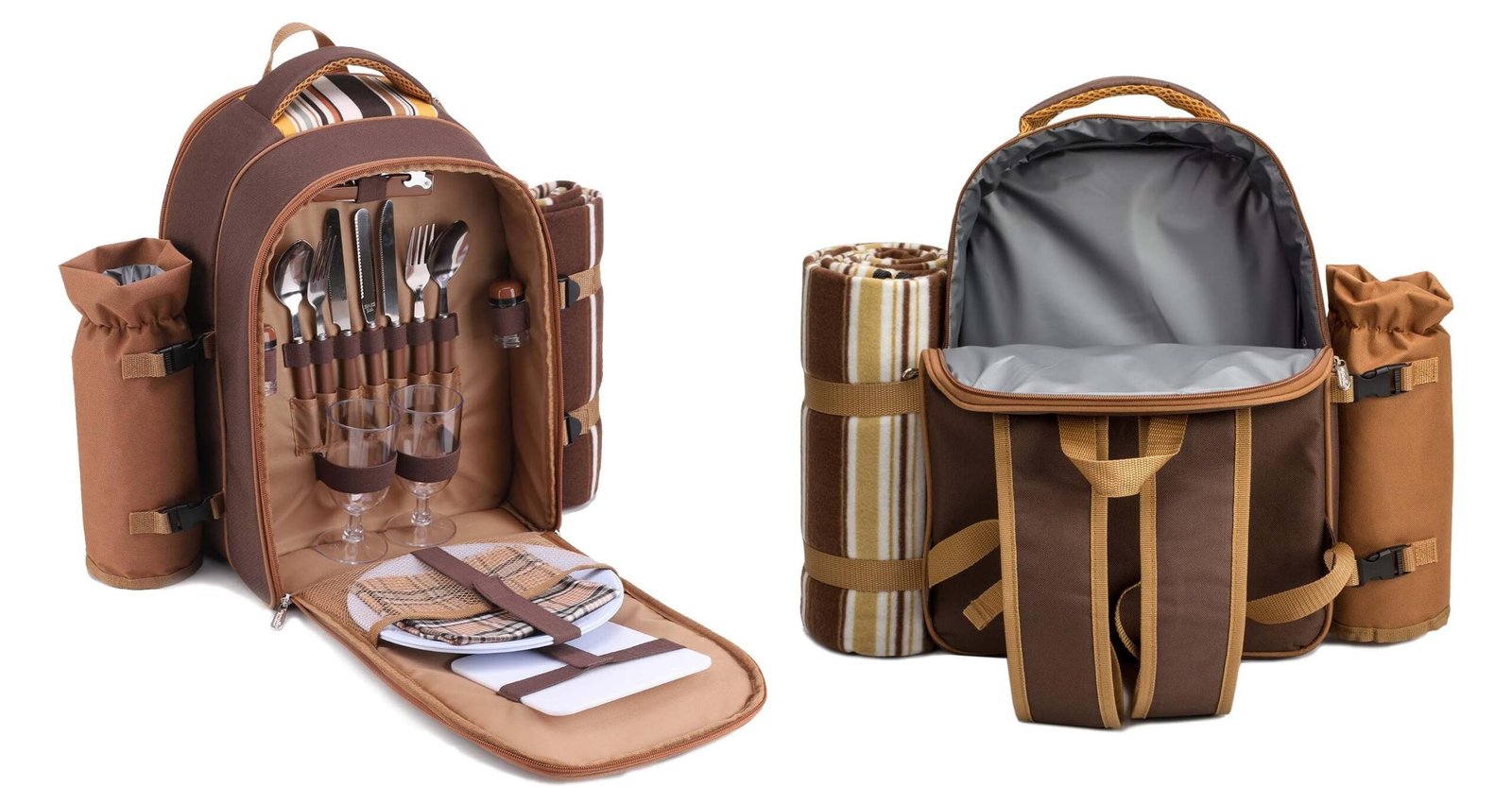
This is one of the most common misunderstandings in supplier conversations. Buyers ask for larger size, then later worry about user comfort, carton efficiency, or retail display. Those concerns should be discussed together from the start.
When capacity goes up, several risks rise at the same time:
- Total carry weight increases
- Shoulder pressure becomes more noticeable
- Load shift affects walking comfort
- Shape collapse becomes easier
- Return risk grows if the bag feels bulky
I often suggest that buyers imagine the bag in realistic use, not empty-sample use. A “30L” bag sounds appealing. But once food boxes, bottles, ice packs, and tableware are added, the load can become awkward for casual park outings.
What comfort features deserve attention?
Shoulder straps
Check width, padding, and attachment strength. Thin straps may look fine in photos but feel harsh under load.
Back panel
A lightly padded back panel can improve comfort. Even simple structure helps if the main compartment carries hard-edged containers.
Weight distribution
The bag should not pull backward or outward excessively3. Bottle placement, accessory pockets, and front compartments all affect balance.
Grab handle
A strong top handle matters more than many buyers expect4. Users often lift the bag briefly from a car trunk, shelf, or picnic spot before wearing it.
Capacity vs comfort table
| Buyer priority | Better choice |
|---|---|
| Supermarket value item | Moderate capacity, simple layout, broad appeal |
| Premium seasonal retail | Medium-large size with better strap comfort |
| Promotional gift program | Controlled size, strong branding area, easy carrying |
| Family outing use case | Practical food volume, stable bottle support |
A practical selection rule
I use a simple question: Would the target customer still enjoy carrying this backpack after it is fully packed?
If the honest answer is “probably not,” then the large capacity is not a strength. It is a mismatch.
That is why the best insulated picnic backpacks are not always the largest ones. The smarter products have a believable carrying experience. For buyers, that usually means better reviews, fewer complaints, and more repeat orders.
What Materials Work for Parks, Resorts, and Outdoor Retail?
Material choice is where visual appeal and commercial reality meet. A fabric can look premium in a sample room but perform poorly when exposed to grass, dust, damp surfaces, or rough handling. Buyers who skip material matching often pay later through claims, negative feedback, or markdown pressure.
The right materials for insulated picnic backpacks depend on the sales channel and use setting. Parks, resorts, and outdoor retail each need a different balance of appearance, wipe-clean performance, abrasion resistance, and price.
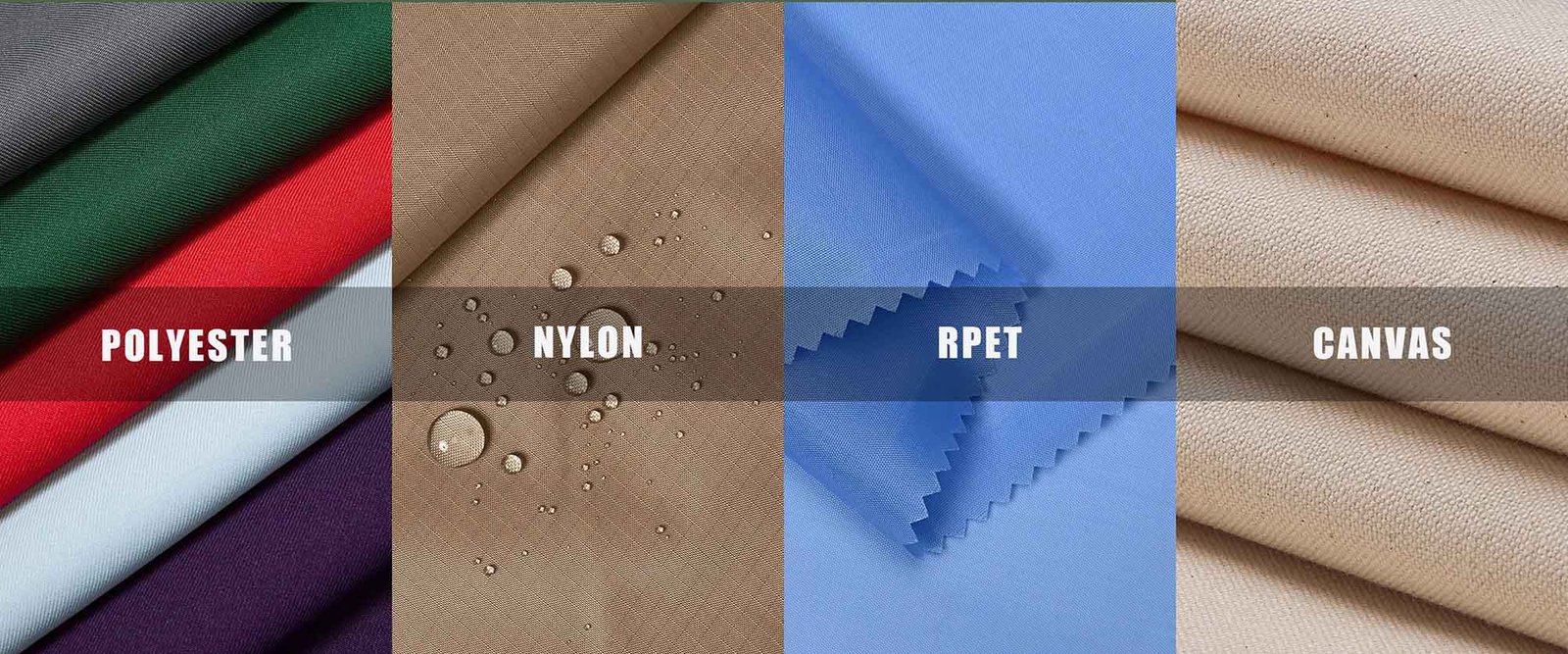
In my experience, buyers often ask for “good material” too generally. A more useful question before sampling is: good for which environment, at which price point, and with what expected finish level?
Outer fabric considerations
Common outer material options include:
- Polyester
- RPET or recycled fabrics
- Canvas-look fabrics
- Oxford fabric blends
Each has trade-offs.
Polyester and Oxford
These are common because they balance cost, printability, color consistency, and durability. They work well for broad retail programs.
Recycled materials
These appeal to buyers who want an eco-friendly story5. They can add value in Europe, North America, Japan, and some branded programs, especially when sustainability messaging matters.
Canvas-look materials
These can create a warmer, more lifestyle-oriented appearance. But buyers should still inspect coating, stain behavior, and actual weight.
Inner lining matters more than many buyers think
The inner lining is one of the biggest complaint zones6. Buyers should inspect:
- Surface smoothness
- Seam neatness
- Odor level
- Resistance to visible wrinkling
- Ease of wiping clean
A lining that looks cheap or creases badly can reduce perceived value fast. More importantly, weak seam finishing increases leak and wear risk.
Match material to channel
| Use scenario | Material priority | Why it matters |
|---|---|---|
| Parks and casual family use | Easy-clean exterior, moderate abrasion resistance | Grass, dirt, short outings |
| Resorts and gifting | Premium look, refined trim, presentable structure | Visual appeal drives purchase |
| Outdoor retail | Tougher fabric, stronger zipper path, practical finish | More demanding expectations |
| Promo programs | Cost control, logo compatibility, balanced durability | Brand image plus budget pressure |
Do not separate material from construction
A decent fabric can still fail if paired with weak foam, poor stitching, or low-grade zippers7. I have seen attractive samples lose buyer confidence the moment the zipper path looked uneven or the lining edge finish appeared rough.
For insulated picnic backpacks, material selection should support the product promise, not just the product photo. That is especially important for B2B buyers who must protect margin after the shipment arrives.
What Should Buyers Test Before Ordering Picnic Backpacks in Bulk?
Bulk ordering creates pressure. Once the order is placed, fixing a structural mistake becomes expensive. That is why sampling should focus on risk points, not just on color, logo placement, and basic dimensions. The real failures usually start in details that are easy to overlook.
Before ordering insulated picnic backpacks in bulk, buyers should test packing logic, zipper movement, seam quality, lining finish, leak-risk areas, strap attachment, and overall balance under realistic load. These checks reveal more procurement risk than headline insulation claims alone.
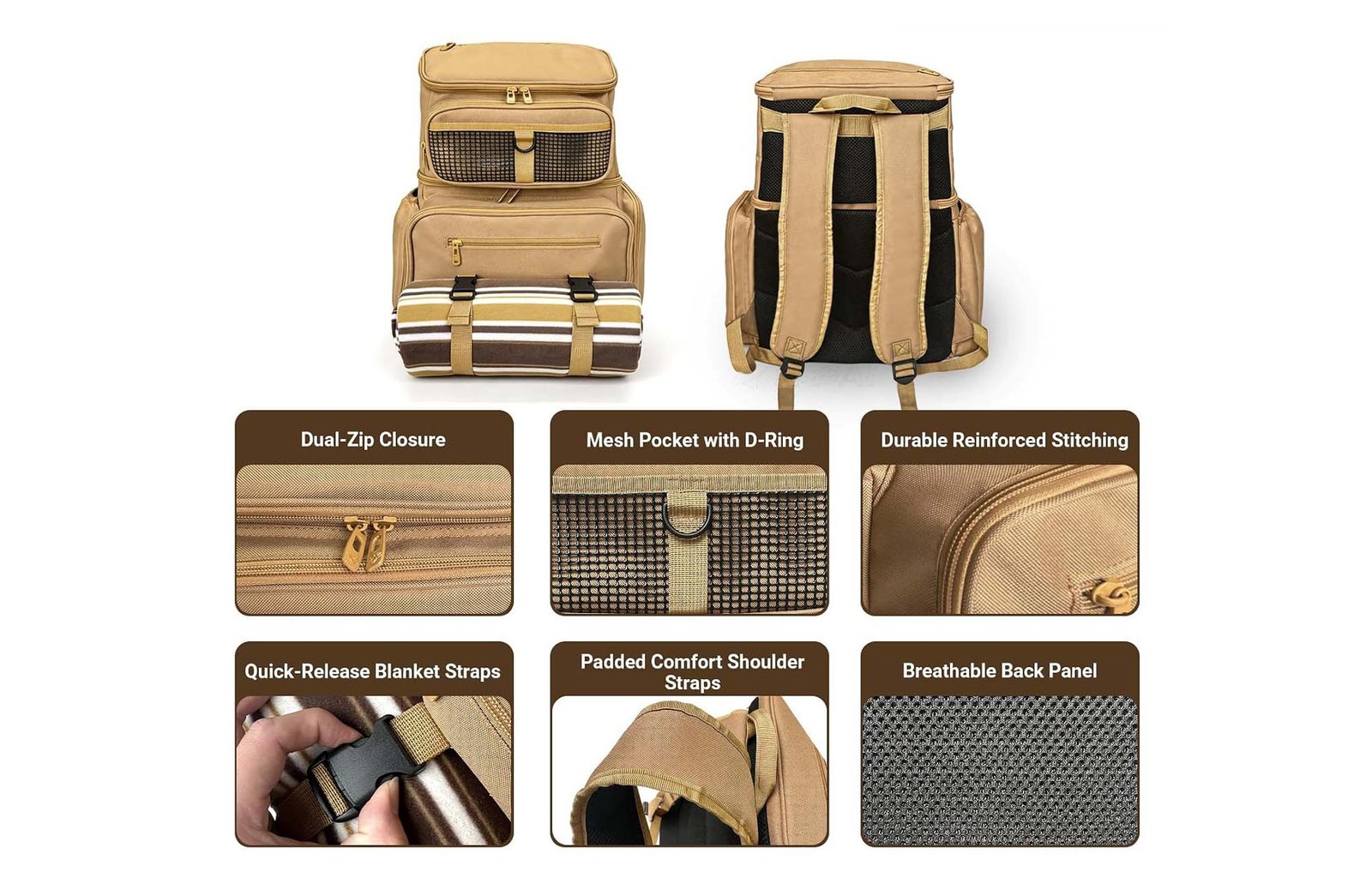
This is where experienced buyers usually become much more practical. They stop asking only for a spec sheet and start asking how the bag behaves when loaded.
A realistic pre-order checklist
1. Load the bag as a customer would
Use food containers, bottles, and common outing items. Do not inspect the sample empty only.
Check:
- Does the shape hold well?
- Does it become front-heavy?
- Can it stand or rest neatly?
- Does the opening still work when packed full?
2. Test zipper movement
Zipper quality affects complaints more than many visual features8.
Look for:
- Smooth movement around corners
- No fabric catching
- Even tape stitching
- Clean finishing at zipper ends
3. Inspect seam construction
Weak seams often show up first at stress points.
Pay attention to:
- Bottom panel joins
- Strap attachment areas
- Bottle pocket edges
- Front accessory panel stitching
4. Check the inner lining carefully
The lining tells you a lot about likely after-sales risk.
Inspect:
- Wrinkles
- Loose threads
- Uneven binding
- Gaps at corner seams
- Surface feel after wiping
5. Review leak-resistance logic
I avoid making hard leakage guarantees without confirmed testing9, but buyers can still inspect whether the design appears procurement-safe.
Ask:
- Are seam areas neatly finished?
- Does the base look supportive?
- Is the lining integrated cleanly?
- Are openings positioned to reduce accidental spill spread?
Sample evaluation table
| Test item | What to check | Why it matters |
|---|---|---|
| Real-load carrying | Balance, strap comfort, bulkiness | Prevents mismatch with actual use |
| Main compartment access | Opening width, packing ease | Affects user satisfaction |
| Zipper operation | Smoothness, corner performance | Frequent complaint source |
| Lining inspection | Finish, wipe-clean feel, seam neatness | Quality perception and durability |
| Bottle support | Stability, pull stress | Reduces deformation and returns |
| Finishing details | Threads, trims, alignment | Directly affects retail impression |
The question I would ask before approval
If this sample reaches a demanding retail customer exactly as it is, what will they notice in the first 30 seconds?
That question often exposes the real answer. It might be the stylish look. But it might also be the awkward weight, rough inner finish, or unstable bottle pocket.
For branded buyers, logo print quality matters. For chain-store buyers, shelf impact and price fit matter. But for both, the safer order is the one with fewer hidden failure points. That is how I would judge insulated picnic backpacks before any bulk commitment.
Frequently Asked Questions
How important are insulation time claims when buying picnic backpacks?
They matter, but only in context. Buyers should connect any insulation claim to test conditions, load type, and actual outing duration. A claim without usage context can sound strong in marketing but offer limited procurement value10.
Should buyers always choose larger insulated picnic backpacks?
No. Larger capacity can create carrying discomfort, shape instability, and unrealistic user expectations11. I usually recommend choosing a size that matches the target outing and customer profile rather than chasing the biggest liter number.
What causes the most complaints in picnic backpacks?
In supplier conversations, the most common risk areas are zipper quality, lining finish, seam strength, leak-prone construction details, and awkward compartment design. These often create more complaints than the bag’s listed insulation spec.
Are picnic accessories always necessary in a picnic backpack?
Not always. Accessories can add perceived value, but poor-quality cutlery or badly arranged storage can hurt the product. Buyers should include accessories only if they suit the market and improve the user experience.
What is the safest way to evaluate a supplier sample?
I would test the sample under realistic loading, inspect hidden construction details, and judge whether the bag matches the intended retail promise. That approach is usually more reliable than approving a sample based only on appearance or a spec sheet.
Conclusion
Choosing the right insulated picnic backpacks is really about reducing mismatch risk. I would start with the outing scenario, expected load, and carrying comfort. Then I would check compartment logic, material fit, and hidden construction details like lining, seams, and zippers. That is how buyers separate attractive marketing from dependable procurement. If you are sourcing picnic backpacks, tote bags, cooler bags, or other OEM/ODM bag projects, you can explore more options with us at Coraggio or contact me at info@coraggiobag.com.
"Online Consumer Complaint Behavior in COVID-19 Isolation - PMC - NIH", https://pmc.ncbi.nlm.nih.gov/articles/PMC9547594/. Consumer-behavior research on expectation-disconfirmation finds that dissatisfaction commonly arises when perceived performance falls short of prior expectations, providing a general mechanism for complaint risk even when no single catastrophic defect is present. Evidence role: mechanism; source type: paper. Supports: That dissatisfaction and complaint behavior are strongly related to disconfirmation between expected and perceived performance.. Scope note: The evidence is typically derived from broad consumer-product and service contexts rather than picnic backpacks specifically. ↩
"Comparison of features, usability, and load carrying design of recreational ...", https://www.imse.iastate.edu/files/2014/03/EagleZoe-thesis.pdf. Ergonomic studies of backpack use show that how load is arranged within the pack influences balance, perceived exertion, and comfort, which supports the caution that more compartments do not necessarily improve practical usability. Evidence role: general_support; source type: research. Supports: That internal arrangement and load distribution affect comfort, balance, and usability in carried bags.. Scope note: The literature usually addresses load placement and carry ergonomics more directly than the specific retail concept of 'dead space.' ↩
"Impact of Backpacks on Ergonomics: Biomechanical and Physiological ...", https://pmc.ncbi.nlm.nih.gov/articles/PMC9180465/. Biomechanical research on backpack carriage reports that posterior or poorly distributed loads alter trunk posture and increase discomfort, supporting the recommendation to avoid designs that pull the carrier backward or outward. Evidence role: mechanism; source type: paper. Supports: That backpack load position and center-of-mass shift influence posture, stability, and user discomfort.. Scope note: Most studies assess general backpacks and standardized loads rather than picnic backpacks with bottles and accessories. ↩
"Impact of Backpacks on Ergonomics: Biomechanical and Physiological ...", https://pmc.ncbi.nlm.nih.gov/articles/PMC9180465/. Human-factors and baggage-handling literature indicates that users frequently lift and reposition bags using short-duration grasp points, so grab-handle construction contributes materially to everyday usability and durability. Evidence role: general_support; source type: research. Supports: That short-duration lifting and repositioning are common handling actions for carried bags and place meaningful stress on grab handles.. Scope note: Evidence is usually drawn from general bag and luggage handling rather than picnic backpack purchasing studies. ↩
"Plastics recycled content requirements", https://www.oecd.org/content/dam/oecd/en/publications/reports/2024/05/plastics-recycled-content-requirements_c6de64b7/b311ee60-en.pdf. Reports from international and research institutions on sustainable consumption indicate that environmentally framed attributes such as recycled content can affect purchase preference and product positioning, supporting the claim that recycled fabrics may carry market appeal. Evidence role: general_support; source type: institution. Supports: That sustainability-related attributes, including recycled content, can influence buyer or consumer preferences in product selection.. Scope note: Such evidence is usually broad and does not directly measure preferences for RPET picnic backpacks in all regions. ↩
"Examining Cut-and-Sew Textile Waste within the Apparel Supply ...", https://bren.ucsb.edu/sites/default/files/2024-04/Examining%20Cut-and-Sew%20Textile%20Waste%20within%20the%20Apparel%20Supply%20Chain%204.10.24.pdf. Textile and sewn-product quality research identifies lining integrity, seam finishing, and internal appearance as recurring contributors to durability problems and negative quality perception, which supports heightened scrutiny of bag linings during evaluation. Evidence role: general_support; source type: research. Supports: That lining and seam performance are common durability and quality-perception issues in sewn consumer goods.. Scope note: Direct complaint-frequency data specific to picnic backpacks may be limited, so the support is contextual rather than category-specific proof. ↩
"The effects of different fabric types and seam designs on the seams [sic ...", https://commons.emich.edu/cgi/viewcontent.cgi?article=1052&context=honors. Textile engineering literature shows that the durability of sewn products depends on component interactions—including seam strength, closure quality, and structural support materials—so acceptable face fabric alone does not ensure reliable performance. Evidence role: mechanism; source type: paper. Supports: That seams, closures, and supporting materials are critical determinants of durability in sewn products, independent of outer-fabric properties.. Scope note: The evidence usually addresses sewn products or luggage broadly rather than insulated picnic backpacks specifically. ↩
"DOT Reminds Airlines that Passengers Should be ...", https://www.transportation.gov/briefing-room/dot-reminds-airlines-passengers-should-be-compensated-most-damage-baggage-wheels. Product-quality research consistently finds that failures in core functional components such as closures generate disproportionate dissatisfaction relative to cosmetic imperfections, supporting close attention to zipper performance during sample review. Evidence role: general_support; source type: research. Supports: That functional failures in closures such as zippers are salient drivers of product dissatisfaction and returns.. Scope note: The relative weight of zipper defects versus visual features may vary by product category and market segment. ↩
"FTC Policy Statement Regarding Advertising Substantiation", https://www.ftc.gov/legal-library/browse/ftc-policy-statement-regarding-advertising-substantiation. Regulatory guidance on advertising substantiation states that objective performance claims should be supported by adequate evidence, which supports avoiding definitive leak-resistance guarantees unless testing has confirmed them. Evidence role: expert_consensus; source type: government. Supports: That objective product performance claims should be supported by competent testing or substantiation.. Scope note: General substantiation guidance does not prescribe a single leak-test method for all insulated bags. ↩
"Performance Comparison of Thermal Insulated Packaging Boxes, Bags ...", https://digitalcommons.calpoly.edu/cgi/viewcontent.cgi?article=1043&context=it_fac. Thermal-performance studies and test methods for insulated containers show that cold-retention results depend strongly on conditions such as ambient temperature, starting load, and usage pattern, so an hours-kept-cold claim is difficult to interpret without test context. Evidence role: mechanism; source type: paper. Supports: That measured thermal-retention performance varies with test conditions such as ambient temperature, load, fill level, and opening frequency.. Scope note: Published methods may focus on coolers or insulated containers generally rather than picnic backpacks specifically. ↩
"Effects of backpack load and position on body strains in male ... - PMC - NIH", https://pmc.ncbi.nlm.nih.gov/articles/PMC5862447/. Load-carriage research links increased carried volume and weight to higher discomfort and reduced stability, while consumer research shows that stronger product promises can heighten expectations and increase disappointment risk when real use is less favorable. Evidence role: general_support; source type: paper. Supports: That larger carried loads tend to reduce comfort and stability, and that oversized product promises can raise expectations that are harder to satisfy.. Scope note: The support combines two adjacent literatures and is therefore contextual rather than a single direct study of picnic-backpack capacity decisions. ↩