Many buyers start with “just add our logo,” then end up with a bag that looks generic, feels cheap, and does not support the brand they wanted to build.
A drawstring bag becomes a branded product only when I first define its job, user, price level, and brand feel, then match fabric, construction, print, and packaging to that goal.
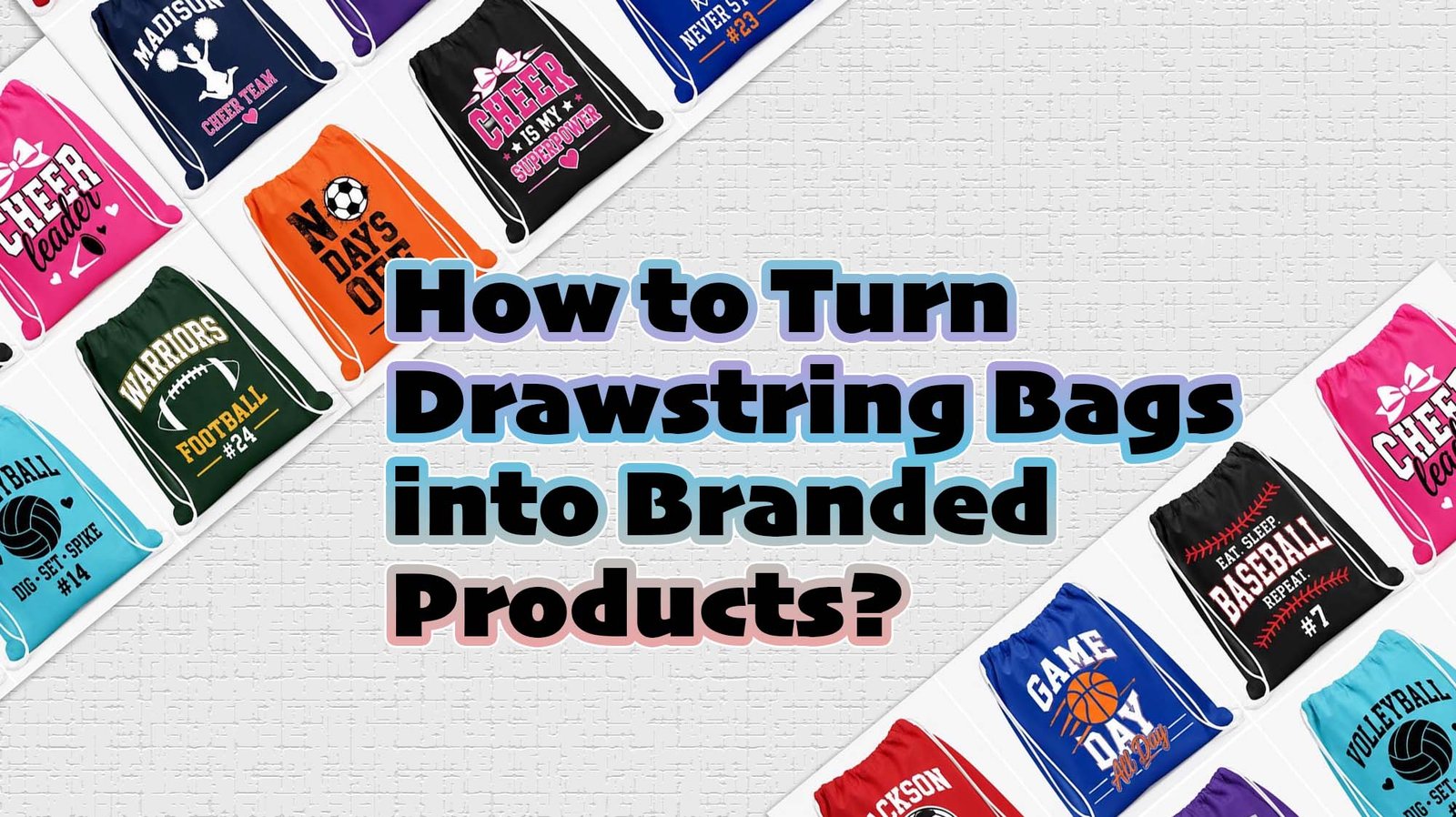
I have seen this many times in sample talks. A buyer comes to me with a logo file and a rough size. That sounds simple. But after a few questions, the real issue appears. Is this bag a giveaway, a retail item, a school program bag, or a gift add-on? Each answer changes the product. I have learned that a branded drawstring bag is not built from artwork first. It is built from purpose first. Once I know the use case, I can help shape the right product story, cost level, and finish. That is where a plain custom bag starts to become something a customer will actually keep, use, and connect with a brand.
Why Do Some Promotional Drawstring Bags Get Used More Often?
A lot of promotional bags get handed out once and forgotten fast.1 The problem is not only the logo. The problem is that the bag has no clear use in daily life.
Promotional drawstring bags get used more when I design them around a real habit, like gym visits, shoe storage, school use, or event carry.2 Useful size, comfortable cords, and better fabric matter more than a large logo.3
When I speak with buyers, I often ask one basic question: “When do you expect the end user to carry this bag?” That question changes the whole discussion. If the bag is for a one-day event, low cost may be the top need. If the bag is for a school program or sports club, repeated use matters more. If the bag is for a retail add-on, appearance matters more. I have seen buyers realize this only after they receive a first sample and feel disappointed. The sample may match the artwork, but it does not match the real use.
A bag gets used more often when I make practical choices early. The size must fit the items people carry. The cords should not cut into the shoulder too much. The fabric should not feel too thin. The shape should sit flat when carried. Even small details change user behavior.
| Use case | What users care about most | What I would focus on |
|---|---|---|
| Event giveaway | Light carry, easy handout | Low cost, simple print, standard size |
| Gym promo | Shoes, towel, bottle | Stronger fabric, larger size, better cord |
| School activity | Books, uniform, daily use | Reinforced corners, stable stitching |
| Retail add-on | Looks and feel | Better fabric texture, neater finish, tag |
I do not think “used more often” means “most expensive.” It means the product fits a real habit. That is the point many buyers miss at first.
Which Fabrics Make a Drawstring Bag Feel Less Disposable?
A bag can look fine in a photo but still feel throwaway in the hand. That feeling often comes from the fabric before anything else.
Fabrics that make a drawstring bag feel less disposable usually have better hand feel, shape, and surface stability, such as thicker polyester, cotton canvas, RPET with body, or non-woven with improved weight.4
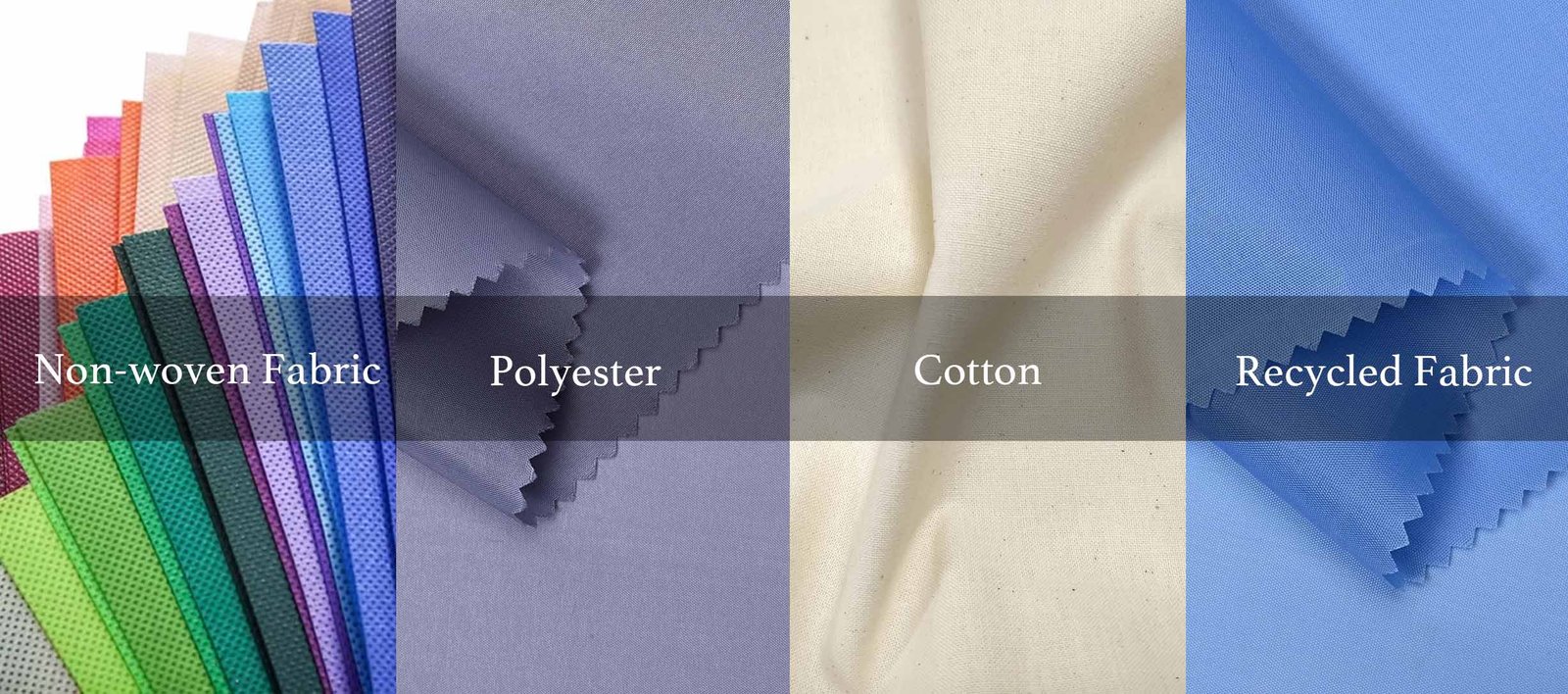
In sample discussions, fabric is often the first place where branding becomes real. A buyer may say, “I want it to look premium but stay very cheap.” I understand that goal, but fabric forces a choice. Thin material can reduce cost, but it often makes the bag collapse, wrinkle hard, and feel short-term. A better fabric gives the bag body. That body changes the first impression.
I usually break fabric choice into two simple questions. First, what does the bag need to do? Second, what should the customer feel when touching it? If the bag is only for one event, a lighter fabric may be enough. If the bag is meant for resale or repeated use, the fabric has to do more work.
| Fabric option | Feel | Best for | Main trade-off |
|---|---|---|---|
| Thin non-woven | Light, basic | Mass giveaway | Feels temporary |
| Heavier non-woven | More stable | Budget promo with better feel | Still limited in premium look |
| 210D/300D polyester | Smooth, practical | Sports, school, daily promo | Can still look promotional |
| Cotton canvas | Soft, familiar, better texture | Retail, gift, eco-focused programs | Higher cost, heavier |
| RPET fabric | Modern, brand-friendly | Sustainability story, branded events | Cost can rise with spec |
I have found that buyers often use the word “premium” when they really mean “not disposable.” Those are not the same thing. A bag does not always need luxury fabric. It needs the right fabric for the price point and brand promise.
When Should Buyers Add Reinforced Corners or an Inner Pocket?
Some buyers add details because they look nice in a sketch. Some skip them to save cost. Both choices can be wrong if the bag’s use is still unclear.
Buyers should add reinforced corners when the bag will carry weight or be used often. An inner pocket makes sense when users need to separate small items like keys, cards, or phones.
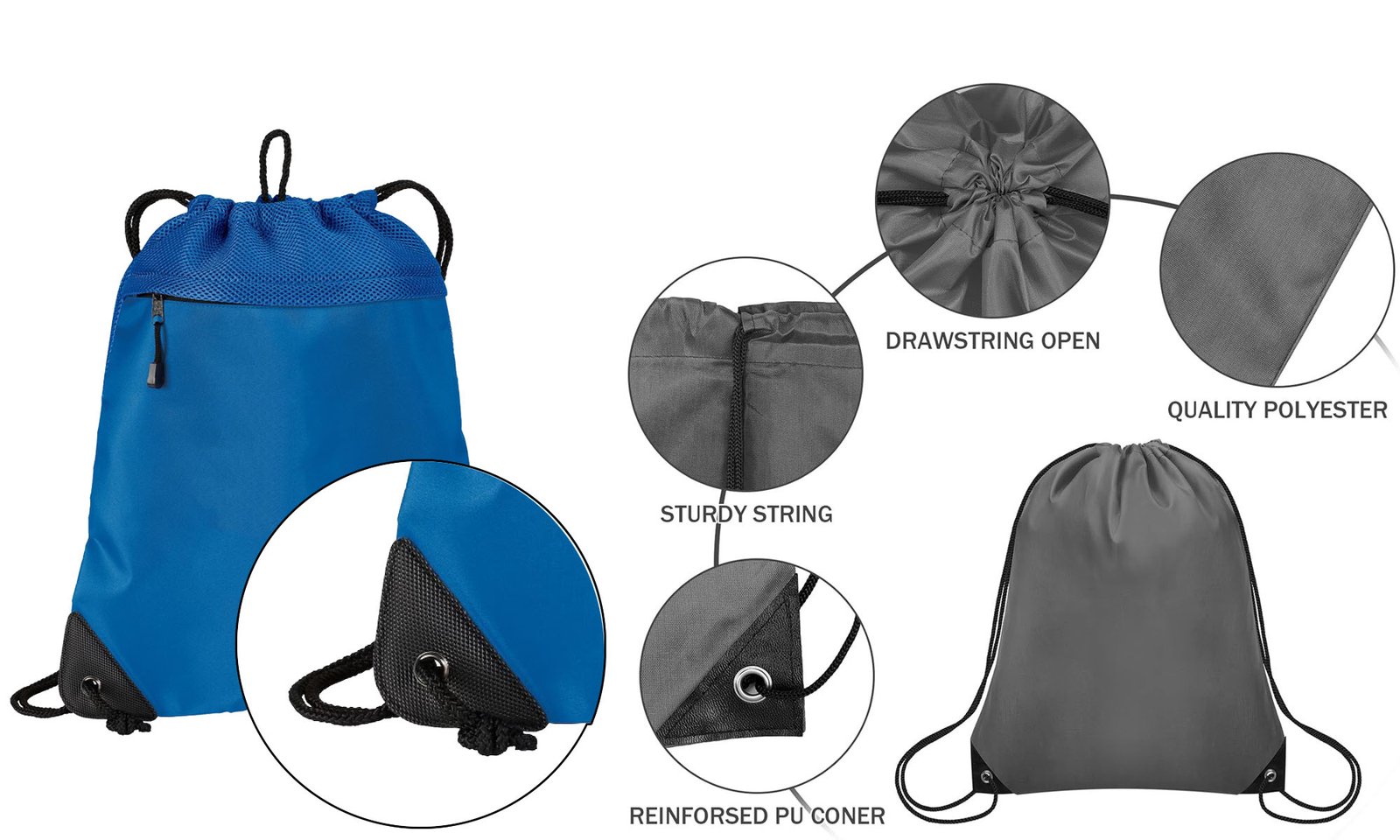
I often see reinforced corners discussed too late. A buyer approves a simple sample, then later says the bag should hold shoes, bottles, or books. At that point, the stress points matter much more. Corners are where many simple drawstring bags fail first.5 If the bag is only for leaflets or light gifts, basic corners may be fine. If the bag is meant for repeat use, reinforcement is a practical upgrade, not just a visual one.
The same logic applies to inner pockets. An inner pocket sounds small, but it changes the user experience a lot.6 If the bag is for school, travel, or gym use, people often want a place for keys or a phone. If the bag is a low-cost event freebie, that detail may not be worth the added cost and labor.
| Detail | When I suggest it | Why it helps | Cost effect |
|---|---|---|---|
| Reinforced corners | Daily use, heavier loads | Reduces stress at pull points | Low to medium increase |
| PU corner patch | More branded look plus support | Adds structure and style | Medium increase |
| Inner pocket | Gym, school, travel | Keeps small items separate | Medium increase |
| Zipper pocket | Retail or higher-position bag | Adds function and value feel | Higher increase |
I always tell buyers that details should follow the product job. A useful feature can lift the bag. A random feature can just increase cost.
Which Cord and Closure Options Improve Daily Use?
Many people notice fabric first. But in daily use, the cord and closure often decide whether the bag feels easy, annoying, or cheap.
Cord and closure options improve daily use when I match them to comfort and function. Softer thicker cords, better sliding action, and secure closure details make the bag easier to carry and open.
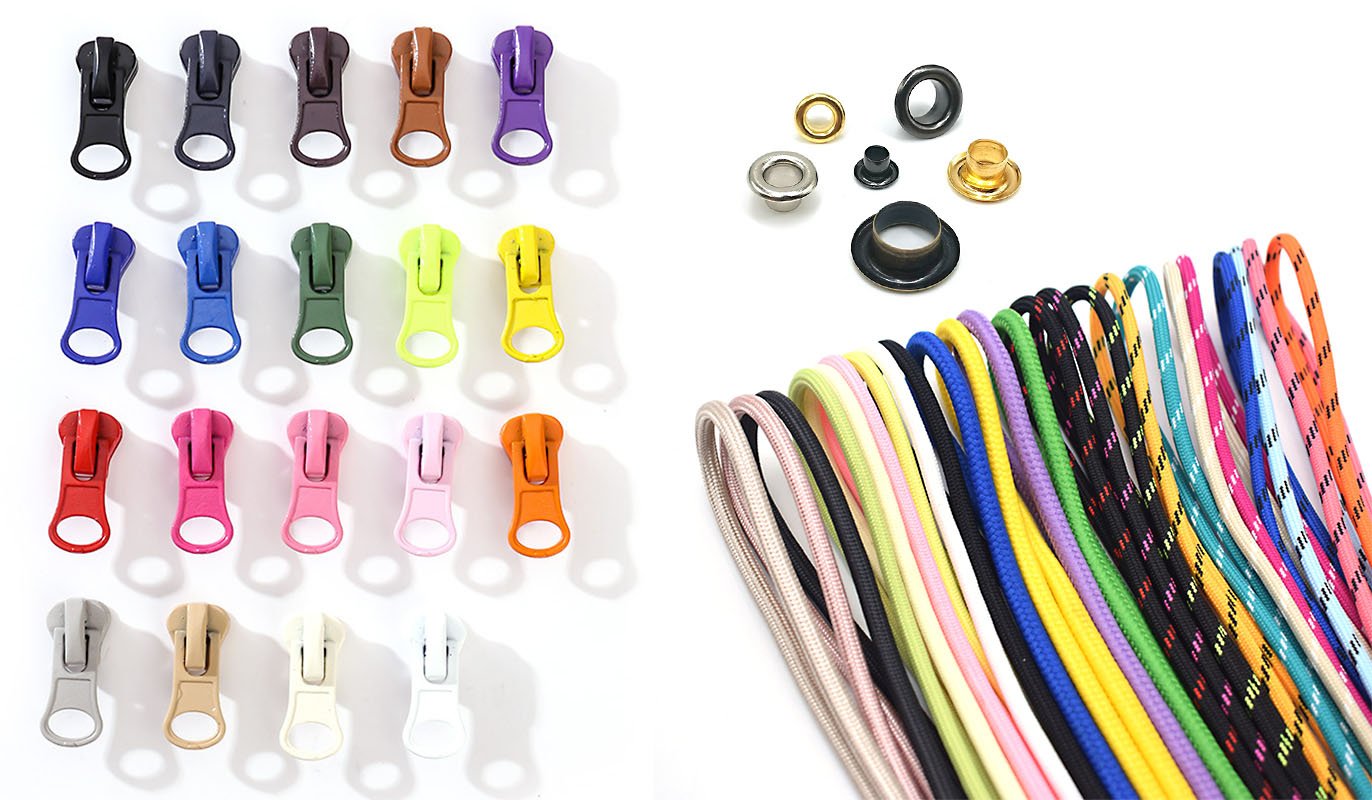
I have handled many samples where the body looked acceptable, but the bag still felt weak because of the cord. A thin rough cord can cut into the shoulder.7 A stiff cord can make opening and closing feel jerky. A cord that twists too much can make the bag look messy in store display. These are small things, but users notice them fast.
This part matters even more when the bag is meant to support a brand image. If the closure action feels poor, the whole product can feel careless. I do not mean every bag needs a complex system. I mean the cord should match the expected use level.
| Cord or closure option | User feeling | Best use | Notes |
|---|---|---|---|
| Thin standard PP cord | Basic | Low-cost promo | Lowest cost, lowest comfort |
| Thicker braided cord | Better grip and look | School, sports, merch | Good balance |
| Cotton rope | Softer, more natural feel | Eco or gift programs | Better touch, can cost more |
| Knotted closure only | Simple | Basic bags | Fast and common |
| Metal eyelets8 | Smoother pull point | Higher-use bags | Better function and finish |
| Cord stopper | Easier closure control | Sports or youth use | Adds convenience |
When buyers tell me a bag should feel “more like a product,” I often look at the cord system right away. It is one of the fastest ways to improve use without changing the whole structure.
What Print Area Works Best for Event and School Programs?
Some buyers want the biggest logo possible. But a larger print does not always mean a stronger branded result, especially for practical programs.
The best print area for event and school programs depends on viewing distance, bag size, and how the bag will be carried.9 A balanced front print often works better than an oversized design.10
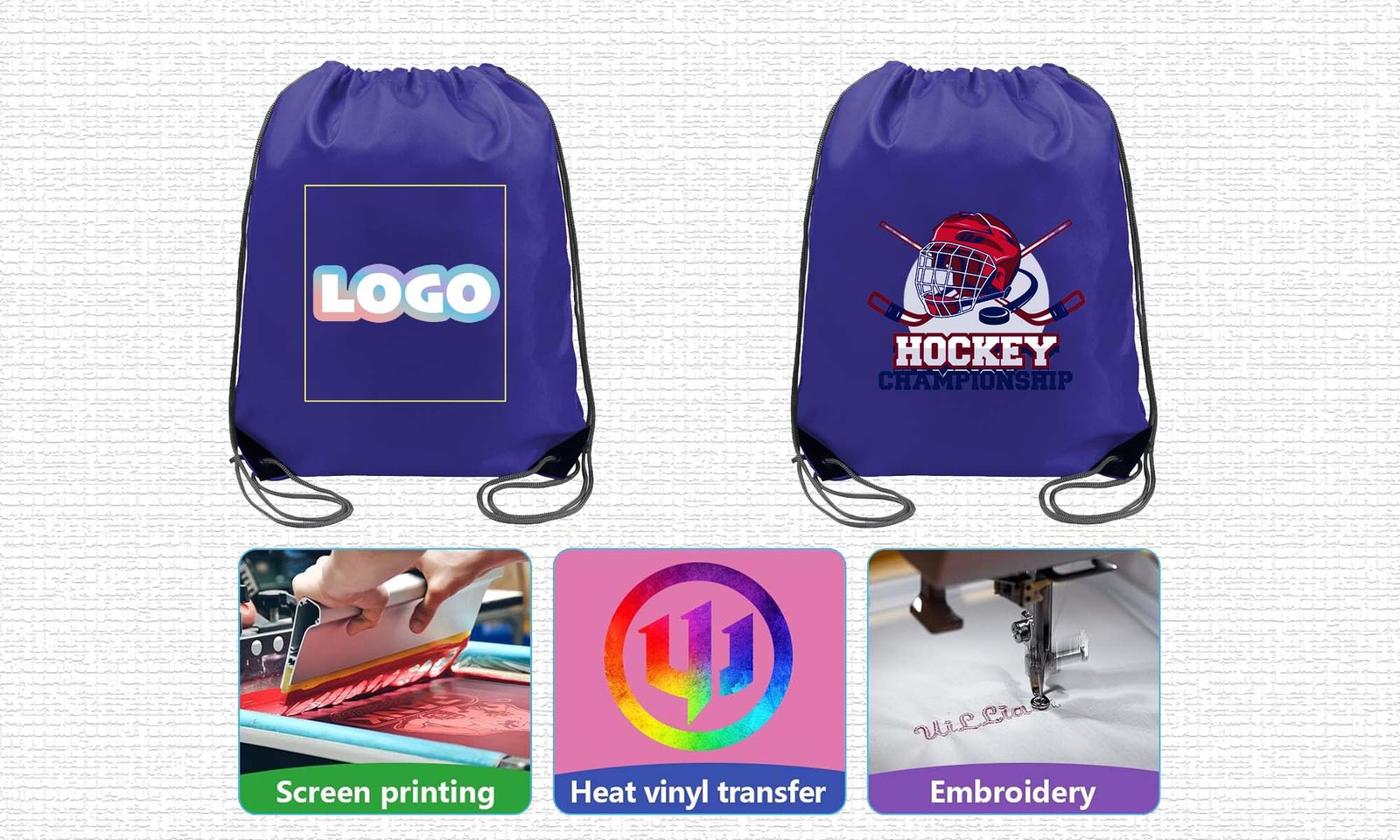
I have seen many layouts where the logo was made too large because the buyer wanted “more brand exposure.” I understand the thinking. But if the print overwhelms the bag, the result can look more like a cheap giveaway than a useful branded item. For school and event programs, the print should fit the bag shape and leave enough clean space around it.
The print method also matters. Screen printing may be fine for bold simple art. Heat transfer may suit more detailed graphics. A one-color mark can sometimes look cleaner and more mature than a full loud layout. This depends on the audience and the program type.
| Program type | Best print approach | Why |
|---|---|---|
| School orientation | Medium centered logo or mascot | Clear, easy to identify |
| Sports event | Bold front graphic | Good visibility outdoors |
| Corporate event | Smaller clean logo | Looks more polished |
| Charity program | Message plus logo | Supports campaign story |
| Retail merch | Brand mark with design balance | Feels sellable, not just printed |
I usually remind buyers that a branded product is not a poster. The bag still needs shape, breathing room, and a clean visual order. Good print placement supports the bag. It should not fight the bag.
How Can Buyers Compare Cost Without Sacrificing Usefulness?
Many sourcing problems begin when buyers compare prices line by line but do not compare product purpose. Then they choose the lowest quote and wonder why the sample feels wrong.
Buyers can compare cost without sacrificing usefulness by fixing the use case first, then comparing fabric weight, size, stitching, cord type, print method, and packaging as one complete product specification.11
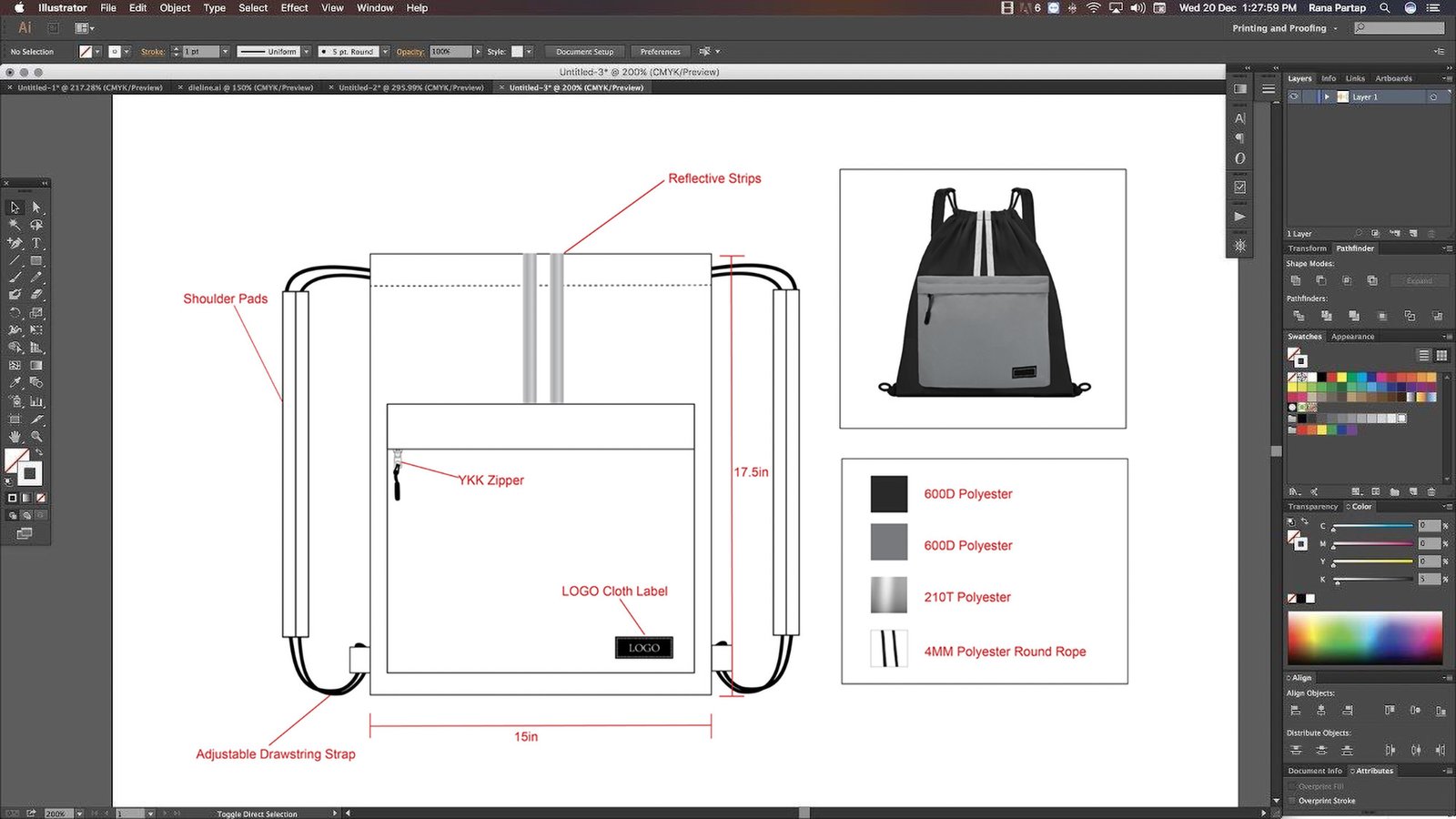
This is the part where I see the most confusion. A buyer may send me a target price and a reference image from another brand. The image looks good. The target price looks very low. At that point, I know we need a real discussion, not just a quote. Cost only makes sense when the spec is clear. If one supplier quotes thin non-woven and another quotes thicker polyester with reinforced corners, those are not the same bag even if the shape looks similar in a photo.
I try to help buyers compare products in a structured way. That keeps the discussion honest. It also stops the common mistake of chasing low cost first and usefulness later.
| Cost factor | Low-cost choice | Better-use choice | Buyer should ask |
|---|---|---|---|
| Fabric | Lighter basic fabric | Heavier or better-feel fabric | How long should the bag last? |
| Construction | Standard stitching | Reinforced points | What load will users carry? |
| Cord | Thin standard cord | Thicker softer cord | Is shoulder comfort important? |
| Small simple print | Better placement or finish | Is this for exposure or resale feel? | |
| Packaging | Bulk plain pack | Hangtag, label, individual pack | Does presentation matter? |
I also tell buyers that a sellable branded bag usually needs a full presentation system. A label, hangtag, barcode sticker, or simple retail-ready packing can make a big difference.12 Without these, the bag may still look like a custom item rather than a market-ready product. I have seen buyers understand this only after the first sample arrives. The bag itself may be acceptable, but the product does not yet feel complete. That gap matters if the goal is brand building, not just logo placement.
Conclusion
I turn a drawstring bag into a branded product by starting with purpose, then choosing the right trade-offs in fabric, structure, print, and presentation.
"[PDF] THE INFLUENCE OF PROMOTIONAL PRODUCTS ON ...", https://catchfiremarketing.com/wp-content/uploads/2014/03/InfluenceOnConsumerBehav_021313.pdf. Industry surveys on promotional products can document how often recipients keep and use giveaway items, providing context for the claim that many promotional bags are quickly forgotten or not integrated into regular use. Evidence role: statistic; source type: research. Supports: Survey or industry research on retention and use rates of promotional products, including bags if available.. Scope note: Such surveys are typically self-reported and may cover promotional products broadly rather than drawstring bags specifically. ↩
"How the smart product attributes influence consumer adoption ...", https://pmc.ncbi.nlm.nih.gov/articles/PMC9996093/. Studies in product design and consumer behavior commonly find that products aligned with routine tasks and perceived usefulness are more likely to be used repeatedly, which supports the article’s claim about designing drawstring bags around real habits. Evidence role: mechanism; source type: paper. Supports: Research showing that perceived usefulness and fit with routine behavior increase repeated product use.. Scope note: The support is mechanistic and general to product use; it may not test promotional drawstring bags directly. ↩
"Package design as a branding tool in the cosmetic industry - PMC", https://pmc.ncbi.nlm.nih.gov/articles/PMC9123395/. Consumer research on utilitarian goods often shows that functional attributes such as comfort, capacity, and material quality are stronger predictors of continued use than brand visibility alone. Evidence role: expert_consensus; source type: paper. Supports: Evidence that utilitarian product attributes often drive continued use more than visual branding alone.. Scope note: This evidence is usually derived from broader product categories and may not isolate drawstring bags specifically. ↩
"Study on Effect of Leather Rigidity and Thickness on Drapability of ...", https://pmc.ncbi.nlm.nih.gov/articles/PMC8398511/. Textile references commonly note that fabric weight, stiffness, drape, and surface stability influence hand feel and perceived quality, supporting the claim that thicker or more stable fabrics can make a bag seem less disposable. Evidence role: mechanism; source type: education. Supports: Textile science or design sources explaining how weight, drape, stiffness, and surface stability affect tactile perception and perceived quality.. Scope note: These sources explain perception mechanisms rather than proving a universal consumer response for every bag category. ↩
"3 Tips for Troubleshooting Making Slow Stitching Drawstring Bags", https://www.youtube.com/watch?v=cVHUr-GUdew. Textile and soft-goods engineering sources describe how loads concentrate at seam intersections and attachment points, which supports the claim that bag corners are common early failure areas in simple drawstring constructions. Evidence role: mechanism; source type: paper. Supports: Engineering or textile sources describing stress concentration at seams, corners, or drawcord attachment points in soft goods.. Scope note: The support is based on general structural mechanics and may not report failure statistics for promotional drawstring bags in particular. ↩
"Human Factors in Product Design", https://productsofdesign.sva.edu/blog/human-factors-product-design. Usability research on personal-carry products and organizational features indicates that internal compartments can improve item separation, retrieval efficiency, and perceived convenience, supporting the claim that an inner pocket can materially affect user experience. Evidence role: mechanism; source type: paper. Supports: Human-factors or usability research showing that internal organization features can improve findability, efficiency, and perceived usefulness.. Scope note: The evidence is generally about organization features across product types rather than drawstring bags alone. ↩
"The effect of shoulder strap width and load placement on ... - PubMed", https://pubmed.ncbi.nlm.nih.gov/29254136/. Ergonomic studies of load carriage show that narrower straps concentrate force over a smaller contact area, increasing local pressure and discomfort; this supports the claim that thin cords can feel as if they cut into the shoulder. Evidence role: mechanism; source type: paper. Supports: Ergonomic evidence that narrower load-bearing straps increase localized pressure and discomfort.. Scope note: Most studies examine straps or load carriage generally rather than the exact cords used in drawstring bags. ↩
"Grommet - Wikipedia", https://en.wikipedia.org/wiki/Grommet. Technical references on textile hardware note that eyelets or grommets reinforce openings and can reduce abrasion at cord passage points, which supports the claim that metal eyelets may improve drawcord function and finish. Evidence role: mechanism; source type: education. Supports: Technical sources explaining that eyelets or grommets reinforce openings and reduce abrasion at cord passage points.. Scope note: The support is functional and contextual; whether the pull feels smoother in practice depends on hardware quality and overall construction. ↩
"Effects of content and viewing distance on the preferred size ... - PMC", https://pmc.ncbi.nlm.nih.gov/articles/PMC7409065/. Graphic communication and signage guidelines commonly relate viewing distance, display size, and placement to legibility, supporting the claim that print area should be chosen in relation to bag size and expected viewing conditions. Evidence role: definition; source type: education. Supports: Design guidance linking viewing distance and display size to legibility and visual effectiveness.. Scope note: These guidelines address visual legibility broadly and do not prescribe a single optimal print area for all drawstring bags. ↩
"The Impact of Visual Elements of Packaging Design on Purchase ...", https://pmc.ncbi.nlm.nih.gov/articles/PMC11851823/. Research in visual aesthetics and package or product design often finds that balanced layouts and lower visual clutter are associated with more favorable evaluations, which supports the claim that a balanced front print may work better than an oversized design. Evidence role: mechanism; source type: paper. Supports: Research showing that visual balance and lower clutter are associated with more favorable aesthetic evaluations or perceived quality.. Scope note: The evidence is indirect because it typically examines graphic composition in general rather than printed drawstring bags specifically. ↩
"[PDF] Comparison of Federal Uniform Guidance and State Procurement ...", https://www.sog.unc.edu/sites/www.sog.unc.edu/files/general_media/Federal%20and%20State%20Procurement%20Comparison%20Chart%20-%20General_8.pdf. Procurement guidance from public institutions commonly states that clear, complete specifications are necessary for comparable quotations and for reducing the risk of receiving products that do not meet intended use. Evidence role: general_support; source type: government. Supports: Procurement guidance that clear specifications enable fair comparison of bids and reduce quality mismatch.. Scope note: Such guidance is general to procurement practice and does not address drawstring bags as a distinct product category. ↩
"The Impact of Visual Elements of Packaging Design on Purchase ...", https://pmc.ncbi.nlm.nih.gov/articles/PMC11851823/. Retail and packaging guidance describes labels, barcodes, and retail-ready packaging as important for merchandising, inventory handling, and presentation, which supports the claim that these elements can materially affect whether a bag appears market-ready rather than merely custom printed. Evidence role: historical_context; source type: institution. Supports: Retail or packaging sources describing the role of barcode labeling and retail-ready packaging in store handling and product presentation.. Scope note: The support is contextual because retail needs vary by channel, and not every branded bag is intended for formal retail distribution. ↩