Many bag buyers want lower prices. But many still lose money when they go direct too early. I have seen simple factory deals turn into delays, disputes, and expensive lessons.
Most bag buyers do not truly prefer middlemen. They use them because middlemen reduce sourcing risk1, solve communication problems, screen factories, and manage quality. Buyers with strong sourcing experience and trusted factory relationships often benefit more from buying direct from China factories.

I have talked with many buyers who said they wanted to cut out the middleman on day one. I understand that instinct. Everyone wants a better margin. But I have also seen what happens when a buyer chases the lowest quote without the right system behind it. The problem is not only price. The problem is control, clarity, and accountability. In bag sourcing2, the cheapest path on paper can become the most expensive path in real life. That is why this topic matters so much. If I look at how buyers actually behave, I do not think they are choosing middlemen out of habit alone. I think they are choosing the path that matches their own experience, team strength, and tolerance for risk.
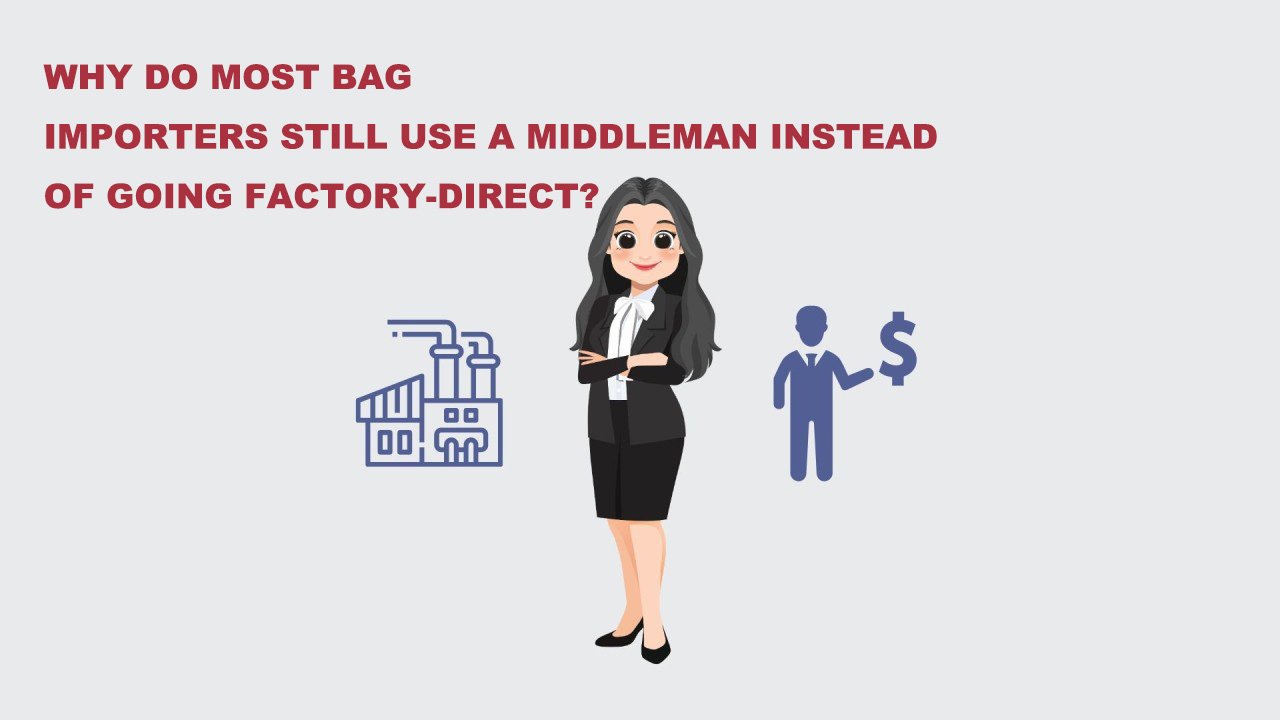
Why Do Most Bag Importers Still Use a Middleman Instead of Going Factory-Direct?
New buyers often believe factory-direct always means safer and cheaper. Then they face unclear quotes, slow replies, and quality surprises. That gap between expectation and reality pushes many back to middlemen.
Most bag importers still use middlemen because middlemen reduce friction. They help with factory screening3, communication, sampling, production follow-up, and inspection4. For many buyers, these services prevent costly mistakes that are far more expensive than the middleman’s commission.
I have seen this pattern many times. A buyer searches online, finds a China bag factory, and gets a quote that looks great. The buyer thinks the job is almost done. But that is only the start. The buyer still needs to check if the factory is real, if it has the right machines, if it can make the bag style well, if the fabric is correct, and if the delivery date is realistic. A middleman often steps in before these problems grow.
For many importers, the middleman is not just a messenger. The middleman is a filter5. The middleman removes weak factories early. The middleman also keeps pressure on the factory during production. I think this is where the real value sits.
| Common Buyer Problem | What Happens Without Support | How a Middleman Helps |
|---|---|---|
| Language gaps | Specs get misunderstood | Explains details in both directions |
| No factory audit experience6 | Buyer picks weak supplier | Screens and checks factory ability |
| No production follow-up | Delays appear late | Tracks milestones and pushes updates |
| No QC team in China | Defects found after arrival | Arranges pre-shipment inspection7 |
| No one to hold accountable | Supplier shifts blame | Middleman coordinates solution |
I once worked with a buyer who thought a low price from a new supplier was a big win. Later, the logo size was wrong, the zipper color was off, and the carton marks did not match the shipping documents. None of these problems looked huge alone. But together, they delayed the shipment and created a retail issue. That buyer later told me the middleman fee would have been much cheaper than the mess. I think many importers learn the same lesson after one painful order.
What Are the Real Risks of Buying Bags Directly From a China Factory?
Buying direct sounds simple. But many buyers do not see the hidden risks8 until money is paid and production starts. By then, fixing mistakes gets harder and more costly.
The real risks of buying bags directly from a China factory include poor communication, weak factory verification9, unstable quality10, delayed delivery, limited accountability, and wrong assumptions about materials or workmanship. These risks are higher for buyers without sourcing experience, technical knowledge, or local support.

When I talk about risk, I do not only mean fraud. Many buyers imagine the biggest danger is finding a fake company. That can happen, of course. But in my view, the bigger danger is a real factory that is simply not the right factory for the job. A factory may be honest but still weak in design understanding, fabric sourcing, pattern control, or schedule management.
Bag production has many moving parts. There are fabrics, linings, webbing, zippers, buckles, prints, embroidery, labels, packaging, and testing needs. If one detail is unclear, the result can drift away from the approved sample. A buyer who lacks technical experience may not spot the warning signs early.
| Risk Area | Typical Issue | Business Impact |
|---|---|---|
| Material control | Fabric weight or coating differs | Product feels cheaper than expected |
| Construction quality | Stitching, reinforcement, or trimming is poor | Higher return and complaint rates |
| Timeline control11 | Factory overbooks production | Late delivery to retail or promotion |
| Communication | Specs are interpreted differently | Sample and bulk order mismatch |
| Compliance12 | Missing test reports or wrong standards | Import problems or customer rejection |
| After-sales response | Factory avoids responsibility | Buyer carries the loss alone |
I remember one case where a buyer approved a sample backpack. The bulk order looked similar at first glance. But the shoulder straps used thinner foam than the sample. The buyer only noticed after a warehouse check in his country. The factory said the product still matched the general design. The buyer disagreed. This kind of dispute is common because many details were never locked in with enough precision. In direct sourcing, if the buyer does not control the process tightly, the factory usually controls it by default.
How Do Sourcing Agents Actually Save Money for Bag Buyers?
Many buyers focus only on commission. They see the sourcing agent fee and assume it is extra cost. But they often miss the costs that come from bad sourcing decisions.
Sourcing agents save money by reducing hidden costs13. They help buyers avoid weak suppliers, prevent quality failures, improve negotiation, monitor timelines, and catch problems before shipment. In many cases, these savings are larger than the agent’s fee.

I think this point is often misunderstood. A sourcing agent is not valuable because the agent places a purchase order. Any buyer can do that. The value comes from reducing expensive mistakes. A late shipment can cost a retailer a season. A wrong logo can make stock unsellable. A weak zipper can damage a whole product line. These are not small issues.
A good sourcing agent usually knows which factories are stable and which ones only look good in a quotation sheet. That knowledge saves time. It also protects margin. An agent may negotiate better payment terms, catch inflated material charges, or suggest a factory that makes the same quality level more efficiently.
| Cost Factor | Without Agent | With Good Agent |
|---|---|---|
| Factory selection | Trial and error | Pre-screened options |
| Sampling rounds | More revisions | Faster correction |
| Production delays | Found too late | Earlier warning and action |
| Quality problems | Discovered after shipping | Found before balance payment |
| Internal workload | Buyer team spends more time | Agent handles daily follow-up |
| Total landed cost | Can rise through mistakes | Often more stable and predictable |
I once saw a buyer reject the idea of using an agent because the fee looked high. Later, the buyer had to remake part of the order due to color inconsistency across batches. The direct cost was obvious. The hidden cost was worse. The buyer lost trust from a retail client. That does not show up in a simple sourcing spreadsheet, but it matters a lot. In that case, an experienced sourcing agent likely would have checked the dye lot control earlier and prevented the issue.
When Does It Make Sense to Skip the Middleman and Work Directly With a Factory?
Some buyers hear all these risks and assume direct sourcing is always a bad idea. That is not true. For the right buyer, factory-direct can be the best model.
It makes sense to skip the middleman when a buyer has strong sourcing experience, clear technical specifications, reliable QC processes, and a trusted long-term factory relationship14. In these cases, direct factory cooperation can improve margins, speed communication, and strengthen supply chain control.

I do not believe middlemen are always needed. I believe the right model depends on the buyer. Some buyers have spent years in the bag business. They know materials. They know construction. They know how to compare factories, read warning signs, and manage quality. If that buyer has already built trust with a capable factory, then going direct can create real advantages.
A mature buyer usually has systems. The buyer has approved tech packs15. The buyer has inspection standards. The buyer has a clear sample approval process. The buyer also knows how to handle disputes. That changes everything. At that point, the middleman may add less value than before.
| Buyer Situation | Better With Middleman? | Better Direct With Factory? |
|---|---|---|
| First-time importer | Yes | No |
| Limited technical knowledge | Yes | No |
| No QC support in China | Yes | No |
| Stable repeat orders | Maybe | Often yes |
| Long-term trusted factory | Maybe | Yes |
| Strong internal sourcing team | Maybe | Yes |
I have seen experienced buyers work directly with factories very effectively. They place repeat orders, standardize materials, and maintain strong communication with factory managers. Because both sides know each other well, decisions move faster. The buyer often gets better control over price, lead time, and product changes. In my opinion, this is the stage where direct sourcing really shines. But that stage is earned. It usually comes after years of trial, error, and relationship building.
China Factory Direct vs. Sourcing Agent: Which Is Better for Handbag Sourcing?
Many buyers want one fixed answer. They ask whether factory-direct or sourcing agent is better. The truth is less simple, and that is why buyers often make the wrong choice.
China factory direct16 is better for experienced handbag buyers with stable systems and trusted suppliers. A sourcing agent is better for buyers who need factory screening3, communication support, quality control, and lower sourcing risk1. The better option depends on the buyer’s experience, order type, and supply chain resources.
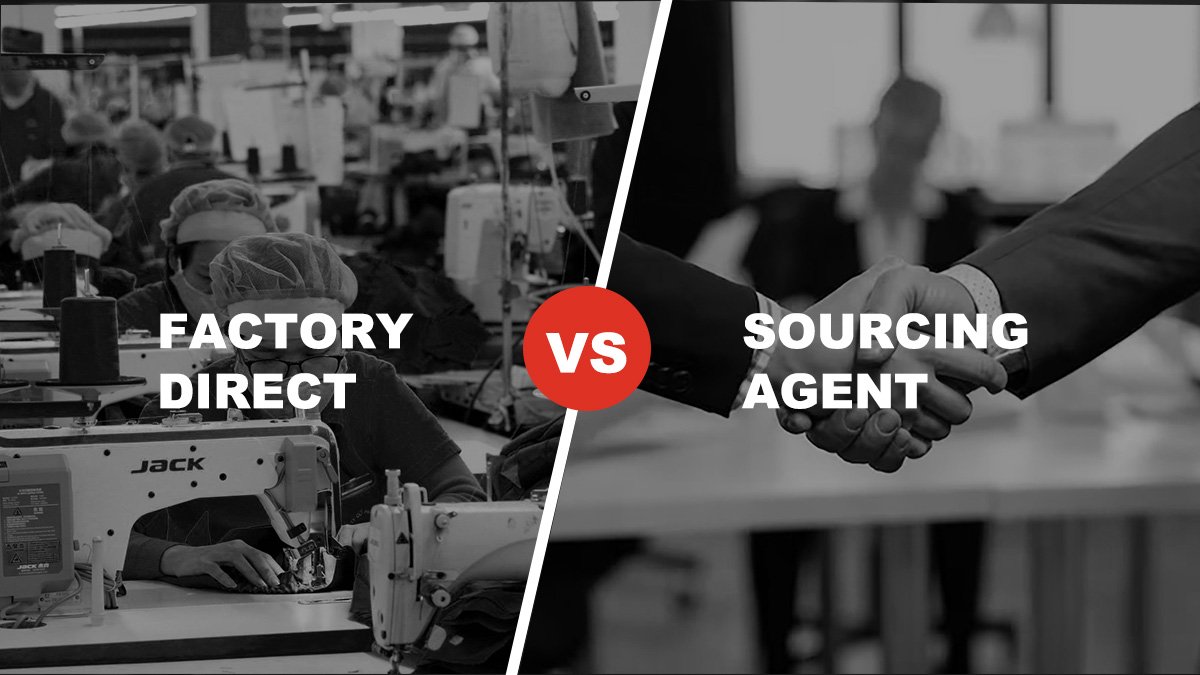
When I compare these two paths, I do not ask which one is cheaper at first. I ask which one fits the buyer’s current ability. That is the real question. A direct factory price may look lower. But if the buyer cannot manage development, production, and QC well, that lower price can be misleading. On the other hand, if the buyer has a solid sourcing structure, then paying an outside agent on every order may reduce profit without adding much value.
Handbag sourcing17g](https://coraggiobag.com/tote-bags/)%%%FOOTNOTE_REF_2%%% is not just about making a bag. It is about matching design intent, cost target, quality level, retail position, and delivery timing. The sourcing model should support all of that.
| Criteria | Factory Direct | Sourcing Agent |
|---|---|---|
| Unit price potential | Lower | Slightly higher |
| Risk level for new buyers | Higher | Lower |
| Communication ease | Varies by factory | Usually easier |
| Factory selection support | Limited | Strong |
| QC and follow-up | Buyer must manage | Agent often manages |
| Best for | Experienced repeat buyers | New or scaling buyers |
If I speak honestly, I think many buyers should start with support, then move direct when ready. That path makes sense. It lets the buyer learn the supply chain while reducing damage from early mistakes. Later, when the buyer has enough knowledge and enough trusted factory resources, the buyer can remove layers and improve margin. So I do not see this as a battle between two models. I see it as a business stage question. Your experience and resources decide the right route more than your preference does.
Conclusion
Bag buyers do not choose middlemen because they love paying extra. They choose the model that matches their experience, reduces risk, and protects profit at their current stage.
Understanding common sourcing risks helps you design safeguards so one bad order doesn’t wipe out your profit or damage your brand. ↩
Improving your overall bag sourcing approach can boost margins, quality consistency, and your ability to scale reliably over time. ↩
Learning robust factory screening steps reduces the chance you end up with weak suppliers that cause delays and quality failures. ↩
A clear system for samples, follow-up, and inspections cuts surprises, keeps timelines on track, and stabilizes quality across orders. ↩
Seeing how a middleman filters suppliers helps you decide whether to build this capability in-house or outsource it strategically. ↩
Audit know-how lets you confirm real capacity, compliance, and reliability before you risk money on tooling and deposits. ↩
Pre-shipment checks catch defects before final payment and shipping, saving you from costly rework, returns, and customer complaints. ↩
Knowing the hidden pitfalls behind “cheap” quotes helps you avoid losses that never show in the initial price comparison. ↩
Solid verification methods protect you from fake entities and underqualified factories that may jeopardize your orders. ↩
Learning how to stabilize quality over multiple orders keeps your brand reputation strong and your return rates low. ↩
Tighter control of lead times helps you hit launches, promotions, and seasonal windows without last‑minute panic. ↩
Understanding compliance early prevents customs issues, fines, or retailer rejections that can kill an entire shipment. ↩
Identifying hidden costs lets you compare direct vs agent sourcing on a realistic total landed cost, not just unit price. ↩
Long-term, trust-based partnerships usually mean better pricing, priority capacity, and smoother problem solving. ↩
Strong tech packs cut miscommunication, minimize sample rounds, and lock in details so bulk matches your vision. ↩
Knowing when direct sourcing truly pays off helps you time the shift so you gain margin without increasing risk too much. ↩
A structured overview of handbag sourcing lets you refine your process from design through delivery for smoother growth. ↩