Custom canvas tote bags need more than a shrinkage percentage in a purchase order. In my buyer conversations, a requested limit sometimes arrives without washing or measurement instructions. That gap can leave both sides interpreting the same number differently. I start by asking: “How will this bag be used, and how will you tell consumers to wash it?”
I recommend setting wash/shrinkage specifications for custom canvas tote bags by first defining intended use and the proposed consumer care instructions. Buyers and factories should then agree on washing, drying, cycle count, measurement points, calculation rules, and acceptance limits. Those requirements remain development targets until the agreed sample and procedure provide supporting evidence.
At CoraggioBag, I discuss these requirements from the manufacturing side, not as a textile laboratory. My aim is to help buyers turn a care promise into a specification that a factory, inspector, and buyer can interpret consistently before bulk production begins.
Which Tote Bag Dimensions Should Buyers Measure Before Washing Custom Canvas Tote Bags?
I cannot interpret “maximum shrinkage” reliably if the buyer and factory measure different parts of the bag. A tote can meet an overall width requirement while losing useful opening space or handle clearance. I therefore start with the dimensions that matter to its intended use.
I recommend recording the finished bag’s body width, body height, opening width, base or gusset dimensions, and handle dimensions before washing. The specification should identify exact measurement locations, bag positioning, and whether measurements are taken flat or otherwise supported. Buyers should also identify any minimum dimensions needed after washing.
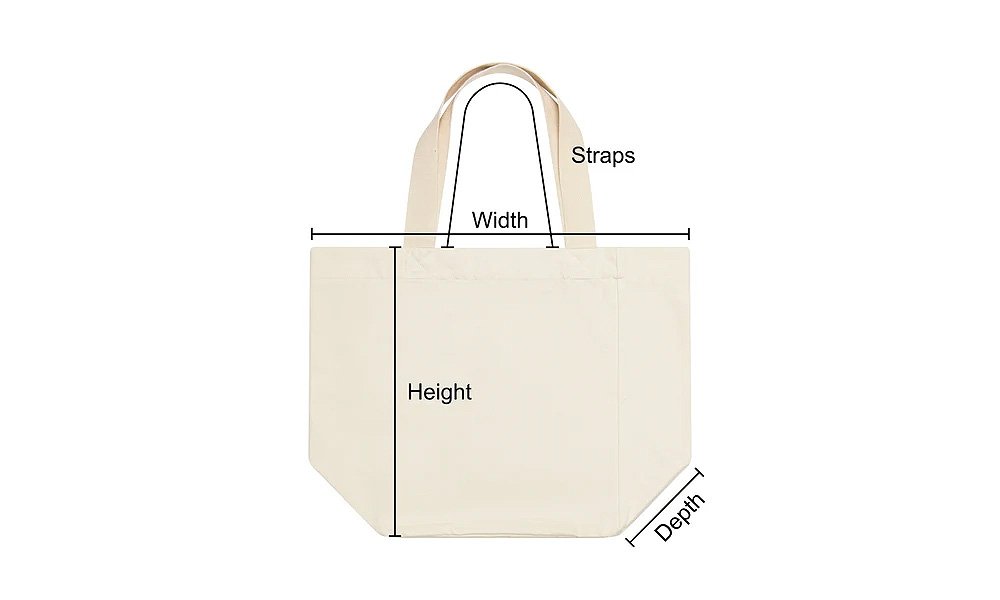
I separate dimensional change from usable size
A percentage describes change, but it does not establish whether the washed bag remains suitable for its purpose. I ask buyers to consider both questions:
- How much dimensional change will the buyer accept?
- What usable dimensions must remain after washing?
For example, a retail tote developed around a particular package may need a minimum opening width. A shoulder tote may need sufficient handle drop after washing. These functional requirements can matter even when the percentage change appears small.
For custom canvas tote bags, I would build a measurement sheet around a drawing rather than rely on dimension names alone.
| Measurement | Definition I would ask both sides to confirm | Reason it matters |
|---|---|---|
| Body width | The drawing identifies the horizontal measurement line | Different heights can give different readings |
| Body height | The drawing identifies the top and bottom reference points | Folded edges and seams can create ambiguity |
| Opening width | The method states how the mouth is positioned | The opening controls practical access |
| Base or gusset | The method defines how the base is opened or flattened | Construction affects the measurement |
| Handle drop | The drawing identifies the attachment and handle reference points | Carrying clearance can change |
| Handle length | The method defines endpoints and applied tension, if any | Stretching during measurement can distort results |
I agree on conditioning and calculation rules
I also ask how the bag will rest before its initial and final measurements. Moisture, handling, and inconsistent positioning can make comparisons less useful.1 The agreed procedure should define the condition in which measurements occur and whether reshaping or pressing is permitted.
If the parties report shrinkage as a positive number, I suggest documenting the calculation explicitly:
Shrinkage (%) = (before-wash dimension − after-wash dimension) ÷ before-wash dimension × 1002
An illustrative change from 400 mm to 388 mm equals 3% shrinkage. That example explains the calculation; it is not my recommended acceptance limit. The agreement should also explain how growth, rounding, and measurement resolution will be reported.
How Should Washing and Drying Conditions Be Agreed?
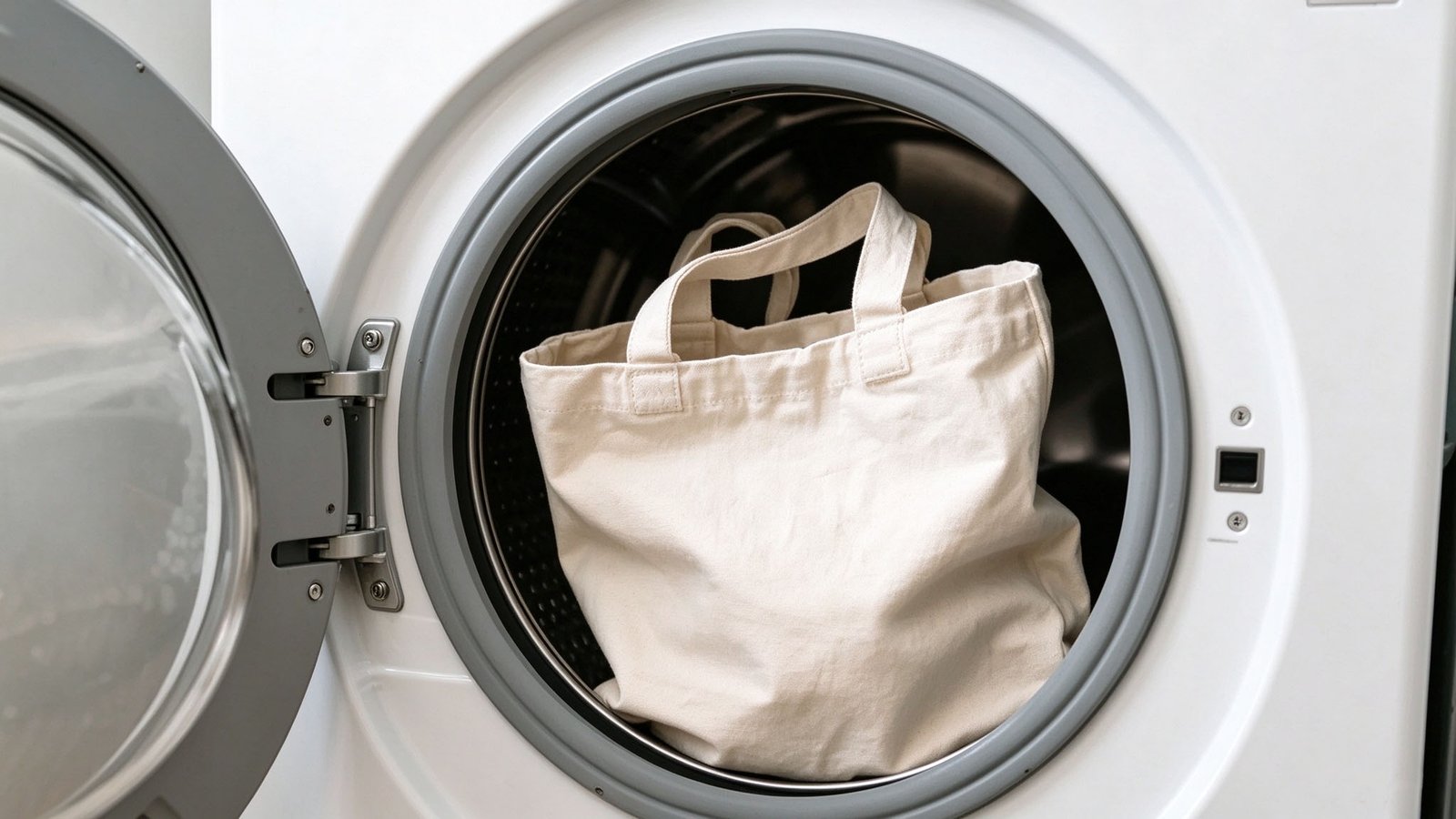
When I receive a request such as “washable with limited shrinkage,” I still need to understand the proposed care promise. Different washing and drying procedures can produce different outcomes.3 Without a shared procedure, a quoted percentage may create confidence without creating a usable acceptance standard.
I recommend agreeing on the washing method, temperature, detergent, load conditions, drying method, cycle count, and post-wash handling before validation. The procedure should reflect the proposed consumer care instructions.4 A qualified testing provider can help buyers select an appropriate evaluation method when market requirements or product claims require specialist judgment.

I translate the care promise into a testable instruction
My first question remains: “How will this bag be used, and how will you tell consumers to wash it?”
A tote intended for repeated grocery use may lead to a different care discussion from a decorative promotional bag. I would not assign the same procedure automatically to both.
For custom canvas tote bags, I recommend recording at least these items:
| Agreement item | What I would ask the buyer and factory to define |
|---|---|
| Care promise | The proposed wording and intended cleaning method |
| Washing procedure | The process, equipment type, and relevant settings |
| Temperature | The agreed setting or controlled condition |
| Detergent | The product or defined detergent specification and quantity |
| Load conditions | The bag quantity and any accompanying load |
| Drying procedure | The method, settings, positioning, and endpoint |
| Cycle count | The number of complete wash-and-dry cycles |
| Intermediate checks | Whether measurements occur after selected cycles |
| Post-wash treatment | Whether stretching, reshaping, or ironing is allowed |
I do not prescribe a universal washing temperature or cycle count. Those choices need to match the intended claim and the evaluation plan.
I keep proposed conditions separate from validated conditions
A buyer may request a particular washing procedure and shrinkage limit during development. I treat that combination as a target, not evidence that the construction already meets it.
If the sample does not meet the target, the parties have several options. They can review the material, construction, finishing process, proposed care instructions, or acceptance criteria. Any change should be explicit rather than hidden inside an informal retest.
I also distinguish factory acceptance testing from consumer-use variation. An agreed procedure creates a repeatable basis for evaluating custom canvas tote bags. It does not reproduce every detergent, machine, drying habit, or handling condition consumers may use.
Why Must Fabric and Finished-Bag Results Be Checked Separately for Custom Canvas Tote Bags?
I understand why buyers ask for fabric shrinkage information early. It can help screen materials before sampling. However, a canvas swatch does not include handles, seams, printing, lining, or closures.5 Treating that swatch as proof of finished-bag washability leaves important parts of the product unevaluated.
I use fabric results to assess material behavior and finished-bag results to assess the assembled product. Both can support development, but they answer different questions. Finished-bag validation should use the agreed construction, decoration, and care procedure, with records that identify the materials and sample version actually evaluated.
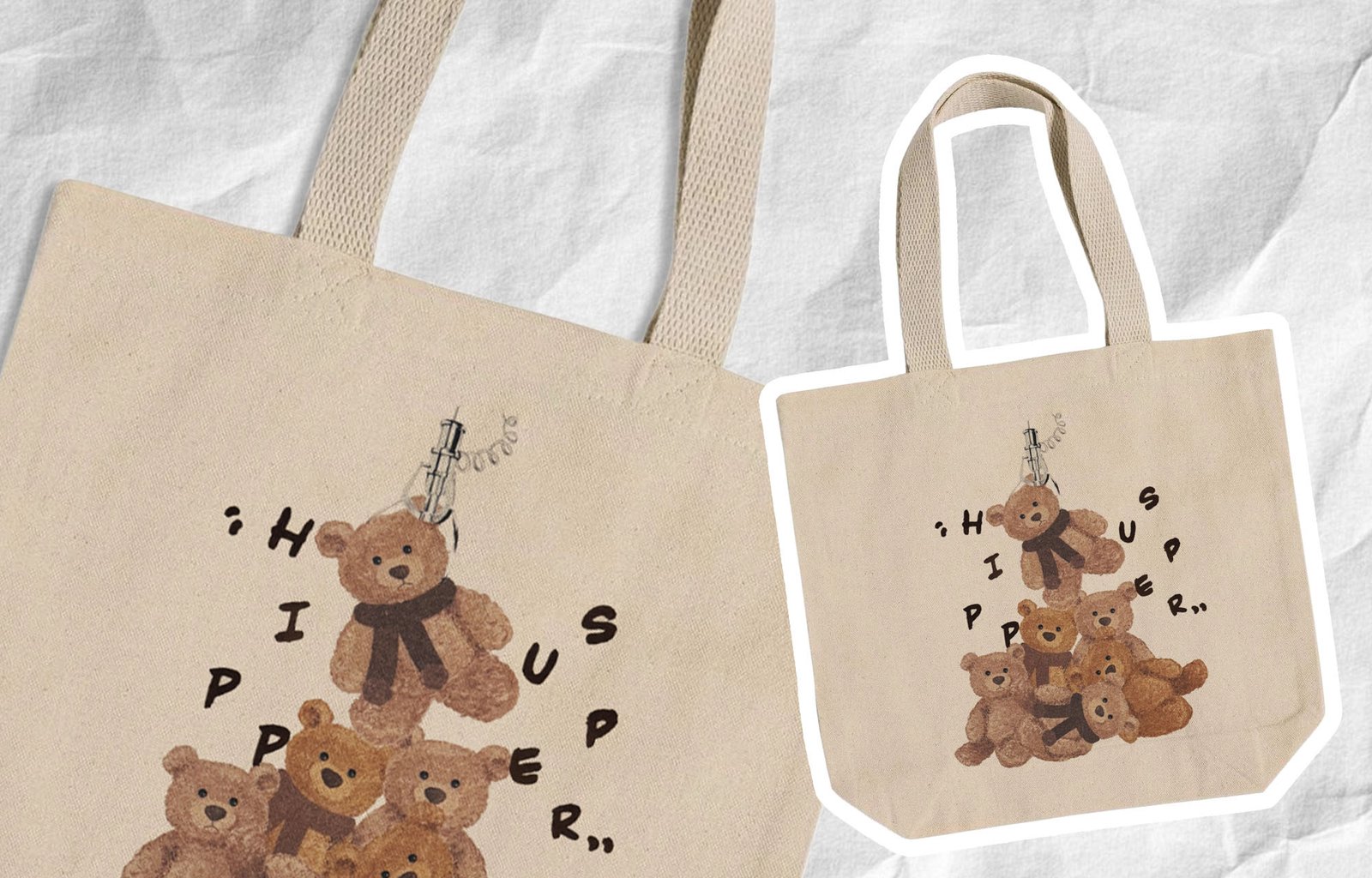
I use fabric checks as an input, not a substitute
Fabric testing can help buyers compare material options or understand dimensional change before committing to a finished sample. It may also support discussions about cutting allowances or material preparation.
However, I would not conclude that a tote is washable simply because its main fabric has a favorable result.
The finished assembly introduces additional variables:
- Seams constrain fabric movement.6
- Handle materials may respond differently from the body.
- Linings may change dimensions differently from the outer shell.7
- Printing and other decoration may affect appearance after washing.8
- Interlinings, labels, binding, and closures may introduce separate concerns.
These interactions are why I ask for finished samples of custom canvas tote bags to be evaluated under the agreed conditions.
I connect each result to an identifiable sample
A useful result needs an identifiable product behind it. I recommend linking the evaluation record to the sample code, drawing revision, material specification, and decoration details.
For example, if development moves from an unlined tote to a lined version, I would not assume that the earlier result covers the new construction. Similarly, a change in handle webbing or print process deserves a review of whether additional validation is necessary.
My suggested evidence sequence is:
- The buyer and factory define the intended use and care promise.
- Material information supports the initial development decision.
- The finished development sample undergoes the agreed evaluation.
- The approved construction and acceptance requirements are documented.
- Bulk-related samples are checked according to the agreed inspection plan.
This sequence does not make one sample an unconditional guarantee for every unit.9 Instead, it gives procurement and quality teams a documented basis for controlling changes and deciding what bulk evidence they require.
How Can Shrinkage Affect Handles, Prints and Lining Fit?
I look beyond body width and height because a bag can remain close to its original dimensions while becoming less attractive or less comfortable to use. Handle distortion, print changes, and lining mismatch can all matter to a retail buyer. A dimensional limit alone will not address them.
I recommend evaluating handles, decoration, lining, seams, and closures alongside dimensional change. The acceptance agreement should describe unacceptable distortion, damage, or loss of function and identify how those conditions will be assessed. Buyers should approve both numerical limits and appearance or functional criteria before production.
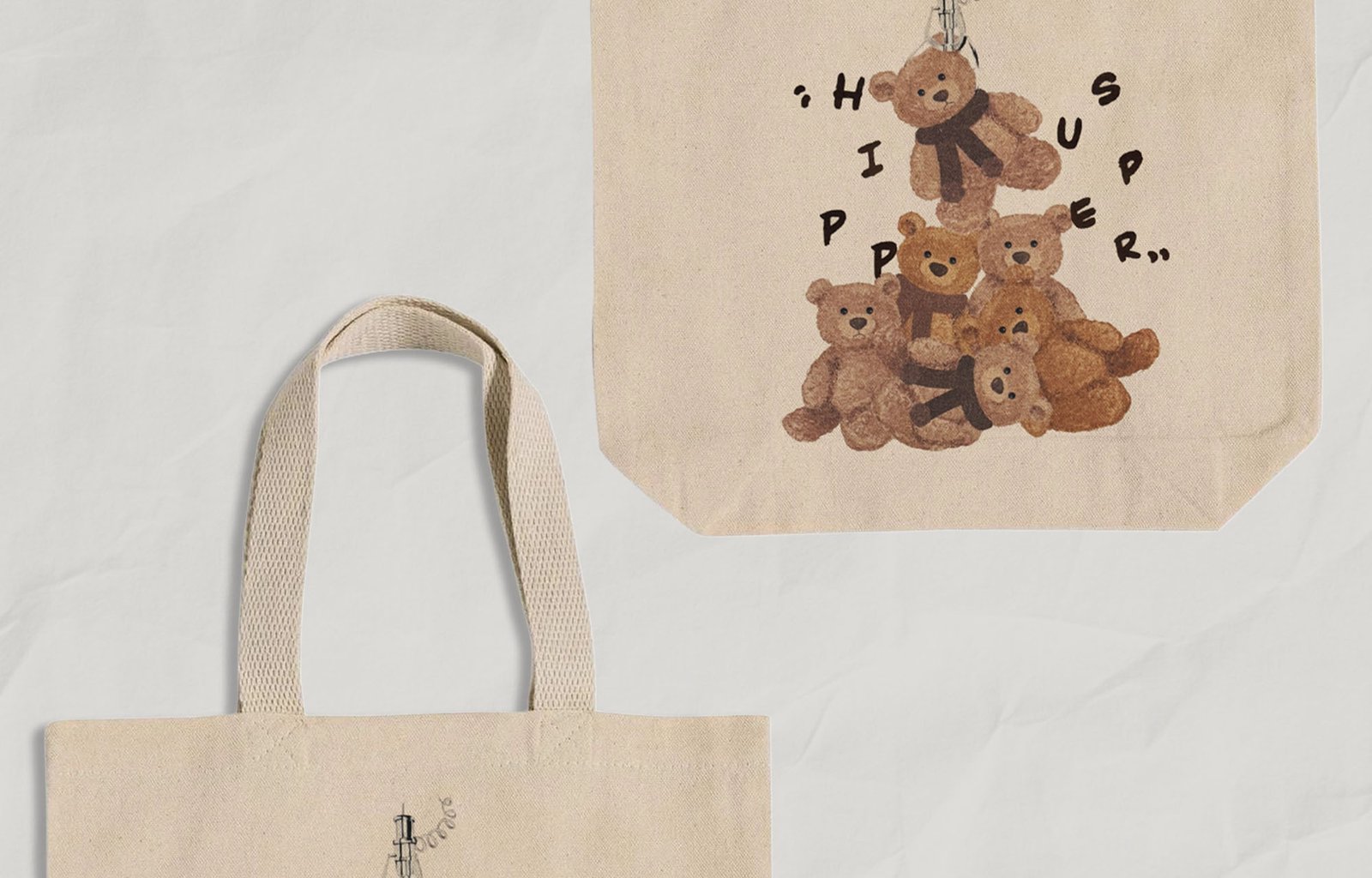
I separate measurement criteria from appearance criteria
For custom canvas tote bags, I would create two connected checklists. One covers measurable dimensions. The other covers appearance and function.
| Component | Issue I would include in the evaluation | Possible evidence |
|---|---|---|
| Handles | Uneven length, twisting, puckered attachment areas | Measurements and consistent photographs |
| Printed areas | Cracking, lifting, distortion, or unacceptable color change | Defined visual review and suitable specialist testing where needed |
| Lining | Bunching, pulling, protrusion, or restricted opening | Interior photographs and fit assessment |
| Seams | Puckering, opening, or visible damage | Close-up photographs and inspection notes |
| Closures | Difficulty opening or closing after washing | Recorded functional check |
The table identifies evaluation topics, not predetermined outcomes. I would agree on the relevant criteria for the actual design.
I avoid vague appearance requirements
Terms such as “good appearance” or “normal shrinkage” leave too much room for disagreement. I prefer criteria that explain what the buyer considers unacceptable and how the reviewer should assess it.
For instance, the agreement might identify a lining that protrudes beyond the opening as an unacceptable condition. Another design might require handles to remain within an agreed dimensional range and free from specified twisting. The appropriate requirements depend on the product.
Where visual judgment matters, I recommend consistent lighting, camera angles, and views. Physical reference samples can also help when both parties agree on their role and storage conditions.
I also ask whether post-wash reshaping is part of the proposed care instructions. If a sample only looks acceptable after treatment that consumers will not be instructed to perform, the result may not support the intended promise.
For application-specific durability, print performance, or safety questions, I recommend a qualified professional evaluation rather than relying on photographs alone.
What Wash-Test Records Should Accompany Bulk Sample Approval for Custom Canvas Tote Bags?
I do not consider a message saying “wash test passed” a complete approval record. Without the sample identity, procedure, and actual readings, a later disagreement can become difficult to resolve. Buyers need enough information to understand what passed, under which conditions, and against which requirements.
I recommend attaching the agreed procedure, sample identification, before-and-after measurements, calculations, photographs, observations, and approval decision to bulk sample approval. The record should show deviations and unresolved items. It should also define how approved sample evidence relates to bulk inspection, material changes, and any required retesting.
I build a traceable approval package
For custom canvas tote bags, I would ask the buyer and factory to retain a shared approval package rather than distribute key details across separate messages.
My suggested package includes:
- Product identity: The style code, purchase order reference, and drawing revision identify the product.
- Sample identity: The record identifies the evaluated samples and their relationship to development or bulk production.10
- Construction details: The record identifies the fabric, handles, lining, decoration, and relevant trims.
- Procedure: The document records washing, drying, cycle count, conditioning, and measurement instructions.
- Results: The sheet includes original readings, final readings, calculations, and observations for each evaluated sample.
- Visual evidence: Photographs show agreed views before and after evaluation.
- Decision: The buyer records approval, rejection, or conditional approval with outstanding actions.
- Responsibility: The record identifies who performed, reviewed, and approved the evaluation.
I recommend reporting individual results rather than only an average. An average can conceal variation between samples or between measurement locations.11
I define the connection to bulk acceptance
The approval package should state the sample quantity and selection method used for evaluation. The parties should also agree on the bulk sampling approach, failure handling, and circumstances that trigger further review.
I would ask one practical question: “What happens if the material, finish, print process, or construction changes after approval?”
A clear change-control requirement helps keep earlier evidence from being applied to a different product without review.
At CoraggioBag, I can discuss these requirements alongside material selection, sample development, and production planning. However, I would keep any requested performance target separate from a confirmed result. A development sample supports the construction and conditions actually evaluated; it does not remove the need for bulk quality control.
Frequently Asked Questions
What shrinkage percentage should I specify for a canvas tote?
I do not recommend a universal percentage. I start with intended use, the proposed care instructions, and the dimensions the bag must retain. The buyer and factory can then agree on development targets and validate them using an identified sample and procedure before establishing production acceptance requirements.
Does preshrunk canvas prove that the finished tote is washable?
I would treat “preshrunk” as material information that needs clarification, not proof of finished-product performance. I would ask what treatment occurred and what evidence supports the description. Handles, lining, decoration, and construction still need evaluation as part of the finished bag.
How many wash cycles should buyers require?
I recommend choosing the cycle count to match the intended claim and evaluation purpose. A single-cycle check and a repeated-washing assessment answer different questions.12 The buyer, factory, and qualified testing provider, where appropriate, should agree on the count and measurement checkpoints before testing begins.
Can I approve bulk production using only a fabric report?
I would not use a fabric report as the only washability evidence for a finished tote. It can support material selection, but it does not evaluate the complete construction. I recommend finished-sample validation and a separate agreement covering bulk sampling, acceptance, and changes after approval.
What should I do if the sample misses the requested limit?
I would first confirm that the agreed procedure and measurement method were followed. Then I would review the material, construction, and proposed care promise with the buyer. Any revised target or product change should be documented, and the relevant sample should be evaluated again before approval.
Conclusion
I set wash/shrinkage specifications for custom canvas tote bags by starting with use and the consumer care promise—not an isolated percentage. A useful agreement defines measurements, washing and drying conditions, cycle count, dimensional limits, and appearance requirements. Sample evidence must support the proposed claim, while bulk acceptance needs its own documented controls. If you are planning a B2B tote order, share your design, intended use, and proposed care instructions with CoraggioBag so I can help clarify the development and approval requirements before production.
"Dimensional Metrology Group", https://www.nist.gov/pml/sensor-science/dimensional-metrology. Textile conditioning standards specify controlled atmospheres for conditioning and testing, providing a basis for comparable measurements; they do not quantify the effects of handling or positioning for this particular tote construction. Evidence role: mechanism; source type: institution. Supports: Standardized conditioning and measurement conditions help control variability in textile testing.. Scope note: General conditioning standards do not establish the magnitude of measurement error for the bags discussed. ↩
"ISO-5077-2007.pdf", https://cdn.standards.iteh.ai/samples/41877/ffcaa2fb92e54cdc88dd679a4f68f732/ISO-5077-2007.pdf. Standard textile dimensional-change methods express the change relative to the original dimension; the equation here adopts a positive value for shrinkage, so its sign convention should be distinguished from methods that report contraction as negative dimensional change. Evidence role: definition; source type: institution. Supports: Textile dimensional change is calculated relative to the original measured dimension, with the sign convention explicitly defined.. Scope note: The article's positive-shrinkage convention may differ from the reporting convention of a selected test standard. ↩
"Dimensional stability of tumbler dried and ...", https://krex.k-state.edu/server/api/core/bitstreams/2678ee65-93e0-4ac2-a7ea-96e6675aacf1/content. Standardized domestic laundering methods distinguish washing procedures and drying methods, making the selected procedure part of the interpretation of a dimensional-change result. Evidence role: general_support; source type: institution. Supports: Washing and drying conditions are specified variables in standardized textile dimensional-change testing.. Scope note: A standardized procedure does not predict the amount of shrinkage for an untested tote. ↩
"Clothes Captioning: Complying with the Care Labeling Rule", https://www.ftc.gov/business-guidance/resources/clothes-captioning-complying-care-labeling-rule. Textile care-label frameworks relate care instructions to treatments the article can withstand without unacceptable damage, supporting alignment between the stated care procedure and the conditions evaluated. Evidence role: general_support; source type: institution. Supports: Care-label frameworks connect specified care treatments with avoiding unacceptable product damage.. Scope note: Care-label standards and legal requirements have product- and jurisdiction-specific scopes; their application to a particular tote must be established separately. ↩
"TM150 Test Method for Dimensional Changes of Garments ...", https://members.aatcc.org/store/tm150/556/. Textile dimensional-change methods distinguish fabric specimens from garments or other textile assemblies; results for an isolated fabric do not directly evaluate components and construction absent from the specimen. Evidence role: general_support; source type: institution. Supports: Fabric testing and assembled-product testing evaluate different specimens and therefore support different conclusions.. Scope note: Garment methods provide relevant methodological context but may require adaptation or a separately agreed procedure for tote bags. ↩
"The influence of mechanical properties of sewing threads ...", https://www.researchgate.net/publication/228761930_The_influence_of_mechanical_properties_of_sewing_threads_on_seam_pucker. Research on seam puckering identifies interactions among fabric dimensional change, sewing thread, and seam construction as contributors to laundering-related distortion. Evidence role: mechanism; source type: paper. Supports: Interactions between fabric, sewing thread, and seam construction can produce puckering or distortion after laundering.. Scope note: The occurrence and severity of distortion depend on the particular materials and seam construction. ↩
"Dimensional stability (fabric)", https://en.wikipedia.org/wiki/Dimensional_stability_(fabric). Textile compatibility research treats differential dimensional change between joined materials as a potential source of distortion, providing a mechanism by which a lining and outer shell can lose their original fit. Evidence role: mechanism; source type: research. Supports: Compatibility of dimensional change between joined textile layers matters to post-laundering fit and appearance.. Scope note: This mechanism does not demonstrate that any particular lined tote will develop bunching or protrusion. ↩
"ISO 105-C06", https://cdn.standards.iteh.ai/samples/51276/bb37ae4124174869ac303511b7cc742f/ISO-105-C06-2010.pdf. Textile laundering standards assess colorfastness and post-wash appearance separately from dimensional change, supporting separate evaluation of decorated areas rather than reliance on shrinkage measurements alone. Evidence role: general_support; source type: institution. Supports: Laundering assessments include colorfastness and appearance characteristics distinct from dimensional change.. Scope note: Colorfastness testing alone does not establish resistance to print cracking, lifting, or every other decoration failure. ↩
"What kinds of Lot Acceptance Sampling Plans (LASPs) are ...", https://www.itl.nist.gov/div898/handbook/pmc/section2/pmc22.htm. Acceptance-sampling theory recognizes risks of accepting nonconforming lots and rejecting conforming lots; a passing sample therefore does not establish conformity of every unit in the lot. Evidence role: general_support; source type: government. Supports: Acceptance decisions based on samples involve uncertainty and do not guarantee conformity of every lot member.. Scope note: The degree of assurance depends on the sampling design, acceptance criteria, and representativeness of the sampled units. ↩
"ISOIEC 17025 Crosswalk - REPORTING THE RESULTS", https://www.nist.gov/document/7-8-17025-crosswalk-reporting-results-20180201pdf. Laboratory reporting requirements under ISO/IEC 17025 include identification of the tested item and information needed to interpret the results, supporting traceable links between a report and the samples evaluated. Evidence role: general_support; source type: institution. Supports: Laboratory reporting principles require identification of tested items and clear attribution of results to those items.. Scope note: These laboratory requirements provide a reporting model; they do not make an internal factory approval package accredited or demonstrate that a sample represents bulk production. ↩
"NIST/SEMATECH e-Handbook of Statistical Methods", https://www.itl.nist.gov/div898/handbook/. Statistical guidance distinguishes measures of location from measures of spread; a mean alone does not describe dispersion or reveal whether individual observations exceed an acceptance limit. Evidence role: general_support; source type: government. Supports: Measures of central tendency do not describe the full dispersion or extremes of a set of observations.. ↩
"Dimensional stability (fabric)", https://en.wikipedia.org/wiki/Dimensional_stability_(fabric). Studies of repeated textile laundering examine dimensional change across successive cycles, distinguishing initial wash response from behavior under continued washing. Evidence role: general_support; source type: paper. Supports: Textile dimensional behavior can evolve over successive laundering cycles.. Scope note: Such studies do not establish a universal cycle count or acceptance threshold for canvas totes. ↩