I treat load-test requirements as a buyer–factory agreement, not just a kilogram figure. A weight without a defined carrying configuration, procedure, and acceptance criteria can leave both sides interpreting the same request differently.1 I start with the carrying task, then coordinate written requirements before quotation and sampling.
I set shoulder-strap load-test requirements by defining intended use, the test object, the carrying configuration, the loading procedure, and the conditions for passing. I ask the supplier’s quality team or a qualified laboratory to confirm technical details, then record the agreed requirement before the sample is made.
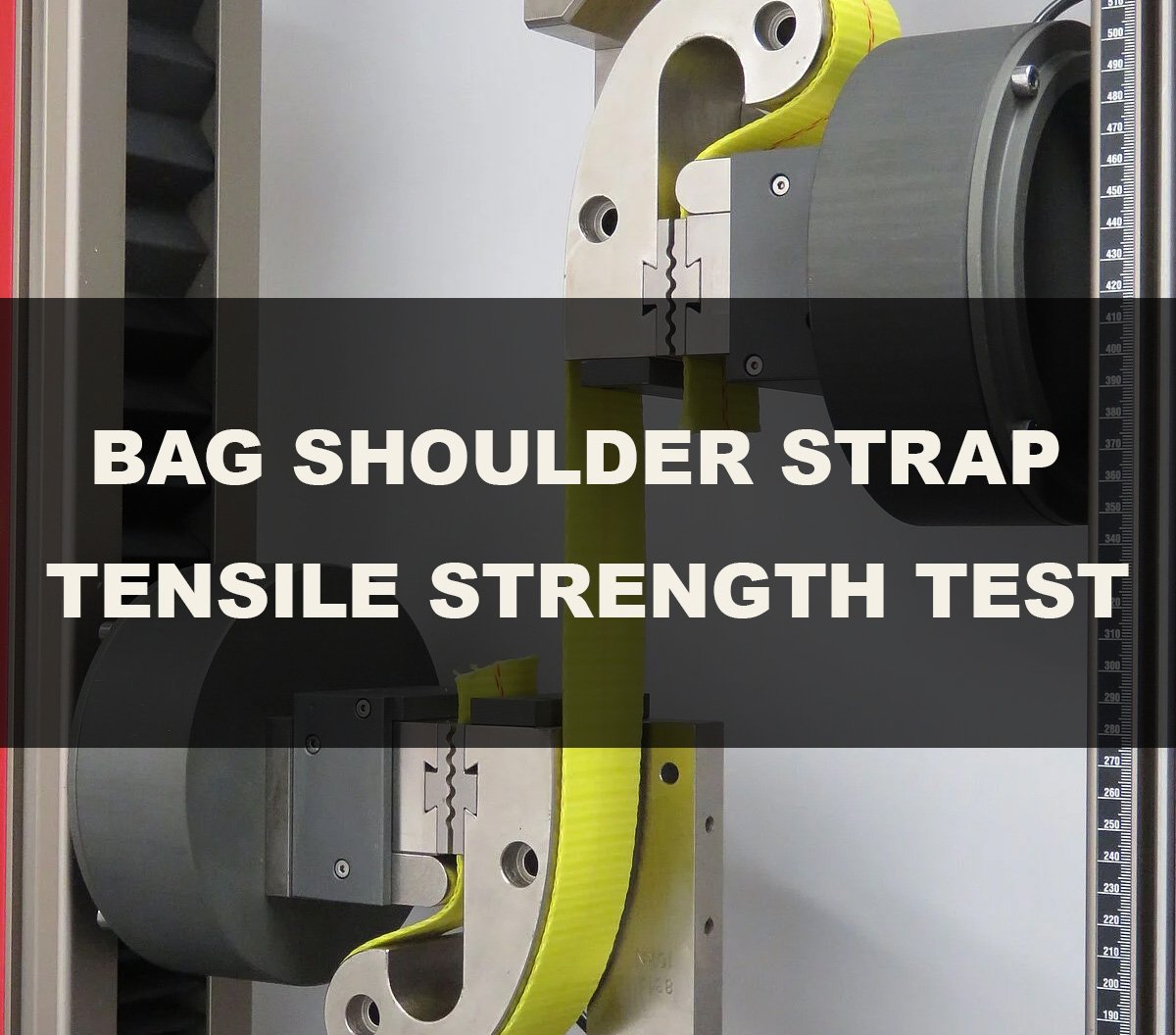
In customer requirement discussions at CoraggioBag, I encounter the question, “How many kilograms can it hold?” I understand why buyers ask it. However, I need several more answers before that question becomes a requirement that a factory can quote, sample, and assess consistently.
Which Loads and Use Conditions Should Load-Test Requirements Represent?
I start by asking what the bag carries and how people will carry it. If I begin with a test weight alone, I may overlook an important use condition. A backpack, travel bag, and shopping tote can place different demands on their straps.
I define the intended carrying task before discussing test severity. My requirement brief identifies the expected contents, normal loaded weight, carrying arrangement, and relevant use conditions. I then ask qualified quality personnel to translate that information into an appropriate procedure, rather than applying one load value to every bag.
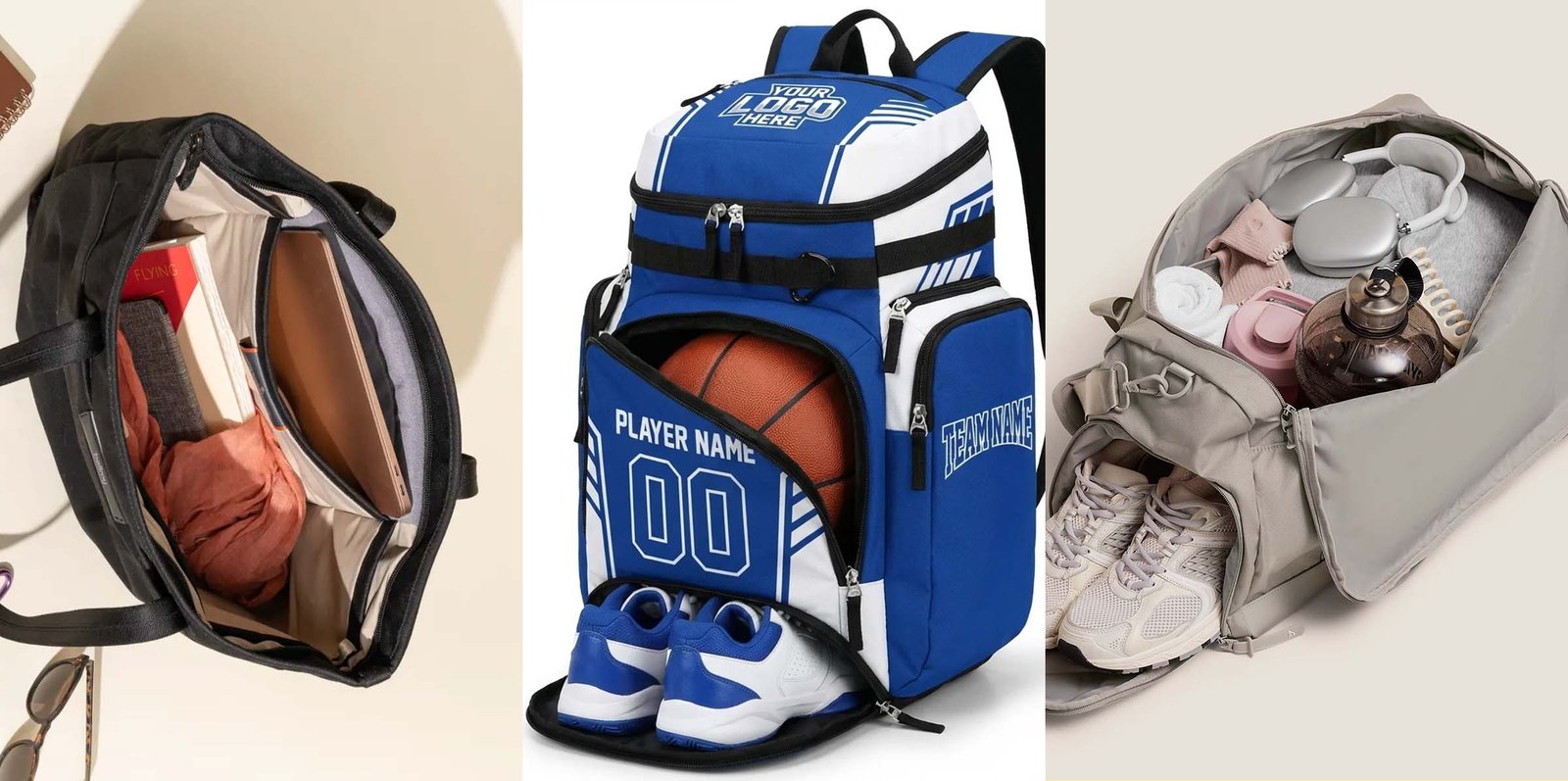
I describe the carrying task before discussing a number
In my sample-coordination role, I need enough information to understand what the buyer expects the finished product to do. “A bag for daily use” is usually too broad. A laptop backpack and a promotional shopping bag may both be used daily, but their contents and carrying patterns differ.
I use a short requirement brief to organize the discussion:
| Information I request | What I want to clarify |
|---|---|
| Intended contents | The buyer identifies likely items, such as clothing, groceries, or a laptop. |
| Normal loaded weight | The buyer states whether this includes the bag itself or only its contents. |
| Carrying arrangement | The buyer identifies one shoulder strap, two backpack straps, or another arrangement. |
| Expected handling | The buyer describes ordinary carrying and any foreseeable lifting or pulling. |
| Use environment | The buyer flags relevant moisture, temperature, storage, or outdoor exposure. |
I also distinguish normal use expectations from test conditions. They are connected, but they are not interchangeable. I do not assume that the normal carrying weight should automatically become the test load, nor do I prescribe a universal multiplier.
I ask who will confirm technical relevance
For shoulder-strap load-test requirements, I ask the supplier’s quality team or a qualified laboratory to confirm whether the proposed procedure reasonably addresses the intended use.
If a buyer references a standard, I request its full designation, edition, relevant clause, and any proposed deviations. I also ask the technical reviewer to confirm its applicability. A method used for a different product category does not automatically become suitable for a bag.2
My role is to make the commercial expectation clear enough for technical review. I do not present that clarification work as laboratory validation or proof of carrying performance.
How Should Strap Anchor Points Be Inspected?
I do not treat the visible strap as the whole system. The buyer may focus on strap width or fabric thickness while leaving the attachment construction undefined. That gap can make a sample look acceptable without giving the quality team a clear inspection reference.
I ask the quality team to review the complete attachment path, including stitching, reinforcement, supporting panels, adjusters, and relevant hardware. I record the approved construction and inspection criteria alongside the loading procedure. I also distinguish visible workmanship checks from evidence obtained through an agreed performance test.

I identify what connects the strap to the bag
During requirement clarification, I ask the product team to identify every relevant connection between the strap and the bag body. Depending on the design, that discussion may include sewn attachments, webbing loops, rings, clips, buckles, and detachable fittings.
I want the approved sample and specification to show the construction clearly. Useful references can include:
- Annotated photographs: I use these to identify attachment locations and visible reinforcement.
- Construction drawings: I request these when layers or hidden details are difficult to understand from photographs.
- Material specifications: I record agreed webbing, supporting fabric, reinforcement, thread, and hardware references.
- Workmanship criteria: I ask the quality team to define unacceptable stitching or assembly conditions.
I avoid making unsupported assumptions such as “more stitch rows always mean a stronger anchor.” Construction suitability requires technical evaluation, including how the materials and attachment design work together.3
I keep inspection and performance assessment separate
I use visual inspection to check whether the sample matches the approved construction. I do not use it as a substitute for loading evidence.
For example, the quality team may check for skipped stitches, inconsistent attachment positioning, exposed sharp hardware edges, or missing reinforcement against the approved specification. Those checks establish whether the sample was made as agreed. They do not, by themselves, establish its load capacity.4
I also ask how anchor points will be documented before and after testing. Comparable photographs can help reviewers understand a change, but the written acceptance criteria must determine whether that change is acceptable.
For my load-test requirements, the key question is not simply, “Does the attachment look strong?” I need to know whether the specified construction was evaluated under the agreed conditions and whether the recorded observations meet the approved criteria.
What Sample Setup Makes Load-Test Requirements Comparable?
I want two reviewers to understand the same test setup without guessing. If one evaluates a complete bag and another evaluates an isolated strap, their results may answer different questions. Even a shared load figure cannot remove that difference.
I make results more comparable by documenting the sample identity, test object, carrying configuration, load placement, support arrangement, conditioning, and observation method. I ask qualified personnel to confirm these details, including duration and any repeated-loading parameters. I also record deviations so reviewers do not mistake different procedures for equivalent evidence.

I define exactly what is being evaluated
I first clarify whether the test concerns:
- The complete bag, including its supporting body construction.
- A strap assembly, with defined attachments or fixtures.
- An individual component, such as webbing, an adjuster, or a clip.
I do not treat evidence from one level as automatic proof at another level. A component assessment may support material selection, but I would not present it as a complete-bag result.5
I also ask whether the loading applies to one strap or a defined carrying configuration. For a two-strap bag, I do not assume that the load is shared equally.6 The intended setup and its interpretation need technical confirmation.
I make the procedure reproducible
I use a setup checklist to identify information that the quality team must finalize:
| Setup item | What I ask the approved procedure to state |
|---|---|
| Sample identity | The procedure identifies the model, revision, and relevant material configuration. |
| Sample quantity | The procedure states how many specimens are required and how they are selected. |
| Conditioning | The procedure defines any required preparation or environmental conditioning.7 |
| Loading | The procedure defines the load, its placement, and how it is applied. |
| Duration or repetition | The procedure states the holding period or repeated-loading parameters, where applicable. |
| Observation | The procedure identifies inspection stages and measurement references. |
| Equipment | The record identifies relevant equipment and calibration status where applicable.8 |
I do not fill these fields with convenient numbers merely to complete a form. I ask the technical reviewer to establish suitable values and explain any limitations.
I also separate development-sample evidence from bulk-production evidence. A handmade development sample may help evaluate a design, but I need to know whether its construction and materials represent the production version. Comparable load-test requirements depend on a controlled sample identity as much as a clear procedure.
Which Failures Should Trigger Design Review?
I want failure criteria agreed before anyone sees the result. Otherwise, one reviewer may call a slipped strap acceptable while another rejects it. That disagreement becomes harder to resolve when the original requirement only mentioned breakage or a target weight.
I ask the quality team to define unacceptable separation, tearing, stitching damage, hardware malfunction, strap slippage, deformation, and loss of function where relevant. I also ask which observations require a design review, which indicate a production nonconformity, and what evidence is needed before a revised sample can be accepted.

I define passing beyond “nothing broke”
I do not consider “no breakage” a complete acceptance requirement unless the qualified reviewer confirms that it adequately addresses the evaluation purpose. A bag may remain connected while showing another unacceptable change.9
I ask the reviewer to consider the following categories without assuming every category needs the same limit:
- Attachment integrity: I ask how separation, seam opening, or supporting-fabric damage will be assessed.
- Strap adjustment: I ask whether movement through an adjuster must be measured.
- Hardware function: I ask whether clips, buckles, or adjusters must remain operational after loading.
- Permanent change: I ask whether residual elongation or deformation needs an acceptance limit.
- Bag function: I ask whether the evaluated condition affects access, closure, or the intended carrying arrangement.
Where measurements are necessary, I request defined reference points, units, inspection timing, and limits. Words such as “slight,” “strong,” and “acceptable” can leave too much room for interpretation.
I distinguish design questions from production problems
When a sample does not meet the agreed criteria, I ask the team to investigate before deciding on a correction. A missing specified reinforcement may indicate a manufacturing nonconformity. A correctly built attachment that fails the agreed evaluation may require a broader design or material review. Qualified personnel should determine the cause.
I also ask how a proposed change affects the approval scope. A different webbing, reinforcement, stitch construction, or hardware item may require further evaluation rather than a visual sign-off alone.
My load-test requirements therefore include a review path, not just a pass/fail box. I want the record to identify the observation, responsible reviewer, proposed action, and required reassessment.
I do not describe a static hanging-test pass as a guarantee of long-term durability or safety.10 I state what was evaluated and leave conclusions within the evidence available.
What Load-Test Requirements Record Belongs in Bulk Approval?
I want bulk approval to refer to an identifiable requirement and identifiable evidence. An email saying “the strap passed” is difficult to interpret later. Without the sample revision, procedure, and acceptance criteria, a buyer may not know what that approval actually covers.
I include the approved requirement, sample identification, procedure reference, results, photographs, deviations, and approval decision in the bulk-approval file.11 I also record relevant material and construction references. I ask the buyer and supplier to agree on production inspection and change-control arrangements rather than assuming sample approval covers every future variation.

I create a traceable approval package
For me, a useful record connects four things: what the buyer requested, what was evaluated, what was observed, and what was approved.
I would organize the file as follows:
| Record element | What I want it to establish |
|---|---|
| Requirement reference | The file identifies the approved load-test requirements and revision. |
| Product reference | The file identifies the bag model, sample revision, and relevant specifications. |
| Procedure reference | The file identifies the method, setup, and any agreed deviations. |
| Evaluation details | The file records the date, evaluator or laboratory, and sample quantity. |
| Evidence | The file includes observations, measurements where required, and relevant photographs. |
| Acceptance decision | The file states whether the evidence meets the agreed criteria. |
| Open actions | The file identifies unresolved issues, restrictions, or reassessment requirements. |
| Approval authority | The file records who approved what and when. |
I prefer a clear procedure reference over an informal description such as “our usual strap test.” If an internal method is used, I ask for an identifiable revision and enough detail for the buyer to understand its scope.
I connect approval to production controls
I also ask what happens after sample approval. The buyer and supplier should agree on the production verification plan, including any sampling approach, inspection stage, and handling of nonconforming findings. I ask qualified quality personnel to establish those details rather than choosing a generic sample quantity.
Change control matters as well. If a supplier proposes a different material or attachment construction, I want the buyer to know whether that change requires review or renewed evaluation.12
At CoraggioBag, my role is to help clarify these expectations during quotation and sample coordination. I can help organize the questions and supporting references, but I do not substitute a sales statement for a technical assessment.
I keep load-test requirements within the wider product approval file. They address a defined performance question; they do not replace other workmanship, material, or market-specific compliance requirements.
Frequently Asked Questions
Can I specify one shoulder-strap test weight for every bag?
I would not use one value across all bag types without technical justification. I first define the intended contents, carrying arrangement, and normal loaded weight. I then ask the quality team or a qualified laboratory to confirm suitable test conditions for the particular product and evaluation purpose.
Does passing a static hanging test prove long-term durability?
I would not make that claim. I interpret a static test result within its documented setup, duration, and acceptance criteria. If the buyer needs evidence about repeated handling, environmental exposure, or other conditions, I ask qualified personnel to identify whether additional evaluation is appropriate.
Should I test one shoulder strap or both straps together?
I would confirm that decision against the intended carrying arrangement and the question the evaluation needs to answer. I would not assume the results are interchangeable. I ask the technical reviewer to define the configuration, load application, and scope of the resulting conclusion.
Do I need an independent laboratory for every order?
I would consider the product, buyer requirements, contractual terms, applicable obligations, and the supplier’s evaluation capability. An internal assessment may be suitable for some agreed checks, while other situations may warrant independent evaluation. I ask qualified personnel to confirm the appropriate route before sampling.
When should I agree on shoulder-strap acceptance criteria?
I aim to agree on the criteria before quotation and sample production. Early agreement helps me coordinate construction, evaluation costs, timing, and approval expectations. If the requirement changes later, I document the revision and ask whether the sample or earlier evidence still represents the updated requirement.
Conclusion
I set load-test requirements by turning intended carrying use into a written procedure and a clear definition of passing. I clarify the test object, attachment construction, setup, review triggers, and approval record before treating a load figure as meaningful. I also ask qualified quality personnel or a laboratory to confirm technical suitability. For a CoraggioBag OEM/ODM inquiry, I welcome your design, intended contents, carrying expectations, and existing test specification so I can help coordinate requirement clarification before quotation and sampling.
"NASA Systems Engineering Handbook", https://www.nasa.gov/wp-content/uploads/2018/09/nasa_systems_engineering_handbook_0.pdf. NASA systems-engineering guidance links requirement verification to defined methods, conditions, and success criteria; this supports the requirement-writing principle but does not establish a shoulder-strap test method. Evidence role: general_support; source type: government. Supports: Verifiable requirements specify evaluation conditions and criteria rather than only a nominal performance value.. Scope note: General engineering guidance does not prescribe bag-specific loads or configurations. ↩
"The Fitness for Purpose of Analytical Methods A Laboratory ...", https://www.academia.edu/69318546/The_Fitness_for_Purpose_of_Analytical_Methods_A_Laboratory_Guide_to_Method_Validation_and_Related_Topics_Second_edition. ISO/IEC 17025 distinguishes verification of standard methods from validation of methods used outside their intended scope, supporting the need to establish applicability before transferring a procedure to another product category. Evidence role: expert_consensus; source type: institution. Supports: Test methods require confirmation of suitability for their intended application, particularly when used outside their original scope.. ↩
"Physical Testing Laboratory - Zeis Textiles Extension", https://textiles.ncsu.edu/zte/physical-testing-laboratory/. Experimental textile studies associate seam performance with fabric properties, sewing thread, seam type, and stitch parameters; these findings support evaluating the construction as a system rather than inferring strength from stitch-row count alone. Evidence role: mechanism; source type: paper. Supports: Seam strength and failure behavior depend on multiple material and construction parameters.. Scope note: Results for particular textile seams do not directly establish the strength of a complete bag attachment. ↩
"ISO 13935-2:2014 - Textiles — Seam tensile properties of ...", https://www.iso.org/standard/60679.html. Standardized seam-strength methods determine force-related performance through mechanical loading, illustrating why visual conformity alone is not a measurement of load capacity. Evidence role: general_support; source type: institution. Supports: Mechanical seam-strength assessment measures behavior under applied force rather than relying solely on visual appearance.. Scope note: Textile seam tests address defined specimens and do not independently establish a complete bag's carrying capacity. ↩
"NASA Systems Engineering Handbook", https://www.nasa.gov/wp-content/uploads/2018/09/nasa_systems_engineering_handbook_0.pdf. Systems-engineering guidance distinguishes component verification from verification of integrated assemblies, where interfaces and interactions also require assessment; the distinction provides contextual support for limiting component-test conclusions. Evidence role: general_support; source type: government. Supports: Verification at component and integrated-system levels addresses different requirements and interfaces.. Scope note: Systems-engineering guidance is not direct experimental evidence about bag components. ↩
"Effect of backpack shoulder straps length on cervical posture ...", https://pmc.ncbi.nlm.nih.gov/articles/PMC5080147/. Biomechanical research on backpack carriage examines strap forces in relation to adjustment and carrying conditions, providing context for specifying the load-sharing arrangement rather than assuming equal strap tension. Evidence role: mechanism; source type: paper. Supports: Strap forces depend on the carrying configuration, adjustment, and movement rather than strap count alone.. Scope note: Human-carriage findings do not determine the force split in an unspecified laboratory fixture. ↩
"PPE-Info - Standard Details", https://wwwn.cdc.gov/PPEInfo/Standards/Info/ASTMD1776/D1776M20. ISO 139 specifies standard atmospheres for conditioning and testing textiles, supporting the documentation of environmental preparation when textile properties are part of the evaluation. Evidence role: general_support; source type: institution. Supports: Textile testing standards define atmospheric conditioning and preparation to control relevant test conditions.. Scope note: The standard does not by itself prescribe conditioning for a complete shoulder-strap assembly or establish its acceptance limits. ↩
"Metrological Traceability: Frequently Asked Questions and ...", https://www.nist.gov/metrology/metrological-traceability. ISO/IEC 17025 includes requirements for equipment records and calibration when measurement accuracy or traceability affects the validity of reported results. Evidence role: expert_consensus; source type: institution. Supports: Laboratory quality requirements address equipment records, calibration, and metrological traceability where these affect result validity.. ↩
"nasa-std-5001.pdf", https://standards.nasa.gov/sites/default/files/standards/NASA/B-w/CHANGE-2/2/Historical/nasa-std-5001.pdf. Structural-verification guidance treats detrimental deformation and loss of required function as concerns distinct from ultimate rupture, providing context for acceptance criteria that extend beyond continued attachment. Evidence role: general_support; source type: government. Supports: Structural and functional acceptance can include permanent deformation or impaired operation in addition to fracture.. Scope note: General structural criteria do not supply acceptable deformation or slippage limits for bags. ↩
"Fatigue and Fracture Group", https://www.nist.gov/mml/acmd/fatigue-and-fracture-group. Fatigue mechanics distinguishes resistance to repeated loading from static strength, explaining why a static test alone does not establish service life under cyclic use. Evidence role: mechanism; source type: education. Supports: Repeated loading can produce damage not established by a single static strength test.. Scope note: Fatigue principles do not quantify bag durability or address all other hazards relevant to product safety. ↩
"ISO/IEC 17025:2017, Section 7.8 - Reporting of Results", https://www.nist.gov/document/sop-1-calibration-certificate-eval-app-b-c-20190506pdf. ISO/IEC 17025 requires technical records and reporting information that connect test items, methods, results, and relevant deviations; these requirements support the traceability elements of the proposed approval file. Evidence role: expert_consensus; source type: institution. Supports: Technical records and reports identify test items, methods, results, and relevant deviations so evaluations can be interpreted and traced.. Scope note: Laboratory reporting requirements do not mandate this entire buyer–supplier approval package, including photographs and commercial approval decisions. ↩
"6.5 Configuration Management", https://www.nasa.gov/reference/6-5-configuration-management/. Configuration-management guidance calls for assessing proposed changes against the approved baseline and their effects on verification, supporting review of whether prior evidence remains applicable after a material or construction change. Evidence role: general_support; source type: government. Supports: Changes to an approved product configuration should be evaluated for effects on requirements and verification evidence.. Scope note: The need and extent of renewed bag testing depend on the specific change and applicable requirements. ↩