Duffle bag carton barcodes can scan successfully and still carry the wrong code.1 I know that distinction matters to buyers because a readable but incorrect label can create receiving questions and shipment disputes. I start with a simple principle: the scanner’s decoded value must match the customer-approved reference, and any additional checks must be agreed separately.
I verify duffle bag carton barcodes by reading the symbol and comparing its decoded value with the customer-approved code. That check establishes readability under the scan conditions and a match to the reference. It does not independently establish carton contents, formal print quality, or compliance with every receiving warehouse requirement.
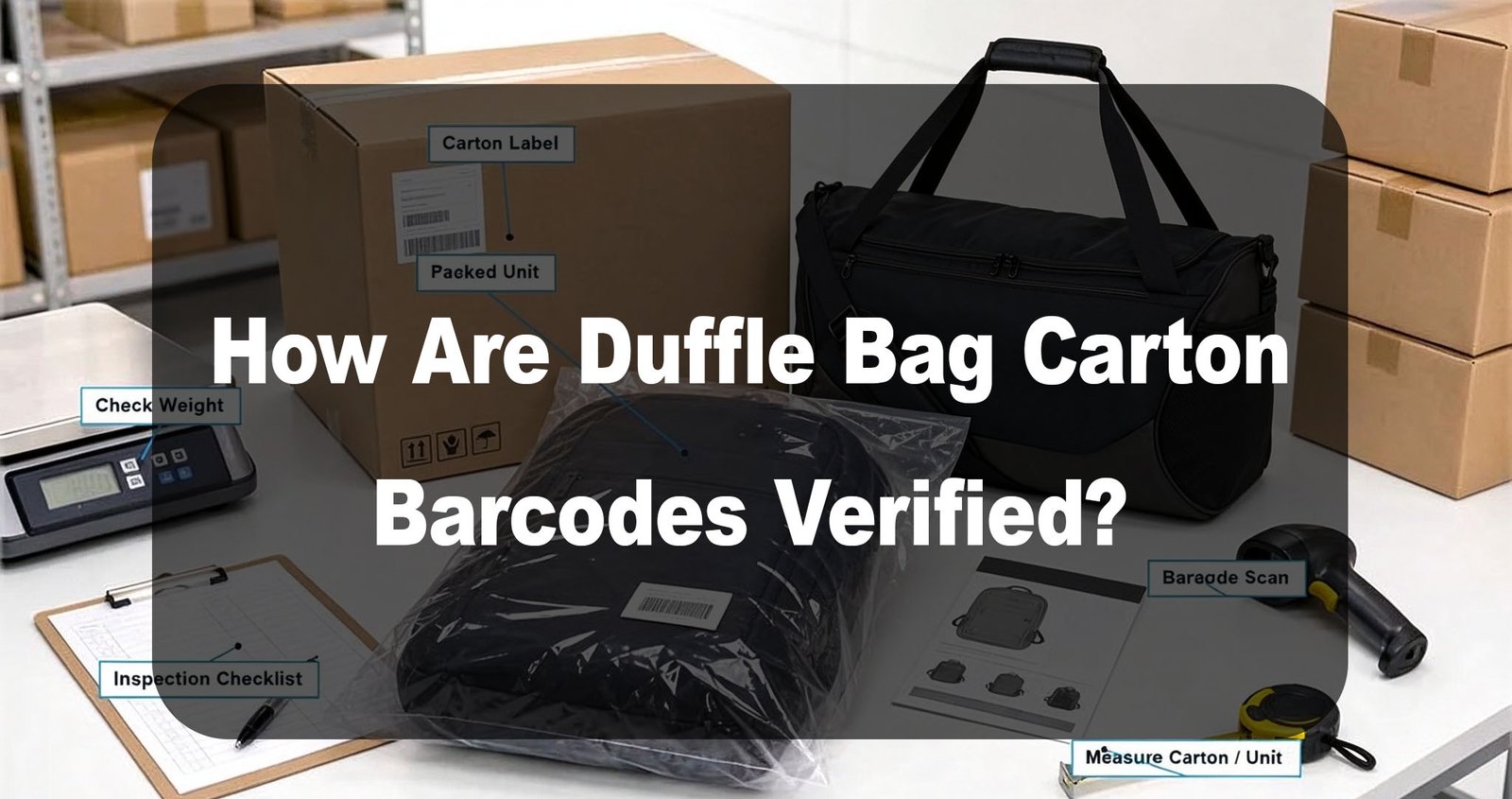
In the shipment checks I have participated in, I have compared scanned carton codes against customer-approved codes. I keep that firsthand experience separate from broader recommendations. Below, I explain which instructions I would ask buyers to agree with their manufacturer before shipment.
Which Barcode Rules Does the Receiving Warehouse Require for Duffle Bag Carton Barcodes?
I would not treat “the warehouse needs a barcode” as a complete packaging instruction. That leaves too many questions unanswered. If the buyer, manufacturer, and receiving location interpret the instruction differently, even a readable label may require clarification when the shipment arrives.
I recommend obtaining the receiving location’s current written requirements before label approval. Those instructions should identify the required code, label information, placement expectations, and acceptance evidence, where applicable. I would also ask the buyer to clarify whether acceptance requires a scan-and-match check, additional receiving-rule checks, or formal print-quality verification.

I start with the destination, not a generic label template
I would first establish which receiving location will handle the shipment. A brand’s own warehouse, a retailer-designated distribution center, and a third-party logistics provider may issue different instructions.2 I would not assume that a label approved for one destination is automatically suitable for another.
For duffle bag carton barcodes, I recommend that the buyer provide a controlled reference package rather than several disconnected email attachments.
| Information I would request | Why I would request it |
|---|---|
| Receiving location and relevant contact | I need to know whose instructions govern the shipment. |
| Current routing or labeling instructions | I want the applicable version, not an old template. |
| Approved label artwork and code data | I need a clear reference for printing and comparison. |
| Required label position and quantity | I want placement expectations defined before packing. |
| Acceptance method and evidence | I need to distinguish a scan check from broader verification. |
I separate the requirement from the evidence
If a buyer requests “barcode compliance,” I would ask what that phrase means for the order. A photograph may show label placement, but it does not demonstrate that the encoded value matches the approved code. A scanner output may establish decoded data, but it does not establish every aspect of the label’s print quality.
I would also check the source and revision of any technical standard or receiver-specific threshold before including it in an inspection instruction. I do not treat a remembered retailer rule as a universal requirement.
My goal is a written acceptance scope that both parties can understand. I want the manufacturer to know what to check, and I want the buyer to know what the resulting evidence actually supports.
How Are Product Codes and Logistics IDs Kept Separate on Duffle Bag Carton Barcodes?
I find that “barcode number” can be an ambiguous phrase in a purchase order. A buyer may mean a product identifier, while a packaging contact may understand it as a carton or shipment identifier. That ambiguity can produce a readable label carrying the wrong type of information.
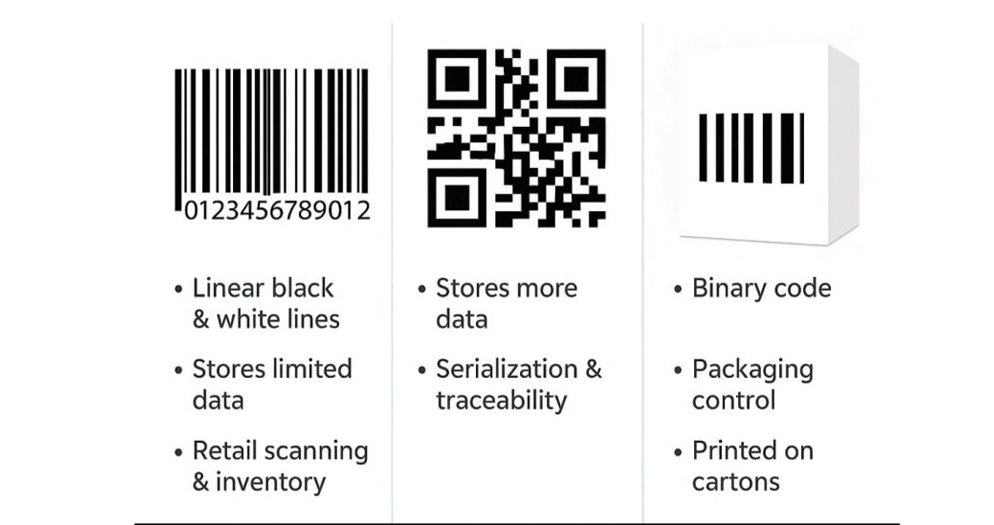
I recommend identifying each code by its purpose, approved source, and assigned packaging level. A product identifier and a logistics identifier should not be treated as interchangeable.3 I would ask the buyer to confirm which identifier belongs on each label and whether it identifies a product type or an individual logistics unit.
I ask what the identifier represents
Before comparing duffle bag carton barcodes, I want to understand what the reference value identifies. The same bag design can appear in different packaging arrangements, and the receiving system may distinguish those arrangements differently.
I would ask questions such as:
- Does this code identify a product or a particular carton?
- Can multiple cartons legitimately carry the same value?
- Does the receiving system expect a separate identifier for each logistics unit?
- Who assigns the code and approves its use?
- Does the customer’s system require a link between this identifier and another record?
I would not infer the answers from the label’s appearance. Two labels can look similar while serving different purposes.
I do not assume that every barcode contains product details
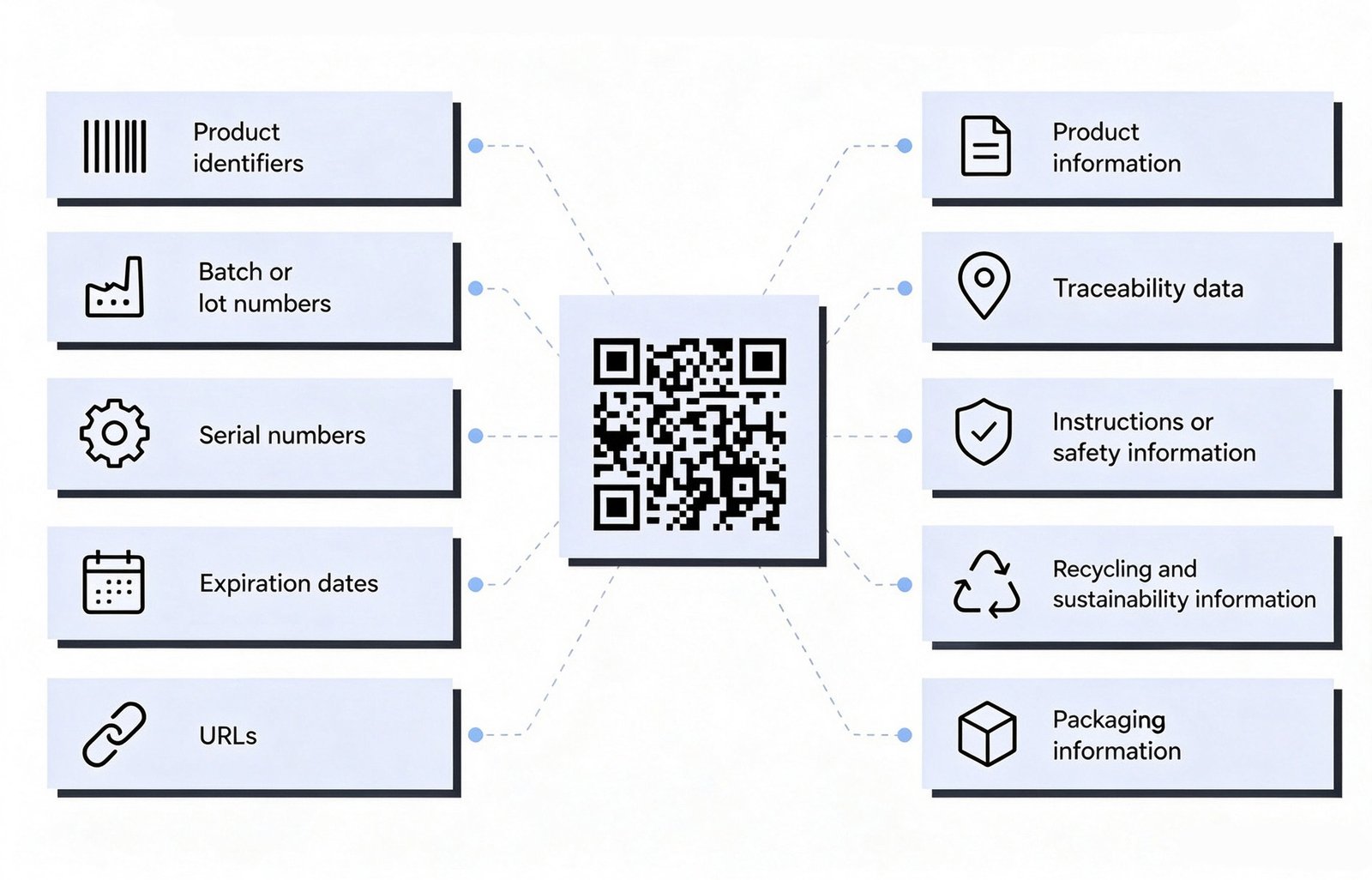
A carton barcode does not necessarily encode the duffle bag’s style, color, quantity, and purchase order directly. It may instead identify a record that contains those details in a customer’s system.4
That distinction affects how I describe a successful comparison. If a scanned value matches an approved identifier, I can describe that value match. I cannot conclude that the code itself contains every shipment detail.
For illustration, I might receive a reference described as “product code” and another described as “carton ID.” I would ask the buyer to map both references to their intended fields before artwork approval. I would not choose between them based on which one looks more familiar.
This step also helps prevent inappropriate reuse. I would confirm whether repeated values are permitted before treating duplicate labels as either acceptable or incorrect.
How Should Label Data Match the Packing Records for Duffle Bag Carton Barcodes?
I see two separate risks when label data and packing records are discussed together. The first is an incorrect printed identifier. The second is a mismatch between the label assignment and the packed goods. A scan-and-match check alone does not resolve both risks.
I recommend agreeing on the relationship between the approved barcode data, label artwork, packing list, and carton assignment record. I would define code matching and carton-content matching as separate checks. The buyer should specify which records govern each check and who is responsible for confirming the relationship.
I establish one approved reference for comparison
My confirmed firsthand practice is narrow: I have compared the scanner’s decoded output with the customer-approved code. For that comparison to mean anything, I need an identifiable approved reference.
I would avoid using an unapproved draft, an unexplained screenshot, or whichever spreadsheet happens to be easiest to find. Instead, I recommend recording the reference file name, revision or approval date, and relevant order information.
I would also ask how the comparison should handle data presentation. For example, spreadsheet formatting can change how long numeric strings or leading zeros appear.5 I would preserve the approved identifier as data rather than assume that a visually similar display is equivalent.
I keep three relationships distinct
| Relationship | What I would seek to establish | What it does not establish by itself |
|---|---|---|
| Scanned value versus approved code | The decoded value matches the reference. | The carton contains the correct goods. |
| Label information versus packing records | The label assignment agrees with the approved records. | The physical packing followed those records. |
| Physical contents versus carton assignment | The contents match the assigned style, color, and quantity. | The barcode meets formal print-quality requirements. |
I recommend agreeing on the second and third checks with the supplier when they are needed. I am not presenting them as procedures I have personally confirmed performing.
For duffle bag carton barcodes, this separation is especially useful when an order includes multiple colors, sizes, or pack quantities. A correct identifier can still be assigned to the wrong carton.6 Conversely, correctly packed goods can carry an incorrect label.
I would therefore ask the buyer to define both the data source and the carton assignment method before shipment. That gives each acceptance statement a clear meaning without overstating what a scanner can establish.
What Can a Scan Check Confirm About Duffle Bag Carton Barcodes Before Shipment?
I have encountered the assumption that “if it scans, it passes.” I do not use that as an acceptance rule. A successful read is useful evidence, but it answers only part of the question. Without comparison to an approved reference, an incorrect code can still appear to pass.
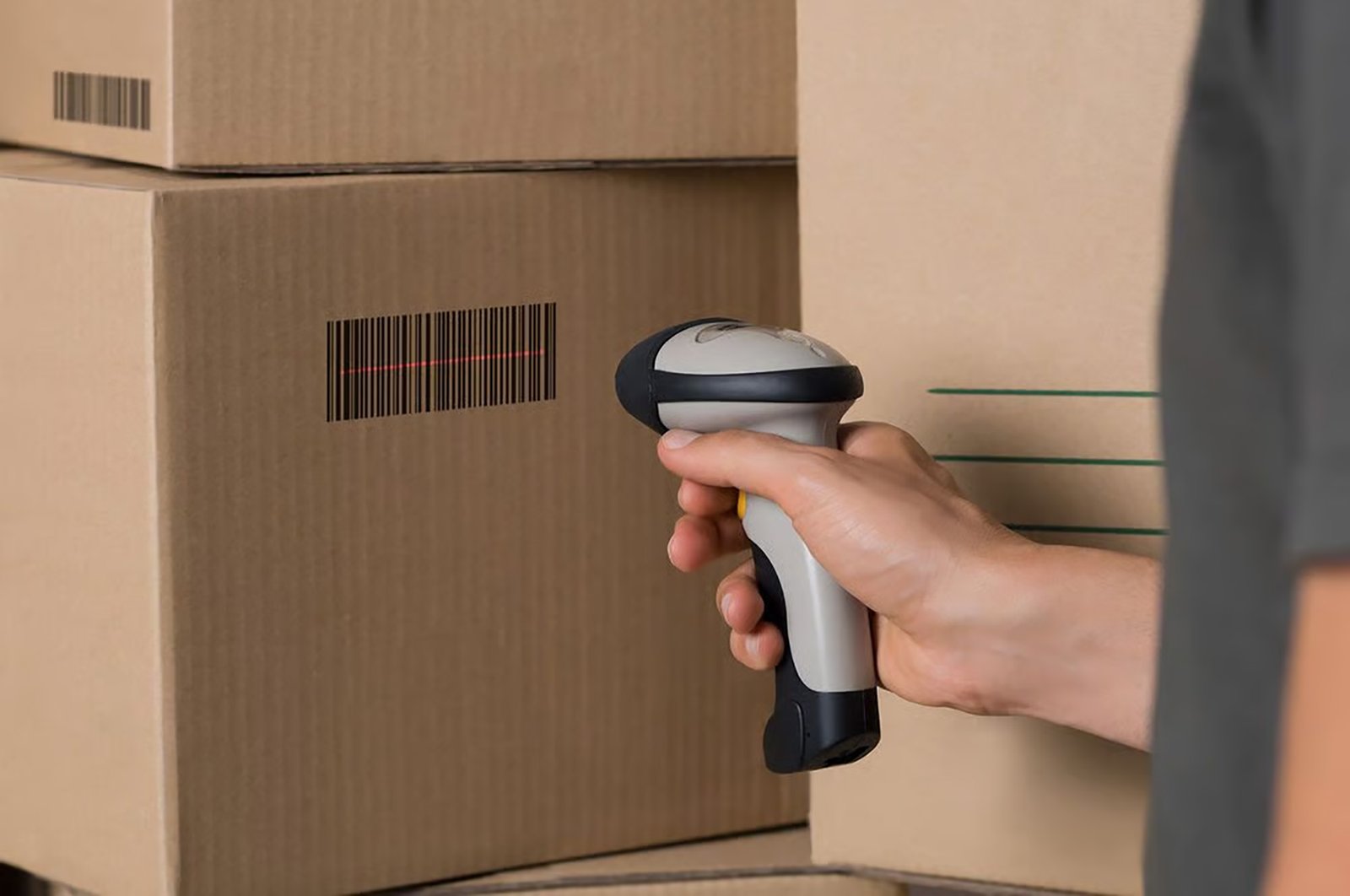
A scan check can confirm that a reader decoded a barcode under the conditions used.7 When I compare that output with the customer-approved code, I can also establish a data match. I would not describe either result as formal barcode grading, proof of correct contents, or guaranteed warehouse acceptance.
I describe the result in bounded language
In the shipment checks I have participated in, the important action was not simply hearing a scanner beep. I compared the decoded value with the customer-approved reference.
I would describe that result as:
“The scanned value matched the customer-approved code for the label checked.”
I would avoid broader wording such as “fully compliant” unless the applicable requirements had been defined and the necessary additional evaluation had actually been completed.
This distinction protects both sides. A buyer receives a precise statement, and a manufacturer does not imply a level of verification that the check did not provide.
I distinguish three levels of evaluation
- Readability: I ask whether the reader successfully decoded the symbol under the check conditions.
- Data correctness: I ask whether the decoded value matches the approved reference.
- Additional acceptance requirements: I ask whether the buyer requires separate evaluation of print quality, placement, receiving-system compatibility, or other specified conditions.
Formal print-quality verification is a separate technical activity.8 If the destination requires it, I recommend having a qualified provider or appropriately equipped specialist evaluate the labels against the confirmed applicable requirements.
I agree on coverage rather than invent it
I would not assume that one successful scan represents every carton in a shipment.9 I would ask the buyer and supplier to agree on inspection coverage, selection, timing, and evidence before work begins.
For duffle bag carton barcodes, those decisions should reflect the order and receiving requirements. I do not prescribe a universal sampling rate or claim a particular inspection coverage here. I recommend documenting what was checked so the result cannot be mistaken for a broader guarantee.
How Are Reprinted Labels and Exceptions Controlled?
I would not consider an approved label file sufficient protection against every later labeling mistake. A reprint can introduce an outdated version, an incorrect assignment, or an unintended duplicate.10 If the original and replacement remain available together, the risk can continue after the correction appears complete.
I recommend defining who may authorize a reprint, which approved data must be used, and how the replacement will be checked. I would also agree on how obsolete labels are removed from use and how unresolved exceptions are identified before the affected shipment is released.

I would make the replacement traceable
I present the following as recommended controls, not as a claim about a documented CoraggioBag reprint procedure.
When a label needs replacement, I would want enough information to explain what changed and which carton assignment is affected. A short exception record can be useful if it clearly identifies the issue and the approved resolution.
| Exception information I would request | Purpose |
|---|---|
| Affected order or carton assignment | I can identify the scope of the issue. |
| Reason for replacement | I can distinguish damage from a data correction. |
| Approved reference and revision | I can confirm which data should be used. |
| Authorization for the change | I can identify who approved the replacement. |
| Replacement-check result | I can see what was checked after reprinting. |
| Disposition of obsolete labels | I can reduce the chance of accidental reuse. |
I would check the replacement, not just the original
An earlier approval does not establish that a later print carries the same data.11 I would recommend repeating the agreed scan-and-match check on replacement labels according to the buyer-approved inspection scope.
I would also confirm whether the identifier may be reused. A replacement for a damaged product-code label and a replacement involving a uniquely assigned logistics identifier can require different handling.12 The governing customer instructions should determine the process.
For duffle bag carton barcodes with unresolved discrepancies, I would recommend holding the affected cartons from release until the responsible parties agree on the disposition. I would not quietly substitute a different identifier or assume that the warehouse can resolve the issue later.
Finally, I would define what closes the exception. “Label reprinted” describes an action. “Replacement checked against the approved reference, with the affected assignment resolved” describes a more useful acceptance outcome.
Frequently Asked Questions
Does a successful scan mean the carton barcode is correct?
I treat a successful scan as evidence that a reader decoded the symbol under the conditions used. I still compare the decoded value with the customer-approved reference. Even a matching value does not independently prove correct carton contents or fulfillment of every receiving requirement.
What should I send the manufacturer before label printing?
I recommend sending the approved code data, label artwork, relevant receiving instructions, and an identifiable approval version. I would also specify which reference governs if files conflict. Before printing, I would agree on the required check, inspection coverage, and evidence expected before shipment.
Does a carton barcode always include style, color, and quantity?
I do not assume that it does. Some identifiers link to information held in a separate system rather than encoding all product details directly. I would ask the buyer to explain what the code represents and how it connects to the approved packing records.
Is a scan-and-match check the same as formal barcode verification?
I keep those activities separate. A scan-and-match check establishes readability under the check conditions and agreement with an approved value. If formal print-quality verification is required, I recommend confirming the applicable criteria and arranging evaluation by an appropriately equipped, qualified provider.
Can CoraggioBag discuss barcode instructions for bulk duffle bag orders?
At CoraggioBag, I can discuss barcode instructions as part of a B2B custom bag packaging inquiry. I would ask buyers to share their approved references and receiving requirements so we can clarify the requested scope. Any specialized verification or additional acceptance work should be confirmed before order approval.
Conclusion
I verify duffle bag carton barcodes by separating readability from correctness and comparing the decoded value with the customer-approved reference. I keep carton-content matching, receiving-rule checks, and formal print-quality evaluation separate because each needs its own acceptance scope. Clear instructions also matter when labels are replaced or exceptions remain unresolved. For your next bulk duffle bag order, contact CoraggioBag with your approved barcode data, packing requirements, and receiving instructions so we can discuss the packaging and pre-shipment checks your project needs.
"Deep learning framework for barcode localization and ... - PMC", https://pmc.ncbi.nlm.nih.gov/articles/PMC12770597/. Barcode decoding establishes the data represented by a readable symbol; determining whether those data are correct for the intended application requires comparison with the applicable reference. Evidence role: general_support; source type: institution. Supports: Successful decoding and correctness of the encoded identifier are separate properties.. Scope note: This distinction does not establish the frequency of incorrect labels in duffle bag shipments. ↩
"GS1 Logistic Label Guideline", https://www.gs1.org/standards/gs1-logistic-label-guideline/current-standard. Logistics-label guidance distinguishes standardized identification elements from requirements agreed between trading partners, providing a basis for checking the intended receiver's instructions. Evidence role: general_support; source type: institution. Supports: Standardized logistics labeling can coexist with trading-partner-specific requirements.. Scope note: General labeling guidance does not establish the requirements of any particular warehouse. ↩
"Global Trade Item Number (GTIN)", https://www.gs1.org/standards/id-keys/gtin. In the GS1 identification system, a Global Trade Item Number identifies a trade item, whereas a Serial Shipping Container Code identifies an individual logistics unit. Evidence role: definition; source type: institution. Supports: GS1 distinguishes identification of trade items from identification of individual logistics units.. Scope note: These definitions apply to GS1 identifiers and do not establish which identifier the customer requires. ↩
"Serial Shipping Container Code (SSCC)", https://www.gs1.org/standards/id-keys/sscc. A logistics-unit identifier can serve as a key linking the physical unit to separately stored or electronically exchanged information, rather than encoding every associated attribute in the barcode. Evidence role: mechanism; source type: institution. Supports: An encoded identification key can link a physical logistics unit to information communicated or stored separately.. Scope note: The actual encoded fields depend on the symbology and application; some barcode formats also carry additional attributes. ↩
"Scientific notation and significant figures", https://www.monash.edu/student-academic-success/mathematics/computation-and-magnitude/scientific-notation-and-significant-figures. Spreadsheet guidance notes that numeric interpretation can suppress leading zeros or display long identifiers in scientific notation, while numeric precision limits can also alter sufficiently long values. Evidence role: mechanism; source type: education. Supports: Treating identifiers as spreadsheet numbers can remove leading zeros, change their display, or lose precision.. Scope note: Display changes and changes to stored values are distinct; the outcome depends on the software and import settings. ↩
"GS1", https://en.wikipedia.org/wiki/GS1. Traceability frameworks require relationships between identified objects and their contents to be recorded, distinguishing the validity of an identifier from the accuracy of its physical assignment. Evidence role: mechanism; source type: institution. Supports: Traceability depends on maintaining accurate associations between identifiers, logistics units, and their contents.. Scope note: This framework explains the distinction but does not demonstrate a labeling error in any shipment discussed here. ↩
"GS1 DataMatrix Guideline", https://www.gs1.org/docs/barcodes/GS1_DataMatrix_Guideline.pdf. Barcode reading performance depends on characteristics of the symbol and reading setup; an observed successful decode therefore establishes readability for that observation rather than for all receiving conditions. Evidence role: general_support; source type: institution. Supports: Barcode reading performance can depend on the reader, symbol, and scanning conditions.. Scope note: A single observation does not quantify reliability across other readers, environments, or labels. ↩
"GS1 2D Barcode Verification Process Implementation ...", https://www.gs1.org/docs/barcodes/2D_Barcode_Verification_Process_Implementation_Guideline.pdf. Barcode print-quality standards specify measurement and grading procedures for symbol-quality parameters, making formal verification distinct from simply obtaining and comparing a decoded value. Evidence role: definition; source type: institution. Supports: Formal barcode print-quality verification evaluates standardized symbol-quality parameters beyond successful decoding.. Scope note: The applicable standard depends on the symbol type, and print-quality grading alone does not establish correct contents or satisfaction of every receiving rule. ↩
"Single Sample Acceptance Plan", https://www.itl.nist.gov/div898/software/dataplot/refman1/auxillar/singsamp.htm. Acceptance-sampling methods evaluate lots through specified sampling and decision rules with associated risks; a successful check of one item is not proof that all items conform. Evidence role: general_support; source type: government. Supports: Inference from inspected items to an entire lot depends on a defined sampling plan and entails uncertainty.. Scope note: General sampling principles do not prescribe an appropriate inspection plan for this shipment. ↩
"Quality System Regulation Labeling Requirements", https://www.fda.gov/medical-devices/device-labeling/quality-system-regulation-labeling-requirements. Regulated manufacturing labeling controls address obsolete-label destruction, controlled issuance, and reconciliation, illustrating recognized risks from uncontrolled label inventories and replacement activities. Evidence role: general_support; source type: government. Supports: Labeling-control systems address obsolete labels, issuance, reconciliation, and label mix-ups.. Scope note: Pharmaceutical labeling controls provide contextual support for these failure modes, not requirements applicable to duffle bag cartons or direct evidence of their occurrence. ↩
"21 CFR 211.125 -- Labeling issuance.", https://www.ecfr.gov/current/title-21/chapter-I/subchapter-C/part-211/subpart-G/section-211.125. Manufacturing labeling controls distinguish approved master specifications from examination of labeling issued for use, supporting the separation between design approval and conformity of subsequent output. Evidence role: general_support; source type: government. Supports: Quality-control frameworks distinguish approved labeling specifications from checks of issued or printed labeling.. Scope note: The cited regulatory framework is contextual and does not impose its procedures on duffle bag manufacturing. ↩
"GS1 Logistic Label Guideline", https://www.gs1.org/standards/gs1-logistic-label-guideline/current-standard. GS1 distinguishes trade-item identification from unique logistics-unit identification and specifies assignment and reuse rules for SSCCs, making the identity represented by a replacement label relevant to its handling. Evidence role: general_support; source type: institution. Supports: Product identifiers and unique logistics-unit identifiers have different assignment and reuse constraints.. Scope note: Identifier rules alone do not define a complete reprinting procedure; applicable customer instructions and the status of the physical logistics unit remain relevant. ↩