I once rechecked a buckle that clicked without fully locking, and that experience changed how I inspect custom waist bags. A convincing click can make a sample feel ready for approval even when the closure has not fully engaged.1 I now base my sign-off on what the buckle does when it is installed on the bag.
I check buckles on custom waist bags as installed on the assembled sample. I confirm that the buckle halves fully engage, stay engaged during the agreed functional check, and release as intended. If I cannot confirm full engagement, I hold approval and ask the supplier to recheck. A click alone does not count as a pass.
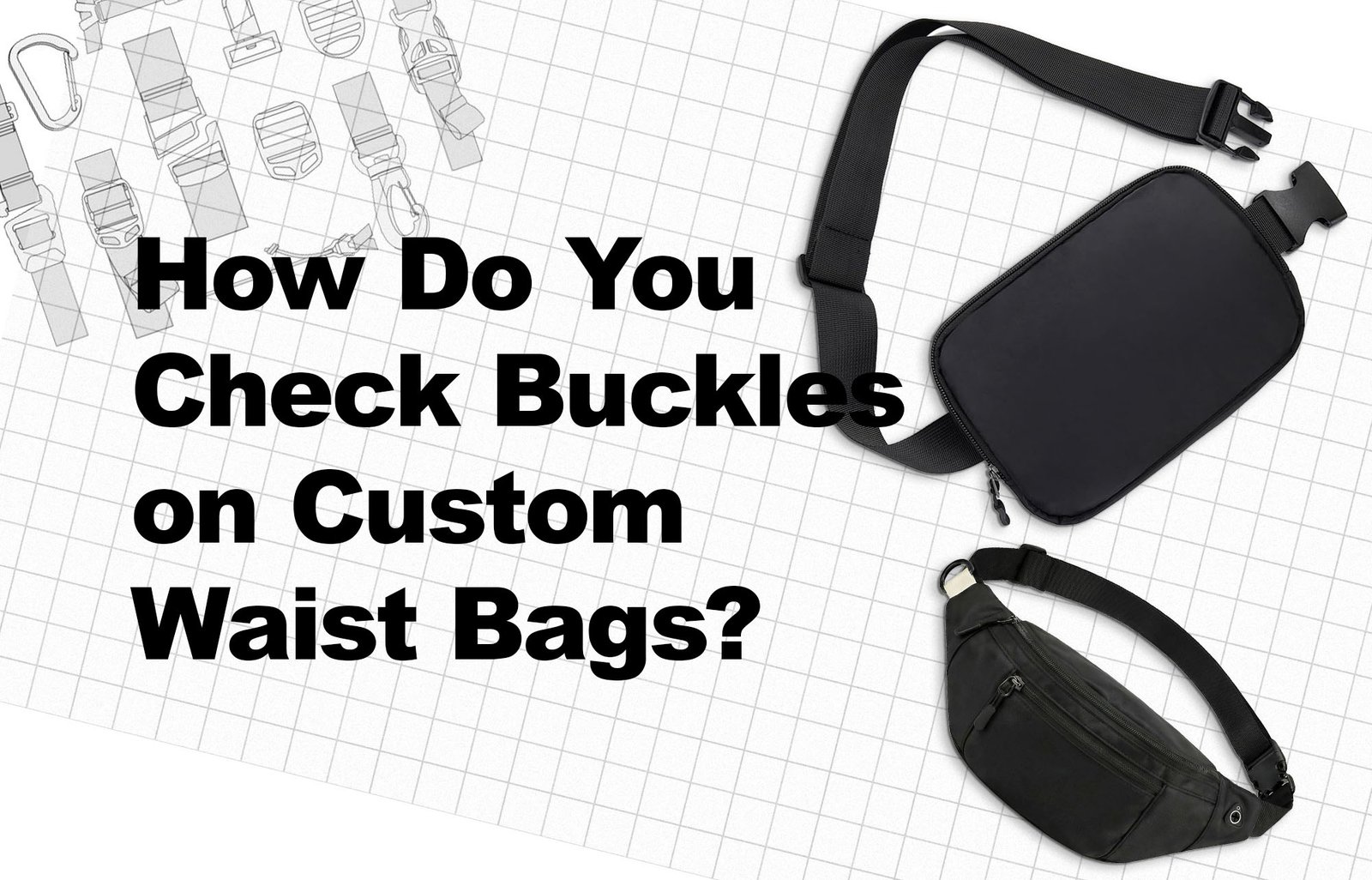
I start with the order references so I know which buckle and webbing I am supposed to see. Then I check how those parts work together on the bag. I keep those two decisions separate because a part can match the order and still function poorly after assembly.
Which Buckle and Webbing References Must Match the Order on Custom Waist Bags?
When I review a sample, I sometimes see an order that describes the hardware only as a “black side-release buckle.” That description may be enough for an early quote, but it leaves too much room for interpretation at sign-off. I want references that distinguish the approved parts from similar-looking alternatives.
I match both buckle halves, the adjuster if the design uses one, and the webbing against the current specification and approved reference sample. I check the part codes, finish, nominal webbing width, and any agreed thickness or construction details.2 I ask the supplier to resolve discrepancies before I sign off on the assembled bag.

I check the revision before I check the parts
I start with the current bill of materials, the latest drawing or tech pack, and the labeled reference sample.3 If the drawing and sample show different buckles, I do not assume one takes priority. I ask the buyer and supplier to confirm which reference governs and record that decision before judging the sample.
For custom waist bags with several colorways, I also check whether the hardware specification varies by SKU. A buyer may approve the same buckle body across the range but specify a different finish for one colorway. A reference photo is useful for showing the expected appearance, but a photo alone may not distinguish two buckle families.
| Reference | What I match | What I record if it differs |
|---|---|---|
| Buckle specification | Buckle family, mating halves, and specified color or finish | The observed part code or marking and the affected sample ID |
| Webbing specification | Nominal width, material, weave, color, and any specified thickness | The observed material or dimension and the relevant tolerance, if one is defined |
| Assembly drawing | Buckle orientation, threading path, and the position of any keeper or separate adjuster | A photo of the installed assembly with the difference noted |
| Approved reference sample | The agreed appearance and configuration for the correct style and revision | The reference sample ID and the detail that does not match |
I treat a nominal width as an identifier, not as a complete fit specification. For example, a buckle and webbing can both be listed at 25 mm without confirming how the selected webbing will feed through the adjuster or hold its setting. The weave and thickness still matter to the assembled check.4 I also ask for written approval of any proposed substitution, even if the alternative looks identical or comes from the same supplier.
How Can Inspectors Detect Mismatched Buckle Halves on Custom Waist Bags?
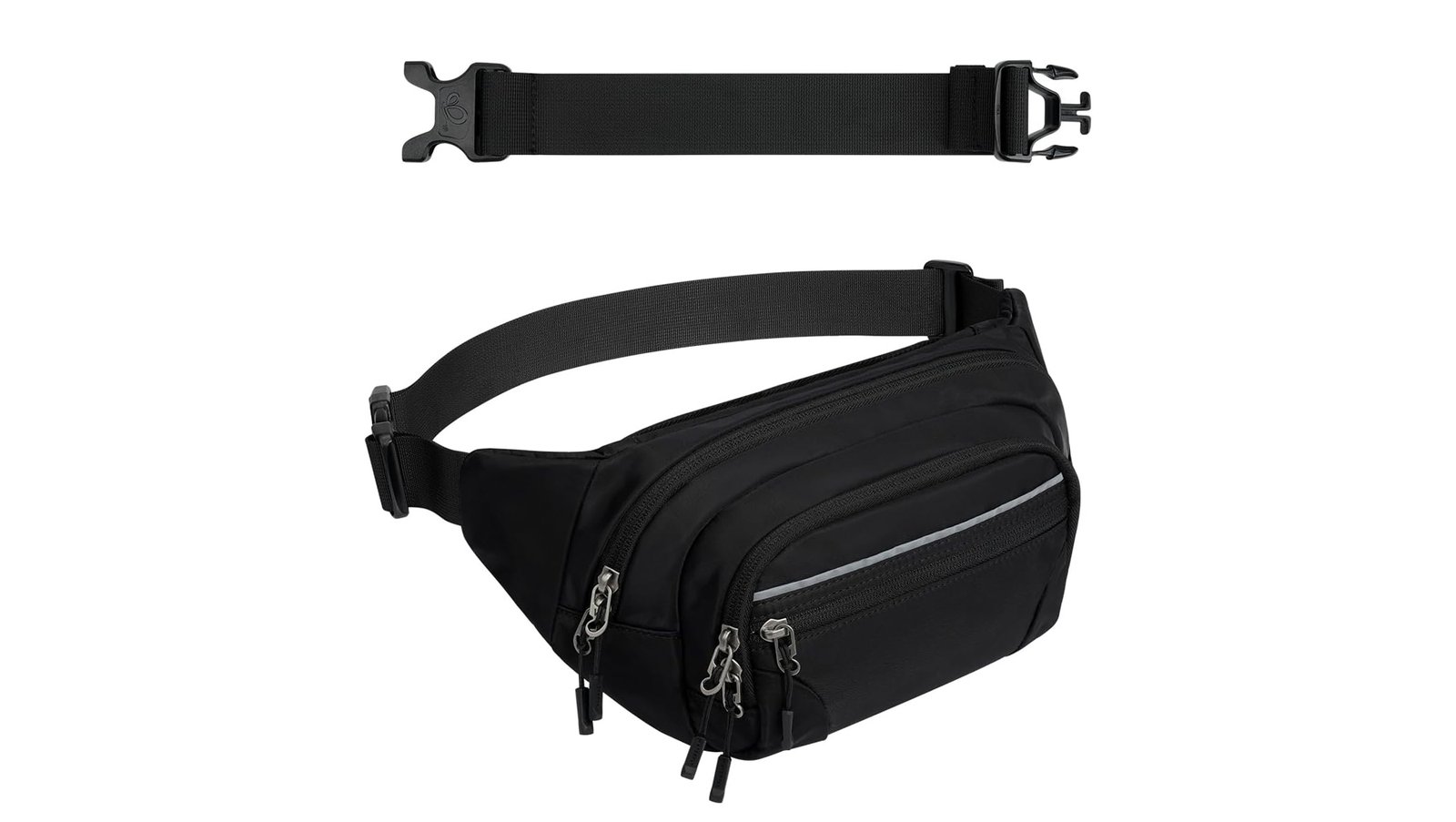
I pay close attention when two buckle halves look right from the outside but do not mate as expected. Similar width, profile, and color can make a mixed pair hard to spot. I check the identity of both halves first, then assess whether they engage correctly on the bag.
I compare both installed halves with the approved mating pair and check available part markings or packaging references. Then I close the buckle on the assembled waist bag and verify engagement and release against the agreed criteria. If the pair cannot be identified or full engagement is uncertain, I hold the sample for review.
I use markings to identify parts, not to prove engagement
I look for molded identifiers where they are available and ask the supplier what they mean. A molded number may identify a tool cavity rather than a part model.5 If the halves carry no useful markings, I ask the supplier to link them to the hardware packaging, receiving records, or another traceable reference. I do not treat a visual resemblance as proof that the halves belong together.
On custom waist bags, I check the closure with both halves mounted in their intended orientation. I use the approved buckle reference or the supplier’s component instructions to establish what full engagement looks or feels like for that design. Where the latch is visible, I check that it has reached the expected position. Where the latch is enclosed, I rely on the agreed functional check rather than guessing from the housing seam or the sound.
I separate the observation from the diagnosis
I record what I can verify. For instance, “I could not confirm full engagement on sample A” is more useful than “the factory mixed the parts” when I do not yet know the cause. A supplier can investigate the component pairing, installed alignment, or another possible source of the issue without having to undo an unsupported conclusion.
I may compare loose parts with the approved hardware to help identify a discrepancy, but I do not use that comparison to approve the bag. Even a confirmed mating pair still has to close and release as intended in the installed configuration.6
What Checks Confirm Correct Webbing Threading and Adjustment on Custom Waist Bags?
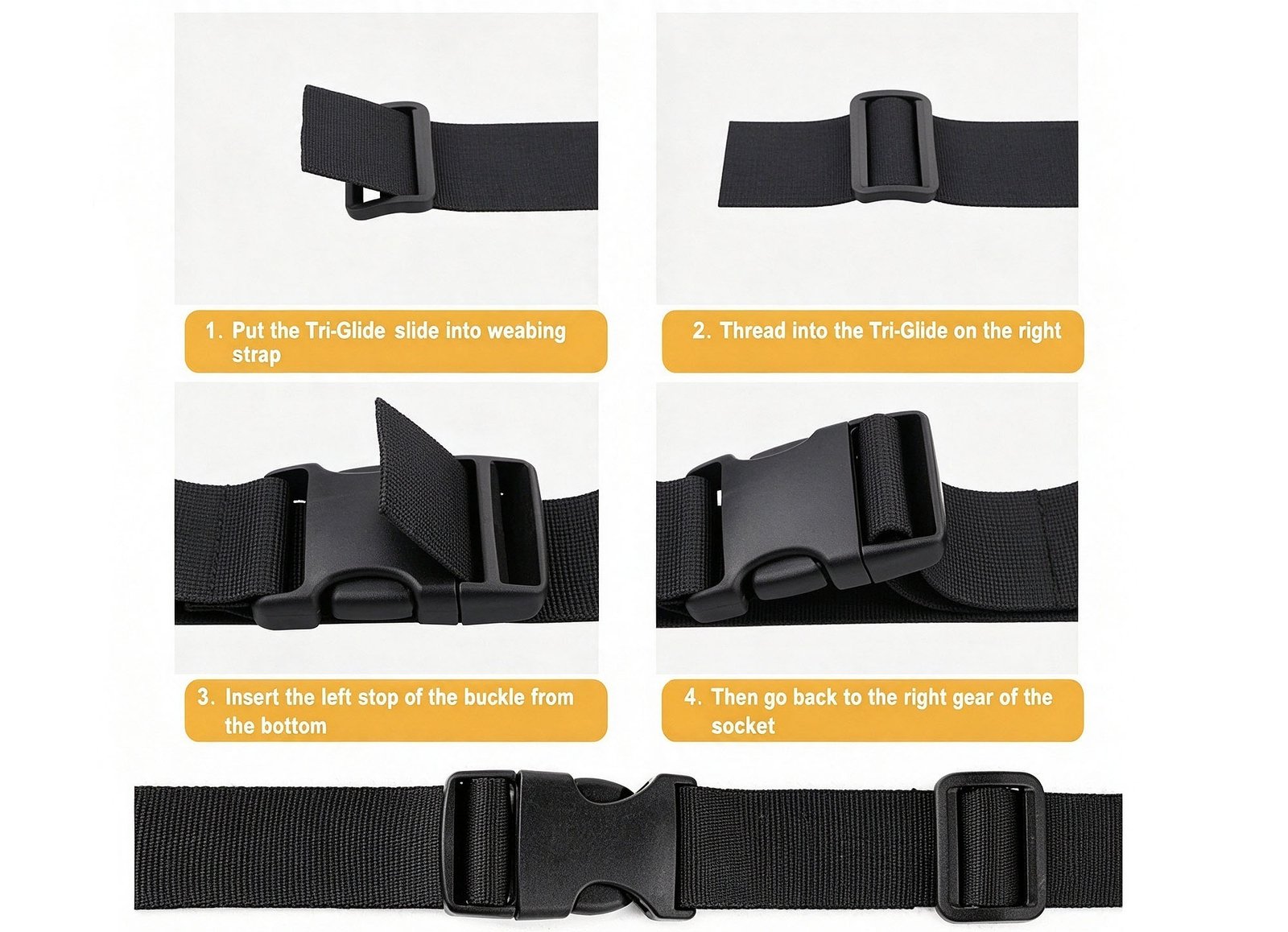
I can have the right buckle and the right strap in front of me and still find an assembly problem. A twist, an incorrect routing path, or a trapped strap tail can change how the adjuster feels.7 I check the complete strap assembly because the buyer receives a bag, not a set of loose components.
I trace the webbing through the installed buckle and any separate adjuster, then compare its path, orientation, and tail arrangement with the approved assembly reference. I run the strap through the agreed adjustment range and check that it moves as intended, reaches the specified settings, and holds its setting during the agreed functional check.
I trace the strap before I move it
I follow the webbing from its fixed attachment to its free end. I compare the route with a drawing or a clear reference photo that shows both faces of the buckle where needed. I check which side of the webbing faces out, whether the strap lies flat, and where the free end sits after it passes through the hardware.
I do not assume every buckle uses the same routing. One design may incorporate an adjuster into a buckle half, while another may use a separate slider. A photo that shows only the outside of the bag may miss the part of the route that matters. If the reference is unclear, I ask the supplier to clarify the path and add that view to the assembly instructions.
I check the usable range on the assembled bag
When the order specifies a minimum and maximum strap length or waist circumference, I check that the buyer and supplier measure it the same way. I ask them to define the closure state, the reference points, and any measurement tolerance.8 Otherwise, one person may quote the webbing length while another measures the closed loop around the bag.
I check the adjuster at the agreed settings. I look for binding, unintended twists, and a tail or keeper that interferes with adjustment in the approved configuration. I also distinguish intentional adjustment from unintended movement. Webbing should move when I operate the adjuster as intended. Whether it can move after I set it is a separate question that belongs in the agreed slippage check.
How Should Closure and Slippage Checks Be Agreed for Custom Waist Bags?
I avoid instructions like “make sure the buckle is strong” or “check that the strap does not slip.” Those phrases leave buyers and inspectors free to use different methods and reach different conclusions. I agree on what the check is meant to show before I use it to make a sign-off decision.
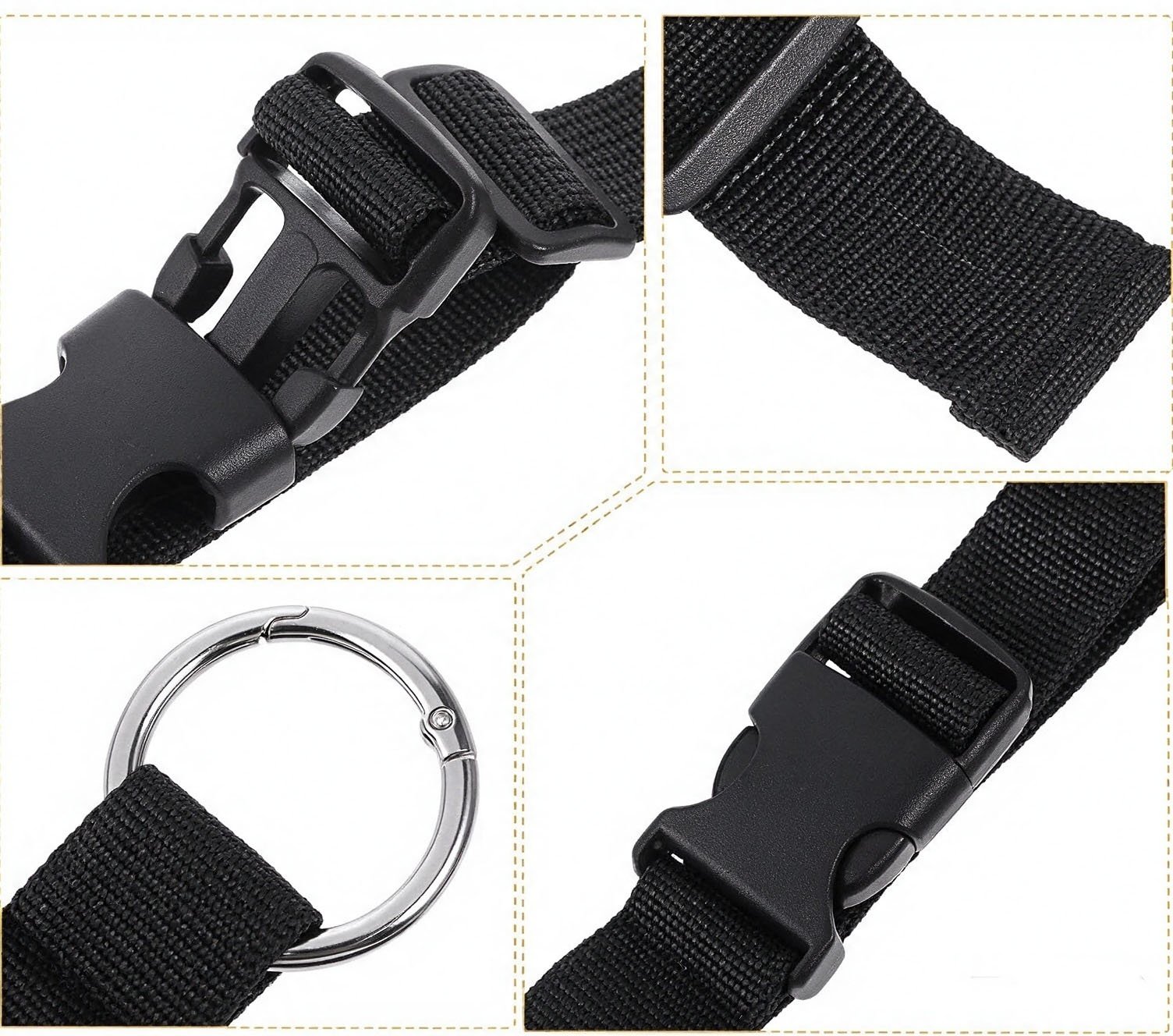
I agree with the supplier on the installed sample configuration, the engagement and release criteria, the strap position, and any slippage measurement method. I also document what counts as a failure and what the inspector should record. If the buyer needs evidence of load capacity or long-term durability, I request a separate, qualified evaluation.
I write the acceptance criteria before the check
For a sample approval, I want the inspection sheet to separate closure, release, adjustment, and slippage. If the sheet has only one box labeled “buckle OK,” I cannot tell which action the inspector checked or why the sample passed. I ask for enough detail that the buyer and factory can interpret the result the same way.
| Check | What I agree with the supplier | What a pass tells me |
|---|---|---|
| Closure | The installed configuration and how the inspector will confirm full engagement | The buckle engaged under the stated check conditions |
| Release | The intended release action and the conditions for operating it | The buckle released as intended during the check |
| Adjustment | The strap routing, measurement points, and settings to check | The strap adjusted as expected over the checked range |
| Slippage | The starting position, observation method, check conditions, and allowable movement, if specified | Any observed movement was within the agreed criteria for that check |
If the buyer wants a measured slippage limit, I agree on where the inspector will take the before-and-after readings and what conditions apply between them. I do not invent a universal limit or substitute a quick manual check for a specified test.9 I also ask the supplier to note when a criterion could not be assessed rather than marking it as a pass.
I keep sample approval separate from performance claims
I treat a functional check on custom waist bags as evidence about the samples and conditions checked. It does not establish a load rating, long-term durability, or regulatory compliance.10 When an application has a defined performance requirement, I ask a qualified testing provider or other appropriate professional to recommend an evaluation suited to the intended use. I also keep the approved sample as a bulk inspection reference, not as proof that later hardware lots or finished units will behave the same way.
What Records Are Needed When a Hardware Lot Is Rejected?
When I review a rejection, “bad buckles” is not enough information for me to act on. A vague note can leave the factory unsure which stock to hold or which finished bags might be affected. I want a record that connects the observed failure to the samples, hardware, and relevant production records.
I record the hardware lot or receiving reference, the affected order and style, the sample IDs, the check conditions, and the observed failure. I also document the quantities checked and affected where known, any containment action, and who must authorize disposition. I keep confirmed findings separate from suspected causes and unresolved quantities.

I document what failed and how far the issue could extend
I link the inspection report to the purchase order and the current specification revision. When lot information is available, I ask the supplier to trace the hardware from receipt through stock issue and into any work in progress or finished bags.11 If that link is incomplete, I note the gap. I do not assume the issue is confined to the units on the inspection table.
I ask the supplier to include these details in the rejection record:
- Identification: I want the purchase order, bag style or SKU, buckle part reference, and lot or receiving ID.
- Evidence: I want the sample IDs, photos of the installed hardware, the inspection method, and a plain description of what the inspector observed.
- Quantity and status: I want the number examined, the number that failed, and any stock or finished units placed on hold. I ask the supplier to label unknown quantities as unknown.
- Disposition: I want a written decision about return, replacement, or approved rework, along with the person responsible for follow-up.
I make the recheck part of the disposition
If a replacement buckle or rework is proposed, I ask the supplier to identify exactly what changed. A replacement shipment or a photo of new hardware does not tell me whether the corrected assembly works. I ask for a recheck on the affected assembled bags against the original approved criteria, or against a formally revised specification if the buyer approved a design change. I keep the recheck linked to the rejection record so the buyer can see what was held, what was corrected, and what evidence supported release.
Frequently Asked Questions
Is a buckle click enough to approve a custom waist bag sample?
I do not treat a click as proof of full engagement. I check the installed buckle against the agreed engagement and release criteria on the assembled bag. If those checks do not confirm full engagement, I hold approval and ask the supplier to recheck.
Can I approve a buckle from photos or a loose hardware sample?
I use photos and loose samples to review part identity, color, finish, and visible construction. I do not use them to confirm how the closure works once installed. I make the functional sign-off decision after checking an assembled sample with the intended webbing and routing.
Does approving one sample guarantee that bulk buckles will work the same way?
I use the approved sample as a reference, not a guarantee.12 Hardware lots, component substitutions, and assembly variation can affect later units. I ask the supplier to keep the approved references current and agree with the buyer on bulk inspection criteria, sampling, and lot traceability.
What should I send a supplier before ordering custom waist bags?
I send the bag design or reference sample, the intended use, the preferred buckle and webbing details, and the required adjustment range. I also share any market-specific or performance requirements early so the supplier can identify which checks it can perform and which need qualified third-party evaluation.
Conclusion
I approve buckles on custom waist bags only after I confirm full engagement on the assembled sample. I match the hardware references, check the webbing route and adjustment, and document the conditions of the functional check. That result does not establish load capacity, long-term durability, or bulk consistency. If I cannot confirm full engagement, I hold approval and ask the supplier to recheck. For a B2B custom order, send us your design, hardware references, and target quantity at CoraggioBag so we can agree on sample acceptance criteria before production.
"Updating Age Determination Guidelines for Toys", https://www.cpsc.gov/s3fs-public/Age-Determination-Guidelines-Relating-Consumer-Product-to-Characteristics-Skills-Play-Behavior-Intersts-to-Children-January-2020.pdf. The documented incident illustrates that a buckle can produce an audible click without fully latching; it does not establish that the same failure occurs in the waist-bag buckle discussed here. Evidence role: case_reference; source type: government. Supports: A documented instance of audible feedback without complete mechanical engagement in a buckle.. Scope note: A case involving another buckle design establishes a possibility, not its frequency or applicability to this product. ↩
"11.104 Use of brand name or equal purchase descriptions.", https://www.acquisition.gov/far/11.104. Procurement guidance distinguishes item identifiers from the physical and functional characteristics used to evaluate conformity; it provides a general rationale for documenting both, not a mandatory specification checklist for waist bags. Evidence role: general_support; source type: government. Supports: Procurement guidance uses identifiers and specified physical characteristics to assess whether an offered item meets a purchase description.. Scope note: Government procurement guidance provides a comparison framework rather than requirements for this private order. ↩
"NASA Systems Engineering Handbook", https://www.nasa.gov/wp-content/uploads/2018/09/nasa_systems_engineering_handbook_0.pdf. Configuration-management guidance describes an approved baseline as the reference against which a product configuration is verified and changes are controlled; it does not determine whether a drawing or a physical sample governs this order. Evidence role: general_support; source type: government. Supports: Configuration management ties verification to an identified, controlled set of product references.. Scope note: The governing reference depends on the buyer and supplier's agreement. ↩
"Frictional study of woven fabrics: The relationship between the ...", https://math.gmu.edu/~pseshaiy/publications/japs_2004.pdf. Experimental work on textile contact provides a basis for expecting webbing construction and thickness to affect sliding or holding behavior; it does not establish a fit or slippage limit for the 25 mm assembly in this article. Evidence role: mechanism; source type: paper. Supports: How textile construction and thickness can affect contact and sliding behavior in a strap-adjustment interface.. Scope note: Results from other textiles or contact geometries do not quantify performance of the selected buckle and webbing. ↩
"Technical Sessions", https://behrend.psu.edu/community-and-workforce-programs/plastics-training-academy/innovation-and-emerging-plastics-technologies-conference/technical-sessions. In multi-cavity injection molding, a mark on a finished part may identify the cavity in which it was formed rather than the part model; the mark's meaning on a particular buckle depends on the manufacturer's marking scheme. Evidence role: definition; source type: education. Supports: The purpose of cavity identifiers on parts produced in multi-cavity molds.. Scope note: General molding practice cannot decode any specific buckle marking. ↩
"NASA Systems Engineering Handbook", https://www.nasa.gov/wp-content/uploads/2018/09/nasa_systems_engineering_handbook_0.pdf. Systems verification guidance distinguishes component-level evidence from verification at the integrated assembly level, where interfaces are present; the guidance supports the distinction without prescribing a test for waist-bag buckles. Evidence role: general_support; source type: government. Supports: Verification of an integrated assembly addresses interfaces and functions not established by component identification alone.. Scope note: The source establishes a general verification principle, not product-specific acceptance criteria. ↩
"The mechanics of belt friction revisited - UC San Diego", http://maeresearch.ucsd.edu/~vlubarda/research/pdfpapers/IJMEE_14.pdf. Research on flexible-belt friction shows that contact geometry can change the force needed to move a belt over a surface, providing a mechanical explanation for routing-dependent adjustment resistance without measuring the listed defects in this buckle. Evidence role: mechanism; source type: paper. Supports: The effect of contact geometry and friction on the force needed to move a flexible strap through hardware.. Scope note: Idealized belt-friction experiments do not establish the effect of each twist, misroute, or trapped tail in a waist-bag adjuster. ↩
"Metrological Traceability: Frequently Asked Questions and NIST Policy", https://www.nist.gov/metrology/metrological-traceability. The International Vocabulary of Metrology defines the measurand as the quantity intended to be measured and explains that its specification can require the state of the object; this supports distinguishing free webbing length from closed-loop circumference without prescribing a tolerance for either. Evidence role: definition; source type: institution. Supports: The metrological principle that the quantity being measured must be defined with enough detail to distinguish it from other quantities.. Scope note: General metrology guidance does not specify waist-bag measurement endpoints or allowable deviations. ↩
"Seat Belt Assembly Tensile Test Procedure Development", https://rosap.ntl.bts.gov/view/dot/56176/dot_56176_DS1.pdf. The microslip procedure for seat-belt adjusters specifies test conditions and a method for measuring strap movement, illustrating why a manual observation is not equivalent to a prescribed test; its limits do not apply to ordinary waist bags. Evidence role: general_support; source type: institution. Supports: Standardized strap- or webbing-slippage tests define the test conditions and how movement is measured.. Scope note: The referenced procedure concerns seat-belt adjusters and is an example of method design, not an applicable waist-bag standard. ↩
"Conformity Assessment Basics", https://www.nist.gov/standardsgov/conformity-assessment-basics. Conformity-assessment guidance ties a finding to the requirements evaluated; an engagement-and-release check therefore supplies no evidence of load capacity, service life, or regulatory compliance unless those requirements are separately addressed. Evidence role: general_support; source type: government. Supports: Conformity evidence addresses specified requirements rather than properties outside the scope of the assessment.. Scope note: This principle does not identify which performance standards or regulations apply to a particular waist bag. ↩
"FSMA Final Rule on Requirements for Additional Traceability Records", https://www.fda.gov/food/food-safety-modernization-act-fsma/fsma-final-rule-requirements-additional-traceability-records-certain-foods. Traceability standards describe linking identified input lots to production outputs so that potentially affected stock can be located; the scope of that identification depends on the completeness and granularity of the records. Evidence role: mechanism; source type: institution. Supports: Lot-level links between incoming components and production outputs allow affected inventory to be traced.. Scope note: A traceability framework does not demonstrate that the supplier maintained complete links for this lot. ↩
"6.2.2. What kinds of Lot Acceptance Sampling Plans (LASPs) are there?", https://www.itl.nist.gov/div898/handbook/pmc/section2/pmc22.htm. NIST's treatment of acceptance sampling shows that even a formal plan carries a risk of accepting a lot of unacceptable quality; approval of a reference sample outside such a plan does not establish conformity of later lots. Evidence role: general_support; source type: government. Supports: Acceptance sampling supports a decision about a defined lot with residual uncertainty and does not guarantee conformity of all units.. Scope note: Acceptance-sampling theory does not specify the inspection plan appropriate for this order. ↩