Defects in custom cosmetic bags can be difficult to review when the report contains only close-up photos. I have handled customer reports where the factory needed a full-bag view and the defect’s location before it could identify the issue. I recommend a connected visual record that makes each reported problem easy to locate.
I document defects in custom cosmetic bags with three connected views: the whole bag, a marked image showing the location, and a matching close-up. I pair those images with the order reference, item identification, inspection scope, and a plain description. This helps the supplier review the issue without assuming its cause or the appropriate remedy.
I find that a useful report answers the reviewer’s questions in a clear order: Which product is this? Where is the issue? What does it look like? The sections below explain how I would organize that evidence and keep later claim discussions separate from initial identification.
What Quality References Should Be Agreed Before Ordering Custom Cosmetic Bags?
I find it harder to explain a reported defect when the buyer and supplier are comparing the product against different references. A sample, an early drawing, and a revised specification may show different details. I recommend agreeing on the controlling documents before production begins.
I recommend identifying the approved sample, current specification, artwork version, and packaging requirements before ordering custom cosmetic bags.1 I would also record any agreed inspection criteria and the process for approving changes. These references help both parties describe a difference, but they do not automatically establish responsibility or a remedy.
I identify the reference that applies to the reported issue
I would not describe a bag as “different from the sample” without identifying which sample I mean. Development can involve several versions, especially when buyers adjust compartments, logo placement, lining, or packaging.
I recommend keeping a short reference register with the purchase order:
| Reference | Details I would record | Why I would include it |
|---|---|---|
| Approved physical sample | Sample identifier, approval date, and approval record | I can identify the physical comparison reference. |
| Product specification | File name, revision, and date | I can locate the relevant construction or material requirement. |
| Logo artwork | Approved file and placement reference | I can distinguish current artwork from earlier versions. |
| Packaging instructions | Packing method, labels, and carton markings | I can compare receiving conditions with agreed requirements. |
| Approved change | Description, date, and written approval | I can explain an intentional departure from an earlier reference. |
I treat this register as a practical communication tool, not a substitute for the purchase agreement.
I describe differences without inventing acceptance limits
I would avoid introducing a new tolerance after a shipment arrives. If the parties agreed on a measurement method or acceptance criterion, I would cite it. If they did not, I would describe the observed difference and ask how both sides should evaluate it.
For example, I might write, “The logo position appears different from the approved placement drawing; the attached image identifies the area for review.” I would not convert that observation into an unsupported numerical rejection rule.
For custom cosmetic bags, I also distinguish a visual reference from a functional requirement. A photograph may help compare appearance, while a reported opening or closure issue may require additional evidence.2 I would ask the supplier what demonstration it needs rather than assume one photograph proves the functional concern.
Which Photos and Batch Details Make a Defect Report Useful for Custom Cosmetic Bags?
In the reports I have personally handled, a close-up was sometimes not enough for the factory to identify the issue. I needed a full-bag view and location details before the review could move forward. That experience is why I put image context before image quantity.
I recommend photographing each reported issue in this order: whole bag, marked location, and matching close-up.3 I keep those images together under one issue identifier and add the order, item, available carton or lot references, and inspection counts. This gives the reviewer context without suggesting that one example represents the shipment.
I connect the three views
I use the following sequence because each image answers a different question:
- I photograph the whole bag. I show enough of the product for the reviewer to recognize its style and orientation.
- I mark the reported location. I add an arrow or circle to a copy of the contextual image so the reviewer can find the exact area.
- I photograph the matching detail. I capture the visible condition clearly, without losing the connection to the marked location.
I keep an unmarked original as well. An annotation can help locate an issue, but a thick circle or arrow can also cover the detail under review.
If the concern is inside the bag, I include an open-bag view that connects the interior area to the product. If scale matters, I include a suitable measuring reference and explain what I measured. I do not treat a ruler in a photograph as a complete measurement method by itself.4
I organize the report around the reviewer’s questions
I recommend one issue identifier for each distinct observation, with its related files stored together.
| Reviewer’s question | Information I would provide |
|---|---|
| Which order does this concern? | I include the purchase order and supplier order reference, if available. |
| Which product is involved? | I identify the style, color, size, and buyer SKU. |
| Where did the unit come from? | I record available carton, lot, or production labels.5 |
| What is visible? | I describe the condition in plain language without diagnosing its cause. |
| How much was inspected? | I state the number examined and the number showing the reported condition. |
| Which images belong together? | I use one issue ID across the overview, location image, and close-up. |
For example, I might name files Issue-01_Whole, Issue-01_Location, and Issue-01_Detail. I present this as a practical recommendation, not a claimed CoraggioBag procedure.
I also keep observed counts separate from shipment estimates. If staff examined only part of an order of custom cosmetic bags, I state that limit. I do not describe uninspected units as defective based on a few photographs.6
How Should Buyers Separate Product Defects from Transit Damage?
I would not assume that a visible problem originated in production simply because it was discovered at receiving. Packaging condition, handling history, and the timing of discovery may matter. I recommend documenting those facts separately so the initial report does not turn an observation into an unsupported cause claim.
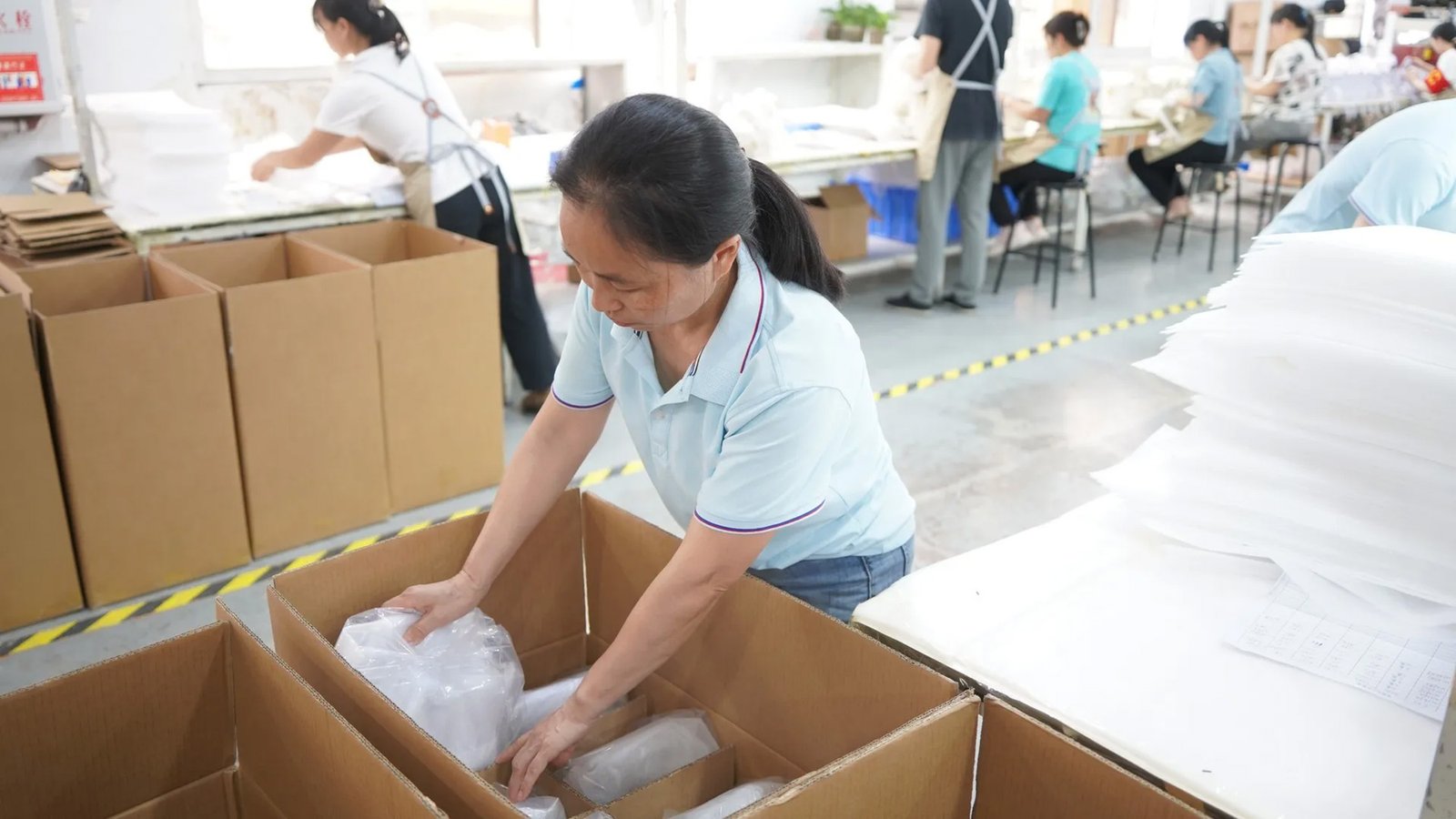
I separate the product-condition record from the packaging and receiving record. I photograph the bag, its packing arrangement, and any relevant carton condition, then record when and where the issue was found. These records support review, but I do not treat them alone as proof of manufacturing fault or transit responsibility.
I preserve the receiving context
When a reported issue might involve shipping or handling, I recommend capturing the available evidence before repacking changes the scene.7 I would photograph relevant outer-carton surfaces, shipping labels, inner packaging, and the position of the affected product.
I would also record:
- I note the delivery and unpacking dates, where known.
- I identify the carton associated with the photographed bag.
- I describe visible carton conditions without guessing their cause.
- I record whether the issue was noticed before or after unpacking.
- I identify any receiving notes or delivery exceptions already recorded.
I would not ask staff to recreate an unpacking scene. If packaging has already been discarded or products have been mixed, I state that limitation openly.
For custom cosmetic bags received across several cartons, I keep carton references attached to the corresponding observations. This may help reviewers compare patterns, but I do not interpret a pattern as a confirmed diagnosis.
I distinguish observations from explanations
I prefer language such as “The carton has a visible compression area” over “The carrier crushed the goods.” The first statement records something staff can photograph. The second assigns a cause that may require further evidence.8
I use the same distinction for the product. I can report a visible condition without claiming when or how it occurred.
| Record type | What I would document | What I would not conclude from it alone |
|---|---|---|
| Product photographs | I show the location and visible condition. | I do not establish the cause. |
| Packaging photographs | I show relevant carton and inner-pack condition. | I do not establish who was responsible. |
| Receiving notes | I record timing and handling information available to staff. | I do not prove the condition at factory dispatch. |
| Inspection counts | I state what staff actually examined. | I do not establish shipment-wide prevalence. |
I recommend checking the applicable purchase, freight, and insurance terms promptly because notification requirements may differ.9 Where the consequences are significant or disputed, I would involve the buyer’s logistics team, insurer, or a qualified claims adviser rather than rely on photographs alone.
What Should a Rework or Replacement Discussion Cover for Custom Cosmetic Bags?
I separate identifying an issue from negotiating an action. A clear photo record helps the factory understand the report, but it does not answer every question about feasibility, affected quantities, cost, or timing. I recommend discussing those points explicitly before anyone starts rework or arranges a return.
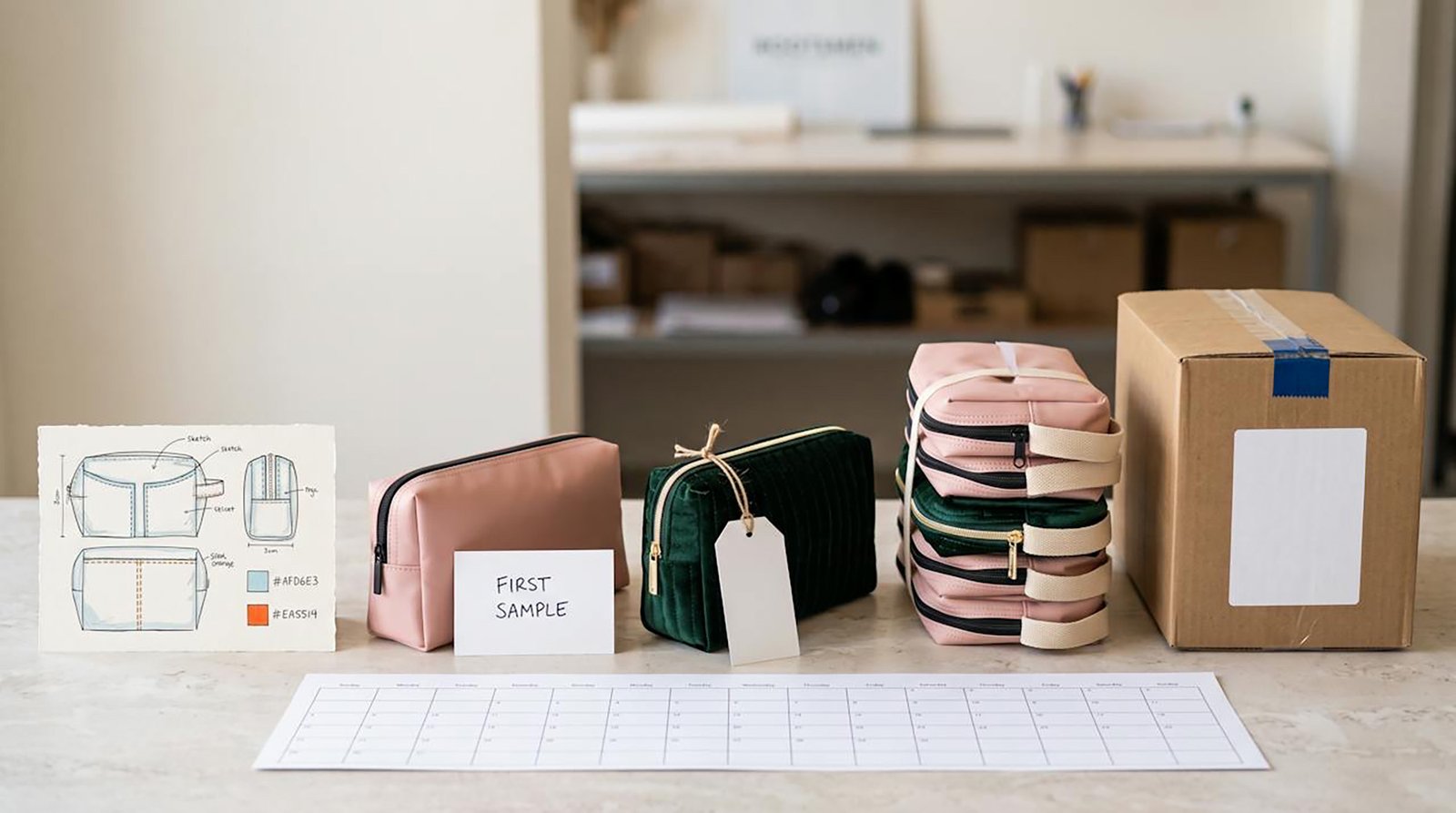
I would ask a rework or replacement discussion to define the affected units, proposed action, approval method, responsibilities, costs, and schedule. For custom cosmetic bags, I would also clarify packaging and inspection arrangements. I treat every proposed remedy as subject to written agreement, not as an automatic result of submitting complete documentation.
I define the scope before discussing execution
I would begin with the issue IDs and the quantities supported by the inspection record. If the proposed action extends beyond the inspected units, I would ask both parties to clarify the basis for that scope.
I recommend discussing the following points:
- I identify the units covered. I specify the style, color, issue reference, and agreed quantity.
- I describe the proposed action. I distinguish local rework, factory rework, replacement, or another negotiated arrangement.
- I identify who approves the result. I clarify whether approval requires photographs, a sample, or inspection.
- I record the timing. I separate proposed dates from confirmed commitments.
- I clarify costs and logistics. I include labor, materials, freight, duties, and packaging where relevant.
- I define verification. I record how the parties will check the agreed work.10
I would not assume that a change which looks simple in a photograph is suitable for every bag construction. Where a proposed repair could affect material integrity, appearance, or function, I recommend evaluation by qualified production or quality personnel.
I keep proposed solutions separate from approved actions
I would label an option as “proposed” until the responsible parties approve it. This prevents a discussion about possible rework from being mistaken for authorization to modify stock.
For replacement custom cosmetic bags, I would confirm the applicable specification and any approved changes. Otherwise, the parties could resolve the quantity question while leaving the original reference disagreement open.
I would also ask what should happen to the reported units. I do not recommend disposal, return, repair, or resale without the relevant authorization. I would retain representative items and packaging when appropriate for review, subject to practical storage limits and any applicable instructions.
My aim is a defined next step, not a promise of compensation. A complete report improves the basis for discussion; it does not guarantee that any particular remedy will be agreed.
Which Claim Handling Steps Need Written Confirmation?
I find that a claim can become confusing when messages mix receipt acknowledgments, evidence requests, and proposed solutions. Each message may mean something different. I recommend keeping a written status record so the buyer, receiving team, and supplier understand what has been confirmed and what remains open.
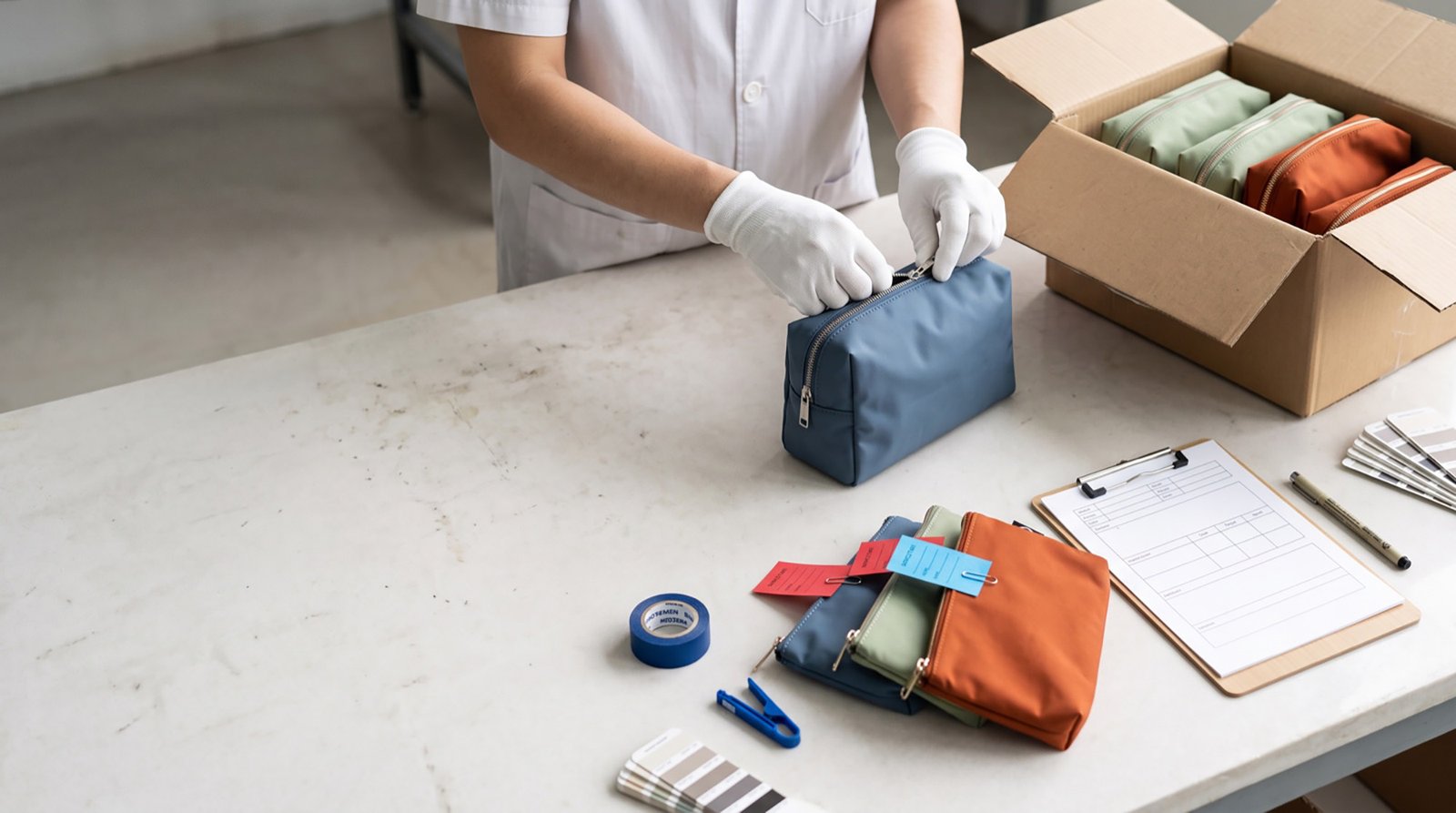
I recommend written confirmation of report receipt, missing evidence, inspection scope, review responsibilities, agreed actions, costs, timing, and closure criteria. I distinguish acknowledgment from acceptance of liability. I also keep revisions traceable so a later decision can be connected to the evidence and agreement that supported it.
I make the status of each step explicit
I would use a shared issue log or a clearly organized email thread. The format matters less than the ability to find the current position without reconstructing scattered messages.
| Step | Confirmation I would request |
|---|---|
| Report received | I ask the recipient to confirm the order and issue IDs received. |
| Evidence review | I ask which additional images, counts, or references are needed. |
| Review assignment | I identify the contact responsible for coordinating the response. |
| Proposed action | I record the option under discussion and any conditions. |
| Action approved | I confirm scope, authorization, responsibilities, and costs. |
| Work completed | I request the agreed completion evidence. |
| Issue closed | I confirm whether the agreed closure conditions have been met. |
I make one distinction especially clear: “We received your report” does not mean “We accept responsibility.”11 Likewise, an estimated review date is not necessarily a confirmed replacement shipment date.
I keep changes and unresolved points visible
If a later inspection changes the reported quantity, I update the record with the date and inspection scope. I do not silently replace the original number.12 If a clearer photograph changes the description, I retain the link between the earlier report and the revision.
I would also write down unresolved points. For example, the parties may agree that an issue needs review while still disagreeing about its cause or commercial consequences. I prefer an accurate open-item list to wording that suggests a broader agreement than actually exists.
For custom cosmetic bags, I recommend attaching the final agreed reference documents to any corrective-action approval. This reduces ambiguity about which product version the action covers.
I would close the communication record only according to the agreed process. Completion evidence, receipt of replacement goods, and acceptance of an outcome are different events, so I would not combine them into one assumed milestone.
Frequently Asked Questions
Can I send only close-up photos of a reported defect?
I would not rely on close-ups alone. In reports I have handled, the factory also needed a full-bag view and location details to identify the issue. I recommend sending the whole bag, a marked location image, and a matching close-up together under one issue reference.
How many bags should I inspect before reporting a problem?
I recommend reporting the observed issue promptly while stating exactly how many units staff examined. I would follow the agreed inspection plan rather than invent a sample size. If no plan exists, I would ask the buyer’s quality team and supplier to agree on the next inspection scope.
Does one defect photo prove that the whole shipment is defective?
I would not treat one photograph as shipment-wide evidence. It documents a reported condition on the photographed unit. I would include inspected and affected counts, explain how units were selected, and leave any broader conclusion to an agreed review supported by appropriate evidence.
Should I repair the bags before the supplier reviews the report?
I would normally preserve the reported condition and request written instructions before authorizing repairs. A repair may change evidence or introduce another variable. If an urgent action is necessary, I would document the original condition and seek agreement on scope, authorization, and costs first.
Does complete documentation guarantee a replacement or refund?
I do not treat documentation as a guarantee of either outcome. A clear record helps the supplier identify and review the issue. Any remedy still depends on the evidence, applicable terms, agreed requirements, and discussions between the parties.
Conclusion
I document defects in custom cosmetic bags by making the issue easy to locate: whole bag → marked location → matching close-up. I connect those images to the order, references, inspection scope, and a plain description. I keep observations separate from conclusions about cause, shipment-wide impact, or responsibility, and I confirm agreed next steps in writing. If your team is preparing a CoraggioBag order report, I invite you to contact us with the order reference and connected images so we can identify the reported issue and coordinate its review.
"6.5 Configuration Management", https://www.nasa.gov/reference/6-5-configuration-management/. Configuration-management guidance describes establishing approved baselines and tracking changes so that later evaluations can be tied to the applicable requirements; it does not prescribe a reference register for cosmetic bag orders. Evidence role: general_support; source type: government. Supports: Approved baselines and controlled revisions help establish which requirements apply to a product.. Scope note: General configuration-management practice does not establish which reference takes precedence under a particular purchase agreement. ↩
"NASA Systems Engineering Handbook", https://www.nasa.gov/wp-content/uploads/2018/09/nasa_systems_engineering_handbook_0.pdf. Engineering verification guidance distinguishes inspection of observable characteristics from demonstration or testing of operation; the distinction explains why a still image may not establish closure performance, but it does not specify a test for these bags. Evidence role: definition; source type: government. Supports: Inspection, demonstration, and testing are different verification methods suited to different requirements.. Scope note: The appropriate verification method depends on the bag construction and the agreed functional requirement. ↩
"burlington police department", https://bja.ojp.gov/sites/bja/files/media/document/burlingtonpd_vt_bwc_policy.pdf. Forensic photography guidance uses overview, intermediate, and close-up images to preserve the relationship between a detail and its surroundings; this supports the documentation principle, not the specific use of a marked image in supplier reports. Evidence role: general_support; source type: government. Supports: A sequence of overview, intermediate, and close-up images documents both location and detail.. Scope note: The guidance is drawn from a different documentation setting and does not measure whether this sequence improves cosmetic bag defect reviews. ↩
"Dimensional Review of Scales for Forensic Photography (2016)", https://nij.ojp.gov/library/publications/dimensional-review-scales-forensic-photography-2016. Measurement photography guidance places the scale in the same plane as the feature and controls camera angle to limit perspective distortion; a ruler visible elsewhere in the frame does not establish dimensional accuracy. Evidence role: mechanism; source type: government. Supports: Photographic measurements depend on imaging geometry and placement of the scale.. Scope note: These controls do not establish whether a photograph meets the accuracy required by a particular product specification. ↩
"GS1 Global Traceability Standard", https://www.gs1.org/standards/gs1-global-traceability-standard/current-standard. GS1 traceability guidance distinguishes batch or lot identifiers from logistic-unit identifiers and describes recording links between them; an observed label supports traceability only to the extent that corresponding records are available. Evidence role: definition; source type: institution. Supports: Lot and logistic-unit identifiers serve different traceability functions and can link records when their relationship is captured.. Scope note: A carton identifier alone does not identify a production lot unless the packing or shipment records link the two. ↩
"6.2.1. What is Acceptance Sampling?", https://www.itl.nist.gov/div898/handbook/pmc/section2/pmc21.htm. The NIST/SEMATECH statistical handbook describes lot acceptance sampling as a decision based on a randomly selected sample and distinguishes lot disposition from estimating lot quality; photographs of selected defects do not provide either sampling basis. Evidence role: general_support; source type: government. Supports: A lot-level conclusion requires an appropriate sampling design, and a lot acceptance decision is not the same as an estimate of defect prevalence.. Scope note: This guidance does not determine the sample size or decision rule for a specific order. ↩
"ROLE OF PACKING AND HANDLING IN CARGO SECURITY", https://www.ojp.gov/pdffiles1/Digitization/52172NCJRS.pdf. Cargo damage survey guidance treats the condition and arrangement of goods and packaging at receipt as evidence for reconstructing the receiving condition; those observations do not by themselves establish when the damage occurred. Evidence role: general_support; source type: institution. Supports: The original packaging configuration and the condition recorded at receipt are relevant to a cargo damage review.. Scope note: Preservation and inspection requirements may vary by shipment, carrier, and applicable contract. ↩
"Incident Investigation", https://www.osha.gov/sites/default/files/2018-11/fy14_sh-27638-sh4_Incident-Investigation.pptx. Incident-investigation guidance separates information gathering from causal analysis and uses multiple evidence sources to assess explanations; by analogy, a carton photograph records the visible condition without identifying the responsible party. Evidence role: general_support; source type: government. Supports: Causal findings are based on analysis of physical evidence alongside other information, not on visible damage alone.. Scope note: Incident-investigation guidance provides a method for evaluating evidence, not a rule for allocating commercial liability. ↩
"49 CFR 370.3 -- Filing of claims.", https://www.ecfr.gov/current/title-49/subtitle-B/chapter-III/subchapter-B/part-370/section-370.3. Article 39 of the United Nations Convention on Contracts for the International Sale of Goods, where applicable, requires notice specifying the nature of the lack of conformity within a reasonable time after discovery or when it ought to have been discovered; that rule does not establish the deadline for a carrier or insurance claim. Evidence role: definition; source type: institution. Supports: Sales-law notice rules can apply separately from carrier-claim procedures and insurance policy conditions.. Scope note: The Convention does not govern every sale, and separate carriage and insurance terms require independent review. ↩
"AS/EN/JISQ 9100:2016 EVALUATION GUIDANCE ...", https://iaqg.org/wp-content/uploads/2019/10/auditor_guidance-_9100_2016.pdf. ISO 9001's provisions on nonconforming outputs distinguish correction from verification of conformity after correction; the relevant inspection or test still depends on the requirements for the product. Evidence role: general_support; source type: institution. Supports: Verification after correction checks whether the corrected output conforms to the applicable requirements.. Scope note: A quality-management standard does not establish who approves rework or pays for it under a particular agreement. ↩
"49 CFR Part 370 -- Principles and Practices for the Investigation ...", https://www.ecfr.gov/current/title-49/subtitle-B/chapter-III/subchapter-B/part-370. U.S. freight-claim regulations at 49 CFR §§ 370.5 and 370.9 treat acknowledgment and disposition as separate procedural steps; this illustrates why receipt alone need not signify acceptance of liability. Evidence role: definition; source type: government. Supports: A claims procedure can require acknowledgment of receipt separately from a decision on the merits.. Scope note: These regulations govern covered freight claims, not ordinary supplier correspondence; the effect of a particular message depends on its wording and applicable law. ↩
"Annex 4", https://cdn.who.int/media/docs/default-source/medicines/norms-and-standards/guidelines/inspections/trs1033-annex4-guideline-on-data-integrity.pdf. WHO guidance on data and record management describes corrections that preserve the original entry and make changes traceable; this provides a record-integrity rationale for retaining both the initial and revised inspection counts. Evidence role: general_support; source type: institution. Supports: Preserving original entries and recording changes allows a reviewer to reconstruct how a record evolved.. Scope note: The guidance addresses regulated records and does not impose a particular audit trail or record format on cosmetic bag suppliers. ↩