Buyers often chase the cube that compresses the most. That sounds safe, but it often leads to zipper stress, seam failure, and returns after launch1.
Buyers should compare compression packing cubes by use case, structure, material, zipper strength, and bulk production stability. The best option is not the one with the highest compression, but the one that fits packing needs and holds up well in repeat orders.
I have handled many buyer questions on packing cubes, and I see the same pattern again and again. A buyer starts with one simple question about compression. Then the real issue appears. They do not only need a cube that saves space. They need a product that can be sold, packed, shipped, and used without too many complaints. That is why I do not compare compression cubes by one headline claim. I compare them by fit for the job, risk in bulk production, and long-term user experience.
What Makes Compression Packing Cubes Different from Standard Cubes?
Many buyers think compression cubes are just standard cubes with an extra zipper. That sounds simple, but the extra function changes stress points and product behavior.
Compression packing cubes differ from standard cubes because they add a second stage of closure that reduces volume after packing2. This design changes zipper load, seam tension, fabric behavior, and user experience3, so buyers must judge structure and durability together.
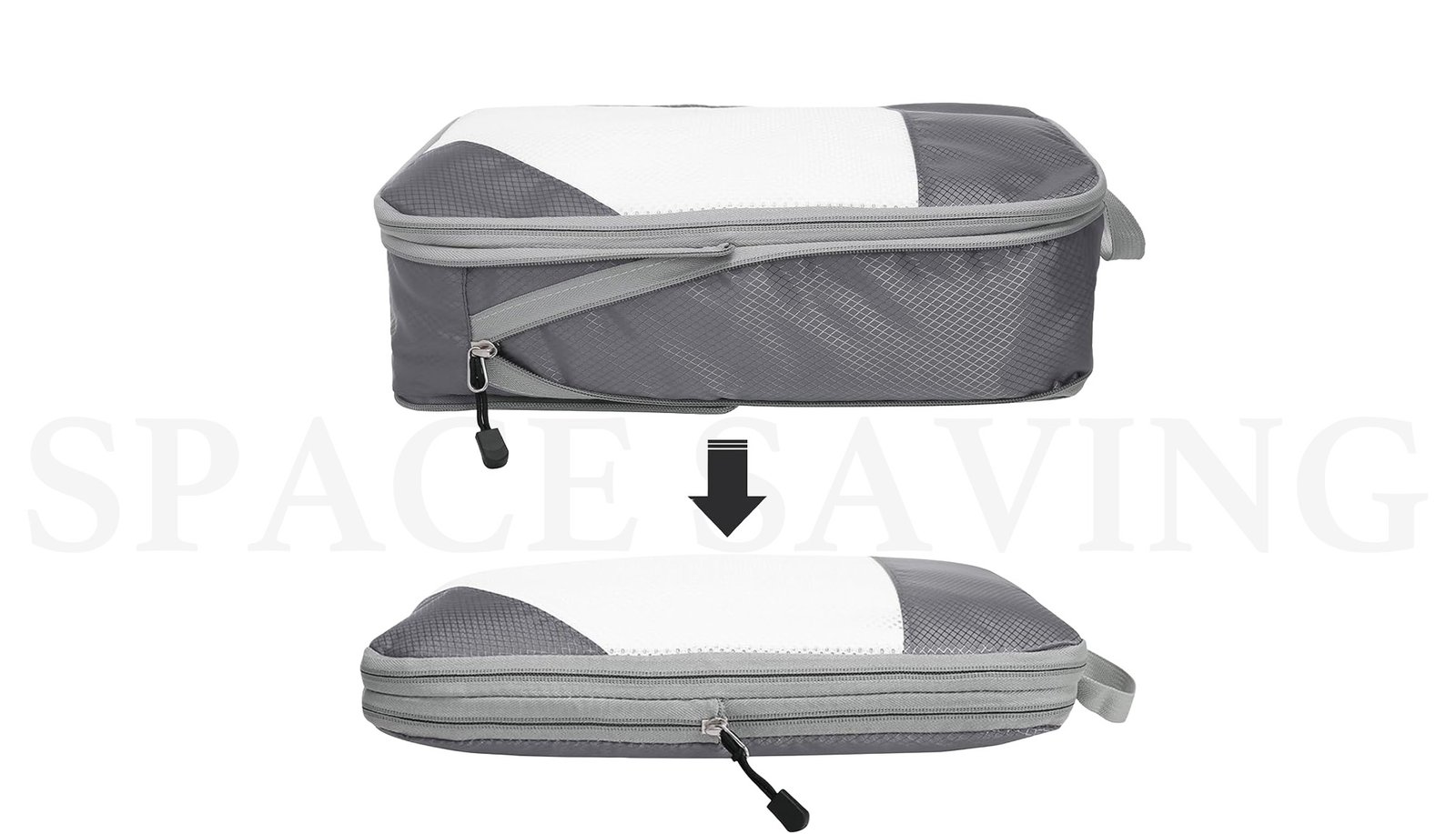
In buyer conversations, we often see a common comparison mistake. The buyer compares dimensions only. They ask for the same size as a normal cube, then ask for compression added on top. But compression changes the way the cube works. A standard cube mainly organizes. A compression cube must organize and pull bulk inward. That means the panels, seams, zipper path, and fabric stiffness all matter more.
I usually explain it in a simple way. A standard cube helps the traveler sort items. A compression cube also asks the product to resist pressure. That pressure does not disappear. It moves into the zipper, seam, and fabric. If one part is weak, the product may look fine in sample review but fail after repeated use.
Here is the way I compare them with buyers:
| Point | Standard Cube | Compression Cube | Buyer Risk |
|---|---|---|---|
| Main function | Organization | Organization + volume reduction | Wrong positioning if feature promise is unclear |
| Structure load | Lower | Higher | More stress on seams and zipper |
| User effort | Easy | Moderate | Poor experience if compression is too hard |
| Material demand | Flexible | Balanced flexibility and strength | Weak fabric may distort |
| Complaint risk | Lower | Higher if overbuilt or poorly built | Returns and bad reviews |
I have seen buyers choose an aggressive compression style because it looks more impressive in photos. Then later they worry about bulk quality consistency. That is a fair concern. In B2B sourcing, the better question is not “Can this compress more?” The better question is “Can this structure compress enough for the target user while staying reliable across production?” That shift saves a lot of trouble.
Which Zipper Details Matter Most for Compression?
Many compression cube problems do not start with fabric. They start with the zipper system, because that is where users apply force again and again.
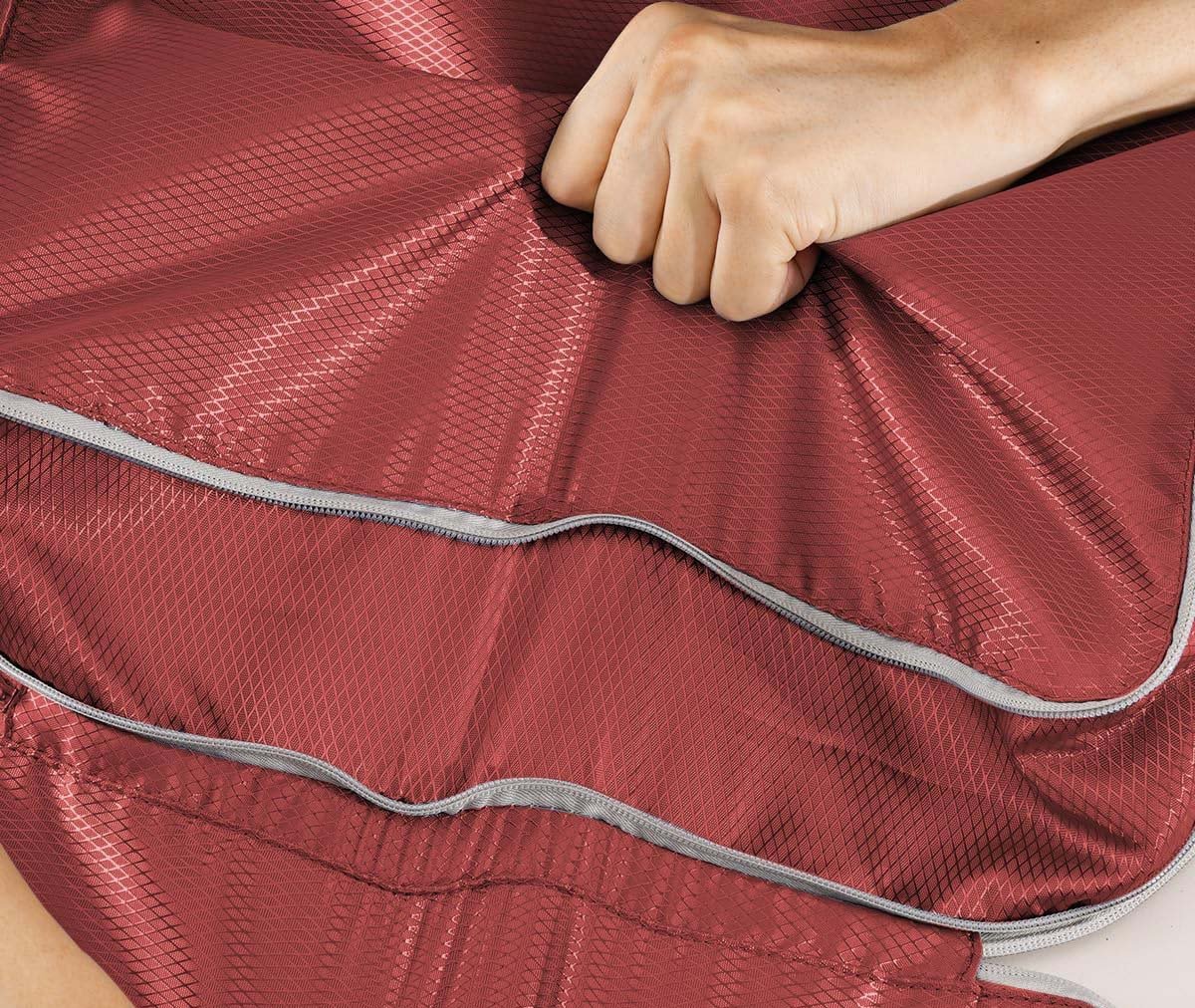
The most important zipper details are coil quality, tape strength, smooth slider movement, stitching support, and zipper path design4. Compression adds tension5, so buyers should judge not only closure, but how the zipper performs under repeated loaded use.
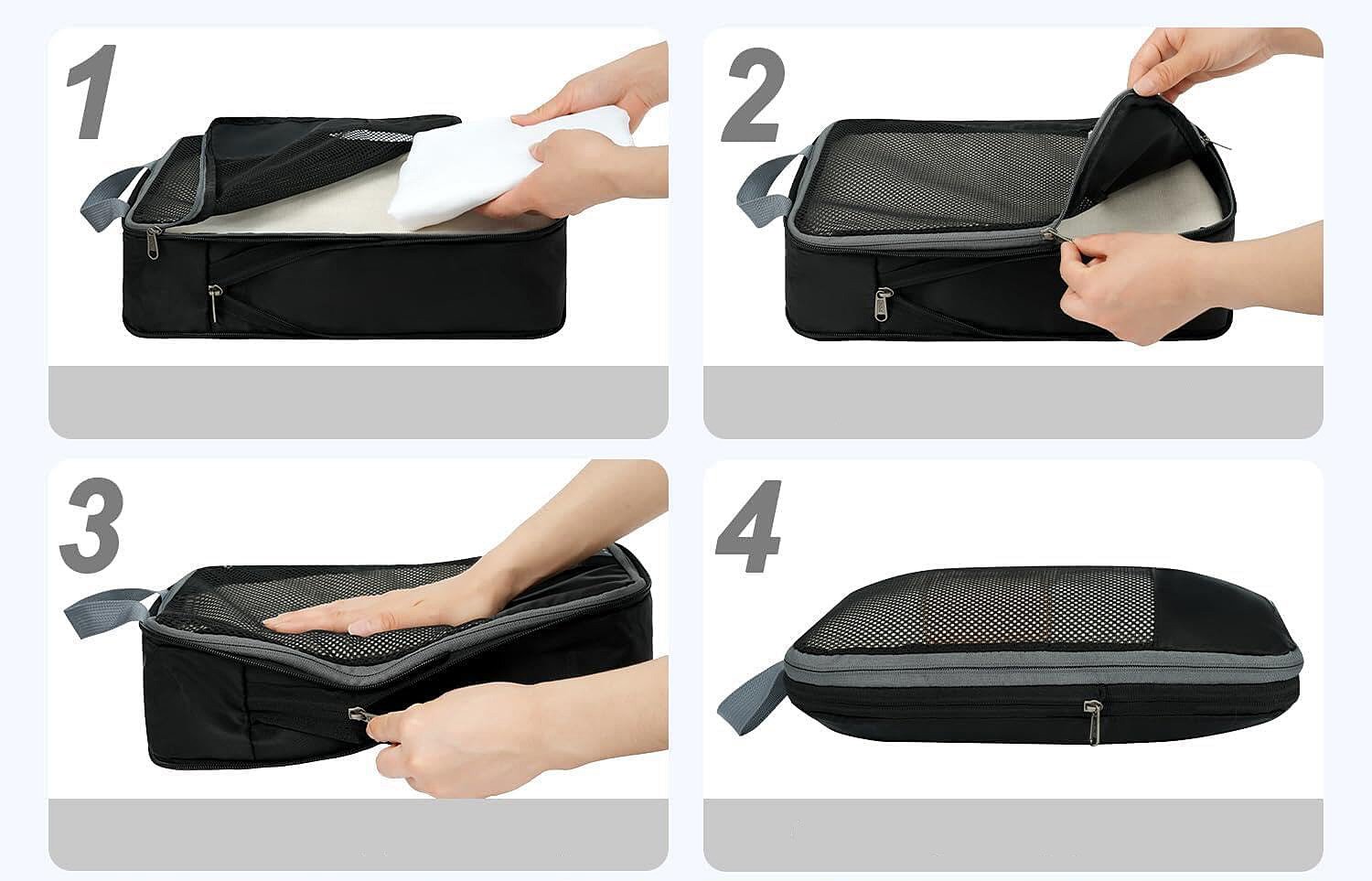
When a buyer asks me why one sample feels better than another, I often start with the zipper. On paper, both samples may use “good zippers.” In real use, the difference is often clear. A compression zipper is not just opening and closing an empty bag. It is closing against packed clothing that pushes back. If the zipper tape is weak, if the slider drags, or if the stitching line is unstable, the problem shows up fast.
I tell buyers to look at five things in one view, not one by one.
| Zipper Detail | Why It Matters | What I Watch For |
|---|---|---|
| Coil size/type | Affects smoothness and strength | Not too light for loaded use |
| Zipper tape | Carries pull force | Tape should feel stable, not thin and loose |
| Slider quality | Controls user effort | Smooth pull under load |
| Stitch support | Holds zipper to panel | Even stitching, no waving |
| Track layout | Affects compression ease | Clean path around corners |
A common mistake is choosing the strongest-looking zipper without checking the whole structure. A stiff zipper on a soft body can create a strange user feel. Another mistake is choosing a smooth zipper that works only when the cube is half full. I prefer to ask how the cube behaves when it is packed to the level real users will actually reach.
I also remind buyers that aggressive compression creates more force on corners and ends. Those spots deserve close review. In bulk orders, small weakness in those areas can become repeated complaints. So the zipper decision is never only about brand or size. It is about how the zipper, tape, seam, and panel work together under pressure.
How Many Sizes Should a Retail Set Include?
Buyers often focus on set count because it is easy to price and easy to market. But more pieces do not always mean better retail value6.
A retail compression packing cube set should include sizes based on real packing scenarios, not just a higher piece count7. The best set mix supports the target user’s clothing types, luggage size, and price point without creating dead inventory.
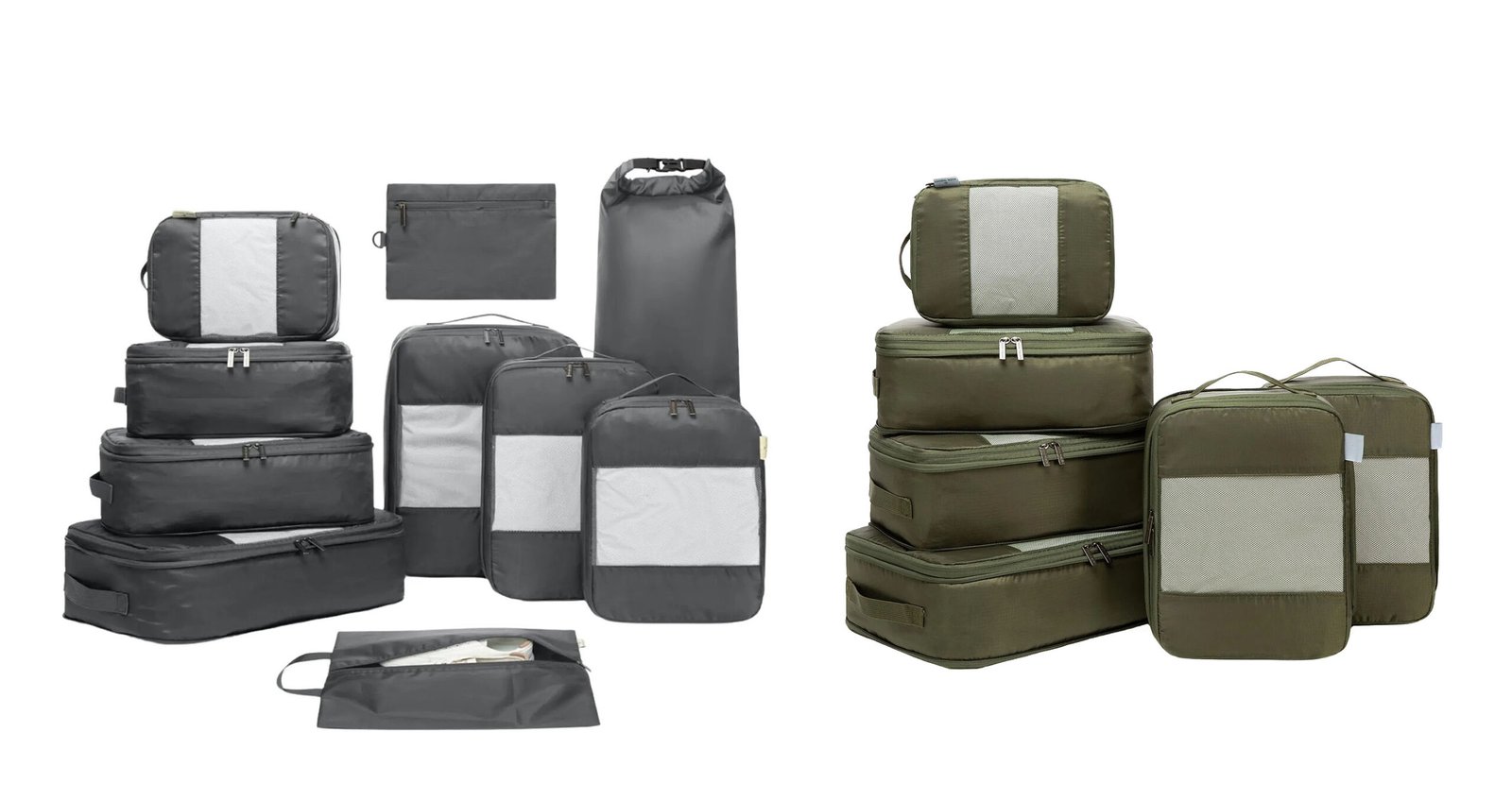
I have seen buyers ask for six-piece or eight-piece sets just because competing products do the same. I understand the logic. More pieces can look like better value. But in practice, set design should start with how people pack. If the size mix is wrong, the set becomes harder to sell, not easier.
For example, a traveler may need one medium cube for tops, one larger cube for pants, and one small cube for undergarments or small items. If the set adds extra tiny cubes that are rarely used, those pieces increase cost and packaging complexity without adding much value. In B2B programs, that matters a lot. Every extra SKU element affects sourcing, carton planning, and retail story.
I usually ask buyers these simple questions first:
- What type of traveler is the set for?
- What luggage size is the set meant to fit?
- Is the set for value retail, gift, or premium private label?
- Do users want full trip packing or just partial organization?
Then I map the size mix.
| Target Use | Better Set Logic | Risk if Wrong |
|---|---|---|
| Budget retail | 3 to 4 practical sizes | Too many pieces hurt price target |
| Gift set | Balanced visual variety | Looks good but may pack poorly |
| Family travel | Medium + large focus | Small-only mix feels weak |
| Carry-on travel | Slim and medium sizes | Large cubes may not fit well |
A common comparison mistake is treating set quantity as product strength. I do not see it that way. I see set design as use-case design. A four-piece set with the right sizes can be much stronger than a six-piece set built for shelf appeal only. The smart buyer compares not “how many,” but “how useful each size is” and “how easy this set is to reorder at stable quality.”
When Should Buyers Use Mesh Panels or Solid Fabric?
Buyers often choose mesh because it looks familiar and helps users see inside. But visibility is only one part of the decision.
Buyers should use mesh panels when visibility, breathability, and lighter compression are priorities8. They should use solid fabric when privacy, cleaner branding, stronger shape control, or a more structured compression feel matters more9.
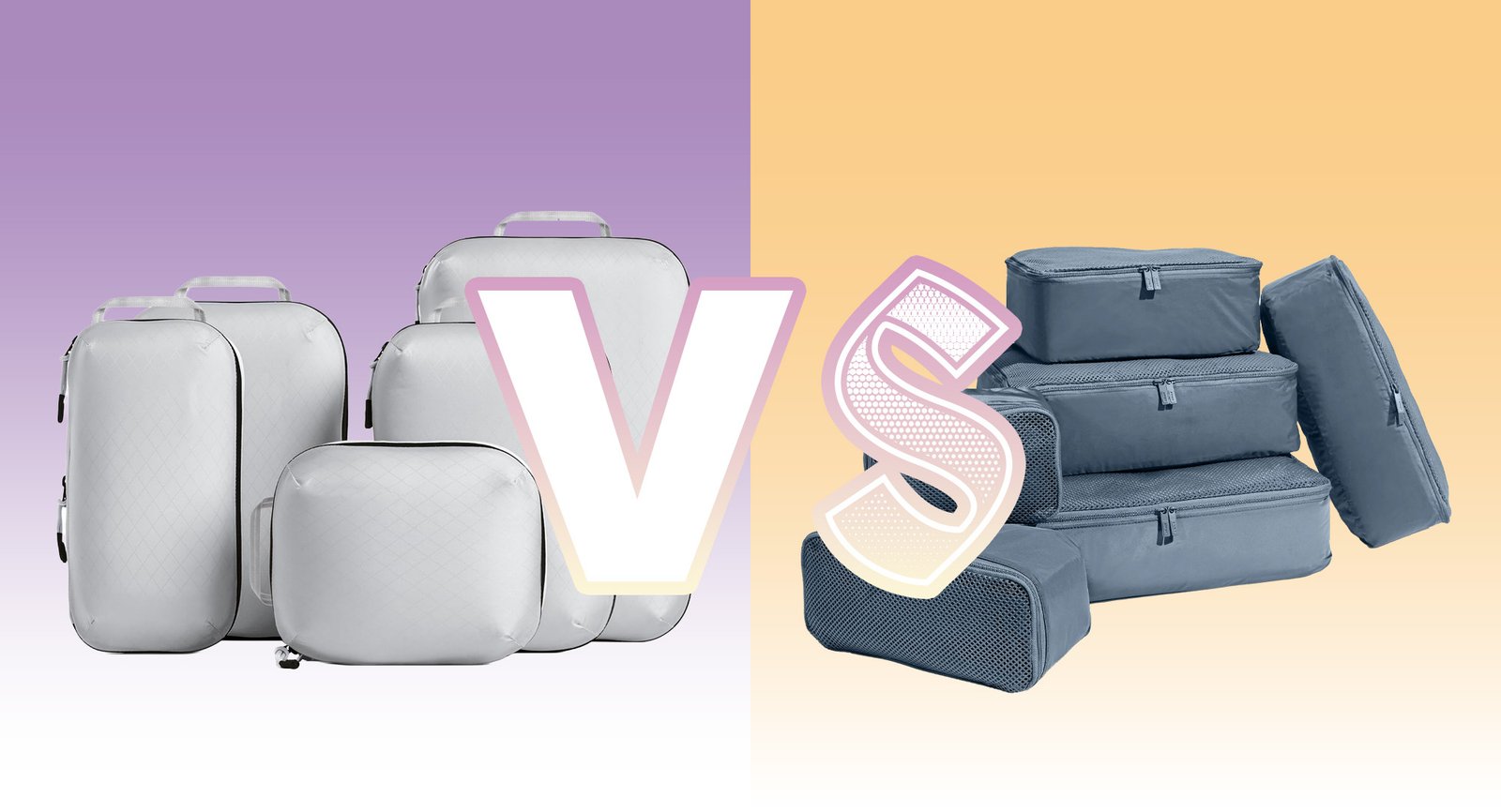
This is one of the most practical questions I get. Some buyers assume mesh is always better because users can see the clothing inside. Others want full fabric because it looks more premium. In my experience, the right answer depends on what the product is supposed to do.
Mesh panels can improve visibility and air release. That can help during packing. It can also make the cube feel lighter and more open. But mesh changes the body behavior of the cube. If the goal is stronger shape control, a large mesh panel may reduce that firm compression feel. It may also change how the cube looks after repeated use.
Solid fabric gives a cleaner outside look. It can support printing, branding, and a more uniform retail appearance. It can also help the cube keep a neater shape, depending on the fabric and structure. But solid panels reduce visibility. That can make item finding less convenient for some users.
I compare the choice this way:
| Panel Choice | Best For | Trade-Off |
|---|---|---|
| Mesh panel | Easy item ID, breathability, lighter look | Less privacy, different support feel |
| Solid fabric | Branding, cleaner look, stronger body feel | Less visibility |
| Partial mesh | Balanced retail design | More parts, more production detail |
In buyer conversations, I often suggest they match the panel style to the sales channel. Supermarket and broad retail programs may prefer easy-use features like visibility. Private label or gift lines may care more about visual finish and branding space. The key point is simple: panel choice is not a decoration choice alone. It affects function, user expectation, and production consistency too.
What Tests Should Be Run Before Bulk Packing Cube Orders?
Many after-sales issues could be reduced if buyers checked loaded-use behavior before confirming mass production10. A pretty sample is not enough11.
Before bulk compression packing cube orders, buyers should review loaded zipper use, seam consistency, fabric behavior, size tolerance, repeated opening and closing, and packing fit across intended use scenarios. The goal is not formal lab proof alone, but practical bulk-order risk control.
I want to be careful here. I do not present this as formal lab authority. I speak from what procurement teams actually ask and what problems usually appear later. In many cases, the biggest issue is not that the sample looked bad. The issue is that the sample was reviewed in a way that did not match actual use.
A common mistake is testing the cube empty or lightly filled. That tells very little about compression performance. Another mistake is checking one approval sample closely, then assuming bulk output will behave the same without clear control points.
I prefer practical pre-order checks that reflect real use and production repeatability.
| Check Area | What I Review | Why It Helps |
|---|---|---|
| Loaded zipper closing | Packed condition, not empty | Shows actual user effort |
| Seam appearance | Corners and high-stress zones | Finds early weakness |
| Compression shape | After full pack and zip | Reveals distortion risk |
| Size consistency | Across samples or pilot pieces | Supports set uniformity |
| Fabric recovery | After use and release | Shows appearance stability |
| Fit test | In target luggage types | Confirms use-case match |
If possible, I like to pack the cube with the type of clothing the target market will likely use. Heavy sweaters behave differently from T-shirts12. A carry-on focused program may need flatter shapes. A family travel set may need more forgiving dimensions.
For B2B buyers, the real question is not “Did this sample pass a quick check?” The real question is “Can I trust this design to perform well enough, look consistent, and avoid avoidable complaints when I scale it?” That is the right mindset before bulk commitment.
Conclusion
I compare compression packing cubes by use case, structure, material, and bulk stability, because the best-selling design is the one that balances feature appeal with repeatable durability.
"Effect of Different Sewing Parameters on Lockstitch Seam Strength ...", https://www.academia.edu/67471432/Effect_of_Different_Sewing_Parameters_on_Lockstitch_Seam_Strength_for_Denim_Fabric. Studies on textile assemblies and closure systems show that increased internal loading can concentrate stress at seams and zipper lines, a mechanism consistent with seam distortion or closure failure in highly compressed soft goods; such evidence supports the product-engineering rationale, though it does not by itself quantify return rates for packing cubes. Evidence role: mechanism; source type: paper. Supports: Mechanical loading in packed textile enclosures can increase stress on zippers and seams, helping explain why aggressive compression designs may be more failure-prone in use.. Scope note: Support is contextual unless the source specifically examines compression packing cubes or similar luggage organizers. ↩
"Packing cube - Wikipedia", https://en.wikipedia.org/wiki/Packing_cube. Reference descriptions of compression organizers explain that, unlike standard organizers used mainly for sorting, compression versions add a secondary closure step to compact contents and reduce occupied volume after packing. Evidence role: definition; source type: encyclopedia. Supports: Compression organizers use an additional closure mechanism, commonly a second zipper, to compact contents after initial packing.. ↩
"Research into fabrics used in compression therapy and ... - PubMed", https://pubmed.ncbi.nlm.nih.gov/25203399/. Engineering and textile research on loaded flexible enclosures indicates that compaction changes force distribution across zipper paths, seams, and fabric panels, supporting the claim that compression-oriented designs affect both structural behavior and user effort during operation. Evidence role: mechanism; source type: research. Supports: Compressing packed textiles changes load distribution across closures, seams, and fabric panels, which can alter both durability and ease of use.. Scope note: User-experience effects are partly inferred from mechanical behavior unless supported by direct usability studies. ↩
"It took 40 years for technology to catch up to this zipper design", https://computing.mit.edu/news/it-took-40-years-for-technology-to-catch-up-to-this-zipper-design/. Technical literature on zipper construction and textile assembly identifies element type, tape strength, slider function, attachment stitching, and installation geometry as major determinants of closure strength and operability, supporting their use as key evaluation points in compressed soft-goods products. Evidence role: expert_consensus; source type: research. Supports: Zipper durability and operability depend on the quality of the zipper elements, tape, slider, attachment stitching, and path geometry.. Scope note: The source may address zippers generally rather than compression packing cubes specifically. ↩
"Research into fabrics used in compression therapy and ... - PubMed", https://pubmed.ncbi.nlm.nih.gov/25203399/. Mechanical analyses of flexible containers under compression show that reducing available volume increases forces transmitted to the closure line, supporting the statement that compression adds tension to the zipper system during loaded use. Evidence role: mechanism; source type: paper. Supports: Reducing volume around packed contents increases force on closure systems such as zippers.. Scope note: This is mechanistic support and may not measure tension in packing cubes specifically. ↩
"[PDF] Higher Quality or Lower Price? How Value-Increasing Promotions ...", https://digitalcommons.bryant.edu/cgi/viewcontent.cgi?article=1033&context=mark_jou. Research in consumer behavior and retail assortment shows that larger bundles or broader assortments do not uniformly increase perceived value, because usefulness, relevance, and decision simplicity also shape purchase response. Evidence role: expert_consensus; source type: education. Supports: Retail value perception is influenced by utility and choice quality, not simply by larger item counts.. Scope note: This supports the retail principle generally rather than proving the effect for packing cube sets alone. ↩
"Impact of Perceived Product Value on Customer-Based Brand Equity", https://pmc.ncbi.nlm.nih.gov/articles/PMC9280421/. Consumer and assortment research indicates that perceived value and product usefulness depend on task fit and ease of choice, not merely on a higher number of included items; in this context, the evidence supports designing cube sets around realistic packing scenarios rather than maximizing piece count. Evidence role: general_support; source type: paper. Supports: Product-set usefulness is better predicted by fit to user tasks than by piece count alone.. Scope note: The support is indirect unless the source specifically studies travel organizers or packing cubes. ↩
"Investigation of the air permeability of fabric weaves to increase the ...", https://pmc.ncbi.nlm.nih.gov/articles/PMC12062212/. Textile studies describe mesh materials as having open structures that improve air permeability and visibility relative to solid fabrics, which helps explain their suitability where breathability and easy content identification are prioritized over a firmer, more enclosed feel. Evidence role: mechanism; source type: research. Supports: Mesh fabrics generally provide greater visibility and air permeability than solid fabrics, and their open structure can reduce firm shape control.. Scope note: The “lighter compression” aspect is contextual unless directly tested in packing-cube constructions. ↩
"Advancements in functional smart and wearable textiles for ... - PMC", https://pmc.ncbi.nlm.nih.gov/articles/PMC12716241/. Textile-material research indicates that continuous woven or synthetic fabric panels provide opacity and, depending on construction, greater panel integrity and shape stability than open mesh, which supports their use where privacy and a more structured exterior are desired. Evidence role: mechanism; source type: paper. Supports: Solid textile panels offer opacity and can provide greater visual uniformity and structural support than open mesh panels.. Scope note: Branding advantages are partly application-specific and may not be directly measured in materials studies. ↩
"46 CFR § 164.019-13 - Production quality control requirements.", https://www.law.cornell.edu/cfr/text/46/164.019-13. Quality-management guidance from manufacturing and standards institutions describes preproduction verification and testing under intended use conditions as established methods for reducing defect escape and downstream complaint risk. Evidence role: expert_consensus; source type: institution. Supports: Preproduction and use-condition testing are recognized quality-control practices that can reduce defect risk and downstream customer complaints.. Scope note: Such guidance supports the preventive principle but may not quantify complaint reduction for packing cubes specifically. ↩
"Sound Practices for Consistent Human Visual Inspection - PMC - NIH", https://pmc.ncbi.nlm.nih.gov/articles/PMC3066354/. Manufacturing quality frameworks distinguish visual conformity checks from functional and reliability verification, indicating that appearance approval alone is not sufficient evidence of production readiness for products subject to repeated mechanical use. Evidence role: general_support; source type: institution. Supports: Appearance inspection does not replace functional validation when assessing whether a design is ready for production.. ↩
"Comparative Analysis of Thermophysiological Comfort-Related ...", https://pmc.ncbi.nlm.nih.gov/articles/PMC7558677/. Textile studies on thickness, bulk, and compressional behavior show that apparel categories differ substantially in how they deform under load, supporting the practical observation that bulky garments such as sweaters behave differently in packing and compression than lighter items such as T-shirts. Evidence role: mechanism; source type: paper. Supports: Garments made from different textiles and constructions vary in bulk, thickness, and compressibility, affecting how they pack and how much pressure they exert when compressed.. Scope note: The evidence is about textile properties generally and may not directly measure behavior inside packing cubes. ↩