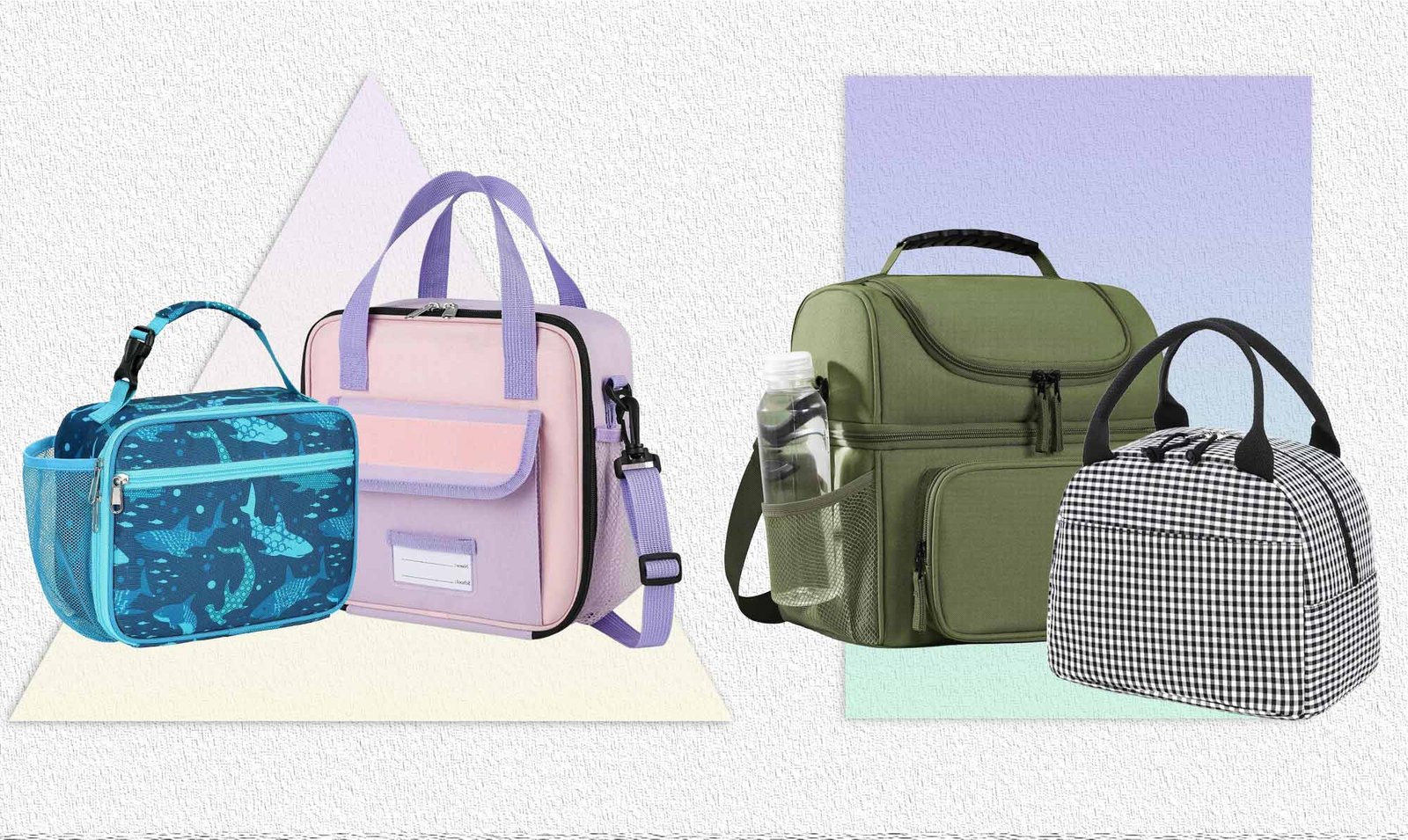
A bag goes viral fast. Stock moves slow. I often see buyers rush in, then worry about late delivery, weak sell-through, and leftover stock when the buzz fades.
Buyers should stock viral mini tote and cooler bags only when the item fits their sales channel, real use case, stock risk, and delivery timing. Trend heat can start interest, but fit, lead time, and repeat demand decide whether the order is safe.
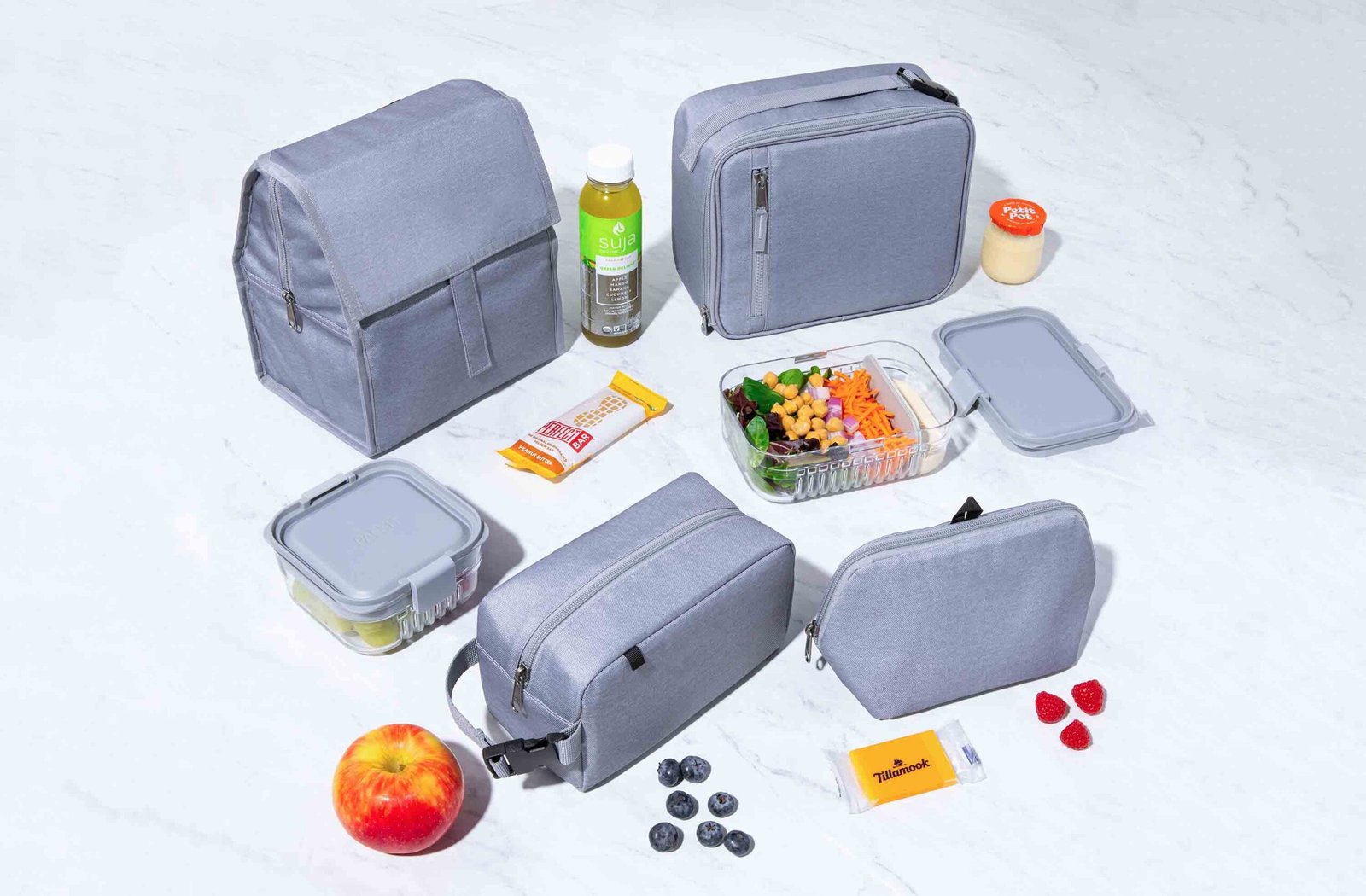
I have had many pre-order talks with buyers who asked me almost the same question in different words. They did not really ask whether a mini tote looked cute. They asked whether the style could work in their stores, in their promo program, and inside their timing plan. That is the real issue. A viral style can bring traffic. But traffic is not the same as a safe order.1 So when I look at mini totes and cooler bags with a buyer, I do not start with social buzz. I start with channel fit, use case, material choice, and how fast we can move from sample to bulk.
Why Are Mini Totes Becoming Collectible Retail Items?
A small bag can look easy to sell. That is why buyers get pulled in fast. But when the style is bought as a collectible, demand can rise and fall very quickly.
Mini totes become collectible retail items when they are low-cost, giftable, easy to style, and simple to release in multiple colors or prints.2 Buyers should still check whether that collectible behavior fits their channel and whether customers will buy more than once.
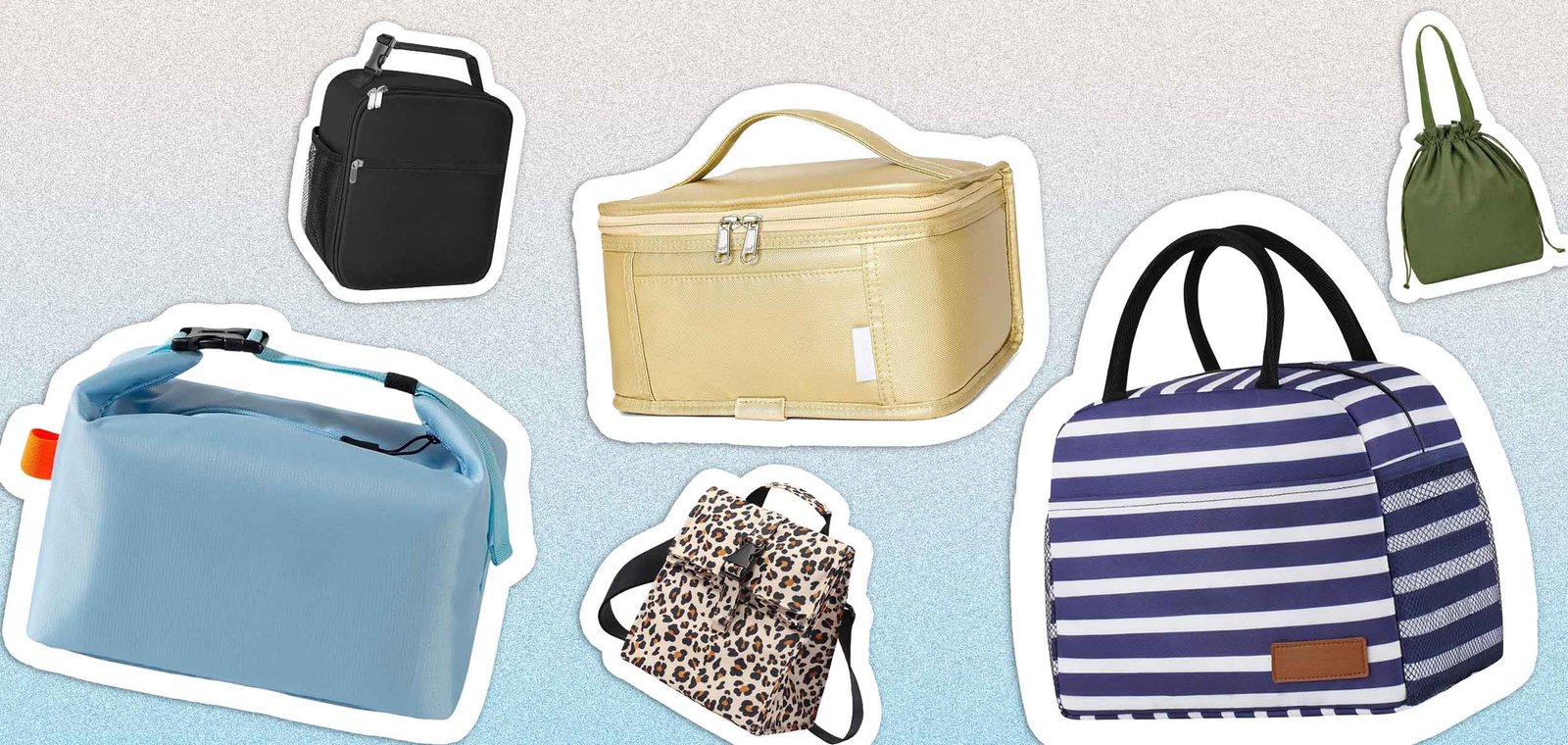
From what I hear in buyer talks, the collectible angle matters because it changes the buying logic. A customer may not need five mini totes. But that customer may still buy several if the colors change, if the print is seasonal, or if the item feels like a low-risk add-on at checkout.3 That is why some buyers look at mini totes not as one SKU, but as a small series. Still, I do not treat that as a green light by itself. I ask where the item will sit, what price band it needs, and whether repeat purchase is likely in that channel.
For example, a supermarket buyer may need a simple item with broad appeal. A gift buyer may need a design story and fast seasonal turnover. These are not the same job. The same mini tote can work in one place and fail in another.
| Buying Question | Why It Matters | What I Usually Suggest |
|---|---|---|
| Is it a checkout add-on or a planned purchase? | This affects price and design detail | Keep add-on items simple and cost-controlled |
| Will buyers come back for new colors? | This affects repeat order logic | Build a color plan, not just one style |
| Is the bag useful or just cute? | Useful items hold demand longer | Link design to real daily use |
| Can the item be updated fast? | Slow refresh kills trend timing | Use easy-to-change prints and trims |
In my experience, collectible demand is strongest when the item is cheap enough to try, useful enough to keep, and fresh enough to buy again. But if the buyer cannot refresh color, art, or packaging in time, the collectible idea loses force very fast.
What Size Works for Lunch, Errands, and Daily Carry?
Many buyers like the look first. Then they find the size is wrong. A bag that looks perfect online can fail if it cannot hold the real items people carry.
The best size depends on use case. Lunch bags need room for containers and bottles.4 Errand totes should fit wallet, phone, and small extras. Daily carry needs a balance between compact size, comfort, and practical opening shape.5
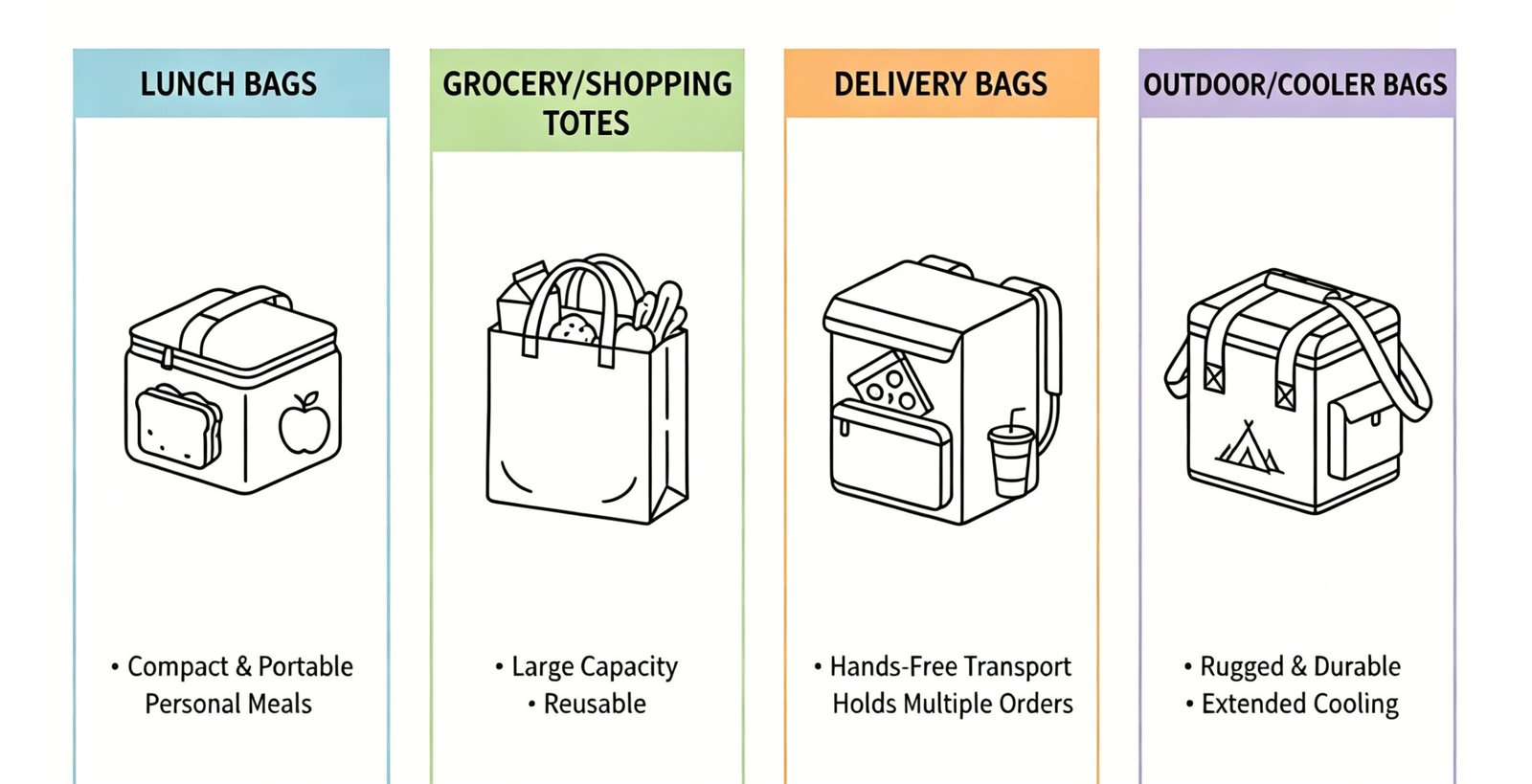
This is one of the first things serious buyers ask before sampling. They ask for size, but what they really mean is use case. I usually walk backward from what the end user puts inside. If the bag is for lunch, I ask about food box size, bottle height, and whether insulation matters. If it is for errands, I ask whether it needs a zipper, inner pocket, or wider gusset. If it is for daily carry, I ask how long it will be carried and whether the handle drop is enough.
A mini tote can look neat in photos but still feel awkward in real life. A cooler bag can look compact but fail if the opening is too narrow for lunch boxes. That is why I prefer to define the bag around the user scene, not around a trend term.
Here is a simple way I often frame it:
| Use Case | Usual Size Direction | Key Structure Point | Common Risk |
|---|---|---|---|
| Lunch | More depth and height | Insulated lining, stable base | Too small for containers |
| Errands | Medium body, easy access | Gusset, zipper, inner slip pocket | Looks good but holds too little |
| Daily carry | Compact but balanced | Comfortable handles, secure closure | Too cute, not practical |
I once discussed a mini cooler concept with a buyer who first wanted the smallest possible bag for cost reasons. After we reviewed the real lunch container size, we increased the width and base. The cost changed a little. The product made more sense. That kind of adjustment often decides whether a bag becomes a reorder item or just a trial that stops after one round.
When Should Buyers Choose Canvas, Polyester, or Insulated Linings?
The bag shape may attract attention first. But material choice decides cost, function, and lead time. Many buying problems start when the material does not match the sales use.
Buyers should choose canvas for a natural and reusable look, polyester for lighter cost and easier printing, and insulated linings when temperature retention matters.6 The right choice depends on channel price, user scene, MOQ, and production timing.
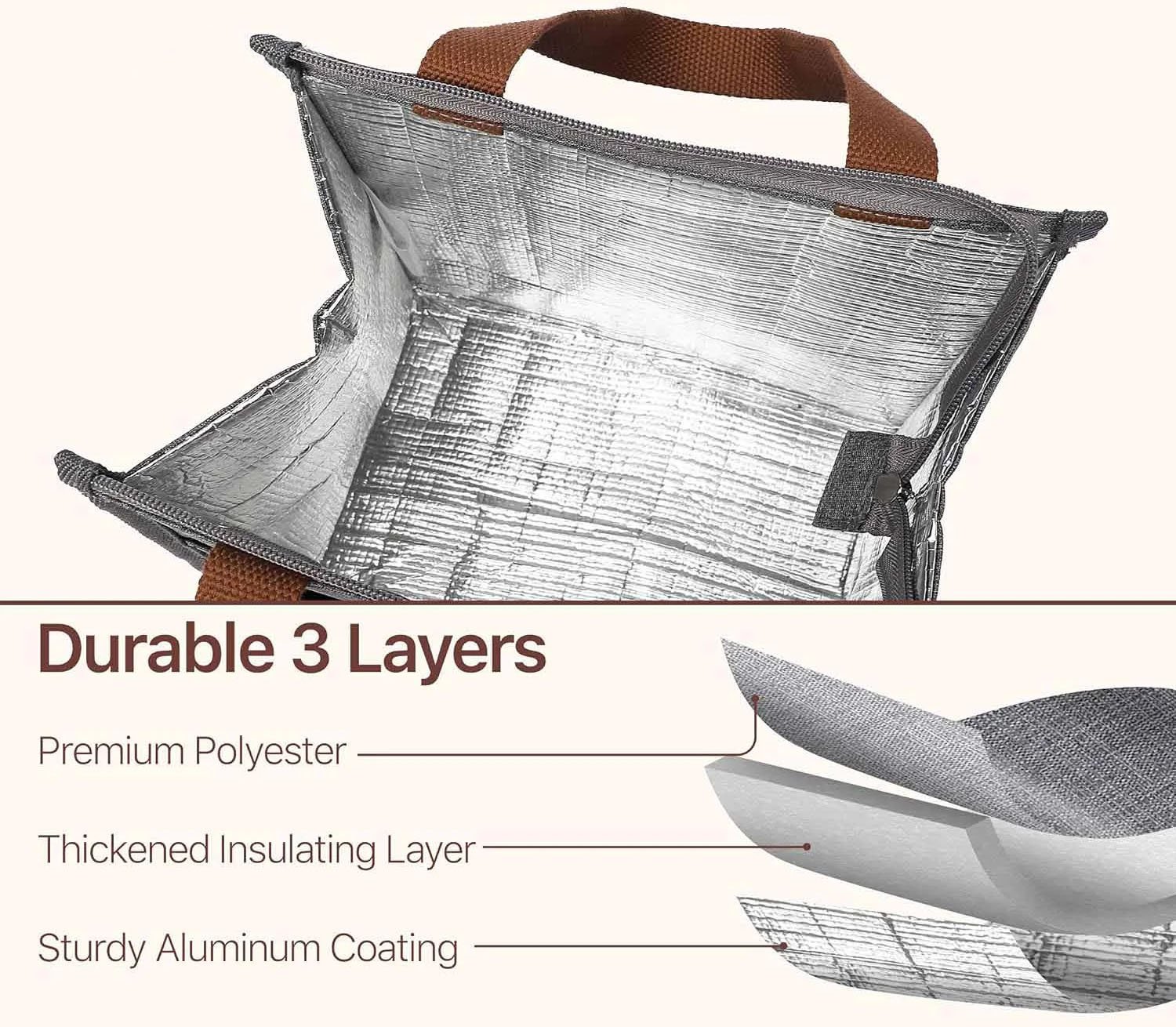
In pre-order talks, material choice is where the trend idea becomes a real sourcing plan. A buyer may send a viral reference image. Then we start asking practical questions. Does the bag need to feel premium? Does it need bright print? Does it need to hold cold items for a short trip? Does the channel accept a higher price? These answers shape the material decision more than the trend itself.
Canvas works well when the bag needs a soft, natural, reusable image.7 It can support simple branding well. It often feels more gift-like or lifestyle-driven. But canvas can cost more, and structure can change depending on fabric weight. Polyester is often easier for mass programs. It is lighter, flexible in color and print, and can work better for price-sensitive retail or promotion.8 For cooler use, lining and foam matter. But buyers should stay practical. A mini cooler bag is often meant for short carry, not long cold-chain performance.9
| Material | Best Fit | Strength | Watch-Out Point |
|---|---|---|---|
| Canvas | Lifestyle retail, gift, eco story | Better hand feel, stronger reusable image | Higher cost, heavier weight |
| Polyester | Large volume retail, promo | Lower cost, easier printing, flexible color | Can feel less premium |
| Insulated lining | Lunch and short cold carry | Adds function and product story | More structure, more steps in production |
I usually tell buyers not to overbuild a viral item. If the market only needs a light lunch carry for a few hours, there is no need to turn it into a heavy technical cooler. Too much build can raise price and slow production. A trend window is short. The safer move is often a clear use case with a clean spec.
How Can Limited Colors Create Repeat Retail Demand?
Too many colors can look exciting at first. Then stock becomes hard to control. A small color plan often works better than a wide one with weak turnover.
Limited colors can support repeat retail demand by making the line easier to collect, easier to refresh, and easier to manage in stock.10 Buyers should use a tight palette that fits season, channel, and reorder speed.
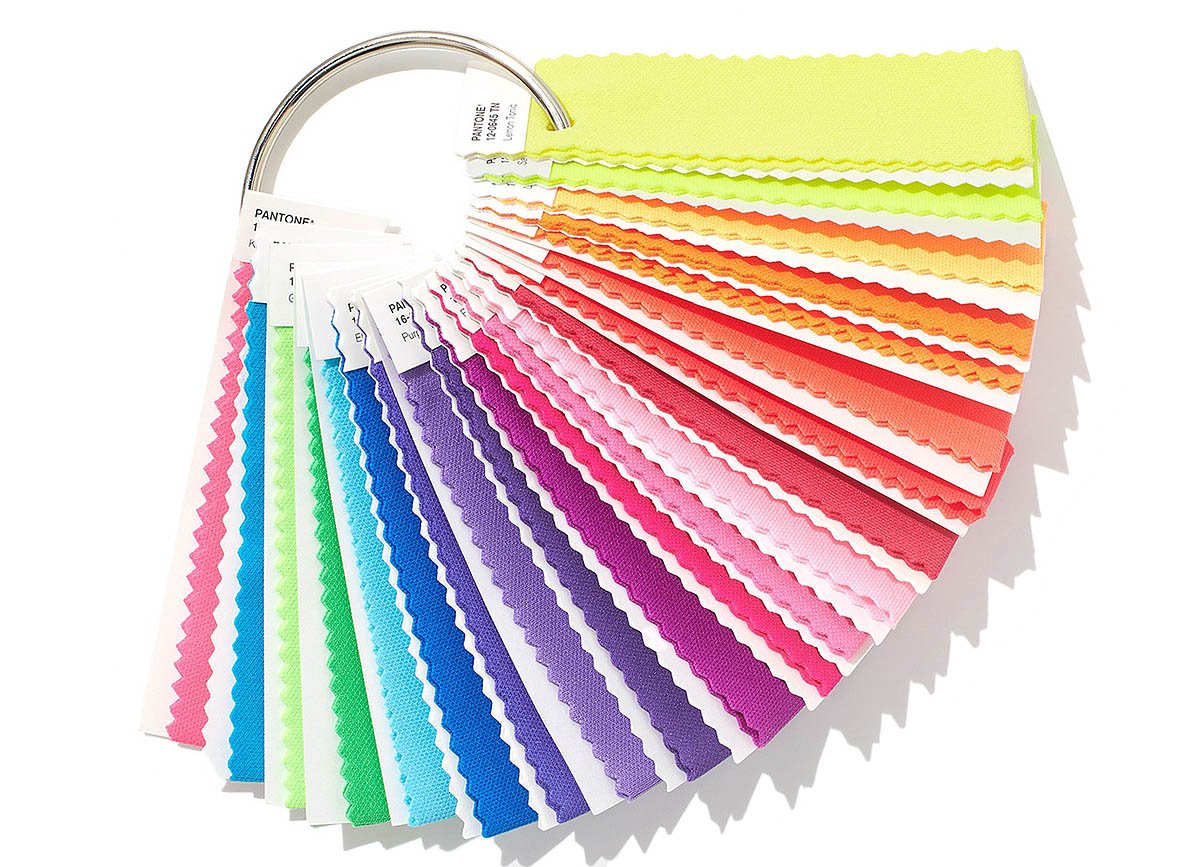
I have seen buyers assume that more colors mean more chances to sell. In many cases, the opposite is true. More colors can spread demand too thin. Then each SKU becomes weak.11 If the item is a mini tote or mini cooler with trend appeal, I usually think in small batches and clear stories. Four strong colors can be better than twelve random ones. A tight color plan helps display. It also helps the buyer test demand with less risk.
This matters even more for chain retail and supermarket programs. The team often needs fast decisions, simple presentation, and easy replenishment. If one color sells and the others do not, the whole program becomes messy. So I like to build color around a reason: neutrals for daily use, soft tones for spring, bright tones for summer, or a small holiday set.
| Color Strategy | Benefit | Risk Control Value |
|---|---|---|
| 3–5 core colors | Easier display and forecast | Lower inventory spread |
| Seasonal refresh | Keeps item fresh without full redesign | Better timing control |
| Limited edition accent color | Tests excitement without full risk | Small-batch learning |
| Channel-based palette | Matches local taste and shelf style | Better fit by market |
In real talks, buyers often ask me which color will be best. I cannot honestly promise that from one image or one sample. What I can do is help reduce risk. A limited palette gives cleaner data. It also makes repeat ordering easier if one or two colors perform well. That is often more useful than chasing every color trend at once.
What Should Brands Check Before Scaling a Mini Tote Program?
A style may work in a test. Scaling is a different problem. Many issues appear only when the buyer moves from sample approval to volume production.
Before scaling a mini tote program, brands should check MOQ, sample speed, material stability, print consistency, packing plan, and lead time. The biggest risk is not missing a trend but scaling too slowly or too heavily for the actual demand window.12

This is where I think supplier value becomes very practical. When a buyer wants to move from one hot sample to a program, I stop talking about trend and start talking about operations. What is the MOQ by color? How long will lab dips or print strike-offs take? Does the handle construction stay stable at higher volume? Can we pack efficiently for mixed-store delivery? These points decide whether the program is safe.
A mini tote program sounds simple because the product is small. But small products can still create big problems when the timing is tight. If customization is too deep, the trend window may close before bulk ships. If MOQ is too high, the buyer may carry too much stock. If the material source is unstable, color continuity may become an issue in repeat orders.
Here is the checklist I usually think through with buyers:
| Check Point | Why It Matters | What Buyers Should Confirm |
|---|---|---|
| MOQ by SKU | Prevents overbuying | Can each color be tested at safe volume? |
| Sample lead time | Protects launch timing | How fast can approvals move? |
| Material source | Reduces supply risk | Is the fabric stable for repeat production? |
| Print and color control | Keeps retail look consistent | Can repeats match approved sample closely? |
| Packaging plan | Affects freight and store handling | Is the pack setup right for the channel? |
| Bulk lead time | Protects trend window | Can delivery meet launch timing? |
Based on what buyers usually ask before sampling or ordering, this is the real decision point. A viral style is only commercially useful if the supply side can support a low-risk test and a fast follow-up. If not, the style may still be attractive, but it is not ready for a serious buy.
Conclusion
Viral mini bags can create interest, but I would only stock them when use case, channel fit, material, color plan, and production timing all make commercial sense.
"Online shopping - Wikipedia", https://en.wikipedia.org/wiki/Online_shopping. Studies on consumer attention and purchase behavior indicate that visibility or social-media-driven interest does not reliably convert into stable sales, which helps explain why high traffic around a product may still leave retailers exposed to demand uncertainty and inventory risk. Evidence role: general_support; source type: paper. Supports: Research should support that attention generated by viral or highly visible products can differ from actual purchasing behavior and may create uncertain demand forecasting conditions.. ↩
"Variety-Seeking Behavior in Consumption: A Literature Review and ...", https://pmc.ncbi.nlm.nih.gov/articles/PMC9207504/. Consumer-behavior literature on variety seeking and low-risk discretionary purchases shows that affordable items offered in multiple visible variants can stimulate repeated buying and collection-like purchasing patterns. Evidence role: mechanism; source type: paper. Supports: Consumer research should support that low-cost, low-risk items with visible variation can encourage repeat purchase through variety-seeking and collectible behavior.. ↩
"(PDF) IMPULSE BUYING BEHAVIOUR AT THE RETAIL CHECKOUT", https://www.academia.edu/45180372/IMPULSE_BUYING_BEHAVIOUR_AT_THE_RETAIL_CHECKOUT_AN_INVESTIGATION_OF_SELECT_ANTECEDENTS. Studies of impulse purchasing and variety-seeking behavior report that consumers may purchase additional low-cost items when designs change across seasons or colors and when products are positioned as convenient add-ons at checkout. Evidence role: mechanism; source type: paper. Supports: Research should support that product variation and point-of-sale placement can encourage multiple-unit or repeat purchases even when functional need is limited.. ↩
"New guidelines for reusable to-go food containers", https://www.phila.gov/2021-10-05-new-guidelines-for-reusable-to-go-food-containers/. General references on lunch boxes and meal containers describe their use for carrying food portions and beverage containers, supporting the design requirement that lunch bags provide adequate space for common containers and bottles. Evidence role: general_support; source type: education. Supports: Reference material should support that lunch-carry products are typically designed around the dimensions of food containers and drink bottles used in everyday meals.. Scope note: This evidence is contextual rather than a direct industry standard for mini tote dimensions. ↩
"School Bag Design and Weight: A Narrative Review of Their Impact ...", https://pmc.ncbi.nlm.nih.gov/articles/PMC12812241/. Ergonomic studies of carried personal items show that usability depends not only on size but also on comfort and accessible opening design, supporting the claim that daily-carry bags must balance compactness with practical handling. Evidence role: mechanism; source type: paper. Supports: Human-factors or ergonomics research should support that carrying comfort and ease of access are important determinants of usability in daily-use bags.. Scope note: Available evidence may address load carriage and usability more broadly rather than mini totes specifically. ↩
"Using and Priming Non-Artist Polyester Canvas", https://sites.udel.edu/cas-mitra/using-and-priming-non-artist-polyester-canvas/. Textile reference materials describe canvas as a durable woven fabric often used where a natural appearance is desired, polyester as a lightweight synthetic compatible with many printing methods, and insulated linings as materials intended to slow heat transfer in food-carry applications. Evidence role: definition; source type: education. Supports: Textile and materials references should support the typical properties and common applications of canvas, polyester, and insulated linings in bags.. ↩
"Canvas - Wikipedia", https://en.wikipedia.org/wiki/Canvas. General references on canvas describe it as a strong woven fabric commonly used in bags and other durable goods, which supports its association with reusable products and a natural-looking material profile. Evidence role: general_support; source type: encyclopedia. Supports: A source should support that canvas is a heavy-duty woven fabric widely used for bags and associated with durable, reusable applications.. Scope note: The source would support common material usage and characteristics rather than directly measuring consumer perception of a 'natural' image. ↩
"Water-Repellent and UV-Resistant Properties of Polyester Fabric ...", https://pmc.ncbi.nlm.nih.gov/articles/PMC12138703/. Textile engineering references identify polyester as a lightweight synthetic fiber used extensively in high-volume manufacturing and note its compatibility with several coloration and printing processes, which helps explain its suitability for cost-sensitive retail and promotional products. Evidence role: mechanism; source type: education. Supports: Textile sources should support that polyester is lightweight, widely used in mass-produced goods, and compatible with common coloration and printing methods.. Scope note: Direct comparative cost advantages may vary by region, printing method, and fabric construction. ↩
"Cold chain time- and temperature-controlled transport of vaccines", https://pmc.ncbi.nlm.nih.gov/articles/PMC7024728/. Cold-chain guidance from public and international health sources defines cold-chain transport as a controlled temperature-management system, which provides context for treating small insulated consumer bags as suitable for short-term temperature retention rather than as substitutes for full cold-chain performance. Evidence role: definition; source type: government. Supports: Official guidance should distinguish between consumer insulated bags for temporary temperature moderation and regulated cold-chain systems designed for controlled transport.. Scope note: The source would provide a contextual distinction and not test any specific mini cooler bag design. ↩
"Dynamic pricing modeling and inventory management in ... - PMC", https://pmc.ncbi.nlm.nih.gov/articles/PMC12539743/. Research on retail assortment planning and inventory management shows that reducing the number of variants can improve forecastability and stock control, providing a basis for using limited color palettes where repeat demand and replenishment discipline are important. Evidence role: mechanism; source type: paper. Supports: Retail and operations research should support that narrower assortments can simplify forecasting and inventory control while preserving or improving sales in some contexts.. Scope note: The sales effect of assortment reduction is context-dependent and may differ by category and consumer segment. ↩
"The evolving role of hit and niche products in brick-and-mortar retail ...", https://pmc.ncbi.nlm.nih.gov/articles/PMC7387359/. Studies of product variety and SKU proliferation report that demand may be split across a larger set of variants, often reducing velocity at the individual-SKU level and increasing the complexity of replenishment and inventory allocation. Evidence role: general_support; source type: paper. Supports: Empirical research should support that increasing the number of variants can divide demand and reduce sales volume per SKU, complicating inventory decisions.. ↩
"The influence of visual marketing on consumers' purchase intention ...", https://pmc.ncbi.nlm.nih.gov/articles/PMC11033480/. Retail and supply-chain literature on short life-cycle products finds that uncertain demand and long response times increase the risk of overstock, markdowns, and missed selling windows, supporting the view that scaling too slowly or too heavily can be more damaging than declining a trend altogether. Evidence role: expert_consensus; source type: paper. Supports: Supply-chain and retail research should support that short product life cycles make overproduction and slow response especially costly under uncertain demand.. ↩