You ask three factories for a price. You get three different numbers. None of them are quoting the same bag. That is the real sourcing problem.
Sourcing a personal-item backpack starts with defining the use case, not collecting quotes. Buyers who first lock down size limits, travel scenarios, and sales channel requirements get reliable quotes. Buyers who skip this step get numbers that look cheap but create problems later.
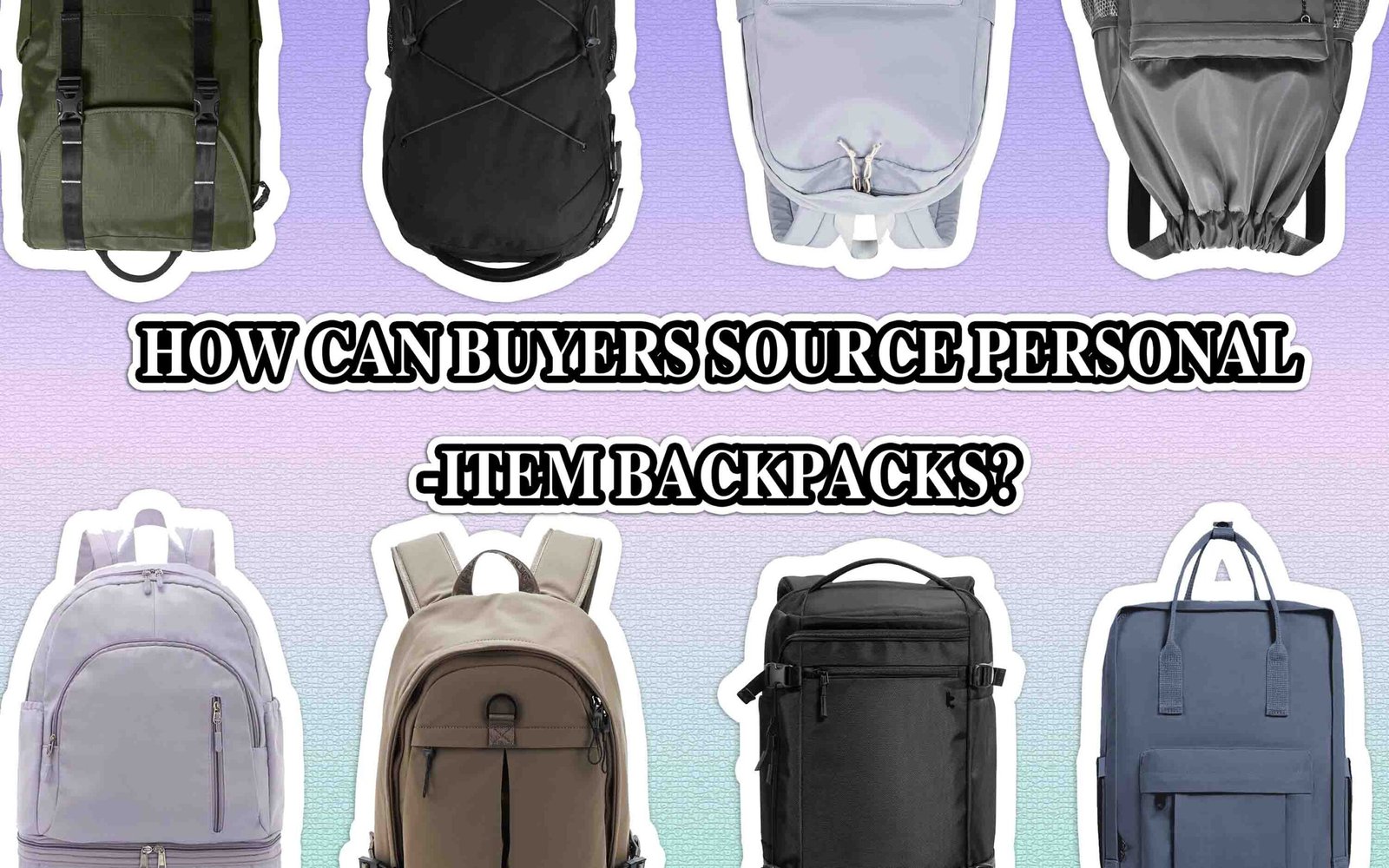
There is a reason personal-item backpacks are harder to source than they look. The category sounds simple. It is a small backpack. But the product is actually shaped by airline rules, retail expectations, end-user comfort, and your brand positioning all at once.1 If you do not define those things before you talk to a factory, you are not really sourcing. You are just shopping for a number. This article walks through the key decisions you need to make, so that when you do talk to a factory, the conversation is actually useful.
What Size Should a Personal-Item Travel Backpack Be?
Most buyers come in with a size range in mind. Some do not even have that. Both approaches create risk.
A personal-item backpack typically fits within 18 x 14 x 8 inches or 45 x 35 x 20 cm, but exact limits vary by airline and route.2 Buyers must confirm the size window for their target sales channel before finalizing dimensions with a factory, because a bag that fails the size check fails the product.
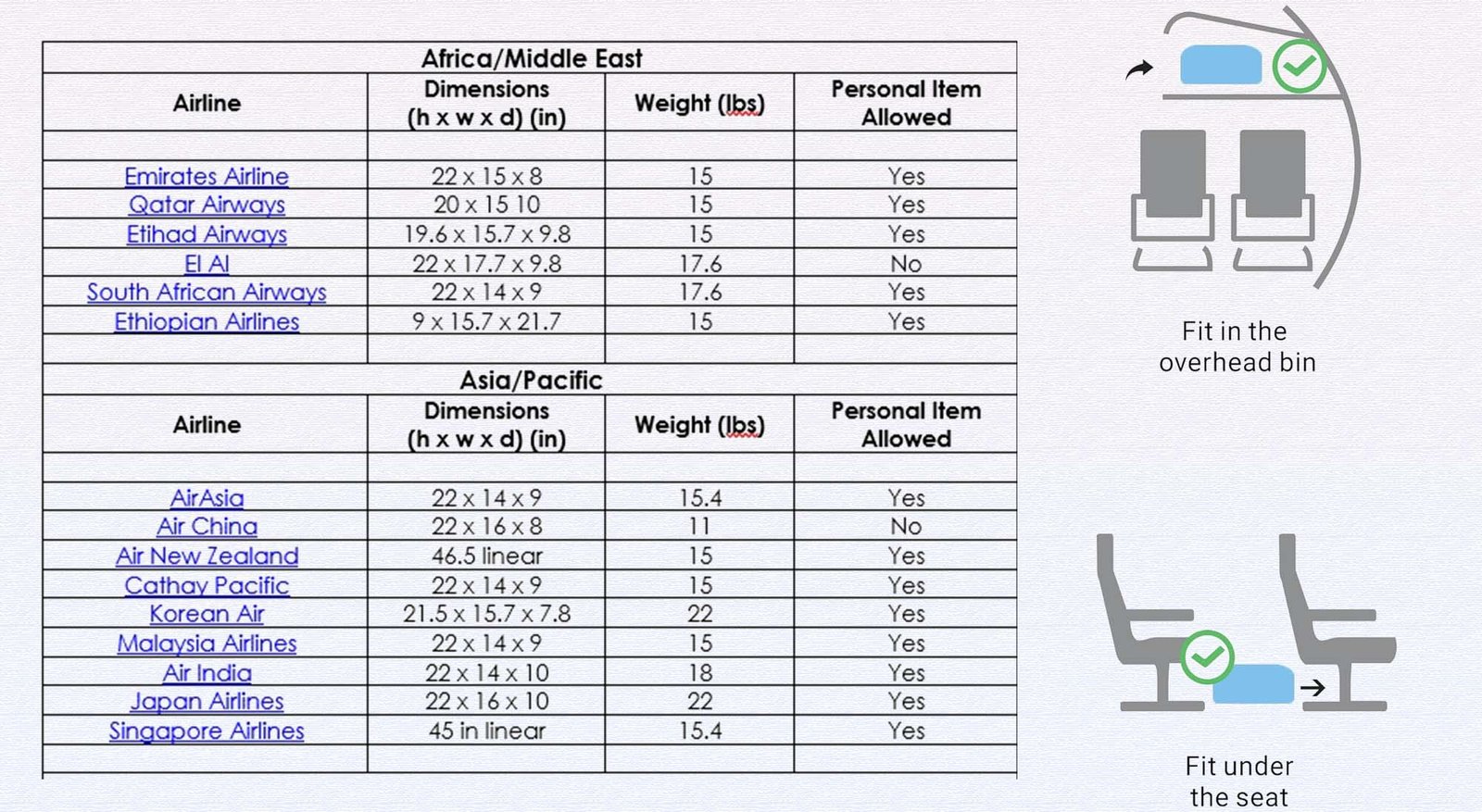
The size question is not just a measurement problem. It is a sourcing decision that affects everything downstream. Here is why.
Why Size Is a Sourcing Decision, Not Just a Spec
When I receive an inquiry for a personal-item backpack, the first thing I ask is: which airline rules does this bag need to meet, and where will it be sold? That question sounds simple. In practice, it splits buyers into two groups.
The first group has done the research. They know their target sales channel, whether it is a retail chain, an airline partnership, a travel accessories brand, or an e-commerce platform. They can say: "Our customers mostly fly within North America, and we are listing on a major retail platform that carries travel accessories." That tells me a usable size window.
The second group says: "Just make it a standard personal-item size." That is not a brief. That is a guess.
The reason this matters for sourcing is that size affects structure. A bag built to 18 x 14 x 8 inches with a semi-rigid frame panel will behave differently at the size boundary than a soft-shell bag of the same dimensions. When a customer at the gate compresses the bag into a sizer, the soft-shell version may pass while the structured version fails. That is a product return, a complaint, or a brand problem depending on your channel.
| Size Reference | Typical Dimensions | Notes |
|---|---|---|
| Common personal-item range | 18 x 14 x 8 in / 45 x 35 x 20 cm | Verify per airline before finalizing |
| Budget airline personal item | Often smaller, around 40 x 30 x 15 cm | Check specific carrier rules |
| Retail "airline-approved" label | Usually based on most common US carrier limits | Label claims should be verified, not assumed |
| Under-seat depth consideration | 8–10 inches is the practical range for most seats | Structural rigidity affects real-world fit |
The table above is a reference, not a compliance guarantee. Airline rules change, and they vary by carrier, route, and even cabin class. What I tell buyers is this: use these numbers as a working range for factory communication, but do your own verification before printing "airline-approved" on packaging. That verification step is yours to own, not the factory's.
Which Compartments Matter Most for Business Travelers?
A buyer once sent me a sketch of a personal-item backpack with eleven compartments. It was for a 20-liter bag. The product would have been so divided it held nothing useful in any one space.
For business travelers, the three compartments that matter most are a padded laptop sleeve that fits a 13–15 inch device, a front quick-access pocket for documents and a phone, and a main compartment sized for at least one day's worth of essentials.3 Everything else is secondary.
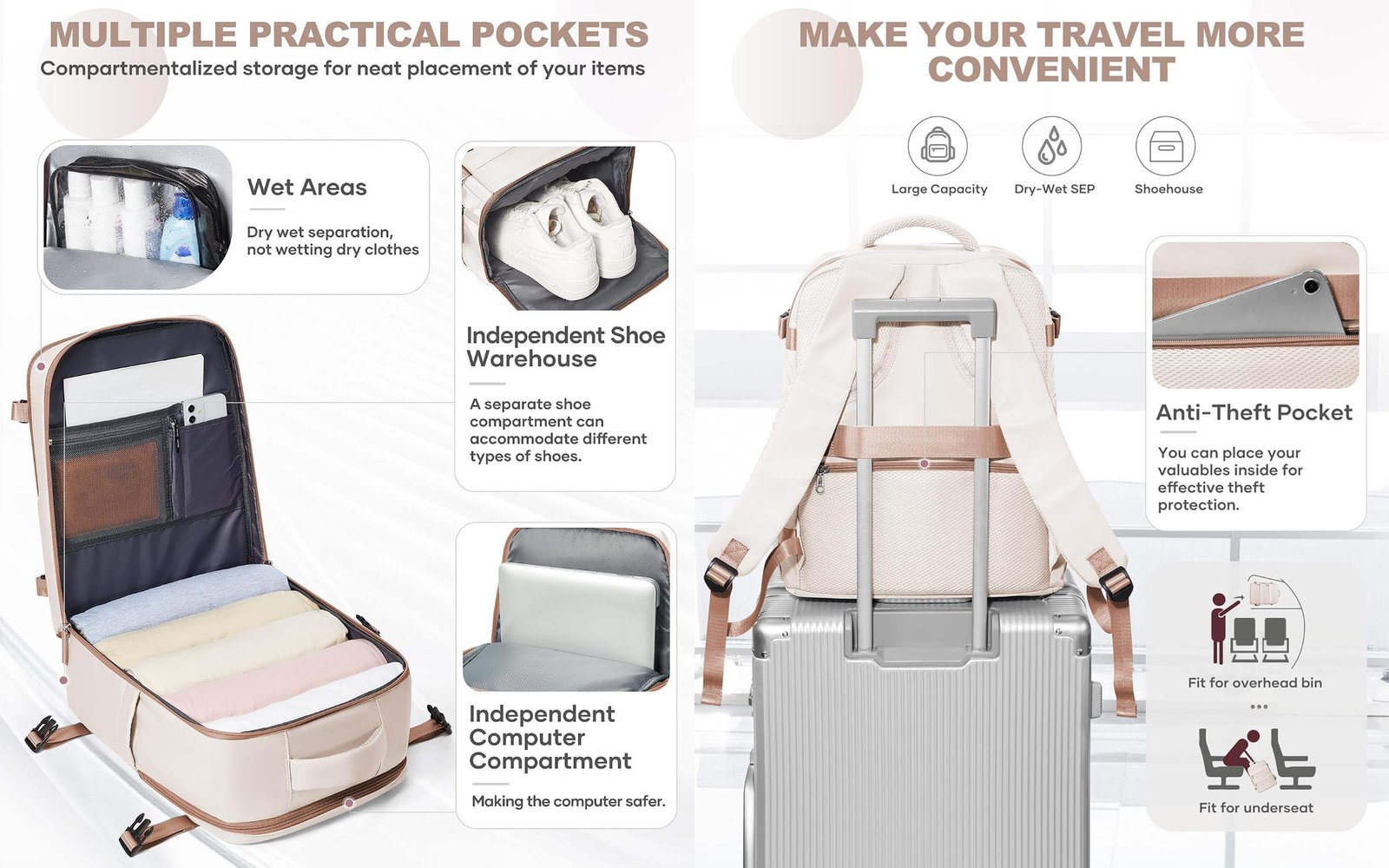
The compartment question is where buyers often confuse feature count with product quality. More pockets is not better. The right pockets in the right positions is better. Let me break this down the way I explain it to buyers during sampling discussions.
How to Decide Which Compartments to Specify
When a buyer says "add more organization," I ask: who is the end user, and what are they doing with this bag for the first ten minutes of their day?
For a business traveler, those ten minutes usually look like this. They pull the bag from under the seat. They take out a laptop for security. They reach for their phone or boarding pass. They put the laptop back. They look for earphones or a charger during the flight. That sequence defines where compartments need to be and how accessible they need to be.
Here is how I help buyers map that to structure:
| User Action | Compartment Required | Design Detail |
|---|---|---|
| Remove laptop at security | Dedicated padded sleeve, rear or main | Sleeve should open flat, fit 13–15 inch devices |
| Access phone or documents quickly | Front top pocket | Zipper pull accessible one-handed |
| Store daily essentials | Main compartment | Minimum 15–18 liters usable volume |
| In-flight reach for small items | Side or top quick-access | Avoid complex closures |
| Power bank and cable management | Internal slip pocket or passthrough grommet | Keeps cables from tangling with other items |
What I often push back on is the request for a "water bottle side pocket" on a personal-item bag. On a bag this small, an external bottle pocket that holds a real water bottle either eats into the main compartment volume or makes the bag wider than the size limit allows. I tell buyers to decide: do you want the bottle pocket, or do you want the size compliance? Usually they drop the bottle pocket once they see the dimension trade-off.
The other thing I watch for is zipper placement on the laptop sleeve. Some buyers ask for the sleeve inside the main compartment. That works for a carry-on. For a personal-item bag that goes under the seat, reaching deep into the main compartment to pull a laptop is awkward and slow. A rear-panel sleeve or a dedicated top-access sleeve is almost always better for this use case.
What Materials Work Best for Lightweight Travel Backpacks?
Weight is a real constraint in this category. A personal-item bag competes with everything else the traveler is carrying. If the bag itself is heavy before it is packed, it is already a problem.4
For lightweight personal-item backpacks, 300D to 600D recycled polyester and rip-stop nylon are the most common material choices.5 They balance weight, durability, and cost.6 Buyers should specify target bag weight empty, because material choice alone does not determine final weight — structure and hardware do.
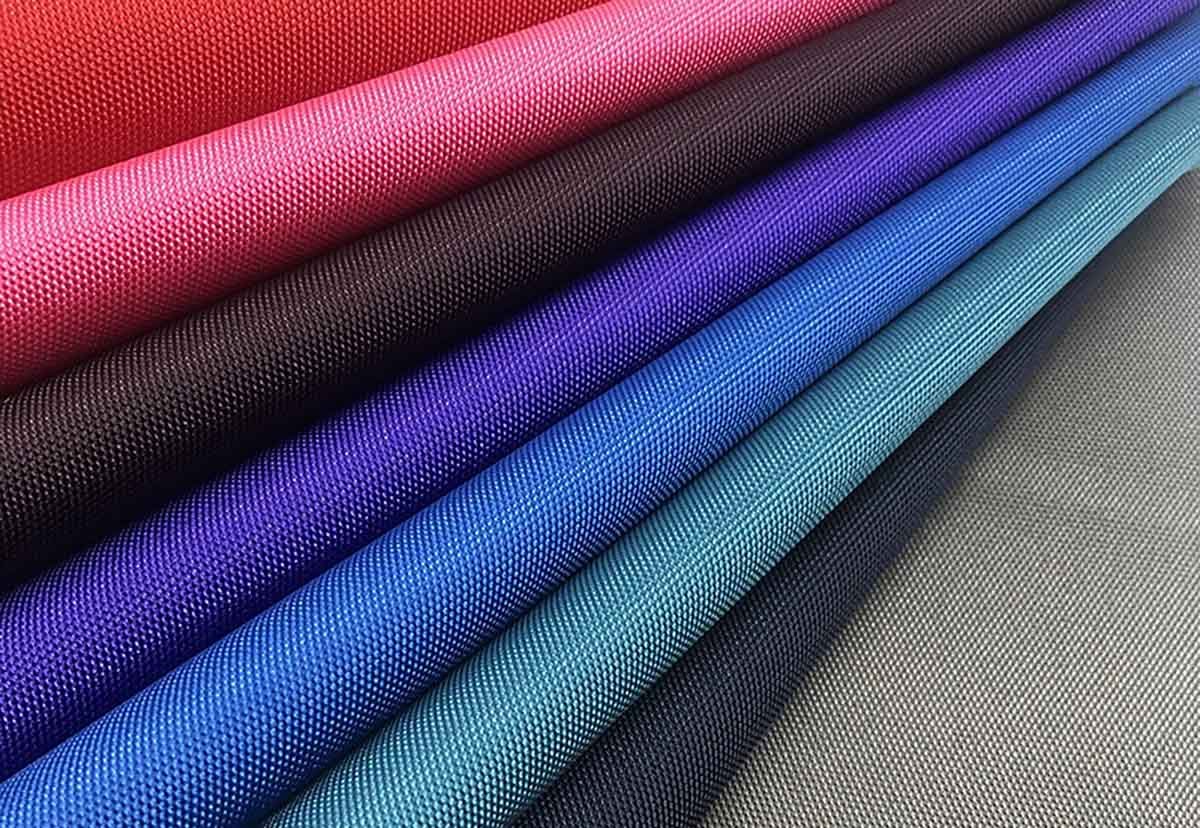
I get material questions from buyers in two ways. Some buyers already have a material spec and want the factory to match it. Others say "make it lightweight and durable" and leave the material choice to us. Both approaches can work, but the second one requires more back-and-forth to land on the right decision.
Material Choices and What They Mean for Your Product
Here is how I walk buyers through material selection when they do not have a fixed spec:
| Material | Weight Profile | Durability | Price Range | Best For |
|---|---|---|---|---|
| 300D Recycled Polyester | Light | Moderate | Low–Mid | Budget retail, eco-friendly branding |
| 600D Polyester | Medium | Good | Low | Mid-range retail, everyday use |
| 420D Rip-stop Nylon | Light | High | Mid | Premium travel, outdoor-adjacent brands |
| 1680D Ballistic Nylon | Heavy | Very High | High | Not recommended for personal-item category |
| Recycled PET (rPET) | Light–Medium | Moderate–Good | Mid | Sustainability-positioned brands |
| Wax Canvas | Heavy | Moderate | Mid–High | Not recommended for lightweight brief |
The material choice is not just about the fabric. It is also about what the material signals to the end buyer. A brand selling to eco-conscious consumers should consider rPET with visible recycled-content labeling. A brand selling through airport retail to frequent flyers should consider rip-stop nylon because it communicates durability without adding weight.
I also tell buyers to think about the lining. An interior with a bright-color ripstop lining makes it easier to find items inside a dark compartment. That is a small detail that gets noticed by end users and shows up in product reviews. It costs almost nothing to specify at the factory stage, but it cannot be changed after bulk production.
The hardware weight is something buyers overlook. A bag made from 300D polyester with heavy metal zippers and a thick aluminum frame sheet is not a lightweight bag. When I give buyers a weight estimate, I build it from fabric, lining, zippers, buckles, frame, and stitching together. That is the only way to get an honest empty-weight number.
How Can Buyers Customize Travel Backpacks for Their Brand?
Customization is one of the reasons buyers come to an OEM factory instead of buying off-the-shelf. But customization means different things to different buyers, and not every request is cost-effective at every order volume.
Buyers can customize personal-item backpacks through color, material, logo placement, lining print, hardware finish, label and tag design, and structural modifications. The most cost-effective customization at mid-range MOQ is color and logo. Structural changes require higher volume to spread tooling and sampling costs.7
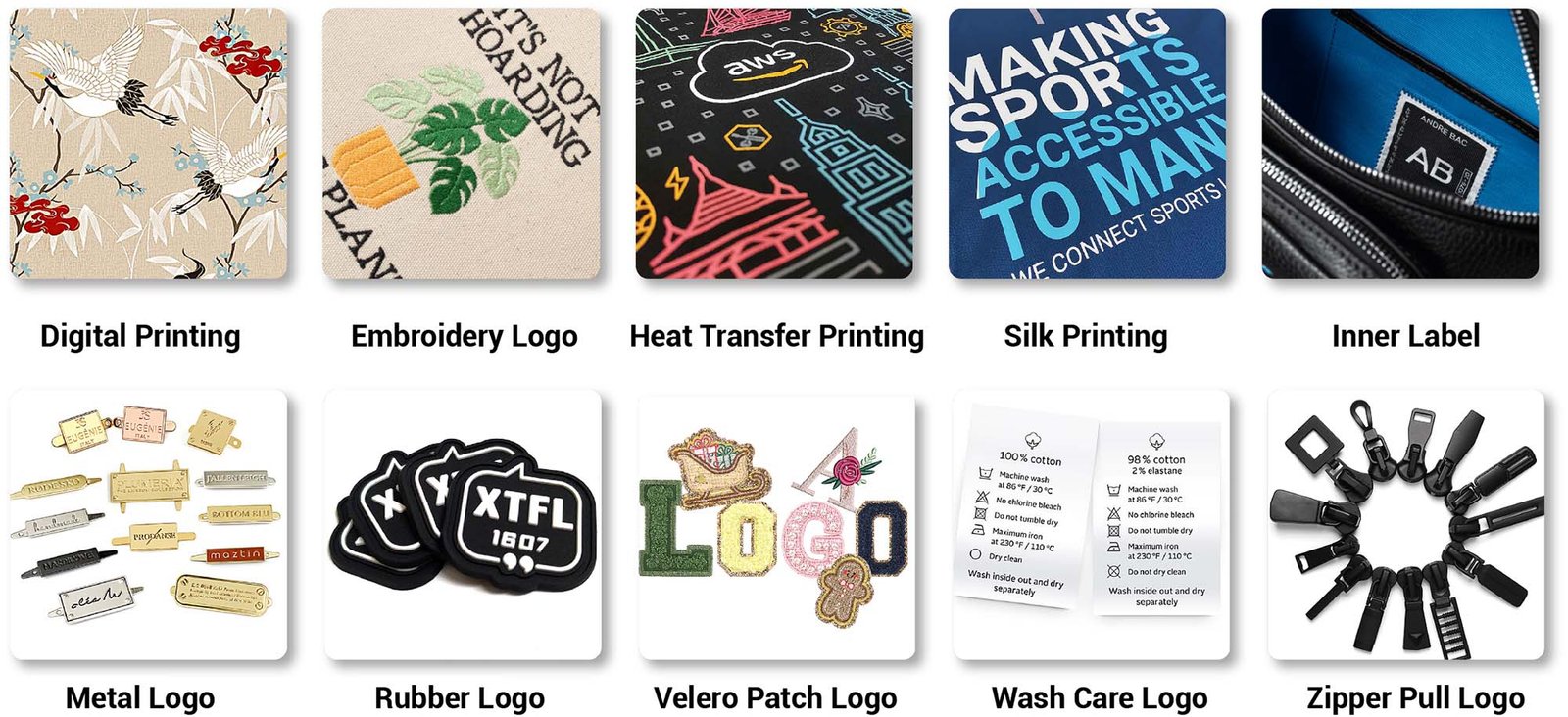
When a buyer comes to me with a customization brief, I try to sort the requests into three groups: things that change the pattern, things that change the material or hardware, and things that only change the surface. Each group has a different cost and sampling implication.
A Practical Framework for Customization Decisions
Surface customization means logo, color, label, and tag. These changes do not affect the pattern or structure. They have the lowest cost and shortest sampling lead time. For a buyer who wants to launch quickly or test a new product line with lower risk, surface customization is the most practical entry point.
Material and hardware customization means changing the fabric type, zipper brand, buckle color, or lining print. These changes affect cost and may affect lead time for material procurement. A buyer who wants a specific recycled polyester with a custom color needs to confirm minimum yardage with the mill before locking the order. I always flag this early because fabric MOQ at the mill level is separate from the bag MOQ at the factory level8.
Structural customization means changing the compartment layout, adding or removing a feature, changing the back panel padding system, or altering the shoulder strap design. These changes require a new or modified pattern, at least one prototype, and usually one or two rounds of sampling. They are worth doing for a buyer with a real product vision and enough volume to absorb the sampling cost. They are a poor fit for a buyer who wants the lowest price and the fastest turnaround.
| Customization Type | Cost Impact | Lead Time Impact | Minimum Volume Consideration |
|---|---|---|---|
| Logo (embroidery or print) | Low | Low | Most factories accept at standard MOQ |
| Color change (existing fabric) | Low–Mid | Low | Depends on fabric availability |
| Custom fabric color or material | Mid–High | Medium | Mill MOQ applies separately |
| Lining print or pattern | Mid | Medium | Print setup fee usually applies |
| Hardware color or finish | Low–Mid | Low–Medium | Some finishes have MOQ at hardware level |
| Structural/pattern change | High | High | Higher bag MOQ usually required |
I always ask buyers to separate their "must-have" customizations from their "nice-to-have" ones before we start the quote. That conversation usually saves time on both sides. A buyer who insists on a fully custom fabric color, custom zipper pulls, and a new back panel design on a 300-unit order is building a product that will cost three times what they expect. I would rather tell them that at the brief stage than after the sample is done.
What Should Importers Check Before Placing a Bulk Backpack Order?
Getting to a bulk order is only the start of the risk. The decisions made in the weeks before production begins determine whether the order arrives on time, at spec, and without surprises.
Before placing a bulk backpack order, importers should confirm the approved sample, production timeline, material sourcing plan, quality inspection method, packaging spec, and payment terms. Each of these items should be documented in writing before production starts, not resolved after shipment.

I have seen orders go wrong in almost every possible way. Late delivery because the fabric was not confirmed. Wrong zipper color because the hardware spec was verbal. Bags that passed the factory's own check but failed the importer's inspection because there was no agreed inspection standard. These are not factory failures in every case. They are often communication failures that happened before production began.
A Pre-Production Checklist That Actually Works
Here is how I walk buyers through the critical checkpoints before bulk production begins:
1. Approved Sample Sign-Off
The golden sample is the physical reference for bulk production. Before production starts, the buyer and factory should both sign off on the same physical sample. Any detail that is not represented in the approved sample, color, material, hardware, stitching standard, is open to interpretation during production. Close that gap before the order is placed.
2. Material Sourcing Confirmation
Ask the factory: is the material for this order in stock, or does it need to be ordered? If it needs to be ordered, what is the lead time, and who is responsible for confirming the material before cutting starts? I always give buyers a clear answer on this because a fabric delay of two weeks at the start of production usually means a two-week delay in shipment, or worse, a rushed production that affects quality.
3. Production Timeline with Milestones
A single delivery date is not a production plan. A useful timeline includes: material confirmation date, cutting start date, sewing start date, quality check date, and ex-factory date. If a buyer only has the ex-factory date, they have no early warning if something slips in the middle.
| Milestone | Why It Matters | What to Ask the Factory |
|---|---|---|
| Material confirmation | Late material = late production start | "Is material in stock or on order?" |
| Cutting start | First real production milestone | "What date does cutting begin?" |
| Mid-production QC | Catch issues before full production is done | "Can we do an inline inspection?" |
| Final inspection | Gate before shipping | "Who conducts this, and against what standard?" |
| Ex-factory date | The date goods leave the factory | "What is your buffer if there is a delay?" |
4. Quality Inspection Method
Does the buyer inspect, does the factory self-inspect, or does a third party inspect? Each method has a different cost and different risk profile. For a first order with a new factory, a third-party inspection before shipment is often worth the cost9. It is not a sign of distrust. It is a standard practice that protects both sides.
5. Packaging Specification
Packaging sounds like a detail. It is not. A bag that arrives at a retail distribution center in the wrong packaging may be refused or re-processed at the buyer's cost.10 Confirm the inner bag requirement, the carton size, the carton weight limit, the labeling format, and the packing list format before production starts.
6. Payment Terms and Risk Alignment
I am not going to tell buyers what payment terms to accept. But I will say this: the payment structure should reflect the stage of the relationship and the size of the order. A buyer placing a first order with a new factory on a tight timeline takes on more risk than a buyer with an established relationship. Structure the payment to match that reality.
The buyers I work with long-term are the ones who arrive at the pre-production stage with most of these questions already answered. They have done the work upfront. That means production is cleaner, communication is faster, and problems get fixed before they become shipment delays.
Conclusion
Source personal-item backpacks by defining the use case, size limits, and channel needs first. Then find a factory that can quote against those real constraints, not just against a vague request.
"Navigating new product development: Uncovering factors and ...", https://pmc.ncbi.nlm.nih.gov/articles/PMC10788447/. Design-management and product-development literature characterizes consumer goods design as a multi-criteria process in which regulatory constraints, distribution-channel requirements, user experience, and brand strategy must be reconciled during specification and sourcing. Evidence role: expert_consensus; source type: research. Supports: that consumer product development commonly requires balancing regulatory constraints, channel requirements, user ergonomics, and brand considerations rather than optimizing only one variable. Scope note: The support is conceptual rather than specific to personal-item backpacks, but it substantiates the article’s underlying sourcing framework. ↩
"Flying with a Musical Instrument", https://www.transportation.gov/sites/dot.gov/files/docs/Musical%20instruments%20tip%20sheet.pdf. Airline cabin-baggage policies compiled by transportation authorities and industry references show that personal-item allowances commonly cluster around dimensions near 45 × 35 × 20 cm, while exact limits are set by individual carriers and may differ by fare type, route, or cabin class. Evidence role: general_support; source type: institution. Supports: that personal-item size limits commonly fall near the stated range and that airlines publish differing baggage allowances. Scope note: This evidence is contextual because no single international standard fixes one universal personal-item size. ↩
"Comparison of features, usability, and load carrying design of ...", https://www.imse.iastate.edu/files/2014/03/EagleZoe-thesis.pdf. User-centered travel-bag and mobility studies describe frequent traveler needs as prioritizing secure laptop carriage, rapid access to documents and electronics, and sufficient volume for short-duration essentials, which aligns with the compartment scheme described here. Evidence role: general_support; source type: research. Supports: that business-travel carry bags are commonly organized around laptop access, quick retrieval of small essentials, and short-trip packing capacity. Scope note: The support is inferential because studies may address traveler behavior and bag use broadly rather than prescribing these exact three compartments as universal requirements. ↩
"Impact of Backpacks on Ergonomics: Biomechanical and ...", https://pmc.ncbi.nlm.nih.gov/articles/PMC9180465/. Ergonomic and baggage-guidance sources note that carried load contributes directly to user strain and, where weight limits apply, heavier empty luggage reduces the remaining capacity available for personal items and travel essentials. Evidence role: mechanism; source type: government. Supports: that reducing carried load can lessen physical burden and preserve usable allowance for contents. Scope note: This support is partly contextual because some airlines regulate personal items primarily by size rather than weight, and user tolerance for load varies. ↩
"Nylon vs Polyester: The Backpack Fabric Showdown", https://www.cabinzero.com/blogs/backpack/nylon-vs-polyester?srsltid=AfmBOoppzrwiSocr4zekPwRI_bVmD3E_JqOqmLph7-j-fpxdU8zx7u_0. Textile and product-design references on luggage and outdoor soft goods identify medium-denier polyester and nylon fabrics, including ripstop constructions, as standard choices for balancing mass, abrasion resistance, and manufacturing cost in lightweight bag applications. Evidence role: general_support; source type: education. Supports: that lightweight backpack construction commonly relies on medium-denier polyester and nylon fabrics, including ripstop variants. Scope note: This evidence supports the material class and performance rationale more directly than the article’s claim about exact market frequency within the personal-item subcategory. ↩
"How To Choose Denier Fabric: Material, Weave, Weight & ...", https://www.canvasetc.com/how-to-choose-denier-fabric/?srsltid=AfmBOoqFImZLlHqNXyd2vx1aP76XEM9Wmzpo4LOoBfG3Xvqn7M-z5Bgo. Textile engineering sources explain that medium-denier polyester and nylon fabrics are often selected for soft-goods applications because they can reduce fabric mass relative to heavier weaves while retaining adequate tensile and abrasion performance at comparatively accessible cost. Evidence role: mechanism; source type: education. Supports: that medium-denier polyester and ripstop nylon are widely used because they offer useful tradeoffs among fabric weight, mechanical durability, and cost. ↩
"Determining Manufacturing Costs", https://my.che.utah.edu/~ring/Design%20I/Articles/CostEstn.pdf. Manufacturing and product-development literature describes tooling, pattern-development, and prototype sampling as fixed or semi-fixed preproduction costs, so their per-unit impact declines as order quantity increases. Evidence role: mechanism; source type: education. Supports: that fixed development costs such as patterning, tooling, and prototyping make structural customization relatively more cost-effective at larger production volumes. ↩
"MOQ's (Minimum Order Quantities) Explained!", https://hookandeyeuk.com/blogs/news/moqs-minimum-order-quantities-explained?srsltid=AfmBOopIMSISdoqc6FCRQwj3VhmBURHmfxzSoRVZtgYTh4mkSptlws1j. Supply-chain and apparel-manufacturing references distinguish between raw-material minimums set by mills and finished-product minimums set by assemblers, reflecting different production constraints and batch economics at each stage. Evidence role: definition; source type: education. Supports: that material suppliers and finished-goods manufacturers commonly set distinct minimum order quantities at different stages of the supply chain. ↩
"Pre-Shipment Inspection China | Final Random ...", https://proqc.com/china/inspection-and-audit-services/pre-shipment-inspections/. Trade-compliance and quality-assurance guidance describes independent pre-shipment inspection as a common control in cross-border sourcing to verify conformity before dispatch, particularly where the buyer lacks an established performance history with the supplier. Evidence role: expert_consensus; source type: institution. Supports: that independent pre-shipment inspection is a standard risk-control measure in international sourcing, especially when supplier relationships are new or specifications are critical. Scope note: The source can support the risk-management rationale, but whether the inspection is financially 'worth the cost' depends on order value, defect risk, and the buyer’s tolerance for loss. ↩
"(PDF) Supply Chain Issues in Reusable Packaging", https://www.academia.edu/18612867/Supply_Chain_Issues_in_Reusable_Packaging. Retail logistics compliance manuals and packaging-standard references state that shipments not meeting prescribed packaging or labeling requirements may be refused, delayed for rework, or assessed noncompliance charges at the supplier’s or buyer’s expense. Evidence role: general_support; source type: other. Supports: that retail and distribution operations may reject, charge back, or rework shipments that fail packaging and labeling requirements. Scope note: The exact consequence depends on the retailer or distribution network, so this evidence supports the general risk rather than every buyer’s specific contract terms. ↩