Every season, buyers face the same stocking gamble1. You need to lock in AW26 handbag assortment months in advance, but you do not have final confirmation on which trend directions will actually sell. You are worried that if you commit too early, you will order styles that look current but sit unsold when the season opens.
To stock AW26 handbag trends with lower risk, stop treating trend reports as order lists. Instead, filter trend directions through your channel, price band, construction feasibility, and launch timeline. A trend is only safe to stock when it can execute on time, fit your margin structure, and match the customer profile your channel actually serves.
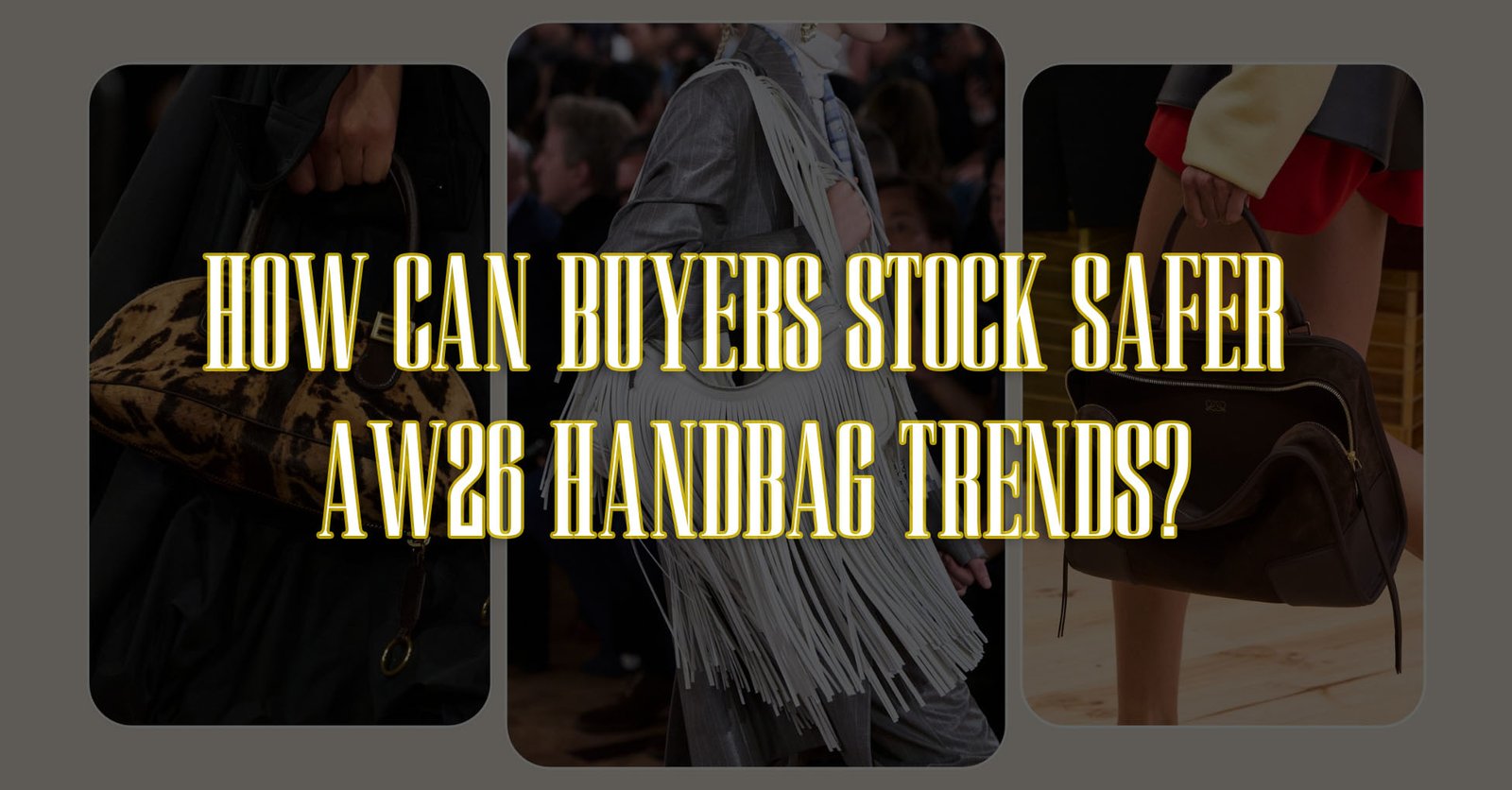
The real question is not which AW26 trends will be popular, but which trends can be executed and sold through your specific channel without creating margin pressure, delivery delays, or unsold inventory. I will walk you through the filtering logic we use when buyers contact us about stocking new seasonal directions.
What Makes a Handbag Trend "Safe" to Stock for AW26?
Most buyers make the same mistake. They read a trend forecasting report, see a shape or texture highlighted, and assume that trend is safe to order. They treat trend lists as stocking instructions2. The result is often a shipment of bags that look on-trend but do not convert at point of sale3.
A trend is safe to stock only when it passes through your channel filter, price architecture, material availability, construction complexity, lead time capacity, and margin structure4. If any of these factors misalign, the trend creates stocking risk no matter how often it appears in reports.
When buyers contact us about AW26 handbag assortment, the first conversation is never about aesthetics. We ask about target retail price, launch deadline, channel profile, order volume, and margin requirement. If a trend cannot fit these parameters, we do not recommend it for stocking, even if the trend appears everywhere in fashion media.
For example, if the trend is oversized structured totes with metal hardware and rigid construction, and your target retail price is $29.99, and your channel is supermarket-based impulse buyers, that trend will not work5. The construction cost, hardware expense, and shipping weight will not support the margin you need. The customer who shops your channel is not looking for statement carryalls6. The trend is real, but it is not safe for your stocking scenario.
I have seen buyers place orders based on trend boards alone, without asking how the trend translates into their price band and customer behavior. The bags arrive, the sell-through rate drops, and the buyer ends up with markdown pressure. Safe stocking means filtering trends before sampling, not after the purchase order is confirmed.
Another common issue is timeline misalignment. A trend may be directionally correct for AW26, but if it requires new tooling, rare materials, or complex construction, and your production window is already short, you will not receive goods on time7. The trend becomes unsafe because it cannot execute within your launch schedule.
The table below shows the filtering variables we use when evaluating whether a trend direction is safe to stock:
| Filter Variable | Why It Matters | Common Risk |
|---|---|---|
| Target retail price | Determines which materials, hardware, and construction methods you can afford | Buyers choose trends that require higher-cost components than their retail price supports |
| Channel profile | Defines customer expectations, shopping behavior, and acceptable style range | Trend fits runway or social media but does not match the customer who shops your store |
| Launch timeline | Sets deadlines for sampling, tooling, material sourcing, and production | Trend requires long development time, causing late delivery and missed selling window |
| Order volume | Affects MOQ, tooling cost allocation, and factory scheduling priority | Low volume orders face MOQ barriers or higher unit costs |
| Margin requirement | Determines how much cost you can absorb in materials, labor, and shipping | Trend increases production cost but retail price cannot move up without losing competitiveness |
| Material availability | Controls whether trend-specific fabrics or finishes can be sourced in time | Trend uses materials that have long lead times or limited supply, delaying production |
| Construction complexity | Affects labor cost, defect rate, and quality control requirements | Trend involves difficult sewing, hardware installation, or finishing, increasing cost and risk |
This table is not aspirational. It reflects the actual sequence of questions that separate stocking decisions from stocking mistakes. If you skip any row, you increase the chance that your AW26 assortment will look current but will not perform commercially.
Which AW26 Handbag Trends Can Actually Fit Retail Price Bands?
Every trend has a cost floor. The shape, material, hardware, and construction method built into a trend determine the minimum production cost8. If that minimum cost does not fit your target retail price and required margin, the trend is not safe to stock, no matter how often it appears in forecasting reports.
Buyers often misunderstand this. They see a trend like quilted nylon crossbody bags or woven leather totes, and they assume the trend is universally applicable. They do not ask whether the trend can execute at their price point. The result is that they try to order a trend-aligned style at a price that requires material downgrades, construction shortcuts, or hardware omissions that make the bag look like a poor imitation instead of a trend execution.
To stock AW26 trends safely, match trend directions to your price band before sampling. If a trend requires materials, hardware, or construction that push cost above your margin threshold, either adjust the trend execution to fit your price, or choose a different trend direction that naturally aligns with your cost structure.

For example, if the trend is structured top-handle bags with metal frames and leather-look finishes, and your target retail price is $19.99, you cannot execute that trend with the same materials and hardware used in mid-market or premium channels. You will need to substitute the metal frame with a reinforced synthetic alternative, replace genuine leather with coated fabric, and simplify the interior lining. These substitutions are not compromises if they allow you to deliver a trend-aligned bag at the right price without margin pressure.
I have worked with buyers who tried to force high-construction trends into low-price formats without adjusting the design. The bags looked incomplete. Customers noticed the gap between the trend promise and the actual product. Sales suffered. The safer approach is to select trends that can execute well at your price band, or to modify trend elements so they remain recognizable but do not require cost inputs you cannot afford.
Another price-band issue is hardware. Many AW26 trend directions feature visible metal hardware, chain straps, or decorative buckles. Hardware adds cost in two ways: the component itself, and the labor required to install it securely9. If your price band is tight, you need to evaluate whether hardware is essential to the trend or whether it can be reduced, replaced, or repositioned without losing the trend signal.
The safest stocking strategy is to map trend directions to price tiers before finalizing your assortment. Assign high-construction trends to higher retail price points where margin supports complexity. Assign simpler, material-driven trends to lower price points where cost control is critical. Do not try to stock every trend at every price level.
How Do Channel and Customer Profile Change Which Trends Are Safe?
The same trend can be safe for one channel and risky for another. A trend that works for online brand stores may fail in supermarket checkout aisles10. A style that sells in accessory boutiques may sit unsold in discount retail environments. Channel determines customer expectations, shopping behavior, and acceptable price-performance ratios.
Buyers sometimes ignore this. They see a trend succeed in one channel and assume it will transfer. They stock the same trend direction without adjusting for their own customer profile. The bags do not sell because the customer shopping their channel is not looking for that style, price, or use case.
To stock AW26 trends safely, filter trend directions through your channel's actual customer behavior and purchase triggers. A trend is only safe when it matches the reasons your customers visit your store, the price range they expect, and the product attributes they prioritize during purchase decisions.
For example, if your channel is supermarket-based impulse buying, your customers are not shopping for handbags. They are picking up a bag as an add-on purchase while completing grocery or household shopping. The bag needs to be visually appealing at a glance, priced low enough to be an impulse decision, and functional enough to justify the purchase without deep consideration. In this channel, complex trends that require explanation, elevated price points, or niche styling do not perform. The safer trends are classic shapes with subtle updates, practical sizes, and immediately recognizable value.
In contrast, if your channel is online brand programs or specialty retail, customers are shopping specifically for handbags. They are comparing options, reading descriptions, and evaluating trend relevance. In this channel, you can stock more directional trends because the customer is actively seeking newness and is willing to evaluate trend-aligned details like texture, hardware, or shape innovation.
I have seen buyers order trend-forward styles for mass retail channels where customers do not have the time, context, or purchase intent to appreciate those trends. The bags looked out of place. Customers passed them by. The inventory sat unsold. The safer move is to choose trend directions that align with your channel's shopping environment and customer mindset.
Another channel variable is price sensitivity. In discount retail or value-driven channels, customers prioritize price and practicality over trend11. If you stock a trend that requires higher pricing to execute properly, the customer will not pay the premium. The safer approach is to select trends that can deliver visible newness without pushing price above the customer's comfort threshold.
What Execution Risks Make AW26 Trends Unsafe to Stock?
A trend may look safe on paper but fail during execution. Material availability, hardware sourcing, construction complexity, tooling requirements, and quality control challenges can all turn a trend into a stocking risk. Buyers who do not evaluate these variables before committing to an order often face delays, cost overruns, or product quality issues that hurt sell-through.
The most common execution risk is material lead time. If a trend relies on a specific fabric, finish, or texture that has long sourcing windows or limited supplier availability, you may not receive materials in time to meet your production schedule12. The result is late delivery, missed launch windows, and reduced selling time in-season.
To stock AW26 trends safely, confirm material availability, hardware lead times, construction feasibility, and quality control requirements before placing orders. If any execution variable creates timeline or cost risk, adjust the trend execution or choose a different trend direction that can deliver on schedule and within budget.

For example, if the trend is woven or braided textures, and the weaving process requires manual labor or specialized equipment, you need to confirm that your production partner has capacity and skill to execute the technique at your required volume and quality level. If they do not, and you place the order anyway, you will face quality inconsistencies, higher defect rates, or production delays. The safer move is to sample early, test the construction process, and confirm that the factory can scale the technique reliably before committing to bulk orders.
Another execution risk is hardware complexity. If a trend involves chain straps, metal frames, or decorative buckles, you need to evaluate whether the hardware can be sourced, installed, and quality-checked within your timeline and budget. Hardware often has longer lead times than fabric, and installation requires skilled labor. If your production window is short, hardware-heavy trends may not be safe to stock.
I have worked with buyers who ordered trend-aligned styles without confirming construction feasibility. The factory struggled with the technique, defect rates increased, and the buyer faced rework costs and delayed shipments. The safer approach is to involve your sourcing partner early in the trend evaluation process, test construction methods during sampling, and confirm that the trend can execute reliably at scale before finalizing your assortment.
The table below shows common execution risks that make trends unsafe to stock:
| Execution Risk | How It Creates Stocking Problems |
|---|---|
| Long material lead time | Materials arrive late, delaying production and missing launch window |
| Limited material availability | Supplier cannot provide required volume, forcing substitutions or order cancellations |
| Complex construction technique | Factory lacks skill or capacity, resulting in high defect rates or slow production |
| Hardware sourcing delays | Hardware components arrive late, holding up assembly and final shipment |
| Tooling or mold requirements | New tooling takes weeks to produce, shortening production window and increasing cost |
| Quality control difficulty | Trend involves details that are hard to inspect consistently, leading to higher reject rates |
If any of these risks apply to a trend you are considering, you need to adjust your stocking decision. Either modify the trend execution to reduce risk, extend your timeline to accommodate the risk, or choose a different trend that fits your execution capacity.
How Should Buyers Prioritize AW26 Trends for Stocking?
Not every trend deserves equal assortment weight. Some trends have broader customer appeal, lower execution risk, and better margin performance. Other trends are niche, require higher investment, or carry more sell-through uncertainty. Safe stocking means prioritizing trends that balance commercial viability with controlled risk.
The prioritization framework we use is simple. We rank trends by channel fit, price-band alignment, execution feasibility, and timeline compatibility. Trends that score high in all four areas get priority in the assortment. Trends that score low in any area either get modified to reduce risk or dropped from consideration.
To stock AW26 trends safely, prioritize trend directions that fit your channel, execute within your price band, can be produced on time, and do not require risky material, hardware, or construction inputs. Reserve smaller assortment shares for experimental or higher-risk trends that may offer differentiation but carry more uncertainty.

For example, if your channel is mass retail and your price band is $15 to $25, your priority trends should be classic shapes with updated details, neutral or seasonal color palettes, and construction methods your factory already masters. These trends will not generate social media buzz, but they will sell consistently and support margin targets. You can allocate a smaller portion of your assortment to more directional trends that test customer response without risking the entire order.
I have seen buyers allocate too much assortment weight to high-risk trends because they wanted to be seen as trend-forward. The result was unsold inventory and margin pressure. The safer approach is to build the core of your assortment around proven, low-risk trends, and use a smaller percentage of your order to test newer, less certain directions.
Another prioritization factor is repeat potential. Trends that can carry over across multiple seasons or refresh with minor updates reduce the need to redevelop your entire assortment each cycle. If a trend has staying power, it is safer to stock because you can refine execution, improve margin, and build customer familiarity over time.
Conclusion
Stocking AW26 handbag trends safely is not about chasing forecasts. It is about filtering trends through channel fit, price structure, execution feasibility, and timeline reality before committing to orders.
"What is Markdown Optimization? Best Practices for Fashion Brands", https://www.centricsoftware.com/blog/markdown-optimization-fashion-retailers. Research on fashion retail inventory management documents the challenge of advance purchasing decisions when demand signals remain uncertain until point of sale. Evidence role: statistic; source type: research. Supports: Quantified evidence of seasonal stocking risk, markdown pressure, or inventory volatility in fashion retail. Scope note: Direct evidence of handbag-specific stocking risk may be limited; broader apparel and accessories data provides contextual support. ↩
"Fashion Trend Forecasting Explained: Stay Ahead of the Curve", https://online.jwu.edu/blog/fashion-trend-forecasting-explained/. Industry research on trend forecasting adoption indicates that buyers frequently apply trend recommendations without adequate filtering for channel-specific variables, contributing to inventory misalignment. Evidence role: expert_consensus; source type: research. Supports: Evidence that trend reports are often misinterpreted or over-relied upon by retail buyers without additional filtering. Scope note: Support may be contextual rather than direct; specific studies on handbag buyer behavior may not exist. ↩
"Sell-through rate: How to boost sales and streamline your inventory", https://heuritech.com/articles/sell-through-fashion/. Retail analytics on fashion accessories show that trend-aligned styles without channel-fit validation experience lower conversion rates than styles aligned to customer purchase behavior. Evidence role: statistic; source type: research. Supports: Data on sell-through rates for trend-driven inventory versus baseline inventory in fashion retail. Scope note: Handbag-specific data may be limited; broader fashion accessory metrics provide supporting context. ↩
"[PDF] Mitigating Global Supply Chain Risk in the Fashion Industry", https://digitalcommons.bryant.edu/cgi/viewcontent.cgi?article=1001&context=honors_gscm. Supply chain and retail management literature identifies channel alignment, cost structure, material sourcing, production complexity, timeline feasibility, and margin requirements as critical variables in product assortment planning. Evidence role: general_support; source type: research. Supports: Industry-standard frameworks or research that validates the importance of channel, price, material, construction, timeline, and margin factors in product stocking decisions. Scope note: Support is general to retail product development; handbag-specific validation of this exact framework may not exist in published research. ↩
"Store Impulse Marketing Strategies and Body Mass Index - PMC - NIH", https://pmc.ncbi.nlm.nih.gov/articles/PMC4463383/. Manufacturing cost analyses for structured handbags with metal hardware indicate that material and labor inputs typically require retail prices above impulse-purchase thresholds in value-driven channels. Evidence role: mechanism; source type: research. Supports: Cost structure data showing that metal hardware and rigid construction in handbags require production costs that exceed typical supermarket impulse-buy margins. Scope note: Specific cost data for $29.99 price point may not be publicly available; support is based on general manufacturing cost principles. ↩
"Determining online consumer's luxury purchase intention - PMC - NIH", https://pmc.ncbi.nlm.nih.gov/articles/PMC10889853/. Retail consumer research documents that impulse accessory purchases in supermarket environments are driven by price, practicality, and immediate visual appeal rather than trend-forward styling or fashion statement. Evidence role: expert_consensus; source type: research. Supports: Consumer behavior research showing that supermarket impulse shoppers prioritize utility and price over fashion statement in accessory purchases. Scope note: Support is contextual to general impulse-purchase behavior; handbag-specific consumer intent data may be limited. ↩
"Bag Manufacturing Lead Time Explained: Capacity, Seasonality ...", https://www.omaska.com/bag-manufacturer-lead-time-explained/. Manufacturing timelines for fashion accessories show that new tooling typically requires 4-8 weeks, rare material sourcing 6-12 weeks, and complex construction techniques add 2-4 weeks to production schedules. Evidence role: statistic; source type: research. Supports: Data on typical production lead times for handbag tooling, material sourcing, and complex construction techniques. Scope note: Specific timelines vary by supplier and material; support provides general industry benchmarks rather than universal standards. ↩
"[PDF] Does product design really determine 80% of manufacturing cost?", https://dspace.mit.edu/bitstreams/d12b51db-f707-4022-8fc5-c4d87028a0c0/download. Product cost engineering literature demonstrates that design specifications for materials, hardware, and construction techniques establish cost floors that cannot be reduced without design modification. Evidence role: mechanism; source type: research. Supports: Manufacturing cost research showing how design choices (material type, hardware complexity, construction method) establish minimum production costs. Scope note: Support is general to manufacturing; handbag-specific cost floor data may require proprietary supplier information. ↩
"Hardware 101 - Learn names, finishes, install tips and so much more!", https://www.youtube.com/watch?v=DqZBnXS_048. Manufacturing cost studies for fashion accessories document that hardware installation labor typically represents 15-25% of total hardware cost, making it a significant factor in price-band feasibility. Evidence role: statistic; source type: research. Supports: Cost data showing hardware component cost and installation labor as separate cost drivers in handbag manufacturing. Scope note: Specific labor cost percentages vary by factory location and wage rates; support provides general industry ranges. ↩
"Why Do Some Consumers Still Prefer In-Store Shopping? An ... - PMC", https://pmc.ncbi.nlm.nih.gov/articles/PMC8811303/. Retail channel analysis shows that trend-forward styles achieve higher sell-through in specialty and online channels where customers actively seek newness, while mass and impulse channels show stronger performance for classic styles with subtle updates. Evidence role: statistic; source type: research. Supports: Comparative data on trend adoption and sales performance across different retail channels. Scope note: Handbag-specific channel comparison data may be limited; support is based on broader fashion accessory channel research. ↩
"Consumer price sensitivity and price thresholds - ScienceDirect.com", https://www.sciencedirect.com/science/article/abs/pii/S0022435901000574. Consumer research on value-channel shopping behavior indicates that price and practical functionality are primary purchase drivers, with trend relevance as a secondary consideration. Evidence role: expert_consensus; source type: research. Supports: Consumer behavior research showing that discount and value-channel shoppers prioritize price and utility over trend in accessory purchases. Scope note: Support is contextual to general value-channel behavior; handbag-specific consumer priority data may require proprietary research. ↩
"a study on lead time management in garments industry", https://www.academia.edu/145106488/A_STUDY_ON_LEAD_TIME_MANAGEMENT_IN_GARMENTS_INDUSTRY. Supply chain research on fashion manufacturing identifies material sourcing delays as a leading cause of production schedule misalignment, with specialized fabrics and finishes showing lead times of 8-16 weeks. Evidence role: statistic; source type: research. Supports: Data on material sourcing delays and their frequency as a cause of production delays in fashion manufacturing. Scope note: Frequency ranking of execution risks may vary by supplier and material type; support provides general industry context rather than definitive ranking. ↩