Many food buyers still choose bags by foam thickness or shiny material names. Then the bags fail in real routes, and the cost comes back in complaints, waste, and repeat buying1.
Food buyers should choose insulated delivery bags by delivery job, not by insulation claims alone. I always start with trip time, food type, loading method, cleaning routine, and reuse frequency. Those factors tell me what structure, liner, size, and durability level the bag really needs.
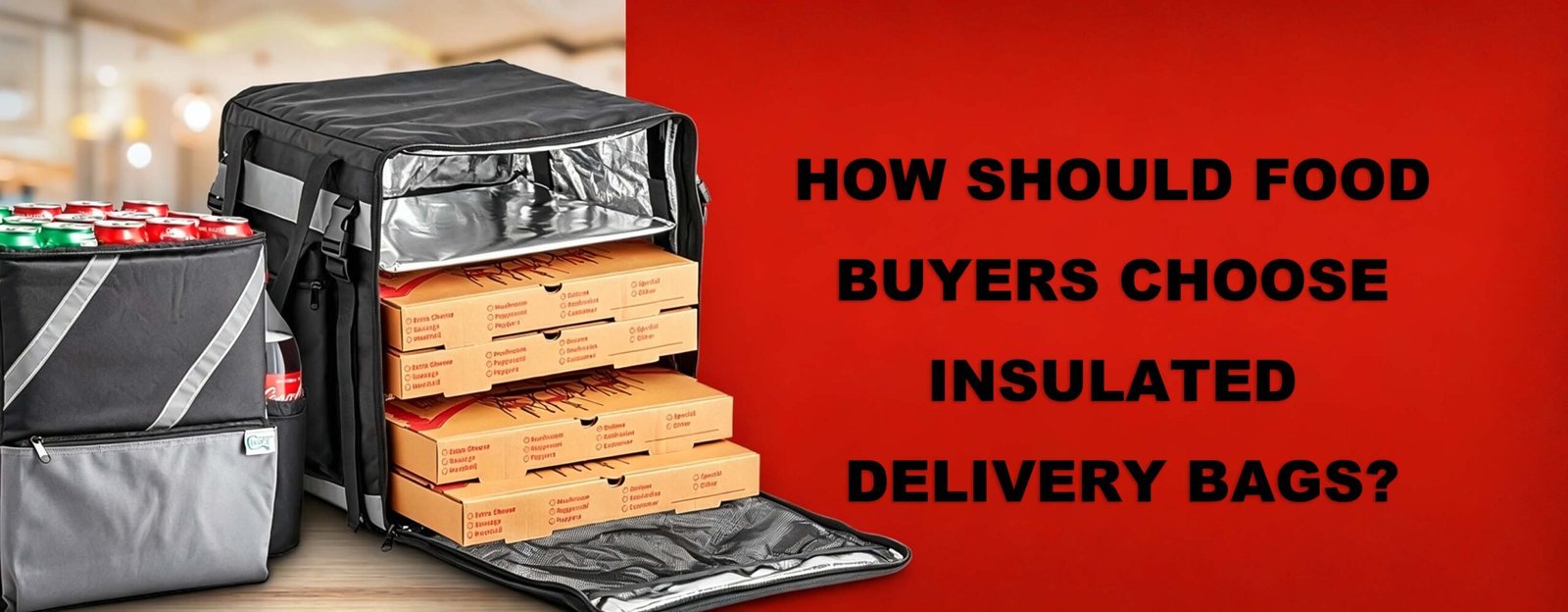
I have handled many buyer talks where the first question was about thickness. I understand why. Thickness looks easy to compare. Still, I have seen thick bags fail fast in daily use, and I have seen simpler bags perform better because they matched the route and handling style. That is why I now push the discussion in a different way. I ask what job the bag must survive. Once that answer is clear, the buying risk drops a lot, and the next choices become much easier.
What Insulation Level Do Grocery Delivery Bags Need?
Many buyers ask for the thickest bag because they fear food safety issues. That sounds safe, but it often leads to overbuying, harder handling, and a bag that still does not fit the route.
Grocery delivery bags need enough insulation for the real trip, product mix, and handling stress. I usually judge the needed level by delivery time, hot or cold load, open-close frequency, and weather exposure, not by thickness alone.
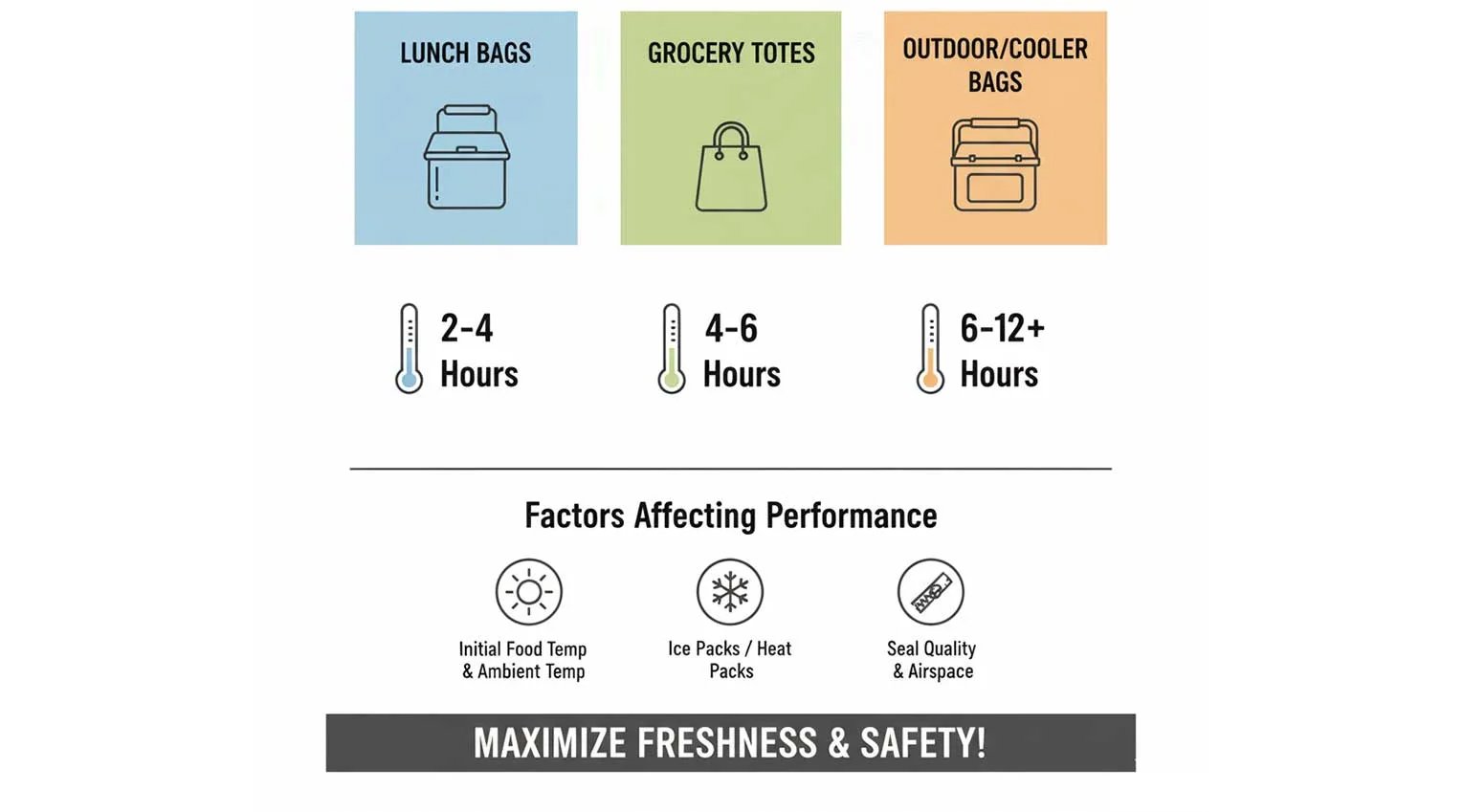
When I discuss grocery delivery bags with buyers, I do not begin with foam type. I begin with route questions. A short city run with chilled drinks and packed groceries is very different from a mixed-temperature delivery with frozen items, meal boxes, and repeated door drops. The same bag will not fit both jobs well.
I also look at how the driver uses the bag. Some teams load once and unload once. Some teams open the bag many times in one route. Heat loss or cold loss often comes from workflow, not just wall construction.2 A bag with strong insulation on paper may underperform if the opening is wide, the zipper leaks, or the shape collapses during loading.
Here is the simple way I frame it:
| Delivery factor | What I check | Why it matters |
|---|---|---|
| Trip length | 15 min, 45 min, 2 hours | Longer trips need stronger retention and better closure |
| Food type | Hot meals, chilled grocery, frozen items | Each product has different risk |
| Open-close frequency | Once or many times | Every opening reduces retention3 |
| Fill rate | Full, half-full, mixed load | Air gaps affect stability |
| Route conditions | Indoor pickup, outdoor wait, car trunk, bike | Handling changes performance |
In many cases, buyers do not need the highest insulation level. They need the right balance of retention, weight, shape, and durability. If the bag is too bulky, staff may stop using it properly. That creates a new problem. So I always tell buyers that insulation level should follow operating reality, not a simple ranking chart.
Are Passive Insulated Bags Enough for Last-Mile Delivery?
Some buyers hope a passive insulated bag can solve every route. Then they use one standard bag for all tasks, and the gap between test conditions and field use becomes obvious.
Passive insulated bags are often enough for last-mile delivery when trip time is short, loading is controlled, and the bag matches the food type. They are not a universal answer for long delays, extreme weather, or high-risk temperature-sensitive loads.
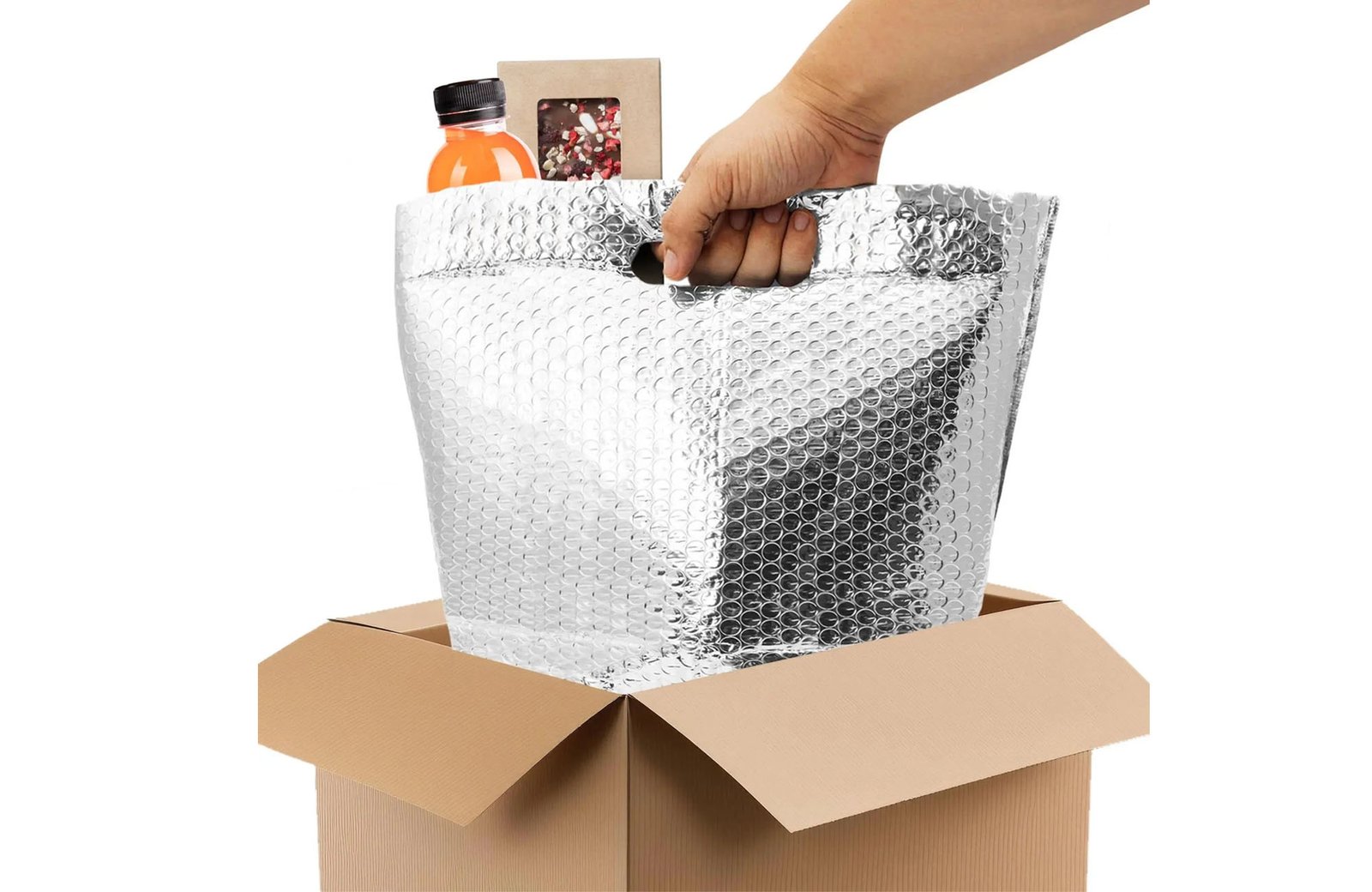
I get this question a lot because passive bags are simple and cost-friendly. In many last-mile systems, they work well. Still, I do not treat “passive” as good or bad by itself. I ask what support surrounds the bag. If food is packed well, staging time is short, and route planning is stable, a passive bag can be a very practical choice.
But I have also seen buyers expect too much from it. A passive bag cannot fix poor dispatch timing, long doorstep waiting, repeated reopening, or products packed at the wrong starting temperature. In that case, the bag gets blamed for a process problem.
I compare passive use like this:
| Scenario | Passive bag fit | Main risk |
|---|---|---|
| Short urban grocery run | Good | Frequent opening |
| One-drop meal delivery | Good | Delay before handoff |
| Multi-stop hot meal route | Medium | Heat loss from repeated access |
| Frozen item with long transport | Weak to medium | Product sensitivity |
| Mixed hot and cold load in one cavity | Weak | Temperature conflict |
I also remind buyers that passive bag choice is a cost decision beyond unit price. A cheaper bag may flatten, tear, or lose zipper function fast. Then replacement cost goes up. Driver frustration goes up too. In B2B buying, that matters. A bag that survives real daily use can be the better low-cost option over time.4 So yes, passive bags are often enough, but only when the delivery model supports them.
How Should Buyers Test Temperature Retention?
Many buyers trust supplier claims without checking how the test was done.5 Then the bag reaches the field, and the result feels very different from the promised number.
Buyers should test temperature retention under their own use conditions. I suggest checking starting temperature, trip length, opening frequency, fill level, and ambient conditions. A useful test compares bags in the same realistic routine.
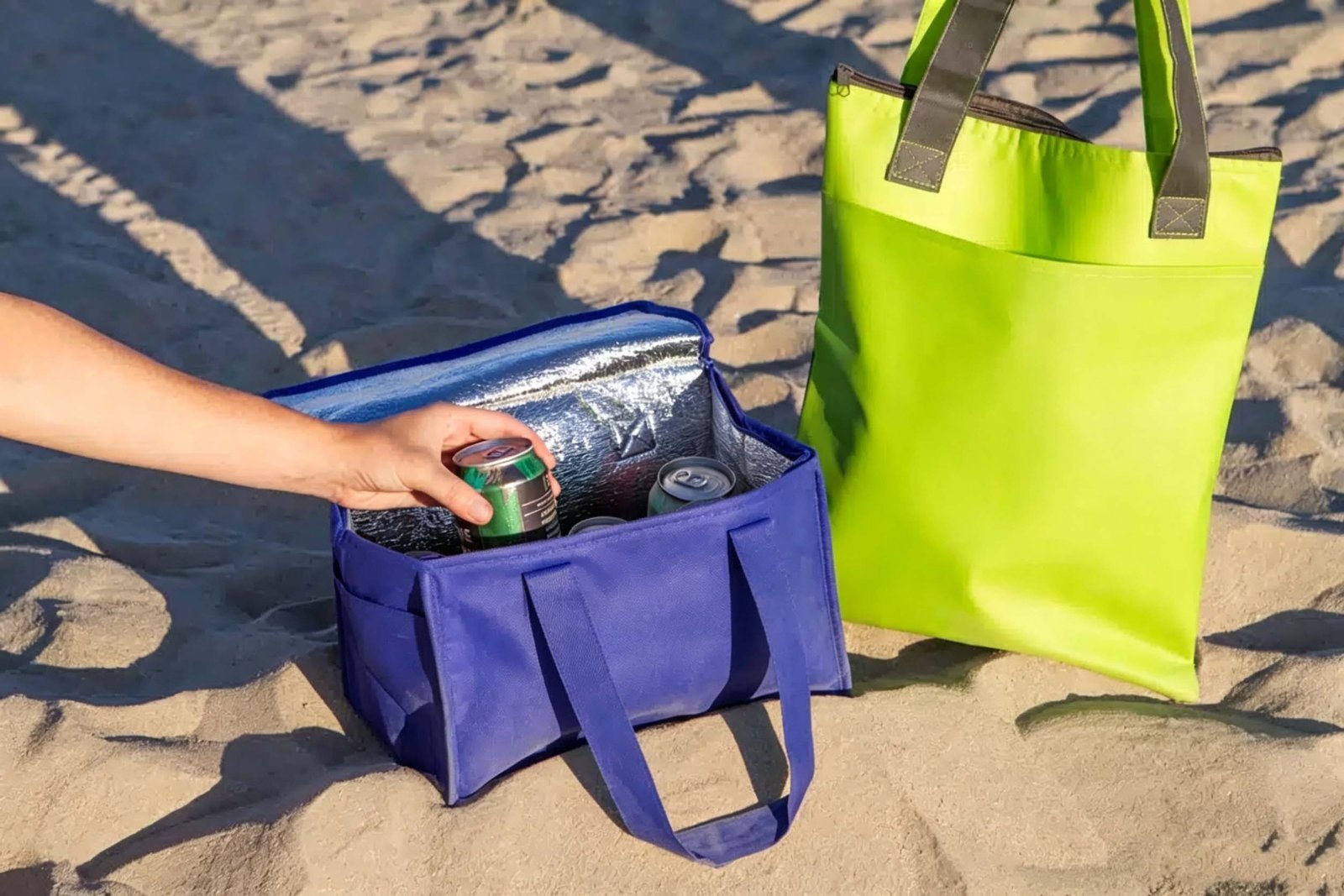
This is one area where I often need to slow the conversation down. A buyer may ask, “How many hours can this bag keep food hot?” I understand the need for a simple answer. But that number means little without test conditions6. Was the bag full or half-empty? Was it opened during the test? What was the outside temperature? Was the food container itself stable?
I do not present lab authority where I do not have it. What I do know from buyer discussions is that comparison only helps when the test setup matches the route. That is why I tell buyers to create a basic internal protocol before placing volume orders.
A practical test can include these points:
| Test item | What to fix | Why |
|---|---|---|
| Starting load temp | Same for each bag | Keeps comparison fair |
| Ambient condition | Indoor or outdoor target range | Outside heat affects result |
| Bag fill state | Full, partial, mixed | Empty air changes retention |
| Opening routine | Every 10 or 15 minutes, or no opening | Matches route behavior |
| Test duration | Based on real route time | Avoids false overtesting |
| Bag position | Upright, stacked, vehicle storage | Handling changes shape and leakage |
I also tell buyers to watch more than temperature. Check zipper smoothness, handle stress, panel stability, and cleaning after the test. A bag can pass one retention check and still fail in daily use because the liner wrinkles, seams trap residue, or the structure collapses under load. Good testing should reflect operation, not just a headline number.
Which Liner Is Easiest to Clean for Food Service?
Many buyers focus on the outer fabric and forget the liner. Then they discover that cleaning takes too long, odors stay inside, or the liner breaks after repeated wiping7.
The easiest liner to clean is the one that matches the food service routine. Buyers should compare surface smoothness, seam design, wipeability, stain risk, and replacement cost, not only the liner material name.

In food service, liner choice affects labor, hygiene, and bag life. I often see buyers ask for a certain liner because they heard it is “better.” But easy cleaning depends on the whole inside build. A smooth liner with awkward corner seams may still be annoying to wipe. A strong liner may resist tearing but hold grease marks. A bright liner may help visual checks but show stains fast.
So I ask buyers simple use questions. Are they carrying sealed meal boxes or loose bakery trays? Will staff wipe the bag after every run or only at the end of the day? Is leakage common? Do they need a removable insert, or will a fixed liner be enough?
Here is how I help structure the choice:
| Liner concern | What I ask | Buying impact |
|---|---|---|
| Daily cleaning speed | Quick wipe or deep clean | Surface finish matters |
| Spill frequency | Rare or common | Seam design and edge build matter |
| Odor control | Low or high need | Cleaning access matters |
| Visual inspection | Easy to check residue | Light color may help |
| Wear from containers | Soft packs or hard corners | Abrasion resistance matters |
I also remind buyers that the easiest liner to clean is not always the cheapest one to source. If staff struggle to clean a bag well, hygiene risk goes up.8 If the liner cracks or peels, replacement comes early. In repeat-use food service, small cleaning problems become real operating cost. That is why I see liner choice as a workflow decision, not a line-item material decision.
What Size Cooler Bag Works for Meal Kits?
Many buyers choose size by external dimensions or carton efficiency. Then the meal kit does not load well, products shift inside, or drivers waste time arranging each order.
The right meal kit cooler bag size should match pack format, insert type, and route handling. I usually check internal usable space, shape stability, and whether the load stays secure without crushing or excess empty space.
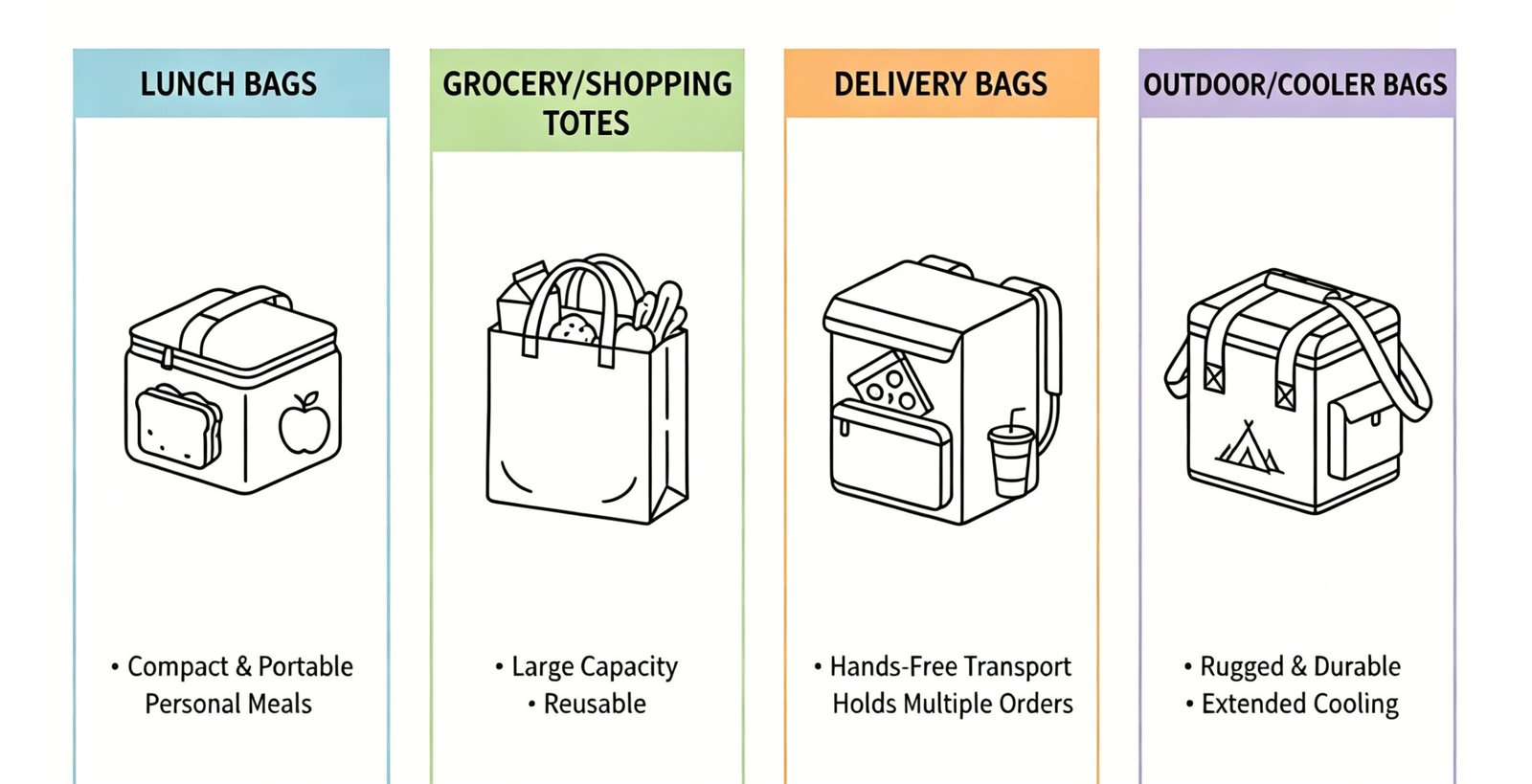
Meal kits create a very common sizing mistake. Buyers often start with product dimensions and forget real packing behavior. Ice packs, insulation thickness, dividers, folded recipe cards, and container shape all affect usable space. A bag may look large enough on paper but still be awkward in the field.
I prefer to talk about “fit quality” instead of just liters or inches. Can staff load the kit quickly? Does the bag stand upright during packing? Does the order move around in transit? Does the opening allow easy access without bending or crushing the top items? These questions matter more than one neat dimension chart.
I usually review size with this table:
| Size factor | What to confirm | Common mistake |
|---|---|---|
| Internal dimensions | Real usable space after insulation | Using outer size only |
| Product mix | Boxes, pouches, ice packs, bottles | Measuring one item only |
| Loading style | Top load or front load | Ignoring staff speed |
| Route handling | Carry by hand, stack in van, shelf fit | Forgetting transport layout |
| Order variation | One standard kit or several SKUs | No flexibility for mixed orders |
A bag that is too large creates dead air and unstable loading.9 A bag that is too small slows packing and can damage packaging.10 For meal kits, I often suggest buyers test with full mock loads, not sample products alone. That reveals whether the chosen size supports repeatable, fast, and clean operation.
What Should Buyers Include in an Insulated Bag RFQ?
Many RFQs ask only for size, material, and logo. Then the quotation looks clear, but the samples come back wrong because the real use case was never defined.
An insulated bag RFQ should include route use, food type, target load, cleaning routine, durability needs, and packing details. A good RFQ helps suppliers quote the right structure, not just the lowest visible spec.

I can say from experience that many sourcing problems begin in the RFQ stage11. A buyer may send dimensions and ask for price. A supplier then quotes based on assumptions. Later, both sides discover that the bag needs a harder base, a different liner, stronger handles, or a divider system. That causes revisions, delay, and frustration.
A better RFQ saves time because it explains the job. I like buyers to include not only what the bag should look like, but what the bag must do every day. When that information is present, supplier feedback becomes much more useful.
Here is the RFQ checklist I would use:
| RFQ item | Why I include it |
|---|---|
| Bag use scenario | Helps match structure to delivery job |
| Food type and temperature goal | Clarifies risk level |
| Trip duration and opening frequency | Affects retention design |
| Internal load details | Improves size and shape fit |
| Cleaning method and frequency | Guides liner choice |
| Reuse frequency | Shows durability level needed |
| Required features | Pockets, dividers, shoulder strap, ID window, hard bottom |
| Branding needs | Logo, color, packaging, label |
| [Compliance or testing needs | Avoids later surprises](https://www.acquisition.gov/far/part-46)%%%FOOTNOTE_REF_12%%% |
| Target order quantity and timeline | Supports practical quoting |
When I receive this kind of RFQ, the discussion becomes much better. We can talk about trade-offs clearly. We can compare standard and custom options with purpose. Most important, we can reduce the risk of buying a bag that looks correct in specs but fails in operation.
Conclusion
I choose insulated delivery bags by the delivery job they must survive. When buyers focus on real use, they make better sourcing decisions and lower long-term risk.
"Scoping Review of Pre-Consumption Food Loss in the US Supply ...", https://pmc.ncbi.nlm.nih.gov/articles/PMC12940745/. Studies on food distribution and cold-chain performance report that temperature abuse and handling failures can accelerate quality loss and spoilage, increasing waste and service failures; these findings support the article’s operational warning, although they do not quantify replacement purchasing for insulated bags specifically. Evidence role: general_support; source type: paper. Supports: Research should support that failures in temperature control or handling during food distribution contribute to quality loss, spoilage, waste, and downstream service problems.. Scope note: Support is contextual from food distribution research rather than a direct study of insulated bag procurement outcomes. ↩
"Economic Impact of Temperature Control during Food ... - PMC - NIH", https://pmc.ncbi.nlm.nih.gov/articles/PMC8834265/. Thermal transport studies show that access events such as repeated opening, loading delays, and poor closure can cause significant temperature excursions independent of nominal insulation thickness, supporting the article’s emphasis on workflow as a major determinant of performance. Evidence role: mechanism; source type: paper. Supports: Sources should show that opening frequency, loading practices, and handling conditions materially affect temperature retention in insulated transport systems.. ↩
"Validation study on new isothermal container for hot ready to eat ...", https://pmc.ncbi.nlm.nih.gov/articles/PMC7154607/. Experimental work on insulated storage and transport systems indicates that each opening event exchanges conditioned air with ambient air and reduces temperature retention, especially when openings are frequent or prolonged. Evidence role: mechanism; source type: paper. Supports: Evidence should support that each opening increases heat exchange with ambient air and reduces thermal retention.. ↩
"[PDF] Single-use vs. Reusable Transport Packaging - UPCommons", https://upcommons.upc.edu/bitstreams/78951b8d-f5e8-48d8-922e-41a508294c3c/download. Procurement and lifecycle-cost guidance from public and institutional sources notes that lower purchase price does not necessarily imply lower total cost when durability, maintenance, and replacement intervals differ, which supports the article’s point about daily-use performance and long-term cost. Evidence role: expert_consensus; source type: institution. Supports: Sources should support the procurement principle that acquisition price alone may not reflect lifecycle cost when durability affects replacement frequency and operating burden.. Scope note: The support is a general procurement principle rather than a bag-specific cost study. ↩
"Research on Thermal Insulation Performance and Impact on Indoor ...", https://pmc.ncbi.nlm.nih.gov/articles/PMC10419949/. Methodological literature on thermal-performance testing shows that reported retention times depend on defined conditions such as starting temperature, ambient environment, load state, and opening pattern, so claims without protocol details can be misleading. Evidence role: general_support; source type: paper. Supports: Evidence should support that reported thermal-retention figures are conditional on standardized inputs such as load, ambient temperature, and access pattern.. ↩
"Heat and fraud: evaluating how room temperature influences ... - PMC", https://pmc.ncbi.nlm.nih.gov/articles/PMC7677414/. Thermal-retention performance is a conditional measurement, not a universal constant; laboratory and standards-based testing frameworks define retention only relative to specified ambient conditions, load characteristics, and access assumptions. Evidence role: definition; source type: research. Supports: Sources should support that thermal-retention values are conditional measurements rather than universally valid product properties.. ↩
"Recontamination of Healthcare Surfaces by Repeated Wiping ... - PMC", https://pmc.ncbi.nlm.nih.gov/articles/PMC7766459/. Materials studies on polymers and coated flexible surfaces report that repeated wiping and cleaning exposure can cause wear, cracking, delamination, or surface degradation depending on the material and cleaning chemistry, supporting the article’s caution about liner longevity. Evidence role: mechanism; source type: paper. Supports: Evidence should show that repeated wiping, cleaning chemicals, or abrasion can degrade flexible liner materials or surface finishes.. Scope note: The support may be material-level rather than specific to insulated food-delivery bags. ↩
"When and How to Clean and Disinfect a Facility - CDC", https://www.cdc.gov/hygiene/about/when-and-how-to-clean-and-disinfect-a-facility.html. Food-safety guidance from regulatory and public-health sources emphasizes that surfaces used in food operations should be smooth, durable, and readily cleanable because poor cleanability can impede sanitation and increase contamination risk. Evidence role: expert_consensus; source type: government. Supports: Authoritative sources should support that food-contact or food-adjacent surfaces must be cleanable to reduce contamination and sanitation risk.. Scope note: The support is based on food-service sanitation principles and may not refer specifically to insulated delivery bag liners. ↩
"[PDF] Performance Comparison of Thermal Insulated Packaging Boxes ...", https://digitalcommons.calpoly.edu/cgi/viewcontent.cgi?article=1043&context=it_fac. Packaging and thermal-transport research indicates that excess void space can promote air movement and temperature variation inside insulated systems, while also allowing load shift during transport; this supports the article’s warning about oversized bags. Evidence role: mechanism; source type: paper. Supports: Evidence should support that excess void space can increase convective heat exchange and allow product movement during transport.. ↩
"Ergonomic factors on task performance in laparoscopic surgery ...", https://pubmed.ncbi.nlm.nih.gov/21893312/. Logistics and packaging studies show that poor fit between product and transport container can reduce handling efficiency and increase the risk of compression or contact damage, which is consistent with the article’s caution about undersized bags. Evidence role: general_support; source type: paper. Supports: Sources should support that insufficient container space can impede handling efficiency and increase compression or damage risk to packaged goods.. Scope note: Support is likely to come from general packaging and handling research rather than meal-kit cooler bags specifically. ↩
"2 CFR Part 200 Subpart D - Procurement Standards - eCFR", https://www.ecfr.gov/current/title-2/subtitle-A/chapter-II/part-200/subpart-D/subject-group-ECFR45ddd4419ad436d. Procurement guidance from public and institutional bodies consistently notes that incomplete or ambiguous specifications can lead to unsuitable quotations, later revisions, and contract-performance problems, supporting the article’s emphasis on the RFQ stage. Evidence role: expert_consensus; source type: institution. Supports: Sources should support that clear and complete specifications are important in procurement to reduce ambiguity, unsuitable bids, and contract performance issues.. ↩
"Part 46 - Quality Assurance - Acquisition.GOV", https://www.acquisition.gov/far/part-46. Quality-assurance and procurement frameworks recommend stating compliance criteria and verification or testing requirements at the specification stage so suppliers can respond accurately and nonconformities can be identified earlier in the sourcing process. Evidence role: general_support; source type: institution. Supports: Sources should support that identifying compliance and verification requirements early in procurement reduces misunderstanding and rework later in the process.. Scope note: The support is a general sourcing-control principle rather than evidence focused specifically on insulated bags. ↩