I often see buyers lose time because the cheapest bag quote hides weak fabric, poor printing, or a risky delivery date.
I source low-cost drawstring bags by fixing the event date, quantity, budget, size, material, logo, load need, and packaging first. This lets me compare supplier quotes fairly and avoid bags that look cheap, arrive late, or fail during use.
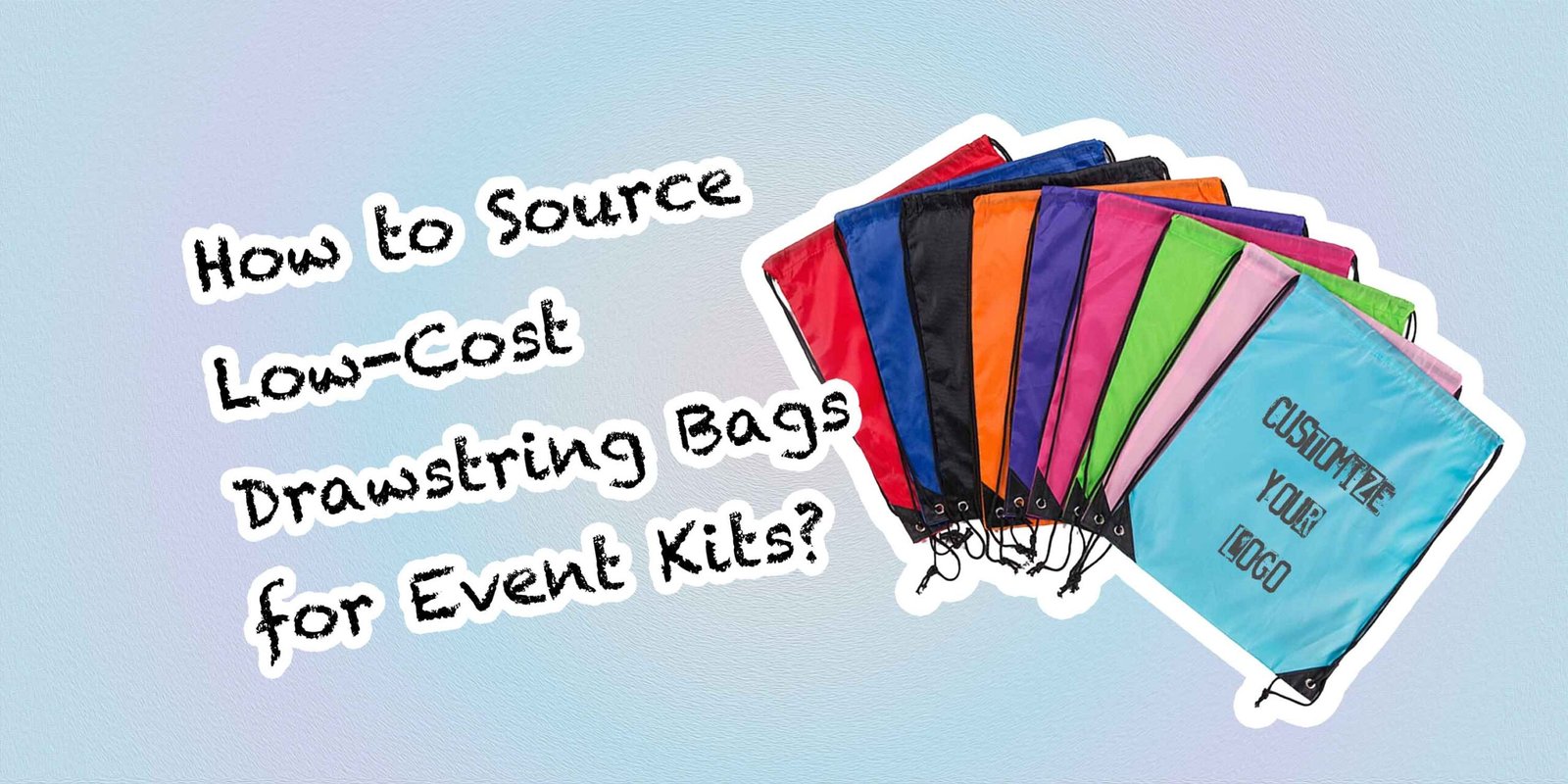
I have handled many overseas inquiries where the first message was simple: “Please send me your cheapest drawstring bag.” I understand this request. Event budgets are tight. Deadlines are fixed. Buyers need a simple bag for kits, gifts, uniforms, brochures, samples, or sponsor items. But I have also seen how a vague request creates vague quotes. One supplier may quote a thin non-woven bag. Another may quote polyester. Another may include printing. Another may not include printing. The unit prices look different, but the bags are not the same. I always suggest one practical method. I define the minimum acceptable bag first. Then I ask suppliers to quote the same bag. This is the fastest way to find a low-cost option that still works for the event.
What Makes Drawstring Bags a Good Choice for Event Kits?
I see many buyers choose the wrong event bag because they focus only on looks and forget carrying comfort, packing speed, and user behavior.
Drawstring bags work well for event kits because they are light, simple, easy to pack, and cost-friendly in bulk.1 I can customize size, material, color, and logo, so the bag can hold event items and still show the brand clearly.
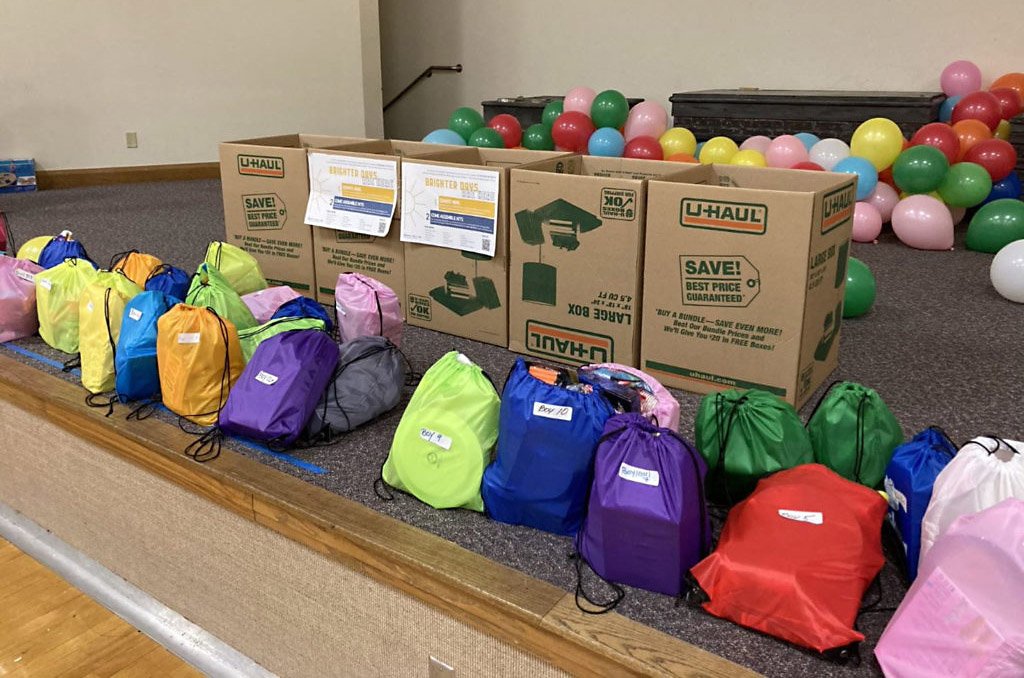
I like drawstring bags for event kits because they solve a simple problem. People need one place to keep all event items. A drawstring bag is easy to open. It is easy to close. It is easy to carry on the shoulder or back.2 It also works for many event types, such as sports days, campus events, trade shows, charity runs, product launches, and staff training.
I usually ask buyers what the bag will hold. A bag for paper brochures is different from a bag for bottles, shirts, catalogs, snacks, or small gifts. The design can stay simple, but the strength should match the contents.
| Event Use | Common Contents | Bag Focus |
|---|---|---|
| Trade show kit | Brochure, pen, badge, flyer | Low weight and clean logo |
| Sports event | T-shirt, towel, bottle | Stronger fabric and cord |
| School event | Notebook, gifts, paper | Medium size and safe print |
| Corporate event | Uniform, documents, samples | Better finish and brand look |
I do not think every event needs an expensive bag. I also do not think every event should use the thinnest bag. The best choice sits between cost, use, and brand image. If the bag is for one-time use, I may suggest a very simple material. If the bag will carry a visible sponsor logo, I usually suggest a better surface for printing. This small choice can protect the brand image without making the project too expensive.
How Can Buyers Reduce the Cost of Custom Event Bags?
I often see buyers pay more than needed because they change details late or ask for unclear options that cannot be compared.
I reduce the cost of custom event bags by fixing the core specs early, keeping the design simple, choosing practical materials, matching quantity to production, and avoiding last-minute changes that create extra sample, print, or rush costs.
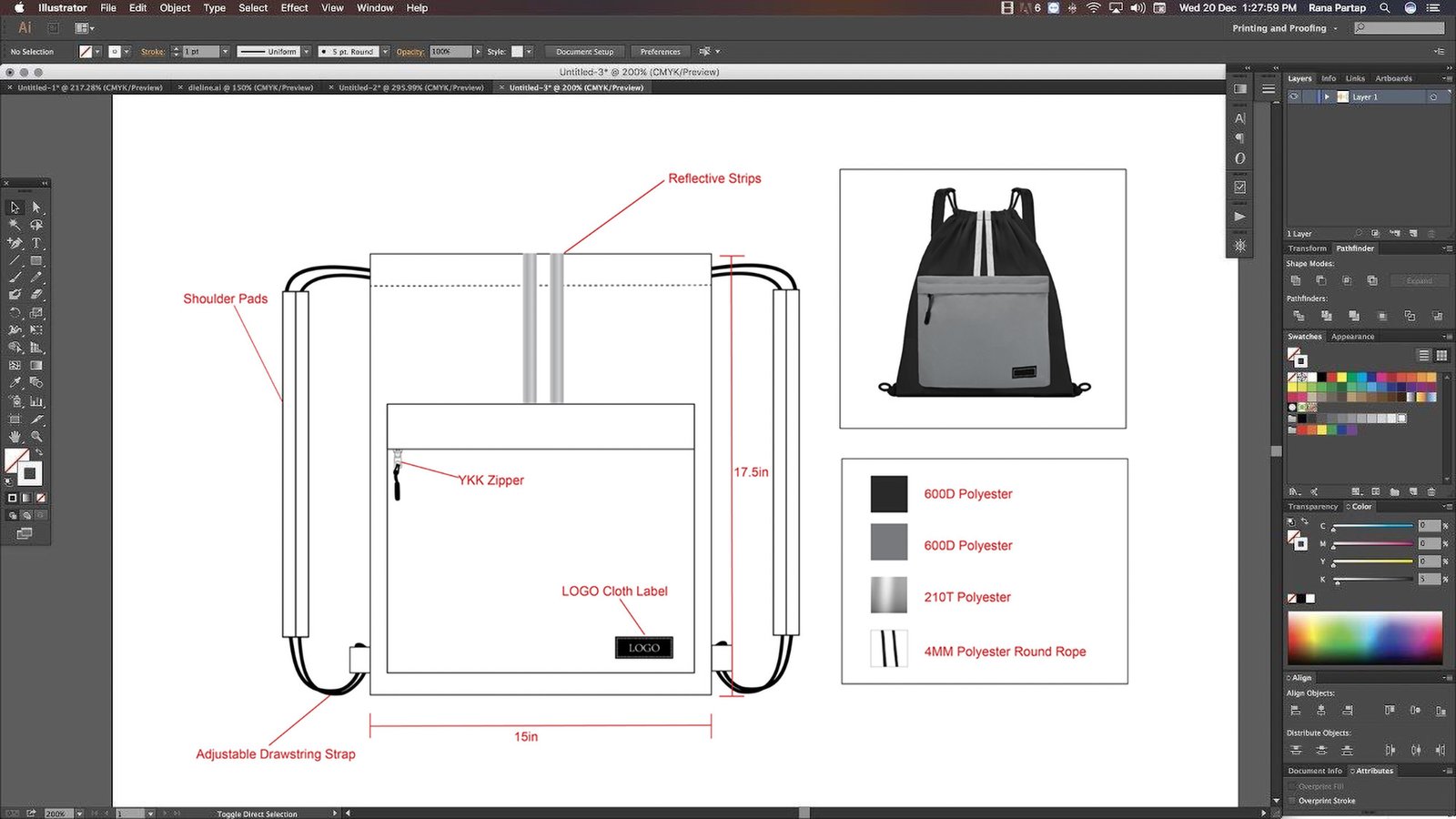
I do not reduce cost by cutting every detail. I reduce cost by removing unclear details. When I receive a clear RFQ, I can quote faster and more accurately. When I receive a vague RFQ, I must guess. Guessing often creates a cheap quote that later changes after the buyer sends the logo, size, packing method, or deadline.
A useful RFQ should include the main facts. I normally ask for these details before I quote:
| RFQ Item | Why I Need It |
|---|---|
| Event date | I need to check production time and delivery risk |
| Quantity | I need to calculate material use and print cost |
| Target budget | I need to suggest a realistic construction |
| Bag size | I need to estimate fabric cost |
| Material and weight | I need to match cost and strength |
| Load requirement | I need to choose fabric and cord quality |
| Logo artwork | I need to check print method and colors |
| Print position | I need to plan production steps |
| Packaging | I need to calculate labor and carton space |
I often suggest a simple logo print if the budget is tight. One-color screen printing is usually more cost-friendly than multi-color printing.3 A standard size also helps. Custom size is possible, but it may increase cutting work and fabric waste.4 A common fabric color can also save time. A special dyed color may need more time and a higher order quantity.5
I also tell buyers not to hide the budget. A budget range helps me offer a workable option. It does not mean I will push the highest price. It means I can avoid quoting a bag that is too thin or too slow for the event. A low-cost bag can still be useful, but the target must be clear from the start.
Which Materials Work Best for Low-Cost Drawstring Bags?
I have seen event bags fail because the fabric looked acceptable in photos but felt too thin or tore when people used them.
The best low-cost materials for drawstring bags are usually non-woven fabric, polyester, cotton, or recycled fabric.6 I choose the material based on budget, load weight, print need, event image, and whether the bag is for one-time use or reuse.
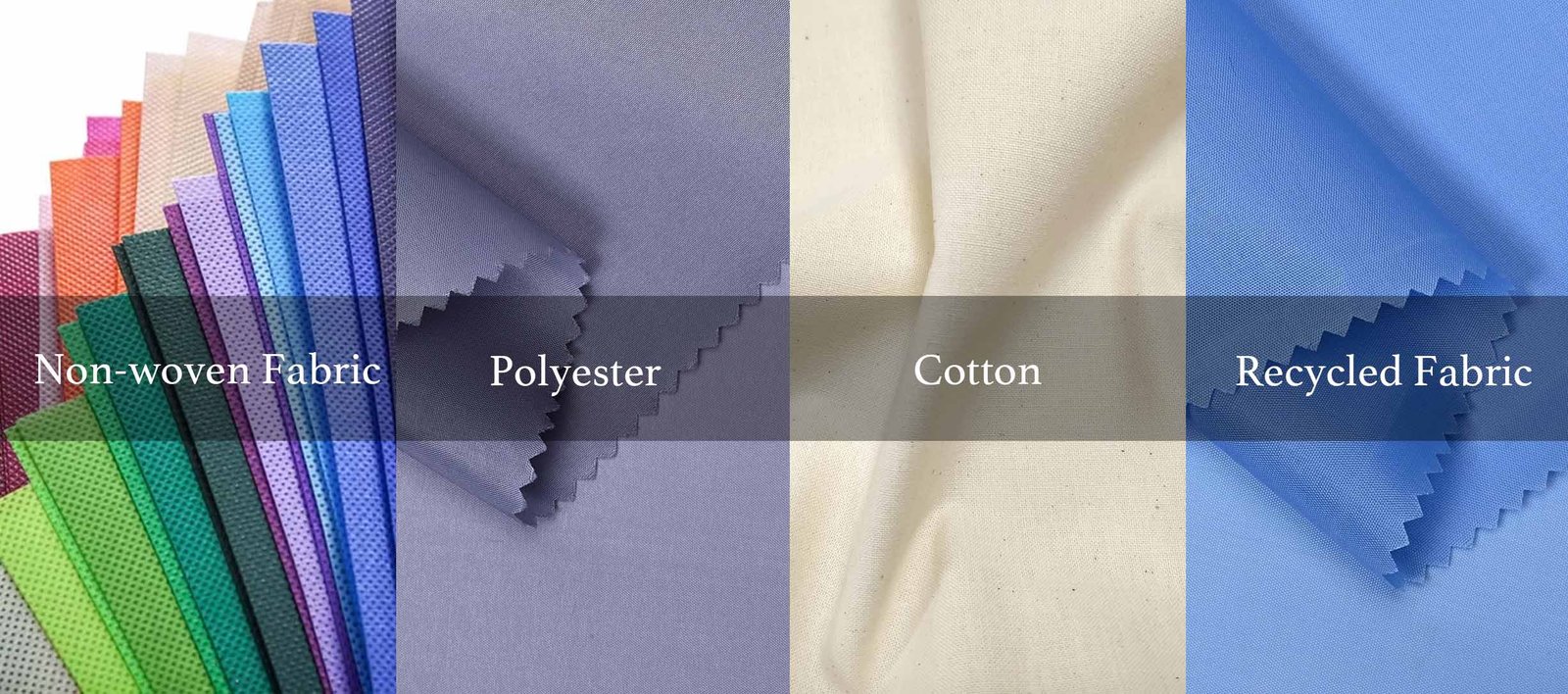
I do not choose material by price alone. I choose material by fit. A non-woven drawstring bag can be very cost-friendly for large giveaway events. It works well for light items. It also supports simple logo printing. But it may not feel premium. It may not be the best choice for heavy bottles or high-value brand events.
Polyester is a common choice when buyers want better strength and a smoother surface.7 It can still be affordable in bulk. It also supports many colors and printing options. Cotton gives a more natural look.8 It can work well for eco-style events. But cotton is usually heavier and may cost more than basic non-woven or polyester options. Recycled materials can support sustainability goals, but I always confirm the needed documents and availability before quoting.
| Material | Cost Level | Best Use | Watch Point |
|---|---|---|---|
| Non-woven | Low | Light event giveaways | It may feel thin if weight is too low |
| Polyester | Low to medium | Sports, trade shows, reuse | Fabric weight should match load |
| Cotton | Medium | Eco-style and retail-like gifts | It may shrink or crease more |
| Recycled polyester | Medium | Brand events with green message | Supply and proof should be checked |
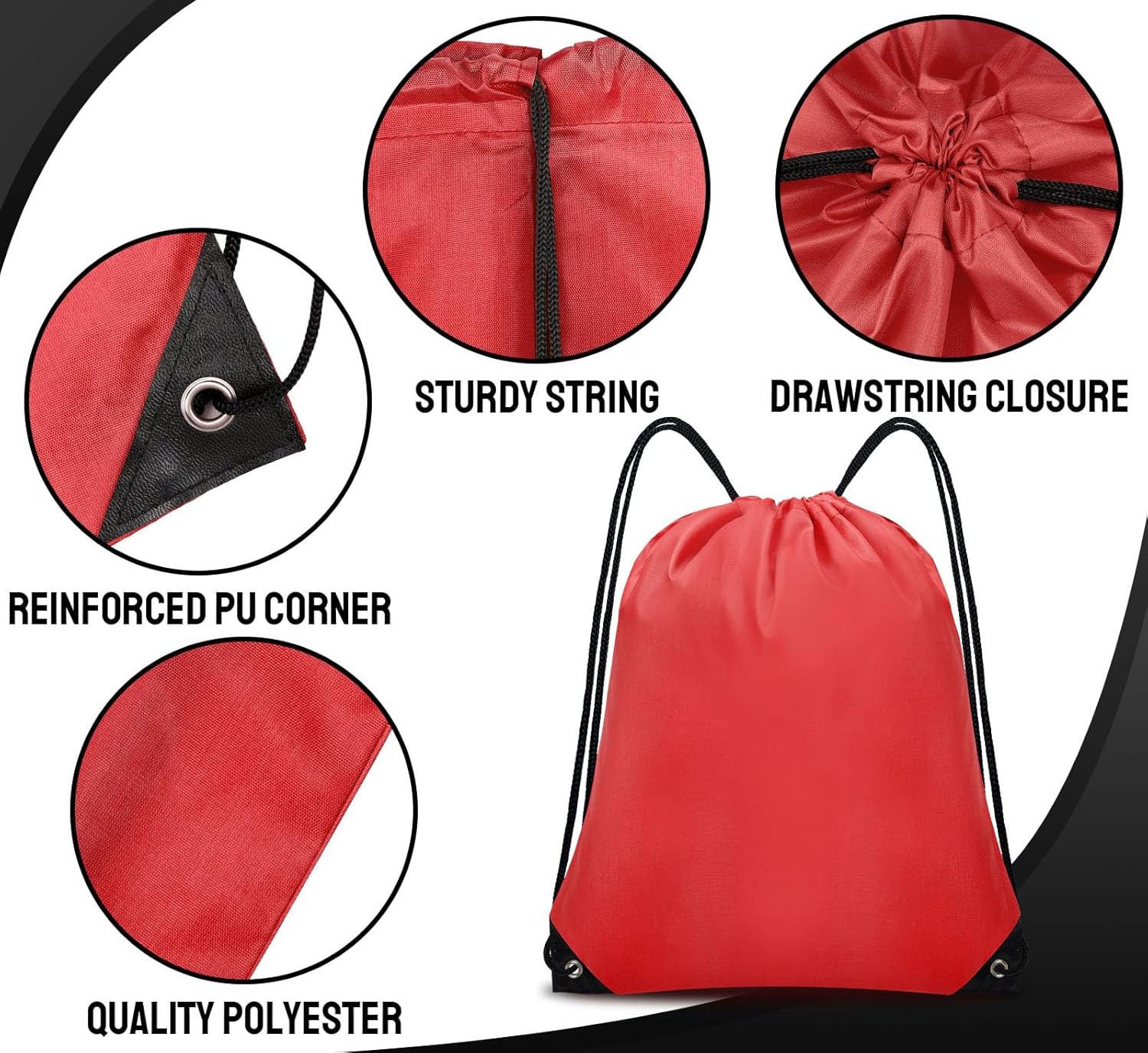
I usually ask buyers how heavy the packed kit will be. If the kit includes only paper, light fabric can work. If the kit includes bottles, samples, or tools, I suggest stronger fabric and better cord. The cord also matters. A cheap cord can hurt the user’s shoulder or break at the seam. The bag is simple, but the load path is important. The fabric, stitching, eyelet area, and drawstring all share the weight.9
I also check the logo method before final material selection. Some fabrics print better than others. A clean logo can make a low-cost bag look more professional. A poor print can make even a strong bag look cheap.
What Should Buyers Check Before Ordering Event Kit Bags?
I know many buyers feel safe after receiving a low quote, but the real risk often appears during sampling, production, inspection, or delivery planning.
Before ordering event kit bags, I check the sample, material weight, size, stitching, drawstring strength, logo color, packing method, production timeline, inspection plan, and delivery schedule. These checks help reduce the risk of late or poor-quality bags.
I always treat the event date as the hard point. A bag that arrives after the event has no value.10 I suggest buyers work backward from the event date. They should leave time for sample approval, production, inspection, packing, and shipping. I do not speak as a customs or freight expert, but I know from factory work that late artwork approval and late sample comments often create production pressure.
A simple timeline can help:
| Step | What I Check | Risk If Missed |
|---|---|---|
| RFQ confirmation | Specs, quantity, logo, deadline | Wrong quote or missing cost |
| Sample stage | Size, fabric, logo, sewing | Wrong product before bulk order |
| Pre-production | Material and print setup | Color or material mismatch |
| Bulk production | Sewing quality and output speed | Uneven quality or delay |
| Inspection | Size, print, stitching, packing | Defects reach the event |
| Shipping plan | Ready date and delivery target | Event deadline risk |
I recommend checking at least one physical sample when time allows. Photos help, but they do not show fabric hand feel, cord comfort, or real load strength.11 If time is too short for a full sample, I still suggest confirming a pre-production photo and clear written specs.
I also ask buyers to check logo details carefully. The logo size, position, color, and print method should be approved before bulk production. A small logo position change can affect the full batch. I have seen cases where the bag quality was fine, but the print color was wrong because no Pantone or color reference was confirmed. The buyer then felt the bag did not match the campaign.
Packing is another detail that buyers often forget. Bulk packing is cheaper. Individual polybag packing looks cleaner but adds cost and time. If the bags need to be inserted into event kits by another team, packing style matters. A cheap bag can become expensive if the packing method does not fit the event workflow.
How Can Custom Logos Make Event Bags More Useful?
I often see buyers treat the logo as decoration, but the logo can decide whether the bag becomes trash or a useful brand touchpoint.
Custom logos make event bags more useful because they turn a simple carrying item into a brand reminder. A clear logo, good print position, and suitable print method can support sponsors, campaigns, and later reuse without adding too much cost.
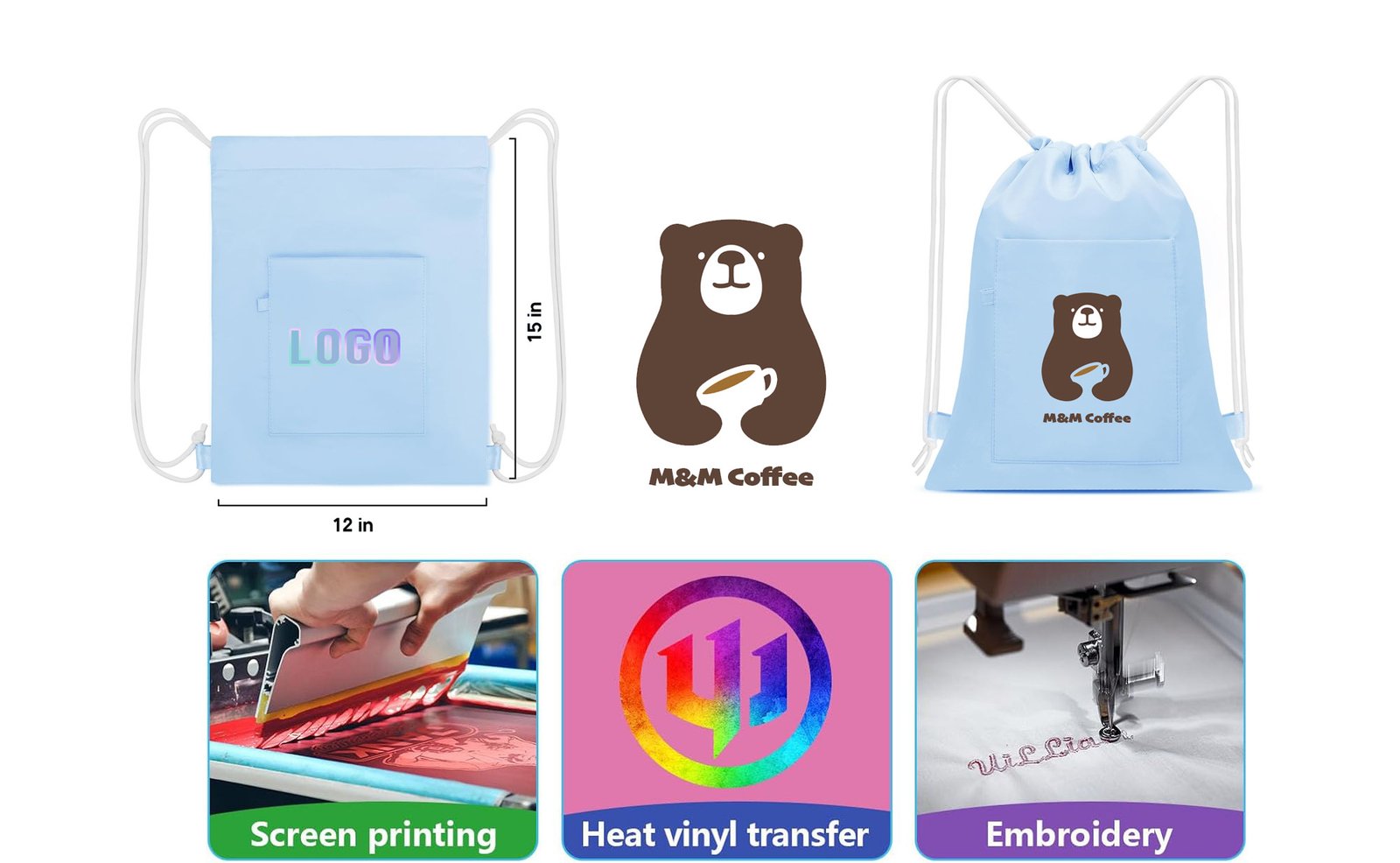
I see a logo as part of the bag function. Event visitors may carry the bag during the event. They may also reuse it for gym clothes, travel items, school supplies, or shopping. If the logo is clear and the bag feels useful, the brand receives more exposure after the event.12 If the print is weak or the bag feels too flimsy, the user may throw it away quickly.
The print method should match the design. A simple one-color logo can be very cost-friendly. A large full-color design may need heat transfer or digital printing. These methods can look better, but they can also raise cost. I usually ask for the logo file early because the artwork can change the quote.
| Logo Need | Common Method | Cost Impact | Best Fit |
|---|---|---|---|
| Simple one-color logo | Screen print | Low | Budget event bags |
| Two or three colors | Screen print | Medium | Sponsor or team logos |
| Full-color image | Heat transfer | Medium to high | Marketing campaigns |
| Small woven label | Label sewing | Medium | More retail-like look |
Logo size also affects cost and appearance. A very large print may need more ink, more setup time, and more care during production. A very small logo may not be visible at the event. I often suggest a balanced front-center logo. It is easy to see, and it works with most bag sizes.
I also remind buyers to think about sponsor rules. Some events need several logos on one bag. In that case, I ask for all artwork at the same time. I also suggest a simple layout. Too many logos can make the bag look crowded. A clean design can make a low-cost drawstring bag look more planned and more valuable.
For private label or distributor orders, I also check hang tags, labels, and packaging needs. These details can support rebranding, but they should be included in the first quote. If the buyer adds them later, the unit cost and lead time may change. A logo is powerful, but only when the production details are clear.
Conclusion
I source better low-cost event bags when I define use, specs, logo, packing, and deadline before I compare prices.
"String bag - Wikipedia", https://en.wikipedia.org/wiki/String_bag. Reference works describing drawstring bags as lightweight sacks closed and carried by cords support the claim that this format is simple and practical for distributing event materials; however, such sources generally describe the bag type rather than directly measuring comparative bulk cost for events. Evidence role: general_support; source type: encyclopedia. Supports: that drawstring bags are a simple, lightweight bag form commonly used for carrying personal items, which supports their practicality for event kits. Scope note: Contextual support on bag form and use, not direct proof of event-specific cost advantages. ↩
"String bag - Wikipedia", https://en.wikipedia.org/wiki/String_bag. General descriptions of drawstring backpacks note that the closure cords also function as shoulder straps, supporting the statement that the bag can be carried on the shoulder or back. Evidence role: definition; source type: encyclopedia. Supports: that drawstring bags are commonly designed to be carried on the back or shoulder using cords. ↩
"How to screen print multiple color designs | by Screenprintdirect.com", https://www.youtube.com/watch?v=6HHcAfhozLc. Educational materials on screen printing explain that each color generally requires its own screen and setup, which supports the claim that one-color printing is often more cost-efficient than multicolor printing. Evidence role: mechanism; source type: education. Supports: that each screen color in screen printing typically requires separate setup and printing steps, which explains why single-color jobs are often less expensive than multi-color jobs. ↩
"[PDF] Examining Cut-and-Sew Textile Waste within the Apparel Supply ...", https://bren.ucsb.edu/sites/default/files/2024-04/Examining%20Cut-and-Sew%20Textile%20Waste%20within%20the%20Apparel%20Supply%20Chain%204.10.24.pdf. Textile manufacturing studies on marker efficiency and fabric utilization support the claim that nonstandard dimensions can increase cutting complexity and material waste relative to standardized layouts. Evidence role: mechanism; source type: paper. Supports: that nonstandard dimensions can reduce marker efficiency or material utilization in textile cutting, increasing waste and labor. ↩
"Dyeing Properties, Color Gamut, and Color Evaluation of Cotton ...", https://pmc.ncbi.nlm.nih.gov/articles/PMC10005735/. Textile sourcing and dyeing references commonly note that custom color matching requires dedicated dye lots and production scheduling, supporting the statement that special dyed colors may involve longer lead times and higher minimum quantities. Evidence role: general_support; source type: education. Supports: that custom dyeing often involves additional processing and batch requirements, which can raise minimums and extend lead time. Scope note: Support is typically process-based and may vary by mill, fiber type, and region. ↩
"Nonwoven fabric - Wikipedia", https://en.wikipedia.org/wiki/Nonwoven_fabric. Government and lifecycle assessment sources on reusable bags identify nonwoven polypropylene, polyester, and cotton as common bag materials, providing general support for listing these fabrics among standard low-cost or mainstream options; however, they do not by themselves rank the materials for every sourcing context. Evidence role: general_support; source type: government. Supports: that nonwoven polypropylene, polyester, and cotton are widely used bag materials, with recycled variants also recognized in bag production and sustainability assessments. Scope note: Contextual support on common bag materials rather than a universal cost ranking. ↩
"Weave structures of polyester fabric affect the tensile strength and ...", https://pmc.ncbi.nlm.nih.gov/articles/PMC11756394/. Textile education sources describing polyester as a strong synthetic fiber with good durability support the claim that polyester is often selected when greater strength is needed; references to printability and surface smoothness provide additional contextual support for its use in logo applications. Evidence role: definition; source type: education. Supports: that polyester fibers are known for good strength and dimensional stability, and that polyester fabrics can provide smooth surfaces suitable for printing. Scope note: Support is material-level and may not directly compare all polyester fabric constructions used in bags. ↩
"What is Cotton - Learn Genetics (Utah)", https://learn.genetics.utah.edu/content/cotton/what/. Textile references identifying cotton as a natural cellulosic fiber commonly associated with a natural appearance support the statement that cotton gives a more natural look. Evidence role: definition; source type: education. Supports: that cotton is a natural plant fiber and is commonly described as having a natural look and hand compared with synthetic fibers. ↩
"The Effect of Selected Factors on the Strength of Stitches of ... - PMC", https://pmc.ncbi.nlm.nih.gov/articles/PMC9572404/. Textile engineering literature on sewn product performance supports the claim that carrying loads are borne not only by the fabric but also by seams, reinforcement zones, and straps or cords, which explains why failure can occur at stitched or eyelet areas. Evidence role: mechanism; source type: paper. Supports: that in sewn textile products, load is transmitted through fabric panels, seams, reinforcement points, and carrying elements, making seam and attachment strength critical. Scope note: The support is based on general sewn-product mechanics and may not analyze drawstring bags specifically. ↩
"Event Planning Guide - Wichita State University", https://www.wichita.edu/about/uems/planning-guide.php. Event management and operations sources describe events as fixed-date activities in which logistics must align with a nonmovable schedule, supporting the statement that delivery after the event can negate the item’s intended value. Evidence role: general_support; source type: education. Supports: that event operations are deadline-driven and that materials delivered after the scheduled event lose most or all functional value for the planned use. Scope note: This is contextual support from event operations rather than a bag-specific study. ↩
"Perceptual imagery of soft sofa fabrics based on visual-tactile ...", https://bioresources.cnr.ncsu.edu/resources/perceptual-imagery-of-soft-sofa-fabrics-based-on-visual-tactile-evaluation/. Textile evaluation literature distinguishes visual assessment from tactile and mechanical testing, supporting the claim that photographs cannot adequately demonstrate hand feel, cord comfort, or actual load-bearing strength. Evidence role: mechanism; source type: paper. Supports: that tactile properties such as hand feel and comfort require physical assessment, and that mechanical strength must be verified by material or product testing rather than imagery alone. ↩
"Why is reusable bag consumption easier to say than do? - PMC", https://pmc.ncbi.nlm.nih.gov/articles/PMC9539943/. Marketing research on promotional products indicates that useful items retained by recipients can generate repeated brand exposure and recall over time, which supports the claim that a reusable event bag may continue to promote the brand after the event. Evidence role: general_support; source type: paper. Supports: that useful promotional items retained and reused by recipients can generate repeated post-event brand impressions or recall. Scope note: The evidence is typically about promotional products broadly, not exclusively drawstring bags. ↩