Youth sports teams plan bulk duffle orders best when they define the real use case before asking for a price. I often see buyers rush into logo ideas or unit cost, then run into size mistakes, weak material choices, and quote changes. A clearer plan avoids wasted budget and bags that athletes barely use.
Youth sports teams should plan bulk duffle orders by deciding who will carry the bag, what gear must fit inside, how often the bag will travel, and what level of customization is truly needed. The right bulk duffle order depends more on use scenario, size, structure, and material than on the lowest starting quote.
I write this from the supplier side, where I help buyers confirm specs, adjust samples, and prevent expensive misunderstandings. In my experience, the best orders start with function first. Once that part is right, colors, logos, and finishing details become much easier to finalize.
Why Do Youth Sports Teams Order Duffle Bags in Bulk?
When buyers start a bulk duffle order without defining the purpose, problems show up fast. Some teams need one bag for daily training. Others need a tougher bag for travel weekends or summer camps. If that difference is ignored, the bag may look fine in photos but fail in real use.
Youth sports teams order duffle bags in bulk to create consistency, simplify gear handling, support team branding, and lower per-unit cost for group purchasing1. In practice, the biggest reason is not appearance alone. Most organizers want one bag format that matches how players actually carry uniforms, shoes, bottles, and accessories.
In supplier conversations, I notice that many buyers ask, “What is your best price for 300 bags?” That question is understandable, but it is often too early. A more useful first question is: what will the athletes put in the bag, and how often will they use it?
Function usually drives the order
A youth team may order in bulk for several different reasons:
- Daily practice use
- Away games
- Weekend tournaments
- Training camps
- School-issued player kits
- Sponsor or event distribution
These sound similar, but the bag specs can differ a lot.
For example, a daily practice bag may only need:
- Main compartment
- Shoulder strap
- Light water-resistant fabric
- Simple logo print
A tournament bag may need:
- Larger volume
- Separate shoe compartment
- Better zippers
- Stronger base panel
- Name tag or player ID area
Why bulk ordering makes sense
Bulk ordering usually helps teams and organizers in four practical ways:
Consistent appearance
A team looks organized when players carry matching bags.Simpler distribution
Coaches and coordinators can issue one standard bag instead of managing mixed styles.Better customization control
Names, numbers, and team colors can be planned in one production run.More predictable budgeting
Unit cost, sample approval, and delivery schedules are easier to manage at scale.
A mistake I see often
I have seen buyers choose a bigger, more feature-heavy duffle because it “feels safer.” Later, they realize younger players cannot carry it comfortably2, or the bag stays half-empty most of the time. That creates a bad user experience even if the factory made the bag correctly.
The real goal of a bulk duffle order is not to buy the biggest or cheapest bag. The goal is to match the bag to the team’s actual use.
That mindset helps avoid overbuying, under-specifying, and re-quoting. It also makes communication with the supplier much smoother from the start.
What Size Works for Practice, Away Games, and Tournaments?
A lot of youth sports teams plan bulk duffle orders around volume alone. That sounds logical, but it often creates trouble. A bag that is too small cannot hold gear. A bag that is too large becomes awkward for younger athletes and may be underused.
The best size for a bulk duffle order depends on the players’ age group, the gear list, and how often the bag travels. Practice bags can stay compact, while away-game or tournament bags often need more structure and extra compartments. Bigger is not automatically better.
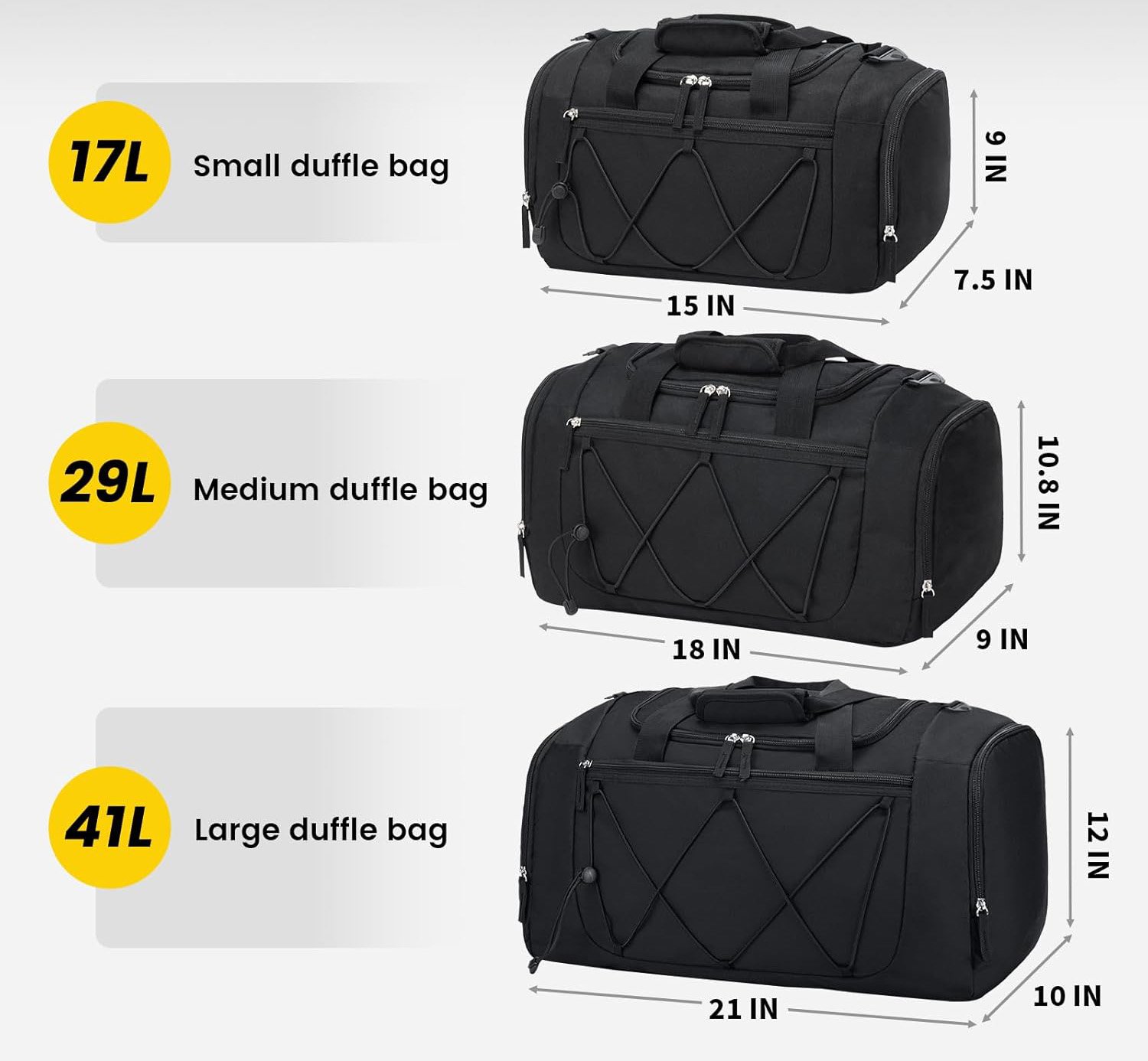
From my side, size is one of the first details that changes the quote, the structure, and the final satisfaction rate. I usually encourage buyers to list the actual contents before discussing dimensions.
Start with the load, not the look
Here are common items teams want to fit:
- Uniform or spare kit
- Shoes or cleats
- Water bottle
- Towel
- Small medical items
- Warm-up layer
- Personal accessories
- Snacks for travel days
If the bag is for overnight tournaments or camps, the list may also include:
- Extra clothing
- Toiletry pouch
- Small blanket or recovery items
A practical size framework
This is not a universal rule, but it is a useful planning guide:
| Use scenario | Suggested size range | Typical notes |
|---|---|---|
| Daily practice | 20–30L3 | Good for basic gear, easier for younger players |
| Away games | 30–40L4 | Better for uniforms, shoes, and extras |
| Tournaments/camps | 40–55L5 | Works when travel or longer use is involved |
Age group matters
A 25L to 30L bag may work well for younger athletes who carry:
- One uniform
- One bottle
- Light gear
But older players may need 35L to 45L if they carry:
- Shoes
- Warm-up layer
- Towel
- Multiple accessories
I have seen cases where a school requested a large tournament-style duffle for a mixed-age group. The sample looked impressive, but once they reviewed real use, they realized the younger students would struggle with the width and drop length. We revised the dimensions before production. That one adjustment probably saved them from a full season of complaints.
Do not ignore shape and compartments
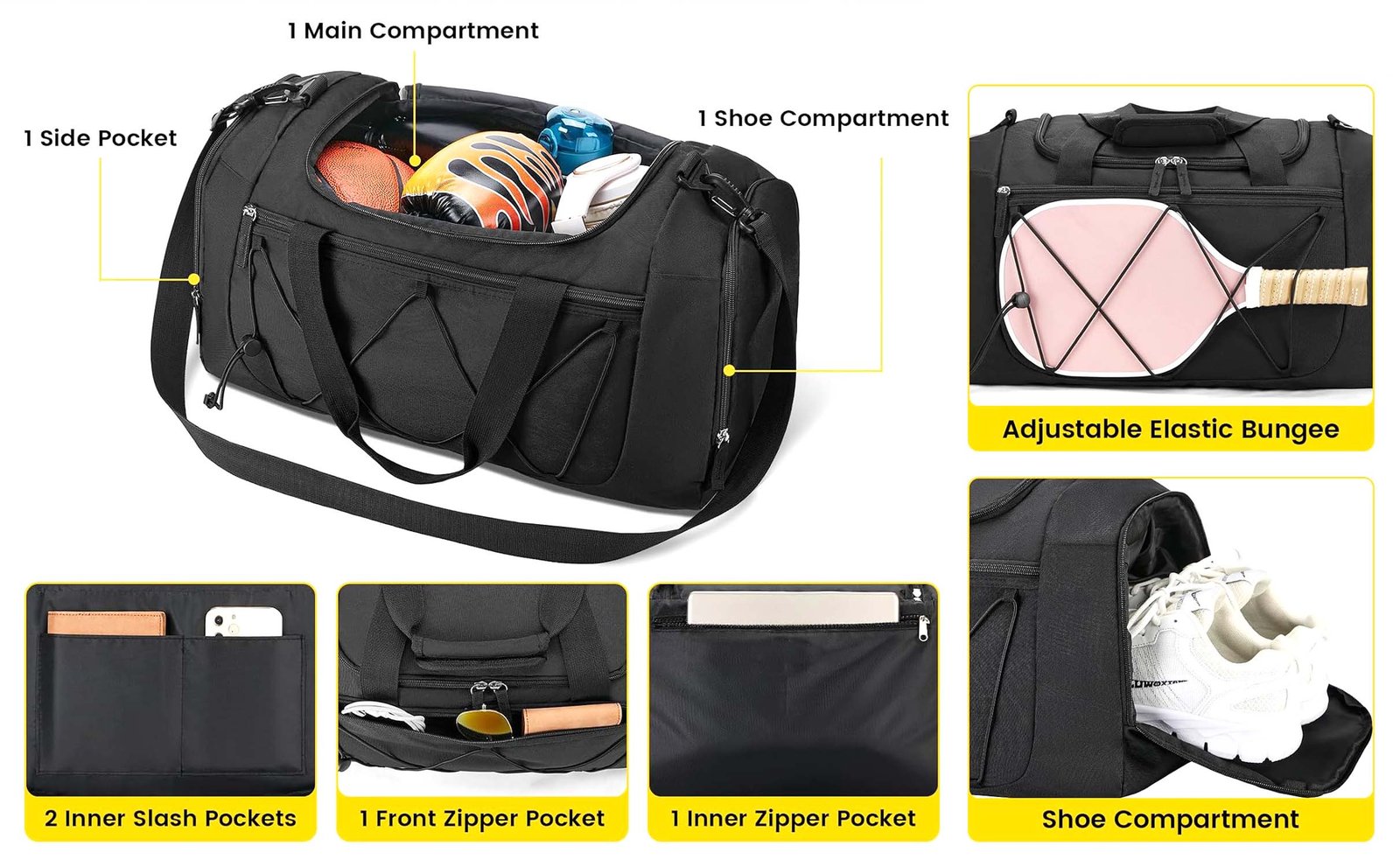
Volume alone can be misleading. A 35L bag with smart structure may perform better than a loose 45L bag. I suggest buyers think about:
- Base width
- Opening style
- End pockets
- Shoe compartment
- Internal mesh pockets
- Shoulder strap comfort
A practical bag is easier to use than a technically larger one.
My recommendation
If you are planning a bulk duffle order, ask your supplier to compare two nearby size options with the same design. For example:
- 28L vs 35L
- 35L vs 42L
That side-by-side review often reveals what players will actually prefer. It also helps the quote become more accurate early, because fabric use, zipper length, and reinforcement details are clearer.
How Should Buyers Add Names, Numbers, or Team Colors?
Many teams care a lot about branding, and that makes sense. Still, I often remind buyers that decoration should follow structure, not replace it. A bag with great colors but poor functionality does not succeed for long.
Buyers should add names, numbers, or team colors only after confirming bag size, panel layout, and decoration method. Good customization depends on having the right print area, color matching plan, and production-ready artwork. Clear early decisions reduce artwork errors and late quote changes.
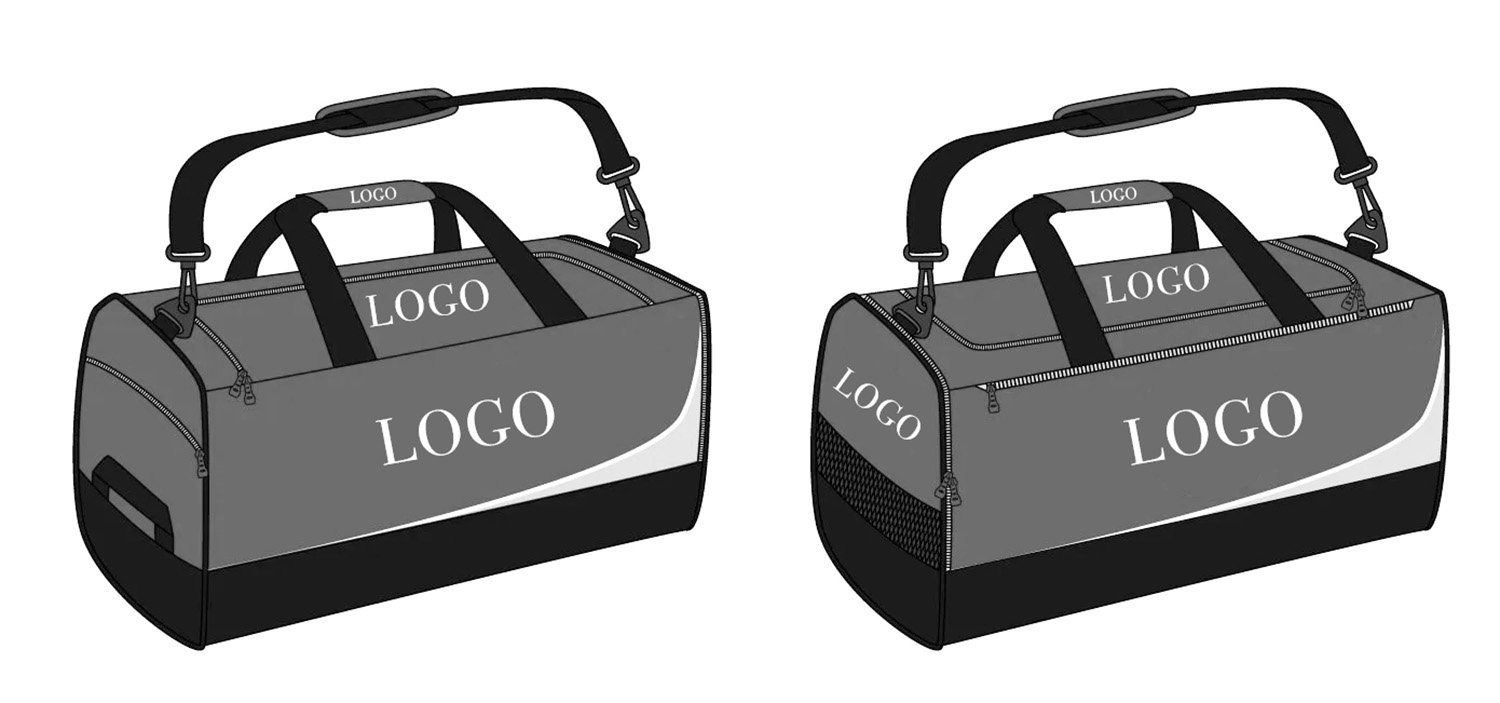
In real projects, customization becomes messy when the buyer says “standard bag” at first, then later adds:
- Player names
- Individual numbers
- Multiple team colorways
- Sponsor logos
- Special zipper pulls
- Extra embroidery
That is not a small change. It affects labor, setup, lead time, and sometimes even the bag construction.
Common customization methods
Here is a simple comparison:
| Method | Best for | Strengths | Things to watch |
|---|---|---|---|
| Silk screen printing6 | Simple logos, larger runs | Cost-effective | Limited for complex color effects |
| Heat transfer7 | Names, numbers, detailed graphics | Good clarity | Needs correct panel planning |
| Embroidery8 | Premium logo look | Durable and textured | Adds cost and can affect some fabrics |
| Woven label/patch | Brand identity | Professional finish | Usually used with another method |
What buyers should confirm early
Before finalizing artwork, I suggest confirming:
- Exact logo size
- Print or embroidery position
- Player-name format
- Number style
- Pantone or reference colors
- Whether all bags are identical or individually personalized
This is especially important in a bulk duffle order because personalization can shift pricing much more than buyers expect.
Team colors need practical thinking too
A dark body color may hide dirt better for school and club use. A lighter panel may show the logo more clearly. Accent colors can improve visibility, but too many custom color panels may increase material complexity and MOQ pressure.
A supplier-side observation
I have seen buyers focus heavily on front-panel logo size while ignoring where the name or number should go. Later, they realize the shoulder strap covers the print area, or the side panel is too narrow for readable numbering. These are small layout issues, but they create real production friction.
Function first, appearance second does not mean branding is unimportant. It means branding works best when the bag design already fits the job.
If possible, ask for a mockup that shows all custom elements on the actual bag panels. That step prevents many avoidable revisions.
Which Materials Handle Repeated School and Club Use?
A bulk duffle order can fail even with the right size if the material does not match the use intensity. School and club environments are not gentle. Bags get dragged, stacked, thrown into buses, and used several times a week.
Materials for youth sports duffle bags should balance cost, weight, abrasion resistance9, and water resistance10 based on how often the bags will be used. For many school and club projects, polyester or oxford fabric works well, while reinforcement at stress points11 often matters more than choosing the most expensive fabric.
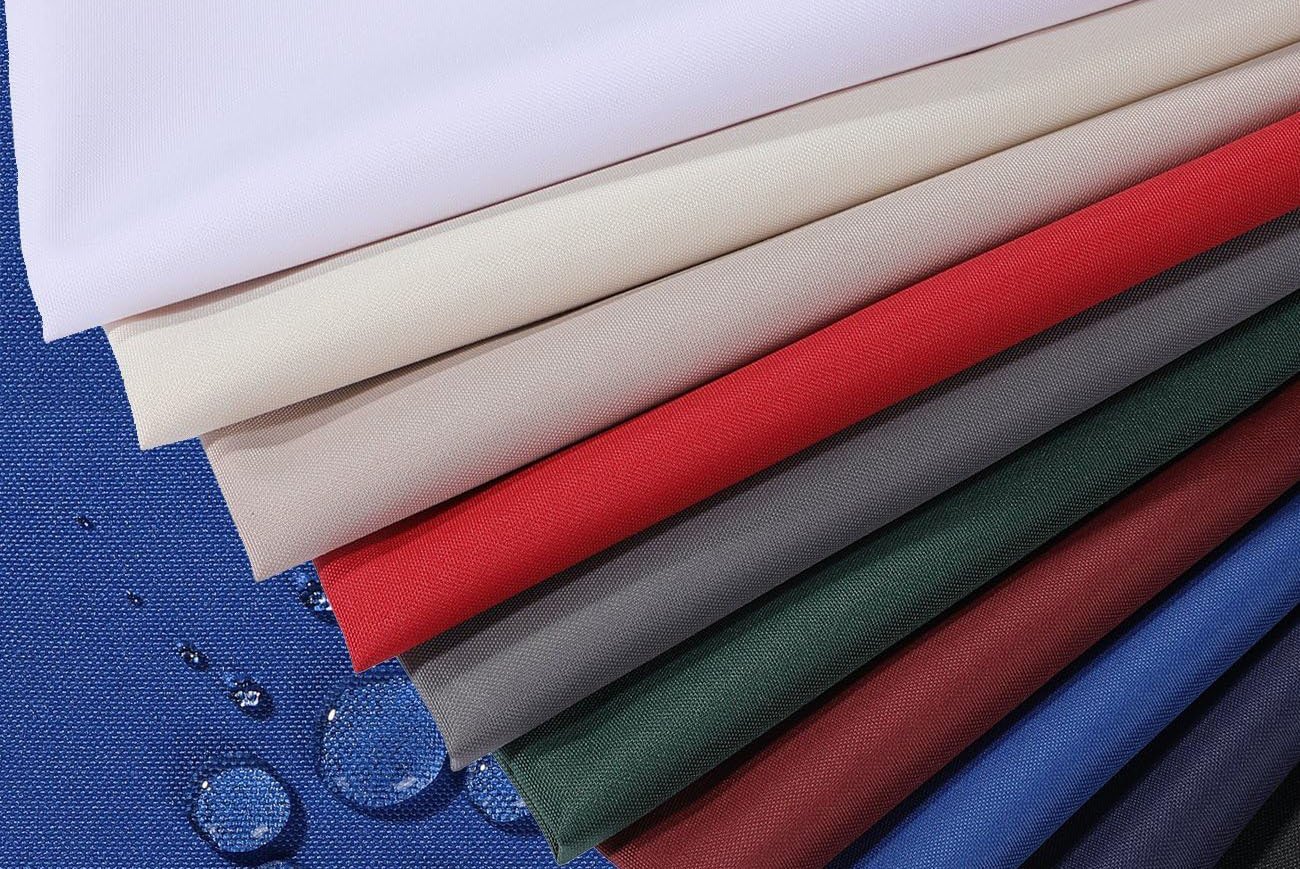
From what I see in development and sampling, buyers sometimes ask for “the strongest fabric” without defining the usage pattern. That can lead to overspending. In many cases, a smart mid-range material plus better structure is the better choice.
Common material options
Here are materials often considered for team duffle bags:
600D polyester12
A common choice for balanced cost and durability.Oxford fabric
Often used when buyers want a reliable daily-use shell.Ripstop polyester
Useful when lower weight and tear resistance matter.PU-coated fabric
Helps with water resistance and surface protection.
Material is only part of durability
I always tell buyers to check these details too:
- Stitch reinforcement at handles
- Bar-tacking at stress points
- Zipper quality
- Lining thickness
- Base panel support
- Strap attachment construction
A bag with decent fabric and weak handle stitching will still fail early.
A practical comparison
| Feature | Light-use training bag | Repeated club/school use |
|---|---|---|
| Main fabric | Standard polyester | 600D polyester or stronger oxford |
| Base panel | Basic | Reinforced or coated |
| Zippers | Standard | Smoother, heavier-duty option |
| Compartments | Minimal | More useful for shoes/wet items |
| Strap attachment | Basic | Reinforced stitching preferred |
Think in terms of wear points
The most common wear points I hear about are:
- Bottom corners
- Handle joins
- Shoulder strap points
- Zipper ends
- Shoe compartment lining
So when planning a bulk duffle order, I would not only ask “What fabric is it?” I would also ask:
- Where is reinforcement added?
- Is the base panel stronger?
- Are the handles wrapped or cross-stitched?
- Is the zipper suitable for repeated opening and closing?
I once worked on a team-style bag project where the original request focused only on fabric thickness. After discussion, we shifted attention to the bottom panel and handle reinforcement. The final spec was more practical, and the price increase was much smaller than switching to a much heavier body fabric.
That is why I believe durability planning should stay specific. The right answer depends on school use, club frequency, and travel intensity.
What Should Coaches and Procurement Teams Confirm Before Ordering?
This is where many youth sports teams plan bulk duffle orders either well or poorly. A vague inquiry may get a fast quote, but it often leads to revisions later. Those revisions can affect price, sampling time, and delivery.
Before placing a bulk duffle order, buyers should confirm size, gear capacity, fabric, compartments, customization details, quantity, delivery timing, and sample expectations. Clear specifications make quotes more accurate and reduce the risk of receiving bags that do not match real team use.

I work with many buyers who are experienced in sourcing but not deeply technical about bag construction. That is normal. The good news is that a simple checklist solves many common problems.
The pre-order checklist I recommend
1. Define the user group
Ask:
- What age group will use the bag?
- Will all players use the same size?
- Is this for school teams, club teams, or event participants?
2. Define the use scenario
Ask:
- Is the bag for practice only?
- Will it be used for overnight travel?
- Will it be used weekly or seasonally?
3. Define the contents
Make a realistic packing list:
- Uniform
- Shoes
- Bottle
- Towel
- Warm-up layer
- Personal items
This step helps determine dimensions and compartment needs.
4. Confirm technical specs
Do not leave these vague:
- Size in cm or inches
- Fabric type
- Lining
- Compartments
- Zippers
- Strap type
- Base reinforcement
5. Confirm customization
Clarify:
- Logo method
- Logo position
- Team colors
- Name/number personalization
- Packaging requirements
6. Confirm business terms
This matters just as much:
- MOQ
- Sample fee
- Production lead time
- Shipping schedule
- Quality inspection standard
- After-sales handling
Why quote accuracy depends on spec clarity
An early quote based on “sports duffle bag, custom logo, 500 pcs” is only a rough starting point. It may not include:
- Exact dimensions
- Shoe compartment
- Individual names
- Upgraded zipper
- Stronger fabric
- Carton requirements
So the buyer may think the supplier changed the price later, when in fact the spec changed later. That is a very common source of friction.
The clearer the specification, the more trustworthy the quote.
My practical advice
If you want fewer surprises, send your supplier:
- Reference photos
- Target dimensions
- Estimated packing list
- Logo files
- Quantity by variant
- Delivery deadline
Even a simple one-page brief can improve the whole process. In my experience, this is one of the easiest ways to avoid ordering the wrong bag for the right team.
Frequently Asked Questions
How far in advance should youth sports teams place a bulk duffle order?
I suggest starting as early as possible, especially if the order includes samples, custom colors, or player names. In many cases, buyers should allow time for specification confirmation, sampling, production, and shipping instead of focusing only on factory lead time.
Is a larger duffle bag always better for youth teams?
No. A larger bag can become uncomfortable, heavy, and impractical, especially for younger athletes. I recommend matching the bag size to the age group, the gear list, and the actual travel frequency rather than choosing the biggest option by default.
What is the most important detail to confirm before requesting a quote?
I think the most important detail is the real use scenario. Once you know who will use the bag, what they will carry, and how often the bag will travel, size, material, and structure become much easier to define accurately.
Should teams personalize every bag with names and numbers?
Not always. Personalized bags can improve identification, but they also increase complexity, cost, and sometimes lead time. If budget or timing is tight, some buyers choose team logos only, or add names only for selected groups.
What usually causes bulk duffle order mistakes?
From what I have seen, the biggest issues come from unclear specifications. Buyers sometimes ask for pricing before confirming dimensions, compartments, fabric, or decoration details. That creates misleading comparisons and later changes that could have been avoided.
Conclusion
Planning youth sports teams bulk duffle orders well means starting with real use, not just price. I have seen the best outcomes happen when buyers first define the players, the gear, the travel pattern, and the needed structure. After that, size, material, and customization become much easier to match to budget. If you are sourcing custom duffle bags for school teams, clubs, or events, I can help you turn your use case into a clearer spec and a more reliable quote through Coraggio.
"Economies of scale", https://en.wikipedia.org/wiki/Economies_of_scale. Economies of scale refers to cost advantages associated with increased scale of production or purchasing, often lowering average cost per unit as fixed costs are spread across more items. Evidence role: general_support; source type: encyclopedia. Supports: That larger production or purchasing volumes can reduce average unit costs through economies of scale.. Scope note: This supports the general pricing logic behind bulk orders rather than proving that every duffle bag order will receive a lower unit price. ↩
"The Impact of Backpack Loads on School Children: A Critical ... - PMC", https://pmc.ncbi.nlm.nih.gov/articles/PMC6267109/. Pediatric and ergonomics research on school-bag carriage reports that heavier or poorly fitted loads can increase discomfort and musculoskeletal strain in children, supporting caution about oversized bags for younger users. Evidence role: mechanism; source type: research. Supports: That excessive carried loads can reduce comfort and increase strain in children and adolescents, making oversized bags less suitable for younger users.. Scope note: Most published evidence concerns backpacks rather than duffels, so the support is mechanistic and contextual rather than a direct test of youth sports duffle bags. ↩
"Duffel bag", https://en.wikipedia.org/wiki/Duffel_bag. General consumer and equipment guides commonly place small duffel or gym bags for day use in the approximate 20–30 L range, consistent with carrying basic clothing and accessories. Evidence role: general_support; source type: other. Supports: That small duffel or gym bags commonly fall in a roughly 20 to 30 liter capacity range for light daily use.. Scope note: This would provide contextual support from sizing guides rather than a sport-specific standard for youth teams. ↩
"Duffel Bag Size Guide", https://www.hellyhansen.com/en_us/guides/duffel-bag-size-guide?srsltid=AfmBOooE8waHrnFCMdMEYAWbxmyyFlr2l6YVU_htDDlEX77T5m48esa5. Bag-capacity guides commonly describe medium duffels in the 30–40 L range as suitable for carrying clothing, footwear, and extra items beyond a minimal day kit. Evidence role: general_support; source type: other. Supports: That medium duffel bags are often described in the 30–40 L range and are suitable for carrying clothing, shoes, and additional accessories.. Scope note: This would contextualize the proposed range but would not establish a universal requirement for all away-game situations. ↩
"The Best Duffel Bags of 2026 | Tested & Ranked", https://www.outdoorgearlab.com/topics/travel/best-duffel-bag. Packing and luggage guides commonly associate duffels of roughly 40–55 L with weekend travel or other longer-use scenarios that require additional clothing and personal items. Evidence role: general_support; source type: other. Supports: That duffel bags in the 40–55 L range are commonly associated with weekend travel or extended-use packing needs.. Scope note: This would support the article’s sizing logic by analogy to travel loads rather than directly measuring youth tournament equipment needs. ↩
"Screen printing", https://en.wikipedia.org/wiki/Screen_printing. Educational descriptions of screen printing note that it is a stencil-based method commonly used for repeated graphics on textiles and other substrates, particularly when designs are produced at scale. Evidence role: definition; source type: education. Supports: That screen printing is a stencil-based process widely used for repeated designs and is well suited to larger production runs.. Scope note: This would substantiate the process and typical use case, while cost-effectiveness can still vary by setup, color count, and run length. ↩
"Heat transfer vinyl", https://en.wikipedia.org/wiki/Heat_transfer_vinyl. Textile-decoration references describe heat transfer methods as commonly used for applying lettering, numbers, and detailed graphics to garments and fabric panels. Evidence role: definition; source type: education. Supports: That heat transfer methods are commonly used to apply detailed lettering, numbers, and graphics to textile surfaces.. Scope note: This would support the general suitability of the method rather than proving performance on every bag fabric or coating. ↩
"A Complete History of Embroidery: 1000 Years of Craft Evolution | SST", https://www.sofst.org/a-complete-history-of-embroidery-discover-1000-years-of-craft-evolution/. Textile-decoration guidance commonly describes embroidery as a durable, textured embellishment, while also noting that needle penetration, backing, and stitch density can affect lightweight or sensitive fabrics. Evidence role: general_support; source type: education. Supports: That embroidery creates a textured and generally durable decoration, while stitching can influence lightweight or technical fabrics.. Scope note: This would support the general trade-offs of embroidery rather than the exact cost or fabric outcome in a particular production setup. ↩
"Abrasion Resistance: Considerations for Textile Specifiers", https://contracttextiles.org/wp-content/uploads/2016/12/act_wp_synopsis_060211.pdf. Textile test standards and educational materials identify abrasion resistance as a core fabric-performance property used to assess how materials withstand repeated rubbing and surface wear. Evidence role: definition; source type: institution. Supports: That abrasion resistance is a recognized textile-performance property relevant to repeated rubbing and wear in fabric products.. Scope note: This would justify the relevance of the criterion, but not rank one specific bag fabric as best without test data. ↩
"Water-Repellent and UV-Resistant Properties of Polyester Fabric with ...", https://pmc.ncbi.nlm.nih.gov/articles/PMC12138703/. Materials and textile references define water resistance as a performance characteristic of fabrics that slows or limits water penetration, often through fiber choice, coatings, or finishing treatments. Evidence role: definition; source type: education. Supports: That water resistance is a recognized performance characteristic of coated or treated textiles used to limit water penetration in everyday use.. Scope note: This supports why the property matters in general, but does not establish the required level of resistance for every sports-bag use case. ↩
"Bar tack", https://en.wikipedia.org/wiki/Bar_tack. Sewn-product and textile-engineering literature identifies high-load seam and attachment areas as common failure points, and shows that reinforcement methods such as bar tacking and stronger seam construction can materially improve durability. Evidence role: mechanism; source type: research. Supports: That localized reinforcement at high-load seam and attachment areas is important to the durability of sewn bags and similar textile products.. Scope note: This would support the mechanism of failure and reinforcement generally, but not prove that reinforcement always matters more than fabric selection in every bag design. ↩
"Ultimate Guide to 600D Polyester Fabric: Your Complete Overview", https://www.orientbag.net/post/everything-you-should-know-about-600d-polyester-fabric-your-ultimate-guide. Textile references explain denier as a measure of fiber linear mass and note that 600D polyester is widely used in bags and luggage as a practical medium-weight fabric for everyday durability. Evidence role: definition; source type: education. Supports: That 600D polyester is a commonly used bag fabric and that denier indicates the linear mass of fibers, often used as one indicator of fabric robustness.. Scope note: This would support the material’s common use and general positioning, but actual durability also depends on weave, coating, construction, and testing. ↩