Many buyers compare cooler backpacks and cooler totes by price first. That creates risk. The wrong structure can cause poor use, damage, and complaints.
Brands should source cooler backpacks for longer carrying distance, hands-free use, and outdoor activities. Brands should source cooler totes for short-distance carrying, easy access, retail display, and gifting. The best choice depends on user scenario, load, insulation need, target price, and sales channel.
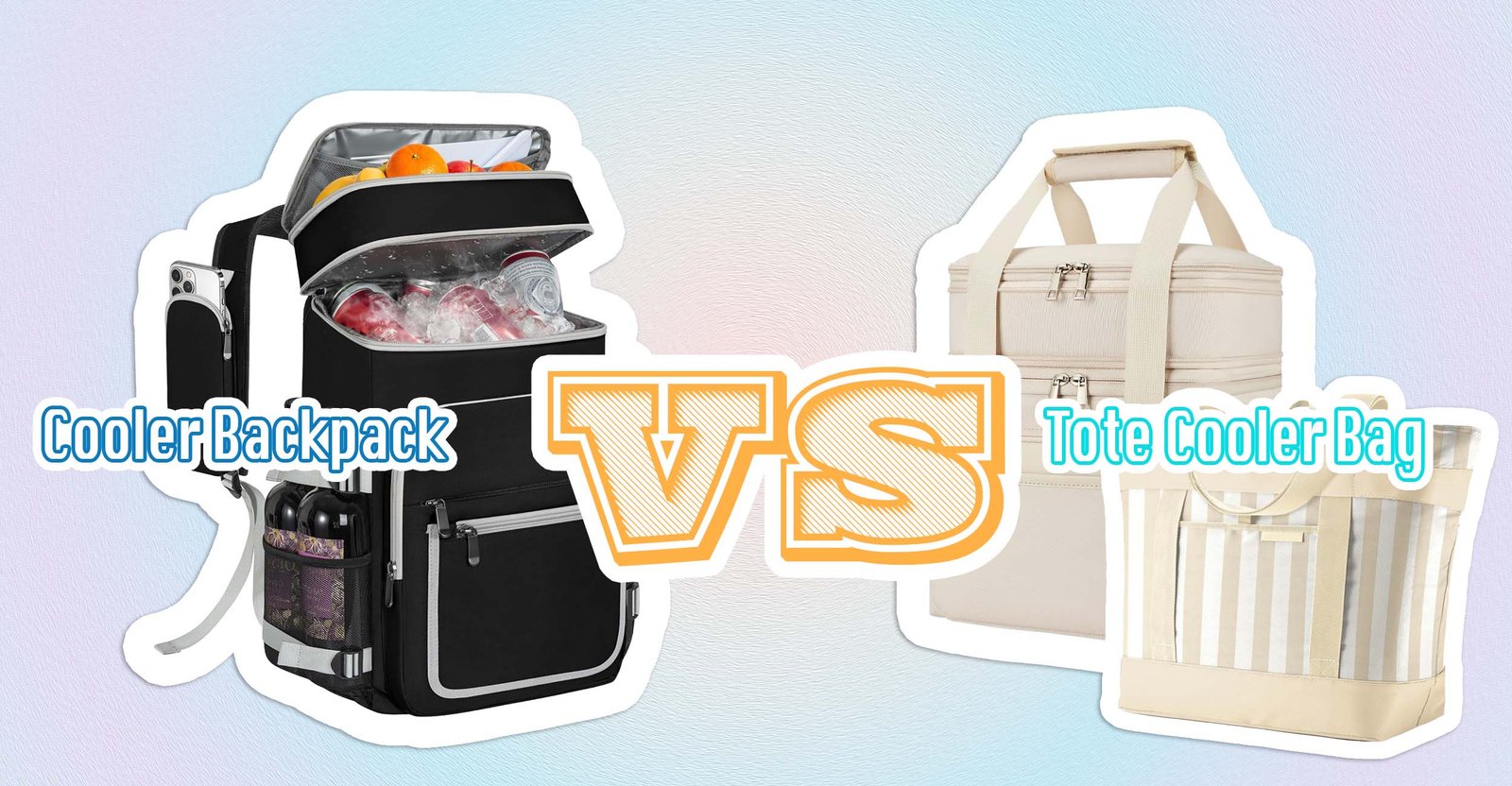
I often receive cooler bag inquiries that start with only one question: “How much is this size?” I understand why buyers ask this first. Price matters in every bulk order. Yet I have seen that capacity and unit price do not tell the full story. A 25L cooler backpack and a 25L cooler tote can feel very different in real use. The zipper can open in a different way. The load can press on different seams. The user can carry the same weight for a very different distance. The lining can also fail in different areas. I will explain how I look at this decision from an OEM/ODM factory side, so buyers can build a clearer sourcing brief before sampling.
When should buyers choose a cooler backpack instead of a tote?
Some buyers choose the shape too late. That creates redesign work. The sample may look nice, but the final user may not carry it well.
Buyers should choose a cooler backpack when users need hands-free carrying, longer walking distance, better weight balance, or outdoor use. Buyers should choose a cooler tote when users need quick access, short carrying distance, easy packing, and simple retail display.
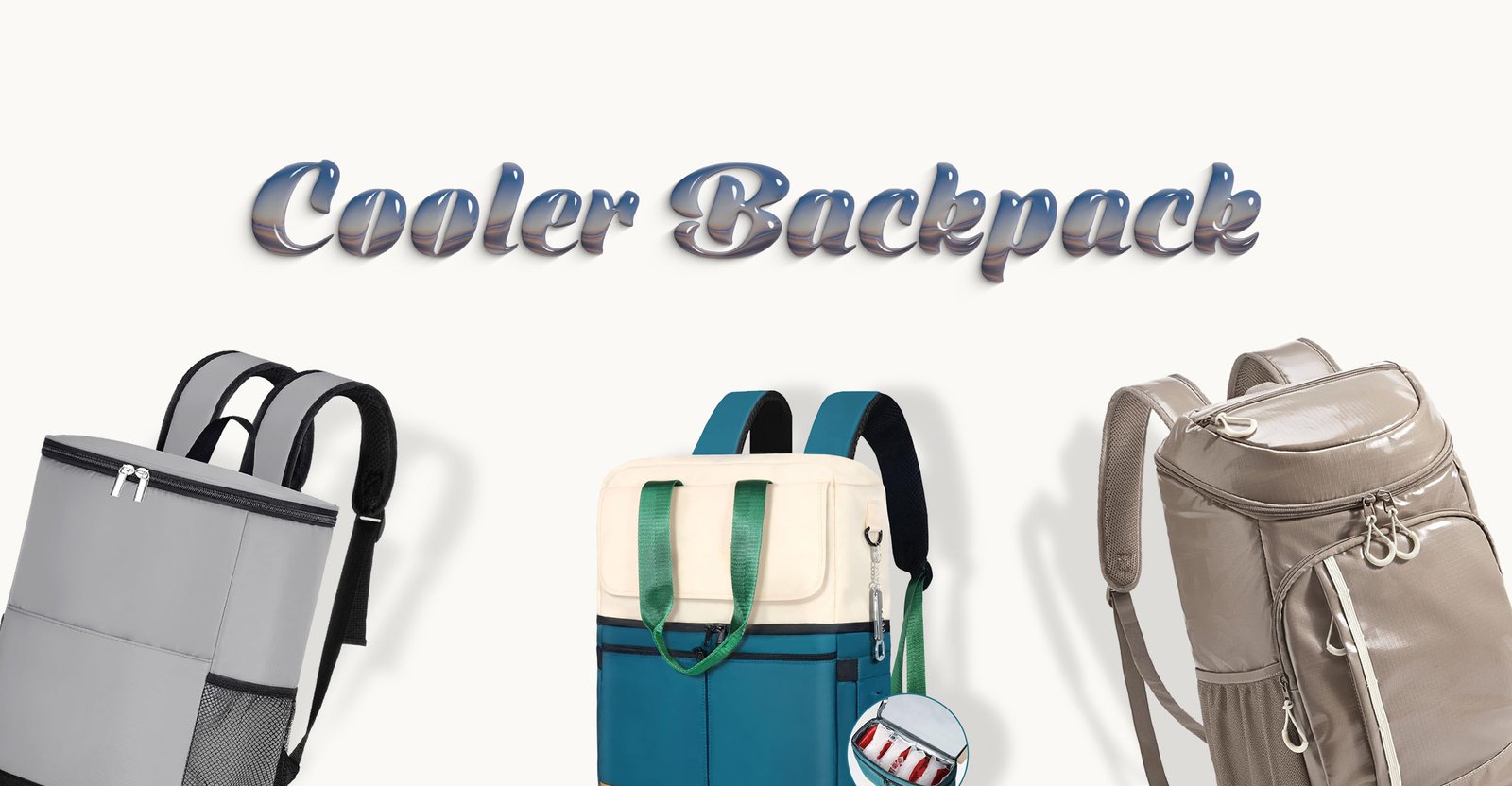
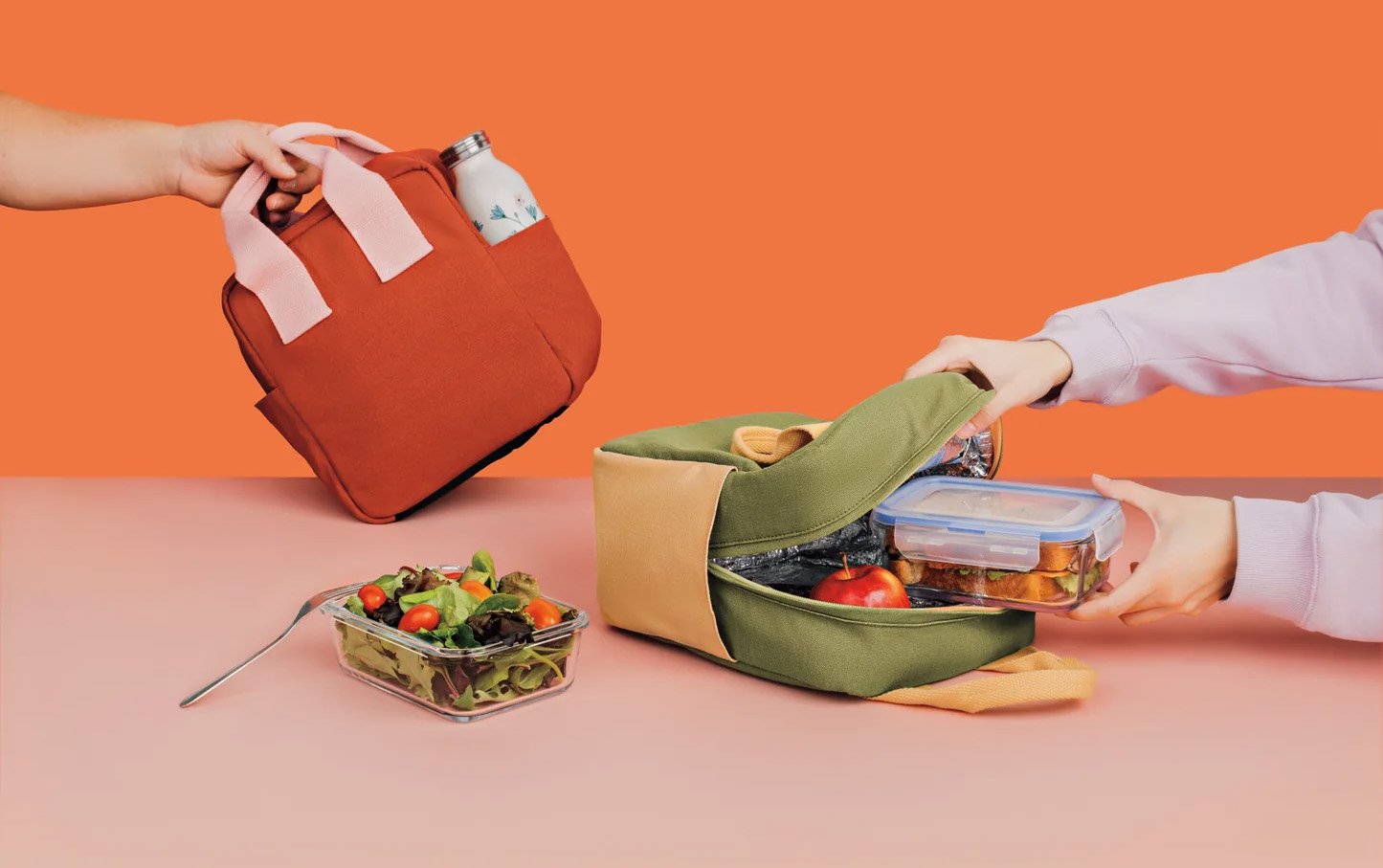
I usually start with the carrying scene before I discuss fabric, logo, and unit price. A cooler backpack places weight on two shoulders.1 This helps when the user walks from a parking lot to a beach, campsite, office, picnic area, or sports field. It also leaves the hands free. This matters when the user carries chairs, children’s items, tools, or other bags. A cooler tote is easier to open and pack. It is also easier to place in a shopping cart, car trunk, or retail shelf. It works well for groceries, wine, gifts, lunch, and short picnic use.
I use this decision table during early communication
| Sourcing question | Cooler backpack fits better when | Cooler tote fits better when |
|---|---|---|
| Who carries it? | One person carries a heavier load | One person carries a lighter load |
| How far do they walk? | The walking distance is longer | The walking distance is short |
| How often do they open it? | The bag opens less often | The bag opens often |
| Where is it sold? | Outdoor, travel, sport, and camping channels | Grocery, gift, retail, and picnic channels |
| What shape is loaded? | Bottles, cans, lunch boxes, and mixed outdoor items | Flat food boxes, groceries, wine, and gifts |
In our factory communication, I ask buyers to describe the full use case. I ask who carries the bag, how far they walk, what they put inside, and where the bag will be sold. This simple step prevents many wrong sample requests. It also helps us suggest shoulder strap padding, back panel support, handle length, opening size, and zipper direction. The choice is not only a style choice. It is a product structure choice.
What capacity works for beach, camping and grocery delivery?
Many buyers request “large capacity” without a clear load plan. That can be unsafe. A large cooler bag can fail when structure is weak.
The right capacity depends on the use case. Beach and camping cooler bags often need larger volume and stronger carrying support. Grocery delivery cooler bags need stable shape, wide access, and easy loading. Capacity should match real load weight, not only liter size.2
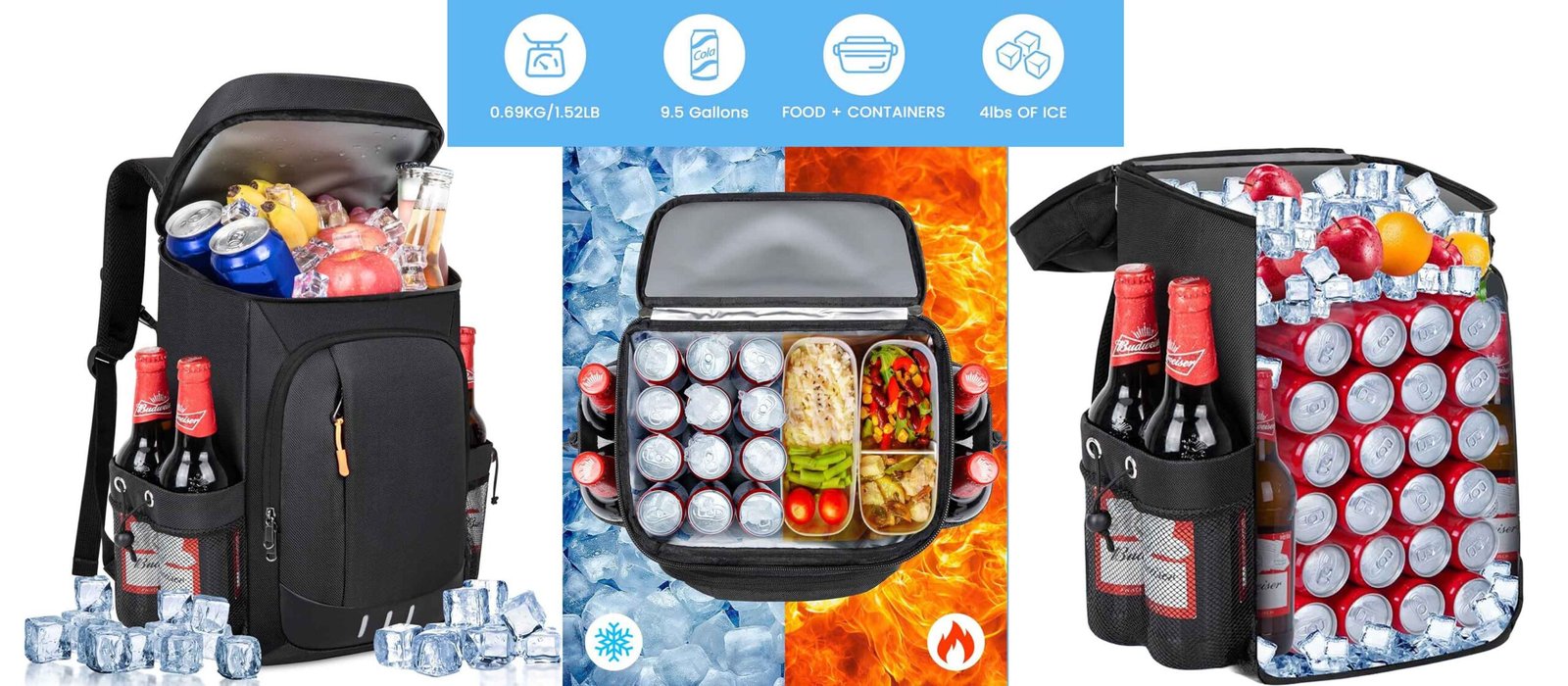
I see many buyers compare cooler bags by liters. This is useful, but it is not enough. A 30L bag can be comfortable or uncomfortable. The result depends on shape, loading point, strap design, foam thickness, stitching, and zipper path.3 A tall cooler backpack may fit bottles well, but it may not fit wide food boxes well. A wide cooler tote may hold groceries well, but it may pull hard on one side when carried too far.
I prefer to match capacity with load behavior
| Use case | Common need | Structure focus | Buyer risk to check |
|---|---|---|---|
| Beach | Drinks, fruit, snacks, towels | Comfortable straps and sand-resistant fabric | The user may walk far with heavy cans |
| Camping | Drinks, meat, meal kits, ice packs | Strong base, high load support, better insulation | The bag may sit on rough ground |
| Grocery delivery | Meal boxes, frozen food, bottles | Wide opening and stable shape | The zipper and liner may wear from frequent use |
| Retail gifting | Wine, snacks, picnic sets | Clean shape and good logo position | The bag may need better shelf appearance |
I often ask buyers to send the expected packing list. They can list cans, bottles, food boxes, ice packs, or meal kits. I can then judge if the pattern should be taller, wider, or more square. I can also check whether the handle needs reinforcement or whether the backpack shoulder straps need extra sewing. This matters because cooler bags hold weight and moisture at the same time. If a buyer only increases capacity to look attractive, the bag may become hard to carry. It may also cost more in fabric, foam, lining, carton size, and freight. I believe capacity should follow the real sales promise. It should not be a number used only for marketing.
How do leakproof liners affect cost and quality?
Some buyers ask for leakproof cooler bags at the lowest price. That request sounds simple, but it can create hidden quality problems.
Leakproof liners can improve user experience, but they increase cost and production control needs. The final quality depends on liner material, seam sealing, corner construction, welding method, zipper area, and factory inspection. Buyers should define the leakproof level before sampling.
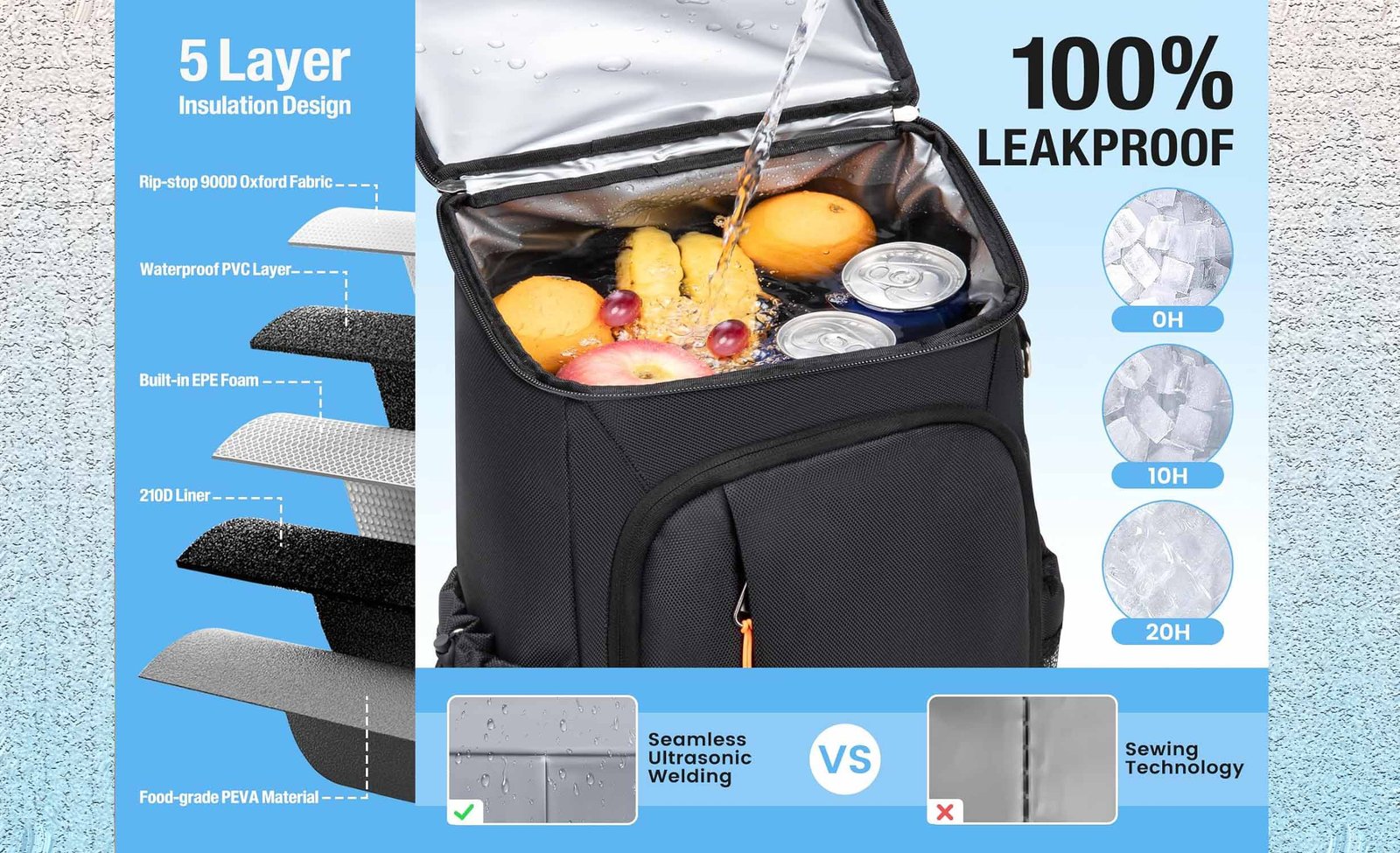
I treat “leakproof” as a technical requirement, not only a selling word. A cooler bag can use PEVA, PVC, TPU, aluminum foil lining, or other inner materials. Each material has a different hand feel, cost, strength, and production process. Some linings are stitched. Some linings are heat sealed or welded. A stitched lining may be lower in cost, but needle holes can increase leakage risk.4 A welded liner can improve water resistance, but it needs more process control and better corner handling.5
I separate liner decisions into three levels
| Liner target | Common construction | Cost effect | Quality control focus |
|---|---|---|---|
| Basic insulation | Stitched lining with foam | Lower cost | Stitching, material cleanliness, and fit |
| Better water resistance | Better liner plus tighter seam control | Medium cost | Corners, zipper edge, and pressure points |
| Strong leakproof target | Heat sealed or welded liner | Higher cost | Welding quality, shape accuracy, and water test method |
I always tell buyers that a leakproof claim should match the real test condition. A bag may resist cold packs and condensation. That does not always mean it can hold melted ice water for long periods without leakage. The opening area is also important. A zipper is not always fully leakproof.6 The corner is another weak area. If the inner liner is pulled too tight, it may split after use. If it is too loose, it may wrinkle and reduce the clean look.
In sampling, buyers should ask for the exact liner material, foam thickness, seam method, and test method. In mass production, the factory should check liner damage, dirty marks, seam sealing, corner shape, and leakage risk. This is where a factory with cooler bag production experience can help reduce risk. The buyer can still control the target cost, but the buyer should not remove every structural cost and still expect a strong leakproof result.
What outer fabrics are best for outdoor cooler bags?
A low-cost fabric may look fine in photos. The problem appears later. Outdoor use can damage fabric, coating, seams, and color.7
The best outer fabric depends on channel and use. Polyester works for many cost-sensitive cooler bags. Oxford fabric gives better strength. RPET supports eco-friendly programs.8 Tarpaulin offers a tougher look and better surface resistance, but it can raise cost and weight.9
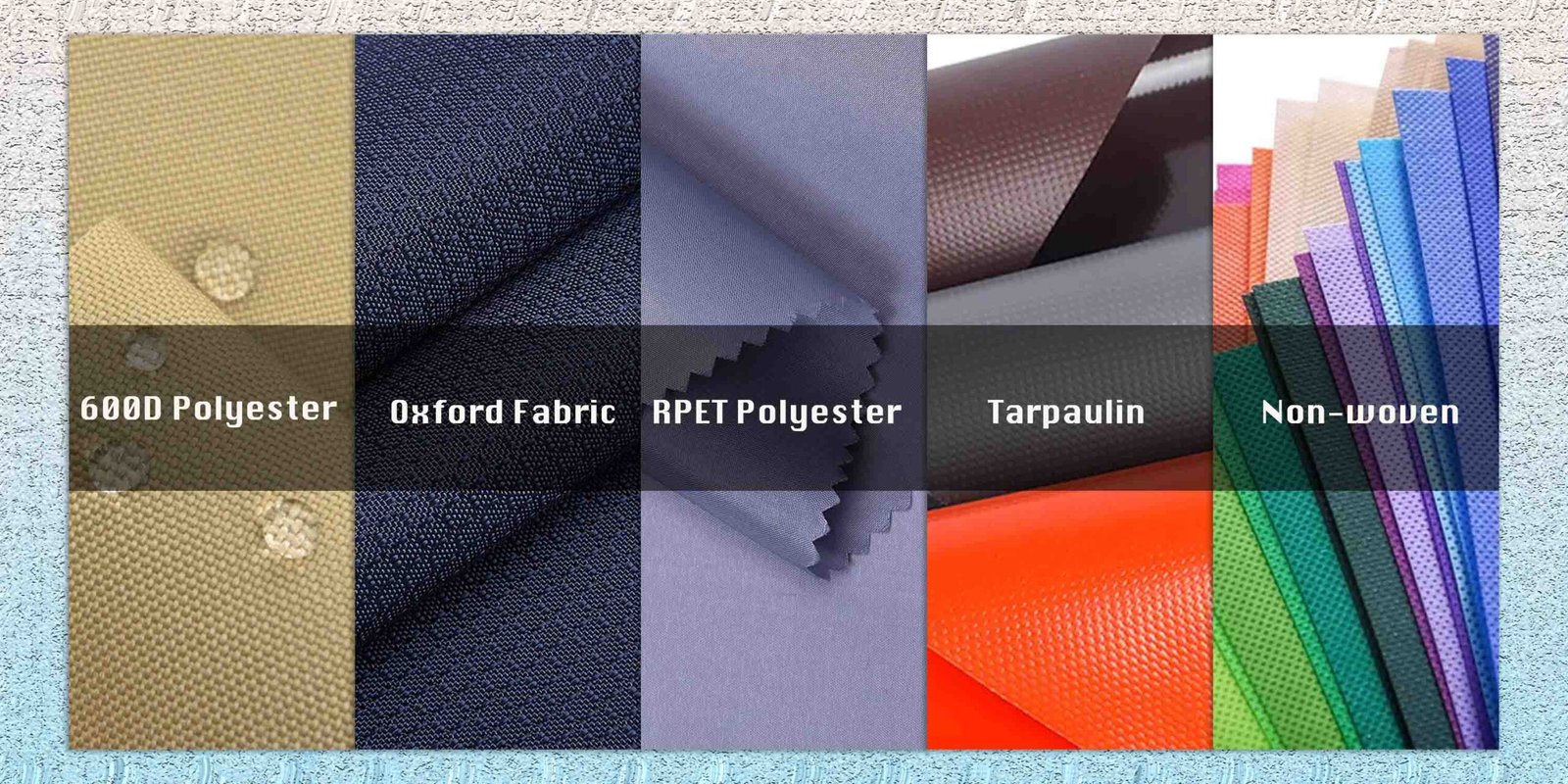
I choose outer fabric after I understand the target market. A supermarket promotion cooler tote may need clean printing, low cost, and stable supply. A camping cooler backpack may need stronger fabric, better tear resistance, and a more outdoor appearance. A brand line may need custom color, logo accuracy, and a surface that fits the brand image. Fabric choice also affects MOQ, lead time, print method, and carton volume.
I often compare fabric by use, not by name only
| Fabric option | Good fit | Main advantage | Buyer should check |
|---|---|---|---|
| 600D polyester | General cooler totes and backpacks | Good cost balance and easy sourcing | Coating, color fastness, and thickness |
| Oxford fabric | Outdoor and heavier use | Better strength feeling | Weight, coating, and sewing difficulty |
| RPET polyester | Eco-friendly retail programs | Supports recycled material story | Certification need and color options |
| Tarpaulin | Premium outdoor look and easy wipe surface | Stronger surface and modern look | Higher cost, weight, and welding needs |
| Non-woven | Low-cost promotion | Very low price | Low strength and shorter use life |
I often remind buyers that fabric strength is only one part of durability. The stitching, binding, zipper tape, puller, webbing, and bottom panel also matter. A strong fabric with weak stitching is still a weak bag. A good outdoor cooler bag should consider the bottom first because the bottom touches wet grass, sand, concrete, and car trunks. If the buyer wants an outdoor backpack, I also check shoulder strap fabric, foam, mesh, and bartack positions. If the buyer wants a tote, I check handle length, handle reinforcement, and side seam load.
For brand buyers, I suggest selecting fabric based on price band and sales channel. If the bag is for a supermarket seasonal program, stable cost and clear logo printing may be more important than a very heavy fabric. If the bag is for an outdoor brand, fabric hand feel and structural strength may be more important. The fabric decision should support the final product promise.
How should buyers test ice retention before ordering?
Many buyers ask for a fixed cooling time. That sounds useful. Yet cooling time can change a lot under different test conditions.
Buyers should test ice retention with clear and repeatable conditions before ordering. They should define ice amount, bag loading, room temperature, opening frequency, sample size, and test duration. They should compare samples under the same conditions instead of relying only on general claims.
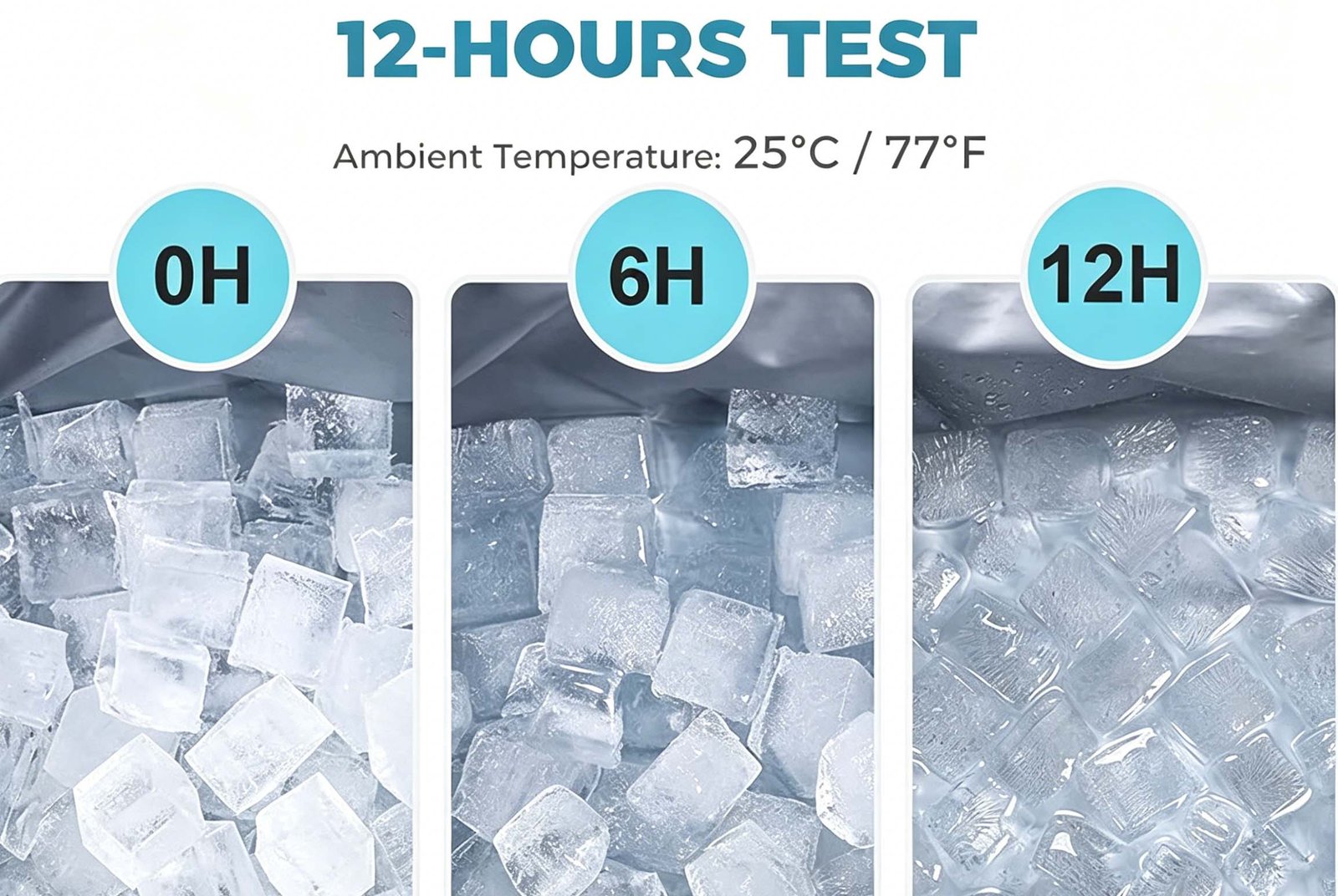
I do not like making a fixed cooling-hour promise without test conditions. A cooler bag is not a refrigerator. Its performance depends on the insulation material, foam thickness, lining, opening design, zipper quality, seam structure, and real environment.10 A bag used under hot sun will perform differently from a bag kept in an air-conditioned room.11 A bag opened every ten minutes will perform differently from a bag kept closed.12
I suggest a simple buyer-side test plan
| Test item | Why it matters | What buyers should record |
|---|---|---|
| Starting temperature | It affects melt speed | Room temperature and product temperature |
| Ice or ice pack weight | It changes retention time | Ice amount and type |
| Fill level | Empty space affects performance | Load volume and content type |
| Opening frequency | Real users open bags often | Number of openings and duration |
| Bag position | Sun and shade change results | Indoor, outdoor, sun, shade |
| End point | Results need one clear standard | Ice left, water temperature, or food temperature |
In our sample communication, I can help buyers compare structure and materials. I can also support basic factory checks based on the agreed sample standard. Yet I do not present myself as a laboratory testing authority. If the buyer needs a formal claim for packaging or retail listing, the buyer should arrange controlled testing or third-party testing. This protects the brand and the supplier.
I also advise buyers to test more than one sample. One sample may not show stable production behavior. The buyer should test a backpack and a tote under the same condition if both are being considered. The buyer should also check the zipper, liner, and seam after the ice test. Moisture can show weak areas. A bag may keep cold well, but it may still fail if the zipper is hard to use or the liner leaks at the corner. Ice retention is important, but it should be tested together with structure, handling, and leakage risk.
What branding methods work on insulated cooler backpacks?
A logo can look good on a flat sample picture. It may look different after foam, curves, seams, and pockets are added.
Branding methods for insulated cooler backpacks include screen printing, heat transfer, embroidery, woven labels, rubber patches, metal badges, and custom zipper pullers. The best method depends on fabric, budget, order quantity, logo detail, surface shape, and brand position.
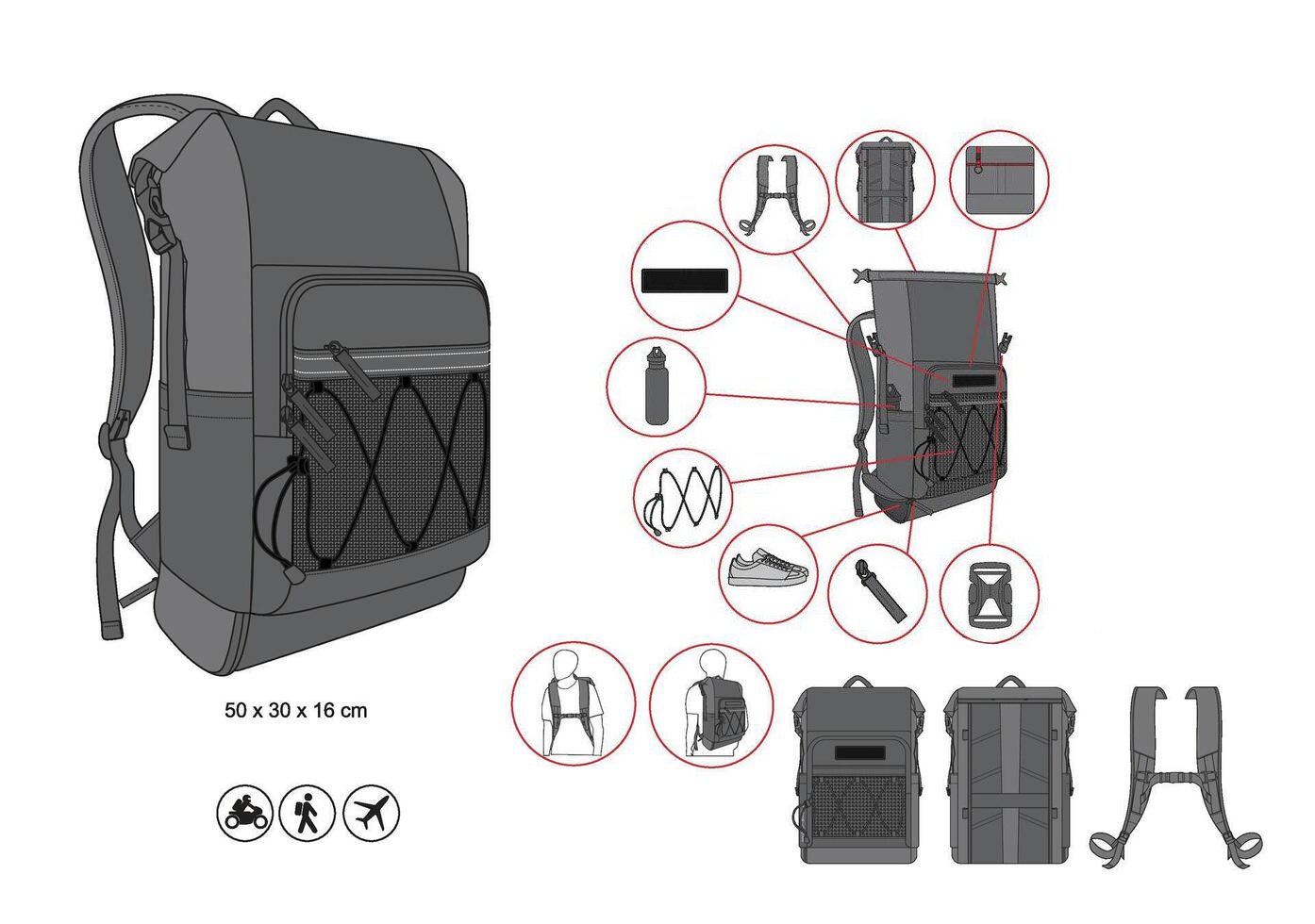
I see branding problems when logo placement is decided after the pattern is finished. Cooler backpacks have foam, pockets, curved panels, straps, and zippers. These parts limit the printable area. A logo that works on a tote front panel may not work well on a backpack front pocket. If the panel has thick insulation, some branding methods may become harder. If the surface is rough Oxford fabric, small logo details may not print clearly. If the buyer wants a premium look, a patch may work better than a large print.
I match branding method with product position
| Branding method | Good use | Main benefit | Main limit |
|---|---|---|---|
| Screen printing | Simple logos and large panels | Cost friendly for bulk orders | Limited detail and color control |
| Heat transfer | More colors and detailed logos | Clean look and good detail | Needs suitable fabric and process control |
| Embroidery | Strong brand feel | Durable and classic | May affect waterproof surface and cost |
| Woven label | Small brand mark | Neat and flexible | Less visual impact |
| Rubber patch | Outdoor or sport style | Strong 3D effect | Higher mold cost |
| Metal badge | Premium retail line | Better shelf look | Adds weight and cost |
| Custom zipper puller | Small detail branding | Good for private label | Needs tooling and MOQ planning |
I usually ask buyers for logo files early. I prefer vector files because they help us control size, color, and edge clarity. I also ask for the final packaging plan. Some buyers need hangtags, polybags, color boxes, carton marks, or barcode labels. These are part of OEM/ODM work, not only decoration. If the buyer sells to supermarkets, carton labeling and packing method can be as important as the logo on the bag.
For insulated cooler backpacks, I also check where the logo will be seen when the bag is worn. A front logo may face backward from the user. A side logo may show better in photos. A top lid logo may be visible on a shelf. The correct choice depends on the sales channel. I suggest confirming logo placement on a physical sample. A digital mockup is useful, but the real sample shows seams, foam thickness, curve, and hand feel. This small step can prevent costly changes before mass production.
Conclusion
I choose cooler backpacks or cooler totes by use case, structure, material, test plan, and channel. This makes sourcing safer and sampling more efficient.
"Impact of Backpacks on Ergonomics: Biomechanical and ... - PMC", https://pmc.ncbi.nlm.nih.gov/articles/PMC9180465/. Biomechanics studies of load carriage report that two-strap backpacks distribute load across both shoulders and produce different postural and gait effects than unilateral bags; this supports the ergonomic rationale for backpack coolers, although the studies are not specific to insulated cooler bags. Evidence role: mechanism; source type: paper. Supports: Backpack-style carrying can distribute load bilaterally and differs biomechanically from one-sided carrying.. Scope note: Contextual support from load-carriage research rather than direct testing of cooler backpacks. ↩
"OSHA procedures for safe weight limits when manually lifting", http://www.osha.gov/laws-regs/standardinterpretations/2013-06-04-0. Government ergonomics guidance on manual material handling emphasizes that injury risk depends on load weight, carrying distance, posture, and handling conditions; this supports matching cooler-bag volume to realistic loaded weight, although it does not prescribe cooler-specific capacities. Evidence role: expert_consensus; source type: government. Supports: Manual handling risk depends on load weight and handling conditions, not only size or volume.. Scope note: General manual-handling guidance rather than a cooler-bag standard. ↩
"Impact of Backpacks on Ergonomics: Biomechanical and ... - PMC", https://pmc.ncbi.nlm.nih.gov/articles/PMC9180465/. Ergonomic load-carriage literature shows that load position, shoulder-strap design, and contact pressure affect perceived comfort and biomechanical strain; this supports evaluating cooler-bag structure beyond liter capacity, though it does not test the cited 30L example directly. Evidence role: mechanism; source type: paper. Supports: Carrying comfort is influenced by load placement, strap design, padding, and structural configuration.. Scope note: Contextual ergonomic evidence, not a direct comparison of 30L cooler bag models. ↩
"[PDF] Optimization of Sewing Parameters for Improving the Waterproof ...", https://jtatm.textiles.ncsu.edu/index.php/JTATM/article/download/20809/9744/76358. Textile research on waterproof and coated fabrics identifies sewn needle penetrations as potential leakage paths and discusses seam sealing as a method to restore water resistance; this supports the leakage concern for stitched cooler liners. Evidence role: mechanism; source type: paper. Supports: Stitching can create perforations in coated or waterproof textiles that reduce water resistance unless sealed.. ↩
"[PDF] WELDING PROCEDURE SPECIFICATION", https://engstandards.lanl.gov/esm/welding/welding_specs/7000-PVC%20Fabric%20Rev_1.pdf. Studies of heat sealing and welding in thermoplastic-coated textiles show that welded seams can form water-resistant joints, but seam strength and integrity depend on controlled process parameters and joint geometry; this supports the article’s caution about liner welding and corner construction. Evidence role: mechanism; source type: paper. Supports: Welded seams in thermoplastic or coated fabrics can provide water-resistant joints, while weld strength depends on parameters such as temperature, pressure, speed, and seam geometry.. ↩
"Optimization of Sewing Parameters for Improving the Waterproof ...", https://jtatm.textiles.ncsu.edu/index.php/JTATM/article/view/20809. Research on waterproof textile assemblies notes that seams and closures, including zippers, can be leakage pathways unless they use specialized construction and testing; this supports treating zipper areas as separate from liner waterproofness, although it is not cooler-bag-specific. Evidence role: mechanism; source type: paper. Supports: Closures such as zippers are common weak points in waterproof textile assemblies unless engineered and tested for water resistance.. Scope note: Contextual evidence from waterproof textile assemblies rather than direct cooler-bag leakage tests. ↩
"A comprehensive review of ultraviolet radiation and functionally ...", https://pmc.ncbi.nlm.nih.gov/articles/PMC11605348/. Textile weathering studies show that ultraviolet radiation, moisture, and abrasion can degrade polymer fibers and coatings and reduce colorfastness; this supports the article’s warning about outdoor damage to cooler-bag materials. Evidence role: mechanism; source type: paper. Supports: Sunlight, moisture, abrasion, and weathering can reduce textile strength and color stability.. ↩
"(PDF) Environmental life cycle assessment of textile bio-recycling", https://www.academia.edu/110779202/Environmental_life_cycle_assessment_of_textile_bio_recycling_valorizing_cotton_polyester_textile_waste_to_pet_fiber_and_glucose_syrup. Life-cycle assessments of recycled PET generally find reductions in virgin material demand and selected environmental impacts compared with virgin PET, supporting its use in sustainability programs; the evidence does not verify any specific cooler bag or certification claim. Evidence role: general_support; source type: paper. Supports: Recycled PET is commonly used to reduce reliance on virgin PET and can lower selected life-cycle impacts, depending on sourcing and processing.. Scope note: Environmental benefit depends on recycling source, processing energy, transport, and certification. ↩
"PVC Coated Polyester Fabric Manufacturer - DERFLEX", https://www.derflex.com/PVC-Coated-Polyester-Fabric.html. Textile engineering references describe tarpaulins as coated fabrics used where water resistance and surface durability are needed, and note that coating layers add mass and processing complexity; this supports the trade-off between surface resistance, weight, and cost. Evidence role: definition; source type: education. Supports: Tarpaulin commonly refers to coated, water-resistant fabrics used for durable covers, which are generally heavier than uncoated lightweight fabrics.. Scope note: Material properties vary by coating type, base fabric, and fabric weight. ↩
"Analysis of Thermal Insulation Thickness for a Container House in ...", https://pmc.ncbi.nlm.nih.gov/articles/PMC9778341/. Heat-transfer research on insulated containers shows that insulation type and thickness, thermal bridges at openings or seams, and ambient conditions influence internal temperature change; this supports evaluating cooler-bag performance by construction and test environment. Evidence role: mechanism; source type: paper. Supports: Thermal performance of insulated containers is influenced by insulation material, thickness, closures, seams, and ambient temperature.. ↩
"Keep Food “Cool for the Summer” to Avoid Foodborne Illness - USDA", https://www.usda.gov/about-usda/news/blog/keep-food-cool-summer-avoid-foodborne-illness. Government food-safety guidance advises keeping coolers out of direct sunlight and limiting heat exposure to maintain safe internal temperatures; this supports the statement that sun exposure and air-conditioned storage produce different cooling results. Evidence role: expert_consensus; source type: government. Supports: Coolers should be kept out of direct sun and in cooler environments to maintain lower internal temperatures.. ↩
"Refrigeration & Food Safety", http://www.fsis.usda.gov/food-safety/safe-food-handling-and-preparation/food-safety-basics/refrigeration. Government food-safety guidance recommends keeping cooler lids closed as much as possible because opening allows heat exchange and can raise internal temperature; this supports controlling opening frequency in cooler-bag tests. Evidence role: expert_consensus; source type: government. Supports: Keeping a cooler closed helps maintain low internal temperature, while repeated opening allows warm air exchange.. ↩