Most buyers pick a sports backpack by size and price. Then complaints come in. The bag looked right, but it failed in real use.
The right sports backpack depends on the job it must do. A gym bag needs fast access and wet separation. A team bag needs durability and easy distribution. A training bag needs load stability. Matching structure to use case prevents costly selection mistakes.
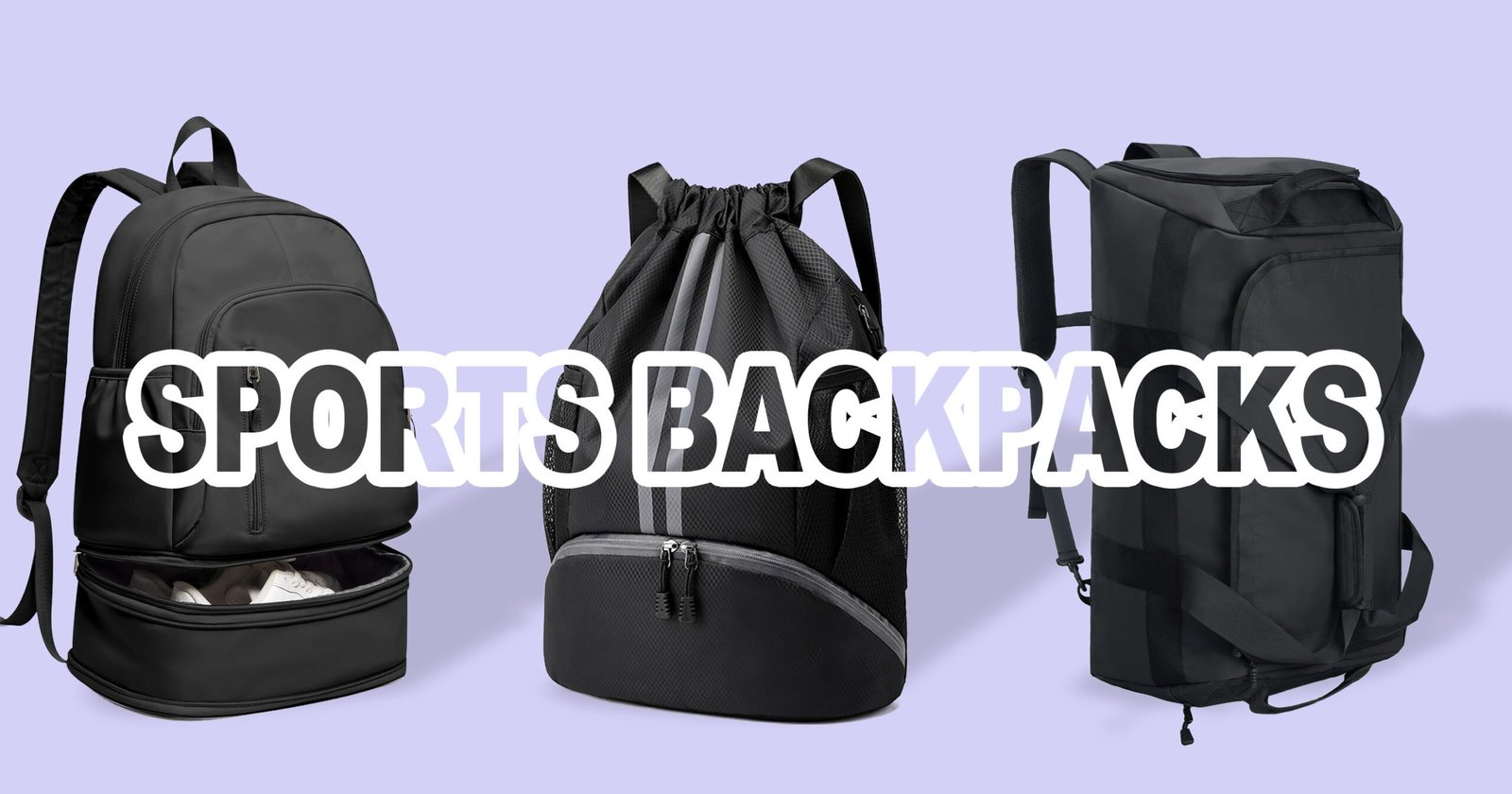
Buyers who come to us with sports backpack inquiries usually have one goal. They want to reduce the risk of choosing the wrong bag. They are not collecting product ideas. They are trying to avoid a problem they may have had before, or one they have heard about from others. The challenge is that "sports backpack" covers three very different use cases. Each one has its own failure points. In this article, I will break down each use case and show what structural features actually matter. This will help you make a much better selection decision before you place any order.
Should a Sports Backpack Have a Shoe Compartment?
You pick up a gym bag that looks perfect. Good size, clean design, decent price. Then your customers start complaining. Their shoes smell. Their clean clothes smell like shoes.
A dedicated shoe compartment keeps footwear physically separated from clothing and gear.1 For gym use, this is not a luxury feature. It directly affects hygiene and user satisfaction.2 Without it, dirty or sweaty shoes contaminate everything else in the bag.3
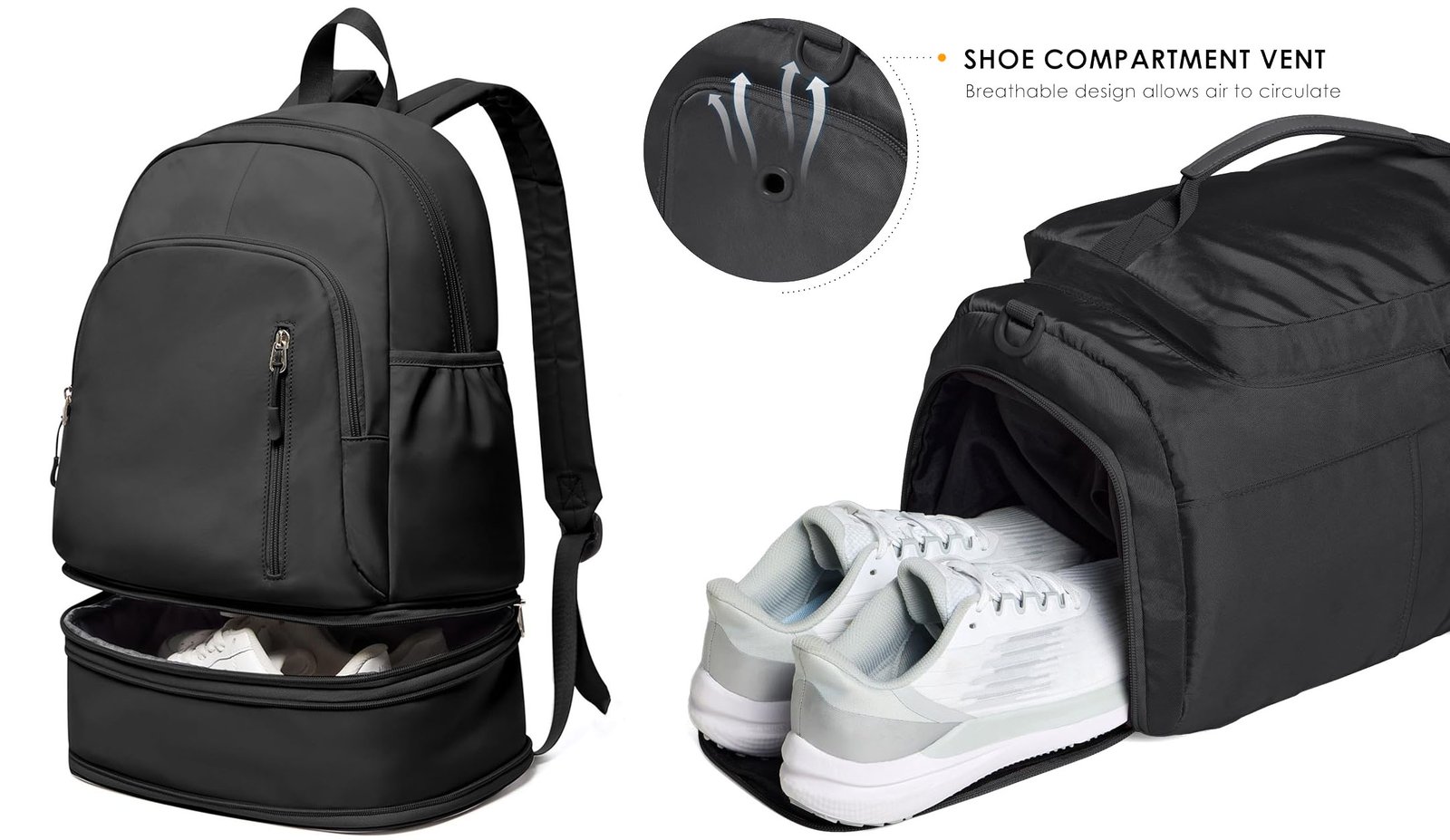
The shoe compartment question comes up in almost every gym backpack inquiry I handle. Buyers sometimes treat it as optional. In my experience, that is the wrong call.
Here is the real issue. A gym user packs a bag before work. They carry gym clothes, a towel, and a pair of training shoes. After the workout, those shoes are sweaty and sometimes muddy. If the shoes share space with clean items, the smell transfers. The user's experience with the bag becomes negative very quickly.
Now let us look at this from a structural angle. There are two common approaches to shoe storage in a sports backpack.
Two Common Shoe Compartment Approaches
| Approach | Location | Access | Best For |
|---|---|---|---|
| Bottom zip compartment | Base of bag | Side or front zip | Clean gear separation, gym bags |
| Side access pocket | Left or right panel | Zipper on side panel | Quick access, training packs |
The bottom compartment is more common in gym-focused bags. It keeps weight low and separates shoes from the main compartment completely. The side pocket is faster to access but offers less separation.
For a gym backpack, the bottom shoe compartment is almost always the better choice. Users do not need to pull shoes out mid-session. They pack them in the morning and retrieve them at the gym. Speed of access matters less here. What matters most is keeping the rest of the bag clean.
I also want to flag a structural mistake I see in lower-cost gym bags. Some designs add a shoe pocket in theory but make it too shallow or too narrow to fit a size 11 or 12 shoe. This creates a usability failure for a large portion of male gym users. If you are sourcing gym backpacks, always confirm the internal shoe compartment dimensions. A minimum of 32 cm in length is a reasonable benchmark for adult male sizes.4
Why Do Wet Pockets Matter for Gym and Team Bags?
A sports bag comes back from the pool. Everything inside is wet. The towel soaked the jersey. The jersey soaked the phone pocket. The whole bag needs to dry for two days.
Wet pockets use waterproof-lined or TPU-coated inner walls to contain damp items.5 They stop moisture from spreading to dry zones inside the bag.6 For gym users and team players who carry wet towels or swim gear, this feature prevents product damage and keeps end users satisfied.
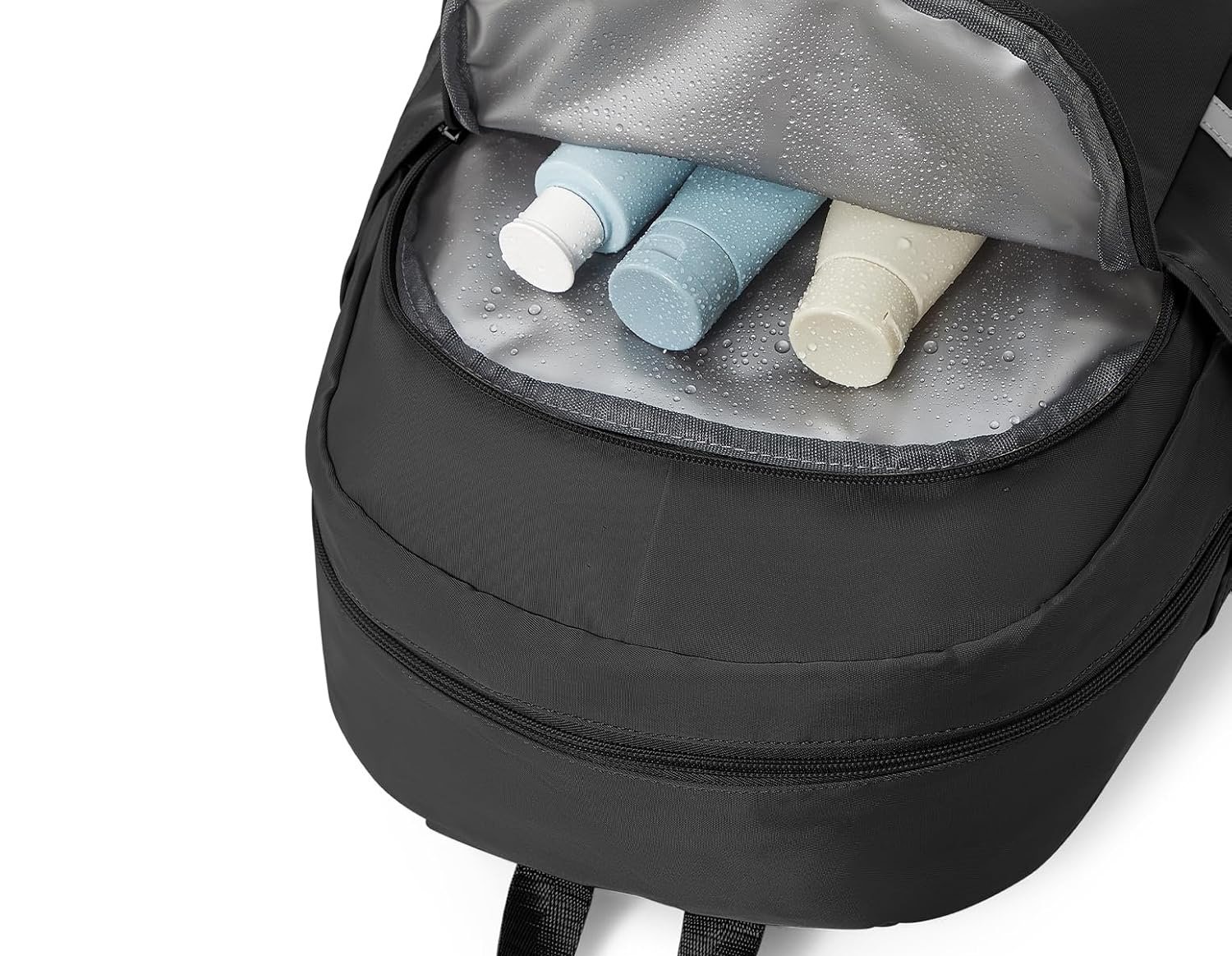
Wet pockets are one of the most undervalued features in sports backpack selection. I see buyers overlook them regularly, especially when they are focused on exterior design or total volume. The problem only becomes visible after distribution.
Let me explain what a wet pocket actually does in a working bag. When a gym user finishes a swim session or a heavy workout, they pack a wet towel or damp clothing into the bag. Without a wet pocket, that moisture spreads through the lining. Dry clothes get wet. Electronics are at risk. The bag takes a long time to air out. Over time, the lining develops mildew.7
A well-designed wet pocket has three structural properties. First, the lining is waterproof on the inside. Common materials include TPU coating, PVC-coated fabric, or welded seams. Second, the zipper keeps the wet zone physically closed off from dry zones. Third, the pocket is large enough to hold a full-size gym towel or a wet jersey.
Wet Pocket Feature Comparison by Use Case
| Use Case | Wet Pocket Priority | Recommended Size | Typical Contents |
|---|---|---|---|
| Daily gym user | High | 8–12 liters | Towel, swimwear, wet shoes |
| School sports team | Medium-High | 6–10 liters | Jersey, shorts, towel |
| Outdoor training | Medium | 4–8 liters | Rain layer, damp accessories |
One point worth noting for team buyers. When you are distributing bags to a school sports team or a club, individual users are often teenagers. They are less likely to organize their gear carefully. A bag with a clear wet zone makes the right behavior the default behavior. That is a structural advantage, not just a comfort feature.
For buyers ordering in bulk, I always recommend confirming whether the wet pocket zipper is sealed or just a standard zip. Sealed zippers cost slightly more but perform much better in high-moisture environments. It is a small cost difference at the unit level but a significant difference in user experience at scale.
Which Fabrics Are Better for Sweat and Light Rain?
You order 500 bags. The fabric looks good in the sample. Three months later, buyers report that the coating is peeling, or the color is fading at the straps.
For sports backpacks, 600D polyester with PU coating, 420D nylon, and recycled RPET fabrics are the most practical choices.8 They balance abrasion resistance, moisture handling, and cost. Each fabric has a different strength, and the right choice depends on how the bag will be used daily.
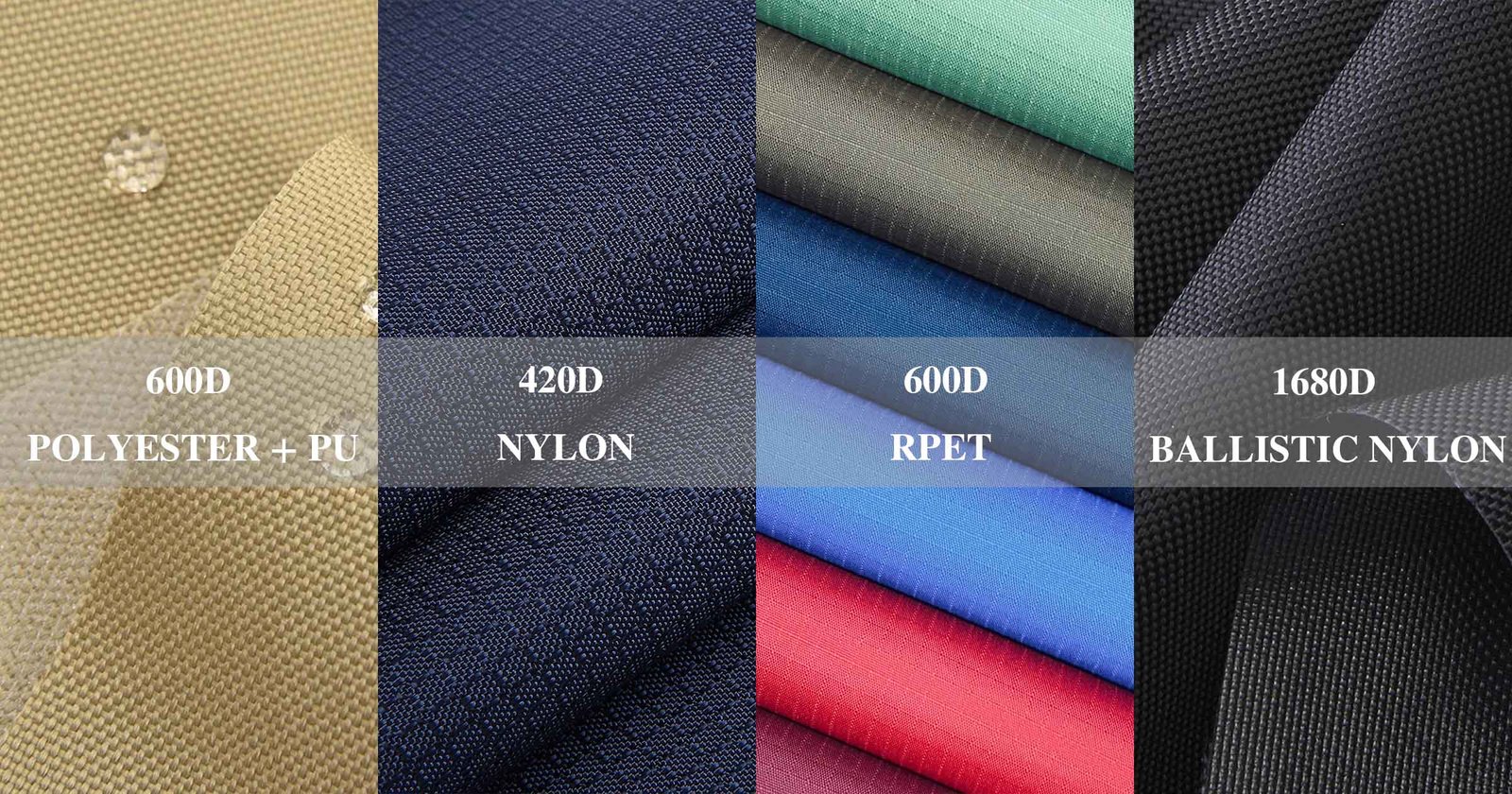
Fabric selection is one of the areas where buyers who lack technical background make the most expensive mistakes. I understand this well because most of the buyers I work with are strong on sales and purchasing logic but are less confident when it comes to material specs. That is a reasonable gap. But it creates real risk if the wrong fabric goes into a high-use sports bag.
Let me break down the three most common fabric options in practical terms.
Fabric Comparison for Sports Backpacks
| Fabric | Weight Feel | Water Resistance | Abrasion Resistance | Typical Use |
|---|---|---|---|---|
| 600D Polyester + PU | Medium | Good (coating) | Medium-High | Gym bags, everyday team bags |
| 420D Nylon | Light-Medium | Good | High | Training packs, performance bags |
| RPET 600D | Medium | Good (varies) | Medium | Eco-branded gym and team bags |
| 1680D Ballistic Nylon | Heavy | Medium | Very High | Heavy training, long-term use bags |
600D Polyester with PU coating is the most common choice in B2B gym and team bag orders. It is cost-effective, available in a wide range of colors, and handles light rain and sweat contact well. The PU coating adds a layer of water resistance on the outer surface. The main failure point is delamination when the bag is washed frequently or stored improperly. For buyers who need a reliable middle-ground fabric at a competitive price, 600D polyester is a safe default.
420D Nylon is lighter and more abrasion-resistant than polyester of the same denier. It is a better choice for training packs that get heavy use, go in and out of car boots, or sit on rough surfaces regularly. The cost is slightly higher, but the durability payoff is real for users who train frequently.
RPET fabric is worth highlighting for buyers who work with brands focused on sustainability. RPET is made from recycled plastic bottles.9 The material performs similarly to standard polyester in most functional tests. Many European and North American buyers specifically ask for RPET options because their customers expect eco-credentials.10 We work with RPET on a regular basis and can confirm that the material handles sweat and light rain well when the weave density is sufficient.
One practical note on strap fabric. High-contact zones like shoulder straps and carry handles wear out faster than the main body. Ask your supplier whether these areas use reinforced webbing or additional padding material. This is often where cheaper bags fail first, and it is a detail that is easy to miss when reviewing a product photo.
How Can Sports Teams Customize Backpacks in Bulk?
A sports team needs 300 bags. They want their logo, their colors, and a model that fits their players. The first supplier sends a generic catalog. The second supplier disappears after sampling.
Sports teams can customize backpacks in bulk through OEM and ODM production. Key options include logo printing or embroidery, custom color matching, dedicated compartment layouts, and branded label placement. A capable supplier will confirm minimum order quantities, sampling timelines, and production schedules before production starts.
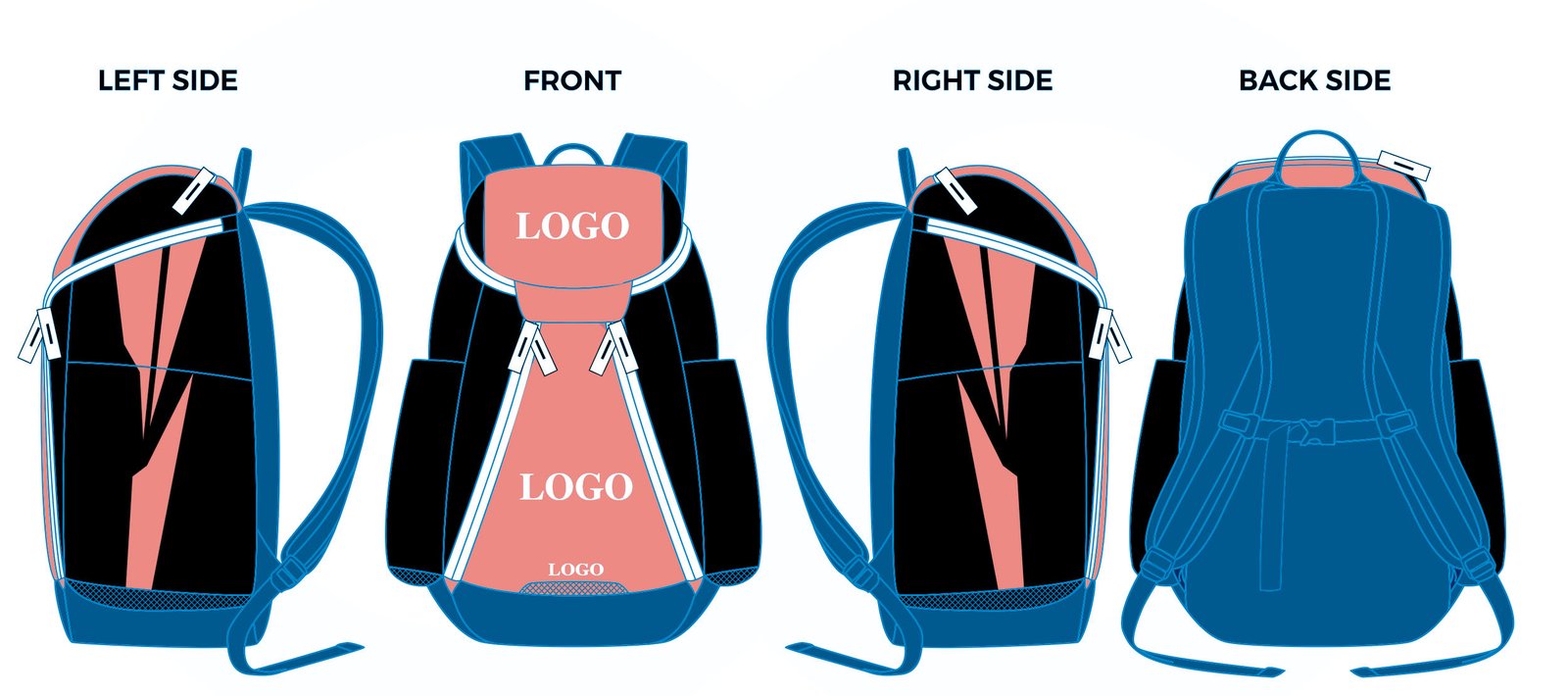
Customization for team orders is not complicated when the process is clear. The confusion usually comes from suppliers who overpromise during inquiry and underdeliver during production. I want to walk through what a reliable team backpack customization process actually looks like, so buyers know what to ask for and what to watch out for.
The Main Customization Variables for Team Bags
| Customization Type | Lead Time Impact | MOQ Effect | Notes |
|---|---|---|---|
| Logo embroidery | Low | Low | Best for premium feel, limit fine detail |
| Screen printing | Low | Low | Fast, good for large logos and flat graphics |
| Heat transfer print | Low | Low | Good for complex artwork and gradients |
| Custom color body | High | High | Requires dye lot matching, add 2–4 weeks |
| Custom compartment layout | High | High | ODM tooling required, longer sampling |
| Custom label and hang tag | Low | Low | Easy addition, minimal cost impact |
For most school teams, sports clubs, and institutional buyers, the most practical approach is to start with a proven base model and apply branding on top. This means logo placement, color selection from available stock fabrics, and custom labels. This approach keeps MOQ manageable, usually from 300 to 500 pieces per color, and keeps the sampling timeline to 2 to 3 weeks.
Full custom ODM, where the buyer designs a new bag structure from scratch, is suitable for brand buyers with consistent annual volume. It requires a longer sampling process, tooling costs in some cases, and higher MOQ commitments. It is worth it when the buyer needs a product that stands out clearly in the market, but it is not the right path for a one-time team order.
One common mistake I see with team buyers is asking for too many color variants in a single order. A football club wants one color for juniors, one for seniors, and one for staff. This splits the order three ways and each variant may fall below the viable MOQ for custom fabric color. The better approach is to unify the base color and differentiate by badge size or position instead. This keeps quality high and cost under control.
Lead time is the other major concern for team buyers. School sports programs have fixed seasons. Club tournaments have set dates. Any supplier you work with should be able to give you a confirmed production and shipping schedule in writing, not an estimate. Always build a buffer of at least two weeks between the committed delivery date and your actual need date. Shipping delays happen, especially for international orders.
What Quality Checks Should Buyers Request Before Production?
The sample looked great. The bulk order arrived. The zippers are rough, the stitching is uneven, and three bags have lining tears. The season starts in two weeks.
Before production, buyers should request pre-production sample approval, fabric weight and coating verification, zipper pull test results, stitch density confirmation, and wet pocket seal testing. These checks happen before the production run starts and prevent bulk quality failures.

Quality failures in bulk bag orders almost always trace back to one thing. The buyer approved the sample but did not confirm that the production materials and construction methods would match the sample exactly. This gap between sample and bulk production is where most problems are created.
I want to be specific about what checks actually matter for sports backpacks, because a generic quality checklist is not enough. Different bag types have different failure points.
Pre-Production Quality Checks by Bag Feature
| Bag Feature | What to Check | Why It Matters |
|---|---|---|
| Main fabric | GSM weight, coating type, colorfastness | Bulk fabric sometimes differs from sample fabric |
| Zipper | Brand confirmation, pull force, smooth operation | Cheap zipper substitution is very common in cost-cutting |
| Stitching | Stitch count per inch (SPI), reinforcement at stress points | High-stress areas fail first if SPI is too low |
| Wet pocket lining | TPU thickness, seam sealing, water hold test | Lining failures cause end-user complaints quickly |
| Shoe compartment | Internal dimensions, ventilation hole presence | Undersized pockets are a common spec deviation |
| Shoulder strap | Padding density, webbing width, stitching reinforcement | Straps carry the most load and wear fastest |
| Hardware | D-ring, buckle, and clip load rating | Failures here affect functionality immediately |
There are two checks I recommend for every bulk sports backpack order, regardless of the bag type.
The first is a pre-production material confirmation. Before cutting begins, ask your supplier to send a fabric swatch and a zipper sample from the actual production roll. Compare these against your approved sample. If the supplier is using a different dye lot or a lower-grade zipper brand, you will catch it here before 500 bags are already cut and sewn.
The second is a mid-production inspection. This is a check at around 20 to 30 percent of production completion.11 It catches systemic issues before they affect the whole order. Issues like incorrect stitching patterns, wrong label placement, or lining material substitution are much cheaper to fix at this stage than after full production.
For buyers who do not have an in-house QC team in the production country, a third-party inspection is a straightforward option. The cost is small relative to the order value and the risk of a bulk failure. Many experienced buyers in North America and Europe treat third-party inspection as a standard part of their process, not an optional extra.
One final point. After-sales service is part of the quality picture. Before you commit to a supplier, confirm what their process is for handling defective units. A clear policy in writing, covering replacement or credit for confirmed defects, is a basic sign of a supplier who stands behind their product.
Conclusion
Match the bag to the job it must do. Gym, team, and training use cases each need different structures. Get the function right first, then brand and scale.
"Mariano Rivera - Wikipedia", https://en.wikipedia.org/wiki/Mariano_Rivera. Sources on contamination control and storage design note that physical separation limits direct contact between soiled footwear and clean textiles, supporting the use of a dedicated shoe compartment in sports bags. Evidence role: mechanism; source type: education. Supports: That physically separate storage compartments reduce direct contact between shoes and clean clothing or gear.. ↩
"Sweat and odor in sportswear – A review - PMC - NIH", https://pmc.ncbi.nlm.nih.gov/articles/PMC10391722/. User-centered and hygiene-related studies of apparel storage indicate that separating soiled items from clean belongings is associated with improved perceived cleanliness and reduced odor-related dissatisfaction; however, such evidence is typically contextual rather than specific to sports backpacks. Evidence role: general_support; source type: paper. Supports: That separating dirty or damp footwear from other contents can improve perceived hygiene and user experience.. Scope note: Most available evidence addresses storage hygiene or user perceptions broadly rather than testing sports-backpack satisfaction directly. ↩
"Textiles as fomites in the healthcare system - PMC - NIH", https://pmc.ncbi.nlm.nih.gov/articles/PMC10193315/. Studies on footwear and textile contamination show that shoes can carry moisture, soil, odor-causing compounds, and microorganisms that transfer to nearby fabrics during shared storage, supporting the claim that mixed storage can contaminate other bag contents. Evidence role: mechanism; source type: paper. Supports: That footwear can transfer moisture, soil, odor compounds, and microorganisms to adjacent fabrics when stored together.. ↩
"Anthropometric Measurements of Foot in Undergraduate Medical ...", https://pmc.ncbi.nlm.nih.gov/articles/PMC11455646/. Footwear sizing references and anthropometric tables indicate that adult men's larger shoe sizes, particularly around US 11–12, approach overall shoe lengths near 32 cm or more depending on sole design, providing context for a 32 cm compartment benchmark. Evidence role: statistic; source type: institution. Supports: That many adult male shoe sizes, especially around US sizes 11 to 12, require internal storage dimensions around or above 32 cm depending on shoe type.. Scope note: The exact required compartment length varies by shoe model, toe shape, and outsole thickness, so the benchmark is approximate rather than universal. ↩
"Coating of TPU-PDMS-TMS on Polycotton Fabrics for Versatile ...", https://pmc.ncbi.nlm.nih.gov/articles/PMC6418616/. Textile engineering literature describes TPU-coated and other waterproof-lined fabrics as liquid-resistant barriers used to reduce water penetration, which supports their use in wet pockets designed to contain damp items. Evidence role: mechanism; source type: research. Supports: That TPU-coated or waterproof-lined fabrics are used to resist liquid penetration and contain damp contents.. ↩
"Water Repellent Coating in Textile, Paper and Bioplastic Polymers", https://pmc.ncbi.nlm.nih.gov/articles/PMC11479018/. Research on coated textiles and moisture barriers shows that low-permeability linings can substantially reduce liquid and vapor transfer between compartments, supporting the use of wet pockets to protect adjacent dry zones. Evidence role: mechanism; source type: paper. Supports: That waterproof or low-permeability compartment materials reduce moisture transfer from wet contents to adjacent dry compartments.. Scope note: Performance depends on seam construction, zipper sealing, and exposure duration, so material evidence alone does not guarantee complete containment in every bag design. ↩
"A Brief Guide to Mold, Moisture and Your Home | US EPA", https://www.epa.gov/mold/brief-guide-mold-moisture-and-your-home. Public-health and building-hygiene sources note that mold and mildew commonly develop on damp porous materials when moisture persists, which provides contextual support for the risk of mildew in repeatedly wet bag linings. Evidence role: mechanism; source type: government. Supports: That persistently damp textile materials can support mildew or mold growth over time.. Scope note: Such sources typically address damp materials generally and do not test sports-bag linings specifically. ↩
"The Definitive Guide that You Never Wanted: Backpack Fabrics", https://pangolinswithpacks.com/the-definitive-guide-that-you-never-wanted-backpack-fabrics-566aa1567af9. Textile and product-design references commonly identify polyester, nylon, and recycled polyester fabrics as standard bag materials selected for practical tradeoffs among durability, weight, water resistance, and cost. Evidence role: general_support; source type: education. Supports: That polyester, nylon, and RPET polyester are common bag fabrics chosen for a balance of durability, water resistance, and cost considerations.. Scope note: The term 'most practical' is context-dependent and reflects design priorities rather than a universally ranked material standard. ↩
"Polyethylene terephthalate - Wikipedia", https://en.wikipedia.org/wiki/Polyethylene_terephthalate. Recycled PET (RPET) is commonly defined as polyethylene terephthalate reprocessed from post-consumer waste streams, especially beverage bottles, supporting the statement about bottle-derived fabric feedstock. Evidence role: definition; source type: encyclopedia. Supports: That RPET refers to recycled polyethylene terephthalate, commonly produced from post-consumer PET bottles.. ↩
"Responsible garment and footwear supply chains - OECD", https://www.oecd.org/en/topics/sub-issues/due-diligence-guidance-for-responsible-business-conduct/responsible-garment-and-footwear-supply-chains.html. Consumer and market surveys in Europe and North America frequently report that sustainability attributes influence purchasing preferences, offering contextual support for buyer interest in RPET options. Evidence role: statistic; source type: institution. Supports: That consumers in Europe and North America often report interest in sustainability attributes, influencing buyer demand for recycled-material options.. Scope note: Such surveys generally measure stated consumer preferences rather than direct procurement behavior for sports backpacks. ↩
"46 CFR § 164.019-13 - Production quality control requirements.", https://www.law.cornell.edu/cfr/text/46/164.019-13. Manufacturing quality-control guidance commonly places during-production inspections after an initial share of the lot has been completed, often around 20–30 percent, so that recurring defects can be identified before full production is finished. Evidence role: historical_context; source type: other. Supports: That during-production inspections are commonly scheduled after an initial portion of output has been completed, often around one-fifth to one-third of the lot.. Scope note: This timing reflects common practice rather than a universal rule and may vary by product type, lot size, and inspection protocol. ↩