Many buyers trust one size claim and place bulk orders. Then complaints come fast when travelers cannot fit the bag under a seat or inside a carrier sizer.
Buyers should check loaded dimensions, airline rule ranges, compartment design, and factory QC control. "Airline-size" is not one fixed standard, so the real question is whether the backpack stays close to target size in real use.
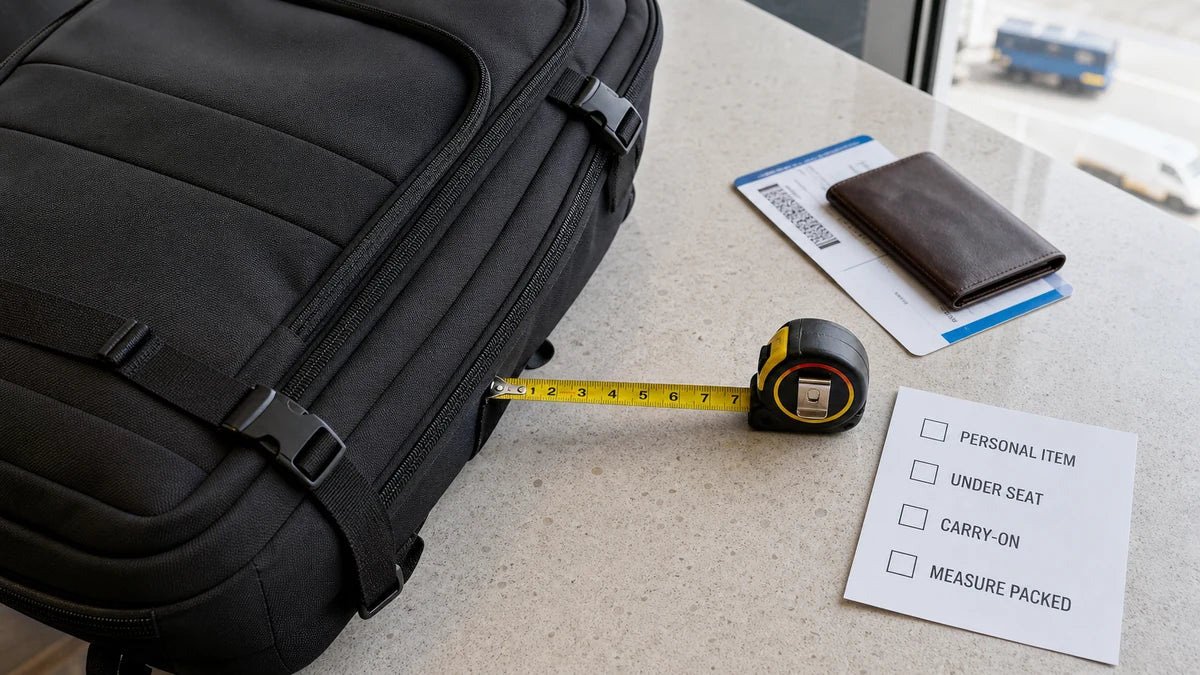
I have handled many buyer questions about travel backpacks over the years. I have noticed one common mistake. People often ask, "Is this backpack airline-size?" I understand the reason for that question. It sounds simple. Still, the real sourcing decision is not simple at all. A backpack can look correct on a spec sheet and still fail in actual travel use. That gap is where buyer risk starts, and that is why I always look past the catalog claim.
What Size Should a Personal-Item Travel Backpack Be?
Many buyers want one exact answer. They want one number they can give to a supplier. Then they expect that number to work for every airline and every traveler.
A personal-item backpack should be based on the airline limits your market cares about most, then checked again in its loaded and fully closed state. Empty dimensions alone do not tell you enough.
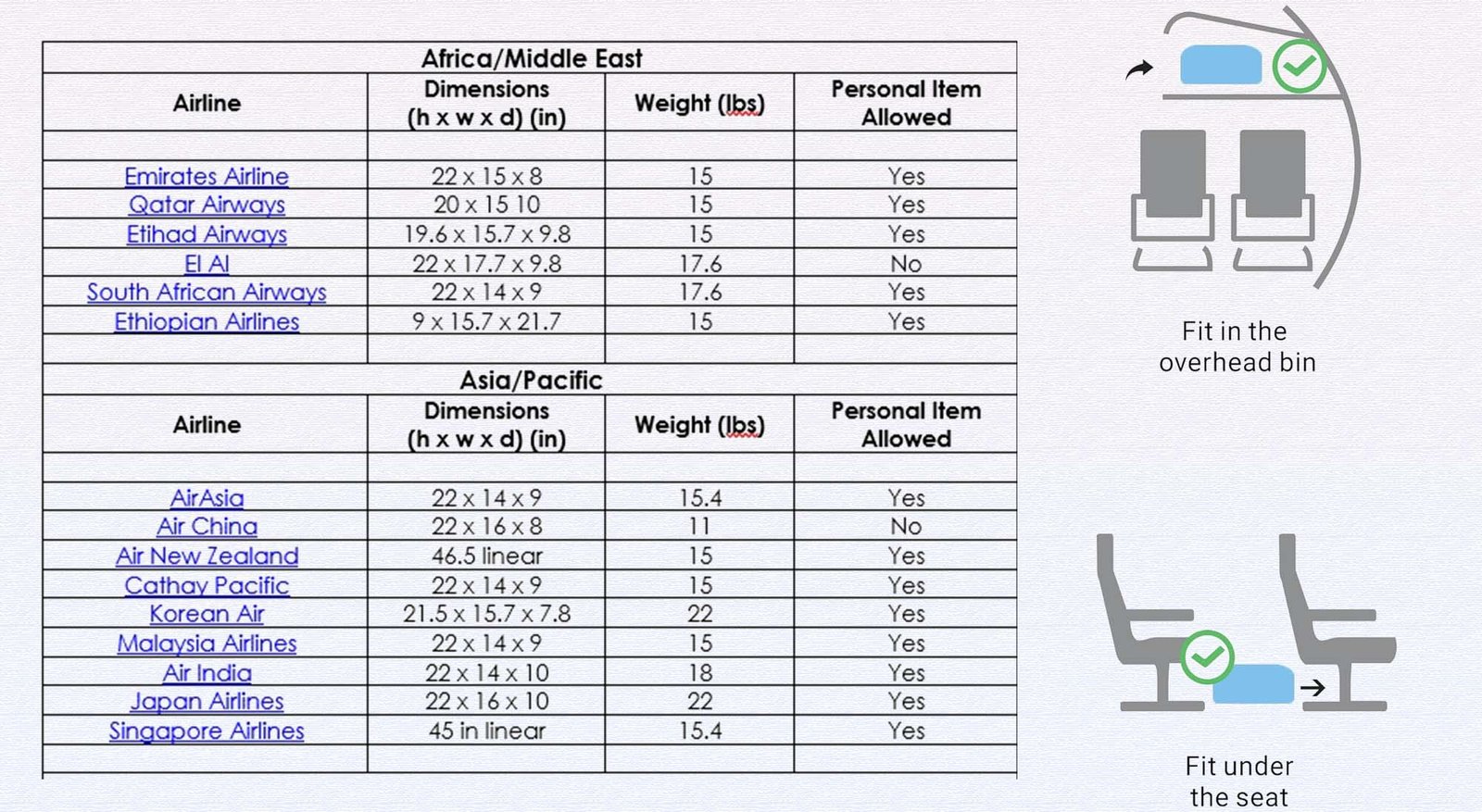
When I speak with buyers, I often hear the same line: "Please make it airline-size." I never treat that as a finished brief. I treat it as the start of a deeper discussion. Different airlines use different rules.1 Some are more generous. Some are much stricter. Some check mainly at the gate.2 Some rarely do, but the risk still exists. If a buyer sells into North America, Europe, and Japan at the same time, the problem gets even more real because one market may accept a bag that another market rejects3.
I have learned that the better buying question is this: which airline size range matters most for your target users? Once that is clear, I look at how the bag behaves after loading. A backpack grows when people pack shoes, chargers, jackets, and documents.4 Pockets also push outward. Handles and front panels add bulk. This is why I do not rely on flat sample measurements alone.
Here is the simple way I think about it:
| Check point | Why it matters | Buyer action |
|---|---|---|
| Target airline range | Rules differ by carrier | List the main airlines in your market |
| Empty dimensions | Good starting point only | Ask for sample measurement report |
| Loaded dimensions | Closer to real use | Ask supplier to test the packed bag |
| Shape expansion | Front pockets can exceed limit | Review pocket depth and panel structure |
| Production consistency | Bulk goods may vary | Ask how QC checks dimensions during production |
I once reviewed a sample that looked safe on paper. Then we packed it with normal travel items. The depth increased enough to create a risk. That moment reminded me again that buyers should not purchase a travel backpack based on one printed number. They should buy based on repeatable control.
How Many Liters Work Best for Underseat Travel?
Buyers often focus on liters because liters are easy to compare. Still, a liter number can mislead if the bag shape and pocket layout are not controlled.
For underseat travel, many buyers look at roughly 15L to 22L5, but liters alone are not enough. The true fit depends on shape, depth, pocket expansion, and how the bag sits when packed.
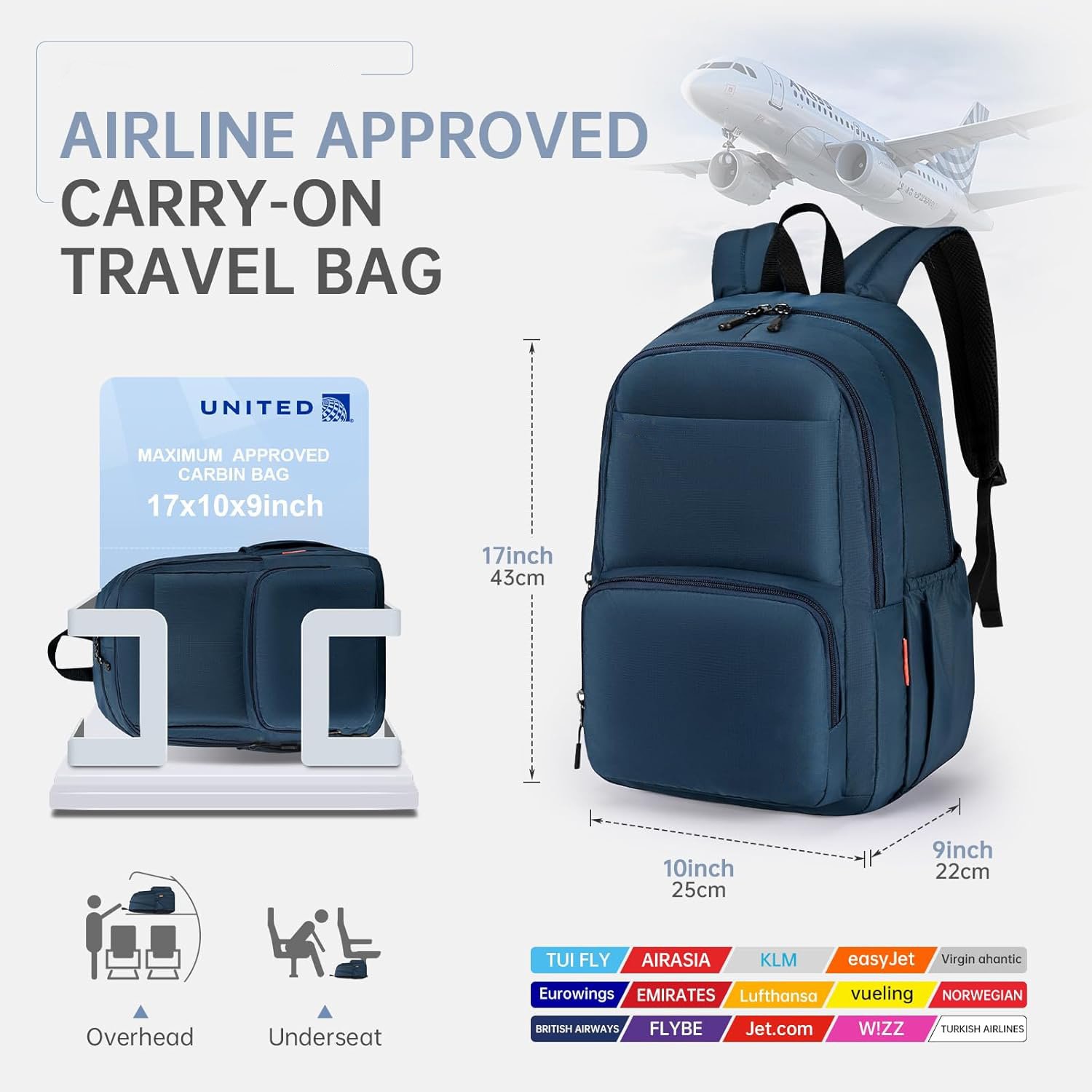
I have seen many product briefs that ask for a 20L backpack because that sounds practical and easy to sell. I understand that thinking. A liter range helps position the item in retail and online listings. Still, liters do not solve the airline-fit problem by themselves. Two backpacks can both be called 20L and behave very differently under a seat.6 One may be taller and flatter. The other may be shorter but much deeper. One may have soft walls that compress. The other may have thick foam and many external pockets that push outward.
This is why I tell buyers to link liter capacity with actual shape. Underseat travel works best when the backpack keeps a controlled profile. That usually means buyers should pay close attention to depth. Depth often causes the most trouble because it changes the fastest after packing.7 A front organizer pocket, a shoe space, or a heavily padded laptop area can add bulk in ways that are not obvious in the first sample review.
I like to break the issue down this way:
| Factor | What buyers often assume | What I check instead |
|---|---|---|
| Liters | Bigger number means better value | Whether the shape stays compact |
| Depth | Minor detail | Main risk point after loading |
| Soft structure | Always compresses enough | Depends on fabric, foam, and fill |
| Pocket count | More storage is always better | Too many pockets can break the size limit |
| User packing style | Easy to predict | Usually not predictable at all |
From my experience, the best liter range is not the biggest one you can market. It is the one that gives the traveler enough daily use while keeping the bag more stable in size. Buyers who think this way usually avoid more complaints later.
Which Compartments Matter for Business Travelers?
Some buyers add many sections because they want the backpack to feel more premium. Then the bag gets bulky, hard to use, and harder to keep within travel size limits.
For business travelers, the most useful compartments are a main compartment, a laptop area, quick-access pockets, and organized internal sections. Too many thick or external compartments can make the bag less practical and more likely to over-expand.8
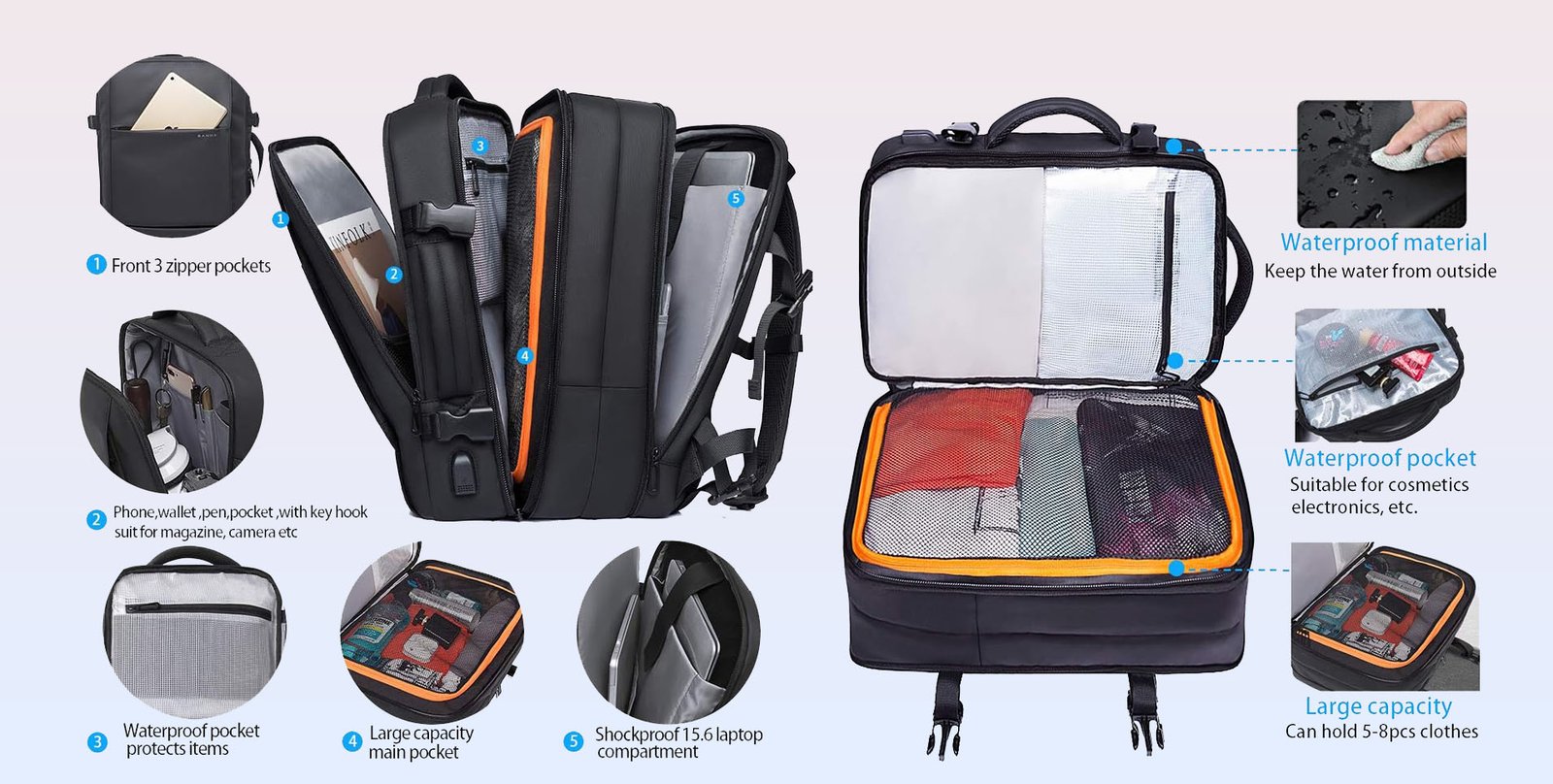
I have worked with buyers who wanted every possible feature in one backpack. On paper, that idea looked attractive. In real use, it often created a bag that felt crowded and oversized. Business travelers do need organization, but they do not need wasted structure. Most of them carry a laptop, charger, documents, phone accessories, passport items, and maybe one change of clothes.9 That means the compartment plan should support fast access and clean packing, not just add visual complexity.
I usually start by asking how the user moves through the day. Does the user pass through airports often? Does the user go from plane to meeting? Does the user need to pull out electronics quickly? Those questions matter more than simply counting pockets. A smart layout reduces stress. A poor layout increases bulk.
These are the compartments I think matter most:
| Compartment type | Why it matters | Risk if overdone |
|---|---|---|
| Main compartment | Holds clothing and larger items | Can become too deep if not controlled |
| Laptop compartment | Important for work travel | Thick padding can add outer bulk |
| Quick-access top/front pocket | Useful for passport or charger | Front pocket can push dimension outward |
| Internal organizer | Keeps small items in place | Too many layers reduce useful space |
| Side pocket | Good for bottle or umbrella | Sticking out pockets affect profile |
In one project, I remember reducing one external pocket and moving part of the organization inside. The bag looked cleaner, and the packed shape became more stable. That small change improved both appearance and size control. This is why I believe compartment design is not only about convenience. It is also part of dimension risk management.
Should Buyers Add a Luggage Sleeve and Laptop Pocket?
Many buyers see these two features as standard. That is often true. Still, standard features can still create sourcing mistakes if they are added without size control.
Yes, buyers should often consider a luggage sleeve and laptop pocket, but both features must be designed carefully. They should improve travel use without adding too much thickness, stiffness, or back-panel bulk.
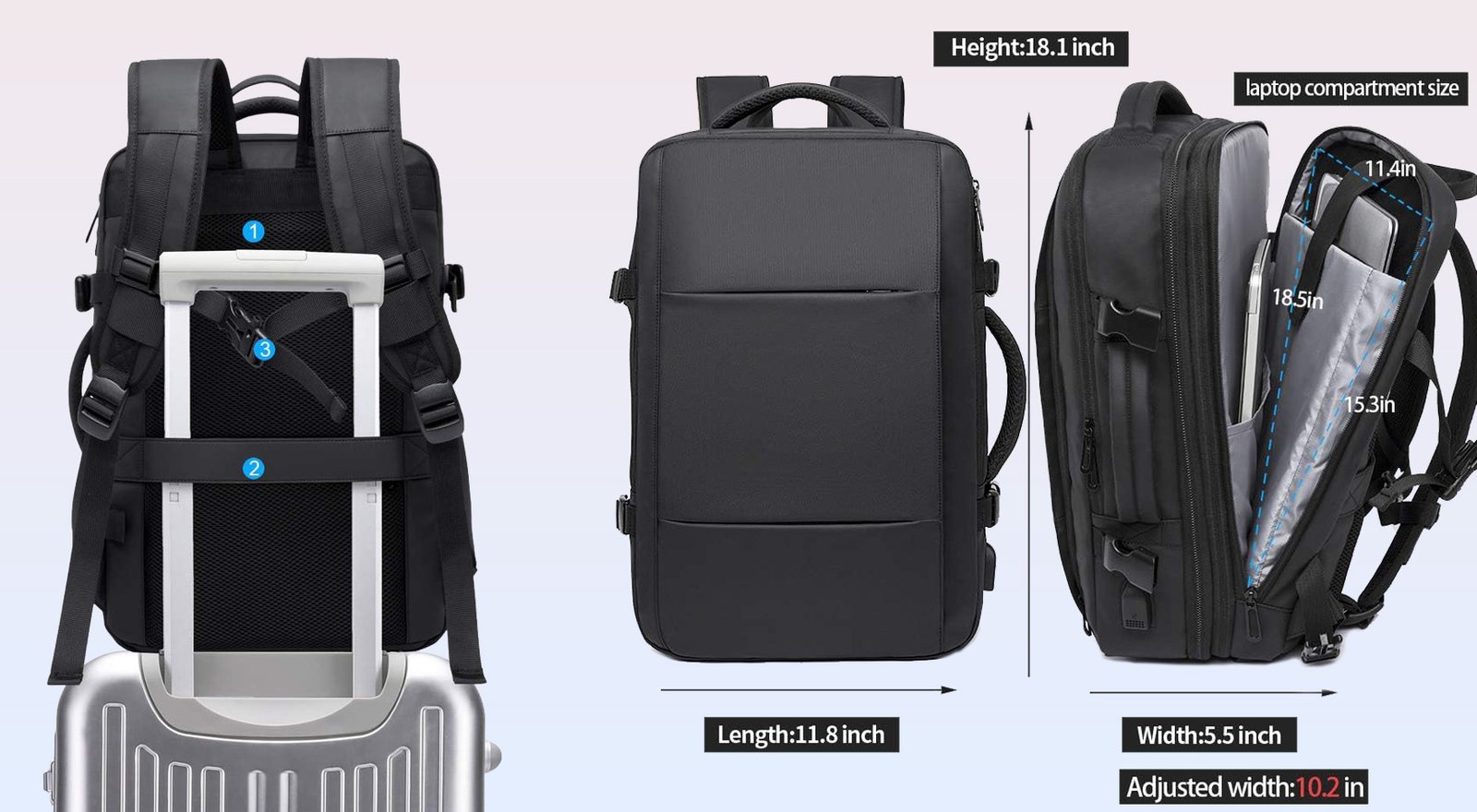
I rarely see business-travel backpack inquiries without a laptop pocket. The luggage sleeve is also very common now. Buyers ask for both because travelers expect them. I agree that both features can add value. Still, I also know that features are not free. Each one changes construction. Each one can change dimensions, weight, and sewing complexity.
The laptop pocket is useful because it separates electronics from clothing and gives the product a clear travel-work identity. But buyers should check how much foam and spacing the supplier adds. If the padding is too heavy, the back panel becomes thicker.10 That extra thickness reduces the space margin for airline fitting. The same issue appears with a luggage sleeve. The sleeve itself may look simple, but the panel structure, stitching lines, and reinforcement can affect how the back section behaves when packed.
I suggest buyers review these points:
| Feature | Value to traveler | What buyers should verify |
|---|---|---|
| Laptop pocket | Protects device and speeds access | Padding level, placement, and outer bulk |
| Luggage sleeve | Helps carry bag with suitcase | Back-panel thickness and structure |
| Combined back design | Better travel convenience | Whether features make the bag stiff |
| Zipper opening style | Easier packing and screening | Whether opening design causes expansion |
| Strap storage or shaping | Cleaner carry | Whether straps add bunching at the back |
From my side, I do not treat these features as automatic wins. I treat them as design choices that need measurement review. A useful feature that causes fit complaints is not a real improvement.
What Sample Tests Help Avoid Airline-Fit Complaints?
Many buyers approve samples after a visual check. Then they trust bulk production to match. That is where avoidable problems can begin.
Buyers should test the sample in a loaded, zipped, and ready-to-carry state. They should also ask how the factory checks production variation, because sample size alone does not prove bulk consistency.
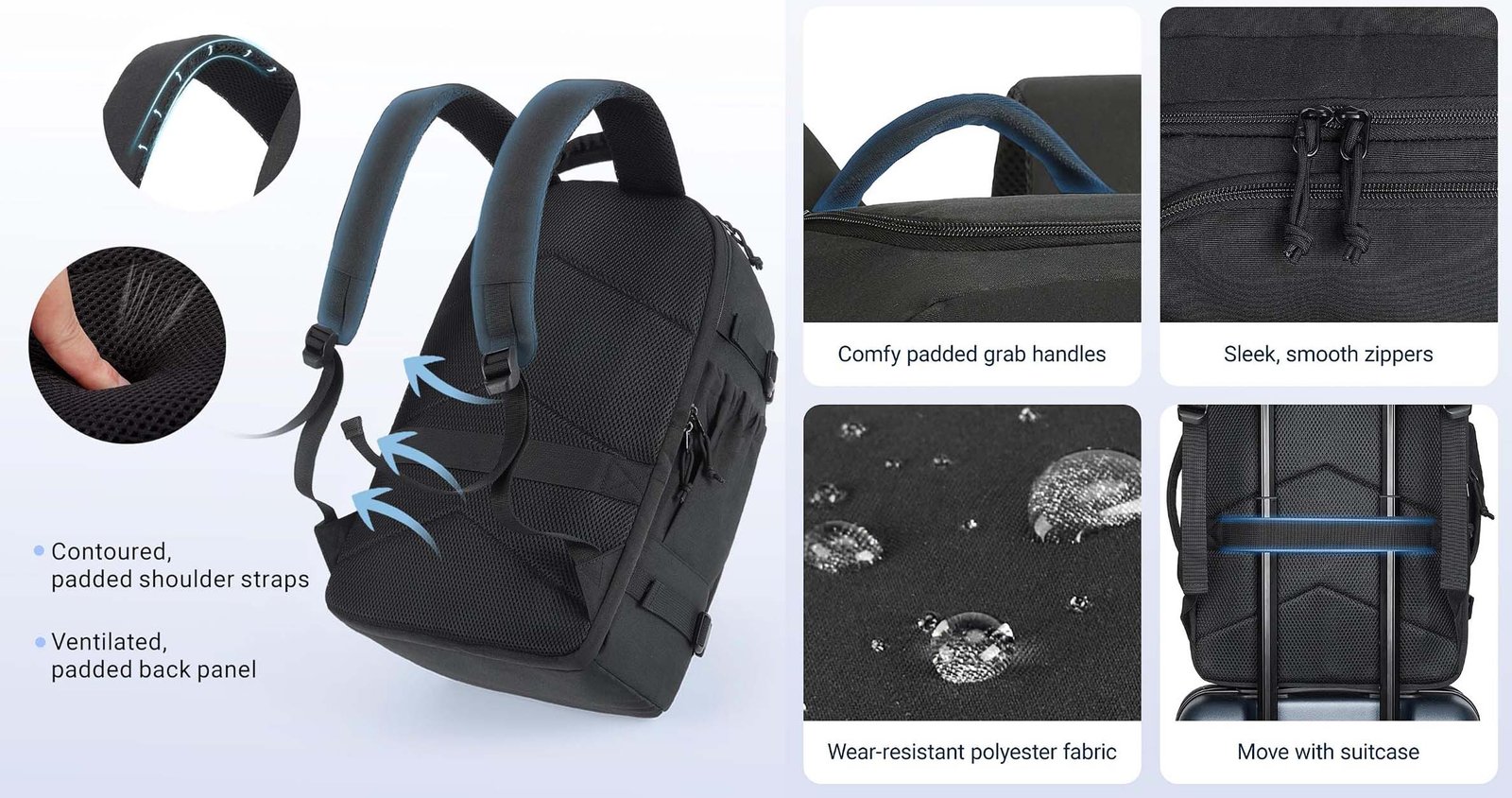
This is the part I care about most when working on travel backpack projects. I have seen buyers approve a sample based on empty measurements and clean photos. Then months later, the market reacts badly because real users pack the bag and find it too large for certain airline checks. I do not blame buyers for wanting a simple approval process. Time is tight. Deadlines are real. Still, a better sample test can prevent many headaches.
My rule is simple: test the backpack the way a traveler will actually use it. That means the bag should be filled with a realistic load, zipped shut, with all handles and outer parts in normal use position. If the design includes front pockets, those should also be tested with typical contents. This is where weak assumptions show up. A bag that looked slim when empty may become risky when full.11
I also think buyers should ask how the supplier controls dimensions during production, not just at sample stage. Sewing, material thickness, and filling all create small changes.12 Those small changes matter in travel bags.
Here is the kind of test list I would ask for:
| Test item | Purpose | What it reveals |
|---|---|---|
| Empty dimension check | Basic spec review | Whether the sample starts near target |
| Loaded dimension check | Real-use size review | Whether packing pushes beyond plan |
| Pocket-loaded check | External expansion review | Whether add-on storage changes fit |
| Batch QC measurement | Production consistency | Whether bulk goods stay close to sample |
| Packing simulation | User behavior review | Whether common use creates complaint risk |
I remember one buyer who asked me why two units from the same style looked slightly different after packing. That question was important. The answer was not that the style was wrong. The answer was that dimension control in bulk production needs clear checking standards. That is why I believe the best supplier is not the one who simply says yes to "airline-size." The best supplier is the one who can explain how size is checked, how variation is managed, and how realistic tests are done before shipment.
Conclusion
I always check airline range, loaded size, compartments, feature impact, and QC proof, because the safest buying decision is not a claim of compliance but a process of control.
"Carry-On Baggage Tips | Federal Aviation Administration", https://www.faa.gov/travelers/prepare_fly/baggage. Major U.S. and international airlines publish differing maximum dimensions for personal items, with limits typically ranging from approximately 36×20×20 cm to 45×35×20 cm depending on the carrier. Evidence role: statistic; source type: government. Supports: airline personal item size limits vary by carrier. Scope note: Specific dimensions change over time and vary by fare class; the source provides a snapshot rather than a comprehensive global standard. ↩
"PSA from a Gate Agent : r/unitedairlines - Reddit", https://www.reddit.com/r/unitedairlines/comments/1sb2eci/psa_from_a_gate_agent/. Several major airlines deploy sizing templates at boarding gates to verify that personal items comply with published dimension limits, with enforcement intensity varying by carrier and route. Evidence role: case_reference; source type: government. Supports: airlines enforce size limits at gates. Scope note: Enforcement practices change frequently and are not uniformly documented across all airlines. ↩
"Personal Items & Underseat Luggage Size Guide", https://travelpro.com/pages/underseat-luggage-and-personal-items. Personal-item dimension limits differ across major markets: U.S. carriers commonly allow up to 45×35×20 cm, while some European low-cost carriers restrict personal items to 40×30×15 cm, and Japanese carriers apply their own categories. Evidence role: statistic; source type: encyclopedia. Supports: airline size limits vary by region. Scope note: The cited limits represent common policies but do not capture every carrier or fare class within each region. ↩
"The Impact of Backpack Loads on School Children: A Critical ... - PMC", https://pmc.ncbi.nlm.nih.gov/articles/PMC6267109/. Studies of soft-sided luggage demonstrate that filled bags can exceed their empty measured dimensions by several centimeters, particularly in depth, due to fabric flex and pocket expansion. Evidence role: mechanism; source type: research. Supports: loaded bags exceed empty dimensions. Scope note: The magnitude of expansion varies by construction material, fill density, and bag geometry. ↩
"Maximum liters to go under seat on MOST flights? : r/onebag - Reddit", https://www.reddit.com/r/onebag/comments/15ci3ig/maximum_liters_to_go_under_seat_on_most_flights/. Travel gear reviews and luggage size analyses commonly categorize underseat personal-item backpacks in the 15–22 L range, though this figure reflects market convention rather than an airline-mandated standard. Evidence role: general_support; source type: research. Supports: typical capacity range for underseat travel backpacks. Scope note: The range is derived from product categorization rather than regulatory specification. ↩
"How are bag volumes calculated? For example, a 40L backpack is ...", https://www.reddit.com/r/onebag/comments/1b8zg9c/eli5_how_are_bag_volumes_calculated_for_example_a/. Luggage volume measurements follow varying methodologies—some using water displacement, others using geometric calculation—so two bags labeled with identical liter capacities may differ substantially in external dimensions and underseat fit. Evidence role: definition; source type: research. Supports: liter capacity does not determine external dimensions. Scope note: No single international standard governs how manufacturers must measure and report backpack volume. ↩
"Carry-On Baggage Tips | Federal Aviation Administration", https://www.faa.gov/travelers/prepare_fly/baggage. Dimensional analysis of packed soft-sided bags indicates that depth exhibits the greatest proportional increase from empty to loaded states, as front pockets and main compartment contents project outward. Evidence role: mechanism; source type: research. Supports: depth is the most variable dimension after loading. Scope note: The finding is based on limited bag types and may not generalize to all constructions. ↩
"Development and Experimental Verification of an Ergonomic ...", https://pmc.ncbi.nlm.nih.gov/articles/PMC7245669/. Ergonomic and design studies of travel bags note that external pockets and multi-layer compartment walls add structural bulk that can push packed dimensions beyond the base footprint, particularly when pockets are filled. Evidence role: mechanism; source type: research. Supports: external compartments contribute to dimensional expansion. Scope note: The effect depends on pocket depth, wall material, and placement relative to the main compartment. ↩
"What to pack for ANY Business Trip - YouTube", https://www.youtube.com/watch?v=j1eDJI_2L1A. Surveys of business travelers indicate that laptops, chargers, documents, and personal electronics are among the most frequently carried items, with many travelers also packing a change of clothing for short trips. Evidence role: statistic; source type: research. Supports: common items carried by business travelers. Scope note: Packing habits vary significantly by trip duration, destination, and traveler role. ↩
"Can a 14 inch laptop fit in a backpack? - Seibertron", https://seibertron-outdoor.com/it/blogs/news/can-a-14-inch-laptop-fit-in-a-backpack?srsltid=AfmBOooa_VhmgQFRwHCEmp6x9WiQzjGzQCEOAK70_E6LsSmxbpoeRpcv. Protective foam padding in laptop compartments adds measurable thickness to back panels; high-density foam layers of 10–15 mm per side can increase overall bag depth by 20–30 mm, reducing the margin within airline dimension limits. Evidence role: mechanism; source type: research. Supports: padding adds to bag thickness. Scope note: The exact thickness contribution depends on foam density, layer count, and panel construction. ↩
"Liquids, Aerosols, and Gels Rule - TSA", https://www.tsa.gov/travel/security-screening/liquids-aerosols-gels-rule. Comparative measurements of soft-sided bags show that loaded dimensions can exceed empty dimensions by 10–20% in certain axes, particularly when front pockets and compartments are filled. Evidence role: mechanism; source type: research. Supports: loaded bags exceed empty dimensions. Scope note: The percentage increase varies by bag design, material stiffness, and packing method. ↩
"Dimensional stability (fabric) - Wikipedia", https://en.wikipedia.org/wiki/Dimensional_stability_(fabric). In soft-goods manufacturing, stitching tolerances, material thickness variability, and filling consistency each contribute to dimensional deviation between production units, with cumulative effects measurable in finished goods. Evidence role: mechanism; source type: research. Supports: manufacturing processes cause dimensional variation. Scope note: The magnitude of variation depends on specific materials, construction methods, and quality control protocols. ↩