Many buyers see a familiar grocery bag and think the choice is simple. I have seen the opposite. A wrong reusable bag can bring complaints, weak value, and repeat cost fast.
Publix reusable bags matter as a useful example, but the real question is fit for use. Buyers should judge material, strength, comfort, repeat-use value, and brand impact based on the shopping job the bag must handle.
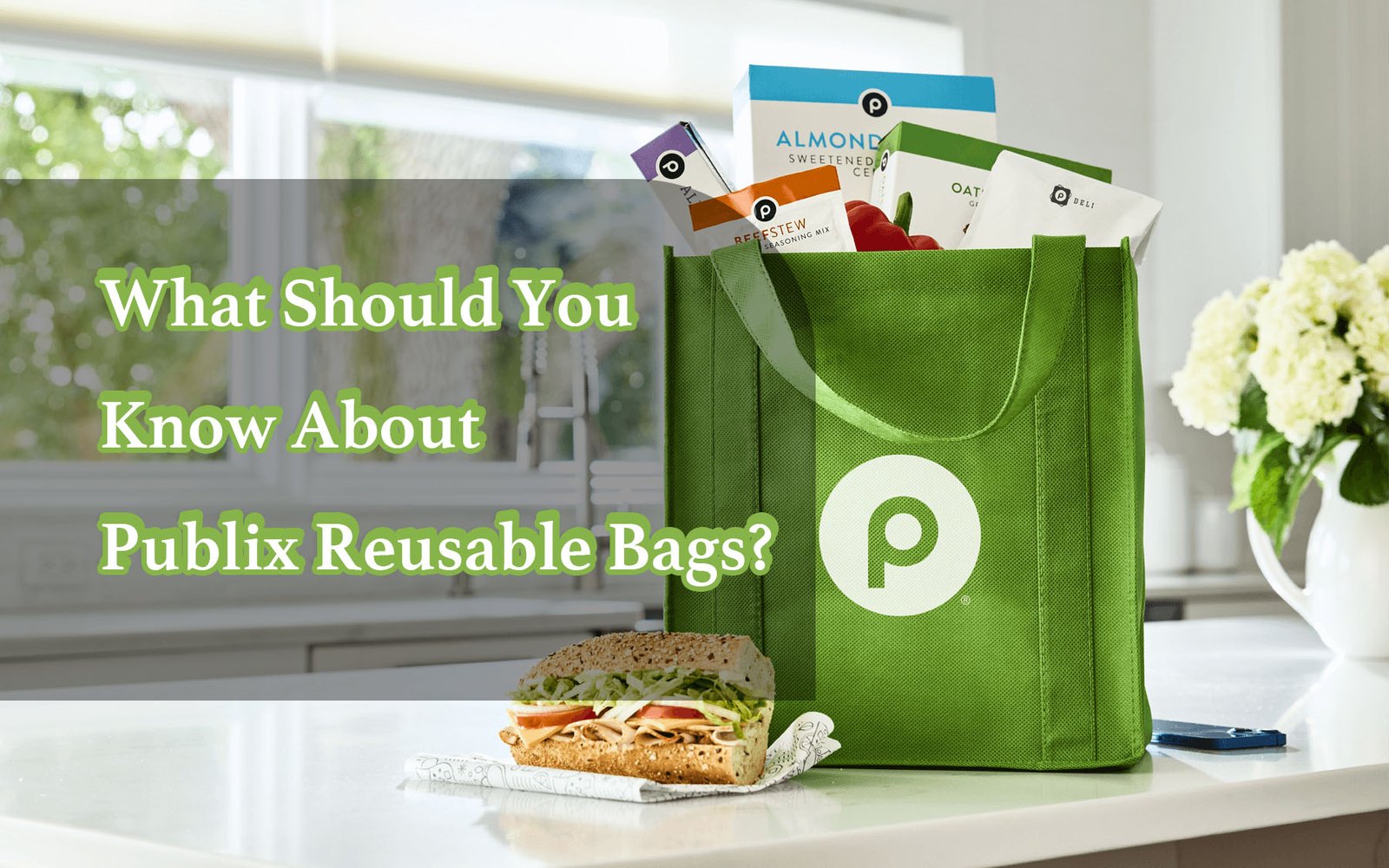
When I speak with supermarket and retail buyers, I almost never start with brand names. I start with use. I ask what the customer will put inside, how often the bag will be used, how it will be carried, and what kind of brand feeling the store wants to give. That is where good bag decisions begin. I have handled many reusable bag inquiries that looked easy at first, but the details changed everything. A low-cost bag can look fine in a quote sheet. Then it fails in real use. A more suitable bag often saves money later. That is why I think buyers should use familiar retail bags as a reference point, not as the final answer.
What Are Publix Reusable Bags Made Of?
Many buyers ask about material first because they want a quick answer. I understand that. Still, I have learned that material alone does not tell the whole story.
Reusable grocery bags like Publix-style bags are often made from materials such as non-woven polypropylene, RPET, or cotton1. The best choice depends on weight load, reuse frequency, cleaning needs, price target, and the brand image a retailer wants.
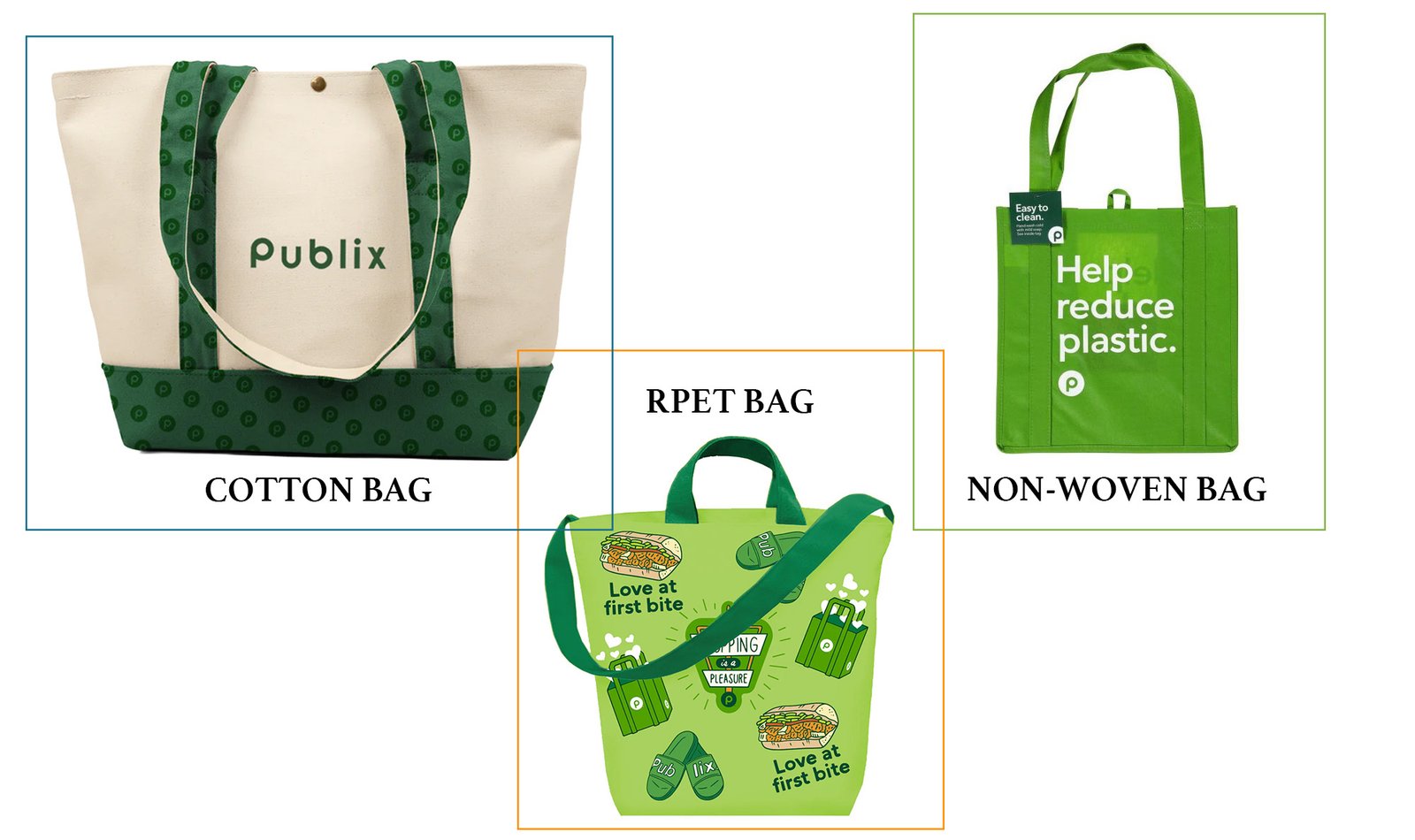
Based on similar supermarket and retail bag projects, I usually see three material paths appear again and again. Each one has a place. Each one also has limits. Buyers often ask me, “Which one is best?” My answer is always, “Best for what?”
Non-woven polypropylene is common because it is low cost, light, and easy to print.2 It fits many grocery programs where price matters and where the bag is expected to be reused many times, but not treated like a premium item. RPET is also popular.3 Buyers like its recycled story and clean retail look. It can help brand positioning, but only if the bag construction is good enough to support real repeat use. Cotton gives a softer and more natural feel.4 It works well for stronger brand image or a more premium message, but it usually costs more and adds weight.
Here is how I explain the practical difference to buyers:
| Material | Main Strength | Main Limit | Best Fit |
|---|---|---|---|
| Non-woven PP | Low cost, easy printing, light weight | May feel basic, not ideal for very heavy loads without stronger build | Everyday grocery promotions |
| RPET | Better brand story, neat appearance, good print result | Cost is higher than basic non-woven, quality varies by factory | Retail programs with image focus |
| Cotton | Soft hand feel, premium look, washable feel | Higher cost, heavier, not always best for low-cost mass rollout | Premium retail and gift use |
I have seen many buyers focus too much on whether a material sounds eco-friendly. I think that is only one part of the decision. If the bag does not last long enough, then the message becomes weak.5 A reusable bag needs to survive actual use. So I always bring the discussion back to material plus construction plus real shopping behavior.
Are Publix Reusable Bags Durable for Daily Shopping?
A bag may look strong on the table, but daily shopping is different. I have seen small design choices decide whether a bag lasts for months or fails in weeks.
Publix-style reusable bags can be durable for daily shopping if the fabric weight, stitching, handle attachment, and bottom support match the load. Durability depends more on build quality and use case than on the reusable label itself.6
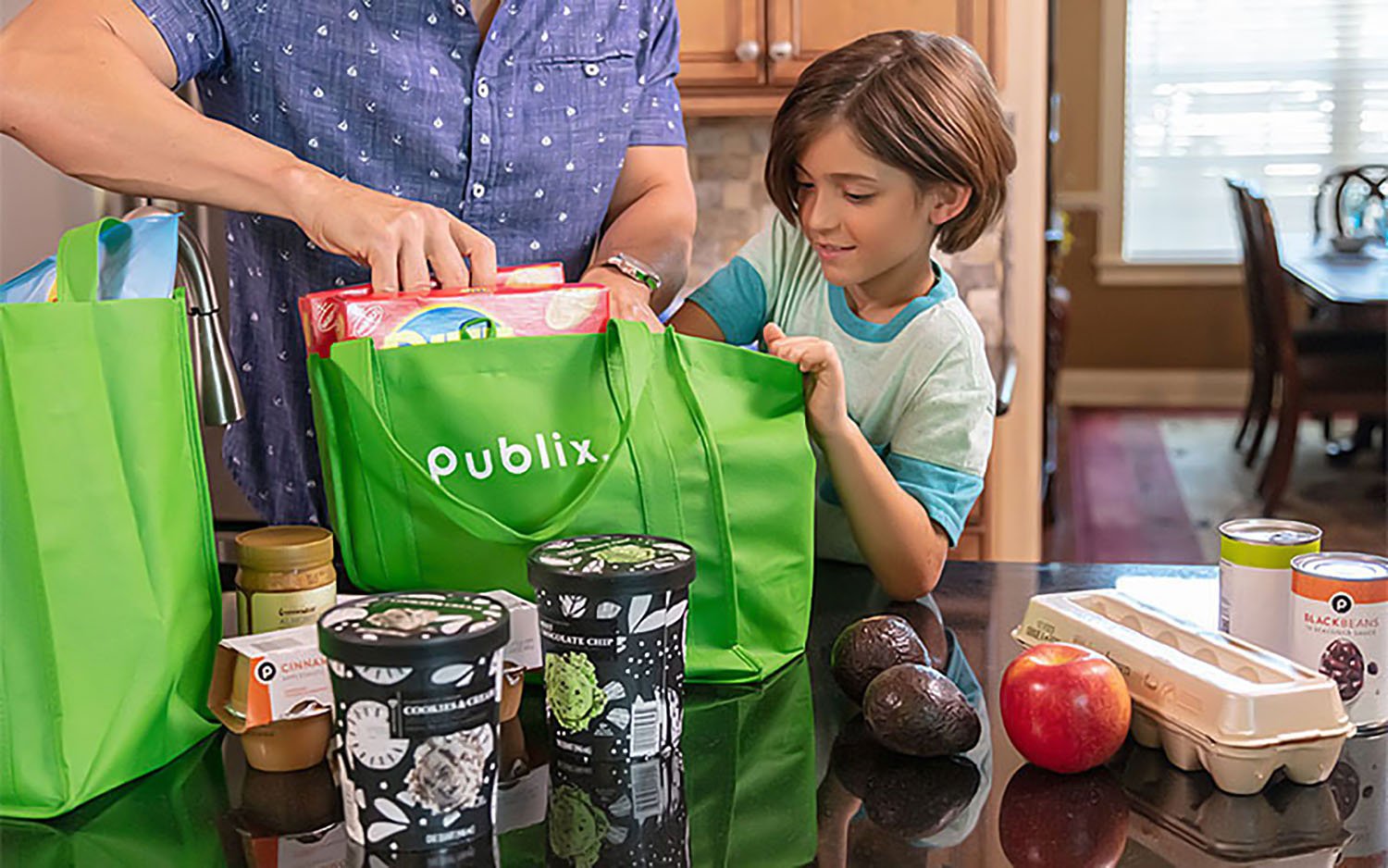
In real buyer discussions, durability is where many bag programs either succeed or create trouble. I have reviewed samples that looked almost identical from a distance. Then I checked the seam count, handle join, edge binding, and gusset structure. The difference was clear right away. One sample was made to survive grocery use. The other was made only to hit a low target price.
For daily shopping, buyers should think about what people actually carry. Grocery use is not gentle. Customers put in bottles, cans, boxed food, fruit, frozen items, and odd-shaped packs. The bag gets lifted fast at checkout. It gets pulled into a car. It may be left in heat. It may be folded and stuffed into another bag.7 This is why I tell buyers to test for real life, not only for a nice appearance.
These are the points I check first:
| Construction Point | Why It Matters | Risk If Weak |
|---|---|---|
| Stitching density | Holds panels and handles together under load | Seams split early |
| Handle reinforcement | Handles take repeated stress | Handles pull out or tear |
| Fabric weight | Affects body strength and shape | Bag sags or punctures easily |
| Bottom/gusset design | Supports heavier grocery loads | Poor stability and lower usable capacity |
| Edge finish | Reduces fraying and weak points | Faster wear during repeat use |
I remember one similar supermarket project where the buyer first wanted the lowest-cost version. I suggested two more sample options with stronger handles and a better gusset. The unit price went up a little. The buyer hesitated. Then their team loaded the bags with real groceries during testing. The cheapest one lost shape and felt uncomfortable. The stronger one gave a better carry experience at once. That small cost change protected the program better. In my view, durability is not just about whether the bag breaks. It is also about whether the customer trusts it enough to use it again.
What Sizes and Styles Do Publix Reusable Bags Come In?
Many buyers ask for a “standard reusable grocery bag.” I usually stop there and ask one more question. Standard for which shopping trip? Basket size changes the whole bag decision.
Publix-style reusable bags can come in many sizes and styles, from basic tote shapes to boxier grocery bags with wider gussets. The right size depends on basket volume, product mix, checkout speed, and how customers carry and store the bag.
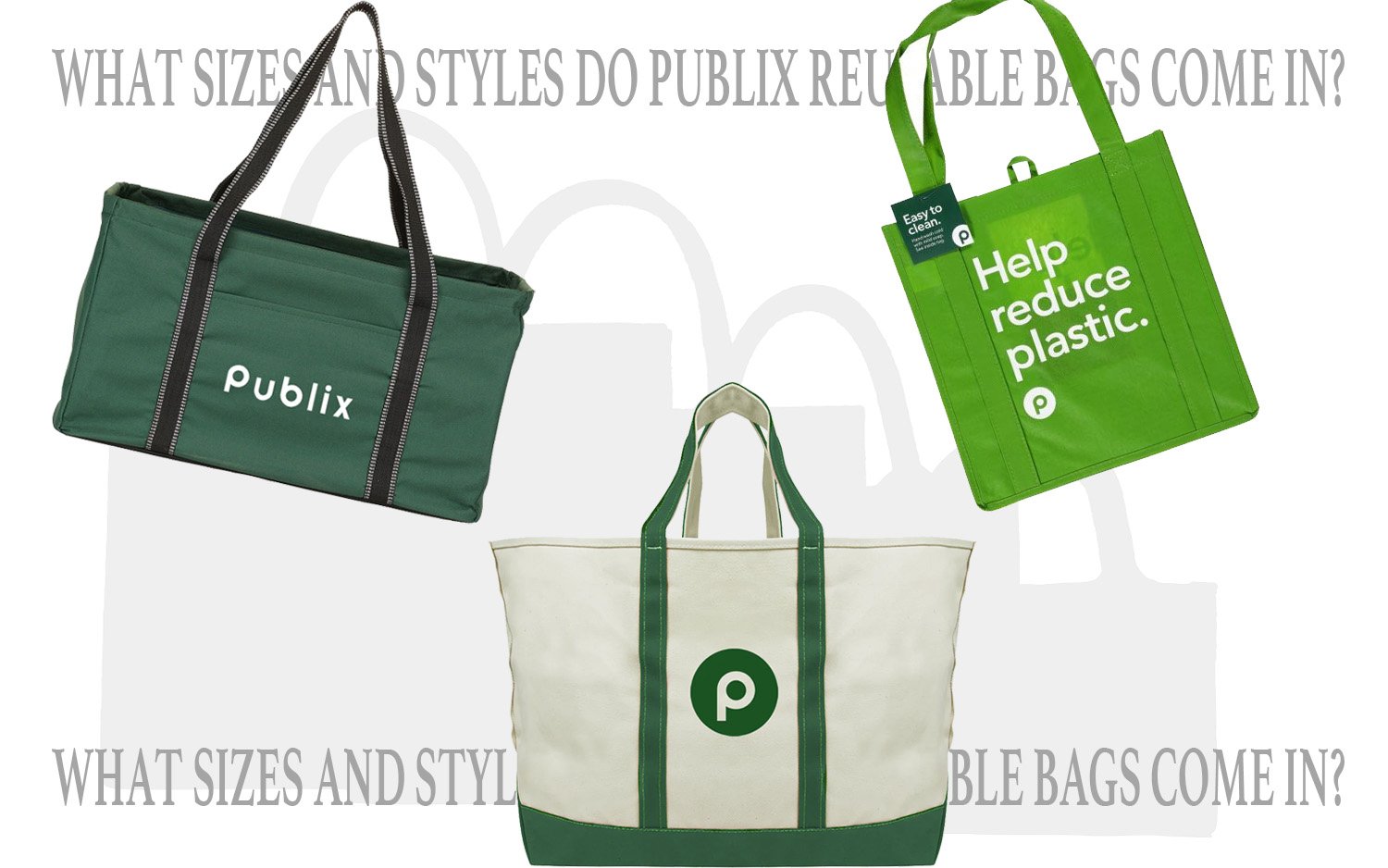
In sourcing talks, size and style often look like simple points. In fact, they shape both user comfort and store efficiency. A tall narrow tote may look clean and save fabric, but it may not suit grocery packing well. A wider boxed shape may hold food better and stand up at checkout8, but it uses more material and can cost more. I have seen buyers change their decision after one in-person packing test.
For grocery use, I usually ask buyers to think in shopping scenes. Is the bag for a quick fill-in trip after work? Is it for a larger family grocery run? Is it for membership retail, where load size is higher? Is it mainly a branded giveaway that should look good and still be practical? Each case points to a different size and style.
Here is a simple way I break it down:
| Style Type | Key Feature | Good For | Watch Out For |
|---|---|---|---|
| Flat tote | Simple shape, lower cost | Promotions, lighter shopping | Less stable for bulky groceries |
| Box gusset bag | Wider base, stands better | Supermarket checkout, grocery packing | Slightly higher material cost |
| Large shoulder bag | Bigger volume, easier carry | Mixed shopping and general retail | Can become too heavy when overfilled |
| Zipper or structured bag | More premium feel | Better brand image, gift-like programs | Higher cost and slower packing |
I also tell buyers to think about handle length, opening width, and foldability. These details matter in daily use. A bag may have enough volume on paper, but if the opening is too narrow, checkout packing becomes slow. If the handle is too short, carrying comfort drops.9 If the bag is too stiff, customers may not keep it with them. I have learned that style is not decoration only. Style changes function. For that reason, I always ask for sample review with actual products inside, not just flat measurements on a spec sheet.
Are There Better Alternatives to Publix Reusable Bags?
Many buyers ask if there is a better bag than the familiar supermarket reusable bag. I think that question is useful, but only if “better” has a clear meaning.
Yes, there can be better alternatives to Publix-style reusable bags, but only when the bag is matched to the real use case. Better may mean stronger, lower total cost, easier carrying, better branding, or a more premium customer feel.
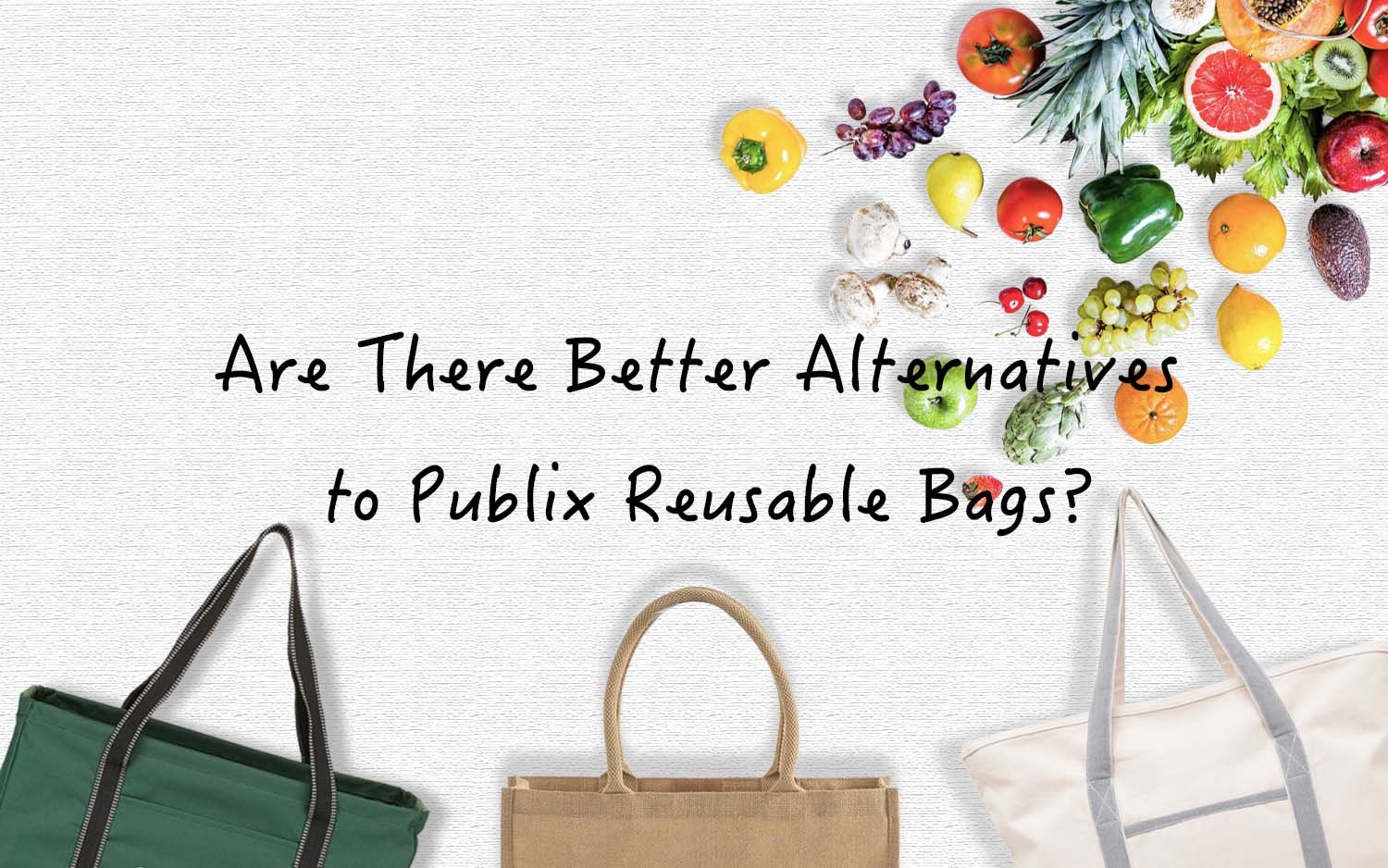
I have seen buyers replace a basic reusable bag with a “better” option and still get poor results. The reason was simple. The new bag solved the wrong problem. They upgraded material, but ignored checkout speed. They improved appearance, but forgot load comfort. They reduced unit price, but increased customer complaints. That is why I think better alternatives should be judged by scenario.
For example, if the program is an entry-level supermarket bag with wide distribution, a well-made non-woven bag may still be the best answer. If the retailer wants a stronger brand story and cleaner look, RPET may be a better fit. If the goal is a premium private-label image or gift-like retail experience, heavier cotton or canvas may work better. If cold-chain use matters, then insulated structures may become the real alternative.
This is how I usually explain “better” in sourcing terms:
| Goal | Better Alternative Might Be | Why |
|---|---|---|
| Lower total cost over time | Stronger non-woven with reinforced handles | Fewer replacements and complaints |
| Better brand image | RPET or cleaner structured design | Stronger shelf and customer impression |
| Premium feel | Cotton or canvas bag | More value perception |
| Heavier grocery use | Laminated or reinforced gusset bag | Better load support |
| Special category use | Cooler bag or foldable hybrid design | Fits the actual shopping need |
I want to stress one point. The cheapest bag is often the most expensive decision later.10 I have seen this happen in retail projects. A bag that fails early creates hidden cost. There are replacements, customer frustration, weaker trust in the store brand, and more pressure on the buying team. A slightly better bag can improve repeat use and customer experience enough to justify the cost. So yes, there are better alternatives, but the best one is the one that fits the job, not the one with the most attractive sales pitch.
Where Can Buyers Source Publix-Style Reusable Bags in Bulk?
Many buyers can find suppliers online in minutes. That part is easy now. The hard part is knowing which supplier can really deliver stable quality at scale.
Buyers can source Publix-style reusable bags in bulk from experienced OEM/ODM bag manufacturers in China and other producing countries.11 The best suppliers offer sample support, material options, quality control, clear communication, and production capacity that matches repeat retail demand.
From my side of the factory business, I know bulk sourcing is rarely about price alone. Serious buyers want fewer surprises. They want a supplier who understands retail use, not just someone who sends a low quote. In similar supermarket bag projects, the best sourcing results usually come from a step-by-step process. First, the buyer defines the use case clearly. Then the supplier gives material and construction options. After that, both sides review samples, packaging, test expectations, and delivery planning.
I think buyers should screen suppliers with simple but direct questions. Can they explain why one fabric or handle method fits your program better than another? Can they make samples that reflect real production, not only a display sample? Do they have stable QC? Can they support logo, packaging, and private label needs? Can they handle repeat orders with consistent output?
Here is a useful checklist:
| Sourcing Checkpoint | What I Think Buyers Should Ask |
|---|---|
| Factory experience | Have you handled supermarket or retail reusable bag projects before? |
| Sampling ability | Can you provide options based on different use cases and budgets? |
| Material clarity | Can you explain the trade-off between non-woven, RPET, and cotton clearly? |
| QC process | How do you inspect stitching, size, print, and packing consistency? |
| Production capacity | Can you support repeat volume and delivery schedules? |
| Custom support | Can you do OEM/ODM, logo printing, packaging, and design adjustment? |
At Coraggio, this is the kind of discussion we have often with B2B buyers, brand teams, and distributors. We work on factory-direct projects, so we focus on reducing sourcing risk through clear communication, controlled production, and practical bag choices. I have found that many buyers do not need the fanciest bag. They need the right bag, made consistently, delivered on time, with fewer surprises.12 In bulk sourcing, that is where real value sits. A good supplier should help the buyer make a smarter decision, not just a cheaper one.
Conclusion
Publix-style reusable bags are only a starting point. I believe buyers should choose by use case, durability, total cost, and brand fit, because that is what makes a reusable bag truly right.
"Reusable shopping bag", https://en.wikipedia.org/wiki/Reusable_shopping_bag. Reference sources on reusable shopping bags describe common constructions including cotton canvas and polypropylene-based non-woven fabrics, with recycled PET/polyester used in some designs; this supports the article’s description of typical material categories. Evidence role: general_support; source type: encyclopedia. Supports: that reusable shopping bags are commonly made from materials including polypropylene, cotton, and recycled PET/polyester variants. ↩
"Research and application of polypropylene: a review - PMC", https://pmc.ncbi.nlm.nih.gov/articles/PMC10761633/. Technical literature on non-woven polypropylene notes its low mass, relatively low production cost, and suitability for printing and packaging uses, which provides material-based support for its frequent use in promotional and grocery bags. Evidence role: mechanism; source type: research. Supports: that non-woven polypropylene is lightweight and widely used because it can be produced at relatively low cost and accepts printing in packaging applications. ↩
"Reusable shopping bag - Wikipedia", https://en.wikipedia.org/wiki/Reusable_shopping_bag. Studies and reference materials on recycled PET textiles report its use in fibers and fabric-based consumer products, including reusable bags, supporting the article’s characterization of RPET as a common option. Evidence role: general_support; source type: paper. Supports: that recycled PET is widely used in textile and bag applications, including reusable shopping bags. Scope note: Support is contextual unless the source specifically quantifies RPET use in grocery bag programs. ↩
"Understand Your Fibers | Textiles - UGA", https://site.extension.uga.edu/textiles/textile-basics/understand-your-fibers/. Textile education sources describe cotton as a natural cellulosic fiber with a soft hand and strong consumer association with natural materials, which supports the article’s characterization of cotton bag feel. Evidence role: mechanism; source type: education. Supports: that cotton fibers are generally associated with softness and a natural hand in textile applications. Scope note: This supports general material properties and consumer associations rather than proving the perception for every bag construction. ↩
"[PDF] Life Cycle Assessment of Grocery Bags in Common Use in the ...", https://open.clemson.edu/cgi/viewcontent.cgi?article=1006&context=cudp_environment. Life-cycle assessments by public agencies report that reusable bags generally need to be used multiple times to offset their production impacts, supporting the article’s point that durability and actual reuse are central to the credibility of sustainability claims. Evidence role: expert_consensus; source type: government. Supports: that the environmental performance of reusable bags depends on repeated use over time rather than the reusable label alone. ↩
"Influence of Shopping Bags Carrying on Human Responses ...", https://pmc.ncbi.nlm.nih.gov/articles/PMC6040247/. Packaging and textile performance studies show that load-bearing capacity and service life depend on factors such as fabric weight, seam strength, and handle attachment, supporting the article’s emphasis on construction and use conditions over nominal labeling. Evidence role: mechanism; source type: paper. Supports: that performance under load is influenced by material basis weight, seam construction, and handle attachment rather than product labeling alone. ↩
""Evaluation of Durability of Nonwoven Polypropylene Grocery Bags ...", https://open.clemson.edu/all_theses/2476/. Materials and product-durability research indicates that repeated mechanical loading, folding, abrasion, and environmental exposure such as elevated temperature can degrade fabric products over time, which is consistent with the article’s description of real grocery-bag use conditions. Evidence role: mechanism; source type: research. Supports: that repeated loading, folding, abrasion, and temperature exposure can affect the service life of fabric-based bags. Scope note: The support is contextual unless the source tests grocery bags specifically. ↩
"[PDF] Ergonomic Analysis and Redesign For Wegman's Checkout Stations", https://ergo.human.cornell.edu/ErgoPROJECTS/DEA47099old/CHECKOUT.pdf. Packaging design references commonly explain that gusseted bag constructions increase three-dimensional volume and improve the stability of a filled package, supporting the article’s claim that boxier bags can perform better during grocery packing. Evidence role: mechanism; source type: research. Supports: that wider bases and gusseted constructions can improve stability and usable volume in filled bags. Scope note: This evidence is primarily design-based and may not directly measure checkout speed without a task-specific study. ↩
"Impact of Backpacks on Ergonomics: Biomechanical and ...", https://pmc.ncbi.nlm.nih.gov/articles/PMC9180465/. Ergonomics studies on load carrying show that contact area, strap or handle geometry, and load distribution influence perceived comfort and local pressure, supporting the article’s claim that handle dimensions affect carrying comfort. Evidence role: mechanism; source type: paper. Supports: that handle geometry influences user comfort during load carrying. Scope note: Most ergonomics studies are broader than grocery bags specifically, so the support is mechanism-based rather than product-specific. ↩
"[PDF] Reducing the Costs of Poor Quality: A Manufacturing Case Study", https://scholarworks.waldenu.edu/context/dissertations/article/6608/viewcontent/Faciane_waldenu_0543D_20845.pdf. Procurement and quality-management literature distinguishes purchase price from total cost of ownership and shows that low initial price can be offset by failures, replacement, and service costs, which supports the article’s broader sourcing argument. Evidence role: expert_consensus; source type: paper. Supports: that lowest purchase price does not necessarily minimize total cost once quality failures, replacement, and service impacts are included. Scope note: The support is general to procurement decisions and does not quantify the effect for reusable bags specifically. ↩
"Polyethylene Retail Carrier Bags from The People Republic of China", https://legacy.trade.gov/enforcement/operations/scope/country/china/products/prc-polyethylene-retail-carrier-bags-ad.asp. International trade data on textile and plastic bag categories show China as a major exporting country in related product groups, providing context for the article’s statement that bulk sourcing often involves Chinese and other overseas manufacturers. Evidence role: historical_context; source type: institution. Supports: that China is a major exporter or manufacturing base for bag and textile-packaging products relevant to bulk sourcing. Scope note: Trade categories may not isolate reusable grocery bags precisely, so the evidence is contextual rather than exact. ↩
"[PDF] Number of Authorized Suppliers and Supplier Delivery Performance", https://scholar.afit.edu/cgi/viewcontent.cgi?article=6378&context=etd. Supplier-selection research consistently identifies quality performance and delivery reliability among the most important evaluation criteria, supporting the article’s claim that dependable execution is central to sourcing value for business buyers. Evidence role: expert_consensus; source type: paper. Supports: that quality consistency and on-time delivery are standard high-priority criteria in supplier evaluation. ↩