Buyers often choose big capacity and thick fabric first. Then the bag arrives, suits still wrinkle, and the bag feels awkward to carry1. That mistake costs time, claims, and trust.
The specs that matter most are the ones that protect formal clothing and still make the bag easy to carry in real travel use. I always check the garment-holding structure first, then layout, material balance, and production consistency.
When I speak with buyers, I see the same issue again and again. Many people read a spec sheet like every line has the same weight. I do not. I look at the bag by job. A convertible garment duffle has two jobs2. It must help reduce wrinkles for suits or dresses3. It must also work as a practical travel bag. If one job fails, the product loses value fast. So I do not ask, “Which numbers look best?” I ask, “Which specs actually support the use case?” That small change helps buyers compare suppliers in a much smarter way. It also helps avoid a very common B2B problem: a sample that looks fine on the table but becomes risky in real use or in mass production.
What Is a Convertible Garment Duffle Bag?
Many buyers treat it like a normal duffle with a zipper trick. Then they find the structure does not really support hanging garments, and the product feels confused instead of useful.
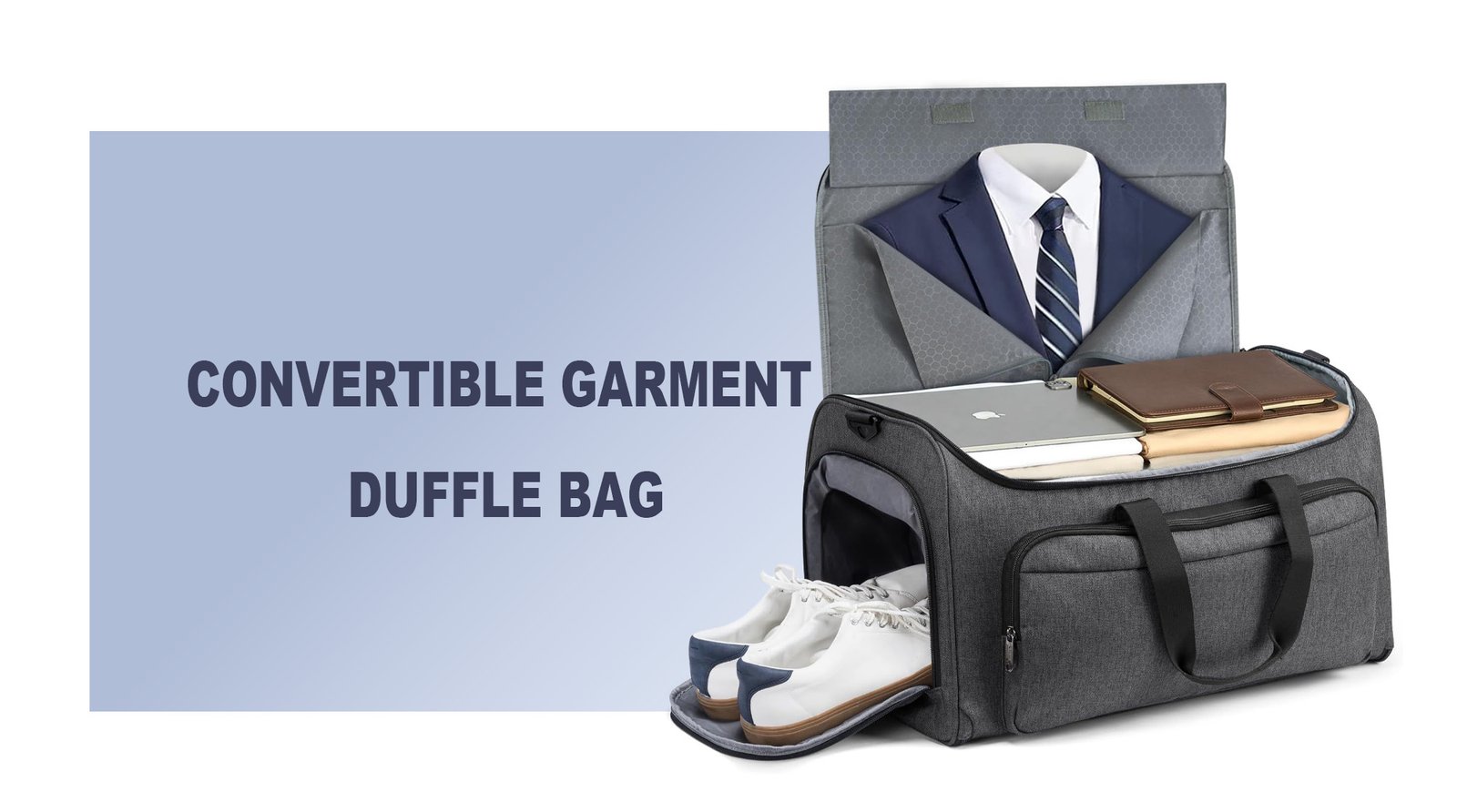
A convertible garment duffle bag is a bag that opens to hold formal clothing in a garment-style layout, then folds or zips into duffle form for travel. Its value depends on how well it balances wrinkle control and carrying convenience.
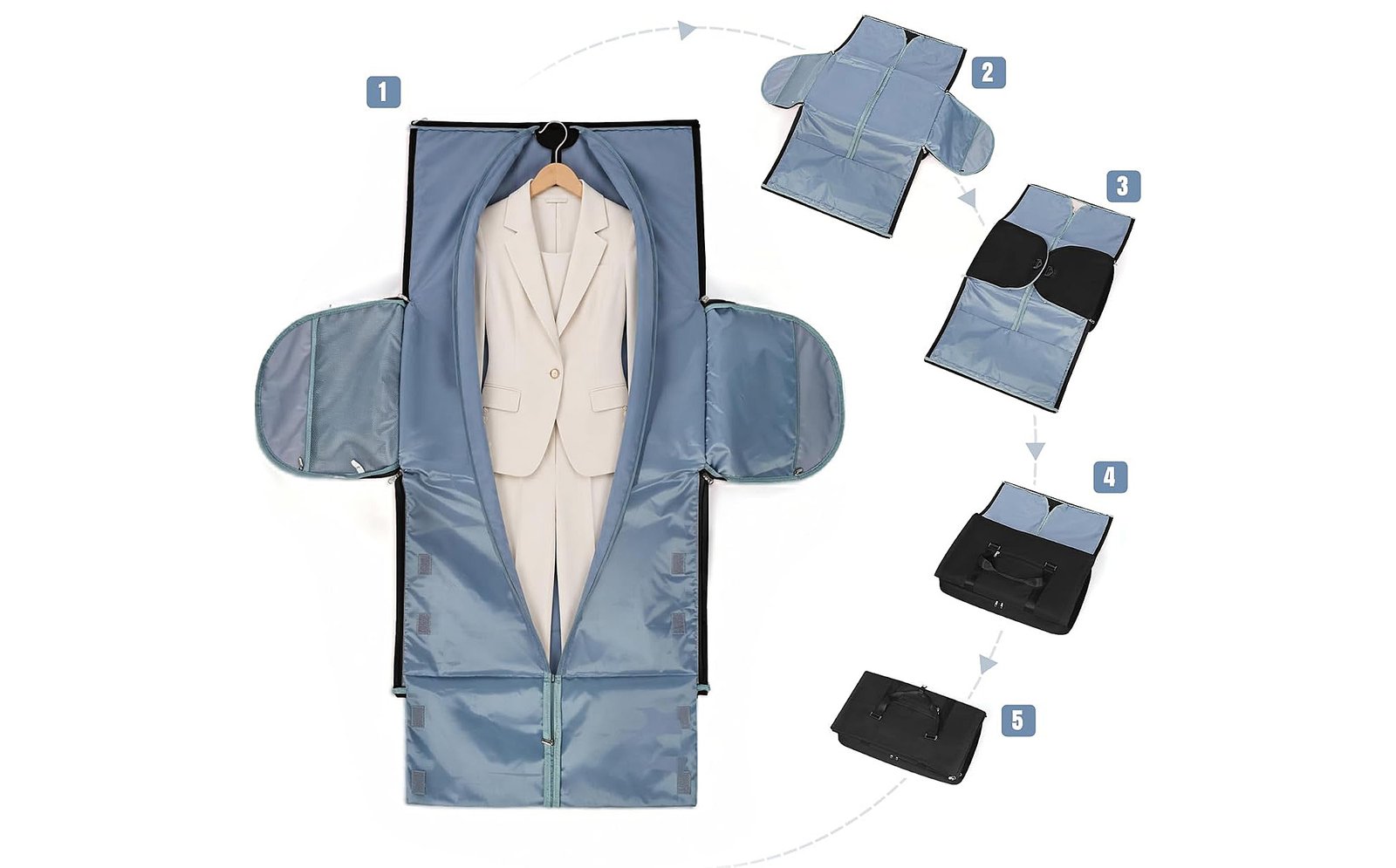
When I explain this product to buyers, I start with function, not shape. A normal duffle is built to carry packed items. A garment bag is built to protect hanging clothing. A convertible garment duffle tries to do both. That sounds simple, but this is where the most common confusion starts in buyer conversations. Some buyers only ask for size, fabric, and logo method. I think that is too shallow. A more useful supplier question is: “When the bag is opened, how is the garment secured, folded, and kept in place during transport?” That question gets to the real product logic.
I usually break the product into two working modes:
| Mode | Main purpose | Main risk if spec is weak |
|---|---|---|
| Garment mode | Hold suits, dresses, shirts | Wrinkles, shifting, poor support |
| Duffle mode | Carry shoes, toiletries, travel items | Bulk, imbalance, poor access |
This bag is only good if these two modes work together. If the garment section is weak, it fails the formalwear use case. If the duffle mode is bulky or awkward, users stop choosing it for travel. I have seen samples that looked premium at first touch but felt too heavy once packed. I have also seen bags with nice outer styling but poor inside support, so the suit moved too much. That is why I never define this product by marketing words. I define it by whether the structure matches the buyer’s intended travel scenario.
How Does a Garment Duffle Help Prevent Wrinkles?
Some buyers expect fabric alone to solve wrinkle problems. It does not. Wrinkle control comes mainly from how the clothing is held, folded, and stabilized inside the bag4.
A garment duffle helps prevent wrinkles by using a garment-style opening, hanger support or fixing points, fold control, and internal straps or panels that keep clothing flat and limit movement during travel5.
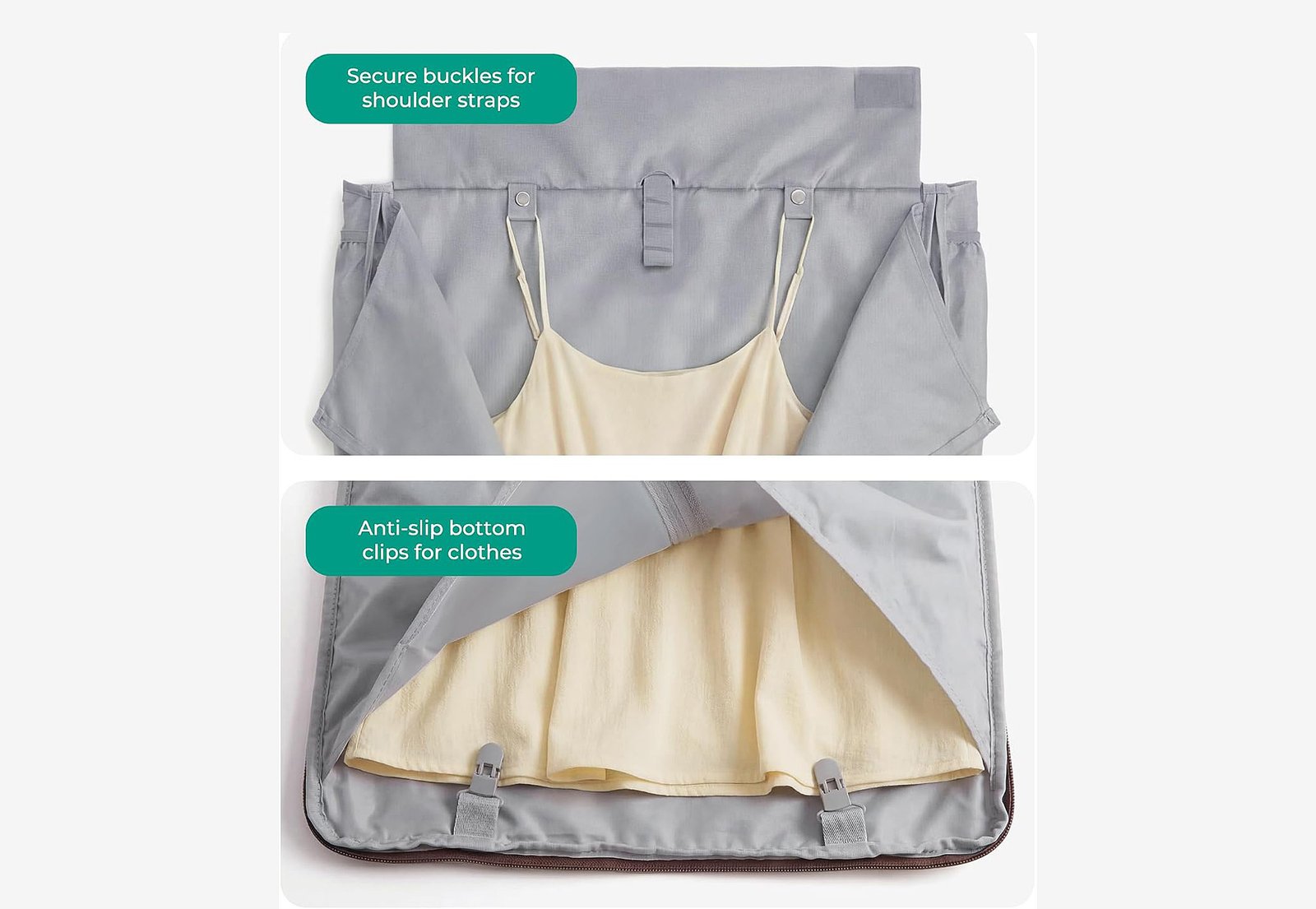
This is the first spec group I verify because it affects the core promise of the product. If a buyer tells me the bag is for sales teams, wedding wear, business trips, or display samples, I focus on garment handling before anything else. In simple words, clothing wrinkles when it is bent badly, squeezed too tightly, or allowed to shift around6. So the key question is not “How big is the bag?” The key question is “How does the bag guide the garment into a controlled position?”
I usually check these points first:
| Structure point | Why it matters | Buyer risk if ignored |
|---|---|---|
| Full opening layout | Makes garment placement easier | Poor packing and random folding |
| Hanger area or fixing point | Supports upper garment position | Collar and shoulder distortion |
| Internal securing straps | Reduces movement in transit | More creasing after carry |
| Fold line design | Controls where bending happens | Sharp wrinkles in visible areas |
| Inner panel smoothness | Reduces friction and bunching | Fabric shifting during travel |
In buyer conversations, the most common confusion is that people treat wrinkle reduction as a fabric topic. I do not. Fabric matters, but structure matters first. If the bag has no good way to secure the garment, thick material will not fix that. In fact, some heavy bags become harder to handle, and users pack them less carefully. That creates new wrinkles, not fewer. I always want buyers to imagine actual use: airport, car trunk, hotel, short business trip. If the garment section cannot keep clothing in place through those steps, the spec sheet is missing the heart of the product.
What Compartments Should Buyers Specify?
Many bags look organized in photos. Then users cannot separate shoes, shirts, toiletries, and small items in a clean way. That creates clutter, pressure on garments, and a poor travel experience.
Buyers should specify compartments based on packing behavior: garment section, shoe space, small-accessory pockets, and enough separation to keep pressure and dirt away from formal clothing7 without making the bag bulky.

I do not believe in asking for “more pockets” as a general rule. More compartments are not always better. They only matter if they support the use case. For a convertible garment duffle, the internal layout should protect the garment area from being crushed by other items. That is the key. I have seen buyers approve samples with many pockets, but the pockets were placed in a way that pushed against the folded garment. That looked functional on paper, but it increased wrinkle risk in real use.
I usually ask buyers to think in layers:
| Compartment type | Main function | Common sourcing mistake |
|---|---|---|
| Main garment area | Protect formalwear | Not enough separation from packed items |
| Shoe compartment | Isolate shoes and dirt | Too deep, steals garment space |
| Toiletry section | Keep liquids separate | Weak lining or poor access |
| Small accessory pockets | Store ties, belts, chargers | Too many, adds bulk and confusion |
| Exterior quick-access pocket | Hold travel documents | Oversized pocket distorts bag shape |
A more useful supplier question is: “When the bag is fully packed, which compartments press directly against the garment panel?” That question reveals a lot. Buyers should also ask how the bag behaves when only partly filled. Some layouts collapse badly when not full. Some become unbalanced when shoes are on one side8. These are not small issues. They affect user satisfaction, return risk, and long-term reorder potential. I always remind buyers that compartment design is not decoration. It is pressure management, cleanliness control, and packing logic.
Which Materials Work for Business Travel Duffles?
Buyers often assume thicker means better. In real travel use, that is not always true. A very heavy fabric can make the bag bulky, stiff, and less comfortable to carry9.
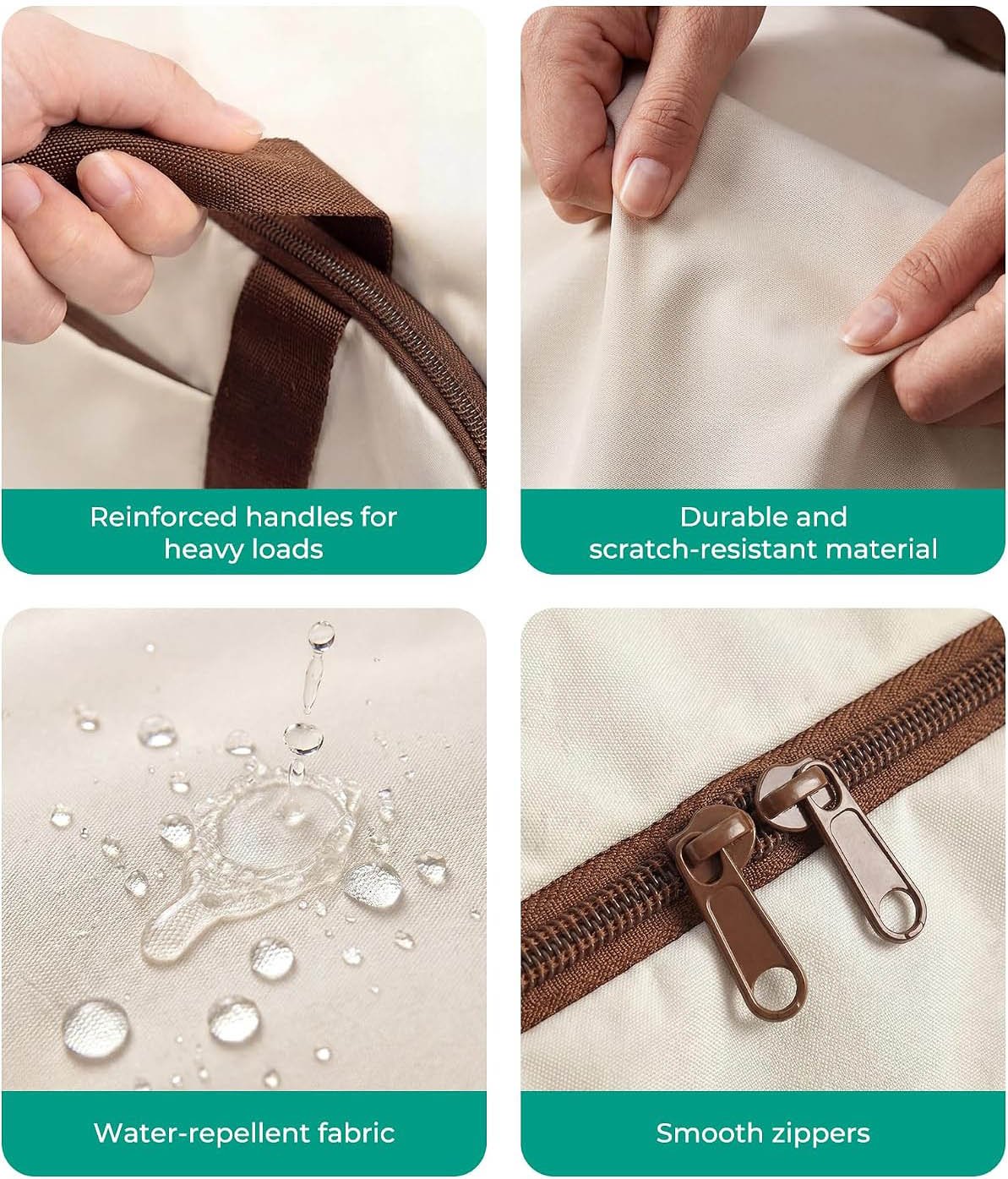
The best materials for business travel duffles are balanced materials that support shape, control weight, and fit the price target. I look for practical fabric, lining, hardware, and reinforcement choices that match actual travel use.
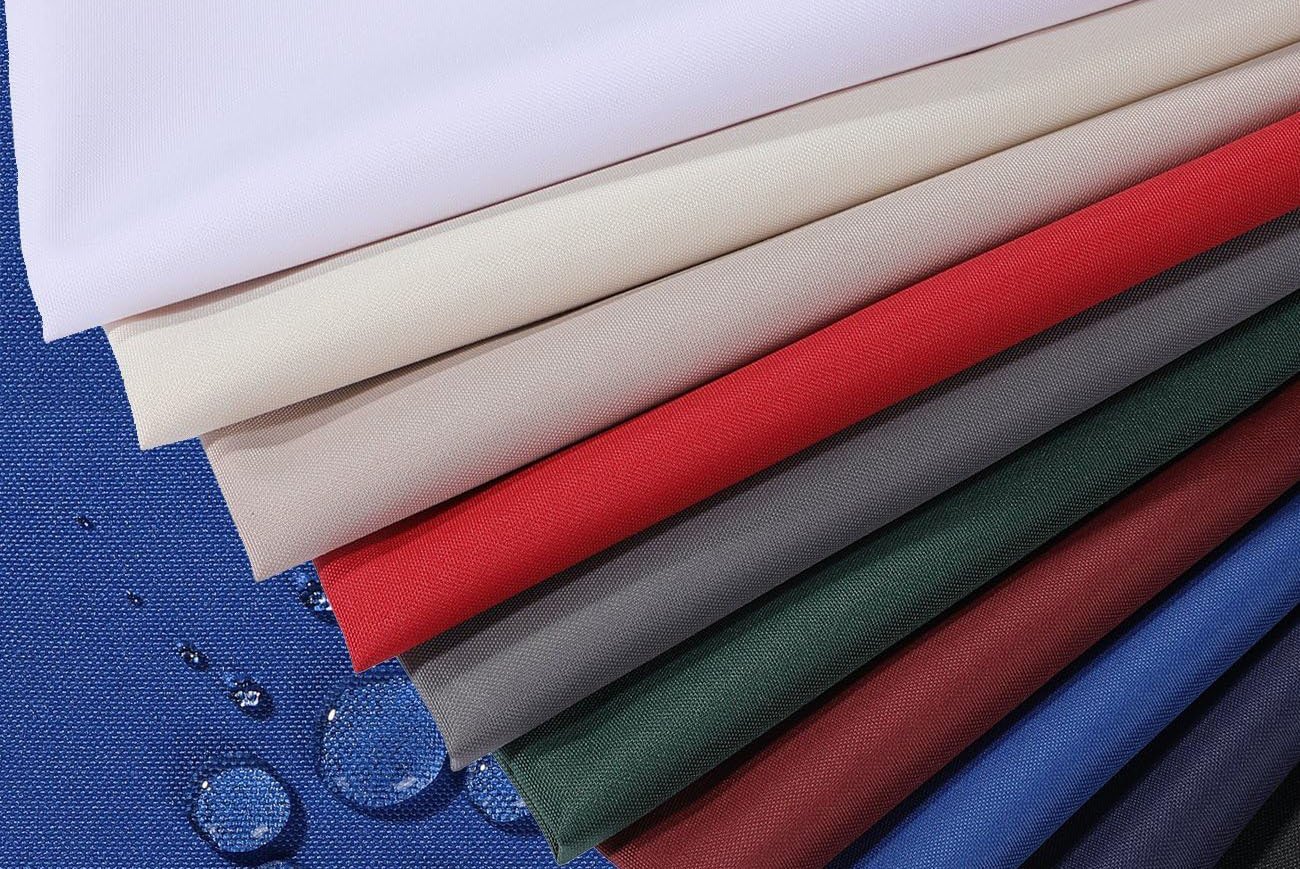
This is where I often help buyers step back from surface judgment. Fabric thickness is not a universal quality signal. Yes, a very thin fabric can create support problems. But a heavy fabric can also create a different kind of failure. The bag may feel impressive in a meeting room, but not in an airport. It may become too stiff to fold well. It may also raise shipping cost10 and reduce day-to-day comfort. So I do not chase the thickest material. I chase the best material balance for the target market.
I usually review materials like this:
| Material area | What I focus on | Real-world reason |
|---|---|---|
| Outer fabric | Weight, hand feel, shape support | Affects carry comfort and look |
| Lining | Smoothness and stability | Helps garment placement and movement control |
| Webbing and handles | Grip and attachment feel | Affects carry safety and comfort |
| Zippers and pulls | Smooth operation | Important for repeated business travel use |
| Reinforcement points | Stress areas only | Prevents weak points without overbuilding |
For business travel, the bag should feel clean, practical, and easy to manage. I often tell buyers not to judge fabric alone by touch in a sample room. They should judge the whole bag after packing. Put in a suit, shoes, toiletries, and accessories. Then lift it. Then open and close it. Then look at the garment area. That is much closer to the truth. In sourcing, materials should serve the product job. They should not just help the sample feel more expensive for ten minutes.
What Quality Checks Matter Before Mass Production?
A sample can pass a quick review and still fail in production consistency11. That is the real buyer risk. The issue is not only whether one sample looks fine, but whether performance stays stable at scale.
Before mass production, buyers should check garment structure consistency, compartment dimensions, stitch quality, hardware function, and packing simulation. I focus on whether wrinkle protection and usability stay reliable from sample to bulk.
This is the part many teams rush, and I think that is where avoidable problems begin. For convertible garment duffle bags, the risk is not just factory quality in a general sense. The bigger risk is hidden drift. A sample may hold a suit properly, but bulk production may change panel size, strap position, zipper smoothness, or internal pocket depth. Each change may look small, but the combined result can hurt wrinkle control and usability12.
I like to review pre-production risk in a very practical way:
| Check point | What to confirm | Why I care |
|---|---|---|
| Internal garment dimensions | Match approved sample | Small changes affect fit and folding |
| Strap and fixing point placement | Same position and tension | Garment movement risk increases if changed |
| Compartment depth and shape | Stable across units | Packing pressure must stay predictable |
| Stitching at stress areas | Clean and repeatable | Helps reduce handling complaints |
| Zipper path and operation | Smooth under packed condition | Real use is not the same as empty-bag testing |
| Packing trial | Use realistic contents | Reveals issues paper specs miss |
In buyer conversations, I often say this: do not only inspect appearance, inspect behavior. A more useful supplier question is: “What points in this design are most likely to change bag performance if production tolerance shifts?” Good suppliers should understand that question. I am not looking for lab claims. I am looking for process awareness. For this product, the goal is simple. The bulk order should protect garments and carry well in the same way the approved sample did. If that consistency is not controlled, the best-looking spec sheet means very little.
Conclusion
The right specs are the ones that protect garments and keep travel easy, and I always judge every detail by that real-use standard.
"Impact of Backpacks on Ergonomics: Biomechanical and ... - PMC", https://pmc.ncbi.nlm.nih.gov/articles/PMC9180465/. Studies on textile creasing and load-carriage ergonomics indicate that wrinkle formation is affected by folding geometry, compression, and motion during transport, while perceived carrying comfort depends on bag weight, stiffness, and load distribution rather than capacity alone. Evidence role: general_support; source type: research. Supports: External sources should support that wrinkle formation during transport is influenced by garment folding and movement, and that carrying comfort depends on load, stiffness, and weight distribution rather than size alone.. Scope note: Such sources would provide contextual support for the mechanism and ergonomics, not a direct test of this specific bag type. ↩
"Duffel bag - Wikipedia", https://en.wikipedia.org/wiki/Duffel_bag. Reference descriptions of garment bags emphasize protection of clothing from creasing during transport, while duffel bags are described as general-purpose travel carriers, supporting the characterization of a convertible garment duffle as a hybrid of these two functions. Evidence role: definition; source type: encyclopedia. Supports: A neutral reference should support that garment bags are intended to protect clothing from creasing and that duffel bags are general travel carriers, contextualizing the hybrid product's two functions.. Scope note: An encyclopedia source may define the parent bag types rather than this exact hybrid product term. ↩
"Garment bag - Wikipedia", https://en.wikipedia.org/wiki/Garment_bag. Educational and reference sources on garment care commonly note that garment bags are used to transport suits, dresses, and other formalwear in a way intended to minimize creasing and preserve shape. Evidence role: general_support; source type: education. Supports: Sources should support that garment bags are commonly used to transport formalwear with the goal of minimizing creasing and preserving garment shape.. Scope note: This would support the general purpose of the category, not quantify wrinkle reduction for every design. ↩
"Pressure prediction model for compression garment design", https://pubmed.ncbi.nlm.nih.gov/20628306/. Textile research on crease formation shows that wrinkles arise from mechanical deformation such as bending, compression, and repeated displacement, which supports the view that garment holding, fold control, and stabilization are central to wrinkle reduction during travel. Evidence role: mechanism; source type: paper. Supports: A technical source should support that creasing and wrinkling are driven by bending, compression, and mechanical deformation, making fold management and movement control important in transport.. Scope note: These studies typically examine fabric behavior under controlled conditions rather than complete luggage systems. ↩
"Design guidelines for movement-assistive clothing based on a ...", https://pmc.ncbi.nlm.nih.gov/articles/PMC10954188/. Garment-care and packing guidance consistently notes that maintaining garments in a flat position and minimizing internal shifting during transport helps reduce visible creasing, which provides contextual support for the use of retaining straps or support panels. Evidence role: mechanism; source type: other. Supports: Neutral sources should support that keeping garments flat and reducing internal shifting lowers the chance of creasing during transport.. Scope note: This would be practical guidance rather than controlled experimental proof for a specific bag construction. ↩
"Research puts new wrinkle in study of materials folding under ...", https://news.uchicago.edu/story/research-puts-new-wrinkle-study-materials-folding-under-pressure. Research and garment-care guidance indicate that wrinkling is promoted by sharp folding, sustained compression, and movement that repeatedly displaces fabric layers, all of which are consistent with the article's explanation. Evidence role: mechanism; source type: research. Supports: Sources should support that wrinkling is associated with folding, compressive stress, and motion or displacement of fabric during storage and transport.. Scope note: Such evidence is usually general to garments and fabrics rather than specific to travel bags. ↩
"G. Laundry and Bedding | Infection Control - CDC", https://www.cdc.gov/infection-control/hcp/environmental-control/laundry-bedding.html. Public-health and consumer-care guidance commonly advises separating footwear and toiletries from clothing to reduce dirt transfer, while garment-care sources note that compressive packing can increase creasing; together these points support compartment separation as a practical protective measure. Evidence role: general_support; source type: government. Supports: Sources should support that separating potentially dirty items from clothing is a standard hygiene practice and that reducing pressure on garments is relevant to preserving appearance.. Scope note: The support is inferential across hygiene and garment-care guidance rather than a direct trial of duffle-bag layouts. ↩
"Impact of Backpacks on Ergonomics: Biomechanical and ... - PMC", https://pmc.ncbi.nlm.nih.gov/articles/PMC9180465/. Ergonomics studies of load carriage report that asymmetric loading alters posture and increases perceived discomfort, supporting the claim that one-sided packing can make a travel bag feel unbalanced in use. Evidence role: mechanism; source type: paper. Supports: An ergonomics source should support that asymmetric load distribution affects balance, posture, or perceived discomfort during carrying.. Scope note: Many studies focus on backpacks or shoulder carriage generally rather than this exact bag format. ↩
"Impact of Backpacks on Ergonomics: Biomechanical and ... - PMC", https://pmc.ncbi.nlm.nih.gov/articles/PMC9180465/. Research on materials and load carriage indicates that increased weight and structural stiffness can reduce flexibility and raise perceived carrying effort, which supports the claim that very heavy shell fabrics may make a travel bag bulkier and less comfortable. Evidence role: mechanism; source type: research. Supports: Sources should support that greater material weight and stiffness contribute to higher carry burden, reduced flexibility, and lower user comfort.. Scope note: The relationship depends on the entire bag design, not fabric mass in isolation. ↩
"Dimensional Weight Shipping Cost Calculator - ShippingEasy", https://shippingeasy.com/dimensional-weight-shipping-calculator/. Carrier and transport-industry guidance explains that freight and parcel charges are commonly based on actual or chargeable weight, so heavier bag materials can increase shipping cost when they materially affect shipment weight. Evidence role: general_support; source type: institution. Supports: A logistics or transport source should support that shipment pricing commonly depends on actual or chargeable weight, making heavier goods more expensive to ship in many cases.. Scope note: Shipping charges also depend on dimensional weight, route, and contract terms, so weight is not the sole determinant. ↩
"Manufacturing | NIST", https://www.nist.gov/manufacturing. Quality-management and manufacturing references emphasize that process variation and tolerance drift can cause production units to differ from an approved sample, which supports the need to verify consistency at scale rather than relying on a single reviewed item. Evidence role: expert_consensus; source type: institution. Supports: Sources should support that manufacturing processes exhibit variation and that quality assurance must address repeatability across production, not only conformance of a single sample.. Scope note: This is general manufacturing evidence and does not by itself document defect rates for this specific product. ↩
"Tolerance in Product Design: How to Avoid Stack-Up Nightmares ...", https://www.modusadvanced.com/resources/blog/tolerance-stack-up-nightmares-choosing-the-right-tolerance-in-product-design. Quality-engineering literature on tolerance accumulation shows that multiple small dimensional and assembly variations can combine to change fit, motion, and user-perceived function, which contextually supports the claim that modest production shifts may degrade wrinkle control and usability. Evidence role: mechanism; source type: paper. Supports: A quality-engineering source should support that multiple small dimensional or assembly variations can accumulate and alter final product performance.. Scope note: The evidence would explain the mechanism of cumulative variation rather than directly test garment duffle bags. ↩